Author:Bu Shuqing, Wall Street News
The AI investment narrative is quietly shifting gears—from the chip arms race to the 'inference economy' and personal agents, Goldman Sachs believes the market has sharpened its focus over four years and is eagerly looking forward.
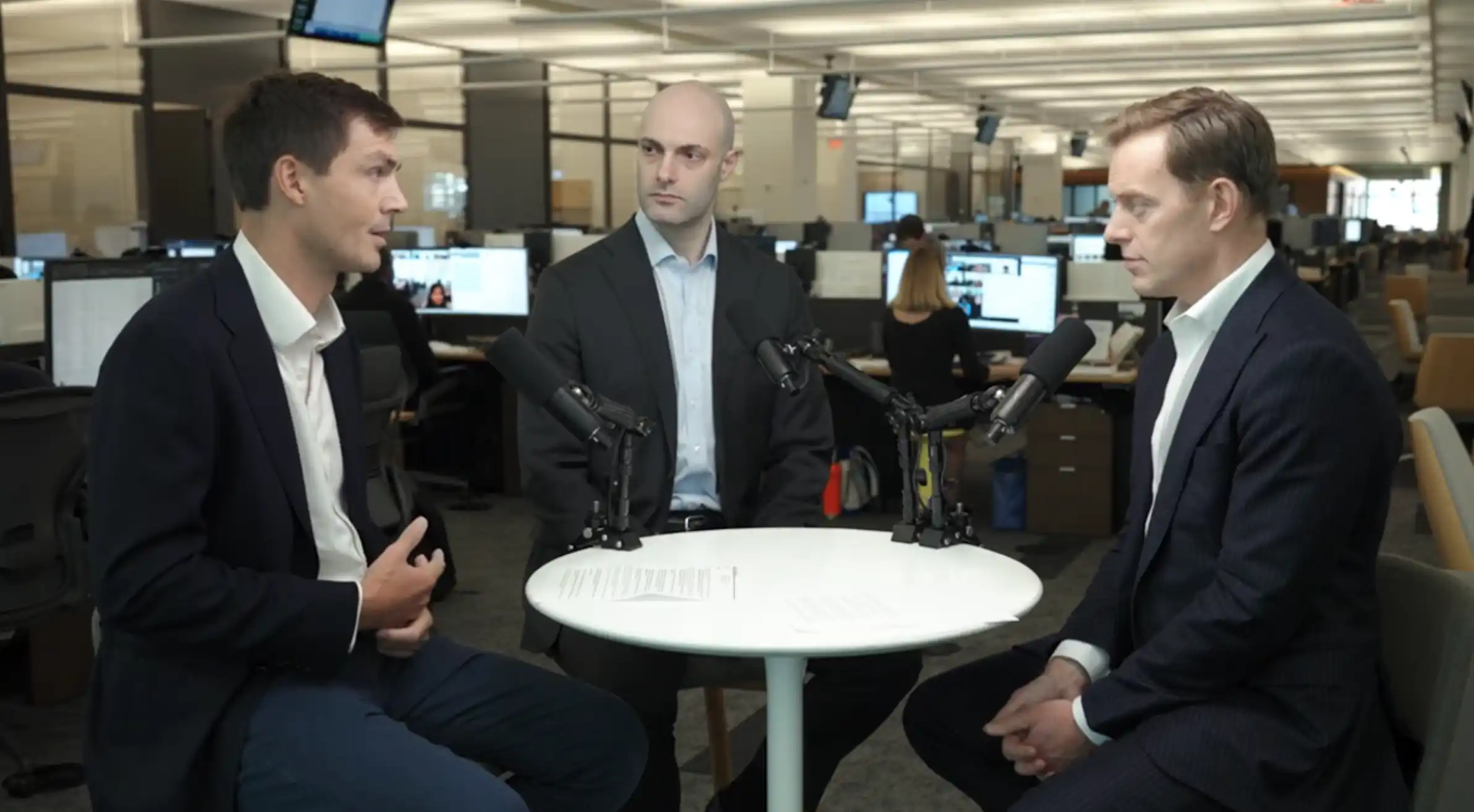
In a recent episode of the "The Macro Call" podcast, Goldman's chief US equity strategist Ben Schneider and TMT sector expert Pete Callahan engaged in an in-depth discussion covering the structural evolution of AI trading, market breadth, key points for the Q3 earnings season, and year-end market prospects.
Both Goldman Sachs experts pointed out in the program that the resilience of the stock market against the backdrop of high-interest rates is fundamentally supported by the strong earnings of large-cap tech stocks—while the AI theme itself is undergoing a profound 'narrative migration.'
AI Trading Moves 'Up the Stack': From Selling Shovels to Selling Water
Pete Callahan directly pinpointed the core shift in market logic. He said that a healthy consensus has begun to form around capital expenditure for 2027, providing visibility for about 12 to 15 months.
But the question then arises: What about after 2027?
"That's why you've seen valuation compression in the semiconductor sector—the market is asking, how sustainable is this high level of profitability? Are companies over-earning or under-earning? And what is the roadmap beyond 2027?" Callahan said.
Against this backdrop, market attention is migrating towards the "application layer." Callahan noted that the "inference economy" and tool companies helping businesses and consumers deploy AI are gaining attention, specifically including areas like cybersecurity and data infrastructure.
"I think the trade has migrated up the stack to a degree," he said, "but I view it more as a 'both and' rather than an 'either or.' Semiconductors are still within striking distance of their highs, and the market has found room for both directions."
'Programming AI Is No Longer a Secret': Are Personal Agents the Next Breakout?
In the outlook for the Q3 earnings season, Callahan made a widely noted observation:
"The market is very hungry for the next story. Programming AI is no longer the market's secret; as a major AI application, it's already widely known. So, how big can the personal agent story get, and how fast can it come? And the resulting ripple effects across the entire consumer-facing industry chain will be very interesting to watch."
He added that during the earnings season, comments from S&P 500 companies regarding cost savings, new revenues, new products, and new businesses will be crucial signals for the market to support the sustainability of the AI narrative.
On the question of return on invested capital (ROIC) for large hyperscale cloud service providers, Callahan stated that the market felt good about it after Q2 earnings and will seek positive reinforcement again in Q3. Additionally, if semiconductor companies can provide visibility extending into 2028, it would help alleviate the biggest uncertainty currently weighing on valuations.
Narrowest Market Breadth Since Dot-com Bubble, but Fundamentally Bullish Into Year-End
Host Mark Wilson mentioned that current market breadth is extremely narrow. Chief US equity strategist Ben Schneider said directly:
"The median S&P stock is down more than 15% from its high. Our preferred measure of market breadth is at its narrowest level since the internet bubble."
However, he believes that historically, the resolution of narrow breadth has more often been through "catching up" rather than "catching down." "Most investors look back at 2000 and think it had to end with a sell-off, but in fact, more often than not in history, it's been resolved by the rest of the market catching up."
Regarding the growth rate of AI capital expenditure, Schneider gave a key forecast: current market consensus expects earnings growth of about 30%, but a slowdown will occur entering 2027—"not only due to macro pressures but also because AI capex, while continuing to grow, will likely not maintain the same pace."
On the election factor, Schneider believes that compared to past election years, investor attention is significantly lower this cycle, primarily due to the AI narrative, the macro background, and the consensus that "major policy changes are unlikely in the next year or two." Combining strong earnings, light positioning, and reasonable valuations, his base case is: the market moves higher by year-end.
The full text transcript of this episode of 'The Macro Call' is as follows (translated with AI assistance):
Mark Wilson: Welcome, everyone, to the latest episode of The Macro Call. I'm Mark Wilson. I'm delighted to be joined by Ben Schneider, our chief US equity strategist in our research division, and Pete Callahan, an expert in our markets business focusing on the TMT sector. Thank you both very much for joining.
Ben Schneider: Thank you, Mark.
Mark Wilson: So, for the past few weeks, many stock stories have really been an interest rate story. The path of rates has been central. At the same time, the equity market is actually trading very well. Ben, what's going on? How sustainable is this stock market strength or resilience in the face of this rate move?
Ben Schneider: Well, first, we should acknowledge that even as the S&P trades near its highs, it's partially reflected the impact of higher yields, with valuation multiples having come down quite a bit over the past year. If you look under the hood, more cyclical stocks, the more rate-sensitive parts of the equity market, have traded very meaningfully lower as yields have moved up. That said, I think the simple reason for the resilience is strong earnings, especially related to the largest tech stocks tied to the AI trade. It's not that these stocks are completely immune to higher yields, but to a large extent, they are much less sensitive than much of the rest of the market.
Mark Wilson: So I've been saying for a while, micro has been driving macro. Ben's touched on it. There's still real AI enthusiasm, Pete, but the nature of the interest and the price action has changed, some recent product success, especially when you think of products like Muse, certainly reignited some new enthusiasm, and the story has shifted from the first half of the year when price action was really all about those massive capital expenditure beneficiaries and recipients. That's right. What are you looking at, what are the themes you're watching most closely in AI right now?
Pete Callahan: Yes, Mark. So, we're certainly now starting to see, I think, some healthy consensus build around calendar '27 from a capital expenditure perspective. That's good because it means there's visibility for the next, you know, 12 to 15 months or so. It also means there's slightly less visibility beyond that, and I think that's why you're seeing multiple compression in the semis space because the market is saying how durable is this? Are companies over-earning? Or are they under-earning?
If you will, you can even make that argument. And how do you think about the roadmap post-calendar '27, so that has driven some of the multiple compression in semis. As that's happened, you start to see the market get excited about things higher up the stack. So think inference economy, companies and tools that help deploy AI and artificial intelligence on the enterprise side and on the consumer side. So those are things like cybersecurity or data infrastructure.
So I think the trade has migrated up the stack to a degree. I do think it's more of an "and" than an "or." Semis are still there. A stone's throw away from the all-time highs, so I think the market has found room for both within this trade and this theme, but you're certainly maturing to a degree, you're in year four of the AI theme, and the market continues to look forward and look for clues for calendar '28.
Mark Wilson: And Ben, the equity market has been trading with what people keep describing as very poor breadth. The narrowness is stunning. How concerned are you about it, how concerned should we be? When you look under the hood of the equity market, what are the themes you're watching most, what are you most excited about?
Ben Schneider: It is stunning, the median S&P stock is down more than 15% from its high. And yes, our preferred measure of market breadth is the narrowest since the internet bubble. That's pretty extreme. I would say, the easy bet there is that at some point, there's going to be a re-convergence. The hard part is that timing it is very difficult. And the direction of that re-convergence is also very difficult to gauge. Most investors look back at 2000, they think it has to resolve with catch-down.
But more often than not, narrow breadth actually resolves with catch-up. So I think the takeaway for investors is, you want to have some of everything, you want to stick with some of the AI themes Pete discussed. You also probably want to look for some parts of the market that have really gotten hit hard recently by macro pressures.
For example, we've been highlighting consumer experiential stocks. They trade at pretty low multiples. If you get a little bit of relief on rates or on oil, I think they could play catch-up nicely. And we're in the first week of October, next week we're going to start getting a ton of earnings, that's going to be the market's focus for the next few weeks. As we enter the third quarter earnings season, what are you most focused on? And then obviously, the calendar year is going to turn, people are going to start talking about 2028 valuation multiples. As those key themes, those conversations begin, what are you thinking?
Ben Schneider: Well, going back to the earlier point about rates and valuation, what's really been supporting the market is earnings. We need to see signs that strong earnings are going to continue. The consensus expectation, which I think is about right, is earnings growth of about 30%. That's pretty good. But it looks like as we move into 2027, we're going to see some deceleration.
That's true both because of the macro forces we've been discussing and because AI capex, while it should continue to grow, probably won't continue at the same rate. So the question is how gentle or how steep will that deceleration be? And then going back to the earlier discussion, as investors focus not just on AI capex but on the rest of the AI economy, getting more data there is going to be very critical.
Mark Wilson: And Pete, when you think about earnings and the big themes we're going to see from tech companies, what are you most focused on? And again, how does that tie in with the themes you're watching for next year?
Pete Callahan: Yeah, a couple of things that tie into what Ben said, but I think first focus again is probably ROIC for these large hyperscale cloud vendors, right? That's still the core engine of this market. I think the market felt pretty good about that coming out of Q2, so we're going to look for positive reinforcement from the big hyperscale cloud vendors again.
I think the other thing to consider, visibility, you're starting to hear some semi companies talk about visibility into calendar '28. That's the bridge, I think, the market is trying to solve. And that's a big overhang on semi multiples broadly. So those companies that have 12, 15 months of visibility and can speak to what '28 might look like, that's going to be a focus. I think the market is very hungry for the next thing, right? Everybody knows coding. It's no longer a secret in the marketplace as a big AI application.
So, how big, how fast can this personal agent story get, and then what does it mean for the entire consumer stack up and down, I think is going to be interesting to watch. And then lastly, certainly, related to AI, just trying to think about any snippets you get from S&P 500 companies about cost savings, about new revenue, about new products, about business formation. I think those are the things the market is really hungry for to continue to support the AI trade.
Mark Wilson: Finally, Ben, we're less than a month away from the midterm elections. I guess the question really is, do the elections matter? More substantively, when you think about the path from here to year-end, the historical analogy that XYZ tends to trade pretty well after the midterms is well entrenched and well covered. To what extent should investors be thinking about that playbook?
Ben Schneider: Again, I think it speaks to the context that you're only asking it now. Typically in an election year, the month before, we'd be talking about it constantly. And yes, it's getting a lot less attention from investors this cycle. I think both because of AI. Because of the macro backdrop, and because of the consensus view that we're unlikely to see major policy changes over the next year or two. That said, as you said. The cleanest historical dynamic is the building of risk premium ahead of the election, and that risk premium actually starting to ease about now in October. I think clearly there are a lot of moving parts at the moment. But if I take the underlying earnings strength we've been talking about and combine that with fairly light investor positioning, fairly reasonable valuation. I do think the base case should be for the market to be higher by year-end.
Mark Wilson: Ben, Pete, thank you very much. Thanks for joining the latest episode of The Macro Call, and remember to tune in for the weekly version, available to everyone on Goldman Sachs' marquee platform.







