Dow Jones Indices, DRW, and Marex Bring Wall Street Swaps to Canton

cryptonews.ruPublished on 2026-10-14Last updated on 2026-10-14

Abstract

On Tuesday, S&P Dow Jones Indices (S&P DJI) announced that it, along with companies DRW and Marex, successfully executed a traditional Wall Street-style derivatives trade using blockchain technology—specifically, the Canton Network. The transaction was a total return swap, a financial agreement that allows one party to gain exposure to the returns of an underlying asset or index without owning it directly, while the counterparty agrees to make payments based on the contract terms. S&P DJI's Chief Operating Officer for Products, Cameron Drinkwater, stated the deal shows how established benchmark infrastructure can support new institutional market structures. The company has been active in the blockchain space since late 2020 when it partnered with data firm Lukka for crypto indexing initiatives. According to S&P DJI, this latest transaction demonstrates how such operations can be coordinated using a common, shared blockchain infrastructure like Canton, rather than relying on multiple separate networks, potentially increasing efficiency and interoperability for institutional financial markets.

On Tuesday, S&P Dow Jones Indices announced that companies had used blockchain technology, specifically the Canton Network, to execute a traditional Wall Street derivatives transaction. The transaction was a total return swap—a financial agreement that allows one party to receive the return from an investment in an asset or index without actually owning it. The other party agrees to make these payments according to the terms of the contract.

"This transaction demonstrates how established benchmark infrastructure can support new institutional market structures," explained Cameron Drinkwater, Chief Operating Officer of Products at S&P DJI, in a press release.

S&P DJI has been active in this space for quite some time, first entering the blockchain market in late 2020. At that time, the company partnered with Lukka—a New York-based crypto asset software and data company—to create capabilities for crypto indexing. S&P DJI believes the transaction announced on Tuesday demonstrates how these operations can be coordinated using a shared blockchain infrastructure, rather than relying on numerous separate networks.

Related Questions

QWhat type of financial transaction did S&P Dow Jones Indices conduct using blockchain technology?

AIt was a total return swap, a financial agreement allowing one party to receive the returns from an asset or index without actually owning it.

QWhich specific blockchain network was used for the derivative transaction announced by S&P DJI?

AThe transaction was conducted using the Canton network.

QAccording to the press release, what does this transaction demonstrate about market infrastructure?

AIt demonstrates how established reference infrastructure can support new institutional market structures.

QWhen did S&P Dow Jones Indices first enter the blockchain market, and with which company did it partner?

AIt first entered the blockchain market in late 2020, partnering with the New York-based crypto asset software and data company Lukka.

QWhat benefit does S&P DJI see in using a common blockchain infrastructure for such transactions?

AThey see it as a way to align these operations using a common infrastructure, rather than relying on multiple separate networks.

Related Reads

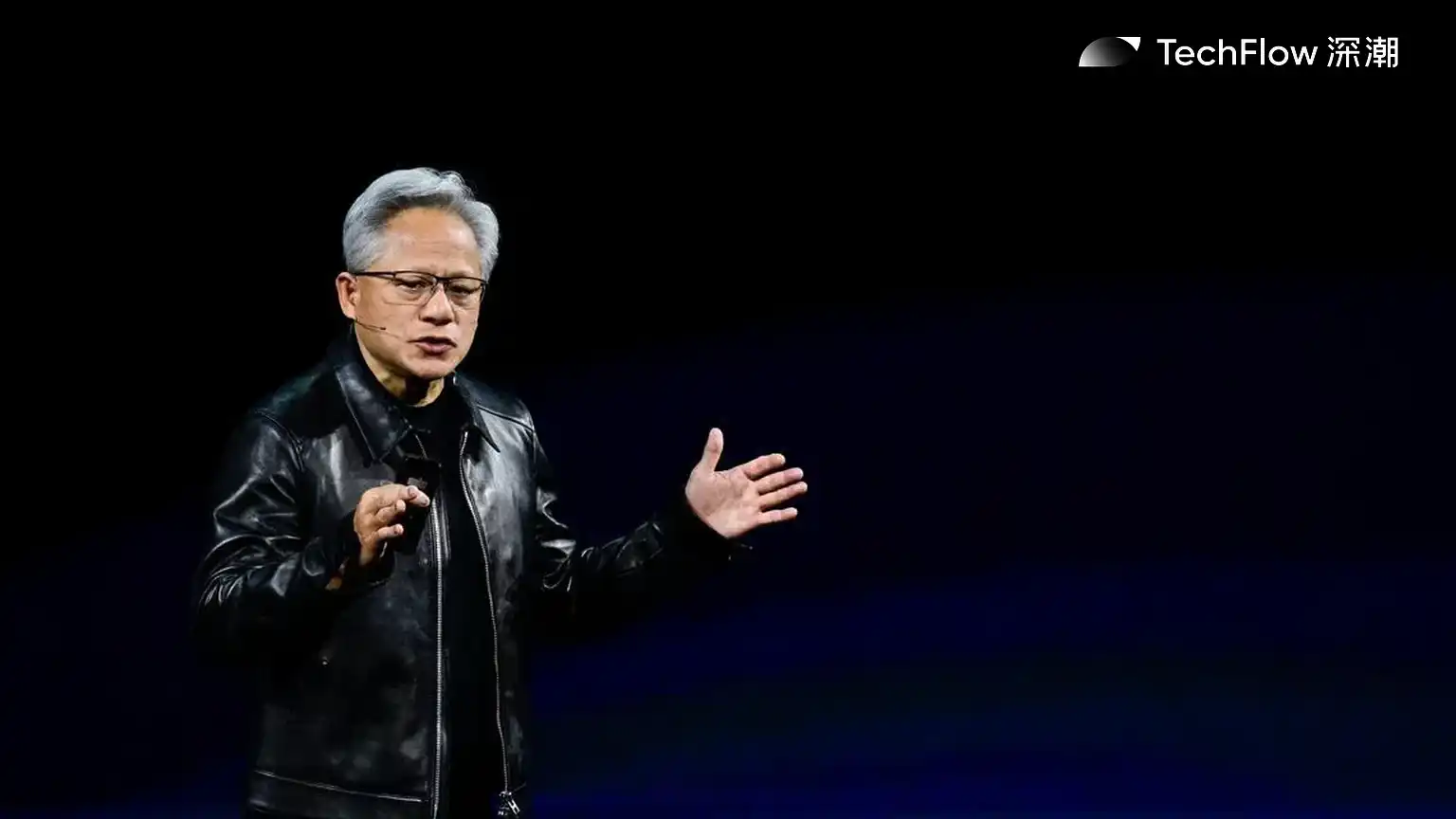
Jensen Huang Resigns, CFO Appointed as NVIDIA Interim CEO — Who Is Kress?

NVIDIA announced on the evening of November 12 that co-founder Jensen Huang has resigned as president, CEO, and board member, effective immediately. The 63-year-old founder, who led the company for 33 years, stepped down after a scandal involving extramarital affairs. The board accepted his resignation on November 11, and Huang also exited the board entirely, giving up all director seats. Huang co-founded NVIDIA in 1993 and built it into a core supplier for the AI boom, with the company's market value once reaching about $4 trillion. He holds roughly 3.6% of NVIDIA shares, making him the fourth-largest shareholder. NVIDIA has appointed CFO Colette Kress as interim CEO until the board selects a permanent successor. Kress will continue as executive vice president and CFO while serving as interim CEO. At the board level, Harvey C. Jones, former Synopsys CEO and a director since 1993, became the company's first board chairman. Previously, NVIDIA had no independent board chair, with Huang holding both CEO and board seats. The board will search for a permanent CEO both internally and externally. Jones said the board has full confidence in Kress and the management team and expects operations, customer commitments, and the product roadmap to be unaffected. Colette Kress, born in 1967 in the U.S. and about 59, is NVIDIA's long-serving EVP and CFO. Her appointment makes her the first female leader in NVIDIA's history. She holds a bachelor's degree in finance from the University of Arizona and an MBA from SMU's Cox School of Business. She began her career at Texas Instruments, working about eight years in various finance roles, then joined Microsoft in 1997 for 13 years, becoming CFO of the Server and Tools Division in 2006. In 2010 she moved to Cisco as senior VP and CFO of its business technology and operations finance organization. In September 2013, recruited personally by Huang, she joined NVIDIA as EVP and CFO, when annual revenue was only about $4.13 billion. During her 13 years, NVIDIA transformed from a gaming graphics maker into a global AI and accelerated computing leader, with revenue soaring from $4.13 billion in fiscal 2014 to $215.9 billion in fiscal 2026, about 52 times growth. In July 2025, thanks to her NVIDIA shares, she became a billionaire with net assets of about $1–1.2 billion. She received the Silicon Valley Business Journal's CFO of the Year award in 2016 and has repeatedly appeared on Forbes and Fortune most powerful women lists. NVIDIA shares fell sharply after the resignation news. After The Wall Street Journal reported the board was preparing to force Huang out, the stock dropped over 9% in after-hours trading; at the U.S. open it continued falling, briefly breaking below $150 to a new low since June 15, before narrowing losses to about $160. Dan Ives of Yorkville Ives said the investigation is a blemish for Huang, could trigger congressional probes, and that he risked being ousted, pressuring the stock. Huang's departure stems from two reports of extramarital affairs. On Sunday, November 8, Huang emailed employees admitting infidelity to his wife and apologizing to employees, the board, and shareholders. The board announced an investigation by a committee of independent directors with outside counsel, saying there was no reason to believe company secrets leaked. On Wednesday, November 11, The New York Times reported Huang had a romantic relationship with Kimberly Powell, NVIDIA's vice president of healthcare, both married, with Powell reporting to Huang; the report said intimate behavior was filmed at a San Jose hotel in March. The Wall Street Journal then reported the board was preparing to force Huang out. CBS cited sources saying the Trump administration was aware. CNBC confirmed the board met that night to discuss whether to remove Huang, with the meeting running into the evening. The next day, NVIDIA announced Huang's resignation.

Odaily星球日报59m ago

Jensen Huang Resigns, CFO Appointed as NVIDIA Interim CEO — Who Is Kress?

Odaily星球日报59m ago

Farewell, Jensen Huang

Nvidia founder and CEO Jensen Huang has resigned from his roles as president, CEO, and board director, effective immediately, following revelations of an extramarital affair with an executive who directly reported to him. The scandal, which began surfacing in late October, escalated rapidly after Huang issued an internal apology letter on November 8 admitting infidelity. Nvidia's stock has plunged, wiping out roughly $450 billion in market value, with analysts warning of potential further losses exceeding $1 trillion if leadership instability persists. Huang's wife may pursue divorce proceedings under California's community property law, potentially resulting in a settlement of $62.6–81.1 billion—possibly the most expensive divorce in history. CFO Colette Kress has been appointed interim CEO while the board searches for a permanent successor, and Harvey C. Jones has been named the company's first board chairman. Huang co-founded Nvidia in 1993 and built it into the world's most valuable chip company, pioneering the CUDA architecture that enabled the AI revolution. His unusually flat management structure—with roughly 60 executives reporting directly to him and no public succession plan—has left the company vulnerable at a critical moment. Given that major tech giants like Google, Microsoft, OpenAI, and Anthropic depend heavily on Nvidia's chips for their AI ambitions, Huang's departure raises urgent questions about whether the AI industry is prepared for an Nvidia without its longtime leader.

marsbit1h ago

Farewell, Jensen Huang

marsbit1h ago

Trading

Spot
活动图片