Cardano Creates a Freeze Button for Stablecoins It Doesn't Have Yet

cryptonews.ruPublished on 2026-10-08Last updated on 2026-10-08

Abstract

The Cardano Foundation has launched a compliance toolkit allowing future issuers of regulated digital assets, such as stablecoins, funds, and bonds, on its blockchain to freeze or confiscate tokens. This feature, which went live on the mainnet without a hard fork, enables issuers to verify recipients and block sanctioned wallets. While the stablecoin market on Cardano is currently modest at about $67 million, the foundation is preparing infrastructure for future adoption. The update, detailed in Cardano Improvement Proposal CIP-0113, was announced at the TOKEN2049 conference.

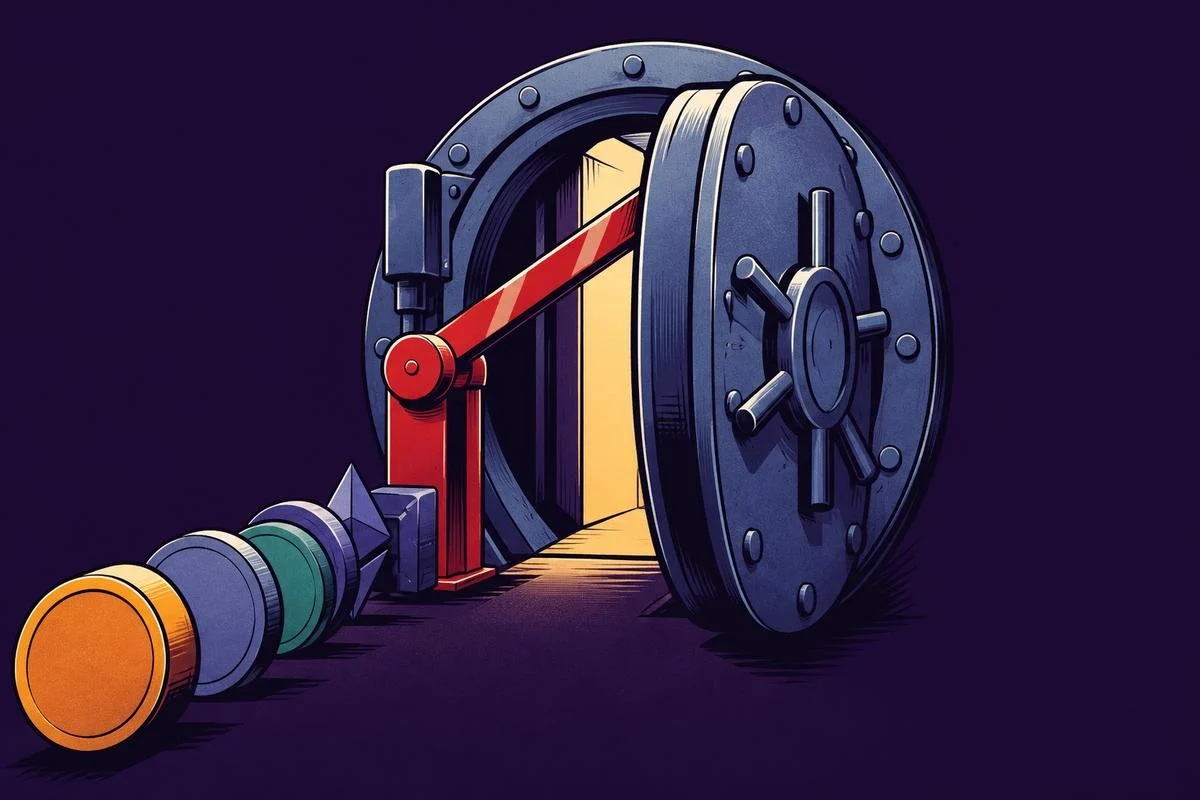
The Cardano Foundation is preparing for a future where issuers of regulated tokens can freeze or seize stablecoins, funds, and bonds issued on the blockchain, as confirmed by its new compliance toolkit.

According to Cardano, the tool launched in the mainnet on Wednesday will allow issuers to verify recipients as well as block sanctioned wallets in the network. The entire stablecoin market—the sector where this feature is most commonly used—is relatively small on Cardano, amounting to approximately $67 million.

As stated by the Swiss non-profit organization overseeing the network's development, the Cardano Improvement Proposal CIP-0113 announced at the TOKEN2049 conference launched without the need for a hard fork.

Trending Cryptos

Related Questions

QWhat has the Cardano Foundation created in preparation for the future of regulated tokens?

AThe Cardano Foundation has created a compliance toolkit that includes a freeze button, allowing issuers of regulated tokens like stablecoins, funds, and bonds to freeze or seize these assets on the blockchain.

QWhat is the primary purpose of the new compliance tool launched on the Cardano mainnet?

AThe primary purpose of the new compliance tool is to allow token issuers to verify recipients and block or freeze assets held in wallets that are under sanctions within the network.

QHow significant is the stablecoin market on the Cardano blockchain currently?

AThe stablecoin market on Cardano is currently relatively small, valued at approximately $67 million.

QWhat was the specific Cardano Improvement Proposal (CIP) number for the compliance feature, and where was it announced?

AThe compliance feature was introduced via Cardano Improvement Proposal CIP-0113, and it was announced at the TOKEN2049 conference.

QDid the implementation of this new compliance feature on Cardano require a hard fork?

ANo, the implementation of the CIP-0113 compliance feature on the Cardano mainnet was launched without the need for a hard fork.

Related Reads

The Lighter Attack: How a Single API Key Drained Tens of Millions of Dollars?

On November 16, a security incident hit Lighter, a decentralized perpetual contract trading platform. Roughly $15.48 million in USDC was drained from two large market-maker accounts (#714710 and #714723), though Lighter officially confirmed only that a single trader's API key was compromised—not the protocol or smart contracts. The attacker reportedly exploited a leaked API key that lacked direct withdrawal permissions by chaining legitimate product features: closing the victim's trading positions to free margin, creating a 0% fee public pool funded with about $10,000 from an attacker-controlled account to secure ~99.99% of pool shares, then using the victim account's internal transfer permissions to move USDC into the pool in ~$1 million batches. Because internal transfers between accounts linked to the same L1 address may not require additional signatures, and such transfers may not have minted new shares for the victim, the attacker's dominant share position appreciated and could be redeemed for the victim's funds. On-chain records show about 10.39 million USDC withdrawn via withdrawPendingBalance, then swapped through CoW Protocol into ~5,764 ETH/WETH, with some funds later moved to Hyperliquid and converted to XMR. Lighter's LIT token fell over 12% in 24 hours. Lighter attributed the root cause to the affected account using unofficial SDK signing code that reused nonces, allowing private key recovery from public signature data; the official SDK was unaffected. The Guardian mechanism paused withdrawals, the security committee returned about $5 million USDC, and deposits/withdrawals have resumed. Lighter now requires wallet signatures for transfers to public pools, makes API key signatures non-public, and plans IP whitelists, API key permissions and limits, plus monitoring for nonce reuse.

marsbit58m ago
The Lighter Attack: How a Single API Key Drained Tens of Millions of Dollars?

marsbit58m ago

Trading

Spot

Hot Articles

Discussions

Welcome to the HTX Community. Here, you can stay informed about the latest platform developments and gain access to professional market insights. Users' opinions on the price of ADA (ADA) are presented below.

活动图片