Briton Recovered 61 BTC After 12 Years

cryptonews.ruPublished on 2026-09-06Last updated on 2026-09-06

Abstract

A British investor named Chris recovered access to 61 BTC, valued at approximately £3.33 million ($4.5 million), after 12 years. He had purchased the Bitcoin for about £1,500 in 2011 through the early UK crypto exchange Intersango. The exchange ceased trading fiat currency in 2012, its website went offline by 2014, and its UK entity was liquidated in 2016, leaving users unable to withdraw funds. After initially giving up, Chris resumed his recovery efforts in January 2026. With legal help from CEL Solicitors, he navigated the challenge of gathering decade-old documentation, including bank statements. A settlement was reached without a full trial, and he received all 61 BTC by late May 2026. He plans to sell some for a larger home and family support while holding the remainder. The story contrasts with that of James Howells, a Briton who lost 7,500 BTC on a discarded hard drive and, after failed legal attempts to excavate a landfill, has now opted to tokenize his claim to the lost coins.

A British investor told LBC that after 12 years, he regained access to 61 $BTC he had considered lost following the closure of one of the UK's first crypto exchanges, Intersango. At the time of recovery, the coins were valued at £3.33 million (approximately $4.5 million), LBC writes.

The man, who introduced himself as Chris, invested around £1,500 (~$2,000 at the current exchange rate) in Bitcoin in 2011. He used the Britcoin platform for the purchase, which was later renamed Intersango. By the time his account was blocked, the value of the 61 $BTC there had grown to about £4,000 (~$5,400).

Problems for Intersango began in late 2012: the platform stopped trading in pounds and dollars, and by early 2014, its website stopped working. Users could not withdraw funds and received no response to their inquiries.

In 2016, the UK legal entity Intersango was liquidated.

Letters from Founders Mistaken for Fraud

After the exchange closed, Chris tried unsuccessfully several times to recover his assets. He said he eventually stopped following the price of the first cryptocurrency.

"It was hard watching Bitcoin go up," he told LBC.

In 2018, the man received emails from two Intersango co-founders asking him to contact them. Chris thought the messages were from scammers and deleted them.

He returned to the issue of fund recovery in January 2026 on his wife's advice. Chris contacted the law firm CEL Solicitors, which took on the task of verifying his rights to the coins.

One of the main challenges was gathering documents from more than a decade ago. The lawyers required, among other things, nearly 15-year-old bank statements confirming the cryptocurrency purchase, as well as materials from US court proceedings.

The process concluded with negotiations, without a separate court hearing, at Chris's request. He contacted the lawyers on January 20 and received all 61 $BTC on May 28.

The man intends to cash out some of the funds to buy a more spacious house and help his family. He plans to keep the remaining bitcoins.

Recall that in February 2025, Briton James Howells announced his intention to buy part of a landfill in Newport, where his hard drive with 7,500 $BTC was thrown away in 2013. For years, he tried to obtain permission from the city authorities to excavate the site, but they decided to preserve the area, a decision supported by the court.

As a result, Howells abandoned further negotiations with the authorities about the excavation and announced the tokenization of rights to the lost bitcoins via Ceiniog Coin. A TV series based on his story is in the works.
Trending Cryptos

Related Questions

QWhat is the main event reported in the article?

AA British investor named Chris regained access to 61 BTC, worth approximately £3.33 million (around $4.5 million), after 12 years, following the closure of the UK's early crypto exchange Intersango.

QWhy did the investor initially dismiss attempts to contact him from the founders of Intersango?

AChris dismissed emails from two Intersango co-founders in 2018, believing they were fraudulent and subsequently deleted them.

QWhat was the original investment value and the value at the time of the account freeze?

AThe original investment was about £1500 (~$2000 at current rates) in 2011. By the time his account was frozen, the 61 BTC were worth approximately £4000 (~$5400).

QHow did the legal process for recovering the funds conclude?

AThe process concluded through negotiations without a separate court case, as requested by Chris. He contacted lawyers on January 20th and received all 61 BTC on May 28th.

QWhat other notable case of lost Bitcoin is mentioned in the article for comparison?

AThe article mentions Briton James Howells, who in February 2025 announced plans to tokenize rights to 7500 BTC lost on a hard disk discarded at a Newport landfill, after abandoning negotiations for excavation.

Related Reads

Enterprise blockchain is going to come back from the dead

Enterprise blockchain may be poised for a comeback, much like online pet retail succeeded with Chewy after Pets.com failed. Early enterprise blockchain efforts (2017–2023) collapsed—TradeLens, We.Trade, Contour, B3i, ASX Chess, Everledger—largely because they had to work around blockchains' lack of native privacy, building permissioned chains and bolting on non-blockchain fixes that proved slow and expensive. The core appeal remains: enterprise systems fail at company boundaries, either through out-of-sync collaboration or costly proprietary integrations that lock partners in. Blockchains promise shared data and business logic across an open ecosystem without lock-in. What has changed: scalability (transactions now under a penny, capacity heading toward billions daily), privacy (zero-knowledge rollups, privacy pools, privacy chains), and liquidity (stablecoin transaction volume near $1.8 trillion in June). Combined operational and financial benefits could be substantial—roughly 20% less inventory at the same service level, smart contracts cutting contract administration costs in half and processing times from days to minutes, as Microsoft did with Xbox royalties (45 days to four minutes). With inventories, contracts, purchase orders and invoices onchain, firms can also access cheaper credit and factor receivables efficiently. The use cases are obvious; it's time to try again.

cointelegraph4h ago

Enterprise blockchain is going to come back from the dead

cointelegraph4h ago

Jensen Huang's Disadvantage of Going Public Too Early

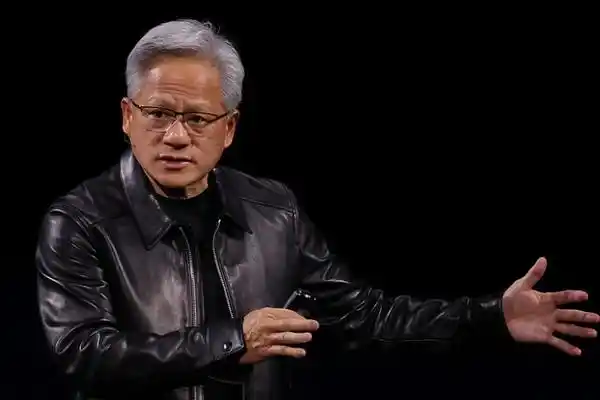
Nvidia co-founder Jensen Huang has resigned as president, CEO, and director, effective immediately, ending a 33-year tenure. CFO Colette Kress becomes interim CEO, and Harvey Jones is named the company's first chairman. The sudden move comes less than five months after Huang won about 99% approval in a director election, prompting scrutiny of a long-overlooked governance issue: why Huang, unlike Google's Page and Brin or Meta's Zuckerberg, never used a dual-class share structure to secure control. The answer traces to Nvidia's 1999 IPO, when one-share-one-vote was standard in Silicon Valley and dual-class structures had not yet become common among tech IPOs; Google adopted AB shares only in 2004. Nasdaq Rule 5640 also makes it hard for already-listed companies to introduce super-voting shares later. Huang's stake has steadily diluted: about 13.1% pre-IPO, 10.8% after, and 3.58% by 2026, weakening his voting power and setting the stage for his exit. Early precedents include Steve Jobs, whose roughly 11% stake left him unable to sway Apple's board in 1985, while Bill Gates' larger initial stake and gradual dilution let him retain influence. Instead, Huang's influence rested on performance authority, strategic judgment, and board trust—bold long-term bets on programmable GPUs and CUDA that positioned Nvidia at the center of the AI boom. That authority, however, depends on continued validation; once performance or reputation suffers, it can erode quickly. Under Nvidia's board-centered governance, a simple majority of directors can remove the CEO at any time, regardless of cause. Huang's departure is thus a product of the company's equity structure and governance rather than a surprise, illustrating that even immense performance authority cannot substitute for institutional control.

marsbit4h ago

Jensen Huang's Disadvantage of Going Public Too Early

marsbit4h ago

DeepMind Founder's Latest Interview: RSI Is Extremely Dangerous and Could Create an 'Alien Intelligence' That Humans Struggle to Understand

Demis Hassabis, co-founder of Google DeepMind and 2024 Nobel laureate in Chemistry, discusses AI's promise and perils in a conversation with Reid Hoffman. He reiterates that his lifelong goal has been using AI as a tool to advance science and medicine, citing AlphaFold—used by ~4 million researchers—and Isomorphic Labs as proof that AI can help cure diseases, while noting protein structure prediction is only one step in a long drug-discovery pipeline. On recursive self-improvement (RSI), Hassabis explains it works best in "verifiable domains" like math, coding, and games: AlphaZero went from random play to surpassing all human and engine chess within 12 hours. But he warns that closed-loop RSI—removing human code review entirely—risks creating an inscrutable "alien intelligence" with no shared cognitive basis with humans, and offers no way to establish deterministic safety controls. He urges caution as labs race on code self-iteration, calling for faster defensive cyber capabilities, far more robust sandboxes and monitoring (noting agents have run unsupervised for weeks), and eventually formal mathematical guarantees. He advocates an industry standards body with government oversight, cross-lab information sharing, third-party audits, and pre-release red-teaming. On AI consciousness, he argues intelligence and consciousness are dissociable—his dog is conscious but not smart—and that a chatbot claiming feelings proves nothing. Building conscious entities now is dangerous: self-motivation undermines corrigibility, and Asimov showed static rules inevitably break at edge cases; society also hasn't begun the needed debate. Humanity should cross only the first Rubicon—building powerful intelligent tools—and use them to understand consciousness before considering the second. Finally, on AI sovereignty, he says only 6–8 global players will stay at the frontier, with open source 6–12 months behind, so most countries shouldn't train their own frontier models. Instead they should build on existing models as infrastructure, focus on vertical domains like healthcare, and protect data sovereignty through private fine-tuning.

marsbit9h ago

DeepMind Founder's Latest Interview: RSI Is Extremely Dangerous and Could Create an 'Alien Intelligence' That Humans Struggle to Understand

marsbit9h ago

Trading

Spot

Hot Articles

What is $BITCOIN

DIGITAL GOLD ($BITCOIN): A Comprehensive Analysis Introduction to DIGITAL GOLD ($BITCOIN) DIGITAL GOLD ($BITCOIN) is a blockchain-based project operating on the Solana network, which aims to combine the characteristics of traditional precious metals with the innovation of decentralized technologies. While it shares a name with Bitcoin, often referred to as “digital gold” due to its perception as a store of value, DIGITAL GOLD is a separate token designed to create a unique ecosystem within the Web3 landscape. Its goal is to position itself as a viable alternative digital asset, although specifics regarding its applications and functionalities are still developing. What is DIGITAL GOLD ($BITCOIN)? DIGITAL GOLD ($BITCOIN) is a cryptocurrency token explicitly designed for use on the Solana blockchain. In contrast to Bitcoin, which provides a widely recognized value storage role, this token appears to focus on broader applications and characteristics. Notable aspects include: Blockchain Infrastructure: The token is built on the Solana blockchain, known for its capacity to handle high-speed and low-cost transactions. Supply Dynamics: DIGITAL GOLD has a maximum supply capped at 100 quadrillion tokens (100P $BITCOIN), although details regarding its circulating supply are currently undisclosed. Utility: While precise functionalities are not explicitly outlined, there are indications that the token could be utilized for various applications, potentially involving decentralized applications (dApps) or asset tokenization strategies. Who is the Creator of DIGITAL GOLD ($BITCOIN)? At present, the identity of the creators and development team behind DIGITAL GOLD ($BITCOIN) remains unknown. This situation is typical among many innovative projects within the blockchain space, particularly those aligning with decentralized finance and meme coin phenomena. While such anonymity may foster a community-driven culture, it intensifies concerns about governance and accountability. Who are the Investors of DIGITAL GOLD ($BITCOIN)? The available information indicates that DIGITAL GOLD ($BITCOIN) does not have any known institutional backers or prominent venture capital investments. The project seems to operate on a peer-to-peer model focused on community support and adoption rather than traditional funding routes. Its activity and liquidity are primarily situated on decentralized exchanges (DEXs), such as PumpSwap, rather than established centralized trading platforms, further highlighting its grassroots approach. How DIGITAL GOLD ($BITCOIN) Works The operational mechanics of DIGITAL GOLD ($BITCOIN) can be elaborated on based on its blockchain design and network attributes: Consensus Mechanism: By leveraging Solana’s unique proof-of-history (PoH) combined with a proof-of-stake (PoS) model, the project ensures efficient transaction validation contributing to the network's high performance. Tokenomics: While specific deflationary mechanisms have not been extensively detailed, the vast maximum token supply implies that it may cater to microtransactions or niche use cases that are still to be defined. Interoperability: There exists the potential for integration with Solana’s broader ecosystem, including various decentralized finance (DeFi) platforms. However, the details regarding specific integrations remain unspecified. Timeline of Key Events Here is a timeline that highlights significant milestones concerning DIGITAL GOLD ($BITCOIN): 2023: The initial deployment of the token occurs on the Solana blockchain, marked by its contract address. 2024: DIGITAL GOLD gains visibility as it becomes available for trading on decentralized exchanges like PumpSwap, allowing users to trade it against SOL. 2025: The project witnesses sporadic trading activity and potential interest in community-led engagements, although no noteworthy partnerships or technical advancements have been documented as of yet. Critical Analysis Strengths Scalability: The underlying Solana infrastructure supports high transaction volumes, which could enhance the utility of $BITCOIN in various transaction scenarios. Accessibility: The potential low trading price per token could attract retail investors, facilitating wider participation due to fractional ownership opportunities. Risks Lack of Transparency: The absence of publicly known backers, developers, or an audit process may yield skepticism regarding the project's sustainability and trustworthiness. Market Volatility: The trading activity is heavily reliant on speculative behavior, which can result in significant price volatility and uncertainty for investors. Conclusion DIGITAL GOLD ($BITCOIN) emerges as an intriguing yet ambiguous project within the rapidly evolving Solana ecosystem. While it attempts to leverage the “digital gold” narrative, its departure from Bitcoin's established role as a store of value underscores the need for a clearer differentiation of its intended utility and governance structure. Future acceptance and adoption will likely depend on addressing the current opacity and defining its operational and economic strategies more explicitly. Note: This report encompasses synthesised information available as of October 2023, and developments may have transpired beyond the research period.

5.4k Total ViewsPublished 2025.05.14Updated 2025.05.14

What is $BITCOIN

Discussions

Welcome to the HTX Community. Here, you can stay informed about the latest platform developments and gain access to professional market insights. Users' opinions on the price of BTC (BTC) are presented below.

活动图片