WTI Surges Then Falls Back to $100 as IEA Cuts Supply Deficit Sharply: Has Oil Peaked?

Published on 2026-09-14Last updated on 2026-09-14

Abstract

WTI retreated by 2.37% to $100.05 after surging 6.7% the previous day. The IEA expects global oil demand to fall by 2.5 million barrels per day in 2026, but due to restricted supply from the Middle East, the global supply decline and the supply-demand gap have actually widened.

WTI Pulls Back from Recent Highs

WTI Crude for October delivery fell $2.43, or 2.37%, on Friday to settle at $100.05 per barrel. The decline followed a 6.7% surge in the previous session that pushed prices to a three-and-a-half-month high, with short-term profit-taking exacerbating the pullback.

The immediate catalyst for the oil price drop was a pessimistic demand forecast from the International Energy Agency. High prices and constrained supply are suppressing consumption, and the IEA expects global oil demand to post its largest annual decline since the pandemic this year.

Softer Demand Doesn't Mean Loose Supply

The IEA revised down its forecast for 2026 global oil demand to a year-on-year decrease of 2.5 million barrels per day, a further cut of 940,000 bpd from last month's projection. However, ongoing delays to supply restoration due to Middle East conflicts mean the global supply drop is still expected to reach 5.7 million bpd.

The agency also raised its forecast for this year's global oil supply deficit from 1.3 million bpd to 1.7 million bpd, and postponed the timeline for the global market to return to surplus until 2027. Weaker demand and tighter supply are occurring simultaneously.

Shipping Risks Keep Risk Premium Afloat

Reports of two vessels being struck by unidentified objects near Oman served as a continued reminder that security risks remain for the Strait of Hormuz and surrounding shipping lanes. Any new disruptions to transport could quickly offset the bearish pressure from lowered demand forecasts.

Oil prices are now in a tug-of-war around $100: demand destruction caps upside potential, while the supply deficit and geopolitical risks limit downside moves. The key focus going forward will be the pace of export recovery in the Middle East, whether the IEA further downgrades its forecasts, and the support level around the $100 mark.

Related Reads

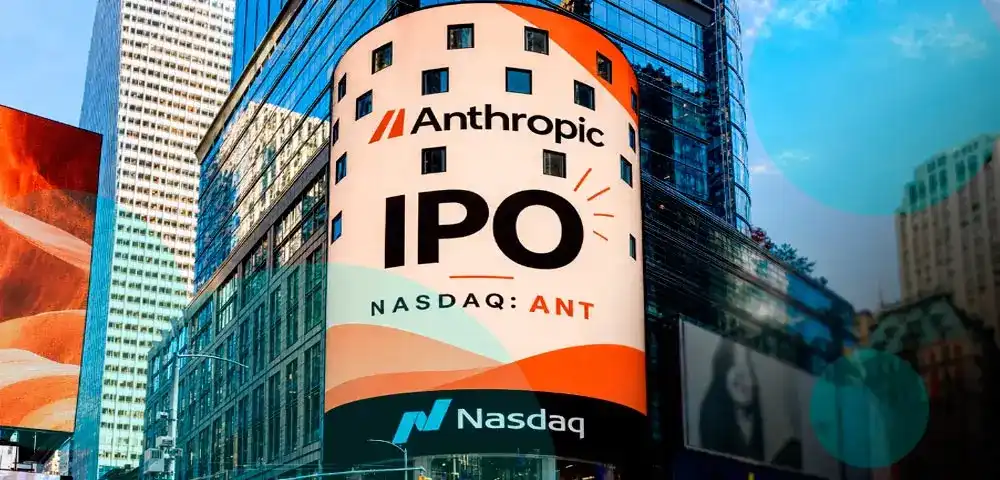
Tech Veteran: Anthropic IPO Will Be the Peak of the US AI Rally, Will "Go Big on China AI" If Conditions Allow

Veteran tech investor Jack Selby, head of Copper Sky and managing partner of Peter Thiel's family office, warns that Anthropic's planned IPO—aiming to raise up to $100 billion—could mark the peak of the AI market rally. He cautions that if the highly anticipated IPO prices well below expectations, the expiry of lock-up periods could trigger significant selling pressure and a large-scale AI market correction. Selby names SoftBank and Oracle as "canaries in the coal mine," flagging Oracle's higher debt ratio as a bigger risk, and suggests investors needing AI exposure consider Google instead. Selby also questions Anthropic's fundamentals: over 80% of its revenue is non-recurring and vulnerable to competitors closing the technology gap within six to nine months. He notes the business is extremely capital-intensive—requiring costly data, energy, data centers, and chips—and that with interest rates no longer near zero, calling it a trillion-dollar company seems far-fetched. He further highlights Chinese competition, saying DeepSeek and other Chinese AI models trail Anthropic by only about six months, posing a direct threat. Selby says he would "aggressively go long on Chinese AI" if conditions allow, arguing that Anthropic cannot claim all its business must rely on U.S. models, since most AI use cases resemble basic tool applications, leaving room for Chinese alternatives.

marsbit2h ago

Tech Veteran: Anthropic IPO Will Be the Peak of the US AI Rally, Will "Go Big on China AI" If Conditions Allow

marsbit2h ago

Grayscale's $1 Million Sponsorship Can't Save It: Why ZEC, Once Hyped as the Belle of the Ball, Crashed Again?

Grayscale announced a $1 million ecosystem sponsorship for Zcash on November 10, pledging to return all first-year management fees from its Zcash ETF (ZCSH) to network development and marketing, with the first $100,000 distributed to four nonprofit organizations. Yet the same day, ZEC plunged 11.3% to around $1,043, extending its 30-day decline to nearly 20%. After two months of hype from overseas KOLs and institutions touting ZEC as a "second spring for old coins," the token quickly turned into a slow bleed under the weight of $2.3 billion in open interest. The article argues that Wall Street's narrative halo and Grayscale's PR subsidy have been exhausted, and ZEC—lacking fundamental support—has once again become an ATM for highly leveraged speculators to cash out on good news. Grayscale's pledge, while seemingly generous, is voluntary and can be modified or terminated at any time; only $400,000 of the $1 million has actually been paid, making it more brand marketing for its own ETF than genuine ecosystem donation. The sum is negligible relative to Zcash's market cap, and the Zcash ETF has not attracted sustained institutional capital the way Bitcoin or Ethereum ETFs did. Without new external liquidity, the inflated narrative cannot hold. The core problem is market structure: ZEC perpetual futures open interest stands at roughly $2.3 billion, dominated by high-volatility leveraged gamblers. The article contends that the earlier social media hype was a precise harvest of derivatives liquidity—promoters used the "first privacy ETF" theme to lure retail into leveraged longs, then exited as open interest peaked and the sponsorship news landed. Compounding this, Zcash's privacy pool suffered a critical vulnerability about three months before the ETF listing, halving the price and shattering conservative investors' confidence despite a July fix. The piece concludes that "old coin re-hype" follows a familiar script: find a traditional-finance-approved angle, package a grand revaluation narrative, use KOLs to drive retail buying, then distribute chips at peak liquidity. Those who hyped ZEC have largely cashed out, leaving behind a broken price and $2.3 billion in unsettled leverage. Grayscale's advertising cannot save Zcash; a real revival requires far more than Wall Street's charity.

marsbit3h ago

Grayscale's $1 Million Sponsorship Can't Save It: Why ZEC, Once Hyped as the Belle of the Ball, Crashed Again?

marsbit3h ago

Trading

Spot
活动图片