Tesla Suddenly Announces: Zero Rare Earth in Motors, Does China Still Hold Competitive Cards?

marsbitPublished on 2026-09-07Last updated on 2026-09-07

Abstract

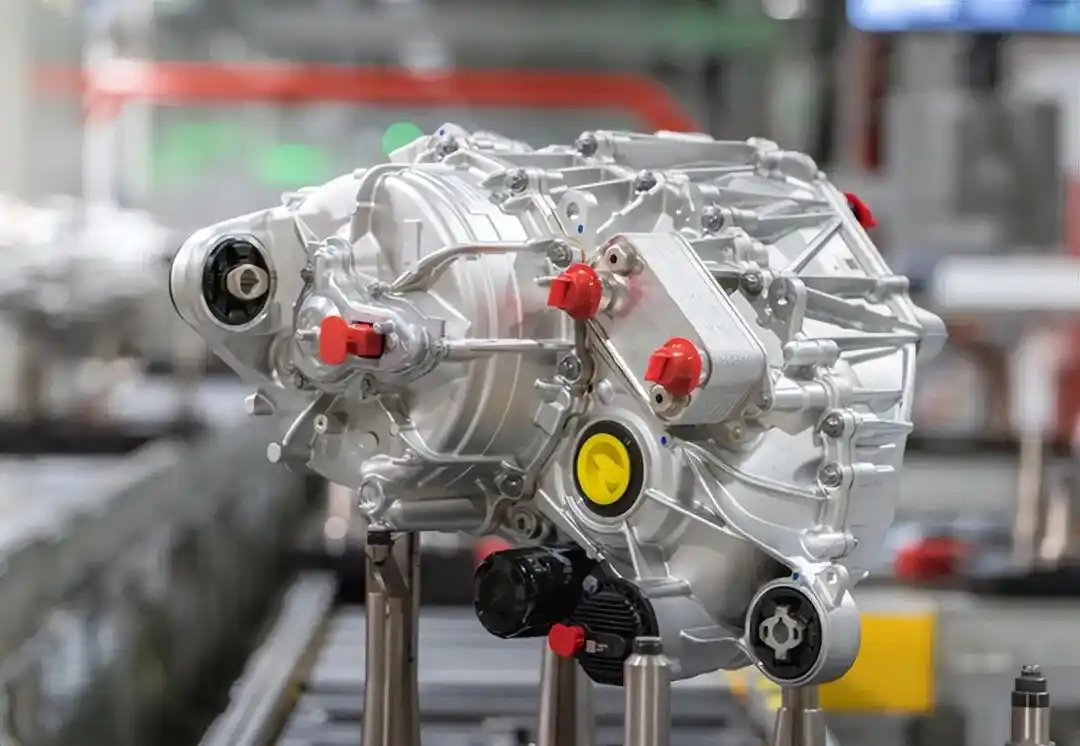
Tesla has announced that its upcoming Cybercab will use a drive motor with zero rare earth elements (REE), while claiming no compromise on vehicle range. CEO Elon Musk stated this was a significant engineering challenge, as non-REE magnets (like ferrite) have much lower energy density than the neodymium-iron-boron (NdFeB) magnets commonly used. Tesla's solution combines three approaches: enhancing the synchronous reluctance path in the rotor, developing new composite ferrite materials, and using hairpin windings with improved thermal management. The result is a system-level engineering achievement rather than a single breakthrough. This move marks a strategic pivot for Tesla. Early models used REE-free induction motors, then switched to REE-dependent permanent magnet motors for efficiency and cost during mass production. Now, with scaling and geopolitical supply chain risks in mind, Tesla is again prioritizing REE-free technology, starting with the North American-focused Cybercab. The new drive unit is designed for mass production with a sub-10-second assembly cycle, reduced factory footprint, and a reported cost reduction of around $1000 per unit. The article analyzes the implications for Chinese companies, which currently dominate the global REE supply chain and high-performance magnet manufacturing. While this has been a key advantage, Tesla's move demonstrates that supply chain dominance does not equate to an unassailable technological moat. It signals a potential shift...

Elon Musk reposted a Tesla update on X, stating that the Cybercab's drive motor uses no rare earth elements at all, with zero compromise on range.
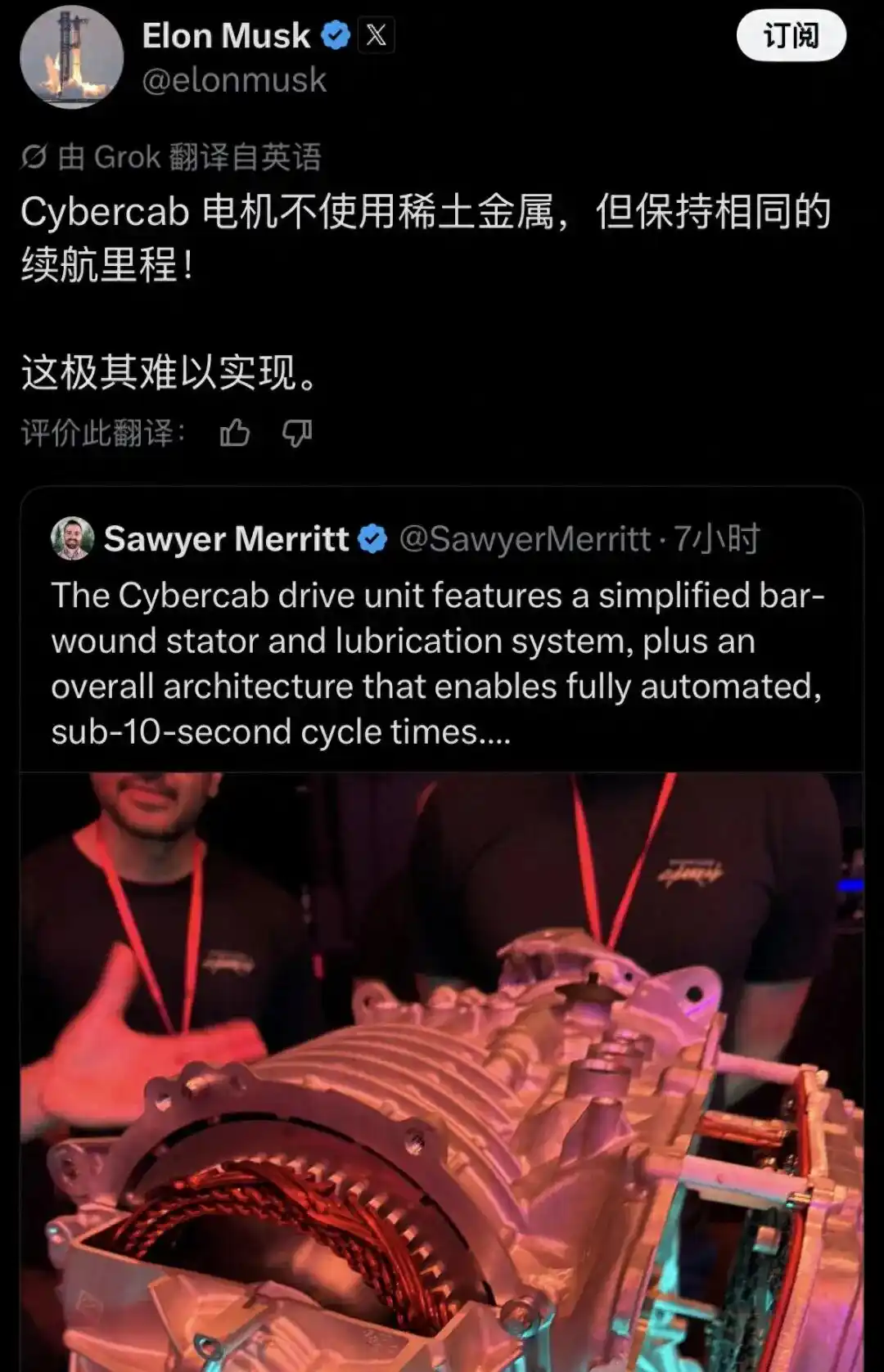
Musk added that achieving this was extremely difficult. Why is it so difficult?

Because the energy density of non-rare earth magnets (like ordinary ferrite) is only a fraction of that of neodymium-iron-boron (NdFeB) permanent magnets. Using "weak magnetic materials" to achieve "strong magnetic output" without sacrificing vehicle range is challenging the laws of physics.

Therefore, "rare-earth-free" historically meant "poor performance, heavy weight, bad range," but Musk not only announced zero rare earth usage but also claimed no compromise on range.

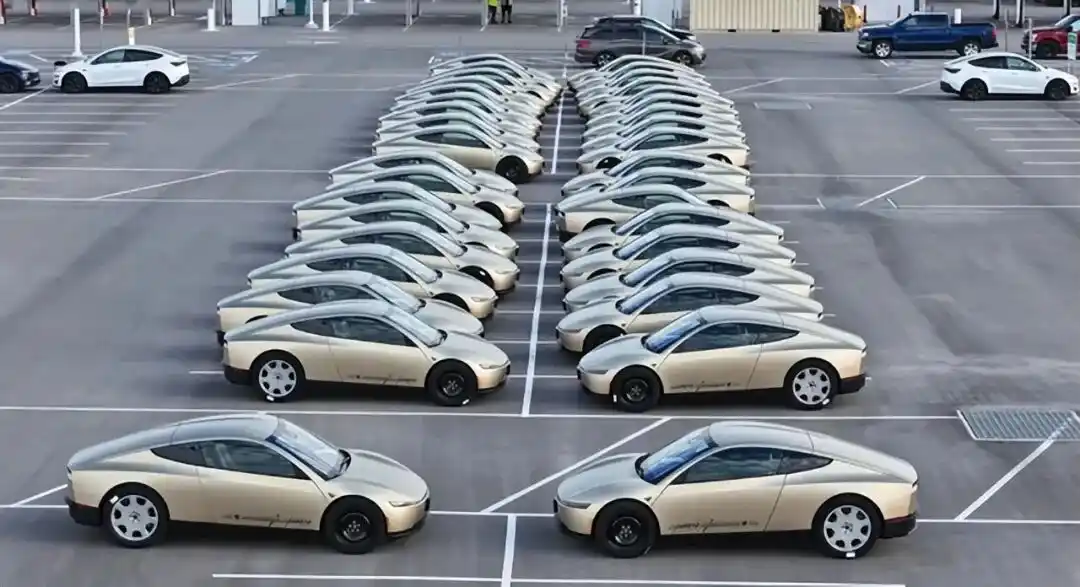
On the same day, golden Tesla compact cars with no steering wheel and no pedals began picking up passengers on American streets.

Tesla's Rare Earth History

To understand this, we need to look back at Tesla's history.

The earliest Model S and Model X used AC induction motors, which did not rely on rare earths. At that time, Tesla had weak supply chain leverage, and using induction motors was a matter of necessity – albeit slightly less efficient and heavier, it meant not being at the mercy of others.

By the time of the Model 3 and Model Y era, Tesla needed to ramp up volume, reduce costs, and improve range. The efficiency disadvantage of induction motors became unacceptable, leading to a complete switch to permanent magnet synchronous motors.

Permanent magnet synchronous motors are efficient, compact, and lightweight, but they have a critical vulnerability – they depend on NdFeB rare earth permanent magnets.

In March 2023, Tesla displayed a motor material usage chart at its Investor Day. At that time, Tesla's permanent magnet motors required the use of three types of rare earths, with quantities of approximately 500 grams of neodymium, 10 grams of dysprosium, and 10 grams of terbium.

Then in 2023, at the Investor Conference, Tesla suddenly unveiled the goal of "next-generation drive motors with zero rare earths." Two years later, Cybercab delivered the actual vehicle.
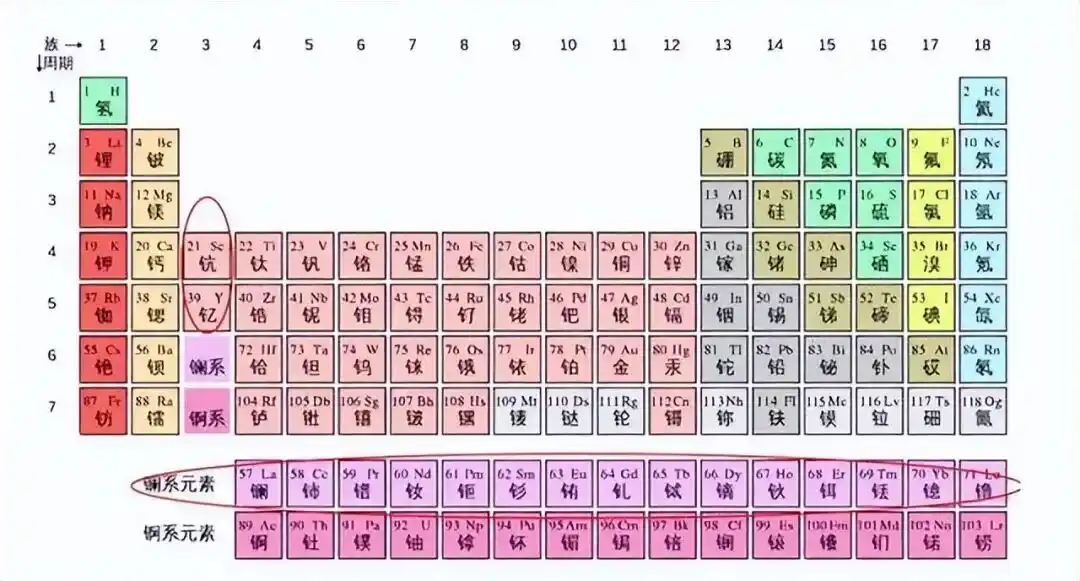
From not using rare earths, to using them heavily, and now back to not using them. These are different choices Tesla made at different stages – When scale was small, supply chain security was the priority; when ramping up volume, efficiency and cost became priorities; now, with substantial scale and facing geopolitical risks, supply chain security has once again become the top priority.

How Zero Rare Earth Achieves Uncompromised Performance

Traditional permanent magnet synchronous motors rely on rare earth permanent magnets to provide a strong magnetic field, allowing the motor to be small, light, and efficient. Without rare earths, the magnetic field strength cannot reach high levels, naturally leading to compromised performance.

Tesla's solution is a three-pronged approach: First, enhancing the synchronous reluctance route, allowing the rotor core's magnetic circuit structure to bear more driving force. In simple terms, it relies less on magnetic attraction and more on the magnetic reluctance variation of the iron core's shape itself to generate rotation.

Second, exploring new ferrite composite magnetic materials, using weak magnetic materials combined with structural design to achieve output close to that of strong magnets.

Third, using hairpin winding to increase copper fill factor, combined with a stronger thermal management system, to compensate for efficiency and heat dissipation.
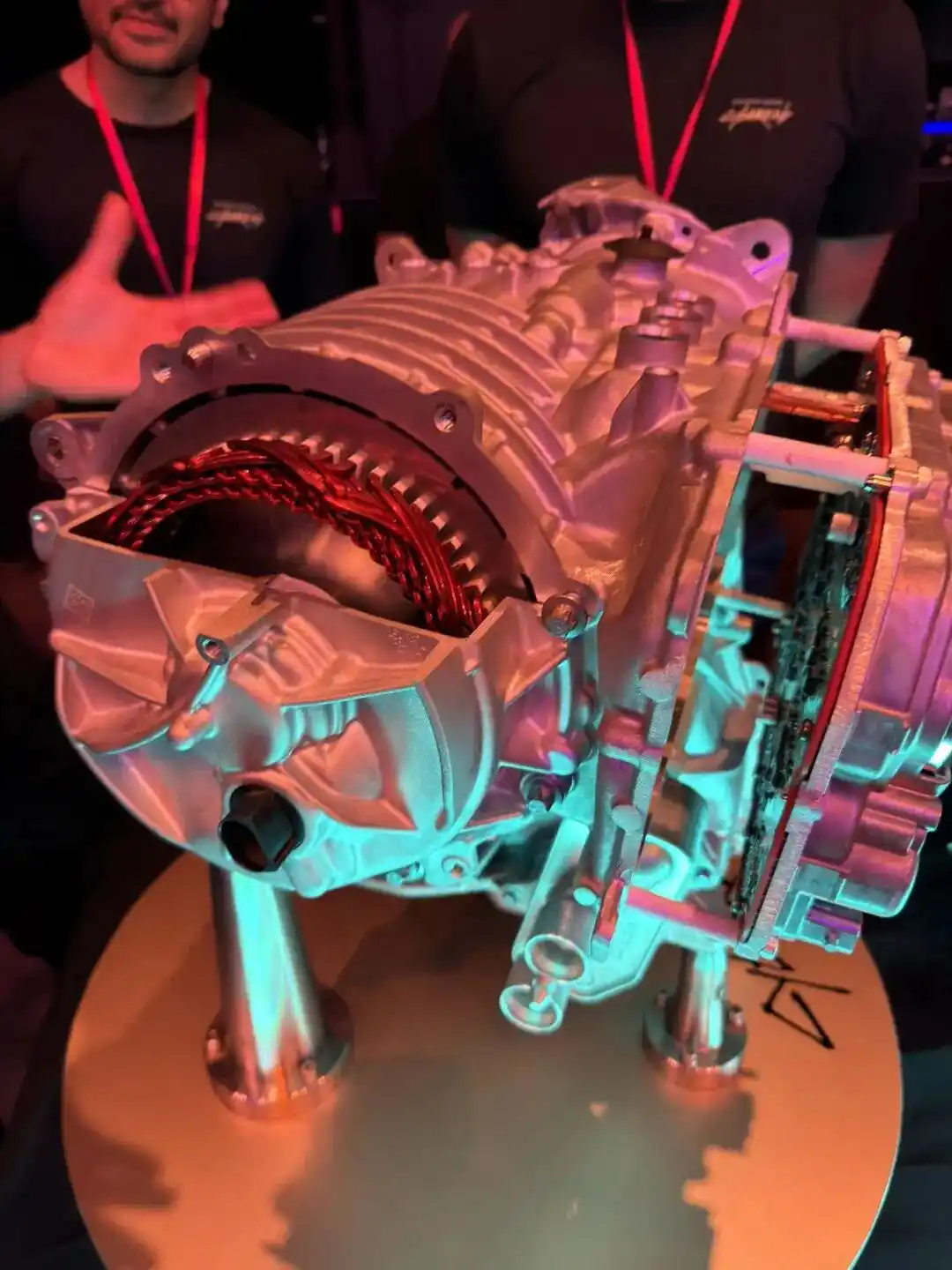
Individually, none of these three moves is particularly revolutionary black tech. The difficulty lies in combining all three while maintaining uncompromised performance and even reducing cost. This is about systems engineering capability, not a single-point technological breakthrough.

But what's truly technologically significant is not zero rare earths itself, but the manufacturing data that follows.

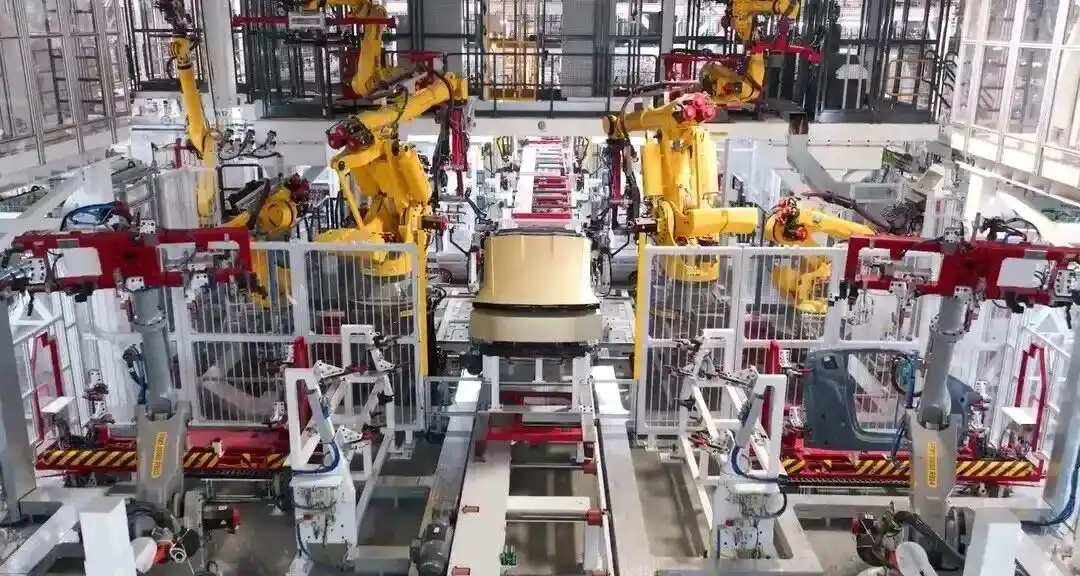
The automated production cycle time for the drive unit is compressed to under 10 seconds – traditional automakers take tens of minutes or even hours to assemble a high-performance motor; Tesla spits one out every 10 seconds.

Motor production line footprint is reduced by 50%. The cost of the next-generation drive unit is about $1000, and the demand for inverter silicon carbide chips has also decreased.
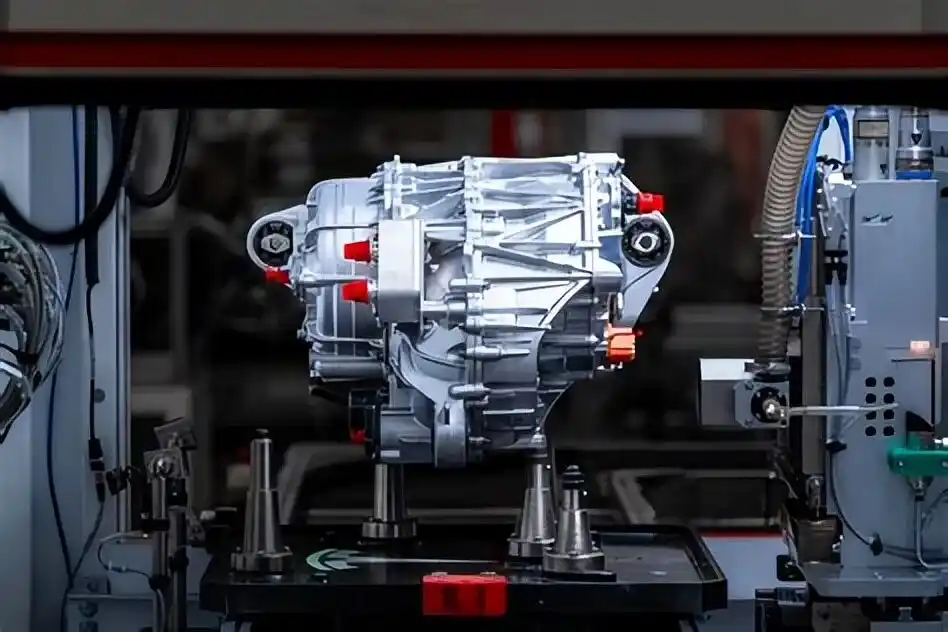
Rare earths saved, chips saved, space saved, labor saved, and cost reduced by $1000.

This shows Tesla is not just doing technical validation; it's doing mass production validation – zero rare earths is not a lab sample; it's a mass-produced product already installed in the Cybercab, rolling off the line one every 10 seconds, and costing even less.
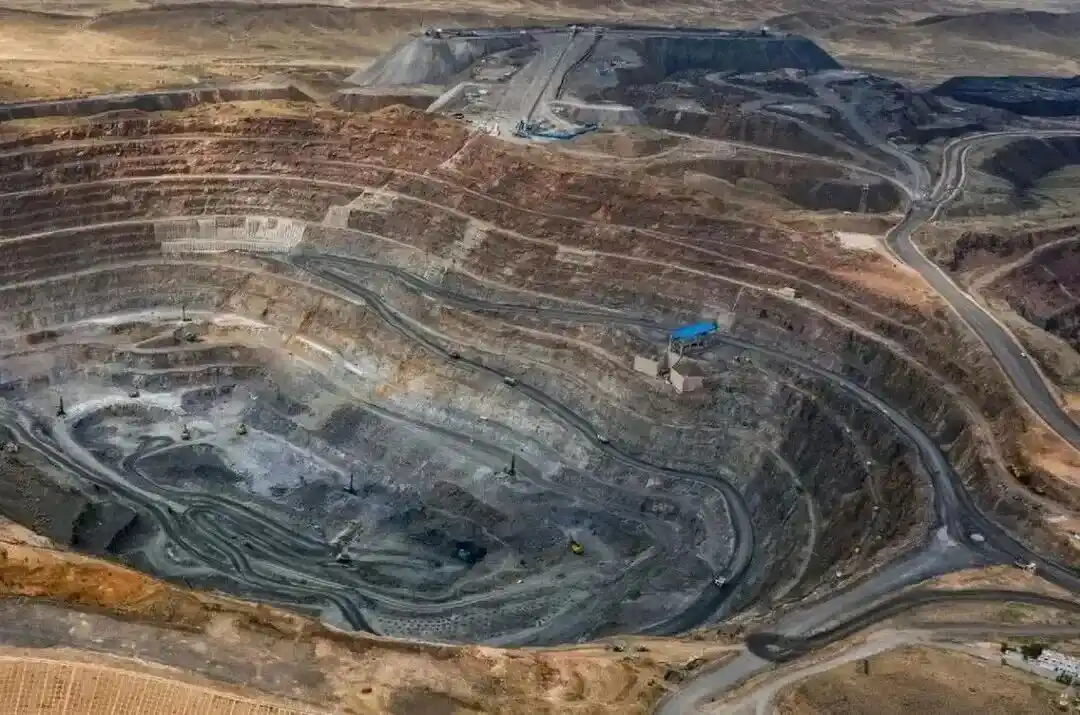
From mining, separation, and refining to high-performance magnetic material manufacturing, China has a very complete industrial chain and a clear scale advantage in rare earths.

This sounds like an advantage, but for Tesla, it's a potential supply chain risk. 500 grams of rare earth per motor might not seem like much, but Tesla sells millions of cars a year. Adding future robotaxis and humanoid robots, motor demand could be several times or even over ten times the current level.

By then, whether key materials can be stably supplied is no longer a small issue.

Also, notice one detail: Tesla's zero-rare-earth motor is first deployed on the Cybercab, and the Cybercab's target market is primarily North America.

What does this mean? It means Tesla is building technical reserves for "de-sinicization of the North American supply chain." If geopolitical tensions escalate in the future, requiring vehicles sold in North America not to use Chinese rare earths, Tesla already has a ready-made solution.

And this is how Musk has always operated: while others are still discussing risks, he has already created the alternative solution.
Does China Still Hold Competitive Cards?

China's new energy vehicle supply chain is strong, and rare earths are our ace advantage. China not only possesses the world's richest rare earth reserves but also controls over 90% of global rare earth refining capacity and high-performance NdFeB magnet manufacturing capability.

From mining and separation to refining and magnetic material processing, China has established a near-absolute monopoly in this field.

In the past, to address this rare earth shortfall, new mines, new refineries, and new magnet factories have been slowly starting up in the US.

But whether it's re-procuring equipment, adjusting separation processes, or getting magnets validated by automakers, this cycle might not be completed in 3-5 years, and the product might not be competitive with Chinese companies.

Tesla has taken a new path. Waiting for the US industrial chain to be built would take forever. It's better to have its engineers redesign the motor – we won't use rare earths at all. Zero grams of rare earths – it's trying to rewrite the rules of the game.

This matter has a complex flavor for Chinese automakers. Advantages can sometimes turn into inertia – We have rare earths anyway, and they are cheap and good, so why bother developing zero-rare-earth motors?
But Tesla's practical action tells you: Supply chain advantage does not equal a technological moat. Today you dominate the market with low rare earth costs; tomorrow, if others successfully commercialize a zero-rare-earth route with even lower costs, where is your advantage?

If future motor competition shifts from "whose magnet is stronger" to "who uses less material, is more efficient, and costs less," then rare earths are no longer an unavoidable critical point for the electric drive system, much like when lithium-ion batteries first emerged, no one expected they would take over half the sky from nickel-metal hydride batteries and internal combustion engine vehicles.

More critically, Tesla's move sets an example for global automakers: key materials are not impossible to circumvent.

This logic applies not only to rare earths but also to chips, battery materials, and all key supply chain links – as long as you are willing to invest and change your mindset, the previously thought unavoidable critical point might be circumvented by taking a different path.

In fact, the three technical routes for zero rare earths – synchronous reluctance, switched reluctance, and electrically excited – have all been deployed by Chinese companies long ago, and many are already in mass production.
In the industrial field, Wolong Electric Drive and Inovance Technology's synchronous reluctance motors have been shipped in bulk for a long time, with a combined market share exceeding 34%, energy efficiency rivaling Siemens and ABB, and costs 30% lower.

In the automotive field, BYD's variable flux motor is already installed in vehicles, directly halving rare earth usage while increasing power by 12% and high-speed range by 15%; NIO and XPeng's electrically excited motor technology reserves were completed long ago. The electrically excited route used in the BMW iX3 – domestic automakers can do that too.

Tesla wanting to change the rules of the game is both a warning and an opportunity for Chinese companies.

The warning is: don't rest on your rare earth laurels; technological route shifts might happen faster than you think.

The opportunity is: since Tesla can pave the way for a zero-rare-earth route, Chinese automakers, with a more complete industrial chain, lower manufacturing costs, and a larger market scale, can walk this path even more steadily.

What Chinese automakers need to prepare for is: what you have, I can have too; what you don't have, I can still build. This is the key to winning the next phase of competition.

This article is from the WeChat public account "Hotspot Micro-Review" (ID: redianweiping), author: Wang Xinxi


Related Questions

QWhat technological approach did Tesla use to achieve its 'zero rare earth' goal for the Cybercab's drive motor without compromising range?

ATesla employed a three-pronged approach: 1) enhancing the synchronous reluctance path in the rotor, 2) developing new iron oxide composite magnetic materials, and 3) using hairpin winding to increase copper fill factor and pairing it with a more robust thermal management system.

QHow has Tesla's strategy regarding rare earth usage in its motors evolved over the different stages of its development?

ATesla's strategy has evolved in three stages: initially, with the Model S/X, it used induction motors with zero rare earths due to weak supply chain influence and a focus on security. Later, for the Model 3/Y, it switched to rare earth-dependent permanent magnet synchronous motors to prioritize efficiency, cost, and range for mass production. Now, with the Cybercab, it has returned to a 'zero rare earth' approach, prioritizing supply chain security and independence from specific materials.

QAccording to the article, what is the broader strategic implication of Tesla's 'zero rare earth' motor for its North American operations?

AThe article suggests that by first deploying the 'zero rare earth' motor in the Cybercab targeted at the North American market, Tesla is creating a technical reserve for 'de-Sinicization' of its North American supply chain. This prepares Tesla for potential future geopolitical scenarios where vehicles sold in North America might be required to avoid Chinese-sourced rare earth materials.

QHow does the article assess the potential impact of Tesla's move on Chinese electric vehicle (EV) companies and their rare earth advantage?

AThe article argues that while China holds a dominant position in the rare earth supply chain, Tesla's move serves as a warning that supply chain advantages are not permanent technical moats. It could shift the competitive focus from 'whose magnet is stronger' to 'who uses less material, is more efficient, and has lower cost.' This challenges Chinese companies to not become complacent and to actively develop alternative non-rare earth technologies, which they are already doing in various forms.

QWhat examples does the article provide of Chinese companies already developing or using non-rare earth motor technologies?

AThe article cites several examples: In the industrial sector, Wolong Electric and Inovance Technology have mass-produced synchronous reluctance motors. In the automotive sector, BYD uses variable flux motors that halve rare earth usage, and Nio and Xpeng have technical reserves for electrically excited motors, similar to the technology used in the BMW iX3.

Related Reads

Didn't We Agree on Decoupling? BTC Fell Along With US Stocks Again

Bitcoin's "decoupling" from tech stocks proved short-lived. On Nov 4, the Dow rose 3% and BTC rebounded to $81K; just 24 hours later, a massive AI-driven selloff sent Nasdaq down 5.5% and BTC back to $75.2K. The trigger had nothing to do with crypto: after Democrats won Congress, markets feared slower data-center buildout, and chip stocks cratered (Nvidia -9.26%, AMD -17.26%, semiconductor ETF -12%, worst since March 2020). All 11 S&P sectors fell. BTC followed: it dropped about 5.5% to $76K, with over $1B liquidated in 24 hours—nearly 90% longs, about 210,000 traders forced out. The transmission path was simple: tech panic → institutions sell BTC ETFs → ETF outflows trigger on-chain leverage liquidations → accelerated decline. From Oct 30 to Nov 5, BTC ETFs saw roughly $1.5B in net outflows. The decoupling narrative keeps flipping. In February, Grayscale's Zach Pandl said BTC was highly correlated with high-growth tech software stocks. By August, the same analyst said BTC's correlation with gold had risen above 50% while its correlation with Nasdaq 100 fell from over 60% to about 33%—prompting talk that BTC was finally shifting toward gold. Two months later, K33 Research found BTC-Nasdaq synchronicity rising again. On Nov 5, Nasdaq fell ~6.5%, BTC ~5.5%, while gold rose 0.9%—BTC tracked Nasdaq, not gold. This isn't new. In early 2022, Kaiko found BTC-Nasdaq correlation at its highest since July 2020, while BTC-gold correlation was negative—the first data-driven blow to the "digital gold" thesis. In April 2025's tariff shock, BTC briefly decoupled, rising 13% while Nasdaq was flat, but correlation soon returned. Nov 5 mirrored April 2025: two shocks of similar magnitude; BTC withstood the first but not the second. Different institutions use different windows—Grayscale looks at 90 days, K33 at two-week returns—so conclusions change with the window. Correlation isn't a fixed conclusion; it keeps flipping. Notably, BTC and gold are both among 2025's worst performers. Charlie Bilello's Oct 23 ranking of 21 assets showed BTC down 7.3% and gold down 7.5%—the two worst—while short-term Treasuries rose 2.9% and commodities 52.5%. By Nov 5, BTC's year-to-date loss widened to about 13%. Bilello noted that since 2011, no year had seen BTC and gold both at the bottom. Gold itself fell about 27% from its January high near $5,600 to about $4,095, hit by war-driven inflation, higher yields, a stronger dollar, and leveraged selling. Yet in March, during the Iran war, BTC didn't follow stocks down—Grayscale's April report was titled "Resilience in War," noting equities, bonds, and precious metals all fell while crypto rose slightly, aided by Strategy's purchase of ~44,400 BTC. Same year: BTC held up in March but fell with tech in November. "Digital gold" is less a fixed property than a switching state. Pandl framed it honestly in February: "Is BTC a store-of-value asset like gold, or a growth asset like tech stocks? Short answer: we think it's both." The risk-asset side is visible—post-ETF institutional inflows make BTC trade like a high-beta tech stock. The store-of-value side needs a longer view: since 2011, BTC's average annual return is 120.6% versus gold's 6.3%. Even JPMorgan now includes BTC in long-term capital market assumptions, projecting 10% annualized returns over the next decade (above US large caps' 7.5%), though it flags 55% volatility and unstable correlations and excludes BTC from main portfolio models. Pandl added: "If BTC succeeds as a monetary asset long term, its price behavior may eventually look more like gold." Note the "if"—BTC is only 17 years old. Three indicators to watch: whether BTC-Nasdaq 100 90-day correlation stays above 0.5; whether spot ETFs see net outflows for more than a week; and whether BTC follows or decouples from tech in the next big move. At 17, BTC hasn't yet grown into itself.

marsbit8m ago

Didn't We Agree on Decoupling? BTC Fell Along With US Stocks Again

marsbit8m ago

After the US Midterm Elections, South Koreans Are in Complete Panic

After the U.S. midterm elections, a "blue wave" swept Congress and key AI-data-center states, triggering a global selloff in AI and semiconductor stocks. While most markets absorbed the shock without emergency action, South Korea reacted with alarming urgency: the deputy prime minister and finance chief convened an emergency market meeting, the financial services commissioner and a Bank of Korea deputy governor attended, and authorities announced a three-month exemption from the 140% credit-financing collateral requirement for brokerages, while the exchange triggered a Sidecar circuit breaker to halt programmatic selling. The panic is rooted in structure. In the month before the crash, Korean retail investors—the famous "ant army"—piled into Samsung Electronics and SK Hynix, often using borrowed money and single-stock leveraged ETFs, which regulators had already been tightening since July as leverage grew dangerously large. Retail investors hold roughly 60% of these leveraged products, and earlier declines had already wiped out 41% of their assets. Beneath them, the National Pension Service, the world's third-largest sovereign wealth fund, was heavily concentrated in the same chip stocks and rode them down from June's peak, losing about $137 billion. Korea's stock market is also a amplifier of social mood and a political risk, and the won is not a safe-haven currency: risk-off outflows hit the currency, import-dependent inflation rises, and a stock-FX-inflation "triple kill" becomes lethal. Foreign investors hold nearly 38-39% of market capitalization and over 46-50% of Samsung and SK Hynix, and have been massive net sellers—about $131 billion withdrawn this year, the most in Asia. Ultimately, the U.S. election was only the match; Korea's dependence on semiconductors is the fuel. Chips are now approaching 47% of exports, and semiconductor-related production contributed about half of Q3 GDP growth. With demand tied to U.S. AI capital spending, Korea catches a heavy cold whenever America sneezes—so its response is less market rescue than firefighting.

marsbit10m ago

After the US Midterm Elections, South Koreans Are in Complete Panic

marsbit10m ago

China Investigates Solana’s Shanghai Promotions After Halting Event

China's central bank confirmed that authorities stopped a planned Solana event in Shanghai and will investigate the companies and individuals involved in promoting the blockchain network in the country. A PBOC official said on November 6 that Solana had used domestic companies to advertise its brand and native SOL token, including an advertisement displayed on the exterior wall of Citigroup Tower in Shanghai's Lujiazui financial district. The PBOC worked with local financial regulators, police and market supervision authorities to stop the planned Solana Accelerate China 2026 event before it began. The central bank will now investigate the domestic entities and individuals connected to the promotional activities, though the official did not identify the parties under investigation or announce any penalties. The official said Solana's promotional activities violated China's existing cryptocurrency rules. The PBOC considers SOL a virtual currency and pointed to Solana's blockchain services supporting the issuance and trading of other digital assets, including Tether's USDT stablecoin. The central bank cited a regulatory notice issued in February 2026 by eight Chinese government agencies that classifies cryptocurrency-related business activities as illegal financial activities in mainland China and prohibits internet companies from providing advertising, marketing, commercial display and other promotional services for virtual currency-related businesses. Solana's Shanghai event was scheduled for October 16 at the Shangri-La Hotel. Organizers initially told attendees that the gathering had been postponed because of last-minute venue logistics. Solana Foundation President Lily Liu later said registrations had quadrupled overnight following publicity surrounding the event, exceeding the attendance limit registered with local authorities, citing crowding concerns and local requirements as the reason for the postponement. The PBOC's latest comments, however, confirm that regulatory authorities intervened to stop the gathering. China has maintained restrictions on cryptocurrency trading and related financial services since 2021. The November 6 announcement does not introduce a new nationwide ban on Solana but signals further enforcement against domestic cryptocurrency businesses and local entities connected to overseas platforms.

TheNewsCrypto10m ago

China Investigates Solana’s Shanghai Promotions After Halting Event

TheNewsCrypto10m ago

CICC: How to view the trends of US stocks and the AI hardware industry chain?

U.S. stocks suffered their largest single-day drop since the April 2025 tariff shock on November 5, with the S&P 500, Nasdaq, and Dow falling 4.4%, 5.5%, and 3.4%, respectively. AI-related names led the decline: the Nasdaq 100 dropped over 6% and the Philadelphia Semiconductor Index plunged about 12%, both marking their worst single-day performances since March 2020. The selloff was broad-based—all 11 S&P sectors fell, including defensive staples and utilities—signaling possible panic and stampede conditions. The VIX rose to 28, a dangerous level last seen during the Iran situation earlier this year, and the gap between spot VIX and three-month futures widened to its largest since April 2025, a sign of market fear and potential further pressure. The direct trigger was heightened fear that Democrats, after midterm election wins, might increase AI regulation and halt data center construction. Comments from newly elected Texas Governor Gina Hinojosa and federal-level calls by Sanders to pause national data center construction amplified concerns about the pace and sustainability of AI infrastructure investment. Markets have whipsawed as they "choose" a direction to trade amid uncertainty over which Democratic agenda items will advance. At this point, short-term moves are no longer fundamentally driven. With U.S. leverage at record highs—FINRA margin debt implying leverage of 3.4 and CBOE put/call open interest ratio at 1.33, the highest since end-2018—markets are highly sensitive to price and volatility swings, raising the risk of margin calls, forced deleveraging, and contagion from AI names to other holdings. So far the stress is confined to equities; rising Treasury yields and a stronger dollar would signal more acute liquidity risk. AI is in a transitional phase lacking new demand or model narratives and catalysts, magnifying credit and regulatory risks. High capex is squeezing cloud providers' free cash flow, fueling worries about AI revenue realization and ROI. Stabilization requires natural clearing or a strong catalyst to reverse pessimistic expectations. The first half of next year is a key verification window—markets need to see breakthroughs akin to Anthropic's outperformance in Q1 this year. Otherwise, patience may run out and trading could shift toward recessionary positioning. Structurally, AI remains the main theme, but investors should favor segments with more sustainable and certain earnings. Valuations are not at extreme highs overall, but AI hardware names such as optical modules, semiconductor manufacturing, and liquid cooling have priced in higher growth expectations, while cloud providers look relatively reasonably valued. Cloud providers have room for further gains, but optical module names risk further valuation cuts if high growth cannot persist. The path of least resistance in trading has converged on Hang Seng Tech and gold: Hang Seng Tech has low AI exposure and benefits from eased geopolitical risk, lower oil prices, and reduced rate-hike pressure, though its problems are internal and southbound selling plus rising short interest signal growing divergence. Gold faces fewer obstacles and remains supported by political risk and expectations of weaker dollar and Treasury yields. On tech hardware: near-term headwinds for overseas AI infrastructure, but continued optimism on domestic computing power during the 15th Five-Year Plan. Most Chinese AI hardware names have corrected over 50% since July. Near-term North American data center changes may alter the slope of hardware demand but not the long-term uptrend; domestic computing demand may be even stronger. Overseas-chain valuations have digested premiums—the SW Communications Equipment index trades at 28.92x PE (TTM), below the 10th percentile of the past three years—and the sharp selloff has squeezed out bubble valuation. Q3 2026 capex at the top four U.S. cloud providers grew 84.2% year over year, with Azure and AWS revenue growing strongly, showing demand converting to revenue; 2027 should still be a year of active cloud investment. For the domestic chain, demand for compute chips and servers remains robust, with constraints on the supply side; the overseas pause provides a catch-up window for domestic hardware, and core localization logic for foundries, semiconductor equipment, and components is unchanged. After the correction, large manufacturing valuations are attractive, and the domestic compute chain is favored during the 15th Five-Year Plan. Risks: AI progress below expectations, slower domestic hardware penetration, and policy changes.

marsbit20m ago

CICC: How to view the trends of US stocks and the AI hardware industry chain?

marsbit20m ago

Wall Street Collectively Turned Bullish on US Stocks After the Midterms, Only to Be Slapped in the Face One Day Later

After the US midterm elections, major Wall Street trading desks—including JPMorgan, Citadel Securities, and UBS—collectively turned bullish on US equities, arguing that compressed pre-election positioning and fading uncertainty would drive capital back into the market. The S&P 500 rose nearly 2% and the Dow gained over 3% on Wednesday, briefly validating that view. But the rally reversed within a single day: anxiety over AI investment returns and computing infrastructure costs erupted, wiping $2.3 trillion from Nasdaq 100 market value and sending the S&P 500 down 4.4%, with every sector falling. Goldman Sachs' John Flood said Thursday was the mirror opposite of Wednesday's busiest trading day, with long-only investors frozen again. Barclays' Alex Altmann, one of the few skeptics, had warned that the election would not resolve the core issues压制ing stocks—AI return prospects and financing costs for compute buildout. The selloff was amplified by systematic strategies: volatility-control funds may have cut roughly 30 percentage points of equity exposure in a single day, implying about $135 billion in futures selling over 24-48 hours, while Thursday was likely the largest leveraged ETF rebalancing sell day on record. Retail investors, previously a dip-buying force, also retreated, with Vanda Research data showing net sales of $338 million by 3pm Thursday, potentially the largest single-day net selling since the pandemic. Despite the blowup, bullish views were not fully abandoned—S&P 500 futures rose 0.3% and Nasdaq 100 futures jumped 1.5% Friday morning—but the episode underscored how even top institutions struggle to predict market direction amid structural AI valuation repricing.

marsbit20m ago

Wall Street Collectively Turned Bullish on US Stocks After the Midterms, Only to Be Slapped in the Face One Day Later

marsbit20m ago

Trading

Spot
活动图片