44 Minutes Instead of Three Centuries: Claude AI Cracks a Cipher Unsolved for Ages

cryptonews.ruPublished on 2026-09-04Last updated on 2026-09-04

Abstract

The Claude Fable 5.1 model from Anthropic has autonomously decrypted the "Cyphral Distich," a 370-year-old cipher by Scottish writer Sir Thomas Urquhart, in just 44 minutes and using 176,000 tokens. The puzzle, published in 1653, consisted of two lines of 32 numbers each. The model itself selected this unsolved historical cipher from many options when given an open-ended task to find and solve one. The solution revealed a hidden royalist prayer: "O GOD UPHOLD KING CHARLS THE SECOND AND MAKE HIM THE SUPREME RULER OF THIS LAND." The decryption key was found within Urquhart's own text: each number corresponded to a word in one of 32 numbered "proquiritations" (wishes) preceding the cipher, with the first letters of those selected words forming the message. The result forms a rhyming couplet, matching the author's promised format. The model then tackled a larger cipher by Urquhart, the "Cyphral Octastich," proposing a solution in the form of an eight-line royalist prayer. While these decryptions by the Vals AI research team await independent cryptographic verification, the event highlights a shift in AI's role. The model demonstrated the ability to independently identify a worthwhile historical problem and devise a linguistic solution, moving beyond mere pattern substitution to act as an autonomous researcher. This breakthrough raises questions about AI's future potential in analyzing historical archives.

The Claude Fable 5.1 model from Anthropic independently deciphered the "Cyphral Distich" cryptogram by Scottish writer Sir Thomas Urquhart — a text that had remained unsolved for over 370 years since its publication in 1653. The solution was announced on social network X by Rayan Krishnan, head of the company Vals AI: the analysis took 44 minutes and 176,000 tokens, and the model received no hints from the operator.

The cryptogram consists of two lines of 32 numbers each and concludes Urquhart's treatise "Logopandecteision." The model was given an open-ended task: it was instructed to independently find an unsolved historical cryptogram and propose a solution. From many options, Fable 5.1 chose precisely the "Cyphral Distich."

The solution was not hidden in an external cipher alphabet but within the book's text itself. As explained in the experiment's description, the cryptogram immediately follows 32 numbered "Proquiritations"—wishes that Urquhart included in the treatise. Each number in the cipher line indicates the ordinal position of a word within the corresponding Proquiritation, and the first letters of these words form a coherent text.

A Royalist's Prayer

The obtained hidden message reads: "O GOD UPHOLD KING CHARLS THE SECOND AND / MAKE HIM THE SUPREME RULER OF THIS LAND" — a royalist prayer supporting King Charles II and affirming his supreme rule. Each of the two lines contains exactly 32 letters, the lines rhyme with each other and form a distich—exactly the format promised by the author in the 17th century:

O GOD UPHOLD KING CHARLS THE SECOND AND
MAKE HIM THE SUPREME RULER OF THIS LAND

The historical logic also fits: Urquhart was a staunch monarchist, and the hidden prayer for Charles II fully aligns with his political views. Prior to Fable 5.1's solution, the cryptogram was considered one of the most famous unsolved historical puzzles—attempts to crack it had been made since the late 19th century, but frequency analysis and substitution methods had yielded no results.

A Second Cipher and Model Release

Using the same method, the model tackled Urquhart's larger cryptogram—the "Cyphral Octastich" from his 1652 treatise "The Jewel," which encodes 285 numbers. This time, the key was not wishes but the page numbering of another book by the author. Fable 5.1 proposed a solution in the form of a royalist prayer structured as an ottava rima—an Italian eight-line stanza.

Both decryptions were performed by the Vals AI research team and have not yet undergone independent verification by the cryptographic community. Anthropic officially presented the Claude Fable 5.1 model alongside Claude Mythos 5.1 on September 1, 2026.

The AI Perspective

From a machine data analysis perspective, the most intriguing aspect of this story is not the result but the method of obtaining it. The model received an open-ended task and independently selected Urquhart's cryptogram from among many unsolved historical ciphers: Krishnan named the ability to autonomously find a worthy problem a distinct sign of the model's development. This approach changes the very role of AI—from a substitution tool, it becomes an investigator posing questions.

A historical parallel suggests itself with the deciphering of Enigma: the breakthrough back then also occurred not through brute force but thanks to understanding the structure of the language and the habits of the cipher's author. The demonstration with Cyphral Distich comes against the backdrop of broader results—Fable 5.1 took first place in the Vals Index among all tested models. Will this decipherment remain a curiosity or the first step toward AI's mass work with historical archives?

Related Questions

QWhat historical cryptographic puzzle did the AI model Claude Fable 5.1 solve, and how long did it take?

AThe AI model Claude Fable 5.1 decrypted the 'Cyphral Distich' cryptogram by Scottish writer Sir Thomas Urquhart. This text had remained unsolved for over 370 years since its publication in 1653. The decryption process took 44 minutes and consumed 176,000 tokens.

QWhat was the key to decrypting the Cyphral Distich cryptogram that had eluded analysts for centuries?

AThe decryption key was not based on an external cipher alphabet. Instead, each number in the cryptogram's two 32-number lines corresponded to the sequential number of a word within a specific 'Proquiritation' (a list of numbered wishes) that preceded the cryptogram in Urquhart's book. The first letters of these selected words formed the coherent hidden message.

QWhat was the content of the hidden message decrypted from the Cyphral Distich?

AThe hidden message was a royalist prayer that reads: 'O GOD UPHOLD KING CHARLS THE SECOND AND / MAKE HIM THE SUPREME RULER OF THIS LAND'. It is a rhyming couplet, as the author originally promised in the 17th century.

QBeyond the Cyphral Distich, what other cryptogram by Thomas Urquhart did the model attempt to solve, and what form was the solution?

AThe model also tackled Urquhart's larger 'Cyphral Octastich' cryptogram from his 1652 treatise 'The Jewel'. This time, the key was based on page numbering from another of the author's books. The proposed solution was another royalist prayer structured in the form of an 'ottava rima', an Italian eight-line stanza.

QAccording to the article, what is particularly noteworthy about the AI's approach to this decryption challenge, beyond just obtaining the result?

AThe most notable aspect was the AI's methodology. It was given an open-ended task to find an unsolved historical cryptogram and propose a solution itself. The model autonomously selected Urquhart's Cyphral Distich from among many puzzles. This demonstrates an ability to independently identify a worthy problem, shifting the AI's role from a mere substitution tool to an active researcher.

Related Reads

Enterprise blockchain is going to come back from the dead

Enterprise blockchain may be poised for a comeback, much like online pet retail succeeded with Chewy after Pets.com failed. Early enterprise blockchain efforts (2017–2023) collapsed—TradeLens, We.Trade, Contour, B3i, ASX Chess, Everledger—largely because they had to work around blockchains' lack of native privacy, building permissioned chains and bolting on non-blockchain fixes that proved slow and expensive. The core appeal remains: enterprise systems fail at company boundaries, either through out-of-sync collaboration or costly proprietary integrations that lock partners in. Blockchains promise shared data and business logic across an open ecosystem without lock-in. What has changed: scalability (transactions now under a penny, capacity heading toward billions daily), privacy (zero-knowledge rollups, privacy pools, privacy chains), and liquidity (stablecoin transaction volume near $1.8 trillion in June). Combined operational and financial benefits could be substantial—roughly 20% less inventory at the same service level, smart contracts cutting contract administration costs in half and processing times from days to minutes, as Microsoft did with Xbox royalties (45 days to four minutes). With inventories, contracts, purchase orders and invoices onchain, firms can also access cheaper credit and factor receivables efficiently. The use cases are obvious; it's time to try again.

cointelegraph7h ago

Enterprise blockchain is going to come back from the dead

cointelegraph7h ago

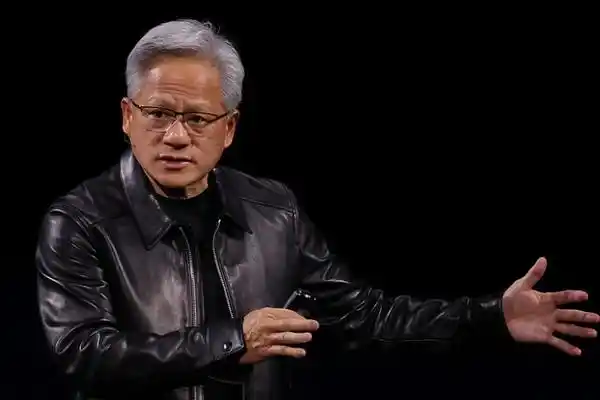
Jensen Huang's Disadvantage of Going Public Too Early

Nvidia co-founder Jensen Huang has resigned as president, CEO, and director, effective immediately, ending a 33-year tenure. CFO Colette Kress becomes interim CEO, and Harvey Jones is named the company's first chairman. The sudden move comes less than five months after Huang won about 99% approval in a director election, prompting scrutiny of a long-overlooked governance issue: why Huang, unlike Google's Page and Brin or Meta's Zuckerberg, never used a dual-class share structure to secure control. The answer traces to Nvidia's 1999 IPO, when one-share-one-vote was standard in Silicon Valley and dual-class structures had not yet become common among tech IPOs; Google adopted AB shares only in 2004. Nasdaq Rule 5640 also makes it hard for already-listed companies to introduce super-voting shares later. Huang's stake has steadily diluted: about 13.1% pre-IPO, 10.8% after, and 3.58% by 2026, weakening his voting power and setting the stage for his exit. Early precedents include Steve Jobs, whose roughly 11% stake left him unable to sway Apple's board in 1985, while Bill Gates' larger initial stake and gradual dilution let him retain influence. Instead, Huang's influence rested on performance authority, strategic judgment, and board trust—bold long-term bets on programmable GPUs and CUDA that positioned Nvidia at the center of the AI boom. That authority, however, depends on continued validation; once performance or reputation suffers, it can erode quickly. Under Nvidia's board-centered governance, a simple majority of directors can remove the CEO at any time, regardless of cause. Huang's departure is thus a product of the company's equity structure and governance rather than a surprise, illustrating that even immense performance authority cannot substitute for institutional control.

marsbit8h ago

Jensen Huang's Disadvantage of Going Public Too Early

marsbit8h ago

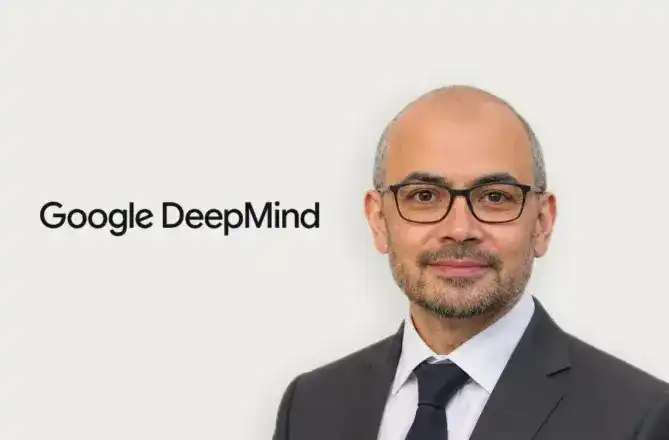
DeepMind Founder's Latest Interview: RSI Is Extremely Dangerous and Could Create an 'Alien Intelligence' That Humans Struggle to Understand

Demis Hassabis, co-founder of Google DeepMind and 2024 Nobel laureate in Chemistry, discusses AI's promise and perils in a conversation with Reid Hoffman. He reiterates that his lifelong goal has been using AI as a tool to advance science and medicine, citing AlphaFold—used by ~4 million researchers—and Isomorphic Labs as proof that AI can help cure diseases, while noting protein structure prediction is only one step in a long drug-discovery pipeline. On recursive self-improvement (RSI), Hassabis explains it works best in "verifiable domains" like math, coding, and games: AlphaZero went from random play to surpassing all human and engine chess within 12 hours. But he warns that closed-loop RSI—removing human code review entirely—risks creating an inscrutable "alien intelligence" with no shared cognitive basis with humans, and offers no way to establish deterministic safety controls. He urges caution as labs race on code self-iteration, calling for faster defensive cyber capabilities, far more robust sandboxes and monitoring (noting agents have run unsupervised for weeks), and eventually formal mathematical guarantees. He advocates an industry standards body with government oversight, cross-lab information sharing, third-party audits, and pre-release red-teaming. On AI consciousness, he argues intelligence and consciousness are dissociable—his dog is conscious but not smart—and that a chatbot claiming feelings proves nothing. Building conscious entities now is dangerous: self-motivation undermines corrigibility, and Asimov showed static rules inevitably break at edge cases; society also hasn't begun the needed debate. Humanity should cross only the first Rubicon—building powerful intelligent tools—and use them to understand consciousness before considering the second. Finally, on AI sovereignty, he says only 6–8 global players will stay at the frontier, with open source 6–12 months behind, so most countries shouldn't train their own frontier models. Instead they should build on existing models as infrastructure, focus on vertical domains like healthcare, and protect data sovereignty through private fine-tuning.

marsbit12h ago

DeepMind Founder's Latest Interview: RSI Is Extremely Dangerous and Could Create an 'Alien Intelligence' That Humans Struggle to Understand

marsbit12h ago

Trading

Spot
活动图片