三条芯片赛道在手,君正股份A+H上市

marsbitPublished on 2026-08-25Last updated on 2026-08-25

Abstract

君正股份在港交所上市,成为“A+H”两地上市的半导体企业。公司通过2020年并购北京矽成(控股美国ISSI),从专注于嵌入式CPU扩展为覆盖存储、计算、模拟三大芯片产品的平台型企业。 业绩方面,公司收入在2023-2025年经历波动后,于2026年第一季度大幅增长至15.60亿元,净利润飙升至3.20亿元,净利率达20.5%,毛利率也回升至42.6%。存储芯片是收入主力,占比约六成;计算芯片收入波动较大但近期均价回升;模拟芯片收入则稳步增长。客户与供应商集中度持续下降。 产品线布局: 1. **存储芯片(ISSI品牌)**:聚焦车规、工业等利基市场,在利基型DRAM、SRAM、NOR Flash等领域位居全球及中国大陆前列。 2. **计算芯片(Ingenic品牌)**:基于自研CPU内核,产品包括智能视觉SoC、嵌入式MPU等,其中IP-Cam SoC全球排名第二。 3. **模拟芯片(Lumissil品牌)**:主要包括LED驱动芯片和集成多种功能的Combo芯片,主要应用于汽车等领域。 三条产品线可协同提供系统级解决方案,尤其在汽车电子等领域形成平台化优势。 增长动力来自汽车智能化带动的利基存储需求,以及端侧AI设备、机器人市场对计算芯片的拉动。公司也在前瞻布局LPDDR4/5、3D DRAM、高带宽NAND Flash等产品。 此次港股上市预计募资约31.3亿港元,资金将主要用于研发、战略投资与并购等。赴港上市有助于拓宽融资渠道并提升国际品牌影响力。公司面临半导体行业周期、上游产能、市场竞争等风险,但其平台化战略试图通过提供整合解决方案来构建差异化竞争力。

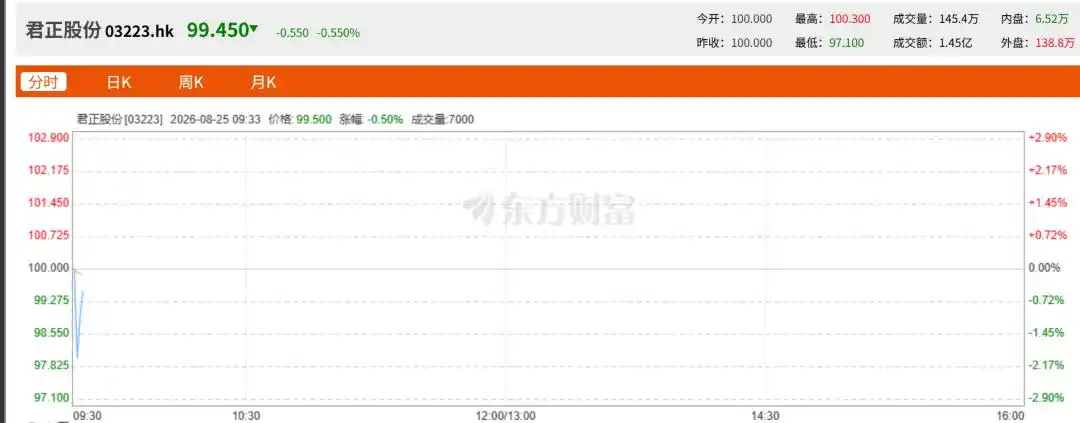
刚刚,君正股份在港交所敲钟上市,开盘价每股100港元,开盘总市值约515亿港元。早在2011年5月31日,公司便在深圳证券交易所创业板挂牌上市,证券代码“300223”,发行价43.80元/股,发行2000万股,募集资金8.76亿元,被称为“中国嵌入式CPU第一股”。此番完成港股上市后,君正股份正式跻身 “A+H” 两地上市的半导体企业行列。
做芯片的公司,大多讲究“专精”——做存储的就死磕存储,做计算的就钻研计算,做模拟的深耕模拟,各守一亩三分地。但君正股份走出了不一样的路径,同时布局存储、计算、模拟三大产品线,打造平台型芯片企业。

这种平台化的底气,来自2020年完成的并购。当年君正完成对北京矽成的收购交割并实现财务并表,间接控股美国芯成半导体(ISSI)。至此,原本主打嵌入式 CPU 的 “小而美” 企业,一跃成为横跨三大赛道的芯片平台。如今它赴港上市,我们可以透过招股书的数据,梳理这家公司一路走来的经营逻辑。

业绩回暖:数字不会说谎
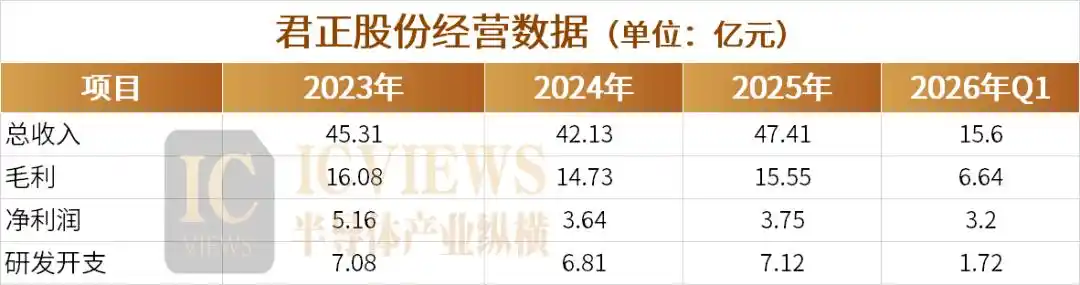
我们先来看看整体的业绩。君正的收入在2023年还有45.31亿元,2024年行业低迷,掉到42.13亿元,2025年弹回47.41亿元。到了2026年第一季度,直接冲到15.60亿元,比去年同期的10.60亿元涨了47.1%。

营收回暖,利润修复更猛。2023年净利润5.16亿元,净利率11.4%;2024年掉到3.64亿元,净利率只剩8.6%;2025年勉强爬回3.75亿元,但净利率进一步压到7.9%。结果2026年第一季度,净利润飙到3.20亿元,比去年同期的0.74亿元翻了3倍多,净利率直接拉到20.5%,比2023年景气的时候还高。最新财报显示,其上半年净利润预增超531%,达12.8亿元。

毛利率也跟着回来了。2023年35.5%,2024年35.0%,2025年掉到32.8%,2026年第一季度一下子弹到42.6%。毛利从2025年第一季度的3.71亿元涨到6.64亿元,涨了79%。
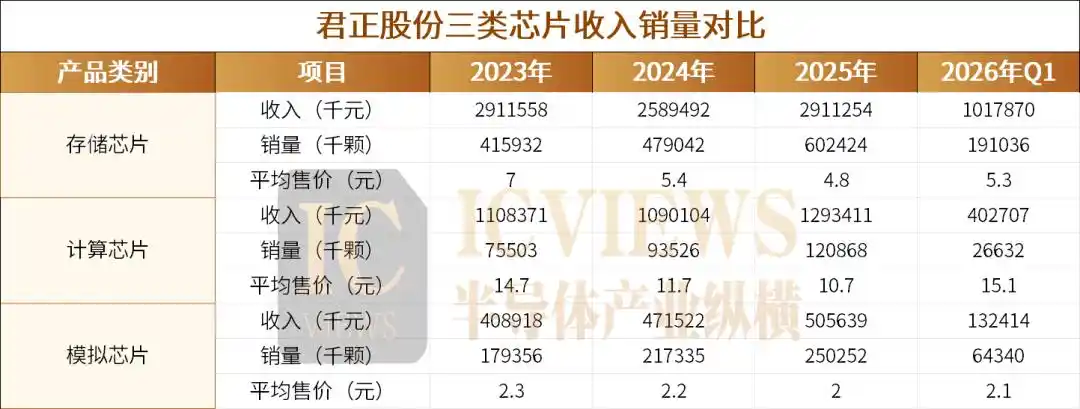
拆开三条产品线看,存储芯片仍是绝对主力,收入占比约六成。2023年到2025年,存储芯片收入分别是29.12亿元、25.90亿元、29.11亿元;2026年第一季度10.18亿元。销量也在持续放量,从2023年的4.16亿颗,涨到2025年的6.02亿颗,2026年第一季度又卖了1.91亿颗。不过价格经历过一轮过山车:2023年均价7.0元/颗,2024年5.4元,2025年4.8元,2026年第一季度终于回暖到5.3元。

计算芯片的收入波动更大。2023年11.08亿元,2024年跌到10.90亿元,2025年回升到12.93亿元;2026年第一季度4.03亿元。销量从2023年的7550万颗涨到2025年的1.21亿颗。均价跌得狠、弹得也高:2023年14.7元/颗,2024年11.7元,2025年10.7元,2026年第一季度突然跳到15.1元。

模拟芯片是最稳的一条线。收入从2023年的4.09亿元,逐年涨到2024年的4.72亿元、2025年的5.06亿元;2026年第一季度1.32亿元。销量从1.79亿颗涨到2.50亿颗。价格也稳,2023年到2025年分别是2.3元、2.2元、2.0元,2026年第一季度维持在2.1元。

值得关注的是,君正的客户和供应商集中度一直在降。前五大客户收入占比从2023年的54.5%降到2026年第一季度的50.3%,最大客户从21.0%降到15.6%;前五大供应商采购占比从58.3%降到41.6%,最大供应商从26.5%降到12.3%。这说明它的盘子在变大,不再那么依赖单一大客户或单一供应商。

研发投入方面,2023年到2025年分别花了7.08亿元、6.81亿元、7.12亿元,绝对金额基本没缩水,占收入比例从15.6%降到15.0%。2026年第一季度研发开支1.72亿元,占收入11.0%,比例下来是因为收入涨得太快。截至2026年3月底,公司822名研发人员,占员工总数65.7%。

从“做单点”到“做平台”:一张并购案拼出的产品版图

君正现在的样子,是2020年收购ISSI之后才成型的。收购前,它主要做计算芯片;收购后,增添存储和模拟芯片产品线。至此,ISSI(存储)、Ingenic(计算)、Lumissil(模拟)三个品牌,君正产品线一下子补齐了。

存储芯片(ISSI品牌) 包括DRAM、SRAM、NOR Flash和NAND Flash,全部面向汽车电子和工业医疗这些“难啃”的场景。按2025年收入算,君正的利基型DRAM全球排第七,中国大陆公司里排第二;SRAM全球第二、中国大陆第一;NOR Flash全球第七、中国大陆第三。这些产品不是普通存储,而是要在零下40度到85度的环境里稳定工作,数据保持能力、耐久性、缺陷率要求都比消费级高一大截。ISSI三十多年的积累,给君正攒下了车规级供应链的门票。

计算芯片(Ingenic品牌) 基于君正自己研发的CPU内核。2005年起步时做了XBurst系列,基于MIPS架构;2014年开始押注RISC-V,推出Victory系列,现在已经用在计算芯片产品线里。计算芯片分三条线:智能视觉SoC、嵌入式MPU、AI-MCU。其中IP-Cam SoC全球排第二,这是一种在单颗芯片内部集成 ISP、视频编码逻辑以及其他专用模块的半导体器件,为网络摄像机提供一体化算力。

模拟芯片(Lumissil品牌) 主要是LED驱动芯片和Combo芯片。LED驱动芯片,在汽车领域大量应用于车外照明系统以及车内照明系统,在非汽车市场,可用于高端游戏设备和家居设备。Combo芯片把MCU、LED驱动器、触控传感器以及LIN/CAN总线全塞进一颗芯片里,专门服务汽车氛围灯、触控这些应用。

三条线怎么咬合?举个例子:在一套汽车电子系统里,ISSI的存储芯片存数据和代码,Ingenic的计算芯片处理视觉和AI任务,Lumissil的模拟芯片管电源和通信。客户可以在同一供应商体系下选型存储、计算、模拟器件,降低多供应商管理成本,实现更好的软硬件协同,这就是平台化的价值。

利基型存储与端侧AI:两条看得见的增长线

君正的存储芯片,走了一条“避其锋芒”的路。它不跟三星、SK海力士卷标准型DRAM,而是专做利基型——车规级、工业控制、航空航天这些对可靠性要求苛刻的细分场景。这些市场订单周期长、客户粘性强,一旦进了供应链就很难被替换。
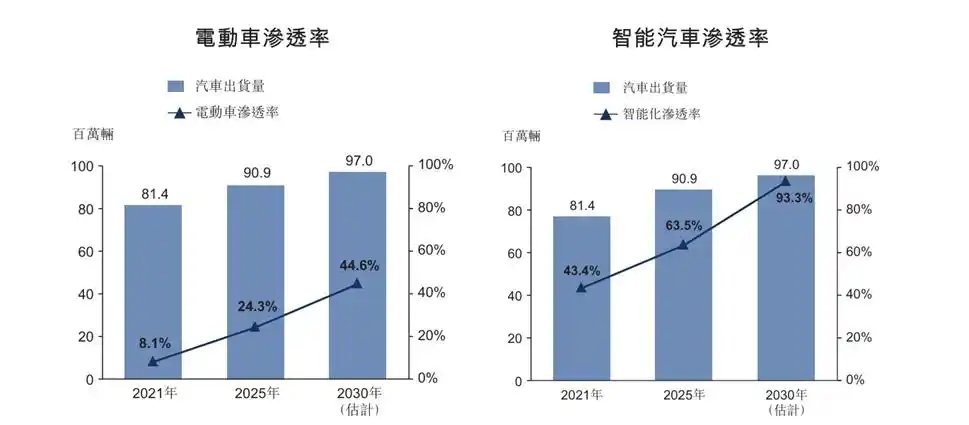
这条路恰好踩中了汽车智能化的风口。按弗若斯特沙利文的数据,2025年全球乘用车出货9090万辆,电动车渗透率从2025年的24.3%要涨到2030年的44.6%;智能汽车系统渗透率从2025年的63.5%涨到2030年的93.3%。车越来越智能,对存储的需求也变了——L2+以上自动驾驶车型每天产生超过1TB数据,存储芯片必须在极端环境下扛住高强度读写。

端侧AI则是计算芯片的增量逻辑。招股书中,弗若斯特沙利文预计到2030年,端侧AI设备出货量要达到19亿台。君正的计算芯片正好赶上这个风口:2026年第一季度计算芯片收入大涨49.1%,部分原因就是安防、AIoT、端侧AI设备的需求在放量。另外,机器人市场2025年到2030年预计以10.5%的复合增长率扩张,君正的芯片已经用在扫地机器人、工业机器人、服务机器人上,随着机器人往更智能的方向走,对电机控制、电源模拟和低功耗存储的需求只会更大。

在前瞻布局上,君正也有所涉及。1x-nm高密度LPDDR4产品已经送样,2025年下半年开始爬坡,2026年第一季度已经进入量产阶段;LPDDR5正在规划。3D DRAM正在大力投入,瞄准AI服务器和端侧计算对高带宽、大容量存储的需求。NAND Flash方面,在2D NAND领域已搭建起串行NAND与并行NAND产品线,同时高带宽8IO串行NAND Flash的开发工作正在推进。在3D NAND领域,eMMC、UFS 产品方案可满足汽车座舱与自动驾驶场景的使用需求。

赴港上市:弹药、风险与平台化这道题

此次赴港上市,君正股份确定的发行价为每股H股100港元,预计将募集到31.3亿港元。这笔钱怎么分?一半砸向研发,用于加强三条核心产品线的技术创新和产品开发;四分之一留着做战略投资和并购,瞄准芯片设计公司及半导体价值链上的企业,包括IP或EDA供应商、晶圆制造商、封装和测试服务提供商等上下游企业;15%扩展销售网络;10%用作营运资金及其他一般公司用途。

这样的比例分配透露出君正的两个意图,第一,君正没打算靠吃老本过日子,研发还是大头;第二,并购在战略里的权重很高。毕竟2020年收购ISSI彻底改写了公司的命运,手里留足弹药,显然是在等下一个“ISSI”出现。

已经在A股上市的君正,为什么还要跑港股?除了多一个融资渠道,港股国际化程度高,对君正这种产品卖到亚洲、美洲、欧洲50多个国家和地区的企业来说,有助于提升海外品牌认知,也方便以后做跨境的买卖和合作。

不过,这条路也不是没有风险。半导体周期性强,2024年存储芯片均价下跌就直接拖累了收入;君正是无晶圆厂模式,上游晶圆产能一紧张,议价能力就受限;计算芯片所在的消费市场竞争激烈,价格战是常态。另外,2026年第一季度毛利率冲到42.6%,有一部分“运气”成分——KGD等关键原材料涨价前,君正已经低价采购了一批库存,帮助公司阶段性控制成本。这种库存红利不是常态,后续毛利率能不能稳住,还得看真实的产品竞争力和市场供需。

但回到产业层面来看,君正的选择逻辑是通顺的:与其在单一赛道做“孤勇者”,不如做系统级解决方案的“平台玩家”。在芯片行业分工日益细化的今天,这种“反共识”的整合路线能否走通,或许正是君正港股上市留给产业界最值得观察的命题。

本文来自微信公众号“半导体产业纵横”(ID:ICViews),作者:ICVIEWS编辑部

Trending Cryptos

Related Questions

Q君正股份此次在港交所上市后的开盘价和总市值是多少?

A开盘价为每股100港元,开盘总市值约515亿港元。

Q君正股份通过哪一年的收购实现了从单一计算芯片企业到横跨三大赛道的芯片平台的转型?

A2020年,通过收购北京矽成并间接控股美国芯成半导体(ISSI)实现了这一转型。

Q根据文章,2026年第一季度君正股份哪条产品线的收入占比最高?其2026年第一季度的收入是多少?

A存储芯片是绝对主力,收入占比约六成。2026年第一季度存储芯片收入为10.18亿元。

Q君正股份赴港上市预计募集多少资金?其中计划用于研发和战略投资/并购的比例分别是多少?

A预计募集31.3亿港元。其中,约一半(50%)将用于研发;约四分之一(25%)将用于战略投资和并购。

Q文章中提到君正股份的计算芯片在哪个具体应用领域做到了全球第二?

A其智能视觉SoC中的IP-Cam SoC在全球排名第二。

Related Reads

GPT-6.1 Sol Participates in Live Brain Surgery! Three Rounds of Localization, Each More Accurate Than the Last

Exin Therapeutics CEO Gabriel Ocana-Santero reported an experiment in which GPT-6.1 Sol participated in three rounds of real mouse brain surgery positioning. The task involved locating Bregma and Lambda, two key skull landmarks used to calibrate stereotaxic coordinates for accurate targeting of brain regions. After each round, a professional surgeon corrected the model's positioning results, and the model retained its images, measurements, and expert corrections for reference in subsequent rounds. By the third round, GPT-6.1 Sol reduced landmark search time from 169 to 86 seconds, required corrections from four to two, and cut positioning error from 0.6 mm to 0.3 mm. Ocana-Santero described this as in-context learning from real-world experience. The team did not disclose how the experience records are integrated into the model or whether underlying weights are updated, so it cannot be described as autonomous training or parameter-level self-evolution. The sample is only three operations, far from proving stable surgical capability, but it demonstrates AI accumulating experience from real observations and expert feedback. This follows earlier Exin work in which AI selected gene therapy vectors, chose injection targets and coordinates, and controlled a stereotaxic device in a mouse experiment, with a licensed veterinarian supervising and safety limits in place. In a further experiment, Claude Sonnet 5, GPT-6.1 Sol, and Grok 4.7 chose different brain regions and treatment strategies for the same scientific goal, suggesting models may reason toward different experimental paths.

marsbit11h ago

GPT-6.1 Sol Participates in Live Brain Surgery! Three Rounds of Localization, Each More Accurate Than the Last

marsbit11h ago

From Drones to Nuclear Reactors: What Has Paradigm Invested in Since Leaving the Crypto World?

Paradigm, a venture capital firm known for crypto investments like Coinbase and Uniswap, is rapidly expanding into hard tech. In November, it co-led a $1.5 billion funding round for Zipline, a US drone delivery company now valued at $21.5 billion—nearly triple its valuation from January. Zipline, founded in 2014, began delivering medical supplies in Rwanda and now operates a large-scale automated logistics network, having completed 150 million miles of commercial autonomous flights. Walmart plans to add 300 new delivery sites, and Uber aims to scale their partnership to one million daily orders by 2029. Paradigm's broader portfolio now spans AI, robotics, manufacturing, semiconductors, space defense, and nuclear energy. Investments include open-source AI lab Nous Research, math-reasoning AI firm Harmonic, AI data company Idler, and GPU platform Andromeda. It also backs SendCutSend (metal parts manufacturing), Fab2 (compact semiconductor factories), True Anomaly (space defense), and Antares (micro nuclear reactors). In July, Paradigm launched a $12 billion new fund for frontier tech. This shift reflects a broader VC trend toward AI and physical technology, as crypto's path to sustained commercial revenue remains uncertain. Paradigm's bets focus on companies solving concrete industrial problems with existing markets, aiming to build a hard-tech network that transcends crypto cycles.

marsbit11h ago

From Drones to Nuclear Reactors: What Has Paradigm Invested in Since Leaving the Crypto World?

marsbit11h ago

Nomura: "Blue Wave" Hits US Data Centers, China's AI Benefits Instead

Nomura argues that the Democratic "blue wave" in the US midterms could paradoxically benefit China's AI economy. Democratic victories in key data-center states will likely tighten regulation, shift grid upgrade costs onto developers, and lengthen approval timelines, slowing US data-center expansion. Market reaction was sharp: the Nasdaq fell 5.5% in a single day, the SOX dropped nearly 15% over two days, Nvidia fell about 12%, and Micron about 24%. Because US cloud giants had been hoarding global GPU, HBM, and advanced logic chip capacity—driving black-market premiums of 200–300% at Asian logistics hubs—a US capex slowdown could collapse those speculative premiums, letting Chinese AI firms, cloud providers, and research institutions obtain GPUs, HBM modules, and advanced packaging materials more cheaply through intermediary trade hubs. China is also building a state-led national AI data-center network, with roughly RMB 2 trillion planned under the 15th Five-Year Plan to integrate regional computing by 2028, supported by low-cost renewable power in western hubs under the "East Data, West Computing" program. Morgan Stanley, meanwhile, does not see the blue wave as a real easing of US-China tensions; it expects strategic competition to persist but sees greater policy predictability. It prefers China's "self-sufficiency" AI trade—supported by both supply and demand under national policy priorities—over export chains tied to global AI capex. It also notes more balanced opportunities in Chinese equities, with valuations near historic lows.

marsbit11h ago

Nomura: "Blue Wave" Hits US Data Centers, China's AI Benefits Instead

marsbit11h ago

After GPT-6, Embodied Large Models Are Trapped in Their Own Territory! Next Year's Self-Research Budget Is Probably Up in the Air

The article discusses how the release of GPT-6 Astra (and the imminent GPT-6.2 Astra) has disrupted the embodied AI/robotics industry. General-purpose large models are now encroaching on capabilities that embodied AI companies previously developed in-house—such as in-context learning, out-of-distribution generalization, error correction, and open-vocabulary manipulation—often without task-specific post-training. On benchmarks like RoboDojo, teams combining general models with robot-use-agent techniques saw scores jump from 20–30 to 50–60, prompting many to question whether self-developing embodied foundation models still makes sense. Some companies have begun cutting algorithm roles. However, the article notes GPT-6 Astra still struggles with complex physical contact, force control, object deformation, and high-precision manipulation, and its cloud API inference latency is high (though this is not seen as a fundamental barrier). Experts argue that general models' current weaknesses shouldn't be treated as durable moats for embodied companies, since OpenAI is already hiring robotics talent and future models may absorb more robot operation data. The core argument is economic: embodied companies' opportunity lies not in building smarter models but in delivering better economic value. Stable, standardized industrial tasks may be better served by lightweight, specialized models or rule-based strategies, while open-ended tasks (e.g., home service robots) may benefit from general models. Ultimately, companies need to re-prioritize their R&D directions—leveraging general models for language understanding and task planning while focusing in-house efforts on physical interaction, embodiment-specific control, real-world adaptation, and deployment efficiency. The article concludes that the industry is moving past the demo-and-burn-investment stage, and the elimination round among the "hundred robot wars" has begun.

marsbit11h ago

After GPT-6, Embodied Large Models Are Trapped in Their Own Territory! Next Year's Self-Research Budget Is Probably Up in the Air

marsbit11h ago

Trading

Spot

Hot Articles

How to Buy CHIP

Welcome to HTX.com! We've made purchasing USD.AI (CHIP) simple and convenient. Follow our step-by-step guide to embark on your crypto journey.Step 1: Create Your HTX AccountUse your email or phone number to sign up for a free account on HTX. Experience a hassle-free registration journey and unlock all features.Get My AccountStep 2: Go to Buy Crypto and Choose Your Payment MethodCredit/Debit Card: Use your Visa or Mastercard to buy USD.AI (CHIP) instantly.Balance: Use funds from your HTX account balance to trade seamlessly.Third Parties: We've added popular payment methods such as Google Pay and Apple Pay to enhance convenience.P2P: Trade directly with other users on HTX.Over-the-Counter (OTC): We offer tailor-made services and competitive exchange rates for traders.Step 3: Store Your USD.AI (CHIP)After purchasing your USD.AI (CHIP), store it in your HTX account. Alternatively, you can send it elsewhere via blockchain transfer or use it to trade other cryptocurrencies.Step 4: Trade USD.AI (CHIP)Easily trade USD.AI (CHIP) on HTX's spot market. Simply access your account, select your trading pair, execute your trades, and monitor in real-time. We offer a user-friendly experience for both beginners and seasoned traders.

8.7k Total ViewsPublished 2026.04.21Updated 2026.06.02

How to Buy CHIP

Discussions

Welcome to the HTX Community. Here, you can stay informed about the latest platform developments and gain access to professional market insights. Users' opinions on the price of CHIP (CHIP) are presented below.

活动图片