Kaito重启“嘴撸经济”,但新插件好多人不敢装

Odaily星球日报Published on 2026-08-21Last updated on 2026-08-21

Abstract

Kaito AI近日推出浏览器插件Kaito Pulse,旨在将X平台用户的讨论行为、链上活动和社交影响力深度绑定,重启“嘴撸经济”。插件可在X信息流中显示用户的链上交易仓位(如来自Polymarket、Hyperliquid),以验证其观点是否与实际行动一致,并推出新的影响力评分体系Aura。 然而,插件上线后因权限问题引发隐私争议。有分析指出,其代码可能涉及设备指纹识别、X行为追踪及第三方账户验证等数据收集行为,尤其对多账号用户匿名性构成威胁。社区对此意见分化:支持者认为这是对抗虚假影响力的必要验证;质疑者则担忧数据过度收集。 对此,Kaito创始人Yu Hu回应称,插件遵循数据最小化原则,目标是在用户授权下验证身份与行为,而非获取原始数据,并承诺优化权限说明。这场争论折射出InfoFi赛道的核心困境:平台需要更多数据以区分真实影响力与虚假热度,但用户也需权衡,为激励开放多少隐私才算合理。

原创 | Odaily 星球日报(@OdailyChina)

作者 | Asher(@Asher_ 0210)

你的 X 信息流,或许又要被“嘴撸”项目刷屏了。

8 月 18 日,Kaito AI 宣布推出浏览器插件 Kaito Pulse,将用户在 X 上的讨论行为、链上活动以及社交影响力进一步绑定。同时,Kaito 公布回归后的首个合作项目 Axis Robotics,重新开启围绕内容创作者、社区贡献者的激励模式。

与此前围绕 Yaps 的简单内容激励不同,这一次 Kaito 想做的不只是“奖励发帖”,而是建立一套“注意力 + 行为验证”的新评分体系。

何为 Kaito Pulse?

Kaito Pulse 是 Kaito 推出的浏览器插件,旨在 X 时间线上加入更多“链上身份”信息,让用户不仅能看到一个 X 账号发表的观点,也能了解其背后的真实市场行为。
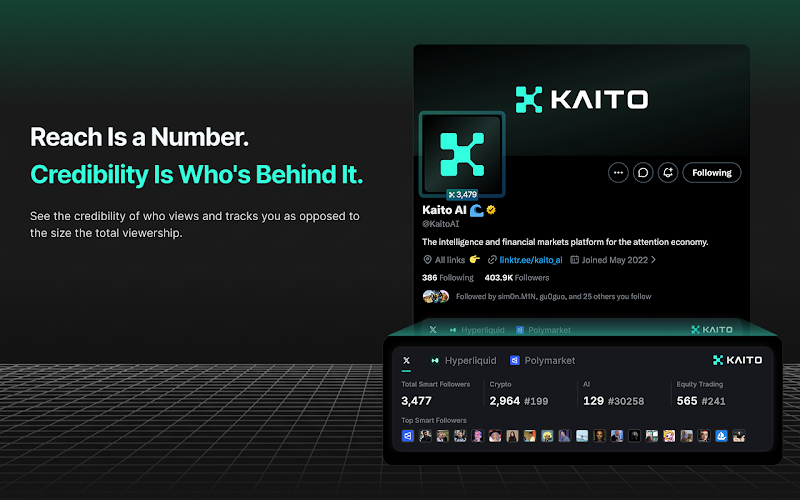
插件安装后,用户可以直接在 X 时间线中查看其他用户的链上活动信息,包括来自 Polymarket、Hyperliquid 等平台的公开交易仓位,从而进一步判断一个账号的观点是否与实际行动一致。

通过将社交影响力与链上行为结合,Kaito 希望让 X 从一个单纯的信息传播平台,变成一个融合“观点、身份与交易行为”的社交层。

这也是 Kaito 从 Yaps 到 Pulse 的一次升级。

此前,Kaito 主要通过追踪 X 上的加密讨论热度,建立内容影响力排行榜,并围绕 KAITO 激励用户参与。但随着大量账号开始批量生产内容,单纯依靠讨论量衡量影响力的问题逐渐显现。因此,Pulse 进一步加入内容影响力、社区互动以及链上行为验证等维度,同时推出新的评分体系 Aura,用于衡量用户影响力以及经过验证的链上行为。

此前,Kaito 关注谁制造了最多讨论;如今,Kaito 更关注谁的讨论值得相信。

插件权限太大,上线后遭“数据收集”争议

Kaito Pulse 的上线引发了社区热议,觉得随着行情的回暖,新的一轮“嘴撸经济”即将来临。但 Kaito Pulse 上线后也迅速引发社区对于隐私权限的讨论。
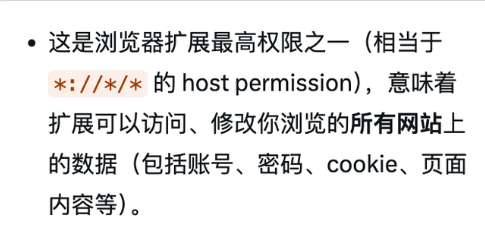
Kaito Pulse 插件被指存在多项深度数据收集行为

Ultra 在 X 发文表示,通过分析 Pulse 插件代码,发现其可能涉及多项数据收集行为,包括设备指纹识别、X 平台行为追踪以及第三方账户验证等。

其中,最受关注的是设备识别问题。Ultra 表示,Kaito Pulse 可能通过 GPU 渲染结果、硬件型号以及硬件测试音频等信息生成设备指纹,并将这一信息与 X 账号进行关联,影响多账号用户、社区矩阵账号等场景下的匿名性。

除了设备信息外,Ultra 还质疑 Kaito Pulse 对用户 X 行为数据的收集范围。插件可能记录用户在 X 平台上的部分行为,包括浏览路径、内容停留时间、点击行为以及关注状态等,并通过周期性请求判断用户是否处于活跃状态。

此外,第三方账户验证也是争议焦点。Ultra 指出,Pulse 涉及 ChatGPT、Claude 以及多个交易平台账户验证流程,并认为相关流程可能触及用户的订阅状态、使用额度以及交易账户信息等敏感数据。

社区分歧:验证真实性还是牺牲隐私?

在 Yaps 时代,Kaito 主要依靠 X 上的讨论热度衡量影响力,但随着大量账号开始批量生产内容,社区逐渐关注一个问题:高热度是否等于真实影响力?

Kaito Pulse 通过加入链上行为、外部账户验证等更多维度,Kaito 希望降低单纯依靠发帖和互动获取排名的空间,让影响力评分更接近用户真实贡献。

但更多验证机制也意味着用户需要开放更多数据权限。因此,社区对于 Kaito Pulse 形成了两种不同看法:

  • 支持者认为,InfoFi 最大的问题就是刷量和虚假影响力,只有增加身份和行为验证,才能建立更可信的激励体系;
  • 质疑者则认为,平台不应为了提高评分准确性而无限扩大数据收集范围,用户隐私与激励收益之间需要找到新的平衡。

官方回应隐私争议:Kaito Pulse 并不会获取用户原始数据

面对社区质疑,Kaito 创始人 Yu Hu 随后进行了回应。

Yu Hu 表示,Kaito Pulse 的设计原则是数据最小化,产品目标并不是收集用户数据,而是在用户主动授权的情况下,通过验证机制证明某些身份或行为。

针对社区关注的账户信息问题,Kaito Pulse 不会获取用户完整账户内容,也不会保存用户原始数据。相关流程主要用于生成验证结果,平台获得的是证明信息,而非用户底层数据。

对于外部账户验证引发的争议,Kaito Pulse 使用包括 zkTLS 在内的验证技术,希望在不暴露原始数据的情况下,让用户证明自己拥有某些链下身份或行为记录。

同时,Yu Hu 也承认,部分权限展示范围可能容易造成误解,后续版本将进一步优化权限说明和用户提示。

“嘴撸经济”的下一步:验证影响力,还是交出隐私?

Kaito Pulse 引发的讨论,本质上也是 InfoFi 赛道绕不开的数据困境。

过去,平台判断一个账号是否有价值,主要依靠粉丝数量、互动数据以及内容热度。但随着 AI 内容、批量账号和矩阵运营越来越普遍,单纯的“讨论量”已经越来越难代表真实影响力。

因此,Kaito 试图引入更多验证维度,而争议也随之出现——当平台想进一步证明“你是谁”“你的观点是否可信”时,用户需要交出的信息也越来越多。

对于用户而言,安装插件参与下一轮“嘴撸经济”的同时,也意味着需要重新思考:为了排名、积分和潜在奖励,自己究竟愿意开放多少数据?平台需要更多数据,才能区分真实影响力和虚假热度;但用户也需要确认,这些数据是否真的只用于验证,而不会成为新的数字画像。

Kaito Pulse 想验证用户影响力,但随着掌握越来越多设备、行为和账户数据,Kaito 自己也成为了被审视的一方。

Trending Cryptos

Related Questions

QKaito Pulse 浏览器插件的核心功能是什么?

AKaito Pulse 的核心功能是在 X(原 Twitter)的时间线中,展示用户的链上活动信息(如在 Polymarket、Hyperliquid 等平台的公开交易仓位),将社交讨论与链上行为绑定,以验证用户观点与实际行动是否一致。

QKaito Pulse 上线后引发了社区哪方面的主要争议?

A主要引发了用户隐私和数据收集方面的争议。社区质疑该插件可能通过设备指纹识别、追踪X平台行为、验证第三方账户等方式,过度收集用户敏感数据,从而牺牲用户隐私。

QKaito 创始人 Yu Hu 如何回应对 Kaito Pulse 隐私问题的质疑?

AYu Hu 回应称,Kaito Pulse 的设计原则是数据最小化,目标是在用户主动授权下验证身份或行为,而非收集原始数据。平台通过 zkTLS 等技术获得验证结果,而非底层数据。他也承认部分权限说明可能造成误解,后续会进行优化。

Q文章中提到,Kaito 从 Yaps 到 Pulse 的升级,其衡量用户影响力的侧重点发生了什么变化?

A此前通过 Yaps 主要关注谁制造了最多的讨论(讨论量)。现在通过 Pulse,则更关注谁的讨论值得相信,增加了对内容影响力、社区互动以及经过验证的链上行为的考察。

Q文章认为 Kaito Pulse 的讨论揭示了 InfoFi 赛道面临的何种困境?

A揭示了数据困境。为了区分真实影响力与虚假热度(如AI内容、批量账号),平台需要引入更多验证维度并收集更多用户数据;但用户则需要权衡,为了潜在奖励而开放大量数据(如设备、行为、账户信息)是否值得,以及这些数据是否仅用于验证而不会成为新的数字画像。

Related Reads

"Strictest Ever" Wet-Lab Prediction Benchmark Released: Maxed-Out Reasoning and 5x Compute Still Won't Cut It

UniPat AI has launched Science Prediction Universe (SPU), a new benchmark that evaluates whether AI models can predict the outcomes of real wet-lab experiments before they are conducted. The benchmark covers 116 tasks and 4,207 wet-lab experiments across chemistry, materials science, biology, and medicine, drawing on recent papers and unpublished collaborations with institutions such as Stanford, Cornell, and Harvard. Models are given eight hours, an H20 GPU, internet access, and scientific software, and must submit a ranked prediction of experimental results, which is then scored against hidden ground-truth data using the Spearman correlation coefficient. To prevent memorization, evaluation runs in isolated, offline containers and screens outputs for paper identifiers. Results show that even leading models like Opus 5.5 and GPT-6 Astra remain far from reliable prediction: the best average score was 0.486, and only about half of tasks exceeded the random baseline. The study also found that increasing reasoning effort fivefold barely improved accuracy, since models often settled on an answer early and spent the rest of the time on minor adjustments. Likewise, more tool use and GPU calls did not reliably help. Performance varied sharply by measurement target, and API costs ranged 300-fold across configurations. SPU aims to give researchers and model developers a unified way to measure and improve AI's scientific judgment before investing in costly experiments.

marsbit1h ago

"Strictest Ever" Wet-Lab Prediction Benchmark Released: Maxed-Out Reasoning and 5x Compute Still Won't Cut It

marsbit1h ago

From Harshly Criticizing Stablecoins to Building an L1: Airwallex's Jack Zhang Isn't "Converting" — the Battle for the Settlement Layer Has Begun

In June 2025, Airwallex CEO Jack Zhang publicly questioned stablecoins, arguing that fiat conversion costs outweighed their cross-border payment benefits and that crypto had failed to solve real-world problems for 15 years. Yet just 17 months later, in November 2026, Zhang emerged as co-founder of Alta, a blockchain project that raised $80 million (a $47.5 million Series A led by Index Ventures plus a $32.5 million seed round). Rather than a change of heart, the move reflects commercial necessity: a battle over the stablecoin settlement layer is underway, and payment giants that stay out risk becoming mere interfaces atop someone else's chain. Alta is not a general-purpose public chain but a compliant Layer 1 built for banks and licensed payment institutions. Co-founder Loong Wang, previously of Ren Protocol, says existing chains like Ethereum and Solana cannot simultaneously meet institutional demands for privacy, compliance, integration with local financial systems, and liquidity. Alta uses recursive zero-knowledge proofs to enable on-chain compliance checks without exposing identities or transaction amounts, and builds in programmable compliance modules, native identity authorization, and anti-airdrop protections. Co-founder Catherine Porter previously led Meta's Libra (Diem) partnerships. Airwallex itself is Alta's key advantage: with $287 billion in annualized volume, $1.3 billion in revenue, 200 countries, and 90 currencies, it will channel enterprise clients onto the new chain. Zhang's apparent reversal is consistent: he criticized stablecoins as cheap remittance tools, but now bets on tokenized fiat settlement infrastructure. Competitive pressure comes from Stripe, which acquired Bridge for $1.1 billion, bought Privy, and incubated the Tempo chain (raising $500 million at a $50 billion valuation, with OpenAI, Shopify, Deutsche Bank, and Visa as partners). Circle's Arc, Fireblocks, and Canton Network are also competing. With stablecoin market cap exceeding $320 billion and 2025 on-chain volume surpassing $33 trillion, the real contest is over who controls minting, clearing, and fiat redemption. Success will depend less on technology than on three factors: genuine adoption by traditional financial institutions, compliance adaptation across jurisdictions, and efficient on- and off-ramps to real banking systems. The paradigm has shifted: instead of disrupting banks, fintech giants now aim to build infrastructure that lets traditional finance voluntarily move on-chain. Pragmatism, not ideology, now dominates the race.

marsbit4h ago

From Harshly Criticizing Stablecoins to Building an L1: Airwallex's Jack Zhang Isn't "Converting" — the Battle for the Settlement Layer Has Begun

marsbit4h ago

"Everyone is too conservative with AI!" Head of Claude Code: My approach is more ambitious

Felix Rieseberg, who leads Claude Code's desktop app, argues that most people use AI too conservatively and should set more ambitious goals. His central trick: set unreasonably aggressive targets and insist they're achievable—for example, instead of cutting website load time from 10 seconds to 5, aim for 0.2 seconds, and when the model protests, keep telling it the problem is solvable and to try again. He organizes ambition into four categories: speed (doing the same work faster), height (raising the abstraction level to focus on desired outcomes rather than individual tasks), depth (working like top experts, using their real tools, data, and methods), and breadth (drawing on ideas from other fields). For height, he suggests asking what you ultimately want to happen and what the goal behind the goal is—e.g., instead of fixing single crashes, require the app to never crash. For a quarterly business review, move from filling in a template to understanding what changed and why, identifying the most urgent decisions, and redesigning the review process itself. For depth, he advises insisting on the tools top professionals actually use (databases and statistical models rather than Markdown tables), setting "unreasonable" targets, challenging your own assumptions against raw data, hunting for new knowledge, and using external validation rather than letting the model grade itself. A useful prompt asks the model what top experts would do that you haven't requested, what raw materials and tools they'd use, and what besides the model and you could prove the result correct. For breadth, he recommends replacing nouns with verbs (not "make a PPT" but "in 30 minutes, convince busy people of an explanation and drive a decision under uncertainty"), assembling cross-disciplinary teams, and using multi-agent setups—while avoiding mere role-play in favor of adopting other fields' actual methods. He closes with self-efficacy research: people given clear, challenging goals outperform those told to do their best, and believing difficult things are possible—as with the four-minute mile—unlocks achievement. In an era of rapid capability gains, updating our beliefs about what's possible matters more than ever.

marsbit4h ago

"Everyone is too conservative with AI!" Head of Claude Code: My approach is more ambitious

marsbit4h ago

Trading

Spot

Hot Articles

How to Buy KAITO

Welcome to HTX.com! We've made purchasing Kaito (KAITO) simple and convenient. Follow our step-by-step guide to embark on your crypto journey.Step 1: Create Your HTX AccountUse your email or phone number to sign up for a free account on HTX. Experience a hassle-free registration journey and unlock all features.Get My AccountStep 2: Go to Buy Crypto and Choose Your Payment MethodCredit/Debit Card: Use your Visa or Mastercard to buy Kaito (KAITO) instantly.Balance: Use funds from your HTX account balance to trade seamlessly.Third Parties: We've added popular payment methods such as Google Pay and Apple Pay to enhance convenience.P2P: Trade directly with other users on HTX.Over-the-Counter (OTC): We offer tailor-made services and competitive exchange rates for traders.Step 3: Store Your Kaito (KAITO)After purchasing your Kaito (KAITO), store it in your HTX account. Alternatively, you can send it elsewhere via blockchain transfer or use it to trade other cryptocurrencies.Step 4: Trade Kaito (KAITO)Easily trade Kaito (KAITO) on HTX's spot market. Simply access your account, select your trading pair, execute your trades, and monitor in real-time. We offer a user-friendly experience for both beginners and seasoned traders.

6.7k Total ViewsPublished 2025.02.21Updated 2026.07.29

How to Buy KAITO

Discussions

Welcome to the HTX Community. Here, you can stay informed about the latest platform developments and gain access to professional market insights. Users' opinions on the price of KAITO (KAITO) are presented below.

活动图片