Woman Rented a Workshop for Her Husband's Secret Mining Farm

cryptonews.ruPublished on 2026-09-11Last updated on 2026-09-11

Abstract

A woman rented an industrial workshop for a secret crypto mining farm operated by her husband. The mining facility operated for four years, from January 2021 to January 2025. It was equipped with at least 39 mining devices and auxiliary equipment housed in a specialized container and noise-insulated boxes. The prosecution alleges the farm was illegally connected directly to a transformer substation, bypassing electricity meters and without a contract with the power supply company. Consequently, the landlord, who allegedly was unaware of the activities, ended up paying for the electricity consumed. The defendant faces charges of causing major property damage through fraud or abuse of trust, which carries a penalty of up to five years of forced labor or imprisonment. In the town of Bodaybo, industrial mining is permitted but requires registration in a state registry. In a separate recent case in Rossosh, Voronezh region, a secret mining farm with 110 devices was discovered, causing an estimated 5.9 million rubles in damages to the energy company.

The mining site operated for four years, from January 2021 to January 2025. The farm was set up in an industrial workshop rented by the accused's wife. To house the equipment, a special container and soundproof boxes were used, containing at least 39 units of mining hardware and auxiliary devices.

The farm for cryptocurrency mining was connected directly to a transformer substation, bypassing metering devices and without a contract with the energy supply organization, the prosecution claims. As a result, the actual payer for the electricity turned out to be the landlord, who, the investigation believes, was not even aware of what was happening in the workshop of his industrial facility.

The defendant is charged with causing property damage through fraud or breach of trust on an especially large scale. He faces up to five years of forced labor or the same term in a penal colony.

In Bodaybo, industrial mining is permitted, but as throughout Russia, only on the condition of registration in the state register of miners.

Recently, in the city of Rossosh in the Voronezh region, employees of the companies "Voronezhenergo" and "Rosseti Center" discovered a secret mining farm consisting of 110 devices. The damage to the energy companies is estimated at approximately 5.9 million rubles.

end-content

Related Questions

QFor how long did the secret mining farm operate according to the article?

AThe secret mining farm operated for four years, from January 2021 to January 2025.

QHow was the mining farm connected to the power supply, and what was the consequence of this method?

AThe farm was connected directly to a transformer substation, bypassing the electricity meters and without a contract with the energy supplier. This resulted in the property's landlord unknowingly being billed for the electricity consumed.

QWhat specific crime is the defendant accused of, and what potential punishment does he face?

AThe defendant is accused of causing property damage through deception or abuse of trust on an especially large scale. He faces up to five years of forced labor or the same prison term.

QAccording to the article, what is a legal requirement for industrial mining throughout Russia, including in Bodaybo?

AA legal requirement for industrial mining throughout Russia, including in Bodaybo, is registration in the state register of miners.

QWhat recent similar case is mentioned in the article, involving how many devices and what estimated damage?

AThe article mentions a recent case in the city of Rossosh, Voronezh region, where a secret mining farm with 110 devices was discovered. The estimated damage to the energy company was about 5.9 million rubles.

Related Reads

Research Report Interpretation | Space Fund Scale Grew to $18 Billion in One Year, but In-Orbit Direct Investment Accounts for Only 3%

Barclays analysts Katherine Ogundiya and team published a 61-page report on November 16 introducing an "in-S.P.A.C.E." framework for the in-orbit economy, screening 37 commercial space activities down to 15 priority areas and 3 wildcard sectors. Global space-themed fund assets grew from $1.24 billion in Q2 2024 to over $18 billion by Q2 2026, yet only 3% is directly invested in in-orbit operations, while 47% sits in semiconductors, components, and software. Private markets are more direct: of 33 space unicorns worth about $92 billion, 9 in-orbit operators account for roughly $26 billion, or 28%. Global government space spending reached $141 billion in 2025, up 7.4%. The report identifies five physical bottlenecks—launch concentration, spectrum and network routing, orbital congestion, in-orbit servicing standards, and regulatory approval—noting China and the U.S. accounted for over 82% of orbital launch attempts from 2024 to July 2026, with SpaceX and CASC together near 71%, and Starlink performed over 207,000 collision-avoidance maneuvers between December 2025 and May 2026. Among the highest-scoring priority tracks, GEO satellite life extension offers clear economics: about 85% of GEO satellites retire from fuel depletion, and extending life five years costs roughly $65 million versus $150–300 million for a replacement. Orbital AI computing and data centers scored only 8, ranking as a wildcard due to unresolved thermal, power, and economic challenges. Barclays maps over 350 companies across four investment paths: integrated launch and space systems players like Rocket Lab (RKLB) and Firefly (FLY), bottleneck-breaking specialists such as Astroscale, MDA Space, Mynaric, and Thales, "picks and shovels" suppliers including Linde (LIN) and Air Liquide, and downstream applications like Planet Labs (PL) and AST SpaceMobile (ASTS). A heavy-lift rocket launch now consumes about 8,000 tonnes of liquid oxygen, five times a traditional large rocket's 1,600 tonnes, with Linde projecting about $1 billion in annual space revenue by 2030.

marsbit1h ago

Research Report Interpretation | Space Fund Scale Grew to $18 Billion in One Year, but In-Orbit Direct Investment Accounts for Only 3%

marsbit1h ago

The AI Bubble Has Already Burst, Yet Retail Investors Are Still Frantically Buying the Dip: A Hedge Fund Veteran Warns Nvidia's Risks Are Far From Over

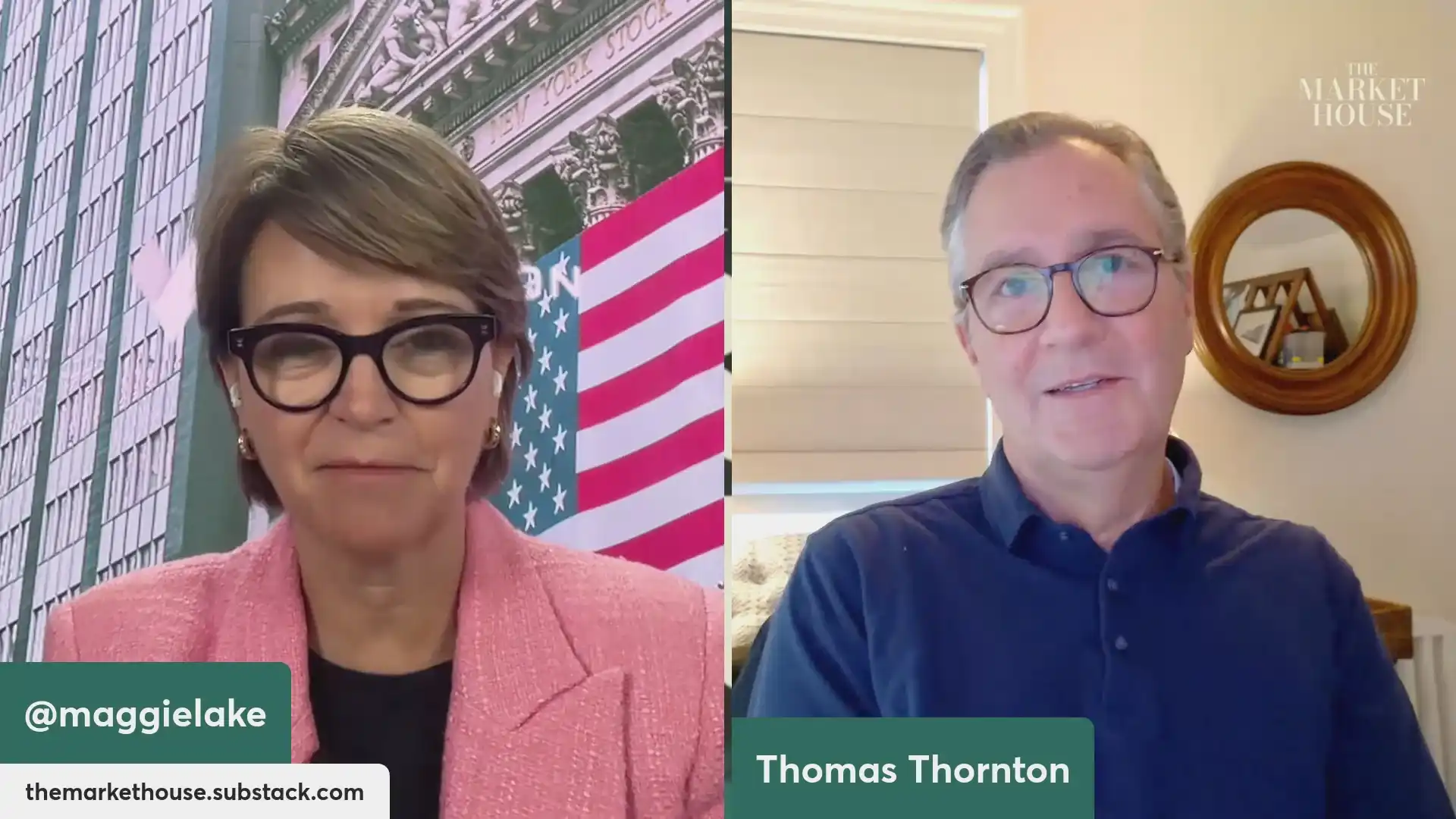
Former hedge fund trader Tom Thornton warns that the AI bubble has already burst, yet retail investors remain trapped in "buy the dip" muscle memory while institutions steadily reduce tech exposure. He points to record single-week inflows into QQQ (~$13.4 billion) even as prices fell—a classic topping pattern where dip-buying eventually fails and confidence collapses. Thornton argues AI's boom rests on a fragile chain of circular financing deals that must unfold perfectly; several links are already cracking. On Nvidia, he stresses that DOJ and congressional investigations aren't short-term noise—any evidence of knowingly bypassing export controls could trigger criminal, not just civil, liability and hammer the business model and valuation. He expects management to spin earnings positively, but even a slight guidance cut could crush the stock and wash out retail dip-buyers, making 2027 a tougher year for markets. Thornton is watching DeMark indicators on the Nasdaq 100 and Mag 7 for true capitulation, noting defensive sectors like staples and utilities are now flashing sell signals. He remains long gold, has started buying silver and gold miners (GDX), is baffled by Anthropic IPO valuations, exited Alibaba on Nvidia-related news, would short a SpaceX-Tesla merger on antitrust grounds, and says the ultimate contrarian buy signal is a front-page photo of a floor trader with his head in his hands.

marsbit1h ago

The AI Bubble Has Already Burst, Yet Retail Investors Are Still Frantically Buying the Dip: A Hedge Fund Veteran Warns Nvidia's Risks Are Far From Over

marsbit1h ago

World Bank Joins Forces with Citi and Circle: Global Aid Funds Poised for On-Chain Settlement via USDC

On November 18, the World Bank Group announced a strategic collaboration with Citi and Circle to explore using the regulated USD stablecoin USDC and blockchain networks to supplement existing cross-border official development assistance (ODA) disbursement systems. The pilot aims to reduce correspondent banking fees, shorten cross-border settlement times, and enhance transparency, starting with borrower countries where digital asset use is legally permitted. Under the division of roles, Circle provides compliant stablecoin infrastructure, minting and clearing USDC on designated blockchains with each token backed 100% by USD cash and short-term Treasuries. Citi leverages its global treasury and trade finance network to bridge traditional fiat payment rails and blockchain networks, validating settlement models interoperable with central banks and local banking systems while ensuring sovereign funds remain fully regulated. Traditional ODA flows rely heavily on SWIFT and多层 correspondent banks, with infrastructure projects in developing countries often routed through three to four intermediary banks, taking three to five business days per transfer, incurring high fees, FX spread losses, and delays from time-zone mismatches and manual reviews. Regulated stablecoin settlement enables near-real-time peer-to-peer on-chain delivery after compliance approval, cutting intermediary layers and sending funds directly to licensed institutions in borrower countries. The initiative builds on the World Bank's FundsChain consortium blockchain, which as of November 18 has connected over 350 sovereign and multilateral development projects across 96 countries, averaging about 3.6 on-chain projects per recipient country. Every transaction—from initial disbursement to treasury receipt to supplier settlement—is recorded on-chain in real time, allowing donors and auditors to verify usage and prevent fund diversion. This marks the first time a core multilateral development institution has formally introduced a regulated stablecoin in sovereign development aid disbursement alongside a major international bank, setting a benchmark for institutional RWA settlement and cross-border payment infrastructure. Next steps include joint testing on central bank FX and digital asset regulatory exemptions, technical standards for commercial bank clearing node access, and automated reconciliation between on-chain stablecoin flows and the FundsChain ledger.

marsbit1h ago

World Bank Joins Forces with Citi and Circle: Global Aid Funds Poised for On-Chain Settlement via USDC

marsbit1h ago

Licenses Are in Hand—So Why Is Crypto Payment Still Not Working?

Why do crypto payment businesses still stall even after obtaining licenses? The core problem is not the number of licenses but whether customers, assets, fiat money, and liability are aligned on a single executable business chain. A license only answers whether a given entity may conduct a regulated activity; it does not resolve who onboards the customer, who controls the stablecoin, who pays out euros, why the bank accepts the funds, or who handles refunds and freezes. Projects often list all group licenses together, assuming they cover the whole business, yet a US MSB registration is not a nationwide money transmission license, and an EU CASP passport under MiCA does not automatically grant payment or e-money institution permissions. Three paths must be reconstructed for any transaction: the customer relationship path (which group company contracts with the client), the crypto asset control path (whose address, whose keys, who decides execution), and the fiat funds path (whose account receives converted funds, whether the bank permits such use, and who pays the merchant). Banks may refuse accounts not because they reject crypto generally but because the proposed account use is unacceptable—licensing does not guarantee banking. With many partners (wallets, KYC providers, liquidity, payment institutions), responsibility easily fragments; MiCA Article 73 makes clear that outsourcing does not transfer regulatory responsibility. Compliance must be continuous—ongoing KYC, transaction monitoring, Travel Rule compliance, sanctions and fraud controls—and must cover before, during, and after a failed transaction. Before launch, projects should stress-test one representative transaction end-to-end, answering who contracts, who controls assets, whose account receives funds, why the bank accepts them, and who is liable when things go wrong. Planning should proceed in three stages: design the business then choose the regulatory path; design licenses, accounts, and fund flows together; and validate the structure through real transactions. The goal is not the most licenses but a complete operating structure in which every payment follows a lawful, clear, sustainable path.

marsbit1h ago

Licenses Are in Hand—So Why Is Crypto Payment Still Not Working?

marsbit1h ago

The Real Reason Jensen Huang Was Brought Down: Rubio's Political Springboard

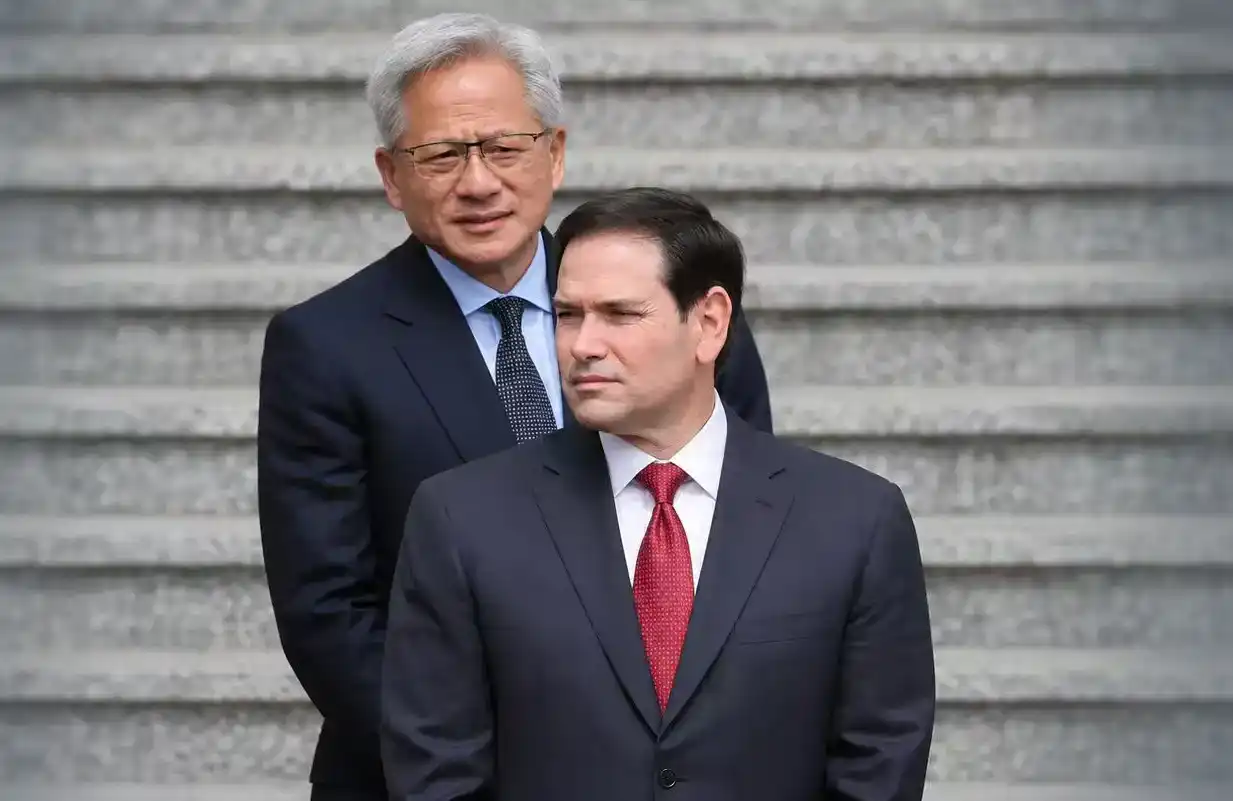
This article analyzes the 2026 ousting of Nvidia CEO Jensen Huang as a window into the internal power struggle within the American right. The author argues Huang's downfall was not primarily about insufficient political donations but about betting entirely on Trump's "expansionist" faction while alienating the party's hawks and populists. Timeline: Huang cultivated Trump through 2025 with donations and lobbying for chip exports, but reports emerged linking him to Megaspeed and a figure named Huang Le suspected of collecting information for a rival state. Secretary of State Rubio wrote a memo warning of the risk, which was ignored by Trump, then leaked to media after Democrats won Congress in the November midterms. Huang admitted an extramarital affair, and the board forced him out, tanking Nvidia's stock. The deeper cause: Trump's MAGA brand is losing influence, and the midterm defeat signals his lame-duck status. Rubio, only 55, is positioning himself for the post-Trump era by proving he can rein in the president's AI agenda—the memo served as a political springboard. Treasury Secretary Bessent, a hawk, consistently pushed to blacklist Megaspeed and now calls for major change at Nvidia's board. Trump's stubborn pro-AI expansion stance (despite 70% public opposition to local data centers) is attributed to donor money and family enrichment: his sons' ventures secured billions in federal contracts and loans, with presidential pardon power as a potential safety net. The article also raises a more conspiratorial theory that AI is becoming a价值观 (value) transmission tool replacing traditional media, and notes the ethnic background of tech leaders—while observing that Claude refused to engage with that framing. Finally, it asks whether Musk is next: unlike others who donated to both parties, Musk bet $474 million entirely on Republicans and lost badly, and Democratic-led Texas now threatens his data center and SpaceX projects. Democrats are expected to tighten AI policy, reclaim projects from Trump's family, and target Musk via Starshield and DOGE contract investigations.

marsbit1h ago

The Real Reason Jensen Huang Was Brought Down: Rubio's Political Springboard

marsbit1h ago

Trading

Spot
活动图片