# Institutional Demand Related Articles

HTX News Center provides the latest articles and in-depth analysis on "Institutional Demand", covering market trends, project updates, tech developments, and regulatory policies in the crypto industry.

Bitcoin lending and yield could drive next wave of institutional demand, Rootstock says

A new RootstockLabs report argues that Bitcoin's next wave of institutional demand could come from lending, yield generation and balance-sheet financing, expanding its role beyond a store of value. The firm estimates only 1.5% of Bitcoin's supply currently participates in lending and Bitcoin-native finance, while identifiable institutional investors hold roughly 3.9 million BTC. Putting more of those holdings to work could create additional demand without changing Bitcoin's fixed supply. The analysis identifies two emerging sources of financial utility: generating returns from existing holdings through lending and structured credit, and using Bitcoin alongside fiat-denominated liabilities to improve corporate balance-sheet efficiency. In a hypothetical scenario where institutional holdings double to 7.8 million BTC and 5% of those holdings earn a 5% annual yield, institutions would collectively generate 19,500 BTC a year. Drawing a comparison to gold, the report argues that successful monetary assets develop additional demand sources beyond their original store-of-value role. Tony DiCarlo, director of institutional propositions at RootstockLabs and author of the report, acknowledged that financialization carries real risks such as fractional reserves, rehypothecation and excess leverage, but argued Bitcoin's traits reduce some of that risk because collateral is verifiable on-chain, liquidation rules are programmable and supply cannot be diluted. He noted borrower defaults, custody failures and legal enforceability remain concerns, while volatility adds to leverage risks, but pointed to MARA's $750 million in Bitcoin-backed loans financing a planned Ohio power plant as evidence the benefits can outweigh the risks. DiCarlo also warned that institutional adoption could concentrate holdings among a few large custodians, noting ETF shareholders "own shares, not coins," but maintained that Bitcoin's decentralized architecture remains a fundamental advantage, enabling services with fewer intermediaries and lower counterparty risk and fees.

cointelegraph10/29 20:17

Bitcoin lending and yield could drive next wave of institutional demand, Rootstock says

cointelegraph10/29 20:17

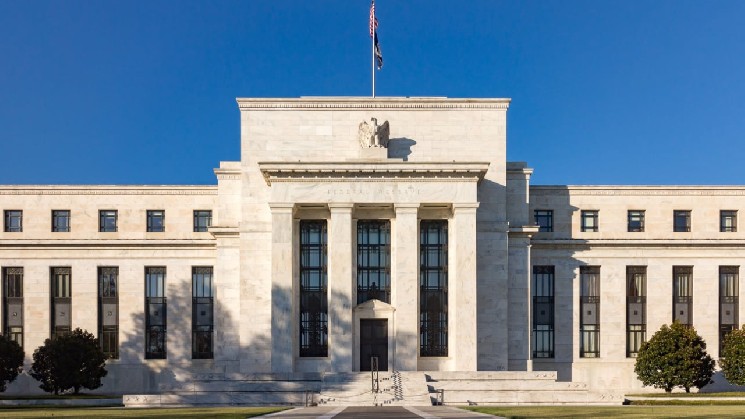
The Fed Turns Hawkish, Cryptocurrency ETFs See $2.6 Billion Net Inflow in September Against the Trend, Who is Buying?

Despite the Federal Reserve's hawkish stance, as revealed in the September FOMC meeting minutes, and an initial market dip, U.S. spot Bitcoin ETFs recorded significant net inflows of approximately $2.65 billion for the month. These inflows, the second-highest monthly figure this year, predominantly occurred after the Fed's 25-basis-point rate hike on September 16, suggesting institutional demand remains resilient. The minutes indicated a unanimous vote for the September hike, with most officials seeing another rate increase this year as appropriate, focusing on persistent inflation risks above the 2% target. While this pushed up near-term rate expectations and initially pressured risk assets like Bitcoin, the subsequent substantial ETF inflows, led by products like BlackRock's IBIT, countered the traditional "sell risk on hikes" narrative. Analysts suggest this pattern reflects a "rate-hike tolerable" trade. The well-telegraphed September hike was largely priced in, reducing post-decision uncertainty. Institutional investors, utilizing the regulated ETF channel, appear to be prioritizing Bitcoin as a portfolio allocation based on its structural demand and regulatory accessibility, rather than solely as a liquidity-driven hedge. The concurrent inflows into Ethereum and other crypto ETFs further support this view of broader institutional interest. The market outlook now hinges on three factors: whether upcoming inflation data (PCE/CPI) reinforces the case for a December hike, if rising Treasury yields meaningfully tighten financial conditions, and if spot ETF inflows can be sustained, especially if Bitcoin price approaches key cost bases for holders. A scenario where inflation moderates, the Fed pauses in October, and ETF flows stay positive could support crypto assets based on steady配置demand rather than expectations for imminent monetary easing.

marsbit10/08 15:46

The Fed Turns Hawkish, Cryptocurrency ETFs See $2.6 Billion Net Inflow in September Against the Trend, Who is Buying?

marsbit10/08 15:46

活动图片