Standard Chartered Launches RLUSD Custody on XRP Ledger

TheNewsCryptoPublished on 2026-10-12Last updated on 2026-10-12

Abstract

Standard Chartered has launched institutional custody services for Ripple's US dollar-backed stablecoin, RLUSD, on the XRP Ledger (XRPL). Announced on October 12, 2026, this service is available through the bank's regulated Dubai branch. It allows eligible institutional clients to hold RLUSD through the bank's secure custody infrastructure instead of self-custody. In a separate initiative, Standard Chartered is working with Ripple and LMAX Group on a plan to make RLUSD eligible as collateral for certain LMAX trading products. This proposed model would allow clients to use RLUSD held in custody as recognized collateral without physically transferring the tokens, aiming to increase flexibility, reduce transfer risks, and improve capital efficiency for institutional trading. Both companies emphasize that this collateral integration is still pending final documentation, testing, regulatory approvals, and has no announced launch date. The move is part of Standard Chartered's broader expansion of digital asset custody services, following its recent addition of LMAX Group as a custody client.

Standard Chartered has launched institutional custody for Ripple USD (RLUSD) on the XRP Ledger (XRPL), giving eligible clients access to the stablecoin through the bank’s digital asset custody services.

The bank announced the launch on October 12, 2026. The service is available through Standard Chartered’s Dubai International Financial Centre (DIFC) branch, which is regulated by the Dubai Financial Services Authority (DFSA).

The move gives institutional clients a way to hold RLUSD through a bank’s custody infrastructure rather than manage the assets themselves. RLUSD is Ripple’s US dollar-backed stablecoin, designed for use across payments, trading and other financial services.

Standard Chartered is also working with Ripple and LMAX Group on a separate plan to make RLUSD eligible as collateral for certain LMAX products. That arrangement is not yet live.

Ripple and LMAX Plan RLUSD Collateral Integration

Under the proposed setup, eligible RLUSD held in custody would be reflected in the collateral value recognised by LMAX Group, without requiring the underlying tokens to be transferred directly to the trading venue.

The companies say this model could give institutional clients more flexibility in using digital assets for trading while reducing risks linked to asset transfers and helping manage counterparty exposure. It is also intended to improve how clients deploy capital across trading and collateral accounts.

The planned integration remains subject to final documentation, successful testing, applicable laws and regulations, internal approvals and readiness in the relevant jurisdictions. The companies have not announced a launch date.

Standard Chartered’s Waqar Chaudry, global head of digital assets for securities and transaction services, said institutions want access to digital asset markets while maintaining established custody and risk-management standards.

Ripple’s stablecoin chief, Jack McDonald, said the partnership combines RLUSD on XRPL with Standard Chartered’s custody services and LMAX’s institutional trading infrastructure.

The announcement follows Standard Chartered’s broader expansion of digital asset custody services. In September, the bank named LMAX Group as a custody client across its Dubai and Luxembourg operations.

The latest development adds RLUSD to that institutional offering, while the planned collateral arrangement could extend the stablecoin’s use beyond holding and settlement into trading workflows.

[googlesitekit-end-of-content]
TagsRippleStandard CharteredxrpXRP LedgerXRPL

Trending Cryptos

Related Questions

QWhat digital asset custody service has Standard Chartered launched for institutional clients?

AStandard Chartered has launched institutional custody services for Ripple USD (RLUSD) on the XRP Ledger (XRPL).

QThrough which regulated branch is Standard Chartered offering the RLUSD custody service?

AThe service is offered through Standard Chartered’s Dubai International Financial Centre (DIFC) branch, which is regulated by the Dubai Financial Services Authority (DFSA).

QWhat is the separate plan that Standard Chartered is working on with Ripple and LMAX Group regarding RLUSD?

AThey are working on a plan to make RLUSD eligible as collateral for certain LMAX Group products, allowing eligible RLUSD held in custody to be reflected as collateral value without direct token transfer.

QAccording to Standard Chartered's Waqar Chaudry, what do institutions want in relation to digital asset markets?

AInstitutions want access to digital asset markets while maintaining established custody and risk-management standards.

QHow could the planned RLUSD collateral integration with LMAX benefit institutional clients?

AIt could give clients more flexibility in using digital assets for trading, reduce risks linked to asset transfers, help manage counterparty exposure, and improve capital deployment across trading and collateral accounts.

Related Reads

Conversation with Macro Analyst Jordi Visser: Micron Has 60%-80% Upside, the Longevity Economy Is a High-Confidence Main Theme

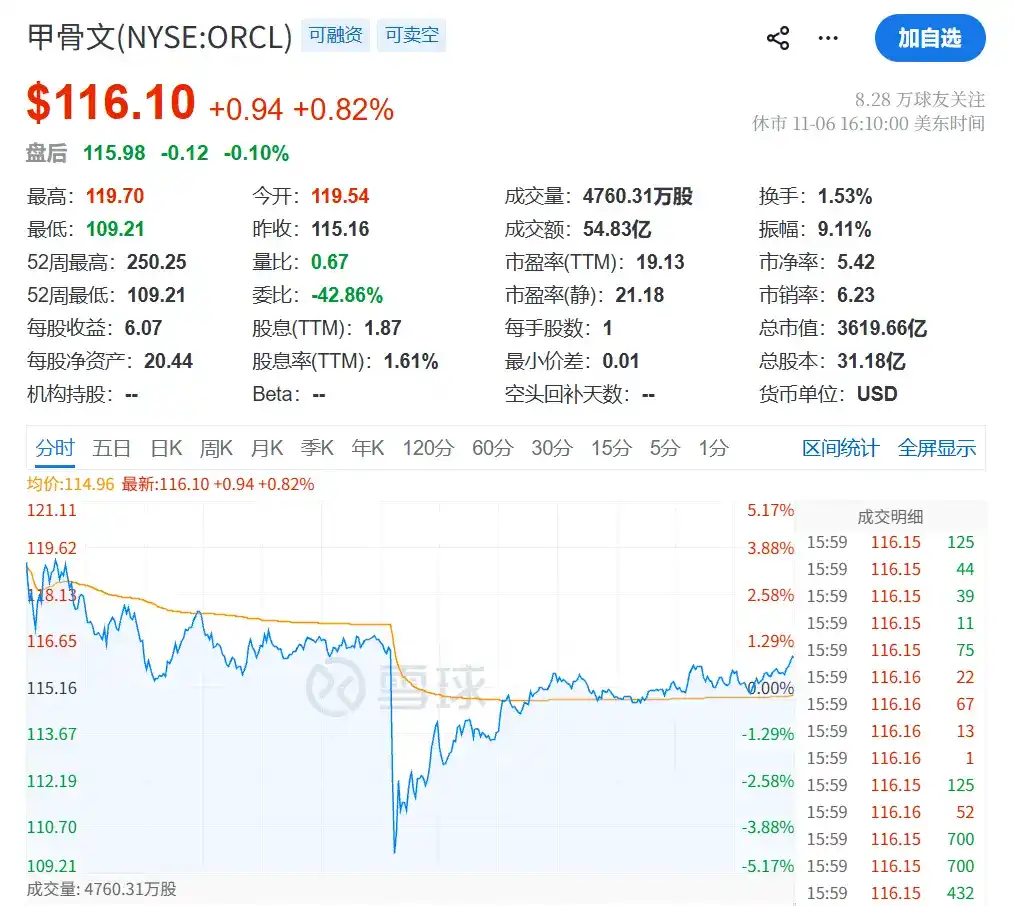
Macro analyst Jordi Visser argues that AI is the sole real driver of the economy today, with traditional GDP metrics failing to capture its value—AI-driven productivity shows up in corporate profit margins instead, as large firms grow revenue while hiring freezes. He attributes rising Treasury yields to AI-related capex and debt issuance, not Fed policy, and views credit default swap widening as a concentration-risk hedging issue rather than an AI bubble. He expects hyperscaler external financing to peak as data centers come online and free cash flow turns positive (citing Oracle's guidance). On labor, he sees Microsoft's buyout of 27% of its workforce as a template: AI-driven revenue-per-employee surges will push governments toward redistributing profits from capital to labor via tax restructuring, since personal income tax bases erode. He warns the market is discounting risks like labor turmoil, political gridlock, memory/data center bottlenecks, and cybersecurity. His key themes are agentic compute and the longevity economy. He is bullish on Eli Lilly as the purest longevity play, predicting it will become the S&P 500's largest company by 2030, and on Micron, which he re-entered around $800 with only ~10% downside and 60-80% upside, citing humanoid robot RAM demand, SpaceX's 10GW compute plan, and long-term supply agreements through 2030. He also holds crypto as his largest allocation, expecting 2027 to mark a breakout year for blockchain commercial applications and payment networks.

marsbit1h ago

Conversation with Macro Analyst Jordi Visser: Micron Has 60%-80% Upside, the Longevity Economy Is a High-Confidence Main Theme

marsbit1h ago

Michael Saylor: Four Centuries of Digital Credit Evolution

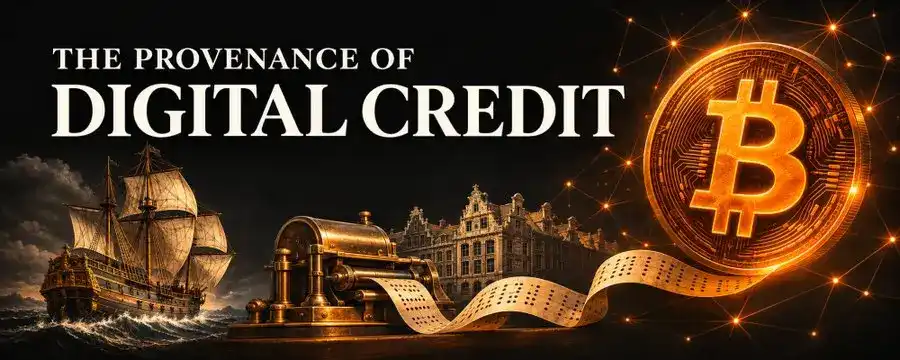
Michael Saylor traces the four-century evolution of digital credit, showing how centuries of financial infrastructure paved the way for Bitcoin-based corporate treasuries. The story begins in 1602 with the Dutch East India Company, which separated a company's capital duration from investors' holding periods through transferable shares. Preferred stock followed, exemplified by the Baltimore and Ohio Railroad's 6% perpetual preferred dividend in 1836 and Delaware's 1899 recognition of distinct share classes. Exchanges and tickers—from the 1792 Buttonwood Agreement to the 1867 stock ticker and 1971 Nasdaq—gave ownership a public market. U.S. securities and commodities law (1922–1974) established the distinction between assets a company holds and securities it issues. The 1940 Investment Company Act's "40% test" still shapes how bitcoin treasury companies use common stock, preferred stock, and debt. Tax law dating to 1921–1954 distinguishes return of capital from income, allowing preferred dividends to reduce cost basis before gains are realized. Shelf registration (Rule 415, 1982–1983) and at-the-market programs (1982, 2005) let companies prepare financing in advance and raise capital at market prices. Buybacks, recognized since 1828 with the 1982 Rule 10b-18 safe harbor, let firms manage capital in both directions. Bitcoin, launched in 2008–2009 and classified as a commodity by the CFTC in 2015, provides a new reserve asset, while companies supply capital structure, dollar liquidity, and distribution policy. Digital credit thus combines over 400 years of corporate ownership transfer, roughly 190 years of U.S. preferred stock, more than a century of tax cost-recovery rules, and four decades of modern shelf and ATM regulation into a familiar framework for investors.

marsbit3h ago

Michael Saylor: Four Centuries of Digital Credit Evolution

marsbit3h ago

The Hidden Risks Behind Anthropic's Nearly $1 Trillion Bet

Anthropic's IPO filing reveals a fragile, high-risk financing mechanism behind its AI ambitions. The company has committed to up to $895.4 billion in data center spending through 2045, with profits squeezed by rising compute costs. Rather than paying upfront for hardware, Anthropic relies on supplier-backed financing: Broadcom arranged a $63 billion equipment financing deal under which it absorbs losses if Anthropic defaults—up to roughly $43 billion once equipment is delivered. Google and AMD similarly tie funding to hardware leases or deployments. This shifts risk onto chipmakers' balance sheets, and because custom TPUs serve a narrower ecosystem than Nvidia GPUs, resale risk is higher. Analysts warn that while individual loans appear safer, risk concentration across the system is rising and harder to assess. Anthropic also can issue up to $42 billion in convertible notes to Broadcom to cover rent, with interest rates rising from 9% to 13% and conversion terms worsening if revenue targets are missed. Despite holding $146.6 billion in liquidity as of September 30, its massive forward obligations and tangled partnerships could limit access to investment-grade financing. Key concerns: whether revenue growth can outrun compute costs and cover future commitments, and whether drawing on credit lines signals distress. Anthropic's Direct initiative—separating data center leasing from chip purchases—and IPO proceeds could give it more flexibility, but ultimately debt repayment depends on end-customer revenue.

marsbit13h ago

The Hidden Risks Behind Anthropic's Nearly $1 Trillion Bet

marsbit13h ago

Trading

Spot

Hot Articles

What is XRP 2.0

XRP 2.0: A New Frontier in the Cryptocurrency Landscape Introduction to XRP 2.0 In the ever-evolving realm of cryptocurrency, new projects continuously emerge, vying for attention and adoption. One such promising initiative is XRP 2.0, a novel cryptocurrency project designed to leverage advanced blockchain technology and robust encryption methodologies. While the name draws parallels with Ripple’s XRP, it’s crucial to note that XRP 2.0 operates independently, focusing on enhancing transaction security, privacy, and scalability. As the digital financial landscape increasingly embraces decentralized solutions, XRP 2.0 aims to contribute meaningfully to web3 and the overall expansion of crypto projects. What is XRP 2.0? At its core, XRP 2.0 is a cryptocurrency project that aims to create a secure and decentralized digital currency ecosystem. Its foundational technology integrates sophisticated blockchain principles with cutting-edge encryption techniques. The overarching goal of XRP 2.0 is to establish itself as a reliable and efficient platform enabling swift transaction execution while prioritizing enhanced privacy protections for its users. The project is promoted as a solution to many limitations faced by existing cryptocurrencies, proposing a system that can handle a higher volume of transactions with improved speed and privacy. This versatility positions XRP 2.0 as a significant contender in a marketplace riddled with various digital currencies. Who is the Creator of XRP 2.0? The identity of the creator behind XRP 2.0 has been flagged as ‘Wilbur.’ However, comprehensive details regarding Wilbur or their associated entity remain elusive. The anonymity of many cryptocurrency creators is not an uncommon phenomenon in the industry, often designed to maintain a degree of privacy and security. Who are the Investors of XRP 2.0? As of now, specific information related to the investment foundations or organizations supporting XRP 2.0 is not publicly available. In the cryptocurrency sector, the backing by reputed investors can significantly influence a project's credibility and success, yet the transparency regarding the financial supporters of XRP 2.0 has not been established. How Does XRP 2.0 Work? XRP 2.0 stands out by employing a combination of blockchain technology and advanced encryption algorithms that ensures secure and decentralized transactions. Its innovative structure includes unique features designed to foster user engagement and broaden functionalities beyond conventional cryptocurrency transactions. Among these features, XRP 2.0 incorporates AI-powered capabilities, such as text-to-image and text-to-speech functionalities. These additions are designed to enhance the interactive experience for users, promoting broader applicability across various sectors. By bridging technological advancements with user-centered design, XRP 2.0 aims to capture the attention of a diverse range of individuals and enterprises looking to integrate cryptocurrency solutions into their operational frameworks. Timeline of XRP 2.0 Understanding XRP 2.0 requires examining the milestones that have defined its journey thus far: July 23, 2023: XRP 2.0 is introduced as a novel cryptocurrency project, aiming to revolutionize secure and decentralized transaction capabilities in the blockchain domain. September 8, 2023: The launching of another project, XRP20, occurs, marking the emergence of an ERC-20 token on the Ethereum blockchain that remains unrelated to XRP 2.0. November 13, 2023: The XRP Ledger undergoes a significant update with the release of rippled server software version 2.0.0. It is essential to note that this development is disconnected from the XRP 2.0 cryptocurrency project. Key Points About XRP 2.0 To distill the essence of XRP 2.0, several critical factors emerge: Unique Features: The inclusion of features like AI-powered text-to-image and text-to-speech further diversifies the potential applications of XRP 2.0. Blockchain Technology: The framework utilizes advanced blockchain mechanisms and encryption protocols, ensuring a secure and decentralized environment for transactions. Scalability and Privacy: XRP 2.0 prioritizes enhanced privacy protections in transaction processes and the scalability necessary to accommodate a growing user base. No Affiliation with Ripple: Importantly, despite its name, XRP 2.0 does not have any allegiance or collaboration with Ripple’s XRP, distinguishing its operational framework and objectives within the cryptocurrency ecosystem. Conclusion XRP 2.0 represents an ambitious venture into the cryptocurrency sphere, aiming to offer a combination of security, privacy, and efficiency in digital transactions. By integrating sophisticated technologies and user-friendly features, the project sets out to broaden the horizons of what cryptocurrency can achieve in today's digital economy. While the anonymity of its creator and lack of disclosed investors might raise questions for some, XRP 2.0's focus on advanced functionalities and decentralisation enhances its appeal amidst an increasingly crowded crypto market. As the cryptocurrency landscape continues to evolve, XRP 2.0 may yet emerge as a pivotal player in the expansion of secure and scalable blockchain solutions.

3.2k Total ViewsPublished 2024.04.01Updated 2024.12.03

What is XRP 2.0

Discussions

Welcome to the HTX Community. Here, you can stay informed about the latest platform developments and gain access to professional market insights. Users' opinions on the price of XRP (XRP) are presented below.

活动图片