ETF Outflows for Nine Consecutive Sessions, Assets Shrink by $2 Billion: Is Wall Street Really Starting to Abandon Ethereum?

Published on 2026-10-12Last updated on 2026-10-12

Abstract

U.S. spot Ethereum ETFs have seen no net inflows for nine consecutive trading days, with total assets dropping from $17.69 billion to $15.71 billion. However, the actual fund redemptions amount to approximately $542 million, with the rest mainly attributed to the decline in ETH's price; the daily outflow has also decreased from a peak of $201.9 million to $56.1 million.

Trading Snapshot

ETF Assets: Decreased from $17.69 billion to $15.71 billion between October 5th and 9th, a reduction of approximately $1.98 billion.

Actual Redemptions: Net outflows of about $542 million during the same period, accounting for 27.4% of the asset decline.

Price: ETH was around $2,496 at the time of writing, down 6.9% for the week.

Fund Flow Pattern: Outflows of $201.9 million on October 6th, dropping to $56.1 million on October 9th.

Nine Trading Days Without Net Inflows

Ethereum ETFs have not recorded a single day of net inflows for nine consecutive trading days. The total net assets of the products dropped from $17.69 billion on October 5th to $15.71 billion on October 9th, a decrease of roughly $1.98 billion. During this period, ETH traded around $2,496, down 6.9% for the week.

The decline in fund net assets stems from two sources: investors redeeming fund shares and the depreciation of the ETH held by the funds themselves. Between October 5th and 9th, the actual net outflows were approximately $542 million, with the remaining $1.44 billion coming from the drop in ETH's price. In other words, fund redemptions accounted for only 27.4% of the total asset shrinkage.

Daily Outflow Pressure is Gradually Easing

The last net inflow of this cycle occurred on September 28th, with an inflow of about $17 million that day. After entering October, outflows were $50.8 million on the 5th, $201.9 million on the 6th, $160.8 million on the 7th, $72.5 million on the 8th, and further decreased to $56.1 million on the 9th.

The consecutive outflows themselves are more noteworthy than any single-day figure, as a single large investor can cause significant redemptions on a given day, while nine straight days indicate sustained pressure. However, the outflow scale has gradually declined from its peak, suggesting the capital withdrawal resembles a progressive adjustment rather than a concentrated flight.

Price Decline Amplifies the Visual Impact of Asset Shrinkage

Fund flow data cannot explain the reasons for redemptions; investors may be rebalancing portfolios or taking profits. ETH is still up 1.1% over the past 30 days, and nine days is not a very long period in the highly volatile crypto market.

There is currently insufficient evidence to prove that Wall Street has completely exited ETH. Most of the asset shrinkage comes from the price itself, and daily redemptions are also weakening. However, ETH remains 49.5% below its all-time high of $4,946; if daily outflows again exceed the $201.9 million seen on October 6th, the argument for capital flight would be significantly strengthened, while any single day of net inflows could potentially end the current losing streak.

Related Reads

Breaking: "Source God" MiniMax Open-Sources H3 Image, the Strongest Open-Source Model Made in China

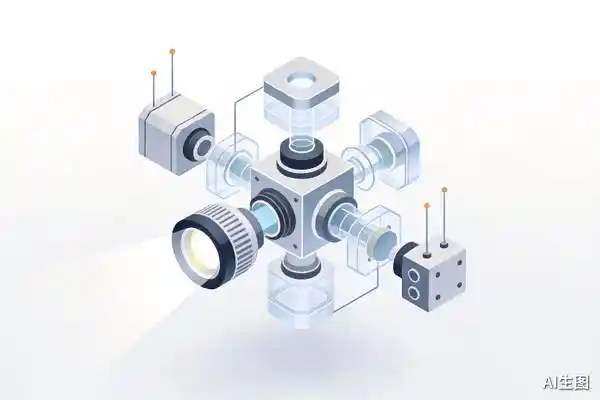
MiniMax has released H3 Image, an open-source image generation model positioned as SOTA among open-source image models and competitive with the global top tier. Weights, API access, and integrations with MiniMax Code, the open platform, and Hailuo AI were all made available on launch day. Key specs: up to 16 reference images, prompts up to 7,500 characters, and 4K (4096×4096) output generated in just 10–20 seconds—far faster than the minute-level times typical of mainstream models. The headline capability is instruction following: H3 Image handles long text, complex spatial relationships, diagrams, and multi-reference consistency far better than art-focused models like Midjourney, which struggle with text and spatial logic. Early testers highlighted photorealistic portraits without the usual "plastic skin," retro game screenshots upgraded to next-gen 3A quality, 3A game assets, large-text posters, American Sign Language gestures (48.1% accuracy vs. Moss's 20%), CAD-style blueprints, and mechanical exploded views. Tests included an Eiffel Tower reimagined as a cyberpunk relay station in CAD blueprint form, a quadruped robot's HUD with correctly perspective-aligned 3D bounding boxes, a dark fantasy game UI screenshot, felt stop-motion and pen-and-watercolor styles, and a 16-image "matching" task assigning heads, outfits, instruments, and environments without a single mismatch. An ORB-7 flashlight exploded view correctly ordered seven parts with exactly three screws, based only on a front view, cross-section, and parts list. The capability comes from a two-step process: H3's pretraining treated text, images, video, and audio as unified context, building strong image fundamentals; then post-training used reinforcement learning, reduced sampling steps, prompt enhancement, and deployment optimization. MiniMax had previewed a unified generation-editing image model in an August community Q&A. The "源神" (open-source god) reputation stems from H3's generous licensing: free commercial use under $20M annual revenue in covered regions, with separate licenses required above that or for deployment in the US, EU, UK, and South Korea. H3 surpassed 24 million downloads and 300+ derivative models within a month, with derivatives from NVIDIA researchers, Pika, and fal. The strategy: let the world run it on their own GPUs, build trust through code, then monetize. The article concludes that open source and profit don't conflict, and image demand—game art, e-commerce, industrial design—is denser than video, implying even greater opportunity.

marsbit7m ago

Breaking: "Source God" MiniMax Open-Sources H3 Image, the Strongest Open-Source Model Made in China

marsbit7m ago

Don't Just Say Your Product Is Great—First Say What Problem It Solves

Many startup teams introduce their projects by talking about technology and features—what tech they used, what functions they built, how many patents they hold, and how well the product performs. These matter, but for first-time audiences there is a more direct question: what problem does this project actually solve? No matter how rich a product's features are, if it doesn't clearly explain who it serves and what need it meets, outsiders will struggle to understand its value. Real user needs are the starting point of a project story. Many interesting startups come from a concrete problem—an inefficient step in a traditional industry that a team redesigns with AI, consumers facing choice overload for which an entrepreneur develops a new product, or difficult manufacturing problems a technical team tackles with new equipment and processes. What is most worth introducing is often not the technology itself, but why the team is doing this and what change it brings users. Teams should answer: What unmet need did you find? What problem does your product solve? How does it differ from existing solutions? Where is the product now? Good projects need a chance to tell their story. Early-stage teams may have solid technology but lack professional channels to reach broader industry audiences. 36Kr's "Project Recommendation" offers a showcase opportunity, open to hard tech, AI, robotics, consumer, enterprise services, healthcare, and advanced manufacturing. Teams can submit materials about their product, technology, use cases, and progress; approved projects may receive free coverage and exposure on 36Kr, which focuses not only on new technology but on the real needs behind it and the value teams are creating. A startup doesn't need a complete business map or big market results from the start—if it is seriously solving a problem, it has a story worth telling. Submit your project through 36Kr's "Project Recommendation" to let your product, technology, and real business story be better understood. Good projects are not only built—they deserve to be explained clearly, and to be seen earlier.

marsbit8m ago

Don't Just Say Your Product Is Great—First Say What Problem It Solves

marsbit8m ago

The Crypto World Doesn't Lack Tokens, It Lacks Trust: A New Vision for Ethereum's 'Human Commitment Markets'

The crypto world doesn't lack tokens—it lacks trust. Independent researcher hitesh.eth argues that if open finance keeps leaving ordinary people feeling unsafe, they will trade freedom for predictability, accepting surveillance, gatekeeping, and custodial control—hollowing out the movement's original ideals even as the technology survives and gets absorbed by institutions. Drawing on Timothy C. May's crypto-anarchist vision (where reputation is central), Eric Hughes on privacy as selective self-disclosure, David Chaum's blind credentials, Wei Dai's b-money, and Elinor Ostrom's polycentric governance, the article proposes "Human Commitment Markets" on Ethereum. Instead of starting with tokens, these communities start with real services: escrowed payment, staked collateral, predefined evidence of completion, and agreed dispute-resolution paths. Three pillars—commitment, collaboration, and reputation—must be threaded with privacy throughout. Reputation should be domain-specific and non-transferable (using standards like ERC-5484 and ERC-1155/6909 for service credits), with zero-knowledge proofs verifying claims without exposing personal data, and scoped nullifiers preventing reuse. Stealth addresses (ERC-5564) reduce linkage but don't hide amounts, so full privacy needs extra infrastructure—echoing Vitalik's "Three Transitions." Disputes go to independent evaluators who verify real-world evidence, while contracts enforce escrow payouts. Systems need fallback paths, caps on early exposure, gradual trust-building for newcomers, and immutable, forward-only rule changes with exit rights. Pilots should be small: one community, one settlement asset, no speculative governance token, tested on Sepolia, audited, measured by real outcomes—completed jobs, repeat customers, dispute times, losses—not token prices. AI agents (per draft ERC-8004) could participate with capped accounts and staked collateral. Crypto can't solve coercion or physical-world fraud, but it can reduce reliance on blind trust and build economies worth staying in, not just tokens worth flipping.

marsbit57m ago

The Crypto World Doesn't Lack Tokens, It Lacks Trust: A New Vision for Ethereum's 'Human Commitment Markets'

marsbit57m ago

21 Banks Pledge $270 Million to Build New Stablecoin Faro: What to Watch

Goldman Sachs, Citi, Santander, and Deutsche Bank are among institutions that have reportedly committed a combined $270 million to cover five years of operating expenses for a joint-venture stablecoin company, internally codenamed Project Faro. The US-registered venture was announced in September 2026 by 21 institutions, with plans to establish the company in H2 2026 and issue a dollar stablecoin in H1 2027, followed by a euro stablecoin. However, the company's name and CEO remain undisclosed, and none of the four prerequisites—entity registration, licensing path, reserve custody, and blockchain design—have been completed ahead of the GENIUS Act's January 18, 2027 effective date. The budget is modest relative to incumbents: Circle's quarterly revenue is about 16 times Faro's annual budget, and the $270 million represents less than 1.1% of the roughly $290 billion stablecoin market, where USDT and USDC together hold over 80% share. Faro also trails competitors—Open Standard's Open USD, issued by Stripe's Bridge, is already live with over 140 participants, while Europe's Qivalis has obtained a Dutch e-money license. Banks are hedging across multiple tracks, with BBVA in both Faro and Qivalis. Key open questions include whether banks will mandate distribution of their stablecoin and how reserve yields—currently around 3.5% for Circle—will be split among issuers, distributors, and banks. Before January 2027, the company name, leadership, licensing path, and first chain will determine whether Faro becomes an operating issuer or remains an expensive letter of intent.

marsbit58m ago

21 Banks Pledge $270 Million to Build New Stablecoin Faro: What to Watch

marsbit58m ago

Inflation Stickiness Has Not Yet Subsided: CICC Maintains Its Call for a 25 Basis Point Rate Hike in December

US October CPI rose 0.4% m/m (vs 0.6% prior) and core CPI rose 0.3% m/m, both above expectations; no y/y data due to last October's government shutdown. Inflation remains sticky, with core CPI up 0.3% for a third straight month, supporting further Fed tightening. Fed Governor Waller floated a possible 50bp December hike, but CICC argues policy is not clearly "behind the curve" and financial conditions have tightened modestly, so accelerated tightening is unnecessary. CICC maintains its baseline call of a 25bp hike in December, keeping this cycle gradual and mild. Energy inflation eased (0.7% m/m vs 5.2% prior), though electricity rose 0.9% amid数据中心 power demand. Food CPI rose 0.5%, a five-month high, with broad-based gains across fruits/vegetables, dairy and meat, partly reflecting pass-through from earlier energy costs. Core goods rose 0.2%, with used cars down 1.2% and AI-related hardware inflation easing slightly. Housing CPI rose 0.3%, with OER and rent both up 0.3% and 0.2% respectively, showing no acceleration. Supercore services remained sticky at about 0.4%, with transport services up 0.8%; service inflation sources remain broad. CICC notes the 0.3% core reading meets Waller's condition for considering a 50bp hike, but argues larger hikes are meant to catch up on insufficient tightening, whereas recent tightening is already taking effect and inflation shows stickiness rather than acceleration. Waller himself supported a pause in October. Even hawk Dallas Fed's Logan favors two more 25bp hikes. CICC's baseline remains a 25bp December hike within a gradual, moderate tightening cycle.

marsbit1h ago

Inflation Stickiness Has Not Yet Subsided: CICC Maintains Its Call for a 25 Basis Point Rate Hike in December

marsbit1h ago

Trading

Spot
活动图片