LATEST NEWS: Fed Meeting Minutes Released! Here's Everything You Need to Know

cryptonews.ruPublished on 2026-10-08Last updated on 2026-10-08

Abstract

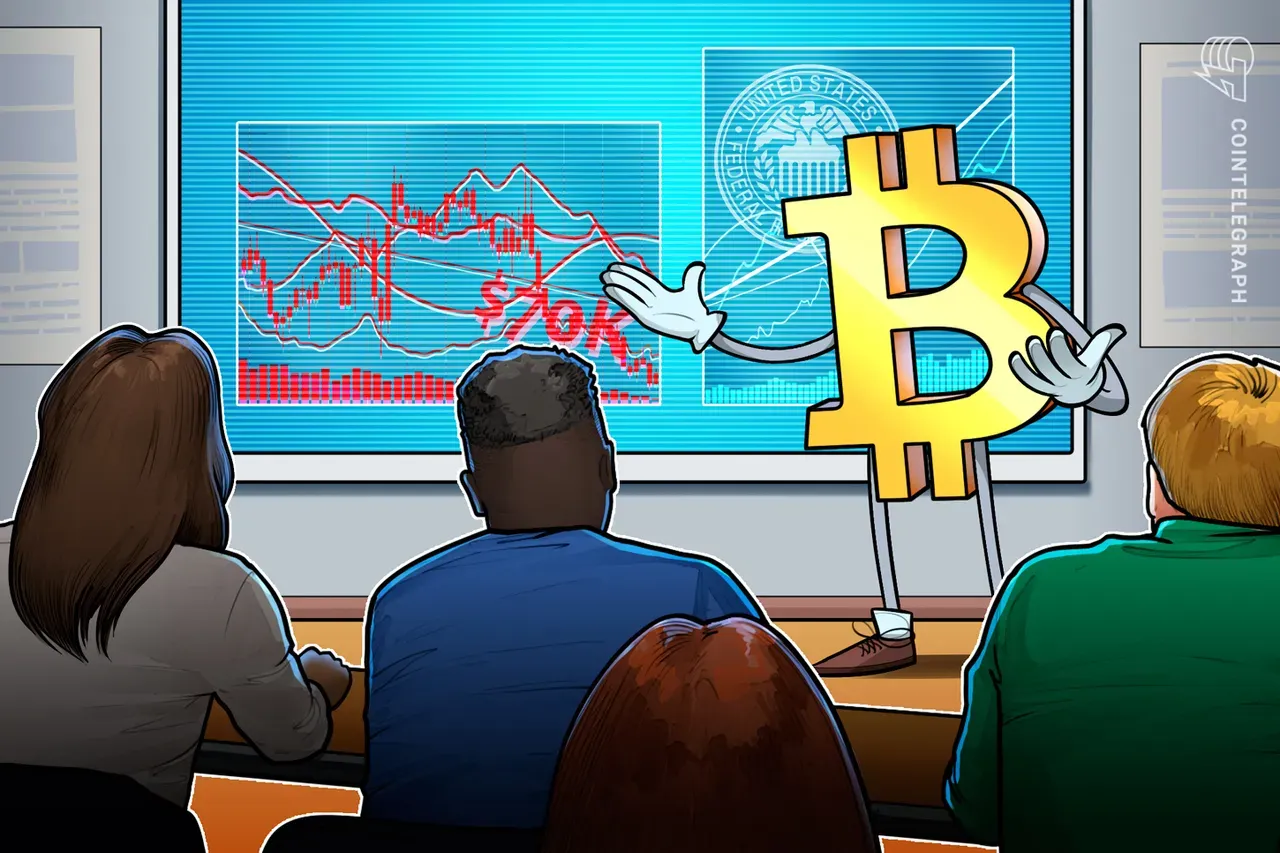
The Federal Reserve has released the minutes from its September Federal Open Market Committee (FOMC) meeting. The minutes revealed that most Fed officials deemed another interest rate hike before the end of 2026 would be appropriate. All members present at the meeting supported raising the benchmark interest rate by 25 basis points in September. A majority of participants also judged that an additional rate increase may be warranted by year's end. While opinions differed on the justification for supporting further rate hikes, inflation risks were a key agenda item. Participants generally noted that inflation risks are tilted to the upside, with some stating these risks have increased further recently.

The Federal Reserve has released the minutes of its September meeting of the Federal Open Market Committee (FOMC). The minutes showed that a majority of Fed officials believe one more interest rate hike before the end of 2026 would be quite appropriate.

According to the minutes, all members present at the meeting supported a 25 basis point increase in the policy rate in September. A majority of participants also judged that one more rate hike might be needed by the end of the year.

While Fed officials expressed differing views on the justification for supporting interest rate increases, inflation risks were a key agenda item at the meeting. Participants generally noted that inflation risks are skewed to the upside, with some participants stating that these risks have increased further recently.

Related Questions

QWhat did the Federal Reserve release according to the article?

AThe Federal Reserve released the minutes (protocols) of its September meeting of the Federal Open Market Committee (FOMC).

QWhat was the majority view among Fed officials regarding interest rate hikes through the end of 2026?

AMost Fed officials believed one more interest rate hike by the end of 2026 would be quite appropriate.

QWhat action did all members present at the September meeting support?

AAll members present supported raising the benchmark interest rate by 25 basis points in September.

QWhat was a key agenda item regarding inflation risks mentioned in the minutes?

AParticipants generally noted that the risks to inflation were tilted to the upside, with some participants stating these risks had increased further recently.

QWhat did most participants think might be necessary by the end of the year?

AMost participants also judged that one more rate increase by the end of the year might be necessary.

Related Reads

OpenAI launches AI payments in ChatGPT with Visa, Mastercard and Amex

OpenAI launched a feature letting AI agents make purchases for users directly within ChatGPT through existing payment networks, in partnership with American Express, Mastercard, and Visa. The wallet uses biometric verification like facial recognition or fingerprints to authorize transactions, and payment networks generate tokenized card credentials for each approved purchase, keeping users' actual card details from merchants and AI agents. The service is rolling out to ChatGPT Pro subscribers in the US with eligible US-issued cards, with plans to eventually support purchases within preset spending limits and other restrictions without requiring approval for each transaction. The launch reflects AI companies moving beyond product recommendations into executing transactions, potentially changing how consumers interact with online merchants. OpenAI is working with payment processors and fraud prevention firms to support AI purchases through existing checkout systems. It joins a growing field: Google introduced its Agent Payments Protocol in 2025, Visa and Mastercard have launched AI transaction initiatives, and crypto companies like Coinbase (x402 protocol), Circle (Agent Stack), and Crossmint are building payment infrastructure for AI agents. Global agentic commerce transaction value is expected to reach $1.5 trillion by 2030, up from an estimated $8 billion in 2026, according to Juniper Research.

cointelegraph39m ago

OpenAI launches AI payments in ChatGPT with Visa, Mastercard and Amex

cointelegraph39m ago

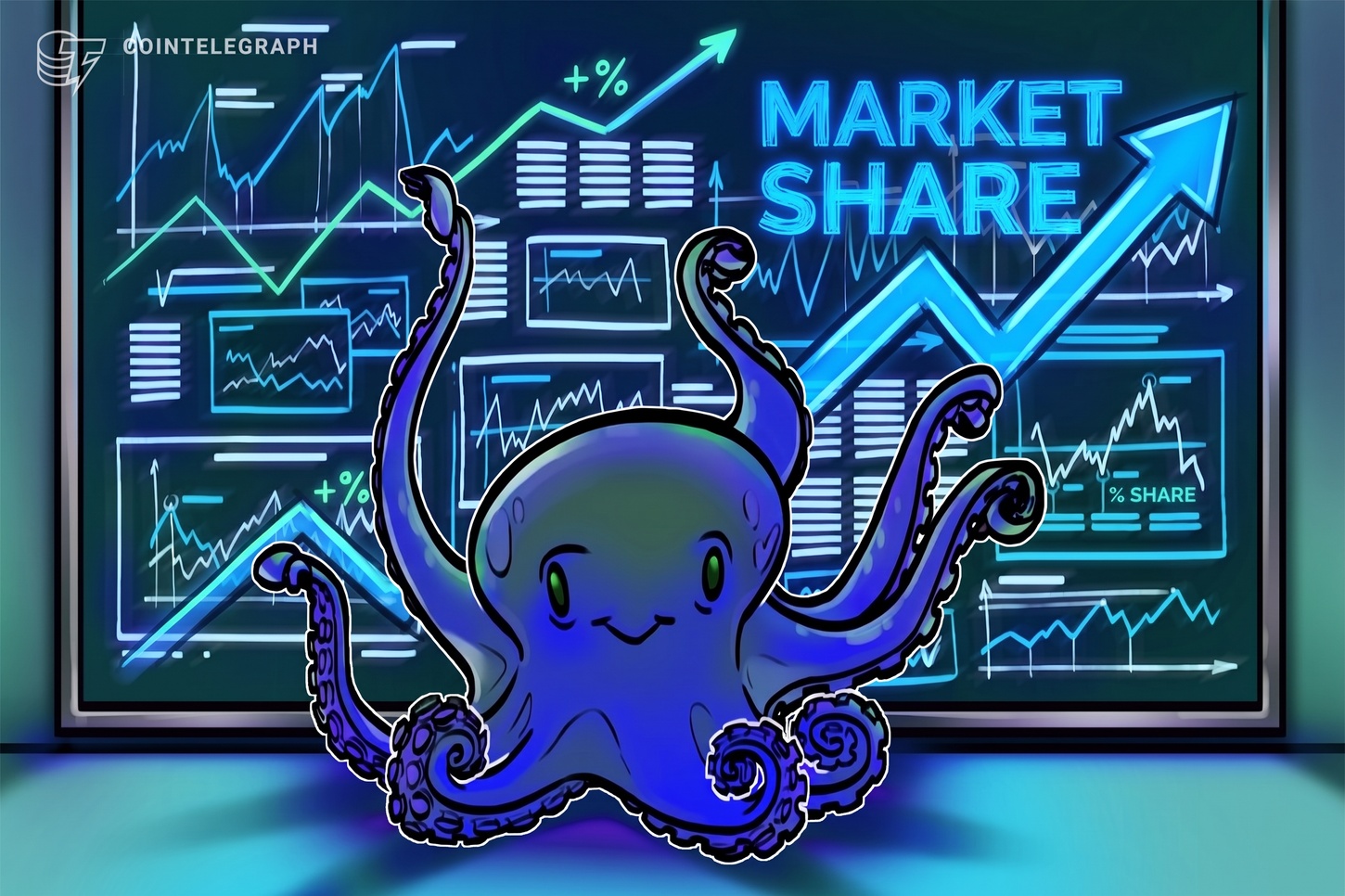
Kraken parent Payward gains market share as slower trading weighs on earnings

Kraken parent Payward nearly doubled its share of global crypto spot trading to 6.5% in September from 3.3% a year earlier, even as weaker trading activity weighed on earnings. The market-share gain reflects a larger portion of spot trading relative to competitors rather than increased activity; the company handled $353 billion in transactions in Q3, down 30% year over year. Adjusted EBITDA fell to $60 million from $178.6 million a year earlier, and total platform margin fell 12% to $487 million. Payward has spent two years expanding beyond its core exchange through acquisitions in derivatives, proprietary trading, tokenized assets and payments, including NinjaTrader, Breakout, Bitnomial and Reap. Derivatives contracts with per-contract fees rose 84% to 66 million, and margin from subscriptions and other paid services rose 59% to $125 million. Results improved from Q2, with total transaction volume up 22% and platform margin up 12% to $487 million from $436 million. Margin from customer-held assets, including staking, rose 26% to $128 million, accounting for roughly half the quarterly increase. Adjusted EBITDA climbed to $60 million from $23 million, though it remained down 66% year over year. Asset- and access-based services accounted for 52% of total platform margin, up from 46%. Payward confidentially filed for a US IPO in November 2025 but paused plans in March; the earliest potential listing window under consideration was Q2 2027.

cointelegraph1h ago

Kraken parent Payward gains market share as slower trading weighs on earnings

cointelegraph1h ago

Metaplanet swings to $170M loss as Bitcoin sale hits earnings

Metaplanet, the world's second-largest publicly traded corporate Bitcoin holder, reported a net loss of 27.16 billion yen (about $170 million) in the first nine months of 2026, compared with a profit of 13.53 billion yen ($84.6 million) a year earlier. The loss was driven by a 19.17 billion yen ($119.8 million) loss on the sale of 10,000 BTC and an 8.04 billion yen ($50.3 million) loss from a decline in the value of its Bitcoin holdings, which outweighed gains in its operating business. During the quarter, Metaplanet sold 10,000 BTC for 124.7 billion yen, temporarily held the proceeds in cash, stablecoins and other liquid assets, then spent 149.9 billion yen to buy 11,000 BTC at an average price 9.3% higher per coin. The company said the sale was intended to demonstrate to rating agencies and bond investors that it could convert Bitcoin into cash to meet financing obligations. Holdings ended September at 44,000 BTC, a net increase of 1,000 coins. Metaplanet borrowed against its Bitcoin during the quarter, raising its credit line debt to $649.5 million at the end of September from $414 million at the end of June. It funded purchases from the second quarter onward with borrowed funds, bond proceeds, exercised stock acquisition rights and revenue from its Bitcoin options business. Interest expense rose 56% quarter over quarter to 1.36 billion yen ($8.5 million), and short-term borrowings and bonds payable totaled 110.5 billion yen ($691 million). For the nine months through September, revenue rose 30.5% to 5.9 billion yen ($36.9 million) and operating profit increased 26.5% to 3.48 billion yen ($21.8 million). The company cut its full-year revenue forecast to 6.5 billion yen ($40.6 million) from 16 billion yen ($100 million). The results come as Bitcoin treasury companies face pressure from falling prices and index removals; MSCI confirmed Strategy, Metaplanet and Upexi will be removed from its equity indexes at the Nov. 30 market close. Bitcoin fell below $70,000 on Friday, trading around $68,600, down about 9% over the previous week.

cointelegraph4h ago

Metaplanet swings to $170M loss as Bitcoin sale hits earnings

cointelegraph4h ago

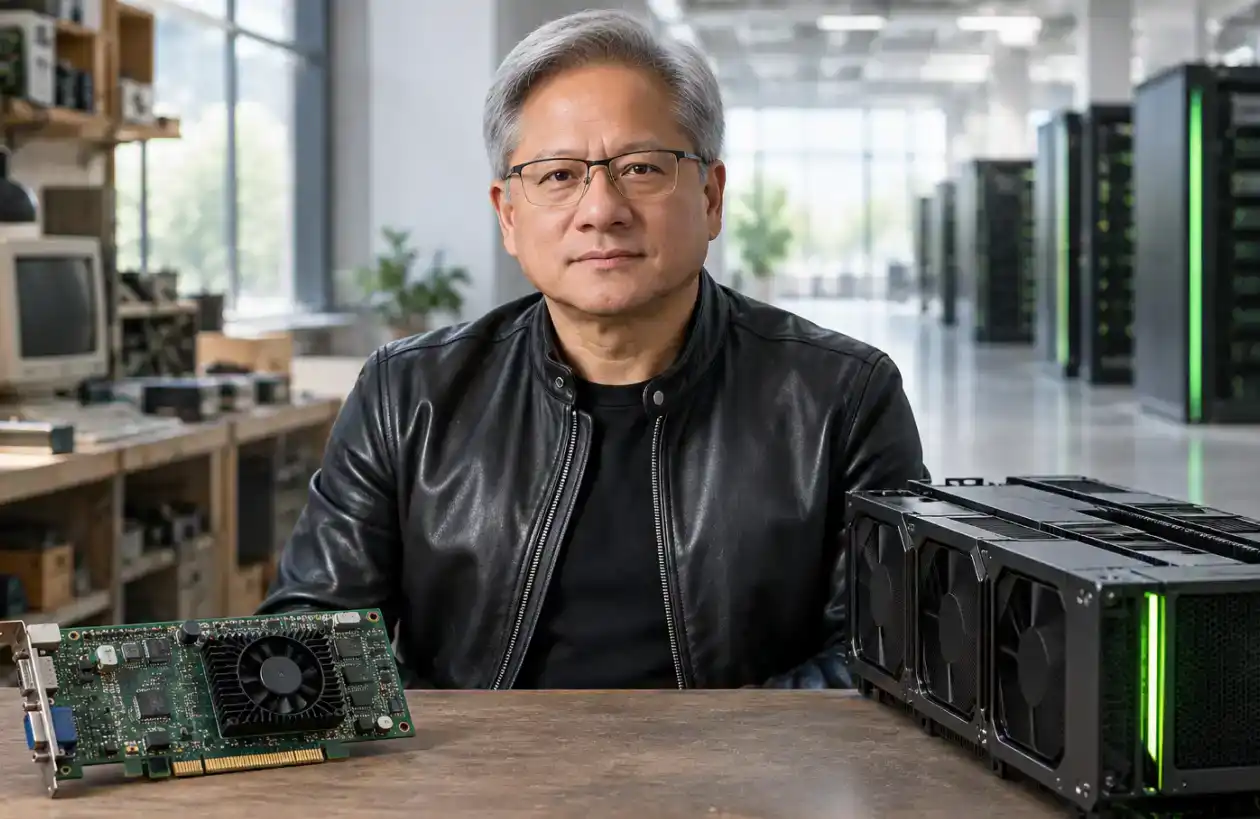
From Near Bankruptcy to Five Trillion: Jensen Huang and His Thirty-Three Years at NVIDIA

In November, at NVIDIA's Santa Clara headquarters, a two-page press release announced CEO Jensen Huang's immediate resignation as president, CEO, and director, following his admission of marital infidelity and a board investigation into related conduct. CFO Colette Kress became interim CEO, and Harvey Jones was named board chairman. Huang, who had just overseen NVIDIA's rise to become the first company worth $5 trillion, retained only his roughly 3% stake and no operational role. The article traces NVIDIA's 33-year history from its 1993 founding at a Denny's in East San Jose, where Huang and two engineers bet on making graphics chips for PCs. Their first chip, NV1, failed, but a pivotal meeting with Sega's Shoichiro Irimajiri converted a $5 million contract payment into an investment, saving the company. After layoffs and self-teaching from Silicon Graphics textbooks, NVIDIA's RIVA 128 succeeded in 1997. The company went public in 1999 and weathered crises including defects, financial downturns, and industry consolidation. Huang's long-term bet on CUDA, initially met with silence and skepticism, positioned NVIDIA for the AI boom. After AlexNet in 2012, he committed the company to deep learning, personally delivering the first DGX-1 to OpenAI in 2016. ChatGPT's 2022 launch triggered explosive growth, with revenue reaching $215.9 billion. Despite surviving decades of near-collapse, it was personal scandal—not business failure—that ended his tenure. As the article notes, for 33 years he woke believing the company was 30 days from collapse; this time, the 30th day was his own.

marsbit6h ago

From Near Bankruptcy to Five Trillion: Jensen Huang and His Thirty-Three Years at NVIDIA

marsbit6h ago

Trading

Spot
活动图片