On the evening of October 14, Dutch lithography giant ASML released its latest third-quarter financial report. Revenue reached 11.662 billion euros, a year-on-year increase of 55.2%, surpassing the 10-billion-euro mark for the first time in a single quarter, but slightly below industry expectations. Of course, ASML currently operates a legal 'monopoly' business, and its revenue expectations are essentially tied only to its own capacity, making such forecasts less significant.
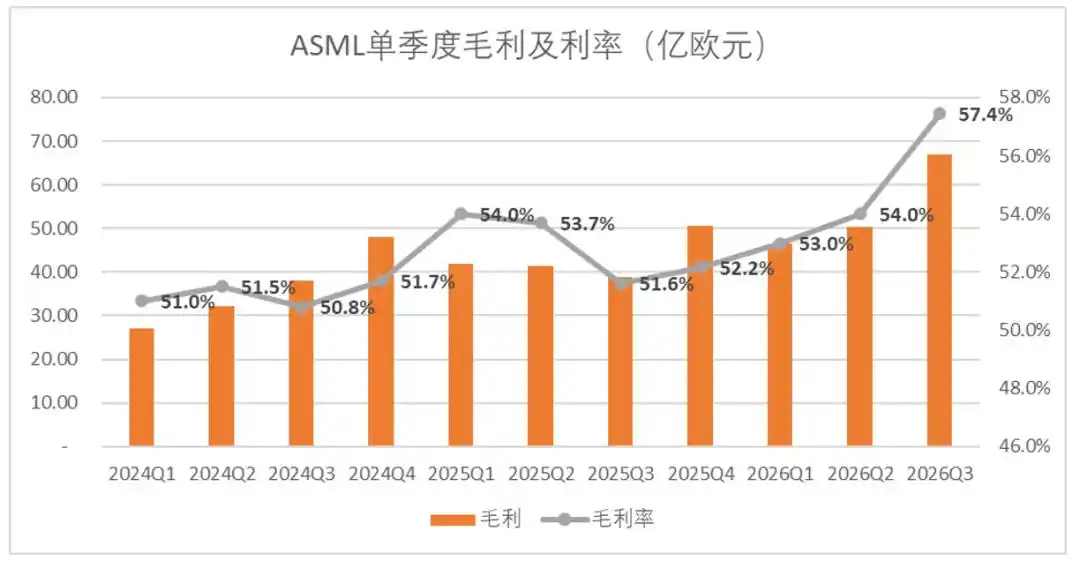
What exceeded expectations was the profit level. The third-quarter gross profit margin reached 57.4%, with a net profit margin of 42.5%, both setting new historical highs. Considering ASML's recent across-the-board 10% price increase for Samsung and SK Hynix, it's clear that how much money ASML wants to earn is now largely in its own hands.
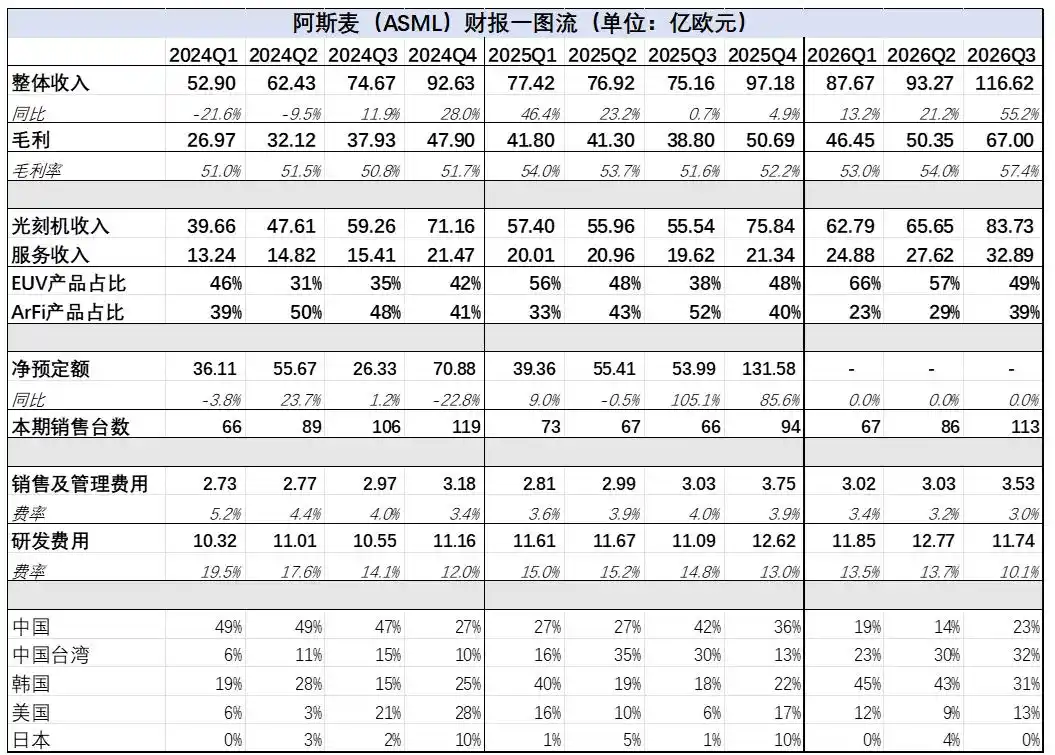
(One-page overview of the financial report as shown in the chart, unit: billion euros, source: company financial report, compiled by Financial Report Journal)
Looking at the financial report, in our view, behind the impressive performance, every family has its own difficulties. The flip side of ASML's order book being filled until 2028 is that it also locks in ASML's valuation space.
Capacity Can't Keep Up, Focusing on Ancillary Services, Revenue Breaks 10 Billion Euros for the First Time
As the upstream source of the AI industry's explicit value chain, ASML's revenue performance has always been relatively straightforward. Quarterly revenue depends solely on two factors: quarterly capacity and unit price.
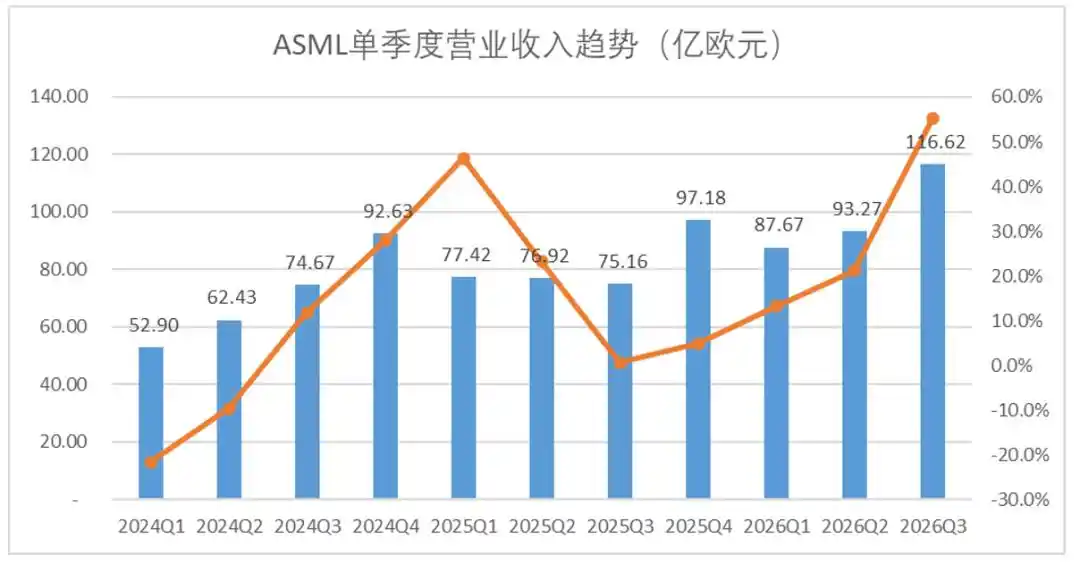
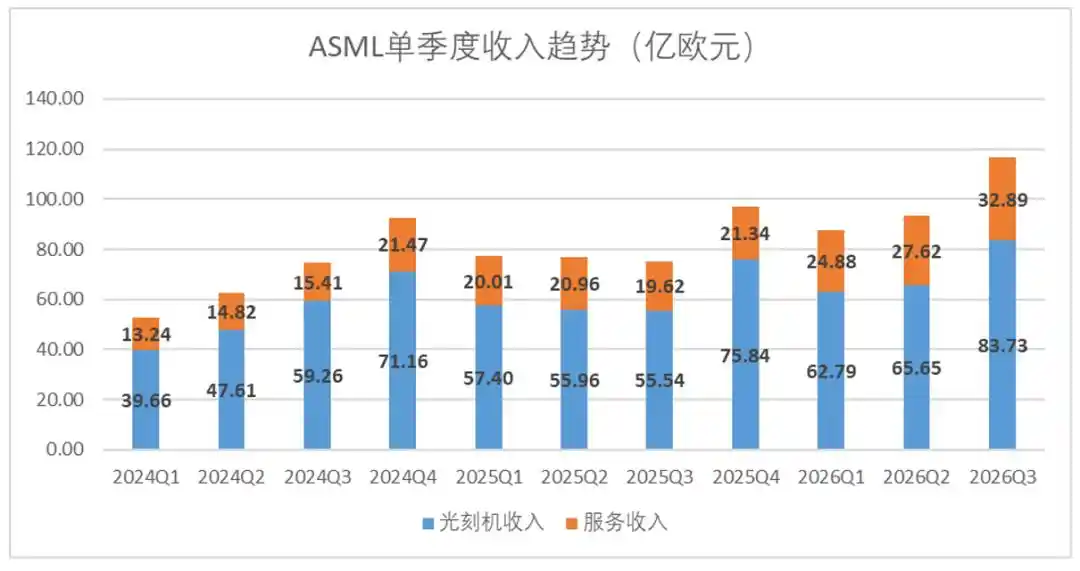
In the third quarter of this year, ASML's quarterly revenue finally broke through the 10-billion-euro mark, recording 11.662 billion euros, a sharp year-on-year increase of 55.2%. This also marks the fastest-growing single-quarter financial report in nearly three years, with two core reasons:
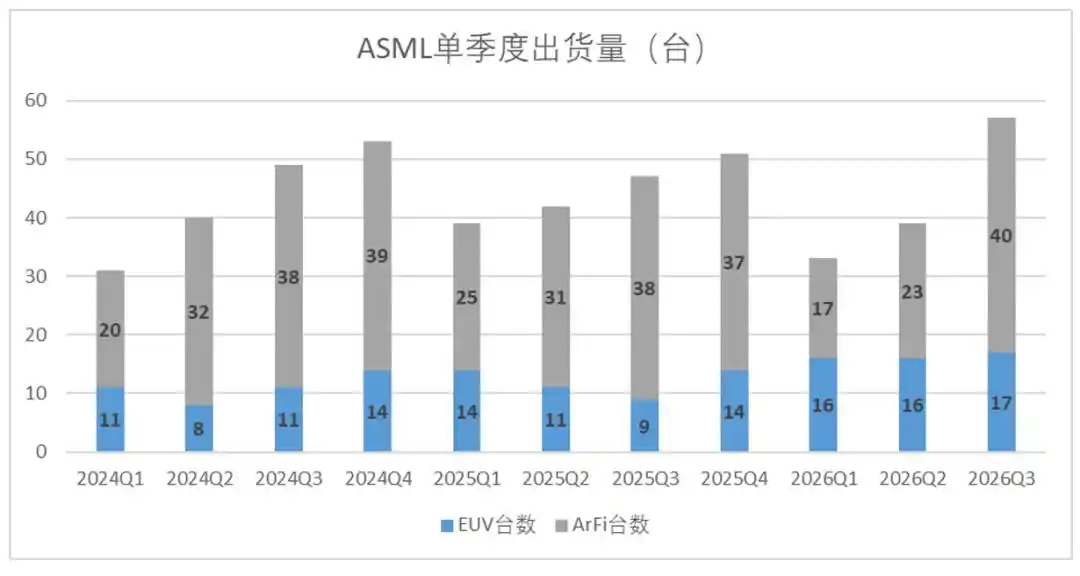
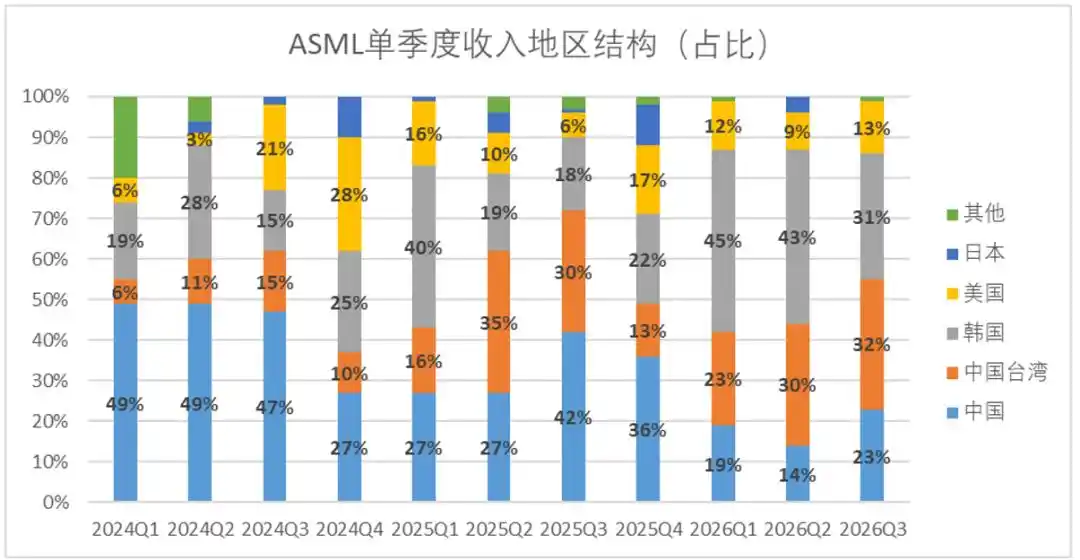
The first is an expected acceleration in deliveries. This quarter, ASML delivered 17 EUV lithography machines, an increase of one unit sequentially, and ArFi shipments reached 40 units, both setting new single-quarter highs for its core products. Notably, order recovery from the Chinese mainland region was relatively evident.
The second reason is that since capacity cannot find new increments, ASML focuses on extracting more from the existing base. Service revenue from the existing installed base hit a new single-quarter high. Breaking down the revenue structure, ASML's service revenue in Q3 reached 3.29 billion euros, a record for a single quarter. Clearly, with capacity constraints, ASML hopes to capture more revenue from maintaining and upgrading existing products.
Management also stated frankly during the earnings call that the increase in service revenue: "mainly comes from strong customer demand for productivity upgrades for EUV and DUV systems," indicating a surge in demand for maintenance and iteration of already delivered products.
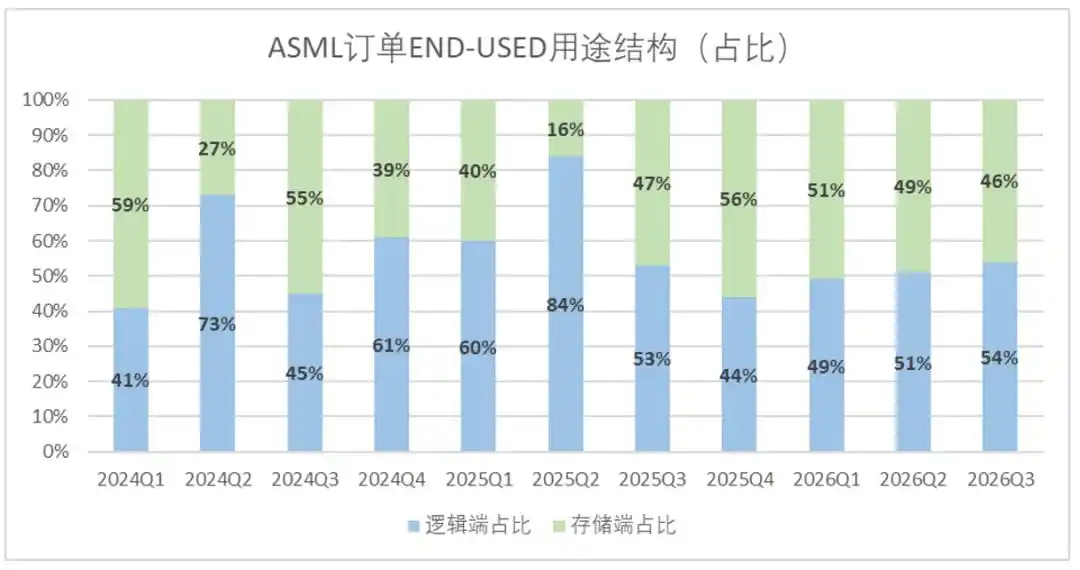
Looking at the order structure, the end-use distribution of lithography machines is quite stable. Since the storage cycle boom in Q3 2025, orders for logic chips and memory chips have been roughly split fifty-fifty, and the third quarter of this year was no exception.
Meanwhile, contract liabilities grew significantly. Customer prepayments and long-term deferred revenue already invoiced increased by 5.7 billion euros in the quarter, rising to 9.3 billion euros. Capacity is essentially locked in, and in the short to medium term, ASML's revenue fluctuations will not be significant.
Under Legal 'Monopoly', Net Profit Margin Exceeds 40%
Compared to the revenue performance, the most surprising aspect of this quarter for ASML was its profit performance. In Q3, ASML recorded gross profit of 6.7 billion euros, with the quarterly gross profit margin reaching a new high of 57.4%. The main reason was the increase in high-margin service revenue.
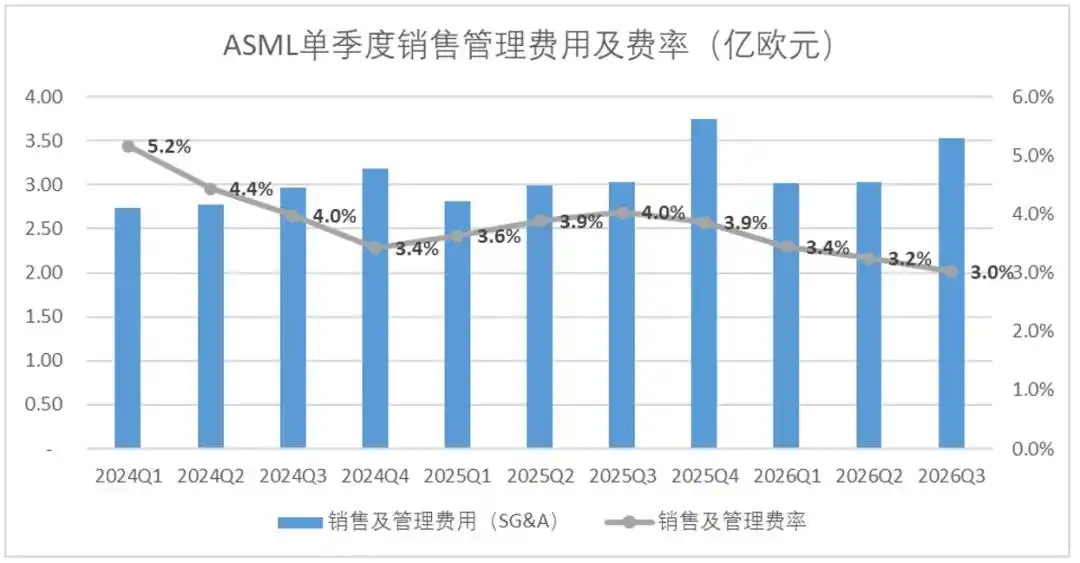
Apart from selling at 'high' prices, ASML completely avoids excessive investment on the cost side, with expense control being very stable. The marginal cost of its expense rate is diluted almost to the point of being negligible. The overall expense rate in Q3 this year decreased by 570 basis points year-on-year and 380 basis points sequentially.
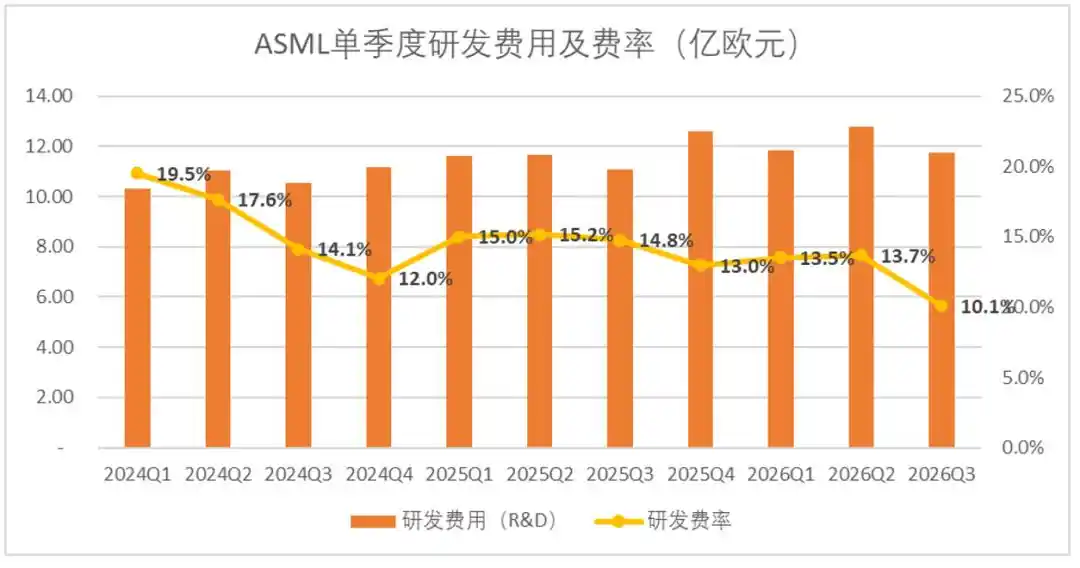
Because of this, ASML recorded a net profit of 4.96 billion euros in Q3, a new single-quarter high, with a net profit margin reaching a staggering 42.5%. This figure includes a 510 million euro revaluation gain from its stake in Mistral AI. Excluding the impact of this investment income, operating profit still doubled, and the net profit margin remained above 38%.
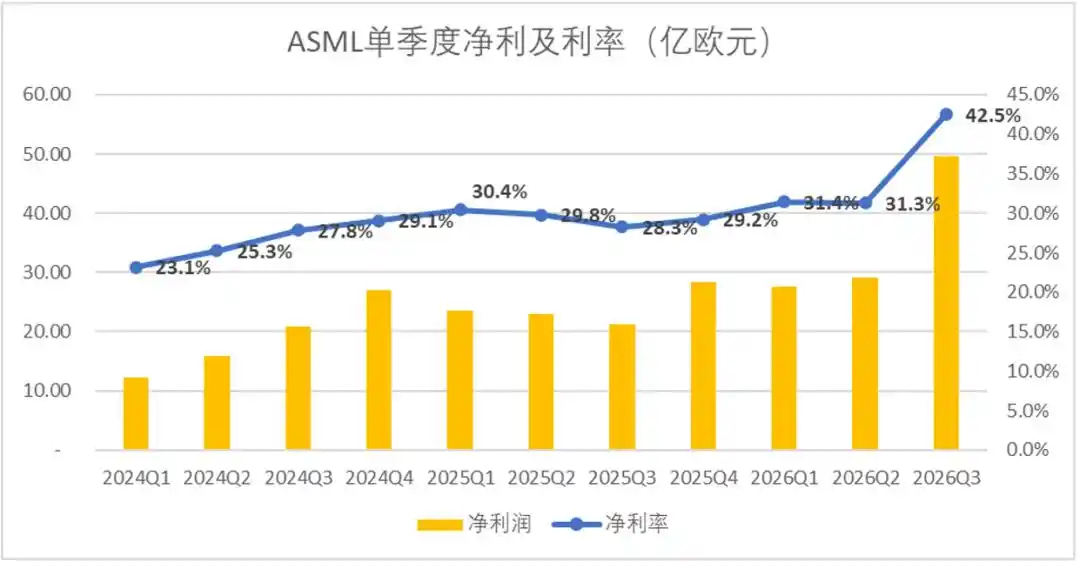
For ASML, even charging 5%-10% more has a negligible impact on downstream industry demand. After all, prices for memory and logic chips have been extremely volatile this year. It is expected that ASML's profit margins will show significant increases in the next two years before its capacity is fully released.
Downstream is Earning Heavily, ASML is Also Envious
In the third quarter, ASML's lithography machine shipment prices remained high. Based on a rough estimate from the financial report, despite increased shipments, the average price of EUV products remained around 336 million euros, and ArFi products around 114 million euros, both showing significant increases compared to last year.
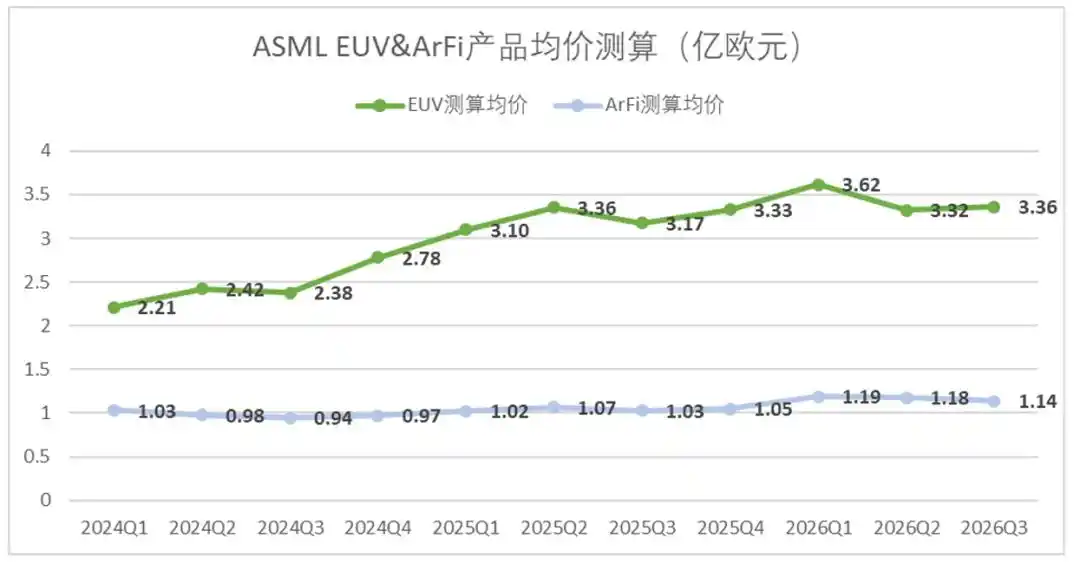
Benefiting from this, management raised the lower end of the Q4 revenue guidance. However, it's clear that this does not satisfy ASML's ambitions.
There is no doubt that ASML's customers are in a profit cycle rare in industrial history. The current stars of the downstream industry, SK Hynix, Samsung, and Micron, have seen their memory chip gross margins rise to around 76%, significantly higher than the monopolist ASML's profit margin.
SEMI forecasts global semiconductor manufacturing equipment sales in 2026 to reach $165.9 billion, a year-on-year increase of 23.2%, with DRAM equipment growing by 39%.
ASML is also envious. During this year's earnings call, ASML management emphasized future price increase plans, stating that discussions on price hikes for key products have been completed with customers, expecting contributions to start in 2027, with full impact visible in 2028. Earlier reports suggested that starting January next year, ASML will uniformly increase prices by 10% for replacement parts of lithography machines supplied to the Korean market. After negotiations, Samsung and SK Hynix have accepted this price adjustment.
Against the backdrop of capacity constraints, the only way for ASML to earn more is to raise prices. However, not all customers are willing to accept this cost; its largest customer, TSMC, has already opposed this price increase plan. However, judging from management's confident statements during the earnings call and the gradual shipment of High-NA EUV machines, price increases may be inevitable.
Every Family Has Its Own Difficulties; Full Production Locks in ASML's Imagination Space
ASML's third-quarter report showed revenue largely in line with expectations, profits exceeding expectations, management raising guidance, and clearly stating price increase and capacity expansion plans for the coming year during the earnings call. By all accounts, it paints a picture of prosperity. Yet, the market reaction after the report's release was relatively muted, with the stock price falling 4%, down about 17% from its high at the end of June.
The most crucial reason lies in one sentence from management:
"We now expect that, based on current plans, our output in 2027 and 2028 will not fully meet customer demand."
This statement may seem like humble bragging, but it actually exposes two major problems ASML faces:
(1) From a capacity perspective, ASML is not the absolute upstream of the industry chain either; it is also constrained by others.
During the earnings call, most questions revolved around ASML's capacity plans. The most representative came from Toronto-Dominion Bank analyst Krish Sankar, who was clearly dissatisfied with ASML's expansion plans and directly asked:
"In a strong demand environment, is there a natural upper limit to EUV output, for instance, constrained by the expansion pace of stage supplier VDL in the Netherlands or Zeiss's capacity?"
After the official pleasantries, management denied being constrained by Zeiss's capacity but also mentioned discussing capacity expansion with Zeiss, which seems somewhat self-deceptive.
Currently, management has set the capacity growth rate for the next two years at 30%, which is actually somewhat below market expectations. The financial report also reveals ASML's sense of powerlessness, as actual capital expenditure has not accelerated.
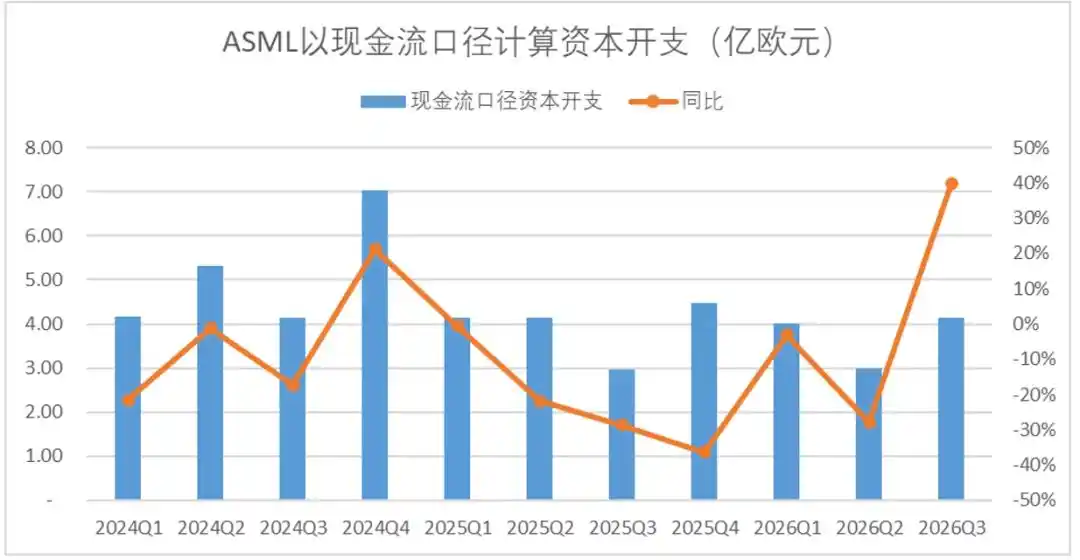
In summary, whether it's VDL, Zeiss, or even upstream raw material suppliers, ASML is currently also constrained by others.
(2) ASML understands the principle of seizing the opportunity, but constrained by capacity, its returns to investors are limited.
Being booked solid until 2028, 'full production, full sales, supply falling short of demand' is good news for most companies. But for ASML, standing at the forefront of a once-in-a-century opportunity and a major industry wave, it's somewhat awkward. The simplest reason is that, in the short to medium term, the industry's golden demand cannot be converted into actual profits on the balance sheet.
ASML's market performance still falls short of investor expectations. So far this year, ASML's market capitalization has grown by 55%, while its downstream customers SK Hynix and Samsung have seen their valuations double. Even after recent pullbacks, their year-to-date growth stands at 95% and 77%, respectively.
Investors are clearly dissatisfied. Management also understands the rarity of this window period and desperately explained the potential future profit realization space during the earnings call, proposing a solution: using service revenue to paint a rosy picture while capacity is constrained:
"The ability to increase capacity through upgrades within the same footprint is extremely attractive to our customers because its effect is immediate output enhancement. We will continue to advance this important value driver, expanding our portfolio of upgrade products in the coming years and offering customers new productivity enhancement options."
But everyone understands that as long as capacity doesn't increase, the numbers on the income statement won't improve. The framework provided by Perez in "Technological Revolutions and Financial Capital" fits perfectly here: the installation period of a technological revolution is dominated by financial capital; after the frenzy comes an inevitable turning point, and after that turning point, the market only cares about real profits.
ASML earned 10.6 billion euros in the first nine months; if Q4 reaches the midpoint of guidance, and considering current profit margins and cost management levels, Q4 net profit should be approximately 5.8 billion euros. This implies full-year 2026 earnings per share of approximately 43 euros, or about 41.6 euros excluding the Mistral gain. At a share price of 1,560 euros or $1,718, the P/E ratio is approximately 37x, which is not cheap for a hardware company.
So, is there room for valuation improvement?
The AI market prospects are vast and boundless, and currently, ASML is indeed an irreplaceable link in the industry chain. According to the prevailing logic, even if the profit ceiling cannot be raised in the short term, value will eventually be realized in the long run. However, over a long enough timeframe, technological route changes are a real possibility.
Even if everything goes perfectly, for investors putting in real money, waiting for ASML's value realization could take years. Under the same bright sunshine, why not invest in downstream companies with higher profit elasticity?
After all, time is also a cost.
This article is from the WeChat public account "Financial Report Journal", author: Yaohua