Kaspa: KAS 突破关键价格阻力后,能否瞄准 0.055 美元?

ambcryptoPublished on 2026-03-17Last updated on 2026-03-18

Abstract

卡斯帕(KAS)近期表现强劲,受到加密货币市场的广泛关注。其价格在过去24小时内上涨超过11.50%,交易价格达到0.03609美元,同时交易量激增130%至3688万美元,显示市场参与度显著提升。 技术分析显示,KAS已突破关键阻力位0.035美元,若日线收盘站稳该水平,可能进一步上涨51%至0.055美元目标位。但0.040美元可能成为新的阻力位。相对强弱指数(RSI)达72.02,表明处于超买状态,可能出现短期回调。平均方向指数(ADX)为19.77,显示趋势动能较弱。 市场情绪分化:短期交易者跟随上涨趋势,而长期持有者可能正在获利了结。数据显示,0.0319美元(支撑位)和0.0358美元(阻力位)存在大量杠杆头寸,若价格波动可能导致清算。此外,过去48小时内有价值122万美元的KAS流入交易所,暗示长期持有者可能准备卖出,这对资产构成看跌信号。 总结:KAS突破关键阻力后短期看涨,但超买状态和长期持有者的抛压可能引发回调风险。

Kaspa [KAS] 因其令人印象深刻的表现而获得了加密爱好者的广泛关注。该资产不仅在更广泛的市场复苏中获得了收益,而且还突破了一个关键阻力。这表明大规模的上行反弹可能即将到来。

根据 CoinMarketCap 的数据,KAS 在过去 24 小时内上涨了超过 11.50%,截至发稿时交易价格为 0.03609 美元。此外,市场参与度显著增加。这反映在交易量上,交易量飙升了 130% 以上,达到 3688 万美元。

交易量的上升表明在价格复苏期间交易者和投资者的参与度提高,并表明市场参与者对当前趋势越来越感兴趣。

Kaspa 价格走势和技术分析

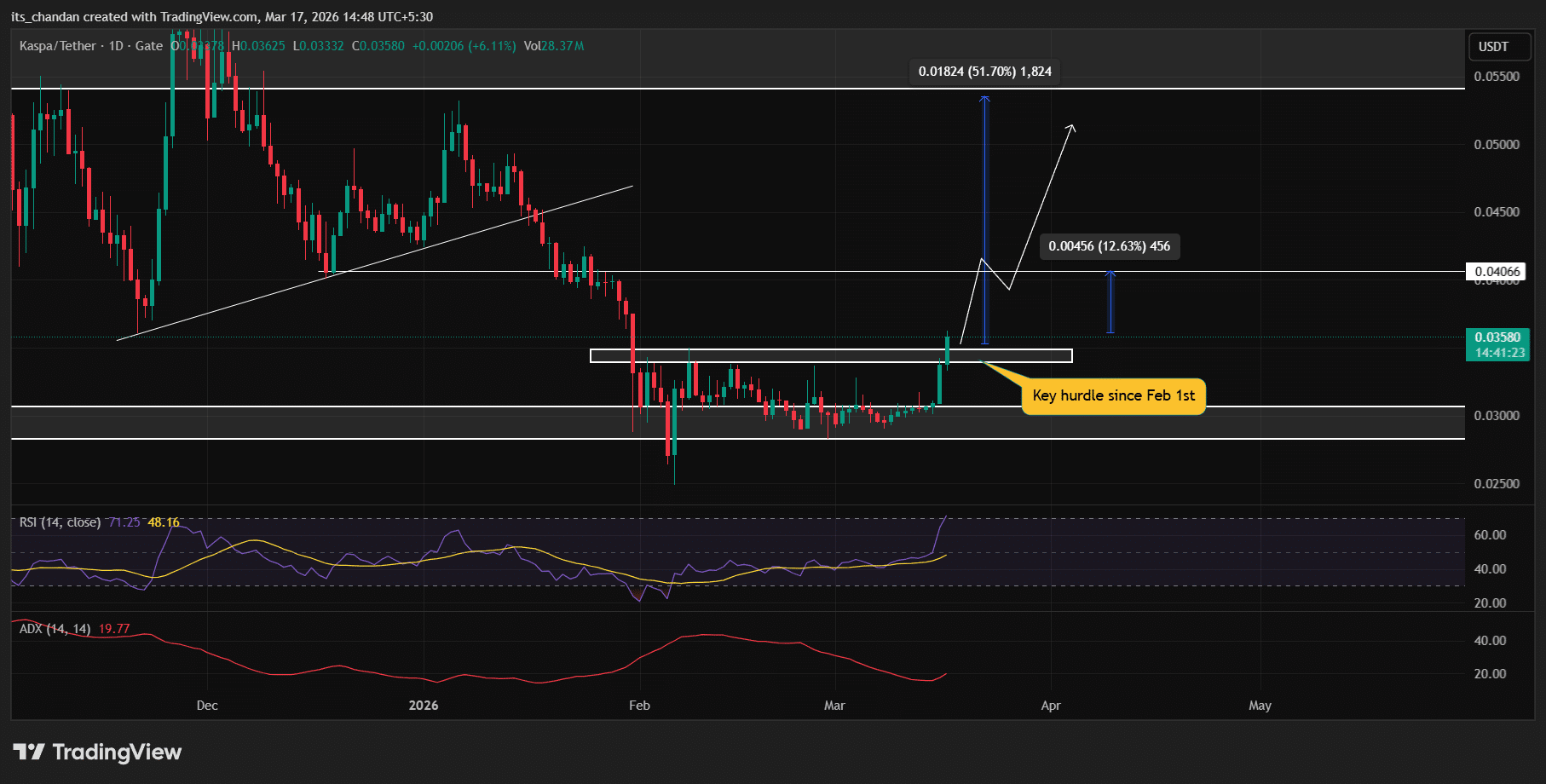
AMBCrypto 的日线图分析显示,KAS 转为看涨,并为大幅反弹做好了准备。随着最近的上行走势,该资产突破了 0.035 美元的关键阻力位。这是一个自 2026 年 2 月 1 日以来一直面临的水平。
来源: TradingView

如果 KAS 的日线收盘价高于这一关键水平,其价格可能会跃升 51%,并可能达到 0.055 美元的水平。然而,0.040 美元似乎是一个关键阻力位,可能在其即将到来的反弹中成为障碍。

尽管出现了看涨突破,但技术指标相对强弱指数 (RSI) 在撰写本文时已达到 72.02。这表明该资产处于超买区域,暗示该资产下一次上涨之前可能会出现潜在的回调。

与此同时,衡量趋势强度的平均方向指数 (ADX) 为 19.77,低于 25 的关键阈值,表明该资产的方向性势头较弱。

市场参与者对 KAS 情绪复杂

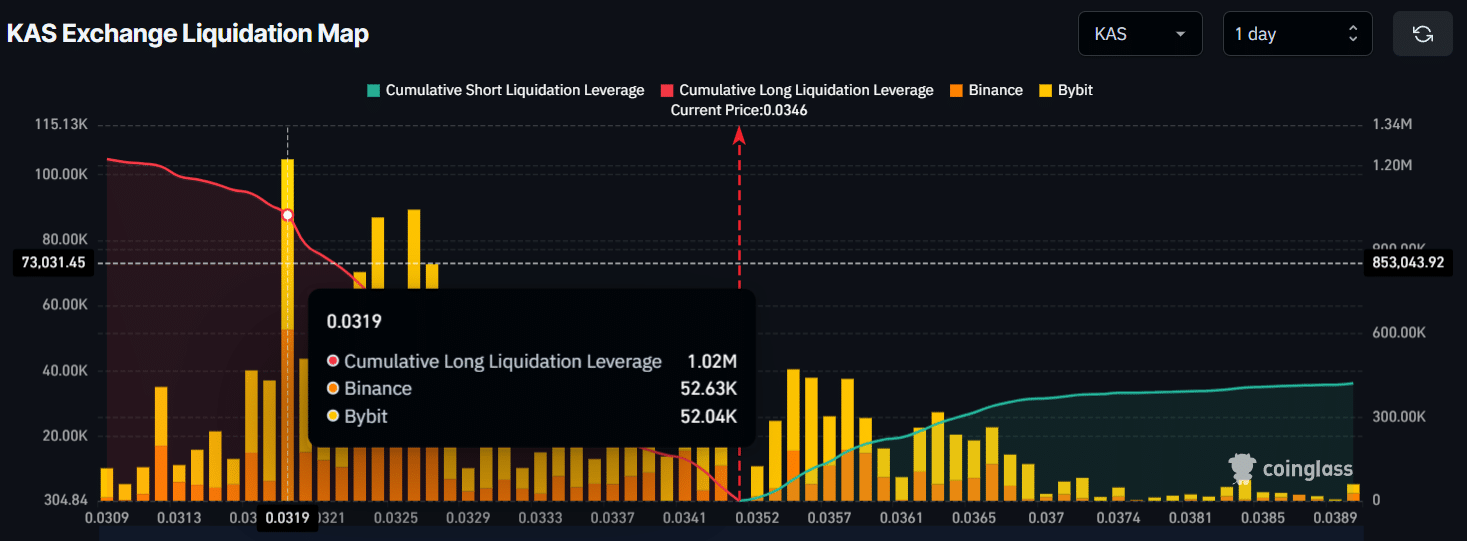
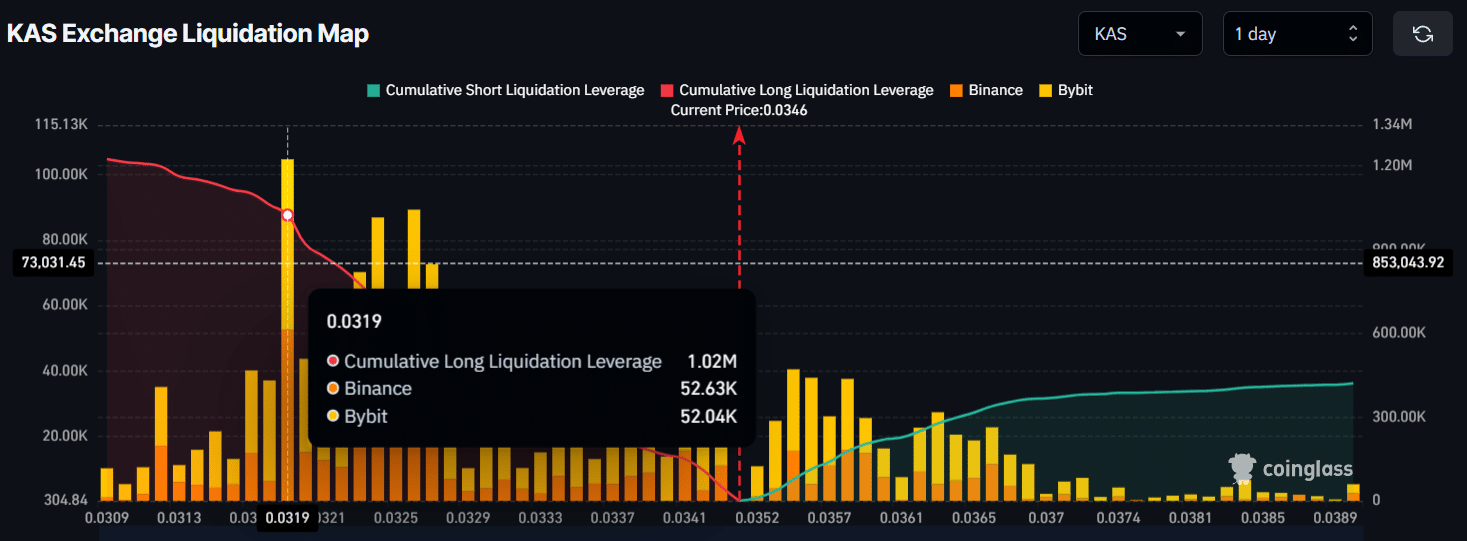
除了价格走势,CoinGlass 还显示,投资者和交易者都情绪复杂,因为短期参与者正在跟随趋势,而长期持有者似乎正在获利了结。

数据显示,下方的 0.0319 美元(支撑位)和上方的 0.0358 美元(阻力位)是交易者过度杠杆化的两个主要水平。事实上,这些水平的交易者建立了 102 万美元的多头杠杆头寸和 17.76 万美元的空头杠杆头寸。

然而,如果 KAS 价格向任一方向移动,这些头寸可能会被清算。 基于这些数据,似乎多头正在主导该资产,而卖家的兴趣似乎正在减弱。
来源: CoinGlass

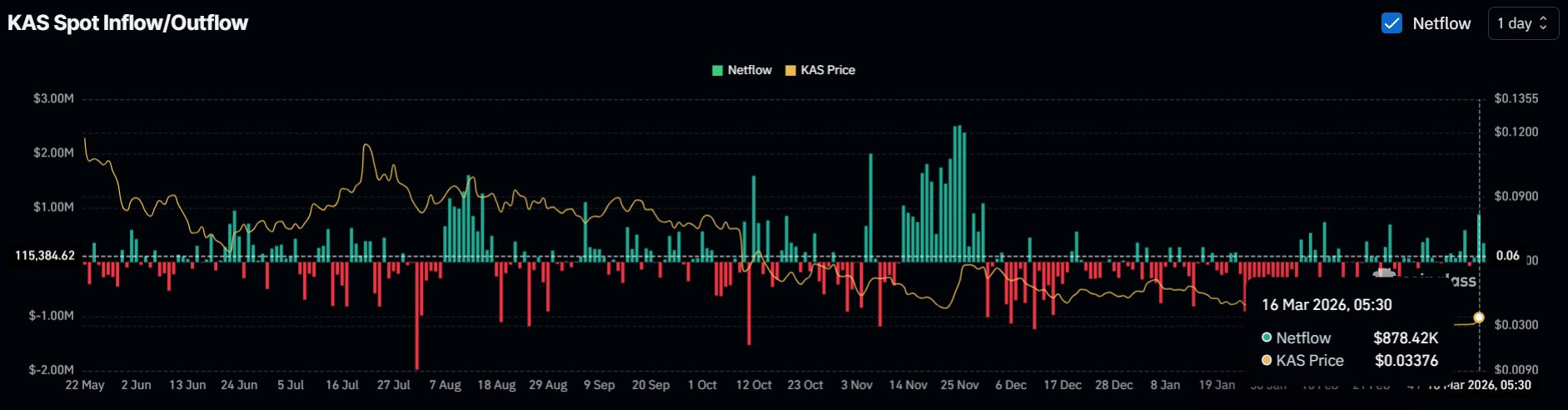
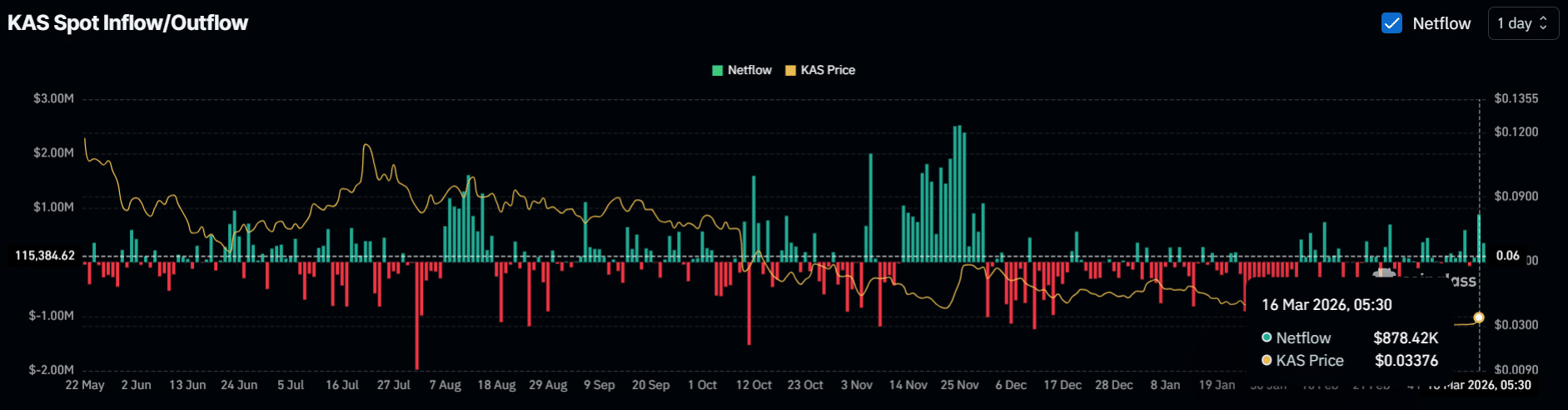
与此同时,关于 KAS 现货流入/流出的数据显示,在过去 48 小时内,有价值 122 万美元的大量资产流入了交易所。资产从钱包转移到交易所通常表明长期持有者可能正准备抛售。这一迹象被认为是该资产的看跌信号。
来源: CoinGlass

最终总结

  • 随着价格跃升 11.50%,Kaspa 突破了一个关键阻力位。
  • 衍生品数据表明,短期参与者正在跟随趋势,而长期持有者似乎表现出兴趣减弱的迹象。

Trending Cryptos

Related Questions

QKaspa (KAS) 的价格在突破关键阻力位后,下一个目标价位是多少?

A根据文章分析,如果KAS的日线收盘价能够稳定在0.035美元的关键阻力位之上,其价格可能会上涨51%,达到0.055美元的目标价位。

QKaspa (KAS) 当前的技术指标RSI值是多少?这说明了什么?

A文章指出,Kaspa的相对强弱指数(RSI)为72.02,这表明该资产已处于超买区域,可能意味着在继续上涨之前会出现一次回调。

QKaspa (KAS) 的衍生品数据反映了市场参与者的哪些情绪?

A衍生品数据显示,短期参与者正在跟随上涨趋势,而长期持有者似乎正在获利了结,显示出市场情绪存在分歧。

QKaspa (KAS) 在过去48小时内的资金流入/流出情况如何?这对其价格有何影响?

A过去48小时内,有价值122万美元的KAS流入交易所。资金从钱包转移到交易所通常意味着长期持有者可能准备抛售,这对资产价格是一个看跌信号。

QKaspa (KAS) 在突破关键阻力位后,下一个需要关注的重要阻力位是多少?

A文章提到,0.040美元是一个关键阻力位,可能会在KAS接下来的上涨行情中成为一个障碍。

Related Reads

Price Hasn't Moved Yet, But Market Makers Are Already Frantically Pulling Orders: How a New Metric Can Warn of Imminent Violent Market Swings

In traditional crypto derivatives and spot analysis, traders often rely on static order book depth and bid-ask spreads to gauge liquidity. However, high-frequency quote cancellations and re-quoting by market makers mean static snapshots frequently mask genuine liquidity crises and sharp price swings. To address this blind spot, Glassnode has introduced a new high-frequency metric called "Book Churn," which quantifies how often order book price levels are updated and rewritten within a given time window. Two order books with identical static depth and spreads can differ several-fold—or even tenfold—in rewrite frequency, and snapshots cannot distinguish between them. The metric captures microsecond-level market maker behavior: when market makers feel confident, quotes tend to rest quietly; when they sense risk, they cancel and re-quote at extraordinary speed. Raw counts are massive—a typical 10-minute BTC perpetual window contains roughly 607,000 level changes, surging into the millions during extreme volatility. To ensure comparability across market cycles, raw counts are log-transformed and standardized into a Z-Score using each asset's trailing 60-day mean and standard deviation. A Z-Score above 2 means the current rewrite frequency exceeds over 95% of recent history; above 3 signals extreme liquidity restructuring. Backtesting since 2020 on BTCUSDT and ETHUSDT perpetuals shows a pronounced right-tail distribution rather than a symmetric normal one. High-churn episodes typically consist of 2–5 consecutive elevated slices, with BTC and ETH peaks highly synchronized during macro shocks, reflecting coordinated risk contraction across market makers' cross-asset arbitrage systems. Most importantly, when Book Churn scores reach 2 or above, the predictive win rate for realized volatility exceeding the historical baseline in the next hour holds steady at 65%–72%—significantly beating the 50% random baseline at a 95% confidence interval. This confirms that market makers' high-frequency rewriting behavior is not merely a backward-looking record but a valuable forward-looking warning signal within market microstructure.

marsbit13m ago

Price Hasn't Moved Yet, But Market Makers Are Already Frantically Pulling Orders: How a New Metric Can Warn of Imminent Violent Market Swings

marsbit13m ago

Aave No Longer Waits for Users to Come to It: V4 Deposits Surge 5.8x, Can the White-Label Model Support Token Buybacks?

Alea Research examines how Aave is expanding through a white-label strategy rather than waiting for users to come to its own frontend. Under Aave V4, partners like EtherFi run dedicated instances on Aave's underlying contracts—EtherFi pays 20% of net interest revenue to the Aave DAO—embedding Aave's lending depth into ecosystems such as Kraken's Ink and EtherFi's Cash card. In Q3, V4 total deposits surged 5.8x to $1.34 billion, while borrows jumped from $76 million to $403 million; even excluding EtherFi, base deposits grew 4.5x. Aave's share among the top four lending networks rose to 64.9%. Notably, Aave Core's USDC pool attracted $326 million in net deposits in Q3 with no token subsidies, plus another $145 million within two weeks after the Fed rate cut. Aave's native stablecoin GHO generates roughly 5x the spread revenue per dollar for the DAO compared with USDC lending, since all GHO interest accrues to the treasury. Since August, the DAO's monthly revenue has consistently exceeded operating costs; Q3 revenue of $17.8 million topped $15.4 million in costs, covering 77% of staking rewards. Of $100.5 million in Q3 fees, depositors and liquidators took $86.4 million while the DAO retained $14.1 million. AAVE rose 87.4% in Q3, beating ETH's 71%. Restarting buybacks requires clearing roughly 8,000 ETH (~$17 million) in legacy debt, well covered by over $100 million in treasury assets. AAVE's valuation multiple remains modest versus peers, with upside if V4 white-label instances keep driving lending demand.

marsbit33m ago

Aave No Longer Waits for Users to Come to It: V4 Deposits Surge 5.8x, Can the White-Label Model Support Token Buybacks?

marsbit33m ago

Trump administration unveils new center to choke off scam payments

The Trump administration has unveiled a new Threat Disruption Center aimed at stopping money flows to foreign criminal networks behind scams, cybercrime, and sextortion schemes. Announced Wednesday by the Homeland Security Task Force's National Coordination Center, co-led by the departments of Homeland Security and Justice, the unit seeks to help more than 30 federal agencies and over 440 state and local partners track scams and work with banks and crypto platforms to halt payments to scam networks. The center was created under a March 2026 executive order directing federal agencies to work with private companies to combat online fraud and other cybercrime targeting Americans. Heith Janke, operations director of the FBI's Criminal Branch, noted that every hour between a victim's report and a response gives criminals more time to launder stolen funds and identify their next target. Blockchain intelligence firm TRM Labs was selected as the center's main private-sector partner and will provide and maintain Ardence, the investigative platform used to map scam networks and identify victims, along with engineering and investigative support. TRM Labs co-founder and CEO Esteban Castano said scammers rarely stop after one payment, draining victims' savings or retirement over months and years, and that stepping in sooner changes everything—a warning before the next payment, a scam website removed before it victimizes another family, or stolen funds frozen while they can still be recovered. The FBI received about 453,000 reports of online fraud in 2025, with reported losses exceeding $17.7 billion. In September, the Justice Department estimated that overseas scam centers cost Americans about $10 billion a year through schemes including crypto and online investment fraud.

cointelegraph1h ago

Trump administration unveils new center to choke off scam payments

cointelegraph1h ago

Fed Minutes Sound Hawkish Alarm: Nearly All See More Rate Hikes Needed, More Backed Action as Soon as October

The minutes of the Fed's October 27-28 meeting showed a markedly hawkish tone: almost all participants judged that further rate hikes would likely be appropriate to bring inflation back to the 2% target in a timely manner, consistent with the September SEP. Although the committee held rates steady by a 10-2 vote, a few officials who supported holding described it as a "close call," and some participants favored a 25bp hike at that meeting, warning that delay could entrench high inflation or force larger, more disruptive tightening later. A couple of participants said a hike exceeding 25bp might be warranted if inflation data disappoints, and a few saw a need for a more restrictive stance if inflation proves stubborn. Separately, the minutes highlighted AI as a growing inflation risk: many participants noted AI-buildout demand straining supply and pushing up tech goods prices, with pricing pressures spreading beyond data-center-related industries. On financial stability, almost all participants discussed risks from disappointing AI investment returns; many explored consequences of an AI-related asset repricing; most noted rapid growth in AI-related debt, much of it through complex, opaque financing structures; and a few flagged increasing concentration of AI exposure among a small number of firms. The staff also warned that off-balance-sheet lease commitments and circular financing arrangements among AI-related firms could amplify losses if returns fall short.

marsbit1h ago

Fed Minutes Sound Hawkish Alarm: Nearly All See More Rate Hikes Needed, More Backed Action as Soon as October

marsbit1h ago

Trading

Spot

Hot Articles

How to Buy KAS

Welcome to HTX.com! We've made purchasing Kaspa (KAS) simple and convenient. Follow our step-by-step guide to embark on your crypto journey.Step 1: Create Your HTX AccountUse your email or phone number to sign up for a free account on HTX. Experience a hassle-free registration journey and unlock all features.Get My AccountStep 2: Go to Buy Crypto and Choose Your Payment MethodCredit/Debit Card: Use your Visa or Mastercard to buy Kaspa (KAS) instantly.Balance: Use funds from your HTX account balance to trade seamlessly.Third Parties: We've added popular payment methods such as Google Pay and Apple Pay to enhance convenience.P2P: Trade directly with other users on HTX.Over-the-Counter (OTC): We offer tailor-made services and competitive exchange rates for traders.Step 3: Store Your Kaspa (KAS)After purchasing your Kaspa (KAS), store it in your HTX account. Alternatively, you can send it elsewhere via blockchain transfer or use it to trade other cryptocurrencies.Step 4: Trade Kaspa (KAS)Easily trade Kaspa (KAS) on HTX's spot market. Simply access your account, select your trading pair, execute your trades, and monitor in real-time. We offer a user-friendly experience for both beginners and seasoned traders.

8.0k Total ViewsPublished 2024.03.29Updated 2026.06.02

How to Buy KAS

Discussions

Welcome to the HTX Community. Here, you can stay informed about the latest platform developments and gain access to professional market insights. Users' opinions on the price of KAS (KAS) are presented below.

活动图片