RootData 迪拜「融合、增长与新加密周期」主题论坛精彩回顾:行业领袖共话加密新周期

marsbitPublished on 2025-12-03Last updated on 2025-12-03

迪拜时间12月2日,由 RootData 联合 ChainCatcher 与 Klickl 共同举办,UXLINK、USDD、0G、Olaxbt、Oops Panda、Tron、Sunpump、Tencent Cloud 等联合赞助的「融合、增长与新加密周期」主题论坛圆满落幕。

活动现场, Cypher Capital 联合创始人 Bill Qian 、Babylon Labs 联合创始人 Fisher Yu 、Klickl Group创始人 Michael Zhao 、 Klickl International CEO Dermot Mayes、 Solayer 首席执行官 Jeff、0G 亚太地区负责人 JT Song、Olaxbt 创始人 Jason Chan、USDD 传播总监 Yvonne Chia、Oops Panda 首席运营官 Emma、 RootData 首席产品经理 Ye Wang等全球顶尖行业建设者、投资机构及意见领袖,共同探讨新加密周期的未来图景。

此外,RootData 现场正式发布业内首个多维度交易所实时排行榜,将“信息透明度”作为核心评估维度,构建涵盖代币解锁、项目事件、团队信息等七大维度的披露标准。该体系旨在将透明度转化为可量化竞争力指标,推动交易所在合规框架下完善信息披露。RootData 表示,将与交易所共同健全项目信息披露机制,帮助投资者做出理性决策,有效延长加密散户投资者的投资生命周期。
IMG_256

一、精彩回顾

开场洞察:下一代货币操作系统

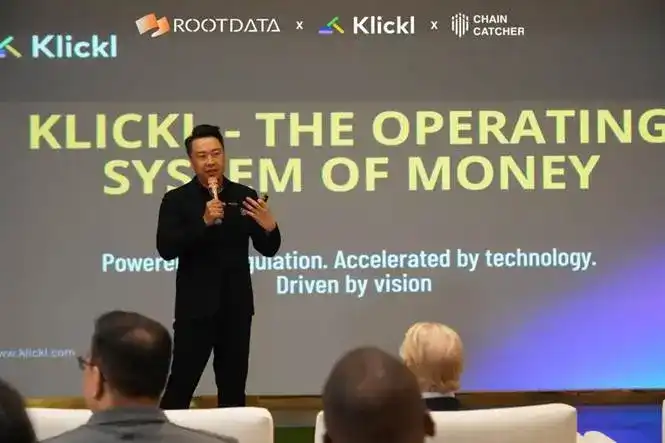
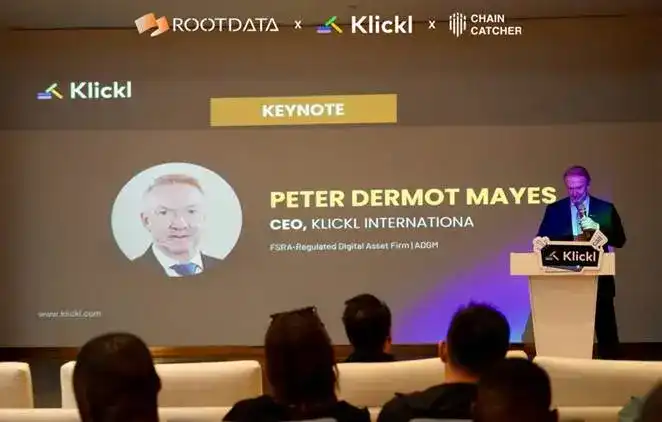
论坛由Klickl的分享拉开序幕。Klickl Group 创始人 Michael Zhao 和 Klickl International CEO Dermot Mayes 发表了主题演讲,系统阐述了 Klickl 对未来全球金融体系演进方向的深度判断,并提出其“货币操作系统(Operating System for Future Money)”的整体愿景,为数字金融基础设施的下一阶段发展提供框架性思考。

Michael Zhao 指出,当今全球金融体系的核心矛盾已从局部效率问题演变为结构性失衡。他强调:“未来的金融升级不再是局部优化或单点创新,而是向统一、可监管、可编程的一体化基础设施迈进。唯有如此,传统金融与 Web3 才能真正实现融合。”

Klickl International CEO Dermot Mayes 进一步从中东业务实践出发指出,数字金融的核心竞争力正在从技术优势转向监管体系的成熟度。“监管原生化(Regulation-Native)”将成为未来金融基础设施的基本标准——架构需要天然适配不同司法辖区的监管逻辑,而非事后补充。
IMG_256

IMG_256

穿越周期:三大核心投资原则

随后,Cypher Capital联合创始人兼管理合伙人Bill Qian发表了题为《无论周期如何,永远重要的事》的主题演讲。他系统阐述了其认为在各类市场环境中均适用的三大核心投资原则:

聚焦头部:投资回报遵循幂律分布而非正态分布。他援引数据指出,72家公司贡献了28114家上市公司总和价值的50%;加密市场中,63%的历史总市值由头部资产贡献。因此,投资者应努力识别并长期持有潜在的“头部赢家”。

拥抱轮动:市场的“Alpha”(超额收益)会在不同板块间轮动,不会永久停留于某一特定赛道。投资者需保持投资组合的多元化与心态的开放性,以捕捉不同周期下的新兴机会。

利用波动:波动性是获取长期高回报的必然代价与入场机会,巴菲特一生也有5次30%以上的回撤。对长期投资者而言,市场下跌不应被视为风险,而应视为以更优价格增持优质资产的战略性机会。

IMG_256

释放潜力:比特币DeFi的破局关键

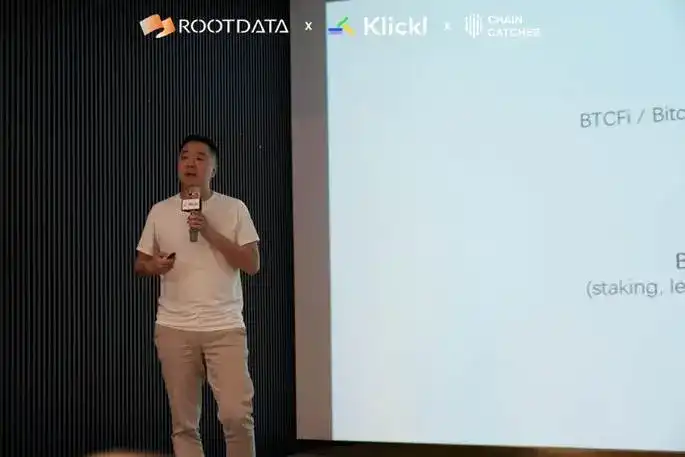
Babylon Labs联合创始人Fisher Yu以“比特币DeFi的未来”为主题,深入分析了当前瓶颈与解决方案。他指出,DeFi市场渴求比特币流动性,但仅有不到1%的比特币通过跨链桥参与,根本原因在于用户必须信任中心化托管方。他强调,破局关键在于实现原生比特币的无信任参与。

为此,Babylon提出了基于BitVM等技术的“Trustless Bitcoin Vault”(无信任比特币保险库)解决方案。该方案允许比特币持有者在不转移资产托管权的情况下,将原生BTC作为抵押品,直接接入以太坊等链上的Aave、Morpho等主流DeFi协议进行借贷等操作,从而在不引入信任风险的前提下解锁比特币的金融效用。

Fisher Yu展望,基于此类基础设施将衍生出比特币抵押借贷、衍生品交易及稳定币等一系列创新产品,目标是激活千亿美元级别的比特币进入DeFi,构建一个真正的“由比特币充电的加密经济”。
IMG_256

圆桌对话:共探行业未来趋势

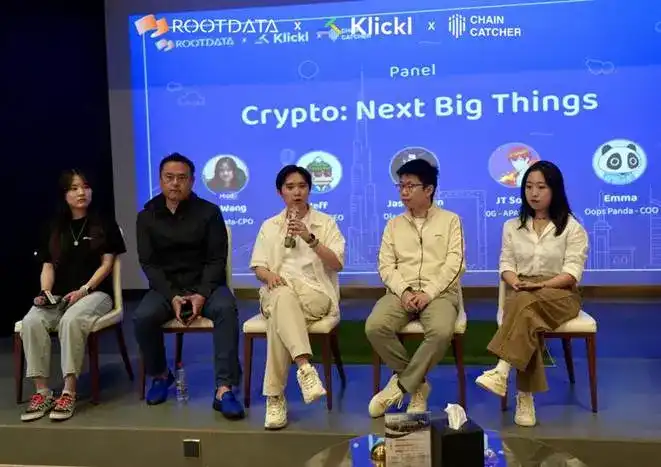
在主题为“Crypto:Next Big Things”的圆桌讨论环节,由RootData首席产品经理Ye Wang主持,Solayer首席执行官Jeff、0G亚太地区负责人JT Song、Olaxbt创始人Jason Chan、Oops Panda首席运营官Emma共同参与。嘉宾们从Layer2扩展、模块化区块链、新兴资产形态与社区发展等多元视角,展开了富有前瞻性的深度对话,探讨了下一轮周期中可能涌现的关键赛道与创新机遇。
IMG_256

稳定币演进:探索收益与稳定的融合

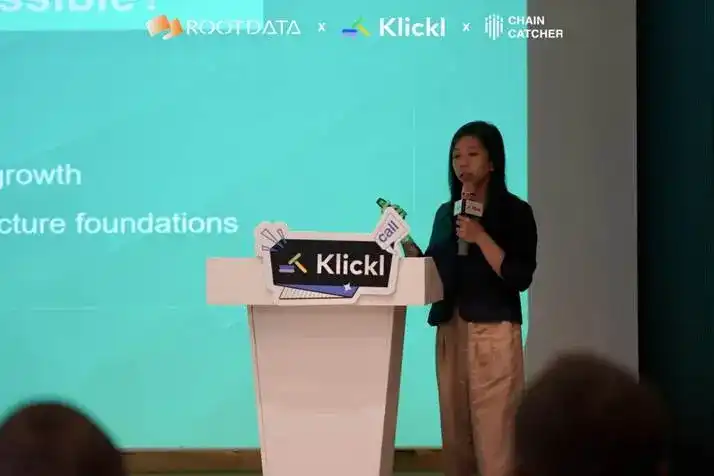
USDD 传播总监 Yvonne Chia 则围绕“收益型稳定币是否真正可能”这一议题发表演讲,系统阐述了收益型稳定币的实现路径。

演讲中指出,传统稳定币长期面临“收益与稳定不可兼得”的矛盾。USDD 通过构建稳定收益来源、扩展应用场景、灵活基础设施与全链透明度四大支柱,让稳定币即稳定还有收益成为可能。其中sUSDD 支持“持有收益+流动性提供”双层收益机制,未来还将接入借贷等多元场景,持续扩展收益边界。

在基础设施层面,USDD 已完成从 1.0 至 2.0 的协议升级,实现由用户通过 CDP 自主铸造,并引入锚定稳定模块( PSM )以增强抗波动能力。同时,通过全链上财务透明、第三方审计及实时数据看板,构建用户可验证的信任体系。
IMG_256

RootData倡议:以透明度重塑信任基石

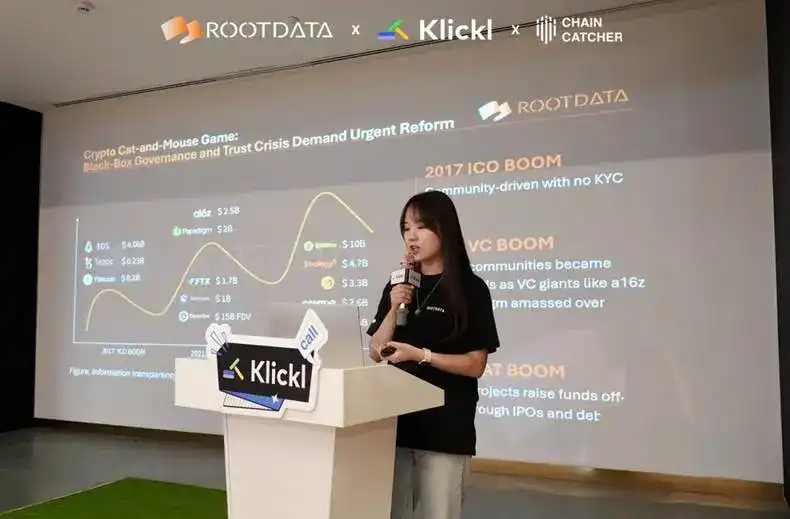
圆桌讨论后,RootData首席产品经理Ye Wang发布了《2025加密货币行业透明度洞察报告》,并宣布RootData正式发布业内首个多维度交易所实时排行榜。报告指出,加密货币行业正面临由“信息黑箱”引发的系统性信任危机,建立可量化、可验证的透明度体系是行业走向规范与成熟的关键。

Ye Wang分析,行业透明度问题从ICO时代的信息不对称,演进至当前链下融资与链上数据脱节的新矛盾。尤其在代币经济层面,“钝刀割肉”式的持续解锁与不透明抛售压制了资产价值与市场信心。

为此,RootData推出的新榜单将“信息透明度”作为核心评估维度,构建了涵盖代币解锁、项目事件、团队信息等七大维度的披露标准,旨在打破“唯交易量论”的评级惯性,将透明度转化为可量化的竞争力指标,推动交易所在合规框架下完善信息披露,最终帮助投资者做出理性决策,有效延长其投资生命周期。
IMG_256

二、自由交流:思想碰撞,气氛热烈

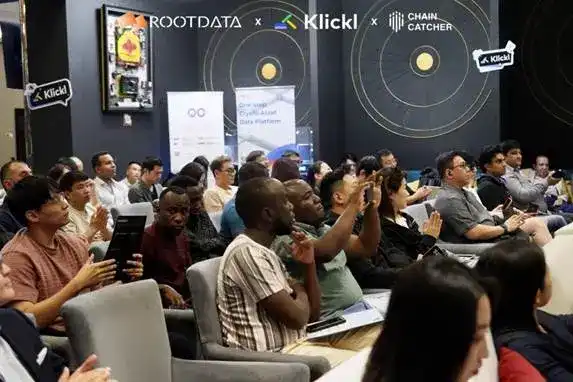
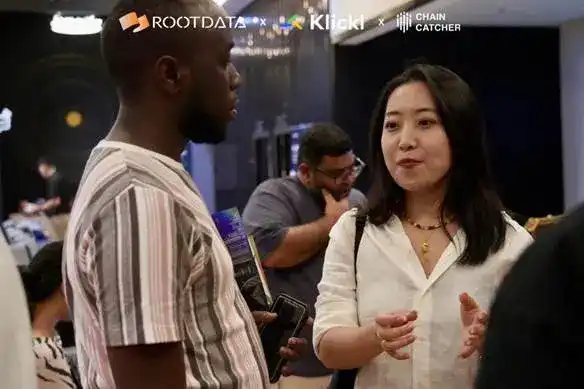
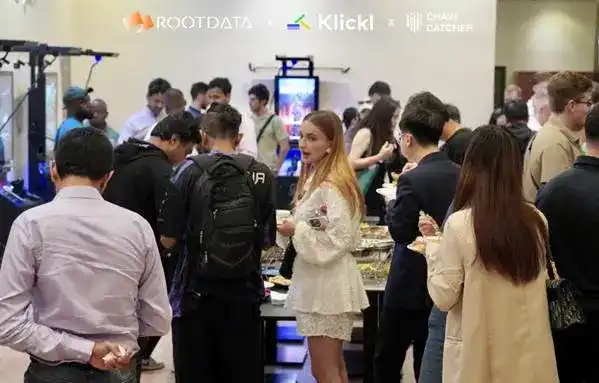
活动的最后环节是自由交流。与会嘉宾与现场观众在轻松的氛围中继续畅谈,就演讲中触及的行业痛点、创新解决方案及未来趋势进行了更直接、更深入的交流与思想碰撞。现场互动频繁,气氛热烈,为本次内涵丰富的论坛画下了一个充满活力的句号。

本次论坛不仅汇集了跨越投资、基础设施、数据服务与资产发行等多维度的前沿思考,更清晰地传递出一个共识:透明度、合规创新与以用户为中心的信任建设,将是引领加密行业穿越周期、实现可持续增长的核心基石。
IMG_256

IMG_256

Trending Cryptos

Related Reads

Jensen Huang Caught in Another Affair with Subordinate, Probability of Departing NVIDIA by Month's End Nears 90%

NVIDIA CEO Jensen Huang is facing escalating scandal after reports of a second extramarital affair. Following earlier allegations involving Alice Huang, an executive at Singapore data center company Megaspeed, The New York Times reported that Huang also had an affair with Kimberly Powell, a married NVIDIA vice president of healthcare and one of roughly 60 executives reporting directly to him. Powell, 48, joined NVIDIA in 2008 and has led its healthcare business since 2017. NVIDIA's code of conduct prohibits private relationships that could create conflicts of interest. NVIDIA's earlier statement that the matter would not affect Huang's role as CEO has reportedly been withdrawn. The Wall Street Journal reported that the board is considering meeting to discuss Huang's future, potentially appointing an interim leader while searching for a new CEO with outside firms. Polymarket odds of Huang leaving before November 30, 2026 have risen to 88%, and to 93% before March 31, 2027. Elon Musk, responding to a suggestion that he hire Huang, said it "would be an honor." The news triggered sharp stock moves: NVIDIA closed up 2.87% but fell as much as 10% after hours, shedding over $300 billion in market value and dragging down other AI stocks including Intel and Dell. A key concern is succession: NVIDIA has no clear plan, and Huang's unusual management structure—with dozens of direct reports and few layers—makes him the central node of the company. While executives like CFO Colette Kress could handle operations, none can quickly replace Huang's industry influence and role as NVIDIA's public face. Neither Huang nor NVIDIA has confirmed or denied the second affair.

Odaily星球日报22m ago

Jensen Huang Caught in Another Affair with Subordinate, Probability of Departing NVIDIA by Month's End Nears 90%

Odaily星球日报22m ago

Ethereum Plans to Move Post-Quantum and Anti-AI Upgrades Forward to 2027: Ethlabs Proposes Restructuring the Hegotá Hard Fork Plan

Ethlabs, a non-profit Ethereum R&D lab, has submitted the pqai27 community proposal to the Ethereum community forum, calling for 2027 to be the target year for achieving quantum resistance and AI resistance on Ethereum. With Ethereum's on-chain TVL exceeding $41.16 billion as of November 12, the proposal argues that Ethereum should leverage its existing hash-based cryptography and formal verification foundations to reinforce its position as the global value settlement layer as AI evolves rapidly and quantum timelines accelerate. The direct motivation is the compression of external timelines: the U.S. government has moved its quantum-resistance target from 2035 to 2030, and Google plans to complete its full cryptographic migration by 2029. AI attack capabilities are also advancing—OpenAI has used frontier models to find and patch roughly 1,000 Linux vulnerabilities and solve hundreds of math problems. "AI resistance" means relying on minimal hash primitives, formal verification, and client diversity to harden the base layer. The roadmap splits 2027 into two stages. The baseline "pqai-ready" stage requires quantum resistance at the consensus layer and ensures users can migrate to quantum-resistant accounts via the Frames account abstraction proposal EIP-8141; if existing cryptography fails early, the network can degrade to calldata to keep running. The advanced "pqai-scaled" stage targets full-capacity operation, introducing EIP-8288 for quantum-resistant signature aggregation and EIP-8479 for quantum-resistant data availability, so quantum-resistant transactions and blobs can regain normal throughput after scaling. To this end, Ethlabs recommends restructuring the scope of the Hegotá hard fork, stripping out non-critical upgrades and reassessing the impact of the FOCIL anti-censorship proposal (EIP-7805) on progress and compatibility; if the execution layer is decoupled from the consensus layer, Frames could ship independently first. The consensus layer must choose between retrofitting the existing Gasper implementation for quantum resistance and moving to decoupled consensus. Ethlabs announced it is withdrawing its push for Quick Slots (EIP-8198) in Hegotá, deferring it to 2028, while Glamsterdam and its scaling plans proceed as normal. The roadmap remains an Ethlabs community initiative; any Hegotá fork restructuring or consensus-layer switch requires further discussion and agreement among Ethereum's All Core Devs. Ethlabs notes that AI is also accelerating formal verification and zero-knowledge proof benchmark optimization, and that advancing pqai27 aims to consolidate Ethereum and ETH's role as the trust root for global value settlement during extreme security cycles.

marsbit38m ago

Ethereum Plans to Move Post-Quantum and Anti-AI Upgrades Forward to 2027: Ethlabs Proposes Restructuring the Hegotá Hard Fork Plan

marsbit38m ago

Former OpenAI Researcher Changes His Tune: Super AI Researcher Could Arrive as Early as Next Year

Former OpenAI researcher Daniel Kokotajlo and the AI Futures Project have revised their timelines, now predicting superhuman AI researchers (SARs) could arrive as early as 2027 rather than 2029. The key driver is a METR assessment of Anthropic, which found that since October 2025, the benchmark score growth rate of Anthropic's internal models reached about 1.9x the previous pace (95% CI: 1.5–2.8x) — roughly two years' worth of progress in one year. METR estimates that by October 2026, about 80% of the extra acceleration may come from AI itself, though this is a subjective guess with high uncertainty. AI is already helping researchers write experiment code, run tests, and try out more ideas. Using METR's estimates, the team calculated that by early November 2026, AI-driven acceleration alone could push overall model progress to 1.7x the historical rate — a speed that, in the original AI 2027 scenario, wouldn't be reached until around April 2027, about five months later. Notably, METR says most of the evidence underpinning its core conclusions was redacted from the public report at Anthropic's request, to avoid helping competitors; only the benchmark curves are publicly verifiable. Depending on the method used, SAR arrival estimates range from February 2027 to mid-2028. If acceleration compounds across model generations, superintelligence could arrive sooner than expected.

marsbit57m ago

Former OpenAI Researcher Changes His Tune: Super AI Researcher Could Arrive as Early as Next Year

marsbit57m ago

Aave V3.8 Officially Launches: Covering 15 Public Chains, $15.2 Billion Liquidity Pool, Introducing Low-Gas-Cost Reentrancy Protection

Aave has launched V3.8 across 15 active V3 markets, following approval by the Aave DAO and development by Aave Labs. According to DeFiLlama, Aave's total value locked exceeds $16.4 billion, with active V3 markets holding over $15.23 billion. The upgrade was deployed via AIP #541, completing a 22-day governance process that began with a forum proposal on October 21 and a Snapshot vote on October 27. V3.8 covers active instances on Ethereum (Core and Lido), Plasma, Avalanche, BNB Chain, Monad, Base, and Arbitrum, along with Mantle, X Layer, Polygon, Linea, Optimism, Gnosis, MegaETH, and Celo. Legacy markets that were frozen with zero caps were deliberately skipped. The release introduces kernel-level reentrancy protection for external callback operations on liquidity pools. Traditionally, preventing cross-function reentrancy requires writing a lock flag before state changes, but after EIP-3529 capped SSTORE refunds at 20%, maintaining persistent locks in high-frequency lending pools became gas-intensive. V3.8 instead uses EIP-1153 transient storage, where TSTORE and TLOAD cost only 100 gas per read or write and automatically clear at transaction end, providing reentrancy hardening at minimal cost. Aave Labs addressed developer concerns that the lock might block liquidation composability within flash loan callbacks. The flashLoan and flashLoanSimple entry points only check the lock status without setting it, creating asymmetric isolation: users can still compose liquidations, deposits, or repayments inside a flash loan callback, but attempts to initiate a flash loan from within a regular pool operation callback are rejected and reverted. Security verification included Certora formal verification and independent external audits before the AIP vote. The new contract code is published in the official Aave V3 repository under the Business Source License. Developers also noted that downstream integrators reading view functions such as account health factors or reserve data during callbacks should account for intermediate ledger states and ensure peripheral risk controls remain compatible.

marsbit58m ago

Aave V3.8 Officially Launches: Covering 15 Public Chains, $15.2 Billion Liquidity Pool, Introducing Low-Gas-Cost Reentrancy Protection

marsbit58m ago

Trading

Spot

Hot Articles

HTX Learn: Learn USDD to Share 1000 USDT​

To enhance your understanding of USDD, we are rolling out various rewarding events. Join them now and bring home generous rewards through learning and trading.

30.5k Total ViewsPublished 2026.05.25Updated 2026.05.25

HTX Learn: Learn USDD to Share 1000 USDT​

Discussions

Welcome to the HTX Community. Here, you can stay informed about the latest platform developments and gain access to professional market insights. Users' opinions on the price of USDD (USDD) are presented below.

活动图片