Institutional and retail dynamics in digital assets are changing, shaped by new capital flows, market structures, and trading behaviors. The emergence of spot ETFs, expanding futures markets, and shifting regional participation trends are defining forces in today’s crypto market.
In collaboration with Gemini Institutional, our latest 2025 Market Trend Report provides a comprehensive, data-driven analysis of these trends. Using on-chain and market data, the report examines the forces driving digital assets in 2025 - including Bitcoin, Ethereum, and Solana - focusing on institutional demand, retail speculation, and global adoption patterns.
Key insights from the report:
- ETFs are absorbing significant portions of Bitcoin’s circulating supply, reshaping liquidity and volatility dynamics.
- Retail investors have returned, with Solana seeing an influx of new capital and surpassing Ethereum in active address count.
- Crypto futures markets are reaching new highs, with a clear institutional long bias.
- Regional adoption is diverging, with APAC retail participation growing while the US remains ETF-driven.
Read on for an overview of the key themes explored in the report, or download the full version for deeper insights into the trends shaping digital assets in 2025.
The Growing Role of ETFs in Crypto Markets
Spot Bitcoin and Ethereum ETFs have transformed crypto market structure, absorbing a significant share of supply and introducing new liquidity dynamics. Since launch, ETFs have accumulated over 515K BTC - 2.4x the amount issued by miners - establishing them as a dominant force in capital flows.
ETFs and Market Impact
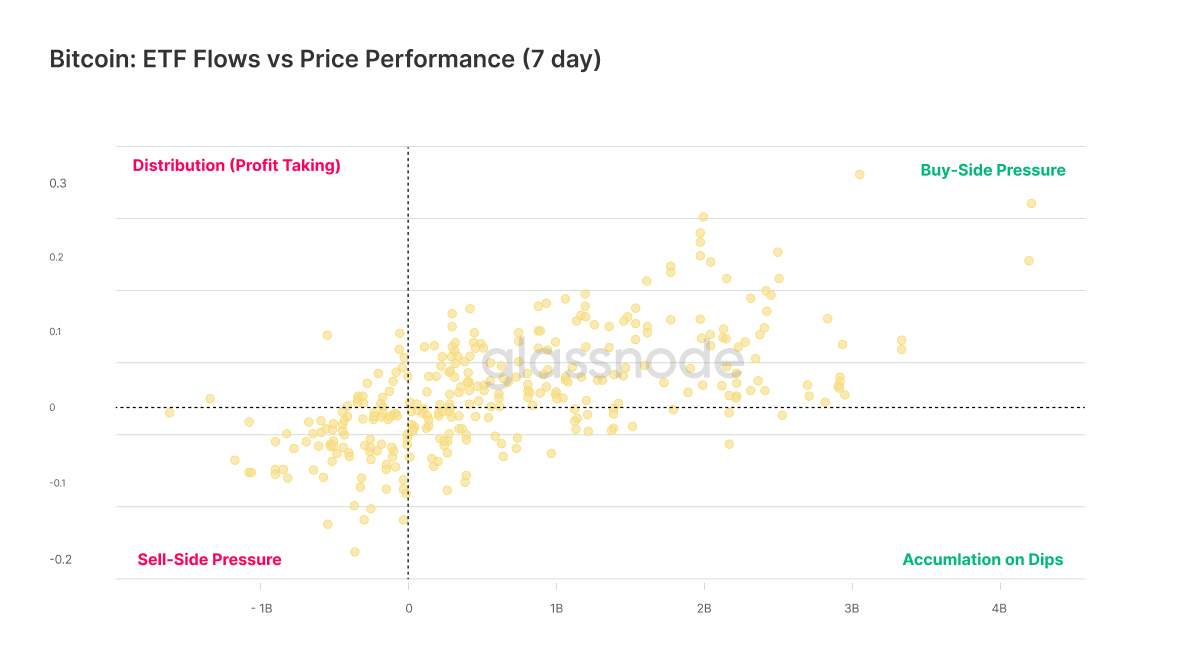
ETF inflows and outflows now strongly correlate with price action:
- $4B+ in inflows has driven price surges of up to 35%.
- Outflows tend to correlate with corrections, though institutions have largely viewed dips as buying opportunities.
Ethereum’s ETF market is gaining traction, with netflows now accounting for ±5% of daily ETH spot volume, signaling growing institutional interest.
Institutional Arbitrage and Market Liquidity
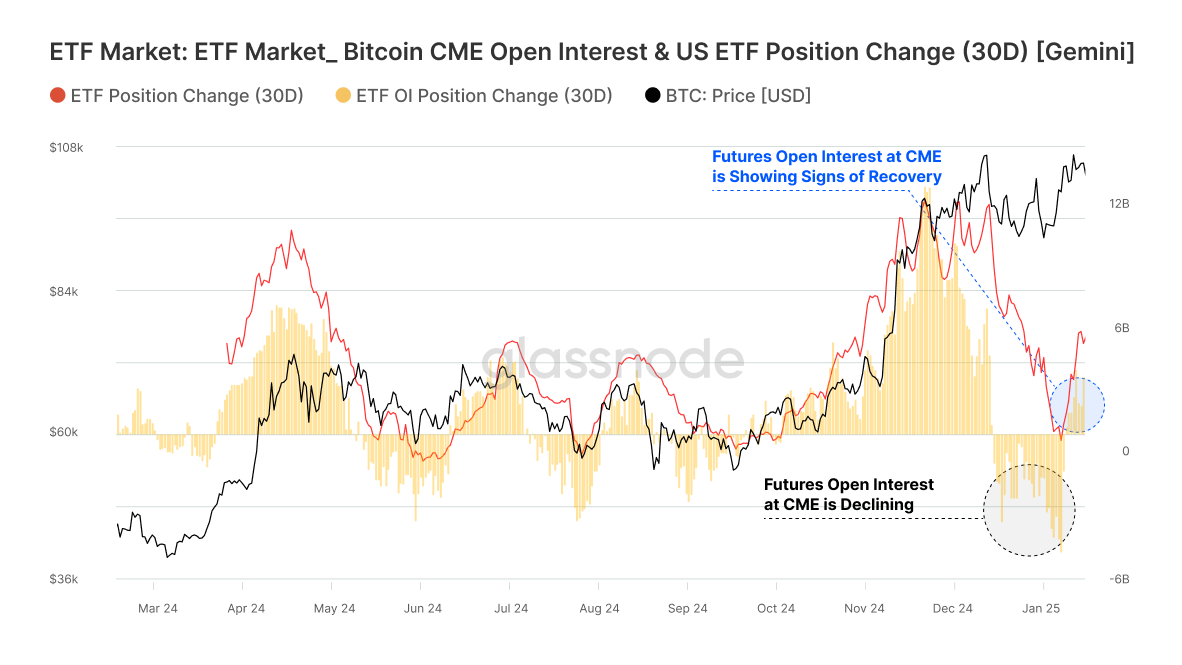
The rise of ETFs has fueled institutional arbitrage, particularly the cash-and-carry trade, where investors long spot ETFs while shorting futures to capture spreads.
- ETF inflows and CME futures open interest have shown a clear correlation, deepening liquidity and efficiency.
Looking Ahead
ETF-driven capital rotation will continue shaping crypto markets, with key developments ahead:
- Potential Solana ETFs as asset managers push for new approvals.
- Growing ETH inflows, reinforcing its position in institutional portfolios.
- A more sophisticated arbitrage landscape, enhancing liquidity and trade efficiency.
As ETF adoption scales, their role in crypto’s macro trends is projected to grow.
Retail Investors Are Back - and Betting on Solana
After a prolonged period of subdued activity, retail investors have returned to digital assets, fueling renewed speculation and shifting market dynamics. This resurgence is evident across key metrics, from realized cap growth to network activity, with Solana emerging as the standout retail-driven asset.
Solana Leads Retail Adoption
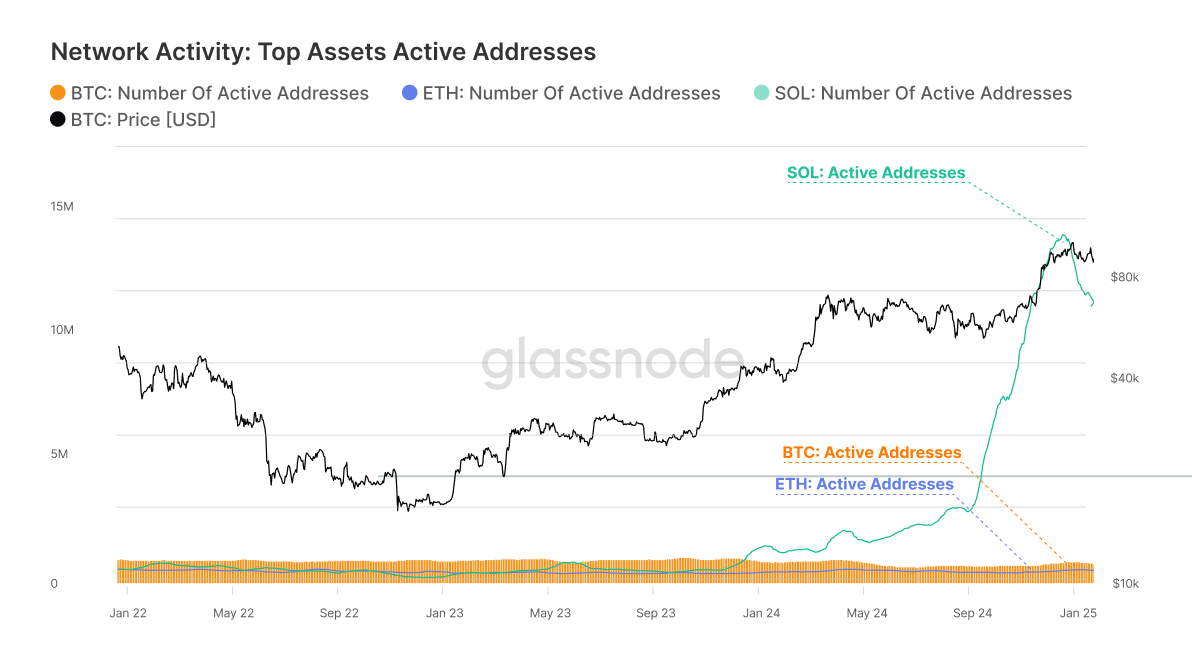
Retail capital has flowed into all major assets, but Solana has surpassed Ethereum in new investor activity:
- Solana’s active addresses now exceed Bitcoin’s by 16.2x and Ethereum’s by 24.6x - a striking shift in network engagement.
- Retail-driven speculation is surging, with Solana-based memecoins growing their realized cap by 477%, outpacing Ethereum’s memecoin sector.
- Solana now settles $37B daily, more than both Bitcoin and Ethereum, reflecting a rapid rise in network activity and transaction velocity.
Retail Demand and Market Structure
Retail inflows have reshaped market structure, with capital favoring high-volatility assets and speculative sectors:
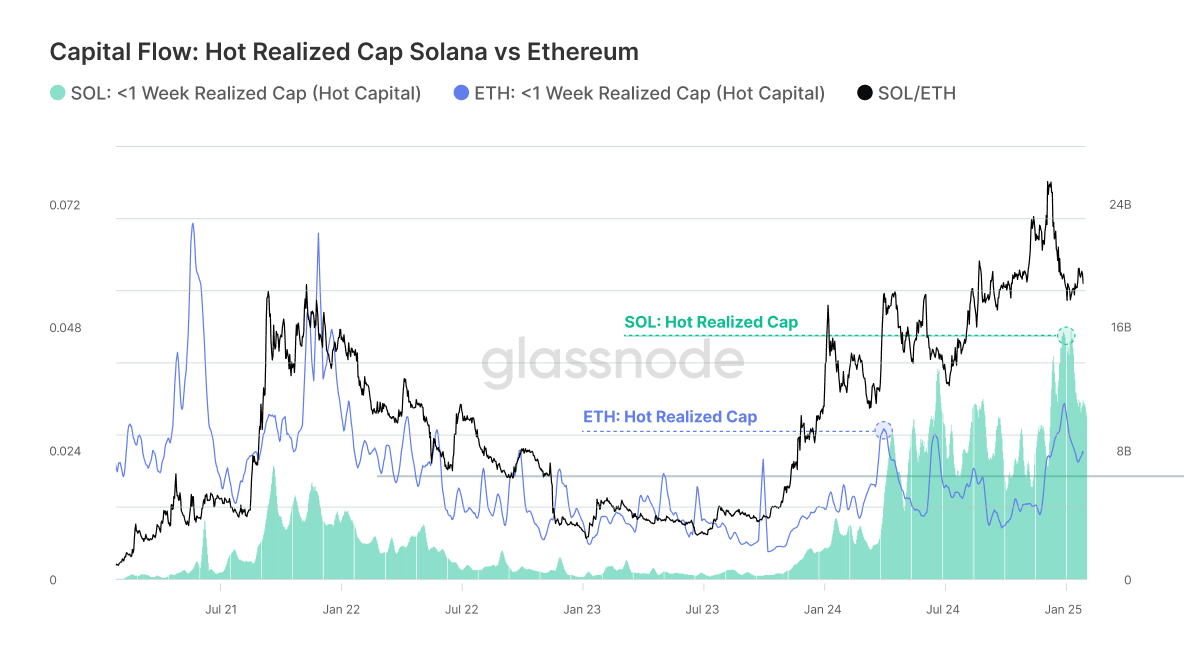
- Hot realized cap for Bitcoin hit $99.6B, signaling an increase in new market participants.
- Ethereum has lagged behind Bitcoin and Solana in retail adoption, with speculative demand remaining below previous cycle highs.
What’s Next?
Retail’s return introduces higher volatility but also deeper liquidity, reinforcing the cyclical nature of crypto speculation. Key trends to watch:
- Will Solana sustain its dominance, or will retail capital rotate back to Ethereum?
- How will memecoins impact broader liquidity flows?
- Will retail demand fuel further price expansion, or does it signal an overheated market?
Institutional Futures Activity Signals Long-Term Confidence
The crypto derivatives market is surging, with institutional futures activity at record highs. As spot markets mature, futures open interest and funding rates reveal a clear long-term bias among institutional investors.
Futures Open Interest Surges
Institutional demand for derivatives exposure has intensified, with all major assets seeing strong growth:
- Bitcoin open interest surged 216% in 2024, reaching $50.9B.
- Ethereum futures open interest rose 196% to $19.8B.
- Solana saw the highest relative growth, up 292%, as speculative activity surged.
Funding Rates Indicate a Persistent Long Bias
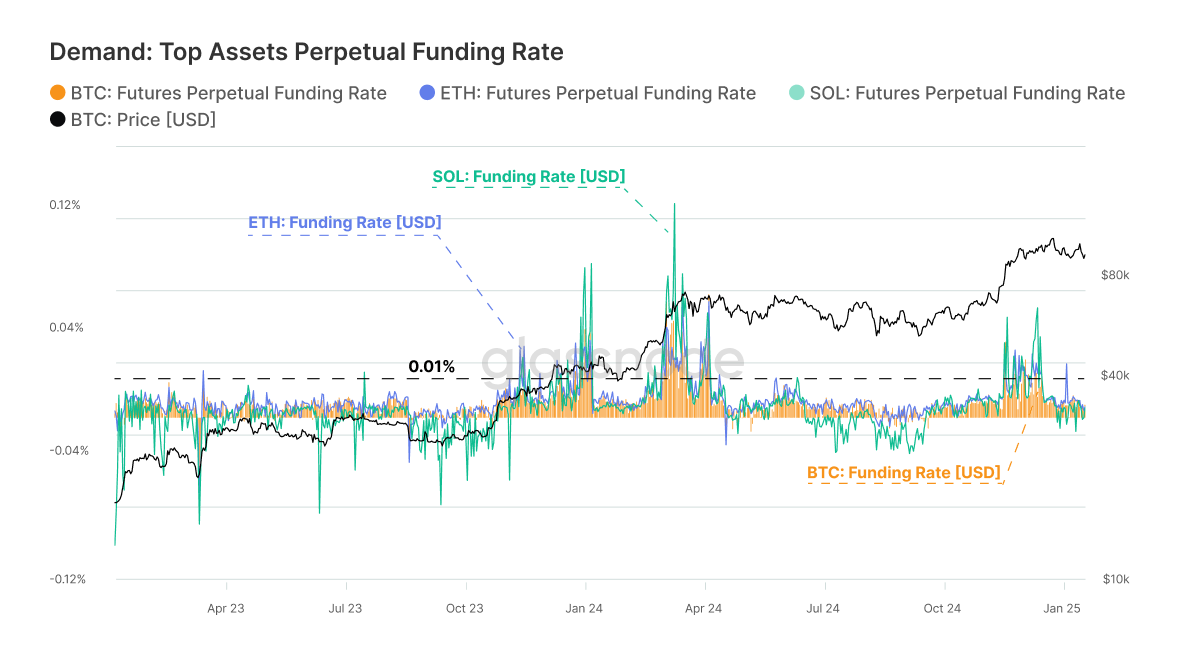
- Funding rates across BTC, ETH, and SOL suggest sustained bullish positioning, with investors paying a premium to maintain leveraged longs.
- Solana exhibited the strongest funding spikes, reflecting high speculative interest among traders.
Institutional Arbitrage and Market Liquidity
The rise of ETFs has fueled futures-based arbitrage, with institutions executing cash-and-carry trades—longing ETFs while shorting futures. This:
- Deepens market liquidity and allows for lower-risk capital deployment.
- Highlights growing sophistication in institutional trading strategies.
Looking Ahead
The expansion of institutional futures activity signals long-term confidence in digital assets, with key trends to monitor:
- Will Bitcoin dominance in open interest continue, or will Ethereum and Solana gain market share?
- How will futures positioning interact with ETF flows in shaping price action?
- Will leverage continue building, or will risk management force periodic deleveraging events?
Institutional derivatives demand is solidifying crypto’s status as a structured, tradable asset class, reinforcing its role in diversified portfolios.
APAC Retail Growth vs. US ETF Dominance
A clear regional divergence is emerging in crypto adoption. While APAC is seeing a surge in retail participation, the US market remains ETF-driven, reflecting a shift in where new capital is flowing. Institutional investors continue to dominate US trading activity, whereas in APAC, individual investors are driving on-chain engagement.
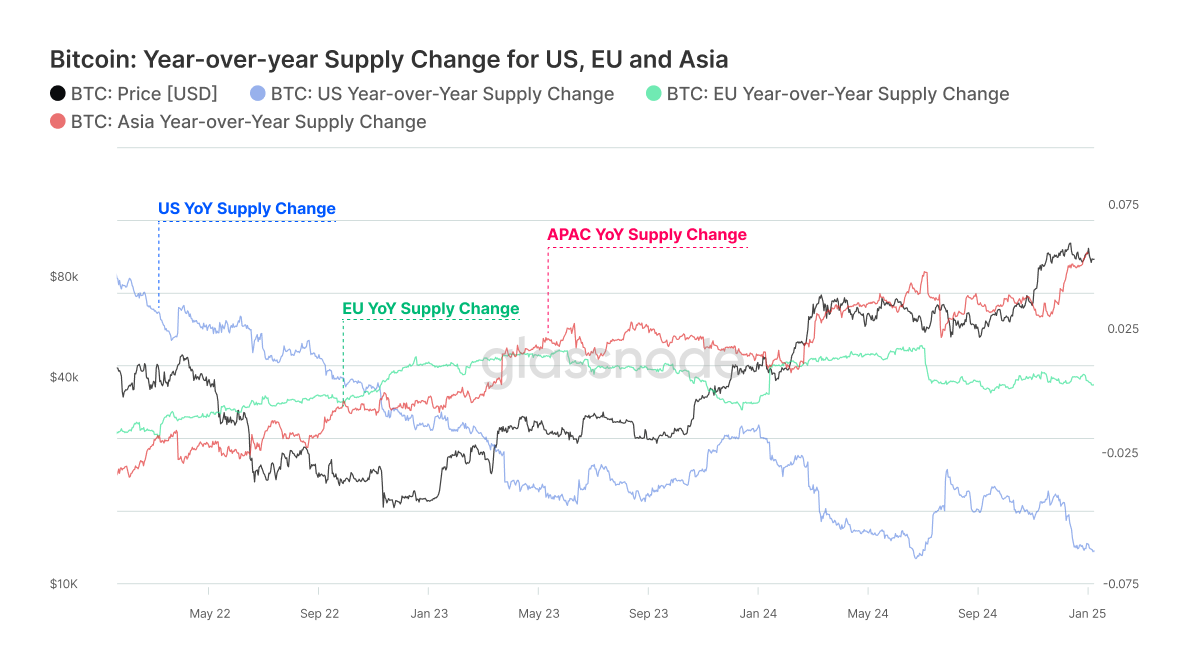
Retail activity in APAC has grown by 6.4% YoY, while both the US and EU have seen declines of -5.7% and -0.7%, respectively. Excluding ETF flows, APAC now leads in on-chain transactions, signaling that crypto adoption in the region is accelerating. This suggests that APAC’s retail market is decoupling from US institutional trends, reinforcing its role as a key driver of speculative cycles.
Looking ahead, post-election volatility in the US remains a key factor to watch. Historically, crypto markets have experienced heightened price swings following major political shifts, as investors react to regulatory developments and macroeconomic policy changes. With a potentially pro-crypto administration on the horizon, expectations around policy direction could influence both institutional positioning and retail sentiment across regions.
Conclusion: A Market in Transition
The crypto market is entering 2025 with strong institutional inflows, resurgent retail activity, and shifting regional dynamics. Spot ETFs are absorbing a growing share of Bitcoin and Ethereum’s circulating supply, while futures markets show a clear institutional long bias. At the same time, retail investors are back, with Solana seeing record engagement and surpassing Ethereum in active addresses.
These trends highlight a market that is both maturing and evolving, with institutional and retail capital shaping liquidity flows in different ways. Regional differences are becoming more pronounced, as APAC leads in retail participation while the US remains ETF-driven. Understanding how these forces interact will be key for investors navigating the year ahead.
Get the Full Analysis
The 2025 Gemini x Glassnode Market Trend Report provides a data-driven breakdown of these critical shifts, helping investors form a complete market view.
- 30+ pages of in-depth insights
- Over 30 charts covering ETFs, futures, retail activity, and capital flows
- Key trends in Bitcoin, Ethereum, Solana, and institutional vs. retail behavior
Download the full report for the most comprehensive look at the forces shaping digital assets in 2025.
Glassnode remains committed to providing the highest quality data and analysis to support institutional investors in the world of digital assets. Contact us for bespoke reports, data services, and more. For more reports on the current trends in the crypto markets, please visit our Insights blog.