# Migration Related Articles

HTX News Center provides the latest articles and in-depth analysis on "Migration", covering market trends, project updates, tech developments, and regulatory policies in the crypto industry.

Are Alt-L1s over? Security, costs drive smaller chains to Ethereum

Running an independent blockchain promises control but comes with major costs, and smaller networks are increasingly finding it economically unsustainable. Zilliqa recently announced it is abandoning its nine-year-old Layer 1 architecture to become an Ethereum-based Layer 2, admitting usage never reached the level a standalone chain requires and that funding and liquidity for independent L1s have dried up. Gnosis is also transitioning its chain into an Ethereum-based network through its Ethereum Economic Zone initiative, and gaming-focused Ronin completed its move back to Ethereum as an L2 in May. According to Bitwise analyst Max Shannon, the decision comes down to profitability: L2s only need to maintain execution and don't necessarily need a token, making them more attractive financially and operationally. The largest networks generate tens of millions in annual fees with margins above 90%, while chains ranked 11th and below collectively earned less than $1 million in annual fees. However, becoming an L2 doesn't guarantee profitability—networks like Optimism, Katana and Linea still have expenses exceeding fee revenue, and Blast has shut down. Beyond cost savings, projects can tap into Ethereum's established ecosystem of applications, developers and liquidity rather than building network effects from scratch. Matter Labs CEO Alex Gluchowski expects more L1 teams to keep their own chains while using Ethereum for settlement, arguing sovereignty and Ethereum integration are not mutually exclusive. Still, Shannon cautions there is no clear conclusion to the L1 versus L2 debate, as some institutions continue launching independent chains like Circle's Arc, Stripe's Tempo and Hyperliquid.

cointelegraph11/12 21:41

Are Alt-L1s over? Security, costs drive smaller chains to Ethereum

cointelegraph11/12 21:41

AI 'Challenges' Cryptography? Web3 Must Plan Ahead, but Must Not Rush Migration

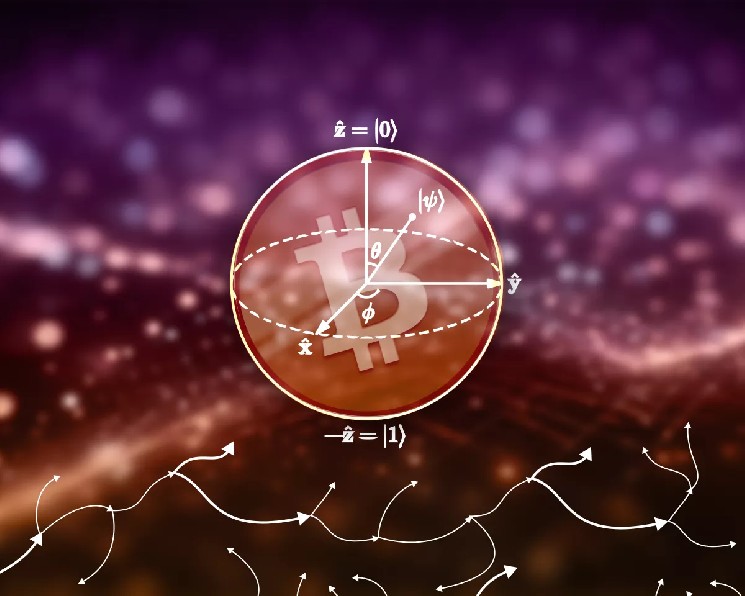
The cryptocurrency community is currently debating the potential risk AI poses to cryptographic security, particularly the widely used elliptic curve cryptography (e.g., ECDSA, Schnorr signatures) underpinning networks like Bitcoin and Ethereum. The discussion was sparked by Justin Drake, who warned that AI advancements could accelerate mathematical breakthroughs, potentially finding new ways to crack these schemes before fully functional quantum computers emerge. He suggested a "Bunker Mode" approach, advising large holders to proactively move assets from addresses with exposed public keys to new ones to mitigate risk. Vitalik Buterin acknowledged AI's potential to advance cryptanalysis but cautioned against hasty user migration. He emphasized that operational errors during rushed transfers pose a more immediate threat than hypothetical cryptographic attacks, especially for users with complex DeFi or staking positions. The core vulnerability lies in the difference between a wallet address and its public key. While an address is a hashed version of the public key, initiating a transaction reveals the full public key on-chain. A future attack capable of deriving the private key from a public key would threaten assets in addresses that have been used. Both experts agree on the need for long-term preparation. The industry is already exploring post-quantum cryptography, with efforts like Ethereum's account abstraction offering a path for future signature algorithm upgrades. However, a full transition requires extensive coordination across protocols, wallets, and infrastructure. For now, the advice for users is: do not panic-move assets due to speculative fears. Be vigilant against scams exploiting these concerns. Large, long-term holders can improve hygiene by reducing unnecessary address reuse. Ultimately, while the ecosystem must prepare for future cryptographic challenges, users should prioritize secure operational practices over premature, risky migrations.

marsbit10/15 19:42

AI 'Challenges' Cryptography? Web3 Must Plan Ahead, but Must Not Rush Migration

marsbit10/15 19:42

After Securing Three Rounds of Funding from a16z and Reaching a $2.25 Billion Valuation, Story Protocol Was Finally Acquired by Sui for $30 Million

**Summary: Sui Acquires Story Protocol's DATA Network for $30 Million After Strategic Pivots** On October 12, the Sui Foundation announced a $30 million investment into the DATA Network, becoming its largest institutional holder. The DATA Network, the successor to the once-$22.5 billion-valued Story Protocol, will migrate to become a native protocol on Sui, retiring its independent blockchain. Founded in 2022, Story Protocol initially aimed to be a blockchain for programmable intellectual property (IP). It raised significant funding from investors like a16z across three rounds. However, its IP token (IP) crashed over 98% from its peak, and major copyright holders proved reluctant to adopt its open licensing model, as highlighted by a failed tokenization attempt with *Baby Shark*'s Pinkfong. Facing minimal on-chain activity and revenue, Story pivoted in June 2025, rebranding to DATA Foundation and shifting focus to AI training data. Its new system, Trace, was designed to record data provenance and compensate contributors, with data platform Kled as a core partner. Despite claims of growth, the chain's fees and usage remained low, and no major AI company partnerships were publicly confirmed. The migration to Sui is presented as a move to improve scalability and reduce the cost of maintaining an independent Layer 1 blockchain. DATA tokens will migrate 1:1 to Sui, losing their gas fee function, while team and investor token unlock schedules remain extended to 2028. For Sui, the deal adds AI data capabilities to its ecosystem. The core challenges remain: bridging the gap between on-chain records and real-world legal rights, and finding paying customers for its data. The article notes that Story's situation is common, with hundreds of blockchains generating negligible fees, suggesting more projects may abandon their own chains. DATA's future now hinges on attracting AI firms willing to pay for its licensed data.

marsbit10/14 17:07
After Securing Three Rounds of Funding from a16z and Reaching a $2.25 Billion Valuation, Story Protocol Was Finally Acquired by Sui for $30 Million

marsbit10/14 17:07

活动图片