Curated & Compiled: TechFlow
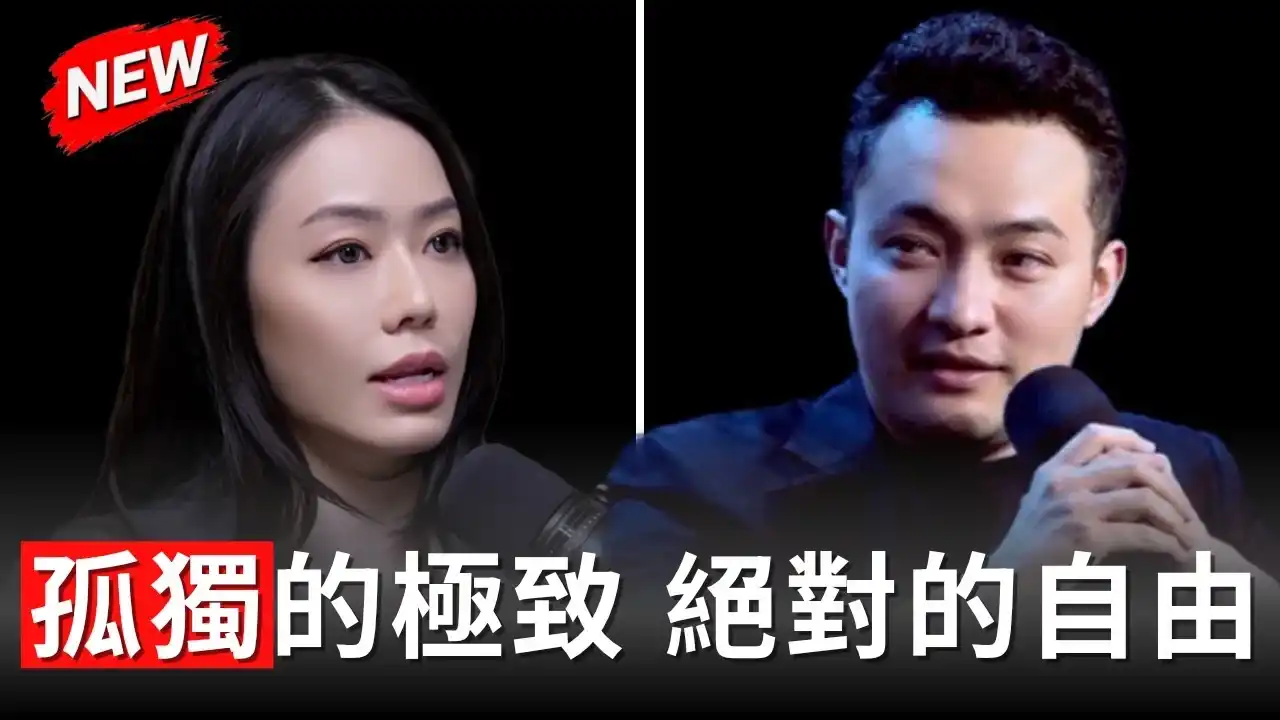
Guest: Justin Sun (Founder of TRON)
Host: Bonnie / Bonnie Blockchain
Podcast Source: YouTube(https://youtu.be/ZQrxbd-r_MM)
Original Title: Justin Sun: Ultimate Loneliness, Also a Form of Freedom! | On Q-Day, Spending $2 Million on a Banana, and Those Mad Decisions You Don't Understand!【Bonnie Blockchain】
Release Date: October 14, 2026
Key Summary
- Warns that the "Quantum Threat Day (Q-Day)" is severely underestimated by Wall Street and BlackRock: Bitcoin's decentralized community upgrades extremely slowly; once quantum computers or top-tier AI crack Satoshi's early public keys, his roughly 1 million Bitcoins could be breached, causing devastating impact; TRON has already deployed NIST post-quantum cryptography standards on testnet.
- TRON has built a formidable network effect moat akin to Facebook, with over $94 billion USDT in circulation (over half the market share), over 400 million real users, and about 500,000 new daily users; to launch tokenized US stocks in Q4, allowing users direct investment in QQQ and S&P 500.
- Established the million-dollar-level "Justin Sun Prize," using a bug bounty model to reform slow academic awards, open to humans or AI agents, awarding immediately upon mathematical breakthrough proofs via systems like Lean; OpenAI has already won one prize.
- Does not regret investing in the Trump family project World Liberty Financial (WLFI) post-investment: it was "inevitable" at the time, lacking sufficient commitments, and he couldn't make his own decision.
- A childhood of being left at a Go boarding school in Wuhan at age nine and being left homeless after parents' divorce shaped the life philosophy that "ultimate loneliness is also a form of freedom"; early independence gave him extraordinary courage to sign for moon missions and go to Mars.
- Spending $6.2 million on a banana, bidding for Buffett's lunch, meeting Musk, signing for moon missions—these "mad decisions" are not marketing calculations in his view, but "priceless ultimate life experiences."
2. Brilliant Viewpoints
- "The Bitcoin community moves very slowly as a whole. We've been in it since 2012; even getting the Bitcoin community to pass a protocol upgrade within two years is almost impossible."
- "Satoshi kept the keys; he was worried about those 1 million Bitcoins. Just think, what a huge impact this would have on Bitcoin's value."
- "Cryptocurrency has a strong network effect, just like Facebook; once you're in, it's hard to move money to another network."
- "Ultimate loneliness is also a form of freedom. Most people get the chance to decide their own life at eighteen, twenty-five, or even thirty when they leave home; I got that chance at nine."
- "Most people think what I do are brave actions, or that I'm doing marketing; but in the end, for me, it's just about wanting these experiences, and these experiences are very important to me."
- "I think bananas are cute. This (buying the banana) is my life, this is my experience."
3. Main Text
1. A Life-Changing Childhood Story
Host: You mentioned at the start that there's a story that changed your life?
Guest: One of the stories changed my life. My parents sent me to a boarding school when I was very young. They originally wanted me to play golf, but later my parents... after I went home, I had to go back to boarding school. The result was, you're always alone. My parents later separated, so I had no home to go back to. When you're young and need to confide in someone, where do you go? No one. My life completely changed; I had to rely entirely on myself. But we also gained something from it, and that's freedom. As you said, ultimate loneliness is also a form of freedom.
Host: At the highest level, is it very lonely?
Guest: Most people get the chance to make decisions about their own lives at eighteen, twenty-five, even thirty; I got that chance at nine. Just like I did back then.
2. The Million-Dollar "Justin Sun Prize": Rebuilding Academic Awards for the AI Era
Host: You're offering a million-dollar-level prize for solving mathematical problems. Why mathematics?
Guest: First, I believe mathematics is the foundation of cryptocurrency. Today, the vast majority of cryptocurrencies—Bitcoin, TRON, Ethereum—are all built on mathematical theory, so it's very important to provide incentives to the mathematics community, and progress in mathematics in turn helps crypto grow. Second, mathematics has started to become a "project" in the internet age. Before, humans learned mathematics, then it was machine learning mathematics; today, most results are starting to be proven by AI. They have a formal verification system that can basically provide verifiable results directly. I think traditional awards like Olympic medals or Nobel Prizes are too slow for the whole industry; we can't spend a year, or even four years, just to reward one person. So the "Justin Sun Prize" is completely designed for the AI era, instant like crypto: we've listed all the important open problems in science; you just prove a mathematical breakthrough using systems like Lean and get the prize immediately. It's not a lifetime achievement award like the Olympics, but more like an agile bounty. We don't care if the solver is a human or an AI agent; if it can solve it, we pay. Many joke that this annual prize might be humanity's last math prize. So what? Why not give the prize to AI.
Host: OpenAI has already won one prize, right?
Guest: Yes. Actually, OpenAI released some new things today, so our team shared the problem repository with them to see if OpenAI can solve more. If OpenAI wins every year, we'll award them every year. Very interesting.
Host: Is mathematics your favorite project?
Guest: Yes, for me it is. I think it's important, and it also helps our business. Because everyone is researching quantum attacks now, and we are also developing the NIST post-quantum cryptography standards, which can help defend against quantum attacks and promote their implementation. We are developing these and hope to validate our commitments on testnet next year.
3. Quantum Threat Day (Q-Day): The Black Swan Underestimated by the Entire Industry
Host: I remember last time we were on stage, you mentioned Q-Day and TRON's hedging plan.
Guest: Yes. I still think Quantum Threat Day (Q-Day) is underestimated by the entire Bitcoin industry. I'm not saying I'm moving fast; it's that the Bitcoin community moves very slowly as a whole. We've been in it since 2012; the entire community's upgrades are extremely slow. Even getting a protocol upgrade passed by the Bitcoin community within two years is almost impossible. The worst-case scenario is that some top-tier AI or mysterious cracker first brute-forces Satoshi's early public-key cryptography. The roughly 1 million Bitcoins he held could be breached; just think what a huge impact this would have on Bitcoin's value.
Host: How big is this risk actually?
Guest: Wall Street and BlackRock managers—they don't use Bitcoin and don't understand Bitcoin's technological progress. They think enough time has been spent on these things, like Apple releasing a problematic update, pushing a new update two minutes later, everyone updates, and it's over. But they've invested so much money without understanding the technology—that's crazy. Actually, not every Apple stock manager studies the iOS system. But Q-Day will be a big problem; it's just that no one knows when it will come, and everyone is predicting what impact Q-Day will have on Bitcoin's value.
4. TRON's USDT Moat, Network Effects, and Tokenized US Stocks
Host: Congratulations to TRON. You now hold over $94 billion in USDT, over half of all USDT. With so many different blockchains trying to compete with you, how are you still winning so much?
Guest: First, cryptocurrency has strong network effects, just like Facebook. When it first came out, you could use other social apps, but Facebook was something else; it's hard to make people switch. Today we already have over 400 million real users still transacting daily. Just like Facebook, if you're not on Facebook and use other software, you can't send messages to others. TRON is the same; if you don't use the TRON network and use other public chains, you can't send money to this network, and the money already on the network is hard to move to other networks. This is the user's choice—today on WhatsApp, tomorrow on X—but that's just communication. Once money is on-chain, it's hard to leave. We have 400 million users, basically adding about 500,000 new users daily. I think it's hard to make people change the network they use; once they enter this network, cryptocurrency's network effect is huge.
Host: What's the second point?
Guest: Second, our team has also been doing our utmost to provide products that users truly need. In Q4 this year, we will launch Tokenized Stocks on the TRON network, ensuring all users have access to major indices and stocks like QQQ and S&P 500, allowing stablecoin users to invest directly in core US stock assets without leaving the chain, connecting on-chain funds to the gateway of traditional financial markets.
5. WLFI Investment: It Was Inevitable Then
Host: Speaking of the US, knowing what you know today, if you could go back in time, would you still invest in World Liberty Financial (WLFI)?
Guest: I think I still would, because it was "inevitable" at the time. I only saw all the materials after investing; they didn't give me enough commitments then, so I couldn't make my own decision and had no reservations. If something is inevitable, it's hard to say you regret it.
6. Lonely Childhood: Go Boarding School at Nine, Parents' Divorce
Host: I want to ask about your childhood stories or your upbringing experiences. Was there anything that shaped who you are now? Like things your parents did.
Guest: Absolutely. One story in my life that changed me is that my parents sent me to a boarding school when I was only nine. At that time, they wanted me to learn Go (Weiqi). Go was the last board game to be conquered by AI. Before me, there were many other games, and the last one ended by AI was Go. Today, learning it is meaningless because even the strongest player can't beat AI; it's like you need two people to deal with one AI. At that time, Go had a strong atmosphere in China with many young players, and all the good players were in Beijing and Wuhan, so I went to Wuhan to learn Go.
Host: Could you only learn Go?
Guest: Yes, because all Go players were in Beijing and Wuhan. And it was very urgent because the rule was you must become a professional player before age 13. If you don't pass before 13, even if you were very successful before, you can never become a pro. So I went to boarding school, practicing 100%, starting from a very young age.
Host: Was it a lonely journey when you practiced?
Guest: Yes, at first, maybe I only knew how to play Go, but later it became everything in my life. Because I went to Wuhan, my parents divorced. When I came back, I had to go back to the training school. You know, just myself, always. It's like soldiers who retreated to Taiwan during the international war; the officers said you'd only stay for a while and then return to southern China. They believed it, but they ended up living in Taiwan forever, with no chance to return to their wives and children back home, having to find a completely new life in Taiwan. For me, the reason for going to boarding school became unimportant because my life completely changed. After that, I relied entirely on myself, and we also gained something from it—freedom.
7. Ultimate Loneliness Is Also Freedom
Host: Your recent article wrote "ultimate loneliness is also a form of freedom." Does the world become very lonely?
Guest: We actually have a lot of people competing; it's a large group, not lonely at all. But for me, maybe these experiences made me feel the truth of life relatively early. Most people have to wait until they are eighteen, twenty-five, or even thirty, when they leave home, to get the chance to decide their own life. I got that chance at nine. So you leave home at nine and then never return home; boarding school became my home. Later, both my parents left; I didn't go home.
Host: When you were young and needed to confide in someone, where would you go?
Guest: No one. My home was in Guangdong, over a thousand kilometers from Wuhan. Even the classmates at boarding school had families and lived in Wuhan. I couldn't trouble anyone; I had to decide everything myself. But I think this gave me a lot of courage to decide to go to space, participate in moon missions in the future, and maybe even go to Mars, as long as Musk says it's safe.
8. Mad Decisions Are All for Experience, Not Marketing
Host: People say you've done many crazy things, like buying a banana, bidding for Buffett's lunch. Is this an investment or marketing?
Guest: For me, it's an experience. My motivation to extend my experiences differs from most people's; things others find important aren't important to me. For example, my decision to meet Musk—I believe that will also become big news, but the reason isn't marketing; going to space is the same, buying the banana is the same. Because I think bananas are cute. I spent $6.2 million. Yes, it was actually mine. The auction reserve was $7 million. I did it for the priceless ultimate life experience.
Host: People think many things you do are brave actions, or that you're doing marketing?
Guest: But in the end, for me, I just want these experiences, and these experiences are very important to me. As I became more famous, people started attaching a lot of meaning to what I do. But for me, this is my life, this is my experience. We decide and then just go, it's that simple.
Host: Aren't you excited?
Guest: I am excited. I just think about all the things I do, and I also think about going to training school at night. If you say you go to training school at night, that must be a promotional move, right? Why? Quite interesting, isn't it? So I think it's the same.
Host: I really enjoyed this discussion; it's very touching and engaging.
Guest: Thank you.