After the $320 Million Liquid Network Incident: When One Line of Defense Fails, What Can Digital Asset Platforms Still Safeguard?

marsbitPublished on 2026-09-11Last updated on 2026-09-11

Abstract

Following a series of recent security incidents in the digital asset space, a key question resurfaces: how should platforms define true security? This is highlighted by the $320 million exploit on the Bitcoin Liquid Network, where assets were transferred not due to compromised keys, but a software vulnerability. Similar events on Cosmos EVM and at Triple-A, involving code bugs and social engineering, underscore a common theme: breaches are often inevitable, but their ultimate impact depends on the depth of a platform's defenses. The critical lesson is that security shouldn't rely on a single, unbreachable gate. The real measure is what happens after the first line fails. Does one compromised credential grant full system access? Can a single point of failure lead to massive asset loss? Effective security lies in layered protections—isolating identities, permissions, critical operations, and asset storage so that a breach in one area is contained. Examining BIT's (formerly Matrixport) updated Trust Whitepaper reveals this philosophy in practice. Its system employs principles like least privilege access, multi-party authorization for sensitive actions, continuous behavioral monitoring, and keeping most assets in cold storage. This creates a series of "gates": a stolen identity doesn't grant full permissions, having a permission doesn't allow independent action, and an online breach doesn't expose core assets. Furthermore, BIT grants its security team a "veto power" to halt pr...

The recent series of security incidents has once again brought the digital asset industry back to a familiar question: What truly constitutes 'security' for a platform?

In early September, a major security incident occurred on the Bitcoin sidechain Liquid Network. Attackers exploited a validation vulnerability in the Elements software, leading to the transfer of approximately 4,000 BTC, worth around $320 million at the time of the incident. Notably, the related PAK and Federation keys themselves were not compromised. This brings to light a more worthy question for discussion: When the keys themselves are not breached, how can an asset transfer that should never have happened still pass through the system?

Similar risks have also emerged in other areas. In August, attackers exploited a critical security vulnerability in Cosmos EVM to attack multiple networks, with six networks actually exploited. The related vulnerability had previously been reported through a bug bounty program. In July, Triple-A fell victim to a social engineering attack where attackers obtained personnel credentials and further accessed the operational environment, ultimately resulting in the transfer of some company-owned assets. However, as client funds were independently stored in trust accounts and isolated from the compromised operational environment, they were not affected.

The causes of these three incidents are different, yet they collectively point to a more realistic issue: Security incidents may be difficult to completely avoid, but when a single link in the code, personnel, or permissions chain is breached, where exactly will the risk stop?

The real thing to guard against is not just 'being breached,' but how far the risk can go.

A more pertinent question than 'whether there was an attack' is: After the first line of defense fails, how much further can the attacker go? If one account is compromised, is that sufficient to perform critical asset operations? If one permission is breached, can they continue to access more core systems? When issues arise in the online environment, how much core asset is truly exposed in the attack path?

This is also a key insight from the recent incidents: The ultimate impact of an attack depends not only on what the attacker breached, but also on how many layers of defense remain in the system after the breach.

If the compromise of a single account can directly access core permissions, or if a problem in the online environment can directly affect a large amount of core assets, then any weak link can be rapidly amplified. Conversely, if there are multiple layers of isolation between permissions, critical operations, risk monitoring, and asset storage, a single breach may not necessarily escalate into a total compromise.

In other words, measuring a platform's security capability is not just about 'whether the first door can be held,' but also about: after the first door is breached, how many doors are left behind it.

Following the attack chain, where are BIT's 'next doors'?

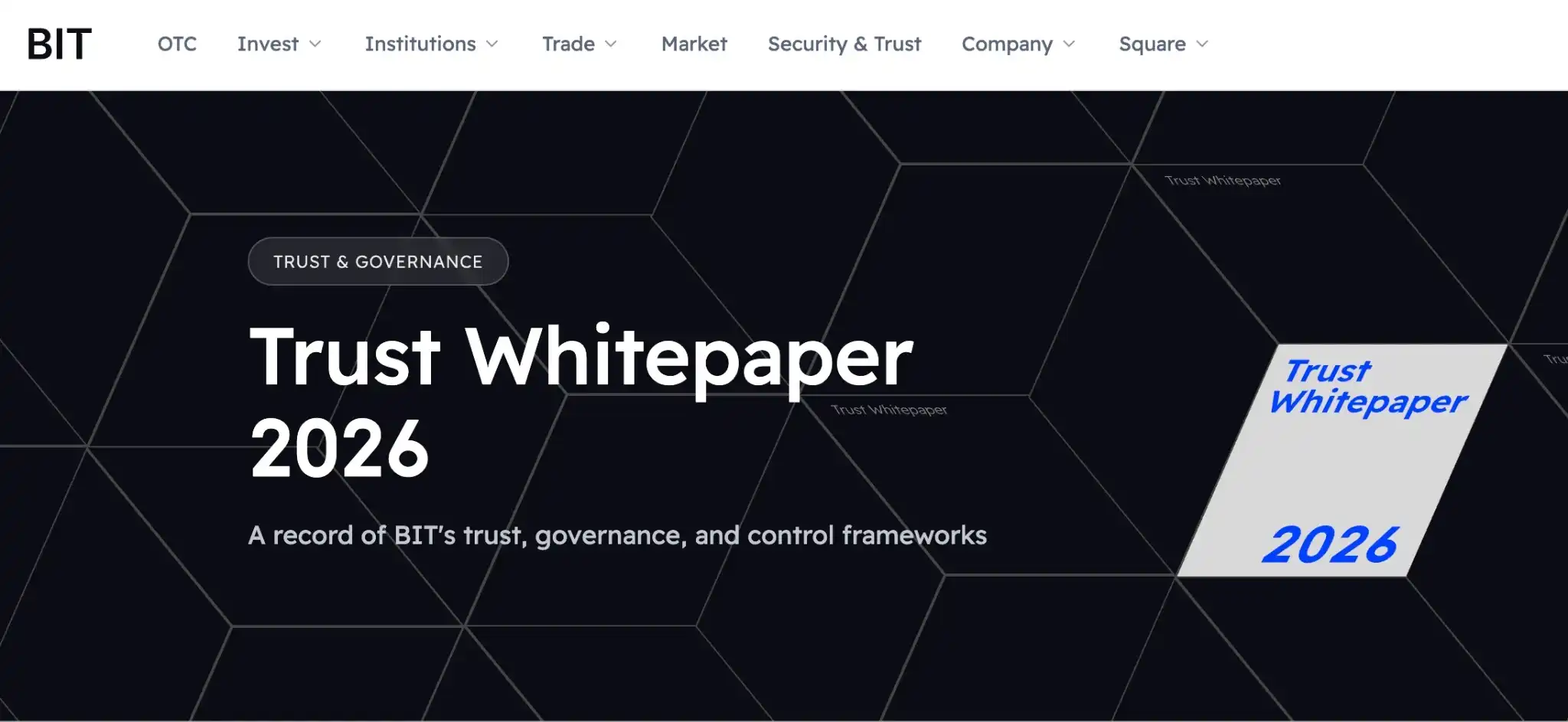
Recently, the global digital financial services platform BIT (formerly Matrixport) released the "BIT Trust Whitepaper" V2.0 (https://www.bit.com/whitepaper). If we re-examine this whitepaper along the question of 'what happens after the first line of defense fails,' one noteworthy aspect is that BIT's security system does not rely on any single line of defense. Instead, it establishes multiple layers of protection between identity, permissions, operations, and assets.
For example, obtaining account credentials does not mean an attacker has all the permissions needed to complete critical asset operations. The whitepaper discloses that BIT limits the systems and operations employees can access based on the principle of least privilege; critical operations involving asset transfers, account security, permission changes, and the generation and approval of transaction instructions require the participation of at least two authorized personnel. This layered approach also extends to institutional-grade digital asset custody scenarios, as exemplified by Cactus Custody.
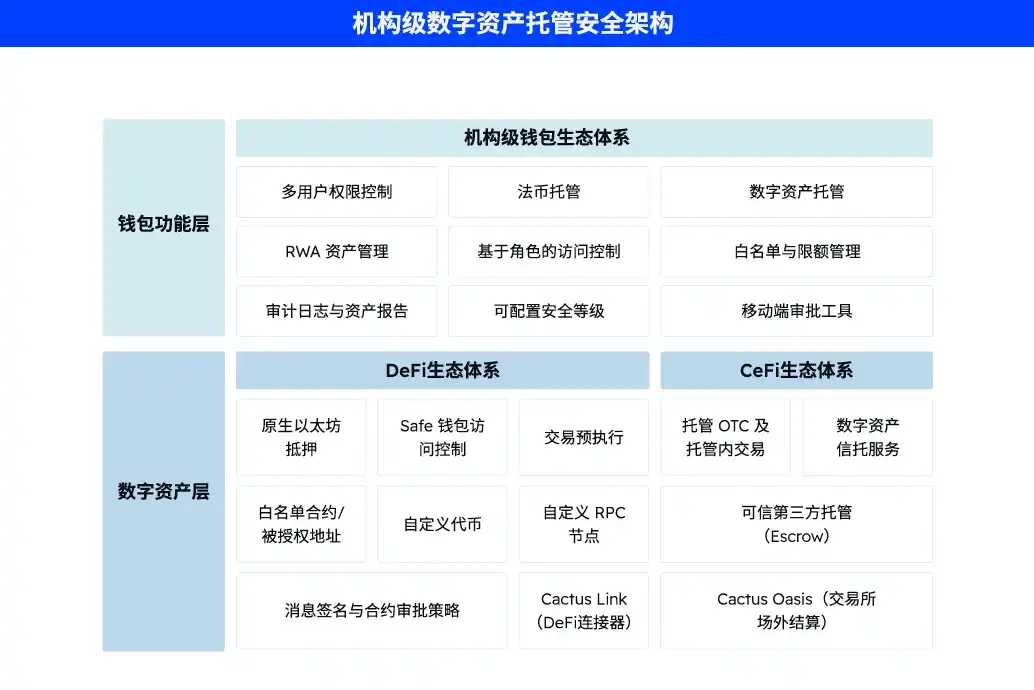
Successfully passing identity verification does not mean subsequent operations get a continuous 'green light.' BIT conducts ongoing monitoring for behaviors such as abnormal logins, abnormal devices, and abnormal withdrawals. On the asset side, the majority of digital assets are stored in cold wallets, further reducing the exposure of core assets when issues arise in the online environment.

Looking at these mechanisms together, BIT's security logic becomes more intuitive: a compromised identity does not equal obtaining all permissions; obtaining one permission does not equal the ability to independently complete critical operations; passing identity verification does not mean subsequent behaviors are no longer subject to risk assessment; and problems in the online environment do not mean all core assets are simultaneously exposed.

What truly determines how far an attack can ultimately go are precisely these 'does not equal' conditions. This does not mean any attack can be completely avoided, but it does mean that even if one line of defense is breached, there are still opportunities to detect anomalies, restrict permissions, or isolate risks.

The gap in security often lies in what happens after the first door is breached.

When risk is discovered, who has the real authority to press the 'stop button'?

However, having a few more technical lines of defense is not everything. In the Cosmos EVM incident, a noteworthy detail is that the related vulnerability had been reported through a bug bounty program, but based on the information available at the time, it was initially assessed as not leading to the loss of funds in known production network configurations.

This also exposes another often-overlooked issue: Discovering a risk does not mean it has been accurately assessed and adequately addressed.

After a vulnerability is submitted, who determines its severity? If the security team deems the risk unacceptable, do they have the authority to prevent the product from going live? When business progress conflicts with security judgment, who has the final say?

The "BIT Trust Whitepaper" V2.0 discloses that when product plans, requirements, architecture, or launch changes pose significant security risks or do not meet security baselines and compliance requirements, the security team holds a 'one-vote veto' right. They can suspend related activities and require rectification and re-review before proceeding.

The truly noteworthy aspect of this mechanism is not just an additional layer of approval, but that it answers a very practical question: When risk truly emerges, is there someone with the authority to say 'no.' For a security system, the ability to discover problems is important, but ensuring that security judgments can genuinely influence business decisions is equally crucial in determining whether a line of defense is merely written in policy or can truly function effectively.

As business becomes more complex, 'security' is no longer just about assets in a wallet.

As digital financial platforms begin to simultaneously connect different types of assets and financial infrastructure, such as digital assets, U.S. stocks, and RWAs, security issues also extend beyond the wallet and account levels. Who handles the assets, which institutions they pass through, and where they are cleared and held also become important parts of users' risk assessment.

This is also where the "BIT Trust Whitepaper" V2.0 further elaborates on the security and trust system. Beyond risk control and security measures, the whitepaper also discloses the regulatory, audit, and independent verification arrangements corresponding to different business entities. This allows external parties to better assess: who is responsible for what, which mechanisms can be verified, and to what extent these mechanisms cover.

Taking BIT's U.S. stock business as an example, its securities business is operated by Matrix Gelephu Pte. Ltd. and is regulated by the GFSO. The related business also connects to U.S. licensed financial institutions and corresponding clearing and custody infrastructure.

For ordinary users, these seemingly complex financial arrangements can ultimately be boiled down to a few simple questions: Who handles my assets? Through which steps? What are the respective responsibilities of the different institutions? Can the identities and regulatory statuses of these institutions be checked?

This is where 'verifiability' truly becomes meaningful—security cannot rely solely on what a platform claims; it also depends on what users and the outside world can verify.

Looking back at the Liquid Network, Cosmos EVM, and Triple-A incidents, the entry points are completely different, yet they all remind the market: No single line of defense should be assumed to never fail. What truly creates a gap in security may not be a single security technology itself, but who can establish sufficient isolation and checks and balances between identity, permissions, operations, assets, and organizational decision-making, making it harder for a local breach to escalate into a total compromise.

From this perspective, what is noteworthy about the "BIT Trust Whitepaper" V2.0 is not just how many security measures it lists, but whether these measures can form a complete defense system: if one link fails, there is another layer; if the next layer fails, there is still an opportunity to continue identifying, blocking, and isolating risks.

For digital asset platforms, 'never being attacked' may be a difficult promise to make permanently. But another thing can be continuously built: True security is ensuring that even if one line of defense fails, a single breach does not easily escalate into a total compromise. And when these lines of defense not only exist but can also be continuously verified by the outside world, 'trust' is no longer just a statement made by the platform itself.
Trending Cryptos

Related Questions

QAccording to the article, what common question arises for digital asset platforms following security incidents like the Liquid Network hack?

AThe article highlights the recurring question of how a digital asset platform can truly be considered 'secure,' especially when an asset transfer can occur even without the core keys being compromised.

QWhat key shift in security philosophy does the article suggest is needed, based on the recent incidents?

AThe article suggests that the focus should shift from merely preventing the initial breach to limiting how far an attack can progress ('risk propagation'). The key measure of security is not just if the 'first gate' holds, but how many subsequent gates exist behind it.

QHow does BIT's security approach, as described in its Trust Whitepaper, implement the concept of 'multiple gates' or layers of defense?

ABIT implements multiple layers of defense through principles like least privilege access, multi-signature authorization for critical operations (requiring at least two authorized personnel), continuous risk monitoring for anomalous behavior, and the physical isolation of most digital assets in cold wallets. This ensures a breach in one area (e.g., a credential) does not grant full system access.

QWhat specific power does BIT grant its security team to ensure safety judgments impact business decisions?

ABIT grants its security team a 'one-vote veto' power. This allows them to suspend product launches, feature changes, or other activities if they identify major security risks or non-compliance with security baselines, ensuring safety concerns can override business pressures.

QBeyond technical safeguards, what does the article identify as a crucial component for building user trust in a platform's security?

AThe article identifies 'verifiability' as crucial. Trust is built not just on what a platform claims, but on what users and external parties can independently verify—such as regulatory statuses, audit arrangements, and clear disclosures about which entities handle assets at different stages.

Related Reads

DTCC Plans Solana Expansion as Wallet Rules Limit Access

DTCC plans to connect its tokenization service to Solana in the second half of 2027, allowing certain securities held by its DTC subsidiary to be converted into digital tokens on the network. Analysts say the move could attract more traditional financial institutions to Solana, which is known for fast transactions and low fees and had about $4.94 billion in total value locked as of Nov. 12. However, the impact may be limited by US regulatory rules. Alex Lin of Reforge noted that Solana's experience handling memecoin trading served as a public stress test, giving the network credibility to handle retail-scale volume reliably. Still, under a December 2025 SEC no-action letter, DTC participants must register wallets to hold tokenized securities, and tokens can only be transferred between registered wallets. Lin said the near-term impact is overstated because the tokens remain in a walled garden, inaccessible to permissionless retail and DeFi liquidity until regulators allow these assets to function as true onchain collateral. DTCC launched its tokenization service on the Canton Network and its private Besu network on Oct. 28, with 20 DTC participants signed on, though it has not said whether any plan to use Solana. Kha Nguyen of Birdeye said Solana has already seen growing demand for tokenized stocks, with trading volume reaching around $4.9 billion in H1 2026 and over 1 million accounts holding tokenized stocks by late September. However, broader Solana activity has slowed, with transactions down nearly 40%, DEX volume down 34.4%, and fees down 39%, while tokenized RWA value rose almost 7% to $4.76 billion. Nguyen said DTCC's integration would need banks, brokers, and issuers to actively issue, trade, and settle on Solana, with enough liquidity for large trades. He stressed that assets must be active rather than idle—traded around the clock, used as collateral, and earning yield. Lin agreed that long-term impact depends on where assets are used for secondary trading and collateral activity, not where they are issued.

cointelegraph5m ago

DTCC Plans Solana Expansion as Wallet Rules Limit Access

cointelegraph5m ago

Jensen Huang Resigns, CFO Appointed as NVIDIA Interim CEO — Who Is Kress?

NVIDIA announced on the evening of November 12 that co-founder Jensen Huang has resigned as president, CEO, and board member, effective immediately. The 63-year-old founder, who led the company for 33 years, stepped down after a scandal involving extramarital affairs. The board accepted his resignation on November 11, and Huang also exited the board entirely, giving up all director seats. Huang co-founded NVIDIA in 1993 and built it into a core supplier for the AI boom, with the company's market value once reaching about $4 trillion. He holds roughly 3.6% of NVIDIA shares, making him the fourth-largest shareholder. NVIDIA has appointed CFO Colette Kress as interim CEO until the board selects a permanent successor. Kress will continue as executive vice president and CFO while serving as interim CEO. At the board level, Harvey C. Jones, former Synopsys CEO and a director since 1993, became the company's first board chairman. Previously, NVIDIA had no independent board chair, with Huang holding both CEO and board seats. The board will search for a permanent CEO both internally and externally. Jones said the board has full confidence in Kress and the management team and expects operations, customer commitments, and the product roadmap to be unaffected. Colette Kress, born in 1967 in the U.S. and about 59, is NVIDIA's long-serving EVP and CFO. Her appointment makes her the first female leader in NVIDIA's history. She holds a bachelor's degree in finance from the University of Arizona and an MBA from SMU's Cox School of Business. She began her career at Texas Instruments, working about eight years in various finance roles, then joined Microsoft in 1997 for 13 years, becoming CFO of the Server and Tools Division in 2006. In 2010 she moved to Cisco as senior VP and CFO of its business technology and operations finance organization. In September 2013, recruited personally by Huang, she joined NVIDIA as EVP and CFO, when annual revenue was only about $4.13 billion. During her 13 years, NVIDIA transformed from a gaming graphics maker into a global AI and accelerated computing leader, with revenue soaring from $4.13 billion in fiscal 2014 to $215.9 billion in fiscal 2026, about 52 times growth. In July 2025, thanks to her NVIDIA shares, she became a billionaire with net assets of about $1–1.2 billion. She received the Silicon Valley Business Journal's CFO of the Year award in 2016 and has repeatedly appeared on Forbes and Fortune most powerful women lists. NVIDIA shares fell sharply after the resignation news. After The Wall Street Journal reported the board was preparing to force Huang out, the stock dropped over 9% in after-hours trading; at the U.S. open it continued falling, briefly breaking below $150 to a new low since June 15, before narrowing losses to about $160. Dan Ives of Yorkville Ives said the investigation is a blemish for Huang, could trigger congressional probes, and that he risked being ousted, pressuring the stock. Huang's departure stems from two reports of extramarital affairs. On Sunday, November 8, Huang emailed employees admitting infidelity to his wife and apologizing to employees, the board, and shareholders. The board announced an investigation by a committee of independent directors with outside counsel, saying there was no reason to believe company secrets leaked. On Wednesday, November 11, The New York Times reported Huang had a romantic relationship with Kimberly Powell, NVIDIA's vice president of healthcare, both married, with Powell reporting to Huang; the report said intimate behavior was filmed at a San Jose hotel in March. The Wall Street Journal then reported the board was preparing to force Huang out. CBS cited sources saying the Trump administration was aware. CNBC confirmed the board met that night to discuss whether to remove Huang, with the meeting running into the evening. The next day, NVIDIA announced Huang's resignation.

Odaily星球日报4h ago

Jensen Huang Resigns, CFO Appointed as NVIDIA Interim CEO — Who Is Kress?

Odaily星球日报4h ago

Farewell, Jensen Huang

Nvidia founder and CEO Jensen Huang has resigned from his roles as president, CEO, and board director, effective immediately, following revelations of an extramarital affair with an executive who directly reported to him. The scandal, which began surfacing in late October, escalated rapidly after Huang issued an internal apology letter on November 8 admitting infidelity. Nvidia's stock has plunged, wiping out roughly $450 billion in market value, with analysts warning of potential further losses exceeding $1 trillion if leadership instability persists. Huang's wife may pursue divorce proceedings under California's community property law, potentially resulting in a settlement of $62.6–81.1 billion—possibly the most expensive divorce in history. CFO Colette Kress has been appointed interim CEO while the board searches for a permanent successor, and Harvey C. Jones has been named the company's first board chairman. Huang co-founded Nvidia in 1993 and built it into the world's most valuable chip company, pioneering the CUDA architecture that enabled the AI revolution. His unusually flat management structure—with roughly 60 executives reporting directly to him and no public succession plan—has left the company vulnerable at a critical moment. Given that major tech giants like Google, Microsoft, OpenAI, and Anthropic depend heavily on Nvidia's chips for their AI ambitions, Huang's departure raises urgent questions about whether the AI industry is prepared for an Nvidia without its longtime leader.

marsbit5h ago

Farewell, Jensen Huang

marsbit5h ago

Trading

Spot

Hot Articles

How to Buy ONE

Welcome to HTX.com! We've made purchasing Harmony (ONE) simple and convenient. Follow our step-by-step guide to embark on your crypto journey.Step 1: Create Your HTX AccountUse your email or phone number to sign up for a free account on HTX. Experience a hassle-free registration journey and unlock all features.Get My AccountStep 2: Go to Buy Crypto and Choose Your Payment MethodCredit/Debit Card: Use your Visa or Mastercard to buy Harmony (ONE) instantly.Balance: Use funds from your HTX account balance to trade seamlessly.Third Parties: We've added popular payment methods such as Google Pay and Apple Pay to enhance convenience.P2P: Trade directly with other users on HTX.Over-the-Counter (OTC): We offer tailor-made services and competitive exchange rates for traders.Step 3: Store Your Harmony (ONE)After purchasing your Harmony (ONE), store it in your HTX account. Alternatively, you can send it elsewhere via blockchain transfer or use it to trade other cryptocurrencies.Step 4: Trade Harmony (ONE)Easily trade Harmony (ONE) on HTX's spot market. Simply access your account, select your trading pair, execute your trades, and monitor in real-time. We offer a user-friendly experience for both beginners and seasoned traders.

7.9k Total ViewsPublished 2024.03.29Updated 2026.09.28

How to Buy ONE

Discussions

Welcome to the HTX Community. Here, you can stay informed about the latest platform developments and gain access to professional market insights. Users' opinions on the price of ONE (ONE) are presented below.

活动图片