Bitcoin ETF Sees $463 Million in Outflows as ETH Defies Trend to Attract Capital: Could $2,500 Become a New Launching Pad?

Published on 2026-09-15Last updated on 2026-09-15

Abstract

Bitcoin ETFs recorded four consecutive days of net outflows last week, totaling $462.73 million. In contrast, ETH ETFs saw a single-day inflow of $216.41 million on Friday, achieving approximately $197 million in weekly net inflows and marking their fourth consecutive week of inflows. The upcoming FOMC meeting and CLARITY vote will test whether this divergence in capital flows can be sustained.

Institutional Capital Begins to Differentiate Among Crypto Assets

Last week saw a clear divergence in the flow of funds for US crypto ETFs. Bitcoin ETFs experienced redemptions every trading day from September 8th to 11th, with a weekly net outflow reaching $462.73 million, ending the previous trend of three consecutive weeks of inflows. During the same period, the price of Bitcoin retreated to around $77,000, and the macro environment became more tense due to inflation and interest rate hike expectations.

Bitcoin ETF trading volume declined by approximately 28% sequentially to $8.76 billion, while ETH ETF trading volume conversely increased by about 54% to $5.14 billion. The combined fund flow for five major categories of crypto ETFs shifted from a net inflow of about $1.24 billion the previous week to a net outflow of approximately $263 million, indicating a clear contraction in institutional risk appetite, but not a synchronized retreat from all assets.

ETH Completed a Flow Reversal on Friday

ETH ETFs came under pressure at the beginning of the week, but saw a single-day net inflow of $216.41 million on Friday, exceeding the size of the final weekly net inflow. This capital injection reversed the prior weakness, resulting in a weekly net inflow of about $197 million for ETH ETFs and extending their streak of consecutive net inflows to four weeks.

This set of data illustrates that while Bitcoin faced sustained redemptions, some institutional capital remained willing to allocate to ETH. Whether the price can stabilize around $2,500 depends not only on spot buying interest but also on whether ETF flows maintain their relative strength.

FOMC and Regulatory Vote to Determine the Next Direction of Flows

XRP and Solana ETFs also attracted net inflows of $18.98 million and $10.30 million respectively last week, with ETH, XRP, and Solana combined attracting approximately $226 million. Capital flows are shifting from broad-based momentum chasing to more selective allocation, with ETH being the most prominent beneficiary of this shift.

The Federal Reserve will hold its meeting from September 15th to 16th, with interest rate futures suggesting a relatively high probability of a 25-basis-point rate hike; the US Senate is also scheduled to hold a procedural vote on a new version of the CLARITY Act on Tuesday. These two events may determine whether ETH fund flows can continue to lead and whether the $2,500 level can transition from resistance to effective support.

Related Reads

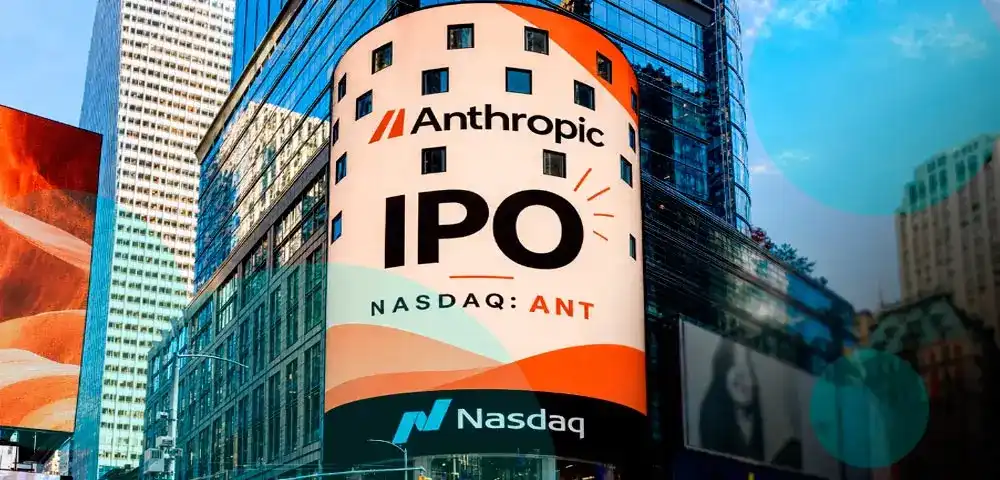
Tech Veteran: Anthropic IPO Will Be the Peak of the US AI Rally, Will "Go Big on China AI" If Conditions Allow

Veteran tech investor Jack Selby, head of Copper Sky and managing partner of Peter Thiel's family office, warns that Anthropic's planned IPO—aiming to raise up to $100 billion—could mark the peak of the AI market rally. He cautions that if the highly anticipated IPO prices well below expectations, the expiry of lock-up periods could trigger significant selling pressure and a large-scale AI market correction. Selby names SoftBank and Oracle as "canaries in the coal mine," flagging Oracle's higher debt ratio as a bigger risk, and suggests investors needing AI exposure consider Google instead. Selby also questions Anthropic's fundamentals: over 80% of its revenue is non-recurring and vulnerable to competitors closing the technology gap within six to nine months. He notes the business is extremely capital-intensive—requiring costly data, energy, data centers, and chips—and that with interest rates no longer near zero, calling it a trillion-dollar company seems far-fetched. He further highlights Chinese competition, saying DeepSeek and other Chinese AI models trail Anthropic by only about six months, posing a direct threat. Selby says he would "aggressively go long on Chinese AI" if conditions allow, arguing that Anthropic cannot claim all its business must rely on U.S. models, since most AI use cases resemble basic tool applications, leaving room for Chinese alternatives.

marsbit1h ago

Tech Veteran: Anthropic IPO Will Be the Peak of the US AI Rally, Will "Go Big on China AI" If Conditions Allow

marsbit1h ago

Grayscale's $1 Million Sponsorship Can't Save It: Why ZEC, Once Hyped as the Belle of the Ball, Crashed Again?

Grayscale announced a $1 million ecosystem sponsorship for Zcash on November 10, pledging to return all first-year management fees from its Zcash ETF (ZCSH) to network development and marketing, with the first $100,000 distributed to four nonprofit organizations. Yet the same day, ZEC plunged 11.3% to around $1,043, extending its 30-day decline to nearly 20%. After two months of hype from overseas KOLs and institutions touting ZEC as a "second spring for old coins," the token quickly turned into a slow bleed under the weight of $2.3 billion in open interest. The article argues that Wall Street's narrative halo and Grayscale's PR subsidy have been exhausted, and ZEC—lacking fundamental support—has once again become an ATM for highly leveraged speculators to cash out on good news. Grayscale's pledge, while seemingly generous, is voluntary and can be modified or terminated at any time; only $400,000 of the $1 million has actually been paid, making it more brand marketing for its own ETF than genuine ecosystem donation. The sum is negligible relative to Zcash's market cap, and the Zcash ETF has not attracted sustained institutional capital the way Bitcoin or Ethereum ETFs did. Without new external liquidity, the inflated narrative cannot hold. The core problem is market structure: ZEC perpetual futures open interest stands at roughly $2.3 billion, dominated by high-volatility leveraged gamblers. The article contends that the earlier social media hype was a precise harvest of derivatives liquidity—promoters used the "first privacy ETF" theme to lure retail into leveraged longs, then exited as open interest peaked and the sponsorship news landed. Compounding this, Zcash's privacy pool suffered a critical vulnerability about three months before the ETF listing, halving the price and shattering conservative investors' confidence despite a July fix. The piece concludes that "old coin re-hype" follows a familiar script: find a traditional-finance-approved angle, package a grand revaluation narrative, use KOLs to drive retail buying, then distribute chips at peak liquidity. Those who hyped ZEC have largely cashed out, leaving behind a broken price and $2.3 billion in unsettled leverage. Grayscale's advertising cannot save Zcash; a real revival requires far more than Wall Street's charity.

marsbit2h ago

Grayscale's $1 Million Sponsorship Can't Save It: Why ZEC, Once Hyped as the Belle of the Ball, Crashed Again?

marsbit2h ago

Trading

Spot
活动图片