Giải tỏa trước, thâu tóm sau: Thương vụ M&A 4 tỷ của Huazhijie là Chuyển đổi hay Gỡ thị trường?

marsbitPublished on 2026-09-30Last updated on 2026-09-30

Abstract

Ngày 29/9, Công ty Cổ phần Hoa Chi Kiệt (603400.SH) công bố kế hoạch tái cấu trúc, dự kiến mua lại 83.5052% cổ phần của Công ty TNHH Cách Lệ Minh với giá trị định giá toàn bộ khoảng 4,85 tỷ NDT, thâm nhập vào lĩnh vực linh kiện hỗ trợ kiểm tra chip bán dẫn. Mục tiêu của thương vụ M&A nhỏ này vượt ra ngoài sự hợp tác phát triển. Hoa Chi Kiệt, niêm yết từ tháng 6/2025, đang đối mặt với lợi nhuận sụt giảm mạnh (giảm 46.78% trong nửa đầu năm 2026). Trong khi đó, tỷ lệ P/E của công ty vẫn ở mức cao khoảng 80 lần. Động thái mua lại diễn ra sau thời điểm 8% cổ phiếu hạn chế được giải tỏa vào tháng 6/2026 và một loạt tin tức về các chủ đề đầu tư nóng, giúp cổ phiếu tăng hơn 65% từ cuối tháng 7 đến trước khi tạm ngừng giao dịch. Việc định giá mục tiêu khoảng 15 lần P/E và thanh toán bằng cổ phiếu với mức định giá cao giúp công ty có lợi về kế toán và bảo vệ cửa sổ giá tốt cho việc giảm sở hữu sau giải tỏa và huy động vốn trong tương lai. Tuy nhiên, ngay cả khi sáp nhập thành công, P/E của Hoa Chi Kiệt vẫn ở mức cao khoảng 58 lần, đặt ra câu hỏi về việc duy trì mức định giá này trong tương lai.

Vào tối ngày 29 tháng 9, Huazhijie (603400.SH) sau nửa tháng tạm ngừng giao dịch đã công bố dự thảo tái cấu trúc, dự định thâu tóm 83.5052% cổ phần của Zhaodie trong công ty Gelingming thông qua phát hành cổ phiếu và thanh toán bằng tiền mặt, đồng thời huy động vốn hỗ trợ. Sau khi giao dịch hoàn tất, Huazhijie sẽ nắm quyền kiểm soát hoàn toàn Gelingming, tiến vào lĩnh vực hỗ trợ kiểm tra chip bán dẫn. Nhìn bề ngoài, đây là một thương vụ mua lại nhỏ với định giá vừa phải - tổng định giá mục tiêu chỉ khoảng 485 triệu tệ, khó có thể tạo ra sự thay đổi thực chất về lợi nhuận và định giá của Huazhijie. Nhưng khi đặt giao dịch này vào dòng thời gian 15 tháng kể từ khi công ty lên sàn, mục đích của nó có lẽ không chỉ nằm ở sự phát triển đồng bộ, mà còn ở giá cổ phiếu: một công ty có lợi nhuận liên tục giảm một nửa, tỷ lệ P/E động lên đến 77 lần, cần một câu chuyện mới để duy trì mức định giá cao, nhằm tạo ra cửa sổ giá tốt hơn cho việc giải tỏa và bán giảm cổ phiếu hạn chế cũng như các đợt huy động vốn tiếp theo (phát hành riêng lẻ).

Định giá mục tiêu không đắt, quy mô không lớn

Gelingming được thành lập vào tháng 4 năm 2020, vốn điều lệ 5 triệu tệ, trước đó do Zhaodie sở hữu 100%, kinh doanh chính là các linh kiện chính xác như đế kiểm tra, đầu dò kiểm tra... trong khâu kiểm tra chip. Đế kiểm tra dùng để cố định chip và kết nối nó với máy kiểm tra, đầu dò kiểm tra có nhiệm vụ dẫn tín hiệu điện ra, thuộc loại linh kiện chính xác nhỏ dùng trong các khâu kiểm tra, đóng gói và xác minh độ lão hóa của chip.

Rào cản của loại linh kiện này không nằm ở chế tạo mà ở chứng nhận, chu kỳ đưa vào hệ thống nhà cung cấp của các hãng thiết kế chip và đóng gói/kiểm tra kéo dài, một loại đế kiểm tra phải được khách hàng xác nhận mới có thể cung cấp hàng loạt. Một khi đã vào được chuỗi cung ứng thì rất khó bị thay thế.

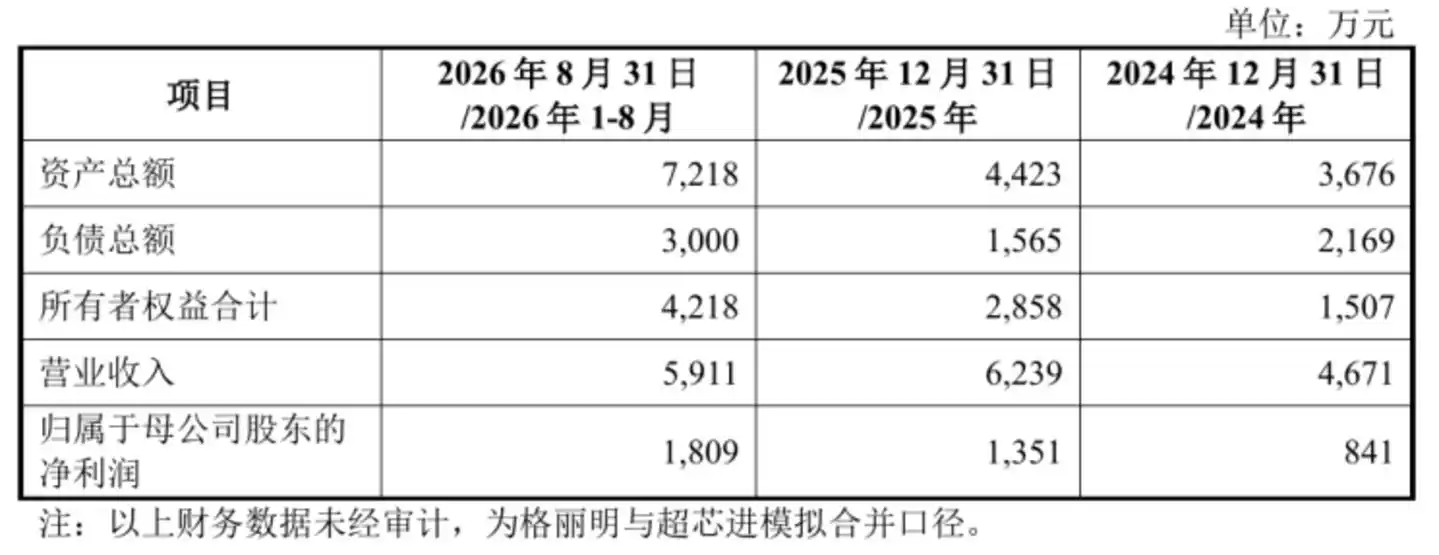
Báo cáo tài chính cho thấy, doanh thu năm 2024 của Gelingming là 46,71 triệu tệ, lợi nhuận ròng 8,41 triệu tệ; năm 2025 doanh thu 62,39 triệu tệ, lợi nhuận ròng 13,51 triệu tệ; 8 tháng đầu năm 2026 doanh thu 59,11 triệu tệ, lợi nhuận ròng 18,09 triệu tệ, tỷ suất lợi nhuận ròng đạt 30,6%. Lợi nhuận tăng nhanh hơn doanh thu. Tính theo năm, lợi nhuận ròng hàng năm của Gelingming khoảng 27 triệu tệ, so với tổng lợi nhuận hiện tại của Huazhijie, con số này không lớn, năm ngoái lợi nhuận sau thuế của Huazhijie là 124,4 triệu tệ.
Nguồn ảnh: Thông báo của công ty

Suy ra từ mức giá Huazhijie từng tham gia vốn trước đó, tổng định giá của Gelingming khoảng 485 triệu tệ, 83.5052% cổ phần còn lại tương ứng khoảng 405 triệu tệ, tương ứng với lợi nhuận ròng hàng năm khoảng 27 triệu tệ, P/E mua lại ngầm định khoảng 15 lần, so với Shandong Weida - công ty cũng làm linh kiện dụng cụ điện - khoảng 16,8 lần, định giá mục tiêu sát với mức này, cũng là bình thường trong ngành chế tạo.

Sắp xếp cổ phần được thực hiện qua hai bước. Thỏa thuận ký ngày 24/9/2026 quy định, Huazhijie trước tiên mua lại 45 triệu tệ cổ phần cũ, sau đó tăng vốn 35 triệu tệ, tổng cộng 80 triệu tệ để có được 16.4948% cổ phần sau khi tăng vốn; 83.5052% cổ phần còn lại dự định mua bằng cách phát hành cổ phiếu kết hợp thanh toán tiền mặt. Theo thỏa thuận này, sau khi tăng vốn, vốn điều lệ sẽ tăng từ 5 triệu tệ lên 5.388889 triệu tệ. Tính đến ngày ký dự thảo, việc chuyển nhượng cổ phần và tăng vốn trước đó vẫn đang trong quá trình hoàn tất thủ tục đăng ký thay đổi công nghiệp thương mại.

Lợi nhuận gần giảm một nửa, cần một câu chuyện mới

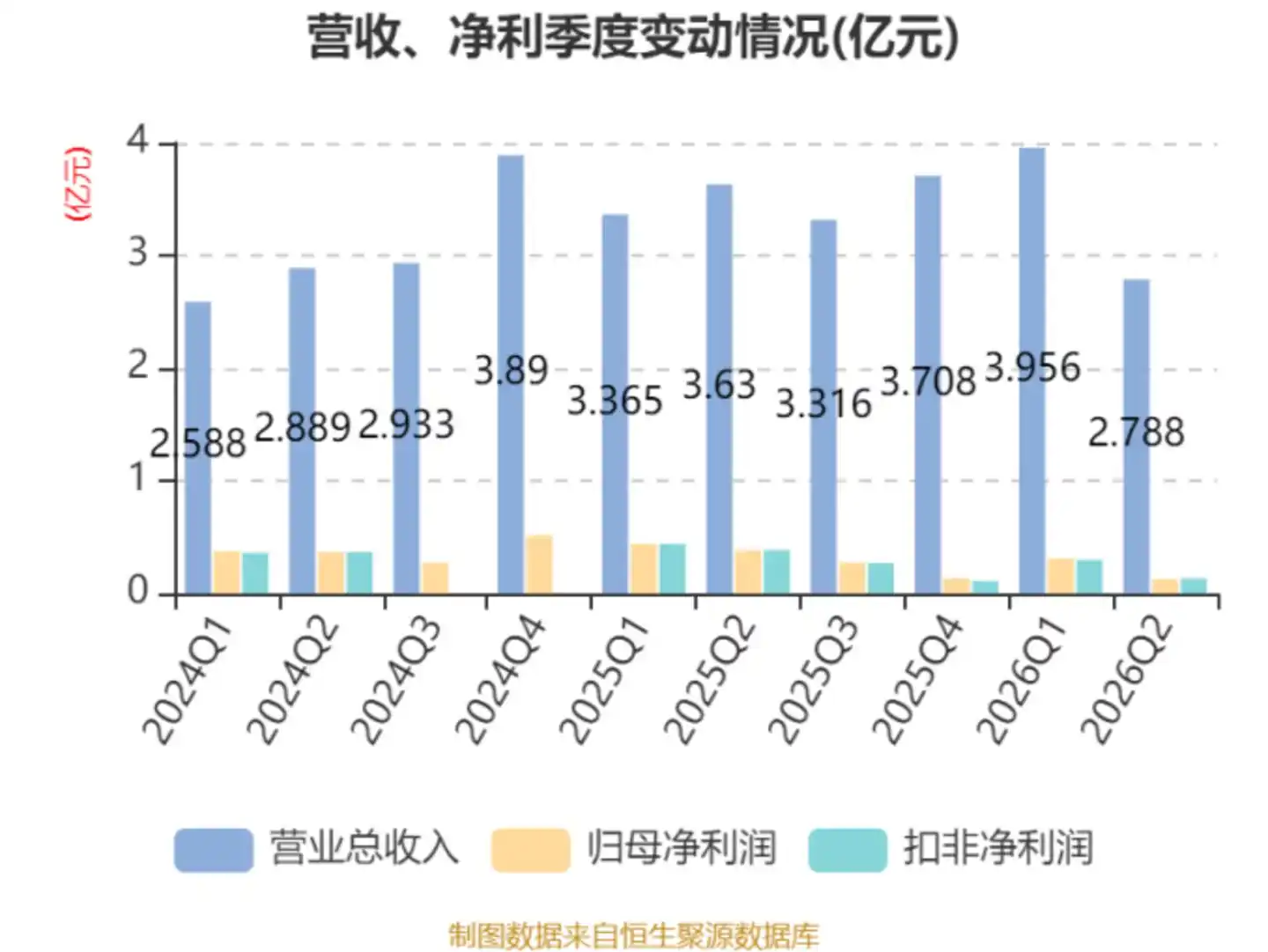
Xét lại bên mua. Ngành chính của Huazhijie là công tắc thông minh, bộ điều khiển, động cơ không chổi than và kết cấu chính xác, lên sàn vào ngày 20/6/2025. Lợi nhuận thuộc về cổ đông mẹ năm 2024, 2025 lần lượt là 153,50 triệu tệ và 124,36 triệu tệ, năm 2025 giảm 18,99% so với cùng kỳ. Lợi nhuận thuộc về cổ đông mẹ nửa đầu năm 2026 là 44,2528 triệu tệ, cùng kỳ năm ngoái là 83,1518 triệu tệ, giảm 46,78%, gần bằng một nửa.
Nguồn ảnh: Trang web chứng khoán Trung Quốc chuyển tải

Báo cáo bán niên của công ty tiết lộ, lợi nhuận kỳ này giảm chủ yếu do biến động tỷ giá và chi phí nguyên vật liệu tăng, chi phí tài chính từ mức -4,8359 triệu tệ cùng kỳ năm ngoái tăng lên 16,7126 triệu tệ. Cùng kỳ, doanh số xuất khẩu của hoạt động kinh doanh chính của công ty là 476 triệu tệ, chiếm 73,16% doanh thu hoạt động kinh doanh chính. Tỷ trọng xuất khẩu vượt quá 70%, ảnh hưởng của biến động tỷ giá đến lợi nhuận được khuếch đại đáng kể.

Cơ cấu kinh doanh cũng khuếch đại sự dao động này: cùng kỳ, doanh thu linh kiện dụng cụ điện là 592,88 triệu tệ, chiếm 87,92% doanh thu hoạt động; doanh thu linh kiện điện tử tiêu dùng là 57,1748 triệu tệ, chiếm 8,48% doanh thu hoạt động. Hoạt động vẫn còn tập trung, biến động sức sống ngành dễ dàng truyền dẫn đến toàn bộ kết quả kinh doanh của công ty.

Nhưng giá cổ phiếu trên thị trường thứ cấp lại có diễn biến trái ngược với kết quả kinh doanh, ngày 30/9, giá đóng cửa của công ty là 53 tệ, tổng vốn hóa thị trường 6,881 tỷ tệ. So sánh theo giá đã điều chỉnh phục hồi, từ đầu năm 2026 đến nay tích lũy tăng khoảng 33,63%, giá cao nhất trong năm khoảng 69,09 tệ. Tính lợi nhuận thuộc về cổ đông mẹ năm 2025 trừ đi nửa đầu năm 2025, cộng thêm lợi nhuận thuộc về cổ đông mẹ nửa đầu năm 2026, lợi nhuận 12 tháng gần nhất là 85,4596 triệu tệ, P/E động tương ứng khoảng 80,52 lần.

Một công ty gia công có lợi nhuận nửa đầu năm giảm một nửa, muốn giữ được mức định giá như vậy chỉ có hai con đường, hoặc lợi nhuận tăng mạnh, hoặc phải cho nhà đầu tư thị trường thứ cấp kỳ vọng cao.

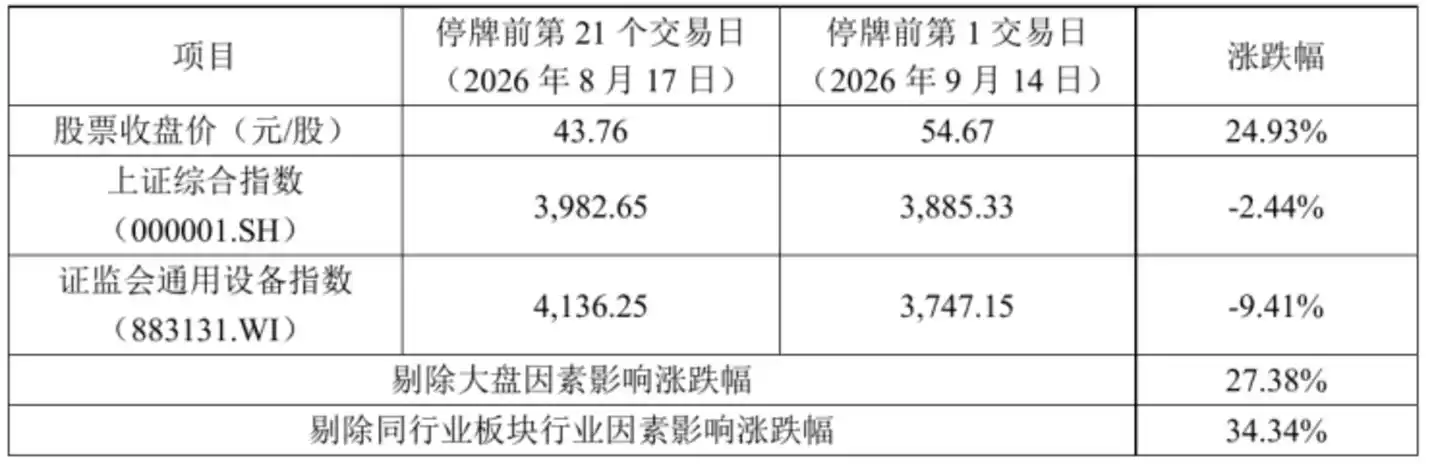
Động cơ duy trì giá cổ phiếu cao của công ty có thể có hai tầng. Ngày 22/6/2026, 8 triệu cổ phiếu hạn chế của công ty được giải tỏa, chiếm 8% tổng cổ phiếu. Sau khi cửa sổ giải tỏa mở ra, từ tháng 7 đến tháng 9/2026, các khái niệm như máy chủ làm mát bằng chất lỏng, mô-đun khớp robot, máy bay không người lái, kiểm tra bán dẫn... lần lượt được triển khai. Tiếp theo là việc tạm ngừng giao dịch để thâu tóm từ ngày 15/9, vào phiên giao dịch trước khi tạm ngừng, giá cổ phiếu đã tăng trần. Xét về nhịp độ, thậm chí có chút tinh tế: giải tỏa trước, khái niệm ở giữa, thâu tóm ở sau, có thể nói là sắp xếp tinh xảo. Tất cả các hoạt động vận hành đều nhằm mục đích đẩy giá cổ phiếu tăng, giá cổ phiếu của công ty từ ngày 21/7 đến ngày 15/9 tạm ngừng giao dịch, đã tăng hơn 65%, vượt xa chỉ số và các công ty cùng loại.
Nguồn ảnh: Thông báo của công ty

Chỉ có giá cổ phiếu tăng mới đảm bảo việc thanh toán cuối cùng: mức giá phát hành cổ phiếu cho giao dịch này được định ở mức 39,08 tệ, gần gấp đôi mức giá phát hành IPO là 19,88 tệ, dùng cổ phiếu có P/E 75 lần để mua một tài sản có P/E khoảng 15 lần, là sự sắp xếp có lợi nhất trên sổ sách. Nếu giá cổ phiếu giảm xuống, để có cùng mức đối giá sẽ phải phát hành thêm nhiều cổ phiếu hơn, làm trầm trọng thêm việc pha loãng, nếu giảm xuống mức bên đối tác giao dịch không muốn chấp nhận, bản thân giao dịch có thể bị tạm dừng, đình chỉ hoặc chấm dứt.

Ngay cả khi có thể thâu tóm Gelingming thuận lợi như công ty mong muốn, P/E của nó có thể giảm xuống khoảng 58 lần, đây vẫn là một mức định giá cao. Đến lúc đó công ty sẽ dựa vào cái gì để duy trì giá cổ phiếu, chúng ta hãy cùng chờ xem. (Tác giả | Chen Xinan)
Trending Cryptos

Related Questions

QCông ty Hoa Chi Kiệt (603400.SH) đã công bố kế hoạch mua lại tài sản nào?

ACông ty Hoa Chi Kiệt đã công bố kế hoạch mua lại 83.5052% cổ phần của Công ty Cách Lệ Minh do Triệu Điệp nắm giữ, thông qua hình thức phát hành cổ phiếu và thanh toán bằng tiền mặt, nhằm mục đích thâu tóm toàn bộ Cách Lệ Minh và thâm nhập vào lĩnh vực hỗ trợ kiểm tra chip bán dẫn.

QViệc định giá và hiệu quả tài chính của Cách Lệ Minh được mô tả như thế nào?

ATổng định giá của Cách Lệ Minh là khoảng 4,85 tỷ NDT, trong đó 83,5052% cổ phần tương ứng khoảng 4,05 tỷ NDT. Lợi nhuận ròng hàng năm hóa ước tính khoảng 27 triệu NDT, tương ứng với tỷ lệ P/E mua vào khoảng 15 lần. Quy mô này không lớn so với lợi nhuận chung của Hoa Chi Kiệt (1,244 tỷ NDT năm ngoái).

QTình hình kinh doanh gần đây của Hoa Chi Kiệt ra sao và tại sao cần có một câu chuyện mới?

ALợi nhuận của Hoa Chi Kiệt liên tục sụt giảm: lợi nhuận ròng năm 2025 giảm 18,99% so với năm trước, và nửa đầu năm 2026 giảm 46,78%, gần như giảm một nửa. Tuy nhiên, giá cổ phiếu và định giá P/E (khoảng 80 lần) lại ở mức cao. Do đó, công ty cần một câu chuyện tăng trưởng mới để duy trì định giá cao, tạo điều kiện thuận lợi cho việc giải ngân cổ phiếu hạn chế chuyển nhượng và các đợt huy động vốn tiếp theo.

QĐộng cơ duy trì giá cổ phiếu cao của Hoa Chi Kiệt được thể hiện qua những sự kiện thời gian nào?

AĐộng cơ được thể hiện qua chuỗi sự kiện: ngày 22/6/2026, 8 triệu cổ phiếu hạn chế chuyển nhượng được giải ngân; từ tháng 7 đến tháng 9, các khái niệm như máy chủ làm mát bằng chất lỏng, mô-đun khớp robot... được đưa ra; ngày 15/9, công ty tạm ngừng giao dịch để công bố thông tin mua lại; trước khi tạm ngừng một ngày, giá cổ phiếu tăng trần. Giá cổ phiếu đã tăng hơn 65% từ ngày 21/7 đến ngày 15/9, vượt xa chỉ số và các công ty cùng ngành.

QGiá phát hành cổ phiếu cho giao dịch mua lại này là bao nhiêu và tại sao việc duy trì giá cổ phiếu cao lại quan trọng?

AGiá phát hành cổ phiếu cho giao dịch mua lại được xác định là 39,08 NDT, gần gấp đôi giá phát hành IPO (19,88 NDT). Việc sử dụng cổ phiếu với tỷ lệ P/E 75 lần để mua một tài sản với P/E khoảng 15 lần là một sự sắp xếp có lợi về mặt sổ sách. Nếu giá cổ phiếu giảm, cùng một mức giá trị giao dịch sẽ cần phát hành nhiều cổ phiếu hơn, làm loãng cổ phần nặng nề hơn, và giao dịch thậm chí có thể bị tạm dừng hoặc hủy bỏ nếu giá giảm xuống mức mà đối tác giao dịch không chấp nhận.

Related Reads

Monad's $909 Million Credit Economics: How a High-Performance Public Chain Breaks Through via Lending

Monad, developed by former Jump Trading quant engineers, has seen its on-chain revenue model shift dramatically from high-frequency trading to lending interest. Over the ten months to September 2026, global DeFi TVL fell from $111.4B to $95.5B, yet Monad's market share rose from 0.14% to 1.09%—an nearly eightfold increase—ranking tenth among all chains by DeFi TVL. Lending now dominates fee revenue: in September, lending apps contributed 71% of application fees versus just 16% from trading, with borrowers paying roughly 6.2% annualized interest on an average $903M loan book. Monad's capital efficiency is notably high, with every $1 of TVL generating $0.89 in borrowings versus 42% on Ethereum and 45% on Base. Institutional credit vaults hold $287M in uncollateralized loans—second only to Ethereum mainnet—with Accountable at 33% and Aave at 29% of lending balances. Aave's Monad market became its third-largest fee-generating deployment globally within 46 days. Spot trading fees fell to 1.2 basis points as monthly volume surged to $4B. MON trades at just 0.25x its DeFi TVL versus 7–12x for peers like AVAX, SUI, SOL, and SEI, and has outperformed competitors since its first full trading day. Annualized interest income stands at about $56.5M at current levels, with each additional $100M in loans adding $6.2M yearly—upside supported by upcoming Aave V4, infiniFi Prime, StraitsX stablecoins, and Category Labs' institutional clearing domain.

marsbit9m ago

Monad's $909 Million Credit Economics: How a High-Performance Public Chain Breaks Through via Lending

marsbit9m ago

BTC Short-Term Bottoming and Gathering Momentum, HYPE Triple Support Faces Critical Test | Guest Analysis

Last week, the crypto market was driven by news. On Nov 4, midterm election news sparked a 3.92% Bitcoin rally above $80K, but a day later, US stock declines triggered a 5.48% drop to ~$75,222, a new low since Sept 21, with fear index near 25. HYPE also fell 15.19% weekly, erasing prior gains and returning to ~$75. Key points: Bitcoin has held above the 52-week MA for eight weeks, satisfying the "price breakout principle," but the pullback confirmation signal is not yet issued and the 52-week MA (~$76,110) remains downward-sloping. The rebound from the July 1 low of $57,820 is still classified as an oversold bounce, not a confirmed bull market. On the daily chart, price remains in a descending channel, has broken below the key MA crossover (~$77,200), but holds above the 0.382 Fibonacci level ($76,130). The correction (wave i) has run 48 trading days with a max drawdown of 15.9%; a wave ii rebound is expected but not yet started. The "Shijie Ribbon" model still signals a long market. Strategy: mid-term stay in cash; short-term use 30% position for range trading, favoring buying dips near $72,500–73,500 with strict stops. HYPE: the weekly bearish engulfing candle was driven by external shocks, not fundamentals. Three support layers: the ribbon upper band (~$74.05, lower ~$71), the box lower edge (~$75, which triggered a 20% bounce on Oct 24), and the long-term uptrend line (~$68). Key support zones: $74–75 (ribbon upper + box bottom), $71 (ribbon lower), $68 (long-term trendline). Strategy: if price stabilizes at $74–75 or $68–71, consider light long positions (≤30%) with strict stops. Special rules: set initial stop at entry; move to breakeven at +1% profit; trail stop 1% per 1% gain. All analysis is personal technical opinion, not investment advice; markets carry risk.

Odaily星球日报24m ago

BTC Short-Term Bottoming and Gathering Momentum, HYPE Triple Support Faces Critical Test | Guest Analysis

Odaily星球日报24m ago

Canton Foundation Launches Official Daml 3 Certification, Expanding Developer Access and Establishing Institutional Finance Standards

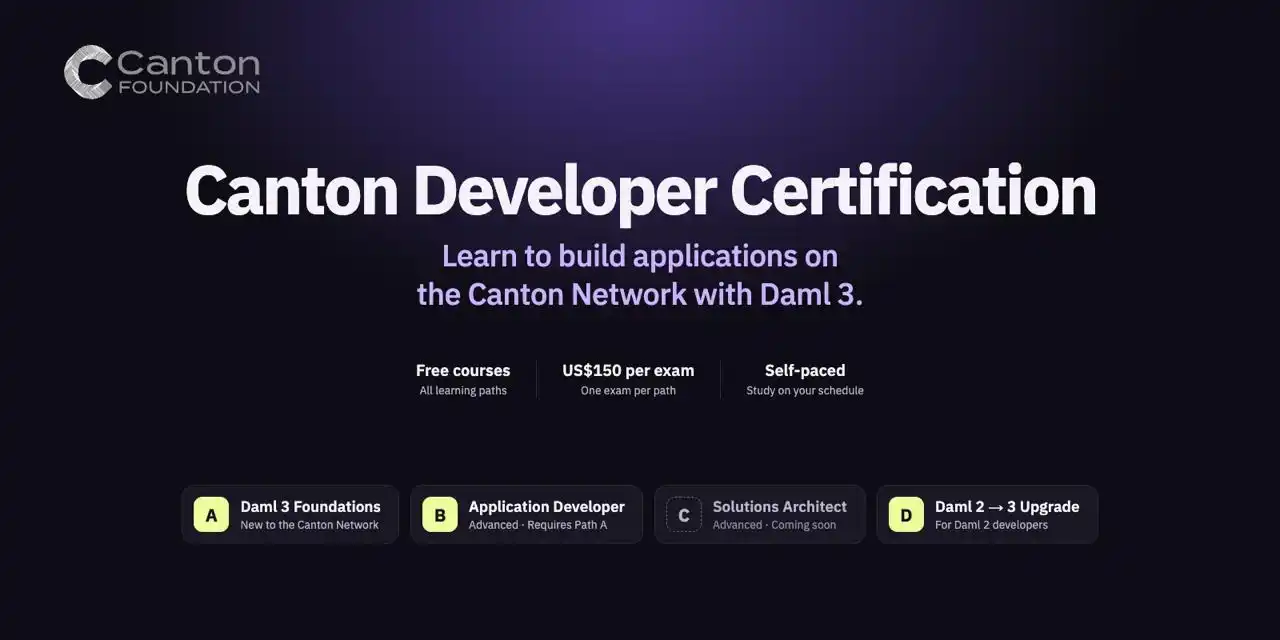
Canton Foundation has launched the Canton Developer Certification, an official certification program for Daml 3, the smart contract language of the Canton Network. Combining a self-paced course with a certification exam, it offers developers worldwide a structured path to building applications for regulated financial markets. Canton Network is a public, permissionless blockchain designed for regulated finance, with over $6 trillion in on-chain assets processed by its supported applications. Daml is built to manage who may act on a contract and who may access its terms; the certification validates practical mastery of these authorization and privacy principles, establishing a recognized standard intended to strengthen institutional confidence in applications built on the network. The program is based on Daml 3 and Canton 3.x, the current technology underlying the network, letting newcomers start on the latest stack, helping production engineers deepen expertise, enabling institutional architects to design and integrate Canton deployments, and allowing existing Daml 2 developers to migrate their skills and codebases to Daml 3, unifying the community on a single, current platform. For ecosystem partners—financial institutions, application providers, system integrators, and validators—the certification provides a common technical foundation and a consistent way to assess developers' understanding of authorization and privacy requirements. Canton Foundation COO Amanda Martin said financial institutions need confidence that the applications they rely on are built by developers who understand regulated market requirements, and that the program both opens opportunities for developers globally and establishes a shared professional standard, building a stronger foundation for Canton's future growth by bringing the community together on Daml 3. The certification is now live at certification.canton.foundation; the course is self-paced and free to all developers, and the exam costs $150 per attempt. Canton Foundation is an independent nonprofit responsible for the governance and long-term development of Canton Network's shared infrastructure, supporting transparent and decentralized governance, ecosystem coordination, and broad participation by Global Synchronizer operators and network stakeholders, while working with financial institutions, technology providers, developers, and other participants to support the network's continued global growth and adoption.

marsbit35m ago

Canton Foundation Launches Official Daml 3 Certification, Expanding Developer Access and Establishing Institutional Finance Standards

marsbit35m ago

Nvidia Faces Independent Investigation, Bernstein Maintains $400 Target Price

Nvidia's board has launched an independent investigation following reports about CEO Jensen Huang's contacts with Megaspeed executive Alice Huang, though it says there is no reason to believe U.S. national security or company secrets were compromised. Three Republican House committee chairs have requested Huang attend a closed-door briefing on November 18 to explain the contacts and Nvidia's internal procedures for countering foreign intelligence activities, and Democratic Senator Chris Coons said Congress will investigate. Some reports suggested Alice Huang may have influenced Huang's lobbying to ease chip export restrictions to China, a claim Bernstein doubts, noting Huang has long publicly pushed to expand sales in China and that revenue from mainland China and Hong Kong has fallen sharply since export controls. Only H20 and limited H200 chips were approved for China sales, well behind Nvidia's most advanced products, and Bernstein sees limited room for recovery as Chinese customers prioritize domestic alternatives. Regulatory pressure may persist, with hawkish lawmakers potentially revisiting export limits. Bernstein maintains an Outperform rating and a $400 target price, about 114% above the November 6 close of $186.64, citing data center demand and earnings growth. It projects adjusted EPS of $4.77 for FY2026, $9.20 for FY2027 and $15.80 for FY2028. The target is based on average FY2028-2029 non-GAAP EPS of $19.04 at about 21x. Bernstein also flags Huang's succession as a key risk, given his central role and roughly 60 direct reports.

marsbit45m ago

Nvidia Faces Independent Investigation, Bernstein Maintains $400 Target Price

marsbit45m ago

Two Blocks Hit in 7 Hours: Two Retail Miners Take on the Entire Network's Hashrate and Walk Away with $476,000

Two individual solo miners using home mining rigs hit two Bitcoin blocks within seven hours on November 7, earning a combined $476,000. One miner using a Canaan AvalonQ home miner with roughly 80–87 TH/s earned about $239,000; the other earned roughly $237,000. A CKPool solo platform took about 2% (0.0629 BTC) as a service fee, with the rest going directly to the miners' wallets. Given current network difficulty of about 148.4 trillion, such a rig would normally need over a century to find a block, making the win a luck value of over 10,000%. This is part of a broader trend: in 2026 so far, solo miners have found 36 blocks, nearly one lucky winner per week. Earlier examples include a 6.5 TH/s Avalon Nano 3S worth a few hundred dollars earning $250,000 on October 27, another Nano 3S earning $232,000 on May 30, and a $150 Bitaxe Gamma earning $200,000 on July 10. Home solo mining is often called "plug-in lottery": a 1.2 TH/s mini miner has about a 1-in-16,000 annual chance of winning, far better than Powerball's 1-in-292 million, but rigs cost thousands of dollars and electricity runs $400–$1,100 monthly, with zero income until a block is found. Each viral win serves as free advertising for the industry. Rig manufacturers sell the dream of "maybe I'll win too"; solo pool platforms collect a steady ~2% fee from any winner; and the Bitcoin network preserves its "anyone can participate" narrative despite mining being dominated by large farms. The people paying for it all are ordinary buyers who purchase miners and pay electricity bills hoping for a life-changing jackpot.

marsbit1h ago

Two Blocks Hit in 7 Hours: Two Retail Miners Take on the Entire Network's Hashrate and Walk Away with $476,000

marsbit1h ago

Trading

Spot

Hot Articles

What is DOGE M

Doge Matrix ($doge m): The New Breed of Community-Driven Cryptocurrency Introduction In the ever-evolving landscape of cryptocurrency, new projects constantly emerge, each aiming to capture the interest of investors and enthusiasts alike. One of the latest entrants to this domain is Doge Matrix, represented by the ticker symbol $doge m. This project has attracted attention thanks to its roots in the popular meme culture surrounding Dogecoin, establishing its place within the web3 space. This article aims to provide a comprehensive analysis of Doge Matrix, covering its overview, creator, investors, functionality, timeline, and notable aspects. What is Doge Matrix ($doge m)? Doge Matrix is a community-driven cryptocurrency project that seemingly builds upon the widespread appeal of Dogecoin, a digital currency known for its Shiba Inu mascot and its meme origins. While the overarching objectives of Doge Matrix are not extensively defined, it is characterized by a commitment to harnessing community involvement and support. Unlike traditional cryptocurrencies that often emphasize utility or intrinsic value through underlying technologies, Doge Matrix positions itself within a space that embraces the cultural phenomenon of cryptocurrencies, particularly appealing to those who resonate with the ethos of meme-based assets. Drawing on the strengths of the Dogecoin community, Doge Matrix operates as part of a broader ecosystem, inviting participation and engagement from users who share an interest in cryptocurrency and the digital landscape. Who is the Creator of Doge Matrix ($doge m)? The identity of the creator of Doge Matrix remains unknown. This lack of transparency is not an uncommon occurrence in the cryptocurrency space, where some projects are launched without revealing the identities of their founders. The absence of information regarding the founding team can raise questions among potential investors about the project’s accountability and direction. Who are the Investors of Doge Matrix ($doge m)? As it stands, there is no publicly available information detailing the investors or investment foundations that back Doge Matrix. The project appears to rely primarily on community support rather than institutional investment. This model aligns with the community-driven nature of the initiative, fostering an environment where the direction of the project is shaped by its participants rather than being dictated by a select few financial backers. How Does Doge Matrix ($doge m) Work? The specifics regarding the operational mechanisms of Doge Matrix are somewhat vague, reflecting a broader trend of projects in the meme coin space where innovative functionalities are not always clearly articulated. Nonetheless, Doge Matrix seems designed to tap into the existing cryptocurrency ecosystem by encouraging user participation while tapping into the familiar cultural references associated with Dogecoin. Its potentially unique characteristics derive from community interactions rather than technological advancements, emphasizing shared experiences and collaboration among token holders. While the exact innovations have not been explicitly outlined, the project appears to create a space where community members can engage, share ideas, and propel the project's potential forward. Timeline of Doge Matrix ($doge m) Reflecting on the project’s timeline reveals notable events that have defined its journey thus far: November 25, 2024: Doge Matrix reached its all-time high value, marking a significant milestone in its early history. January 1, 2025: Conversely, Doge Matrix hit its all-time low value, illustrating the volatility often associated with cryptocurrencies, especially in the early stages of a project's lifecycle. Ongoing: The project continues to be actively traded and supported by its community, although specific future milestones or objectives have yet to be disclosed. Key Points About Doge Matrix ($doge m) Community Focus At the heart of Doge Matrix is a commitment to community engagement. The project thrives on the premise of collaboration and shared objectives among its members, emphasizing the importance of collective effort. Unlike centralized projects that often have a defined leadership structure, Doge Matrix at present showcases a more fluid approach to governance, where every community member's voice matters. Volatility The cryptocurrency market is notorious for its volatility, and Doge Matrix is no exception. Its price history reflects significant fluctuations between high and low values, which is typical of many new cryptocurrencies but underscores the risks associated with investment in emerging tokens. Lack of Detailed Information One of the most striking features about Doge Matrix is the scarcity of detailed information regarding its technological underpinnings and operational mechanisms. This ambiguity necessitates that potential investors conduct thorough due diligence before engaging with the project. Conclusion In summary, Doge Matrix ($doge m) illustrates a new wave of cryptocurrency projects that lean heavily on community engagement and cultural relevance. While lacking in certain specifics—such as clear leadership, defined objectives, and detailed functionality—the project has managed to generate interest within the crypto community, leveraging the established appeal of meme culture. As with any investment in the cryptocurrency space, understanding the inherent risks and conducting comprehensive research is essential for potential participants. Doge Matrix stands as a reminder of the dynamic, sometimes unpredictable nature of the crypto industry, marked by constant evolution and enthusiasm for community-driven initiatives.

6.6k Total ViewsPublished 2025.02.03Updated 2025.02.03

What is DOGE M

What is $M

Understanding Mantis ($M): A New Era in Cross-Chain Interoperability In the continually evolving landscape of Web3 and cryptocurrency, new projects strive to offer innovative solutions aimed at enhancing the user experience and expanding functional possibilities within the decentralized financial ecosystem. One such project garnering attention is Mantis ($M), a pioneering protocol founded on the principles of cross-chain interoperability and intent-based settlements. This article delves into the essential aspects of Mantis, including its core functionality, creators, investment backing, innovative features, and critical milestones. What is Mantis ($M)? Mantis is described as a multi-domain intent settlement protocol that simplifies cross-chain interactions, enabling users to execute complex financial transactions across various blockchain platforms seamlessly. The protocol operates through three primary layers: Intent Expression: Users can articulate their transaction goals using natural language facilitated by the DISE LLM, an advanced AI language model. For instance, a user might express a desire to swap Ethereum (ETH) for Solana (SOL) with a specific slippage tolerance of 1%. Execution: This layer employs a network of solvers that compete to fulfill user intents. Transactions are executed using mechanisms such as Coincidence of Wants (CoWs) and Order Flow Auctions (OFAs), which ensure that user demands are met optimally. Settlement: Leveraging the Inter-Blockchain Communication (IBC) protocol, Mantis enables atomic cross-chain transactions, allowing users to operate across various supported chains, including Ethereum, Solana, and Cosmos. Mantis is engineered to introduce native yield generation for idle assets, employing cryptographic proofs to maintain the integrity of transactions throughout the entire process. Creators & Development Team Mantis was conceived by the Composable Foundation, a research-driven organization notable for its emphasis on blockchain interoperability solutions. This foundation collaborates with esteemed academic institutions, including Harvard University and the University of Lisbon, contributing to extensive research and development efforts that inform Mantis's architecture and functionality. The Composable Foundation’s commitment to fostering innovation in the blockchain space positions Mantis as a robust solution for the growing demand for interoperability among multiple blockchain networks. Investors & Backing While specific details about individual investors have not been publicly disclosed, Mantis enjoys substantial backing from various entities, including: Ecosystem grants from IBC-enabled chains, which support the protocol's growth and integration within decentralized finance ecosystems. Strategic partnerships with infrastructure providers that enhance Mantis's network capabilities and deployment strategies. Funding through the Composable Foundation's treasury, ensuring sustained financial support for ongoing development and operational costs. These collaborative efforts reflect a consensus among stakeholders about the importance of enhancing cross-chain functionality and the potential utility of Mantis's infrastructural innovations. Key Innovations Mantis sets itself apart through several pioneering innovations that enhance its functionality and utility: Chain-Agnostic Intents: Users can initiate transactions from any supported chain while settling on another. This flexibility empowers users, driving increased interaction among different platforms. AI-Powered Interface: The integration of DISE LLM allows users to conduct complex DeFi operations using natural language, thereby simplifying interactions and making blockchain technology accessible to a broader audience. Cross-Domain MEV Capture: Mantis creates an internal market for maximal extractable value (MEV) through competitions among solvers. This innovative approach allows for greater efficiency and value extraction in complex transactions. Modular Settlement Layer: The protocol supports various verification methods, including zero-knowledge proofs and optimistic rollups, providing a versatile framework that can adapt to emerging blockchain technologies. Historical Timeline Mantis's development is marked by several critical milestones that chart its trajectory and growth: | Year | Milestone | |————|————————————————————————-| | 2022 | Initial concept development within the Composable Foundation's research division. | | Q3 2024 | Launch of the testnet with bridging capabilities between Solana and Ethereum. | | Q1 2025 | Anticipated Token Generation Event (TGE) alongside the mainnet launch. | | Q2 2025 | Expected integration of DISE LLM and expansion of cross-chain capabilities. | | 2025 H2 | Planned support for over 15 chains through further IBC upgrades. | This timeline outlines Mantis's evolution, from conceptual discussions to active implementation and future growth phases. Ecosystem Growth Strategy Mantis's strategy for ecosystem growth includes several initiatives designed to encourage user participation and developer engagement: Credits System: Users can earn protocol credits by providing liquidity and engaging in referral programs. These credits are redeemable for incentives in the future, fostering a robust user community. Modular Software Development Kit (SDK): This toolkit empowers developers to create applications based on intent-driven models utilizing Mantis's infrastructure, thus promoting innovation within its ecosystem. Governance Model: As the protocol matures, $M token holders will have a voice in protocol governance, allowing them to vote on proposed upgrades and changes, thereby enhancing community engagement and decentralization. Mantis represents a significant advancement in the realm of cross-chain architecture. By seamlessly integrating advanced AI algorithms with a robust settlement framework, Mantis seeks to tackle the problems of fragmentation within multi-chain ecosystems. Its innovative approach prioritizes improved user experiences while adhering to the foundational principles of decentralization and security, setting a new standard for the future interoperability of blockchain technologies. As Mantis continues its journey of growth and implementation, it promises to be a project to watch closely in the competitive landscape of Web3 and decentralized finance. With its focus on crossing boundaries and elevating user engagement, Mantis is poised to be an integral part of the future developments in the cryptocurrency space.

2.8k Total ViewsPublished 2025.03.18Updated 2025.03.18

What is $M

How to Buy M

Welcome to HTX.com! We've made purchasing MemeCore (M) simple and convenient. Follow our step-by-step guide to embark on your crypto journey.Step 1: Create Your HTX AccountUse your email or phone number to sign up for a free account on HTX. Experience a hassle-free registration journey and unlock all features.Get My AccountStep 2: Go to Buy Crypto and Choose Your Payment MethodCredit/Debit Card: Use your Visa or Mastercard to buy MemeCore (M) instantly.Balance: Use funds from your HTX account balance to trade seamlessly.Third Parties: We've added popular payment methods such as Google Pay and Apple Pay to enhance convenience.P2P: Trade directly with other users on HTX.Over-the-Counter (OTC): We offer tailor-made services and competitive exchange rates for traders.Step 3: Store Your MemeCore (M)After purchasing your MemeCore (M), store it in your HTX account. Alternatively, you can send it elsewhere via blockchain transfer or use it to trade other cryptocurrencies.Step 4: Trade MemeCore (M)Easily trade MemeCore (M) on HTX's spot market. Simply access your account, select your trading pair, execute your trades, and monitor in real-time. We offer a user-friendly experience for both beginners and seasoned traders.

13.3k Total ViewsPublished 2025.07.02Updated 2026.06.02

How to Buy M

Discussions

Welcome to the HTX Community. Here, you can stay informed about the latest platform developments and gain access to professional market insights. Users' opinions on the price of M (M) are presented below.

活动图片