Tăng Gần Gấp Ba Trong Một Tháng, ETF NEAR Đầu Tiên Ra Mắt Không Nên Xem Là 'Tin Tốt' Để Đuổi Đỉnh

marsbitPublished on 2026-09-30Last updated on 2026-09-30

Abstract

Ngày 29/9, Bitwise chính thức niêm yết ETF hàng hóa NEAR (NRR) đầu tiên tại Mỹ trên NYSE Arca. Thông tin này khuấy động thị trường tiền mã hóa, đặc biệt khi giá NEAR đã tăng gấp ba lần trong một tháng qua, từ khoảng 1,6 USD lên 5,4 USD. Tuy nhiên, việc ETF ra mắt không đồng nghĩa với dòng vốn tổ chức truyền thống ồ ạt chảy vào ngay lập tức. Cấu trúc của NRR bao gồm phí quản lý 0,75% và staking tài sản cơ sở để thu lợi nhuận. Động thái chính là mở ra kênh đầu tư hợp pháp, nhưng lợi ích này phần lớn đã được thị trường phản ánh trước qua đợt tăng giá mạnh gần đây. Sức mua thực tế từ ETF mới là yếu tố then chốt cần theo dõi. Động lực chính cho đợt tăng giá của NEAR thực chất đến từ sự thay đổi trong định vị hệ sinh thái. Bitwise và thị trường không còn xem NEAR là "Ethereum killer", mà là "tiền tệ dành cho máy móc" và lớp thanh toán xuyên chuỗi trong kỷ nguyên AI. Điều này được hỗ trợ bởi sự phát triển của giao thức NEAR Intents, với khối lượng giao dịch tích lũy vượt 32 tỷ USD, định vị nó như một trung tâm định tuyến cho các tác nhân AI. Việc ra mắt Confidential Intents cũng đáp ứng nhu cầu giao dịch riêng tư đang tăng. Về mặt kinh tế học token, NEAR đã cắt giảm lạm phát tối đa hàng năm từ 5% xuống 2,5% và triển khai cơ chế mua lại token bằng phí giao dịch từ Intents. Tuy nhiên, thực tế vẫn còn khoảng cách: thu nhập ròng hàng năm của giao thức ước tính khoảng 20 triệu USD, trong khi áp lực bán từ lạm phát 2,5% lên vốn hóa hơn 6 tỷ USD là khoảng 150 triệu USD/năm. Việc mua lại...

Tác giả: Jamie, Shenchao TechFlow

Ngày 29 tháng 9, Bitwise chính thức niêm yết và giao dịch quỹ ETF spot NEAR đầu tiên của Hoa Kỳ (mã: NRR) trên NYSE Arca. Sau khi tin tức được công bố, toàn bộ thị trường tiền mã hóa một lần nữa bị kích động. Xét cho cùng, chỉ trong vòng một tháng ngắn ngủi vừa qua, NEAR đã tăng từ vùng đáy khoảng 1,6 USD lên mức 5,4 USD, cho thấy mức tăng gần gấp ba lần.
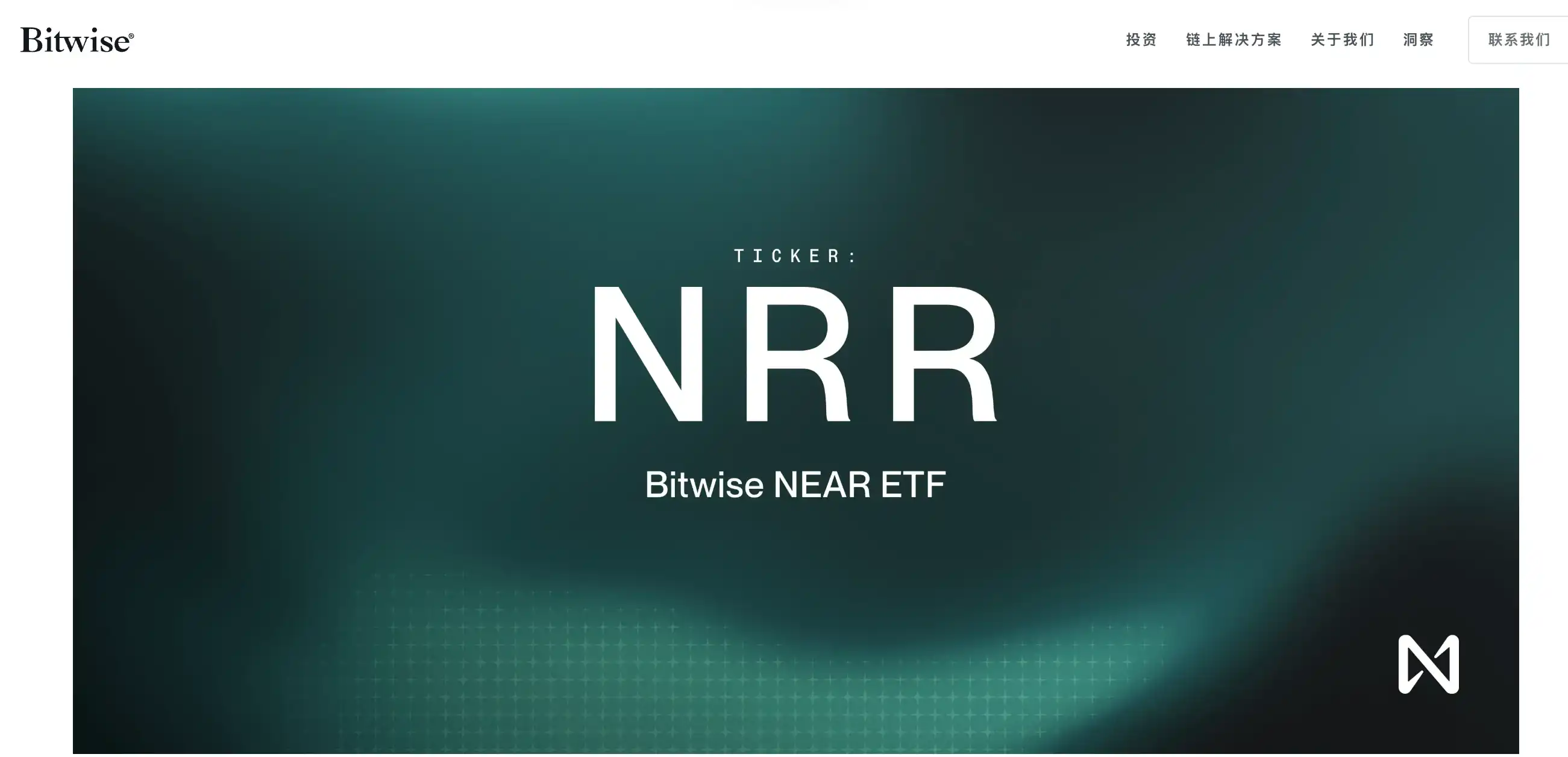
Trong không khí đầu cơ giá lên cuồng nhiệt, nhiều nhà đầu tư theo phản xạ đã xem quỹ ETF này như tiếng kèn báo hiệu dòng vốn từ các tổ chức truyền thống ồ ạt đổ vào.

Tuy nhiên, khi mổ xẻ các điều khoản cơ bản của quỹ này, rồi đối chiếu với những thay đổi kinh doanh thực sự xảy ra với NEAR trong hai tháng qua, sẽ thấy bức tranh thực tế của thị trường phức tạp hơn nhiều so với thông cáo báo chí.

Đối với token NEAR, đây không phải là một đợt tăng giá mới khởi động từ dòng vốn tổ chức, mà thị trường đã chạy trước kỳ vọng.

Kênh Không Phải Là Vòi Nước, Lối Vào Phố Wall Được Chiết Khấu Quá Sớm

Ý nghĩa cốt lõi của việc quỹ ETF spot đầu tiên cho một loại tiền mã hóa riêng lẻ ra đời là mở ra con đường hợp pháp cho vốn truyền thống Hoa Kỳ tham gia, nhưng việc xây dựng đường ống không có nghĩa là đường ống sẽ ngay lập tức chứa đầy tiền.

Theo các chi tiết sản phẩm được Decrypt tiết lộ, Bitwise đã thiết kế cho NRR một mô hình "nắm giữ spot kết hợp staking":

Quỹ thu phí quản lý 0,75% mỗi năm và đưa toàn bộ token cơ sở vào staking trên chuỗi để thu về lợi nhuận hàng năm khoảng 5%. Để trang trải chi phí xây dựng node và lưu ký, Bitwise sẽ trích 33% lợi nhuận từ staking, hai phần ba còn lại sau đó được quy đổi trở lại giá trị tài sản ròng của quỹ.

Cơ cấu này về mặt logic rất trơn tru, miễn là có dòng tiền mua ròng từ bên ngoài vào, bên lưu ký Coinbase buộc phải mua số token tương đương trên thị trường spot và khóa lại.

Nhưng vấn đề mấu chốt nằm ở khoảng cách thời gian.

Đợt tăng giá gần gấp ba từ cuối tháng 8 kéo dài đến cuối tháng 9, trên thực tế đã tiêu hao hết kỳ vọng tích cực của thị trường về "thông qua" và "ra mắt đầu tiên". Trước khi Bitwise công bố dữ liệu mua ròng hàng ngày thực sự có quy mô và bền vững, NRR chỉ là một tấm vé vào cửa được trưng bày trong tủ kính. Nếu dòng mua từ bên ngoài không hình thành như dự kiến, đòn bẩy quá cao và cấu trúc nắm giữ quá đông dễ dàng đối mặt với đợt bán chốt lời lạnh lùng từ những người đã có lãi.

Mạng Ý Định (Intents) Và Đại Lý AI

Nếu bản thân ETF chỉ là điểm chốt kỳ vọng, thì thứ thực sự thúc đẩy NEAR tăng mạnh một cách độc lập trong quý III chính là việc nó hoàn thành một lần thay đổi căn cứ định giá về mặt định vị hệ sinh thái.

Trong tài liệu giới thiệu hướng tới Phố Wall, Bitwise đã loại bỏ hoàn toàn câu chuyện "kẻ giết Ethereum" đã lỗi thời, mà thay vào đó định tính lại NEAR như một loại tiền tệ máy móc và lớp giải quyết thanh toán xuyên chuỗi trong thời đại đại lý thông minh tự chủ. Định vị này chính xác đã đánh trúng logic săn đón cơ sở hạ tầng AI của thị trường cấp một hiện tại.

Quan trọng hơn, NEAR đã mang ra một phương tiện kinh doanh có thể kiểm chứng được.
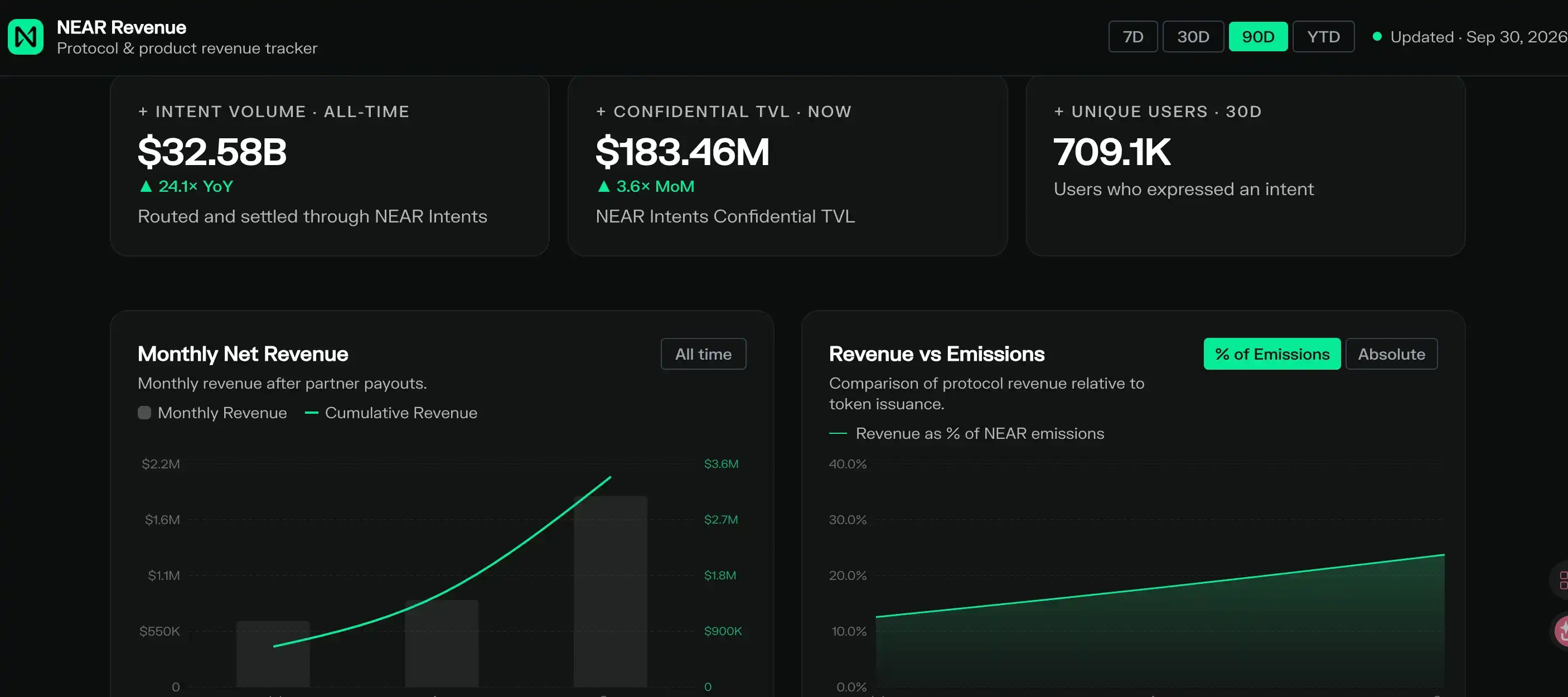
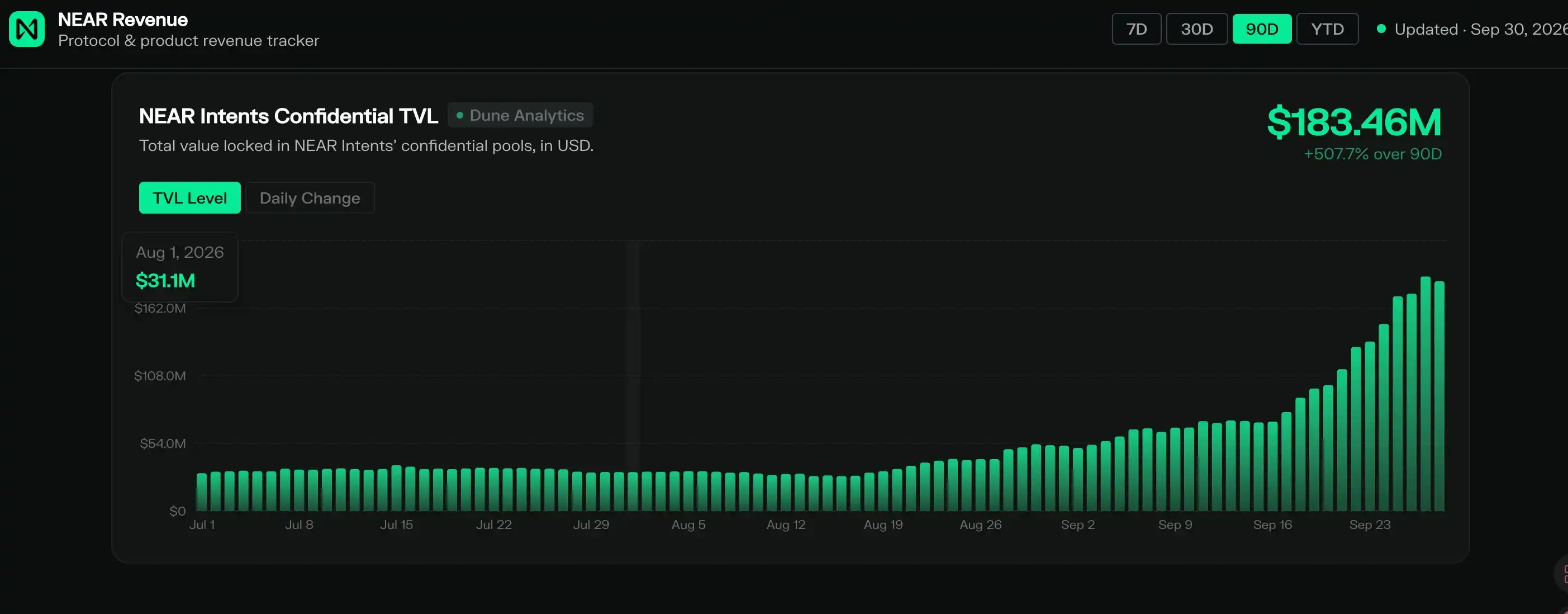
Dựa vào giao thức ý định xuyên chuỗi (NEAR Intents), khối lượng giao dịch lịch sử tích lũy của nó đã vượt 32 tỷ USD, kết nối hàng chục blockchain công khai. Đối với các đại lý AI tương tác tần suất cao trên chuỗi trong tương lai, chúng cần các kênh điều phối vốn có độ ma sát thấp, phản hồi nhanh và không bị ràng buộc với một bên lưu ký đơn lẻ. NEAR nhờ công nghệ chữ ký chuỗi, đã chính xác chiếm giữ vị trí sinh thái định tuyến máy móc này. Thêm vào đó, sau khi ý định bảo mật (Confidential Intents) của nó ra mắt vào giữa tháng 9, thông lượng của kênh riêng tư nhanh chóng tăng vọt, từng chiếm gần một nửa thị phần ở front-end, bắt kịp nhịp điệu hồi phục giao dịch riêng tư trên chuỗi của toàn ngành.
Thị trường không còn định giá NEAR theo logic phần cứng của Layer 1 truyền thống với mức chiết khấu, mà nâng nó lên tầm cao của cửa ngõ giải quyết thanh toán toàn cầu trong thời đại AI, đây mới là mục tiêu đầu cơ mà các dòng vốn đầu cơ giá lên nhiệt tình kéo giá.

20 Triệu USD Doanh Thu VS 150 Triệu USD Lạm Phát

Cùng với sự bùng nổ về lượng sử dụng mạng, NEAR đã thuận thế viết lại mô hình kinh tế token của mình, lên chuyến tàu "mua lại giao thức" đang cực hot hiện nay.

Hiện tại, giao thức đã cắt giảm một nửa mức lạm phát hàng năm từ 5% xuống 2,5%, việc phân bổ token cho các nhà đầu tư ban đầu và đội ngũ cũng đã hoàn toàn kết thúc vào mùa thu năm ngoái, trên sổ sách không còn vách đá mở khóa khổng lồ. Quan trọng hơn, giao thức đã mở công tắc phí trong năm nay, lấy phí giao dịch kiếm được từ Intents để mua lại token bằng tiền thật trên thị trường công khai.

Vòng khép kín này trông rất hấp dẫn, nhưng nếu tính toán kỹ lưỡng theo sổ sách thực tế, sẽ thấy nó vẫn đang ở giai đoạn đầu cân bằng mong manh. Theo tính toán dựa trên dữ liệu hiện tại, thu nhập ròng hàng năm của giao thức NEAR vào khoảng 20 triệu USD; trong khi ở quy mô vốn hóa thị trường hiện tại hơn 6 tỷ USD, mức lạm phát hàng năm 2,5% có nghĩa là mỗi năm vẫn sẽ có thêm khoảng 150 triệu USD áp lực bán ra mới được tạo ra từ không khí.

Điều này có nghĩa là việc mua lại bằng phí giao dịch ở giai đoạn hiện tại chỉ có thể bù đắp khoảng 13% lạm phát mới. Cái gọi là "mua lại tức là giảm phát" hiện vẫn chỉ là một kỳ vọng ngưỡng cửa xa vời. Giá token càng tăng cao, giá trị USD tương ứng với lạm phát càng lớn, ngưỡng khối lượng giao dịch hàng ngày mà giao thức cần để đạt được cân bằng thu chi càng bị đẩy lên cao hơn. Một khi khối lượng khớp lệnh của ý định xuyên chuỗi giảm trong thời gian tới, bánh xe nội sinh dựa trên giả định hoàn hảo này bất cứ lúc nào cũng có thể đối mặt với việc bị bác bỏ.

Làm Rõ Sự Hiểu Lầm

Trong quá trình giá tăng nhanh, cộng đồng đã nảy sinh nỗi sợ hãi "token tăng lên 6,66 USD sẽ kích hoạt đợt mở khóa lớn và đè giá". Tâm lý sợ hãi này đạt đến đỉnh điểm khi tài khoản Twitter chính thức của NEAR vào ngày 26 tháng 9 đăng tấm áp phích quảng cáo với dòng chữ "[email protected] next".

Bên chính thức thực sự đã đặt 6,66 USD làm điều kiện kích hoạt cho vòng hoạt động tiếp theo và ghi rõ giải thưởng mở khóa 666,666 NEAR trên áp phích. Nhiều nhà đầu tư theo bản năng xem đây là áp lực bán treo lơ lửng trên đầu, nhưng chỉ cần tính toán sơ bộ sổ sách, sẽ thấy lo ngại này thiếu cơ sở thực tế.
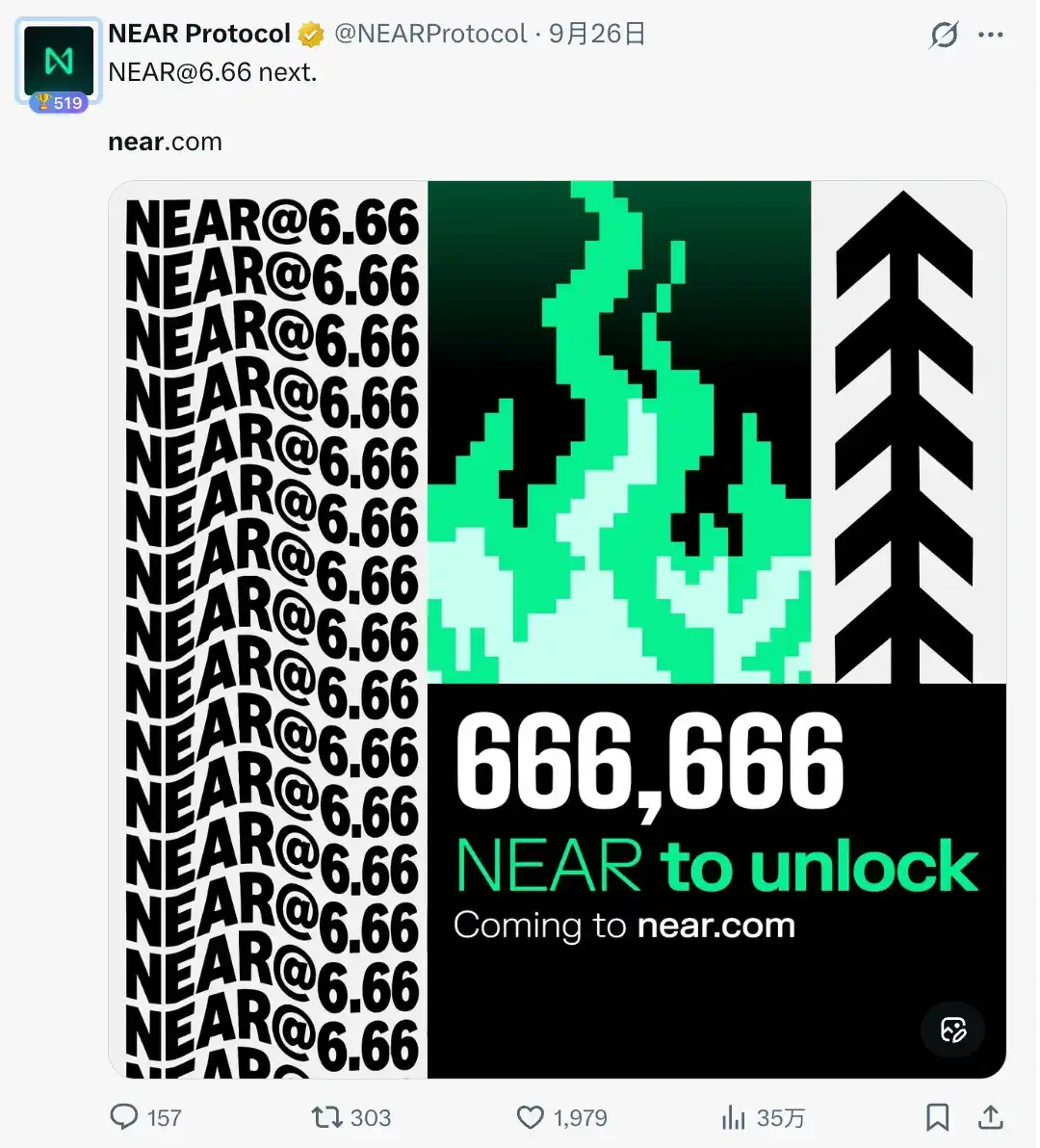
Đầu tiên là quy mô cực nhỏ. Ngay cả khi 666 nghìn token này cuối cùng được quy đổi đầy đủ với giá 6,66 USD vào lưu thông, tổng giá trị của chúng cũng chỉ khoảng 4,4 triệu USD. Đối với một tài sản có vốn hóa thị trường lưu hành hơn 6 tỷ USD và khối lượng giao dịch hàng ngày dễ dàng lên đến hàng trăm triệu USD, tỷ lệ vốn hóa thị trường của quỹ hoạt động này chưa đến 0,07%, đổ vào thị trường hầu như không gây được làn sóng nào.

Thứ hai là quy tắc chưa được công bố. Tham khảo cơ chế phần thưởng 3,33 USD của vòng trước do bên chính thức tổ chức, việc phân phối token cần đồng thời đáp ứng hai điều kiện khắt khe: "TVL của ứng dụng riêng tư đạt ngưỡng" và "giá duy trì ở mục tiêu trong vài ngày". Hiện tại, bên chính thức mới chỉ đăng một tấm áp phích quảng cáo, ngưỡng TVL cụ thể và số ngày duy trì vẫn chưa được công bố.

Bỏ qua những âm thanh hư ảo này, đợt tăng giá gấp đôi này để lại một mệnh đề cực kỳ thực tế cho mọi nhà giao dịch. Câu chuyện đã được kể đầy đủ, ETF đã được niêm yết, điều quyết định việc NEAR có thể đứng vững ở mức cao 5 USD hay trượt dốc âm thầm trong thời gian tới, chỉ có hai chỉ số không thể làm giả:

Thứ nhất là Bitwise trong các phiên giao dịch tiếp theo, công bố dòng tiền ròng ETF liên tục và vững chắc, chứng minh vốn tài chính truyền thống thực sự công nhận câu chuyện AI này; Thứ hai là NEAR Intents có thể ổn định quy mô giao dịch hàng tuần ở mức 8 đến 10 tỷ USD trở lên hay không, từ đó cung cấp đạn dược liên tục dồi dào cho việc mua lại. Trước khi dữ liệu đưa ra câu trả lời, việc mù quáng coi một lối vào hợp pháp vừa ra mắt như tấm bài ngửa để đuổi đỉnh, thường phải trả giá nặng nề bằng thanh khoản.
Trending Cryptos

Related Questions

QQuỹ ETF NR gần đây đã có những kết quả khả quan nào?

AETF NR gần đây đã có kết quả khả quan khi tăng giá từ 1.6 đô la lên đến 5.4 đô la chỉ trong một tháng, tương đương với mức tăng gần ba lần.

QBitwise đã thiết kế mô hình quản lý phí và staking như thế nào cho quỹ ETF NR?

ABitwise thiết kế mô hình quản lý phí 0.75% hàng năm và staking toàn bộ tài sản cơ bản để thu về lợi nhuận khoảng 5% mỗi năm. Họ sẽ thu 33% lợi nhuận từ staking để chi trả chi phí, phần còn lại được chuyển vào giá trị ròng của quỹ.

QNEAR đã thay đổi định vị sinh thái như thế nào để thu hút sự chú ý của thị trường?

ANEAR đã chuyển từ định vị 'kẻ giết Ethereum' sang định vị là đồng tiền máy và lớp thanh toán xuyên chuỗi trong thời đại trí tuệ nhân tạo, tập trung vào cơ sở hạ tầng AI và giao thức nguyện vọng xuyên chuỗi (NEAR Intents).

QMô hình kinh tế token của NEAR hiện tại có những điểm yếu nào?

AMô hình kinh tế token của NEAR hiện tại có điểm yếu khi thu nhập ròng hàng năm chỉ khoảng 20 triệu đô la, trong khi lạm phát 2.5% tạo ra áp lực bán thêm khoảng 150 triệu đô la mỗi năm. Việc mua lại token chỉ có thể bù đắp khoảng 13% lạm phát mới.

QNhững yếu tố nào sẽ quyết định giá NEAR trong tương lai theo bài viết?

ATheo bài viết, hai yếu tố chính quyết định giá NEAR trong tương lai là dòng tiền ròng liên tục từ quỹ ETF NR và khả năng duy trì khối lượng giao dịch hàng tuần của NEAR Intents ở mức 8-10 tỷ đô la để hỗ trợ việc mua lại token.

Related Reads

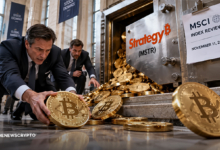
MSCI Confirms Removal of Strategy and Metaplanet From Stock Indexes

MSCI has confirmed that Strategy (NASDAQ: MSTR) and Japan's Metaplanet will be removed from its equity indexes following its November 2026 review, effective at the market close on November 30. Strategy will leave the MSCI USA Index, while Metaplanet will be removed from the MSCI Japan Small Cap Index. The decision follows MSCI's adoption of new eligibility rules for companies classified as non-operating businesses, including firms whose assets are largely held as investments rather than used in traditional operations. Four other companies were also identified for deletion under the screening: UK-based Yellow Cake, Iceland's Skel Fjárfestingafélag, UK-listed Agronomics, and US-based Upexi. Another 19 companies were placed on a watchlist but not confirmed for removal. MSCI's methodology examines operating assets and five financial measures, including operating expenses, cash flow, changes in the value of non-operating assets, and dependence on external financing. Companies whose operating assets exceed 50% of total assets pass the initial test; those below face further screening, and existing index members can be removed if they fail the required tests across their two most recent annual reporting periods. The decision drew attention because Strategy and Metaplanet have built large Bitcoin reserves as core corporate strategies. Strategy previously challenged MSCI's proposed rules, arguing that treating digital asset treasury companies as non-operating businesses was discriminatory. The removals could affect demand for their shares, as index-tracking funds generally adjust holdings when companies leave benchmarks, potentially creating selling pressure around November 30. Strategy warned its exclusion could lead to roughly $2.8 billion in share sales by index-tracking funds, though this remains an estimate. JPMorgan estimated potential selling could reach $8.8 billion if other index providers follow MSCI's approach. The decision does not require either company to sell its Bitcoin holdings; it changes their index eligibility, not their ownership of digital assets.

TheNewsCrypto1h ago

MSCI Confirms Removal of Strategy and Metaplanet From Stock Indexes

TheNewsCrypto1h ago

The 10 People Who Decide Jensen Huang's Fate: A Power Map of Nvidia's Board

The article discusses the uncertainty surrounding Jensen Huang's future at Nvidia amid a scandal, and profiles the 10 board members who will decide his fate. The board includes: 1. Stephen C. Neal – Joined 2019; honorary chairman and senior counsel at Cooley LLP, Nvidia's longtime legal counsel; Harvard and Stanford Law graduate. 2. Tench Coxe – Billionaire VC and early Nvidia investor; board member since 1993; former managing director at Sutter Hill Ventures. 3. John O. Dabiri – Joined 2020; Caltech professor of aeronautics and mechanical engineering; National Medal of Science recipient. 4. Dawn Hudson – Board member since 2013; former NFL CMO and CEO of Pepsi-Cola North America. 5. Harvey C. Jones – Joined 1993; former Synopsys CEO; managing partner at Square Wave Ventures. 6. Melissa B. Lora – Joined 2023; former president of Taco Bell International; praised for financial expertise. 7. A. Brooke Seawell – Joined 1997; partner at New Enterprise Associates; former NetDynamics executive. 8. Aarti Shah – Joined 2020; former Eli Lilly SVP and chief information and digital officer; PhD in applied statistics. 9. Mark A. Stevens – Board member 1993–2006 and again since 2008; managing partner at S-Cubed Capital; former Sequoia Capital managing partner. 10. Suzanne Nora Johnson – Newest member, joined July; former Goldman Sachs vice chairman with 21 years at the firm. The board's decision will significantly impact Nvidia's future.

Odaily星球日报1h ago

The 10 People Who Decide Jensen Huang's Fate: A Power Map of Nvidia's Board

Odaily星球日报1h ago

Trading

Spot

Hot Articles

What is DOGE M

Doge Matrix ($doge m): The New Breed of Community-Driven Cryptocurrency Introduction In the ever-evolving landscape of cryptocurrency, new projects constantly emerge, each aiming to capture the interest of investors and enthusiasts alike. One of the latest entrants to this domain is Doge Matrix, represented by the ticker symbol $doge m. This project has attracted attention thanks to its roots in the popular meme culture surrounding Dogecoin, establishing its place within the web3 space. This article aims to provide a comprehensive analysis of Doge Matrix, covering its overview, creator, investors, functionality, timeline, and notable aspects. What is Doge Matrix ($doge m)? Doge Matrix is a community-driven cryptocurrency project that seemingly builds upon the widespread appeal of Dogecoin, a digital currency known for its Shiba Inu mascot and its meme origins. While the overarching objectives of Doge Matrix are not extensively defined, it is characterized by a commitment to harnessing community involvement and support. Unlike traditional cryptocurrencies that often emphasize utility or intrinsic value through underlying technologies, Doge Matrix positions itself within a space that embraces the cultural phenomenon of cryptocurrencies, particularly appealing to those who resonate with the ethos of meme-based assets. Drawing on the strengths of the Dogecoin community, Doge Matrix operates as part of a broader ecosystem, inviting participation and engagement from users who share an interest in cryptocurrency and the digital landscape. Who is the Creator of Doge Matrix ($doge m)? The identity of the creator of Doge Matrix remains unknown. This lack of transparency is not an uncommon occurrence in the cryptocurrency space, where some projects are launched without revealing the identities of their founders. The absence of information regarding the founding team can raise questions among potential investors about the project’s accountability and direction. Who are the Investors of Doge Matrix ($doge m)? As it stands, there is no publicly available information detailing the investors or investment foundations that back Doge Matrix. The project appears to rely primarily on community support rather than institutional investment. This model aligns with the community-driven nature of the initiative, fostering an environment where the direction of the project is shaped by its participants rather than being dictated by a select few financial backers. How Does Doge Matrix ($doge m) Work? The specifics regarding the operational mechanisms of Doge Matrix are somewhat vague, reflecting a broader trend of projects in the meme coin space where innovative functionalities are not always clearly articulated. Nonetheless, Doge Matrix seems designed to tap into the existing cryptocurrency ecosystem by encouraging user participation while tapping into the familiar cultural references associated with Dogecoin. Its potentially unique characteristics derive from community interactions rather than technological advancements, emphasizing shared experiences and collaboration among token holders. While the exact innovations have not been explicitly outlined, the project appears to create a space where community members can engage, share ideas, and propel the project's potential forward. Timeline of Doge Matrix ($doge m) Reflecting on the project’s timeline reveals notable events that have defined its journey thus far: November 25, 2024: Doge Matrix reached its all-time high value, marking a significant milestone in its early history. January 1, 2025: Conversely, Doge Matrix hit its all-time low value, illustrating the volatility often associated with cryptocurrencies, especially in the early stages of a project's lifecycle. Ongoing: The project continues to be actively traded and supported by its community, although specific future milestones or objectives have yet to be disclosed. Key Points About Doge Matrix ($doge m) Community Focus At the heart of Doge Matrix is a commitment to community engagement. The project thrives on the premise of collaboration and shared objectives among its members, emphasizing the importance of collective effort. Unlike centralized projects that often have a defined leadership structure, Doge Matrix at present showcases a more fluid approach to governance, where every community member's voice matters. Volatility The cryptocurrency market is notorious for its volatility, and Doge Matrix is no exception. Its price history reflects significant fluctuations between high and low values, which is typical of many new cryptocurrencies but underscores the risks associated with investment in emerging tokens. Lack of Detailed Information One of the most striking features about Doge Matrix is the scarcity of detailed information regarding its technological underpinnings and operational mechanisms. This ambiguity necessitates that potential investors conduct thorough due diligence before engaging with the project. Conclusion In summary, Doge Matrix ($doge m) illustrates a new wave of cryptocurrency projects that lean heavily on community engagement and cultural relevance. While lacking in certain specifics—such as clear leadership, defined objectives, and detailed functionality—the project has managed to generate interest within the crypto community, leveraging the established appeal of meme culture. As with any investment in the cryptocurrency space, understanding the inherent risks and conducting comprehensive research is essential for potential participants. Doge Matrix stands as a reminder of the dynamic, sometimes unpredictable nature of the crypto industry, marked by constant evolution and enthusiasm for community-driven initiatives.

6.8k Total ViewsPublished 2025.02.03Updated 2025.02.03

What is DOGE M

What is $M

Understanding Mantis ($M): A New Era in Cross-Chain Interoperability In the continually evolving landscape of Web3 and cryptocurrency, new projects strive to offer innovative solutions aimed at enhancing the user experience and expanding functional possibilities within the decentralized financial ecosystem. One such project garnering attention is Mantis ($M), a pioneering protocol founded on the principles of cross-chain interoperability and intent-based settlements. This article delves into the essential aspects of Mantis, including its core functionality, creators, investment backing, innovative features, and critical milestones. What is Mantis ($M)? Mantis is described as a multi-domain intent settlement protocol that simplifies cross-chain interactions, enabling users to execute complex financial transactions across various blockchain platforms seamlessly. The protocol operates through three primary layers: Intent Expression: Users can articulate their transaction goals using natural language facilitated by the DISE LLM, an advanced AI language model. For instance, a user might express a desire to swap Ethereum (ETH) for Solana (SOL) with a specific slippage tolerance of 1%. Execution: This layer employs a network of solvers that compete to fulfill user intents. Transactions are executed using mechanisms such as Coincidence of Wants (CoWs) and Order Flow Auctions (OFAs), which ensure that user demands are met optimally. Settlement: Leveraging the Inter-Blockchain Communication (IBC) protocol, Mantis enables atomic cross-chain transactions, allowing users to operate across various supported chains, including Ethereum, Solana, and Cosmos. Mantis is engineered to introduce native yield generation for idle assets, employing cryptographic proofs to maintain the integrity of transactions throughout the entire process. Creators & Development Team Mantis was conceived by the Composable Foundation, a research-driven organization notable for its emphasis on blockchain interoperability solutions. This foundation collaborates with esteemed academic institutions, including Harvard University and the University of Lisbon, contributing to extensive research and development efforts that inform Mantis's architecture and functionality. The Composable Foundation’s commitment to fostering innovation in the blockchain space positions Mantis as a robust solution for the growing demand for interoperability among multiple blockchain networks. Investors & Backing While specific details about individual investors have not been publicly disclosed, Mantis enjoys substantial backing from various entities, including: Ecosystem grants from IBC-enabled chains, which support the protocol's growth and integration within decentralized finance ecosystems. Strategic partnerships with infrastructure providers that enhance Mantis's network capabilities and deployment strategies. Funding through the Composable Foundation's treasury, ensuring sustained financial support for ongoing development and operational costs. These collaborative efforts reflect a consensus among stakeholders about the importance of enhancing cross-chain functionality and the potential utility of Mantis's infrastructural innovations. Key Innovations Mantis sets itself apart through several pioneering innovations that enhance its functionality and utility: Chain-Agnostic Intents: Users can initiate transactions from any supported chain while settling on another. This flexibility empowers users, driving increased interaction among different platforms. AI-Powered Interface: The integration of DISE LLM allows users to conduct complex DeFi operations using natural language, thereby simplifying interactions and making blockchain technology accessible to a broader audience. Cross-Domain MEV Capture: Mantis creates an internal market for maximal extractable value (MEV) through competitions among solvers. This innovative approach allows for greater efficiency and value extraction in complex transactions. Modular Settlement Layer: The protocol supports various verification methods, including zero-knowledge proofs and optimistic rollups, providing a versatile framework that can adapt to emerging blockchain technologies. Historical Timeline Mantis's development is marked by several critical milestones that chart its trajectory and growth: | Year | Milestone | |————|————————————————————————-| | 2022 | Initial concept development within the Composable Foundation's research division. | | Q3 2024 | Launch of the testnet with bridging capabilities between Solana and Ethereum. | | Q1 2025 | Anticipated Token Generation Event (TGE) alongside the mainnet launch. | | Q2 2025 | Expected integration of DISE LLM and expansion of cross-chain capabilities. | | 2025 H2 | Planned support for over 15 chains through further IBC upgrades. | This timeline outlines Mantis's evolution, from conceptual discussions to active implementation and future growth phases. Ecosystem Growth Strategy Mantis's strategy for ecosystem growth includes several initiatives designed to encourage user participation and developer engagement: Credits System: Users can earn protocol credits by providing liquidity and engaging in referral programs. These credits are redeemable for incentives in the future, fostering a robust user community. Modular Software Development Kit (SDK): This toolkit empowers developers to create applications based on intent-driven models utilizing Mantis's infrastructure, thus promoting innovation within its ecosystem. Governance Model: As the protocol matures, $M token holders will have a voice in protocol governance, allowing them to vote on proposed upgrades and changes, thereby enhancing community engagement and decentralization. Mantis represents a significant advancement in the realm of cross-chain architecture. By seamlessly integrating advanced AI algorithms with a robust settlement framework, Mantis seeks to tackle the problems of fragmentation within multi-chain ecosystems. Its innovative approach prioritizes improved user experiences while adhering to the foundational principles of decentralization and security, setting a new standard for the future interoperability of blockchain technologies. As Mantis continues its journey of growth and implementation, it promises to be a project to watch closely in the competitive landscape of Web3 and decentralized finance. With its focus on crossing boundaries and elevating user engagement, Mantis is poised to be an integral part of the future developments in the cryptocurrency space.

3.0k Total ViewsPublished 2025.03.18Updated 2025.03.18

What is $M

How to Buy M

Welcome to HTX.com! We've made purchasing MemeCore (M) simple and convenient. Follow our step-by-step guide to embark on your crypto journey.Step 1: Create Your HTX AccountUse your email or phone number to sign up for a free account on HTX. Experience a hassle-free registration journey and unlock all features.Get My AccountStep 2: Go to Buy Crypto and Choose Your Payment MethodCredit/Debit Card: Use your Visa or Mastercard to buy MemeCore (M) instantly.Balance: Use funds from your HTX account balance to trade seamlessly.Third Parties: We've added popular payment methods such as Google Pay and Apple Pay to enhance convenience.P2P: Trade directly with other users on HTX.Over-the-Counter (OTC): We offer tailor-made services and competitive exchange rates for traders.Step 3: Store Your MemeCore (M)After purchasing your MemeCore (M), store it in your HTX account. Alternatively, you can send it elsewhere via blockchain transfer or use it to trade other cryptocurrencies.Step 4: Trade MemeCore (M)Easily trade MemeCore (M) on HTX's spot market. Simply access your account, select your trading pair, execute your trades, and monitor in real-time. We offer a user-friendly experience for both beginners and seasoned traders.

13.4k Total ViewsPublished 2025.07.02Updated 2026.06.02

How to Buy M

Discussions

Welcome to the HTX Community. Here, you can stay informed about the latest platform developments and gain access to professional market insights. Users' opinions on the price of M (M) are presented below.

活动图片