Beldex Khởi Động Chương Trình Tài Trợ $1 Triệu Cho Nhà Phát Triển Toàn Cầu

TheNewsCryptoPublished on 2026-09-29Last updated on 2026-09-29

Abstract

Beldex, một hệ sinh thái blockchain tập trung vào quyền riêng tư, đã công bố Chương trình Tài trợ Beldex với quỹ 1 triệu USD tại Tuần lễ Blockchain Hàn Quốc 2026. Chương trình mở cửa cho các nhà phát triển toàn cầu, nhằm thúc đẩy việc xây dựng các ứng dụng, công cụ và cơ sở hạ tầng bảo vệ quyền riêng tư trên nền tảng Beldex. Đây là bước tiến mới để mở rộng hệ sinh thái ngoài các sản phẩm nội bộ hiện có như BChat, BelNet và Beldex Browser. Quỹ được phân bổ linh hoạt theo từng đề xuất, không chia thành các hạng mục cố định. Ứng dụng có thể nộp quanh năm dựa trên mức độ sẵn sàng của dự án. Theo ông Cris Blanco, Giám đốc Chiến lược, mục tiêu là cung cấp cơ sở hạ tầng, hỗ trợ và vốn để các nhà phát triển biến ý tưởng thành sản phẩm thực tế, từ đó mở rộng hệ sinh thái ứng dụng bảo mật trong tương lai.

Victoria, Mahe, Seychelles, 29 tháng 9 năm 2026 – Beldex, một hệ sinh thái blockchain tập trung vào quyền riêng tư, công bố việc thành lập Chương Trình Tài Trợ Beldex, một quỹ trị giá 1 triệu USD dành riêng cho việc thúc đẩy phát triển các ứng dụng, công cụ và cơ sở hạ tầng bảo vệ quyền riêng tư. Chương trình hoạt động như một sáng kiến liên tục với các chu kỳ tài trợ linh hoạt, cho phép các nhà phát triển trên toàn cầu nộp đề xuất dựa trên sự sẵn sàng của dự án thay vì các thời hạn tùy ý.

Chương Trình Tài Trợ Beldex đã được công bố trong Tuần lễ Blockchain Hàn Quốc 2026 tại Seoul. Chương trình mở cửa cho các nhà phát triển và nhóm trên toàn thế giới, hỗ trợ phát triển các ứng dụng, công cụ và cơ sở hạ tầng bảo vệ quyền riêng tư.
Trong quá khứ, Beldex tập trung xây dựng cơ sở hạ tầng và ứng dụng riêng tư của riêng mình, bao gồm BChat, BelNet, BNS và Trình Duyệt Beldex. Chương Trình Tài Trợ đánh dấu giai đoạn tiếp theo trong quá trình tiến hóa đó, mở cơ sở hạ tầng Beldex cho các nhà phát triển bên ngoài và hỗ trợ một hệ sinh thái rộng lớn hơn gồm các ứng dụng, tích hợp và công cụ bảo vệ quyền riêng tư.
Cris Blanco, Giám đốc Chiến lược tại Beldex, cho biết:
“Beldex đã dành nhiều năm để xây dựng cơ sở hạ tầng và sản phẩm về quyền riêng tư. Giai đoạn tiếp theo là mở nền tảng đó cho các nhà phát triển và phát triển một hệ sinh thái vượt ra ngoài những gì Beldex tự xây dựng. Chúng tôi không mong đợi tất cả các ứng dụng bảo mật quan trọng trong tương lai đều xuất phát từ bên trong một tổ chức. Chương Trình Tài Trợ là về việc cung cấp cho những người xây dựng cơ sở hạ tầng, sự hỗ trợ và vốn để đưa những ý tưởng đó từ khái niệm đến sản xuất.”
Khoản phân bổ 1 triệu USD không được chia thành các phần cố định. Thay vào đó, quy mô tài trợ được xác định riêng lẻ dựa trên phạm vi của đề xuất và độ phức tạp của các kết quả đầu ra yêu cầu. Chương trình chấp nhận đơn đăng ký cho:

Trending Cryptos

Related Questions

QBeldex đã công bố chương trình tài trợ Beldex Grants Program với tổng quỹ là bao nhiêu?

ABeldex đã công bố chương trình tài trợ Beldex Grants Program với tổng quỹ 1 triệu đô la Mỹ.

QMục đích chính của Beldex Grants Program là gì?

AMục đích chính của Beldex Grants Program là thúc đẩy sự phát triển của các ứng dụng, công cụ và cơ sở hạ tầng bảo vệ quyền riêng tư trên hệ sinh thái của Beldex.

QChương trình được công bố vào thời gian và sự kiện nào?

AChương trình được công bố tại Korea Blockchain Week 2026 ở Seoul vào ngày 29 tháng 9 năm 2026.

QAi là người phát biểu về việc mở rộng hệ sinh thái của Beldex trong thông báo này?

ACris Blanco, Giám đốc Chiến lược tại Beldex, là người đã phát biểu về việc mở nền tảng của Beldex cho các nhà phát triển bên ngoài.

QGiá trị mỗi khoản tài trợ được xác định như thế nào?

AGiá trị mỗi khoản tài trợ được xác định riêng lẻ dựa trên phạm vi đề xuất và mức độ phức tạp của các kết quả đầu ra cần thiết, không được chia thành các phần cố định.

Related Reads

"Strictest Ever" Wet-Lab Prediction Benchmark Released: Maxed-Out Reasoning and 5x Compute Still Won't Cut It

UniPat AI has launched Science Prediction Universe (SPU), a new benchmark that evaluates whether AI models can predict the outcomes of real wet-lab experiments before they are conducted. The benchmark covers 116 tasks and 4,207 wet-lab experiments across chemistry, materials science, biology, and medicine, drawing on recent papers and unpublished collaborations with institutions such as Stanford, Cornell, and Harvard. Models are given eight hours, an H20 GPU, internet access, and scientific software, and must submit a ranked prediction of experimental results, which is then scored against hidden ground-truth data using the Spearman correlation coefficient. To prevent memorization, evaluation runs in isolated, offline containers and screens outputs for paper identifiers. Results show that even leading models like Opus 5.5 and GPT-6 Astra remain far from reliable prediction: the best average score was 0.486, and only about half of tasks exceeded the random baseline. The study also found that increasing reasoning effort fivefold barely improved accuracy, since models often settled on an answer early and spent the rest of the time on minor adjustments. Likewise, more tool use and GPU calls did not reliably help. Performance varied sharply by measurement target, and API costs ranged 300-fold across configurations. SPU aims to give researchers and model developers a unified way to measure and improve AI's scientific judgment before investing in costly experiments.

marsbit2h ago

"Strictest Ever" Wet-Lab Prediction Benchmark Released: Maxed-Out Reasoning and 5x Compute Still Won't Cut It

marsbit2h ago

From Harshly Criticizing Stablecoins to Building an L1: Airwallex's Jack Zhang Isn't "Converting" — the Battle for the Settlement Layer Has Begun

In June 2025, Airwallex CEO Jack Zhang publicly questioned stablecoins, arguing that fiat conversion costs outweighed their cross-border payment benefits and that crypto had failed to solve real-world problems for 15 years. Yet just 17 months later, in November 2026, Zhang emerged as co-founder of Alta, a blockchain project that raised $80 million (a $47.5 million Series A led by Index Ventures plus a $32.5 million seed round). Rather than a change of heart, the move reflects commercial necessity: a battle over the stablecoin settlement layer is underway, and payment giants that stay out risk becoming mere interfaces atop someone else's chain. Alta is not a general-purpose public chain but a compliant Layer 1 built for banks and licensed payment institutions. Co-founder Loong Wang, previously of Ren Protocol, says existing chains like Ethereum and Solana cannot simultaneously meet institutional demands for privacy, compliance, integration with local financial systems, and liquidity. Alta uses recursive zero-knowledge proofs to enable on-chain compliance checks without exposing identities or transaction amounts, and builds in programmable compliance modules, native identity authorization, and anti-airdrop protections. Co-founder Catherine Porter previously led Meta's Libra (Diem) partnerships. Airwallex itself is Alta's key advantage: with $287 billion in annualized volume, $1.3 billion in revenue, 200 countries, and 90 currencies, it will channel enterprise clients onto the new chain. Zhang's apparent reversal is consistent: he criticized stablecoins as cheap remittance tools, but now bets on tokenized fiat settlement infrastructure. Competitive pressure comes from Stripe, which acquired Bridge for $1.1 billion, bought Privy, and incubated the Tempo chain (raising $500 million at a $50 billion valuation, with OpenAI, Shopify, Deutsche Bank, and Visa as partners). Circle's Arc, Fireblocks, and Canton Network are also competing. With stablecoin market cap exceeding $320 billion and 2025 on-chain volume surpassing $33 trillion, the real contest is over who controls minting, clearing, and fiat redemption. Success will depend less on technology than on three factors: genuine adoption by traditional financial institutions, compliance adaptation across jurisdictions, and efficient on- and off-ramps to real banking systems. The paradigm has shifted: instead of disrupting banks, fintech giants now aim to build infrastructure that lets traditional finance voluntarily move on-chain. Pragmatism, not ideology, now dominates the race.

marsbit4h ago

From Harshly Criticizing Stablecoins to Building an L1: Airwallex's Jack Zhang Isn't "Converting" — the Battle for the Settlement Layer Has Begun

marsbit4h ago

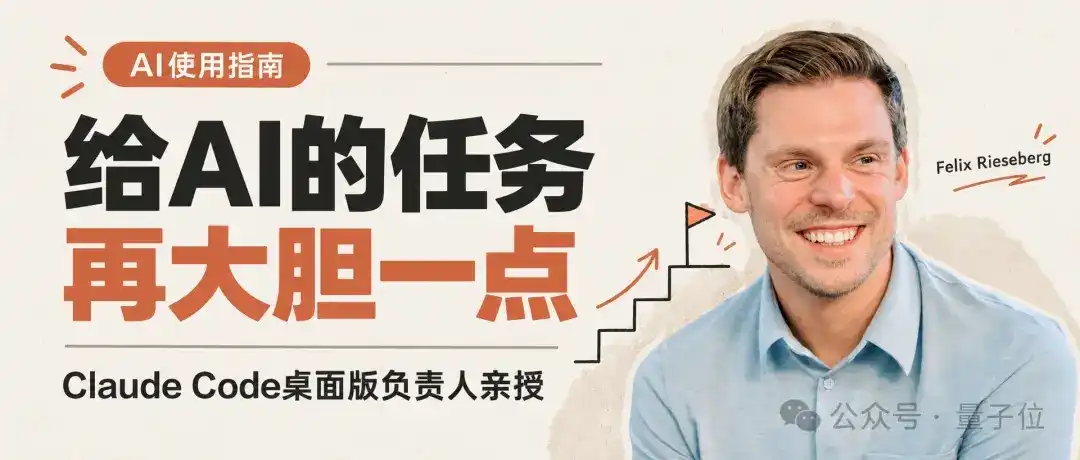
"Everyone is too conservative with AI!" Head of Claude Code: My approach is more ambitious

Felix Rieseberg, who leads Claude Code's desktop app, argues that most people use AI too conservatively and should set more ambitious goals. His central trick: set unreasonably aggressive targets and insist they're achievable—for example, instead of cutting website load time from 10 seconds to 5, aim for 0.2 seconds, and when the model protests, keep telling it the problem is solvable and to try again. He organizes ambition into four categories: speed (doing the same work faster), height (raising the abstraction level to focus on desired outcomes rather than individual tasks), depth (working like top experts, using their real tools, data, and methods), and breadth (drawing on ideas from other fields). For height, he suggests asking what you ultimately want to happen and what the goal behind the goal is—e.g., instead of fixing single crashes, require the app to never crash. For a quarterly business review, move from filling in a template to understanding what changed and why, identifying the most urgent decisions, and redesigning the review process itself. For depth, he advises insisting on the tools top professionals actually use (databases and statistical models rather than Markdown tables), setting "unreasonable" targets, challenging your own assumptions against raw data, hunting for new knowledge, and using external validation rather than letting the model grade itself. A useful prompt asks the model what top experts would do that you haven't requested, what raw materials and tools they'd use, and what besides the model and you could prove the result correct. For breadth, he recommends replacing nouns with verbs (not "make a PPT" but "in 30 minutes, convince busy people of an explanation and drive a decision under uncertainty"), assembling cross-disciplinary teams, and using multi-agent setups—while avoiding mere role-play in favor of adopting other fields' actual methods. He closes with self-efficacy research: people given clear, challenging goals outperform those told to do their best, and believing difficult things are possible—as with the four-minute mile—unlocks achievement. In an era of rapid capability gains, updating our beliefs about what's possible matters more than ever.

marsbit5h ago

"Everyone is too conservative with AI!" Head of Claude Code: My approach is more ambitious

marsbit5h ago

Trading

Spot

Hot Articles

What is DOGE M

Doge Matrix ($doge m): The New Breed of Community-Driven Cryptocurrency Introduction In the ever-evolving landscape of cryptocurrency, new projects constantly emerge, each aiming to capture the interest of investors and enthusiasts alike. One of the latest entrants to this domain is Doge Matrix, represented by the ticker symbol $doge m. This project has attracted attention thanks to its roots in the popular meme culture surrounding Dogecoin, establishing its place within the web3 space. This article aims to provide a comprehensive analysis of Doge Matrix, covering its overview, creator, investors, functionality, timeline, and notable aspects. What is Doge Matrix ($doge m)? Doge Matrix is a community-driven cryptocurrency project that seemingly builds upon the widespread appeal of Dogecoin, a digital currency known for its Shiba Inu mascot and its meme origins. While the overarching objectives of Doge Matrix are not extensively defined, it is characterized by a commitment to harnessing community involvement and support. Unlike traditional cryptocurrencies that often emphasize utility or intrinsic value through underlying technologies, Doge Matrix positions itself within a space that embraces the cultural phenomenon of cryptocurrencies, particularly appealing to those who resonate with the ethos of meme-based assets. Drawing on the strengths of the Dogecoin community, Doge Matrix operates as part of a broader ecosystem, inviting participation and engagement from users who share an interest in cryptocurrency and the digital landscape. Who is the Creator of Doge Matrix ($doge m)? The identity of the creator of Doge Matrix remains unknown. This lack of transparency is not an uncommon occurrence in the cryptocurrency space, where some projects are launched without revealing the identities of their founders. The absence of information regarding the founding team can raise questions among potential investors about the project’s accountability and direction. Who are the Investors of Doge Matrix ($doge m)? As it stands, there is no publicly available information detailing the investors or investment foundations that back Doge Matrix. The project appears to rely primarily on community support rather than institutional investment. This model aligns with the community-driven nature of the initiative, fostering an environment where the direction of the project is shaped by its participants rather than being dictated by a select few financial backers. How Does Doge Matrix ($doge m) Work? The specifics regarding the operational mechanisms of Doge Matrix are somewhat vague, reflecting a broader trend of projects in the meme coin space where innovative functionalities are not always clearly articulated. Nonetheless, Doge Matrix seems designed to tap into the existing cryptocurrency ecosystem by encouraging user participation while tapping into the familiar cultural references associated with Dogecoin. Its potentially unique characteristics derive from community interactions rather than technological advancements, emphasizing shared experiences and collaboration among token holders. While the exact innovations have not been explicitly outlined, the project appears to create a space where community members can engage, share ideas, and propel the project's potential forward. Timeline of Doge Matrix ($doge m) Reflecting on the project’s timeline reveals notable events that have defined its journey thus far: November 25, 2024: Doge Matrix reached its all-time high value, marking a significant milestone in its early history. January 1, 2025: Conversely, Doge Matrix hit its all-time low value, illustrating the volatility often associated with cryptocurrencies, especially in the early stages of a project's lifecycle. Ongoing: The project continues to be actively traded and supported by its community, although specific future milestones or objectives have yet to be disclosed. Key Points About Doge Matrix ($doge m) Community Focus At the heart of Doge Matrix is a commitment to community engagement. The project thrives on the premise of collaboration and shared objectives among its members, emphasizing the importance of collective effort. Unlike centralized projects that often have a defined leadership structure, Doge Matrix at present showcases a more fluid approach to governance, where every community member's voice matters. Volatility The cryptocurrency market is notorious for its volatility, and Doge Matrix is no exception. Its price history reflects significant fluctuations between high and low values, which is typical of many new cryptocurrencies but underscores the risks associated with investment in emerging tokens. Lack of Detailed Information One of the most striking features about Doge Matrix is the scarcity of detailed information regarding its technological underpinnings and operational mechanisms. This ambiguity necessitates that potential investors conduct thorough due diligence before engaging with the project. Conclusion In summary, Doge Matrix ($doge m) illustrates a new wave of cryptocurrency projects that lean heavily on community engagement and cultural relevance. While lacking in certain specifics—such as clear leadership, defined objectives, and detailed functionality—the project has managed to generate interest within the crypto community, leveraging the established appeal of meme culture. As with any investment in the cryptocurrency space, understanding the inherent risks and conducting comprehensive research is essential for potential participants. Doge Matrix stands as a reminder of the dynamic, sometimes unpredictable nature of the crypto industry, marked by constant evolution and enthusiasm for community-driven initiatives.

7.0k Total ViewsPublished 2025.02.03Updated 2025.02.03
What is DOGE M

What is $M

Understanding Mantis ($M): A New Era in Cross-Chain Interoperability In the continually evolving landscape of Web3 and cryptocurrency, new projects strive to offer innovative solutions aimed at enhancing the user experience and expanding functional possibilities within the decentralized financial ecosystem. One such project garnering attention is Mantis ($M), a pioneering protocol founded on the principles of cross-chain interoperability and intent-based settlements. This article delves into the essential aspects of Mantis, including its core functionality, creators, investment backing, innovative features, and critical milestones. What is Mantis ($M)? Mantis is described as a multi-domain intent settlement protocol that simplifies cross-chain interactions, enabling users to execute complex financial transactions across various blockchain platforms seamlessly. The protocol operates through three primary layers: Intent Expression: Users can articulate their transaction goals using natural language facilitated by the DISE LLM, an advanced AI language model. For instance, a user might express a desire to swap Ethereum (ETH) for Solana (SOL) with a specific slippage tolerance of 1%. Execution: This layer employs a network of solvers that compete to fulfill user intents. Transactions are executed using mechanisms such as Coincidence of Wants (CoWs) and Order Flow Auctions (OFAs), which ensure that user demands are met optimally. Settlement: Leveraging the Inter-Blockchain Communication (IBC) protocol, Mantis enables atomic cross-chain transactions, allowing users to operate across various supported chains, including Ethereum, Solana, and Cosmos. Mantis is engineered to introduce native yield generation for idle assets, employing cryptographic proofs to maintain the integrity of transactions throughout the entire process. Creators & Development Team Mantis was conceived by the Composable Foundation, a research-driven organization notable for its emphasis on blockchain interoperability solutions. This foundation collaborates with esteemed academic institutions, including Harvard University and the University of Lisbon, contributing to extensive research and development efforts that inform Mantis's architecture and functionality. The Composable Foundation’s commitment to fostering innovation in the blockchain space positions Mantis as a robust solution for the growing demand for interoperability among multiple blockchain networks. Investors & Backing While specific details about individual investors have not been publicly disclosed, Mantis enjoys substantial backing from various entities, including: Ecosystem grants from IBC-enabled chains, which support the protocol's growth and integration within decentralized finance ecosystems. Strategic partnerships with infrastructure providers that enhance Mantis's network capabilities and deployment strategies. Funding through the Composable Foundation's treasury, ensuring sustained financial support for ongoing development and operational costs. These collaborative efforts reflect a consensus among stakeholders about the importance of enhancing cross-chain functionality and the potential utility of Mantis's infrastructural innovations. Key Innovations Mantis sets itself apart through several pioneering innovations that enhance its functionality and utility: Chain-Agnostic Intents: Users can initiate transactions from any supported chain while settling on another. This flexibility empowers users, driving increased interaction among different platforms. AI-Powered Interface: The integration of DISE LLM allows users to conduct complex DeFi operations using natural language, thereby simplifying interactions and making blockchain technology accessible to a broader audience. Cross-Domain MEV Capture: Mantis creates an internal market for maximal extractable value (MEV) through competitions among solvers. This innovative approach allows for greater efficiency and value extraction in complex transactions. Modular Settlement Layer: The protocol supports various verification methods, including zero-knowledge proofs and optimistic rollups, providing a versatile framework that can adapt to emerging blockchain technologies. Historical Timeline Mantis's development is marked by several critical milestones that chart its trajectory and growth: | Year | Milestone | |————|————————————————————————-| | 2022 | Initial concept development within the Composable Foundation's research division. | | Q3 2024 | Launch of the testnet with bridging capabilities between Solana and Ethereum. | | Q1 2025 | Anticipated Token Generation Event (TGE) alongside the mainnet launch. | | Q2 2025 | Expected integration of DISE LLM and expansion of cross-chain capabilities. | | 2025 H2 | Planned support for over 15 chains through further IBC upgrades. | This timeline outlines Mantis's evolution, from conceptual discussions to active implementation and future growth phases. Ecosystem Growth Strategy Mantis's strategy for ecosystem growth includes several initiatives designed to encourage user participation and developer engagement: Credits System: Users can earn protocol credits by providing liquidity and engaging in referral programs. These credits are redeemable for incentives in the future, fostering a robust user community. Modular Software Development Kit (SDK): This toolkit empowers developers to create applications based on intent-driven models utilizing Mantis's infrastructure, thus promoting innovation within its ecosystem. Governance Model: As the protocol matures, $M token holders will have a voice in protocol governance, allowing them to vote on proposed upgrades and changes, thereby enhancing community engagement and decentralization. Mantis represents a significant advancement in the realm of cross-chain architecture. By seamlessly integrating advanced AI algorithms with a robust settlement framework, Mantis seeks to tackle the problems of fragmentation within multi-chain ecosystems. Its innovative approach prioritizes improved user experiences while adhering to the foundational principles of decentralization and security, setting a new standard for the future interoperability of blockchain technologies. As Mantis continues its journey of growth and implementation, it promises to be a project to watch closely in the competitive landscape of Web3 and decentralized finance. With its focus on crossing boundaries and elevating user engagement, Mantis is poised to be an integral part of the future developments in the cryptocurrency space.

3.1k Total ViewsPublished 2025.03.18Updated 2025.03.18

What is $M

How to Buy M

Welcome to HTX.com! We've made purchasing MemeCore (M) simple and convenient. Follow our step-by-step guide to embark on your crypto journey.Step 1: Create Your HTX AccountUse your email or phone number to sign up for a free account on HTX. Experience a hassle-free registration journey and unlock all features.Get My AccountStep 2: Go to Buy Crypto and Choose Your Payment MethodCredit/Debit Card: Use your Visa or Mastercard to buy MemeCore (M) instantly.Balance: Use funds from your HTX account balance to trade seamlessly.Third Parties: We've added popular payment methods such as Google Pay and Apple Pay to enhance convenience.P2P: Trade directly with other users on HTX.Over-the-Counter (OTC): We offer tailor-made services and competitive exchange rates for traders.Step 3: Store Your MemeCore (M)After purchasing your MemeCore (M), store it in your HTX account. Alternatively, you can send it elsewhere via blockchain transfer or use it to trade other cryptocurrencies.Step 4: Trade MemeCore (M)Easily trade MemeCore (M) on HTX's spot market. Simply access your account, select your trading pair, execute your trades, and monitor in real-time. We offer a user-friendly experience for both beginners and seasoned traders.

13.5k Total ViewsPublished 2025.07.02Updated 2026.06.02

How to Buy M

Discussions

Welcome to the HTX Community. Here, you can stay informed about the latest platform developments and gain access to professional market insights. Users' opinions on the price of M (M) are presented below.

活动图片