Safe Foundation and World Foundation Strengthen Economic Alignment Through 5-Year Token Swap

TheNewsCryptoXuất bản vào 2026-02-19Cập nhật gần nhất vào 2026-02-19

Tóm tắt

Safe Foundation and World Foundation have entered a five-year token swap as the inaugural partnership in Safe’s 5M SAFE Ecosystem Alignment Program. This long-term commitment aims to strengthen economic alignment and advance secure, user-friendly self-custody solutions at scale. The program allocates up to 5 million SAFE tokens to foster infrastructure development through multi-year token swaps, creating bilateral economic exposure with ecosystem leaders. World Foundation has been a key player in onboarding over 37 million users to self-custody via Safe smart accounts, contributing to easier user onboarding and improved UX. The collaboration supports open-source standards and public good initiatives, aligning with Safe’s mission to promote digital ownership. Safe, securing approximately $60 billion in assets, is a leading onchain custody protocol focused on universal smart account standards. This partnership underscores a shared commitment to accelerating the adoption of secure and accessible self-custody across the onchain economy.

First partnership in Safe Foundation’s 5M SAFE Ecosystem Alignment Program, with a five-year commitment to advancing secure and easy self-custody

The Safe Foundation and World Foundation are doubling down on their shared vision with a five-year token swap – a long-term commitment that signals deep collaboration to advance usable self-custody at scale. This inaugural partnership in our 5M SAFE Ecosystem Alignment Program uses SAFE and WLD tokens to create bilateral economic exposure, positioning both ecosystems to accelerate secure and easy self-custody adoption.

Safe Foundation launches Ecosystem Alignment Program, allocating up to 5M SAFE to scale infrastructure

The Safe Foundation is committing up to 5,000,000 SAFE to accelerate the infrastructure powering secure and easy self-custody across the onchain economy. Through multi-year token swaps, the Safe Foundation is creating genuine, bilateral economic exposure with ecosystem leaders.

The program operates through standardized, non-exclusive agreements designed to foster open collaboration, not closed ecosystems. As self-custody infrastructure matures from experimental to essential, the Safe Foundation ensures it’s economically positioned alongside the teams making that transition possible. This ensures that technical collaboration becomes economically rational, and long-term ecosystem success becomes mutually reinforcing.

A Collective Commitment to Usable Self-Custody at Scale

World has done more to onboard people around the world to self-custody than anyone else. From the beginning, World chose to build on the Safe smart account. It continues to enable every user to have a secure self-custodial experience, while making use of the flexibility and composability of the tech stack allowing to abstract onboarding and day to day hurdles for users.

Through this, the World ecosystem has created the leading application across Web3, having onboarded more than 37M individuals. The use of smart accounts has been critical for easier onboarding and for enabling the UX of self-custody that can rival that of centralized web2 services. Ultimately, this gives verified humans on World rights and ownership over their identity, data and assets. With their launch of World Chain and ongoing development of the space they are actively bringing and supporting builders which by nature overlaps towards the Safe ecosystem. This includes grant programs for developers and builders that interact with Safe based World accounts. After previous collaborations we are excited to continue and deepen the alignment between both teams.

World Foundation’s commitment to support open source standards and actively contribute to the open source ecosystem adds another layer of value alignment between the Safe project, including its DAO enforced public good nature of the Safe smart contracts.

About Safe

Safe (previously Gnosis Safe) is an onchain asset custody protocol, securing ~$60 Billion in assets today. Released as on open-source software stack by the Safe Ecosystem Foundation, it is establishing a universal ‘smart account standard for secure custody of digital assets, data, and identity. Safe is built for the mission to unlock digital ownership for everyone in web3, including DAOs, enterprises, retail, and institutional users

Website, Twitter, Discord, Blog, GitHub, Docs

About the Safe Ecosystem Foundation, Zug, Switzerland

The mission of the Safe Ecosystem Foundation is to support the development of Safe, to strengthen Safe technology and to promote the Safe Ecosystem. The Safe Ecosystem is a non-profit organisation based in Zug, Switzerland, that helps educate people about Safe smart accounts and promotes Safe technology through the provision of grants and other forms of funding.

This is not an offer to sell or a solicitation of an offer to purchase any SAFE tokens and is not an offering, advertisement, solicitation, confirmation, statement, or any financial promotion that can be construed as an invitation or inducement to engage in any investment activity or similar.

The Safe Ecosystem Foundation makes no representations, warranties and/or covenants with respect to the Safe Technology (or any implementations of the Safe{Wallet} and/or Safe Smart Accounts) or any program (Grants, Hackathons and/or any other forms of funding) run by the Safe Ecosystem Foundation. You should not rely on the content herein for advice of any kind, including legal, investment, financial, tax, or other professional advice, and such content is not a substitute for advice from a qualified professional.

Disclaimer: TheNewsCrypto does not endorse any content on this page. The content depicted in this Press Release does not represent any investment advice. TheNewsCrypto recommends our readers to make decisions based on their own research. TheNewsCrypto is not accountable for any damage or loss related to content, products, or services stated in this Press Release.

TagsPress ReleaseSafe Foundation

Câu hỏi Liên quan

QWhat is the purpose of the 5-year token swap between Safe Foundation and World Foundation?

AThe 5-year token swap creates bilateral economic exposure between the two foundations using SAFE and WLD tokens, representing a long-term commitment to advance secure and easy self-custody adoption at scale.

QHow much SAFE has the Safe Foundation allocated to its Ecosystem Alignment Program?

AThe Safe Foundation has allocated up to 5,000,000 SAFE tokens to its Ecosystem Alignment Program to accelerate infrastructure for secure self-custody.

QWhat makes World Foundation's approach to self-custody particularly significant according to the article?

AWorld Foundation has onboarded more than 37 million individuals to self-custody, creating the leading application across Web3 by using Safe smart accounts to enable user-friendly experiences that rival centralized web2 services.

QWhat is the core mission of the Safe protocol as described in the article?

ASafe's mission is to unlock digital ownership for everyone in web3 by establishing a universal smart account standard for secure custody of digital assets, data, and identity, currently securing approximately $60 billion in assets.

QHow does the article describe the nature of the agreements in the Ecosystem Alignment Program?

AThe program operates through standardized, non-exclusive agreements designed to foster open collaboration rather than closed ecosystems, making technical collaboration economically rational and ensuring long-term mutual success.

Nội dung Liên quan

Mô hình mới của Anthropic 'ăn dưa leo', Fable 5 mạnh nhất bất ngờ gặp lạnh nhạt

Công ty AI Anthropic đang chuẩn bị ra mắt hai mô hình mới có mã là "Marshmallow" (kẹo bông) và "Melon" (dưa). Theo đánh giá ban đầu, Marshmallow có khả năng vượt trội, trong khi Melon có hiệu suất thấp hơn. Cả hai được dự đoán là bản nâng cấp của Opus và Sonnet, dự kiến ra mắt trong tuần tới. Sự xuất hiện của các mô hình mới này diễn ra trong bối cảnh mô hình cao cấp nhất của Anthropic, Fable 5, đang gặp phải sự thờ ơ bất ngờ từ thị trường. Ra mắt hai tháng trước, Fable 5 chỉ chiếm khoảng 11% lượng token được các doanh nghiệp sử dụng trên nền tảng Anthropic, một con số rất thấp so với đối thủ cạnh tranh trực tiếp là GPT-5.6 Sol của OpenAI (25%). Nguyên nhân chính được cho là do giá thành quá cao của Fable 5 (gấp đôi Opus 4.8) trong khi lợi ích mang lại không tương xứng. Ngay cả mô hình Opus 5 ra mắt sau đó, với giá bằng một nửa, cũng cho thấy hiệu suất tương đương trong nhiều bài kiểm tra, khiến các doanh nghiệp ưa chuộng Opus 5 hơn. Áp lực càng gia tăng khi các mô hình AI mã nguồn mở ngày càng phổ biến, chiếm tới 62% lượng token được sử dụng nhưng chỉ tiêu tốn chưa đến 4% ngân sách của doanh nghiệp. Do đó, việc Anthropic nhanh chóng chuẩn bị các mô hình mới như Marshmallow và Melon được xem là một nước đi chiến lược nhằm lấp đầy khoảng trống trên thị trường: cung cấp những mô hình đủ mạnh nhưng có mức giá phải chăng hơn, có khả năng thu hút người dùng doanh nghiệp sử dụng lâu dài và ở quy mô lớn.

marsbit9 phút trước

Mô hình mới của Anthropic 'ăn dưa leo', Fable 5 mạnh nhất bất ngờ gặp lạnh nhạt

marsbit9 phút trước

Github 10.000 sao Agent bị OpenAI mua lại toàn bộ, 'Firebase phiên bản AI' thông báo toàn đội gia nhập

OpenAI đã mua lại toàn bộ đội ngũ của startup Instant - một nền tảng cơ sở hạ tầng backend chuyên cho AI Agent, thường được ví như "Firebase của thời đại AI". Vụ mua lại này diễn ra ngay sau khi Instant ra mắt phiên bản 1.0 và có hơn 10.000 sao trên GitHub. Mục tiêu chiến lược của OpenAI là bổ sung "lớp bộ nhớ" (Memory Layer) và "lớp trạng thái" (State Layer) cho các Agent, giải quyết điểm yếu về quản lý trạng thái bền vững và tính đồng bộ dữ liệu thời gian thực - những vấn đề cốt lõi khiến Agent mắc "chứng mất trí" và khó xử lý tác vụ đa luồng trong môi trường thực tế. Instant, được sáng lập bởi các cựu kỹ sư Facebook và Airbnb, cung cấp SDK "all-in-one" giúp các Agent có khả năng đọc/ghi thời gian thực, xử lý tương tranh và hoạt động ngoại tuyến. Đây là mảnh ghép cuối cùng để OpenAI đưa Agent tiến tới vận hành "tự động hoàn toàn". Động thái này nằm trong xu hướng mua bán và sáp nhập (M&A) mạnh mẽ của OpenAI trong năm 2026, tập trung vào các công ty cơ sở hạ tầng cho nhà phát triển, nhằm xây dựng một nền tảng sinh thái toàn diện (OpenAI Cloud), chuyển đổi từ một công ty mô hình thuần túy sang một công ty nền tảng.

marsbit17 phút trước

Github 10.000 sao Agent bị OpenAI mua lại toàn bộ, 'Firebase phiên bản AI' thông báo toàn đội gia nhập

marsbit17 phút trước

Chuyện hồ sơ bệnh án của chú chó Rosie biến thành một công ty y tế AI ba tháng sau khi cô ấy ra đi

Cách đây ba tháng, chú chó Rosie đã qua đời vì ung thư. Câu chuyện của chủ nhân nó, Paul S. Conyngham - một doanh nhân AI không có nền tảng y học, đã tự mình sử dụng các công cụ AI như ChatGPT và AlphaFold để thiết kế một loại vaccine mRNA cá nhân hóa chống lại khối u cho Rosie, từng gây bão trên mạng xã hội. Mặc dù vaccine ban đầu giúp thu nhỏ một số khối u, nhưng Rosie cuối cùng không thể chống chọi lại căn bệnh. Từ nỗ lực cá nhân đầy cảm xúc đó, Paul Conyngham đã thành lập công ty Gamgee. Mới đây, Gamgee đã huy động được 4 triệu USD vốn seed, với mục tiêu biến quy trình "thủ công" từng áp dụng cho Rosie thành một quy trình có thể nhân rộng, cung cấp vaccine mRNA ung thư cá nhân hóa cho nhiều chú chó mắc bệnh hơn. Công ty đang hợp tác với các viện nghiên cứu ở Úc để tiến hành thử nghiệm lâm sàng. Lĩnh vực ung thư học so sánh đã chỉ ra rằng khối u tự phát ở chó có nhiều điểm tương đồng với ở người, khiến chúng trở thành mô hình nghiên cứu quý giá. Tuy nhiên, thách thức cốt lõi của phương pháp điều trị cá nhân hóa này không chỉ nằm ở khả năng thiết kế, mà còn ở tốc độ của toàn bộ hành trình từ thiết kế, phê duyệt, sản xuất đến khi tiêm cho bệnh nhân - điều mà Paul đã rút ra từ trải nghiệm đau lòng với Rosie. Trong khi chờ đợi bằng chứng lâm sàng chặt chẽ từ Gamgee, lời khuyên cho các chủ nuôi vẫn là tìm đến các bác sĩ thú y chuyên khoa ung thư có chuyên môn.

marsbit18 phút trước

Chuyện hồ sơ bệnh án của chú chó Rosie biến thành một công ty y tế AI ba tháng sau khi cô ấy ra đi

marsbit18 phút trước

Không theo đuôi thung lũng Silicon: Những bạn trẻ đang học tiến sĩ đặt cược vào bộ não tích hợp cho robot hình người hai chân

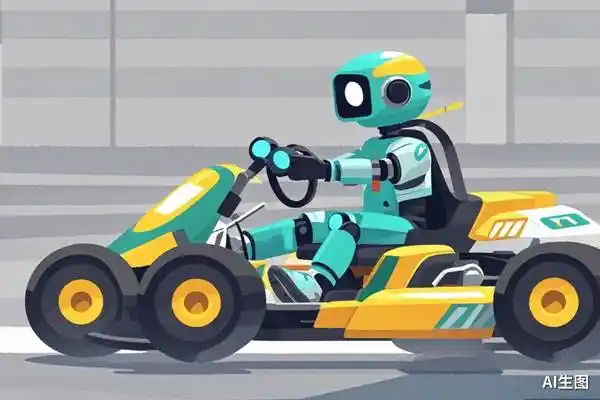
Cuối tuần, một video về robot điều khiển go-kart trên đường đua đã gây ấn tượng mạnh. Công ty đằng sau màn trình diễn này là Symbiotic SenseAction, một startup non trẻ với đội ngũ toàn nghiên cứu sinh tiến sĩ, đa số là Gen Z. Họ tập trung phát triển "bộ não" tích hợp từ đầu đến cuối (end-to-end) cho robot hình người hai chân - một lĩnh vực được coi là khó và tiên phong nhất trong trí tuệ thể hiện. Thay vì đi theo phương pháp phân tầng (hierarchical) phổ biến, nơi "não" và "tiểu não" robot hoạt động tách biệt, nhóm này đặt cược vào mô hình end-to-end thuần túy. Họ tin rằng đây là con đường hiệu quả và tối ưu cuối cùng, lấy cảm hứng từ sự phát triển của xe tự hành và mô hình lớn. Thách thức lớn nằm ở việc dạy robot hiểu và kiểm soát động lực học toàn thân phức tạp, chứ không chỉ đơn thuần là quỹ đạo chuyển động, đồng thời giải quyết vấn đề thiếu dữ liệu huấn luyên chất lượng. Với các kỹ thuật như DriftDistill và TrajBooster, họ hướng tới xây dựng một mô hình thống nhất có khả năng "xuất hiện" các kỹ năng vận động mới và hiểu được tương tác lực. Mục tiêu cuối cùng là tạo ra một kiến trúc mô hình tiên phong, không đi theo sau mà dẫn dắt xu hướng công nghệ toàn cầu, dù họ thừa nhận cả ngành công nghiệp vẫn chưa có lời giải cuối cùng và cần một lượng dữ liệu khổng lồ để đạt được ý nghĩa thương mại thực sự.

marsbit22 phút trước

Không theo đuôi thung lũng Silicon: Những bạn trẻ đang học tiến sĩ đặt cược vào bộ não tích hợp cho robot hình người hai chân

marsbit22 phút trước

Giao dịch

Giao ngay
活动图片