Bankless Founder: By 2026, Tokens Will Finally Be Treated as 'Equity'

marsbitXuất bản vào 2026-02-03Cập nhật gần nhất vào 2026-02-03

Tóm tắt

Bankless co-founder David Hoffman argues that most tokens are treated poorly compared to equity, leading to low market valuations. However, 2026 marks a shift with innovative token distribution models. MegaETH locks 53% of its MEGA tokens in a KPI-based program, where tokens unlock only if specific growth targets—like TVL, decentralization progress, and performance metrics—are met. This aligns dilution with actual ecosystem growth and distributes new tokens to long-term stakers, reducing sell pressure. Meanwhile, Cap protocol replaces traditional airdrops with a "stabledrop," distributing stablecoins (cUSD) instead of governance tokens to users. Those seeking CAP tokens must participate in a public sale, ensuring holders are committed investors. These models move away from indiscriminate token distribution toward targeted, conditional mechanisms that reward genuine participation and long-term alignment, potentially improving token value and holder quality.

Author: David Hoffman

Compiled by: Deep Tide TechFlow

Deep Tide Introduction: Are most tokens garbage? Bankless co-founder David Hoffman points out that historically, teams have treated tokens far less seriously than equity, and the market has responded to this through token prices.

But 2026 saw a turning point:

MegaETH locked 53% of its tokens in a KPI plan, which only unlocks upon achieving growth targets;

The Cap protocol replaced governance token airdrops with stablecoin airdrops, allowing only real investors to obtain CAP through token sales.

These innovative strategies are ending the era of "spray-and-pray" token distribution, shifting towards precise, conditional allocation mechanisms.

Full text as follows:

The crypto industry has a "good coins problem".

Most tokens are garbage.

Most tokens are not treated with the same legal and strategic seriousness as equity by their teams. Because teams have historically not given tokens the same respect as equity in traditional companies, the market has reflected this in token prices.

Today I want to share two sets of data that make me optimistic about the state of tokens in 2026 and beyond:

  1. MegaETH's KPI Plan
  2. Cap's Stablecoin Airdrop (Stabledrop)

Conditional Token Supply

MegaETH has locked 53% of the total MEGA token supply in a "KPI Plan". The logic is: if MegaETH does not achieve its KPIs (Key Performance Indicators), these tokens will not unlock.

Therefore, in a pessimistic scenario where the ecosystem does not grow, at least no additional tokens flood the market to dilute holders. MEGA tokens only enter the market when the MegaETH ecosystem actually achieves growth (as defined by the KPIs).

The KPIs for this plan are divided into 4 scoreboards:

  1. Ecosystem Growth (TVL, USDM supply)
  2. MegaETH Decentralization (L2Beat stage progress)
  3. MegaETH Performance (IBRL)
  4. Ethereum Decentralization

Thus, in theory, as MegaETH achieves its KPI targets, the value of MegaETH should grow correspondingly, mitigating the negative price impact of MEGA dilution on the market.
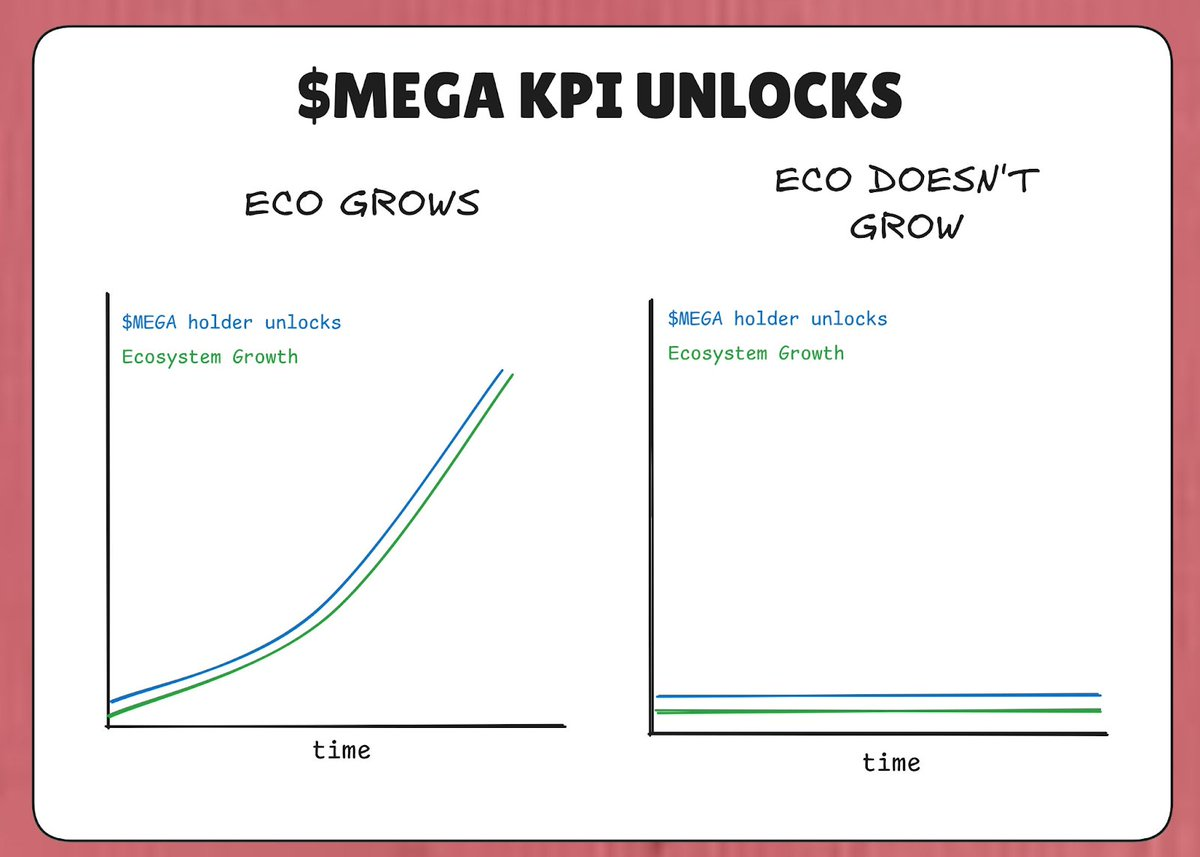
This strategy is very similar to Tesla's "pay for performance" compensation philosophy for Elon Musk. In 2018, Tesla granted Musk an equity compensation package that vested in tranches, only payable if Tesla simultaneously achieved increasing market capitalization targets and revenue targets. Elon Musk only gets paid if Tesla's revenue grows AND its market capitalization grows.

MegaETH is trying to transplant the same logic into its tokenomics. "More supply" is not a given—it's something the protocol must earn by scoring real points on meaningful scoreboards.

Unlike Musk's Tesla benchmarks, I don't see anything in Namik's KPI targets about MEGA market cap as a KPI target—perhaps for legal reasons. But as a public MEGA investor, this KPI is very interesting to me. 👀

Who Gets the Unlock Matters

Another interesting factor of this KPI plan is: who gets the MEGA when KPIs are met. According to Namik's tweet, the recipients of the unlocked MEGA are those who stake MEGA into the locking contract.

Those who lock more MEGA for longer periods receive a larger share of the 53% MEGA tokens entering the market.
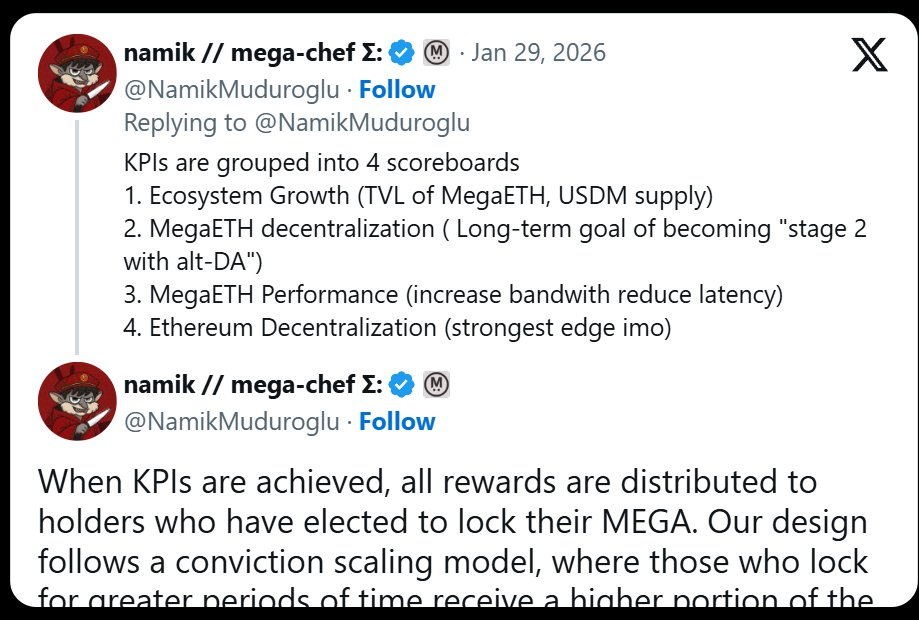
The logic behind this is simple: allocate MEGA dilution to those who have already proven themselves as MEGA holders and are interested in holding more MEGA—those least likely to become MEGA sellers.

Alignment and Trade-offs

It's worth emphasizing that this also introduces risks. We have seen historical cases where similar structures went seriously wrong. Look at this excerpt from Cobie's article: "(content)"
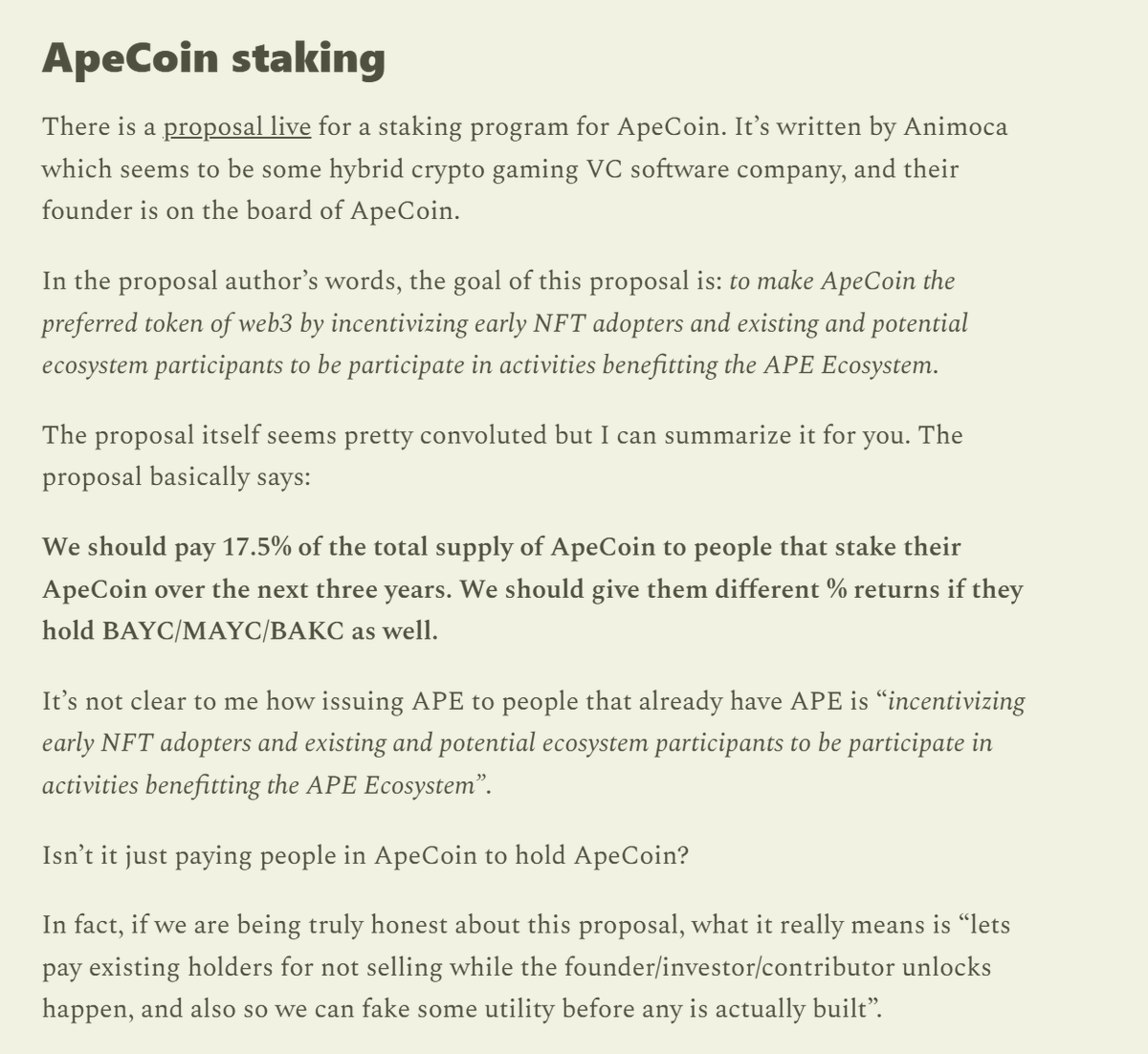
If you are a token pessimist, a crypto nihilist, or just bearish, this alignment problem is what you worry about.

Or, from the same article: "Staking mechanisms should be designed to support the goals of the ecosystem"
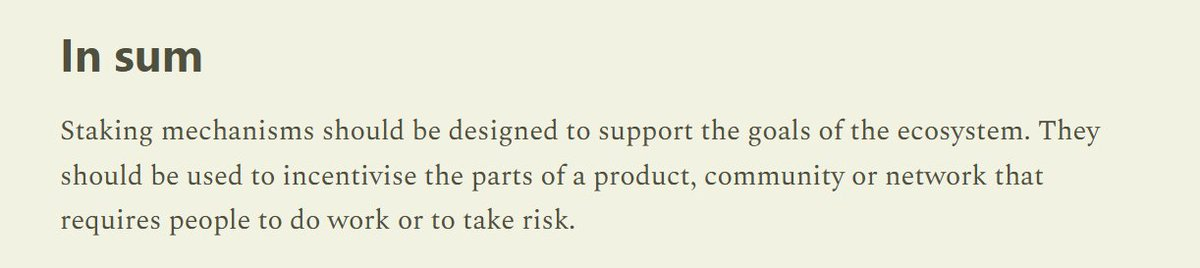
Locking token dilution behind KPIs that should actually reflect growth in the value of the MegaETH ecosystem is a much better mechanism than any vanilla staking mechanism we saw in the 2020-2022 liquidity mining era. In that era, tokens were being issued regardless of the team's fundamental progress or ecosystem growth.

Therefore, the net effect is that MEGA dilution is:

  • Conditionally constrained by corresponding MegaETH ecosystem growth
  • Diluted into the hands of those least likely to sell MEGA

This does not guarantee that MEGA value will rise as a result—the market will do what the market wants. But it is an effective and honest attempt to fix a core underlying problem that seems to plague the entire crypto token industrial complex.

Treating Tokens as Equity

Historically, teams have been "spraying and praying" their tokens across the ecosystem. Airdrops, mining rewards, grants, etc.—teams would not engage in these activities if they were distributing something truly valuable.

Because teams distributed tokens like worthless governance tokens, the market priced them as worthless governance tokens.

You can see the same philosophy in MegaETH's stance on CEX listings after Binance opened MEGA token futures on its platform (historically Binance's attempt to extort teams):
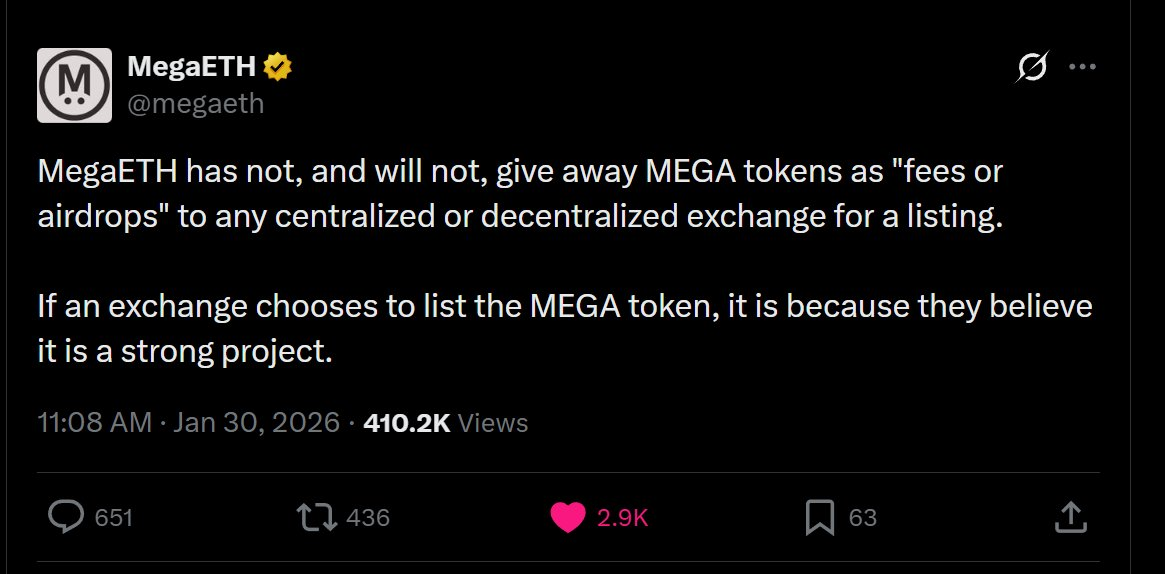
Hopefully, teams will start being more selective with their token distribution. If teams start treating their tokens as precious, perhaps the market will respond in kind.

Cap's Stablecoin Airdrop

The stablecoin protocol Cap introduced a "stablecoin airdrop" (stabledrop) instead of a traditional airdrop. Instead of airdropping the native governance token CAP, they distributed the native stablecoin cUSD to users who earned Cap points.

This approach rewards points farmers with real value, thus fulfilling the social contract. Users who deposited USDC into Cap's supply side accepted smart contract risk and opportunity cost, and the stablecoin airdrop compensated them accordingly.

For those who want CAP itself, Cap is conducting a token sale via a Uniswap CCA. Anyone seeking CAP tokens must become a real investor and commit real capital.

Filtering for Committed Holders

The combination of a stablecoin airdrop plus a token sale filters for committed holders. A traditional CAP airdrop would flow to speculative farmers likely to sell immediately. By requiring a capital investment through the token sale, Cap ensures CAP flows to participants willing to accept full downside risk for upside potential—a group more likely to hold long-term.

The theory is that this structure gives CAP a higher probability of success by creating a concentrated holder base aligned with the protocol's long-term vision, rather than a less precise airdrop mechanism that puts tokens into the hands of those focused solely on short-term profits.

Watch this video:

https://x.com/DeFiDave22/status/2013641379038081113

Token Design is Maturing

Protocols are getting smarter and more precise with their token distribution mechanisms. No more shotgun spray-and-pray token issuance—MegaETH and Cap are choosing to be highly selective about who gets their tokens.

"Optimizing for distribution" is no longer the thing—perhaps a toxic hangover from the Gensler era. Instead, these two teams are optimizing for concentration to provide a stronger foundational holder base.

I hope that as more apps launch in 2026, they can observe and learn from these strategies, and even improve upon them, so the "good coins problem" is no longer a problem, and we are left with only "good coins".

Câu hỏi Liên quan

QWhat is the 'good coins problem' mentioned in the article, and why does it exist?

AThe 'good coins problem' refers to the issue that most tokens are considered garbage because they haven't been treated with the same legal and strategic seriousness as equity by teams. Historically, teams did not respect tokens as much as equity in traditional companies, and the market reflected this through token prices.

QHow does MegaETH's KPI plan work to conditionally unlock its tokens?

AMegaETH locks 53% of its MEGA tokens in a 'KPI plan,' where tokens only unlock if specific Key Performance Indicators are met. These KPIs include ecosystem growth (TVL, USDM supply), MegaETH decentralization (L2Beat stage progress), MegaETH performance (IBRL), and Ethereum decentralization. This ensures tokens enter the market only when real growth occurs, reducing dilution for holders.

QWhat is Cap Protocol's 'stabledrop' and how does it differ from traditional airdrops?

ACap Protocol's 'stabledrop' distributes its native stablecoin cUSD to users who earned Cap points, instead of airdropping the governance token CAP. This rewards users with real value for their participation. Those who want CAP tokens must become real investors by purchasing them through a Uniswap CCA token sale, ensuring committed holders.

QWhy does the article suggest that token design is evolving towards more selective distribution mechanisms?

AToken design is evolving because teams like MegaETH and Cap are moving away from 'spray-and-pray' distribution methods (e.g., indiscriminate airdrops) to highly selective mechanisms. These strategies, such as KPI-based unlocks and stabledrops, aim to distribute tokens only to committed holders, aligning incentives and creating a stronger base for long-term success.

QHow does MegaETH's approach to token distribution resemble Elon Musk's Tesla compensation plan?

AMegaETH's KPI plan is similar to Elon Musk's Tesla compensation philosophy, where Musk's equity grants vested only when Tesla achieved increasing market cap and revenue targets. Similarly, MegaETH's tokens unlock only when the protocol meets specific growth and performance KPIs, tying token issuance to tangible ecosystem progress.

Nội dung Liên quan

Kraken Lên Kế Hoạch Cung Cấp Hợp Đồng Tương Lai Vĩnh Viễn Được CFTC Quy Định Cho Nhà Giao Dịch Chuyên Nghiệp Hoa Kỳ

Kraken đang chuẩn bị ra mắt hợp đồng tương lai vĩnh viễn được CFTC quản lý cho các nhà giao dịch chuyên nghiệp đủ điều kiện tại Hoa Kỳ. Sản phẩm sẽ được cung cấp thông qua sàn phái sinh Bitnomial mà Kraken đã mua lại và dự kiến tích hợp vào nền tảng Kraken Pro. Hợp đồng tương lai vĩnh viễn là sản phẩm phái sinh crypto lớn toàn cầu, cho phép giao dịch không ngày đáo hạn. Tại Mỹ, các hạn chế quy định trước đây khiến nhà giao dịch có ít lựa chọn trong nước. Động thái của Kraken nhằm thu hẹp khoảng cách này, cung cấp một con đường được quản lý để tiếp cận sản phẩm chi phối khối lượng giao dịch crypto ở nước ngoài. Việc ra mắt sẽ tập trung vào các nhà giao dịch chuyên nghiệp đủ điều kiện. Các yếu tố cần theo dõi bao gồm điều khoản về tính đủ điều kiện, thiết kế hợp đồng, tài sản được hỗ trợ và quan trọng nhất là thanh khoản khi ra mắt. Thành công của sản phẩm có thể mở đường cho nhiều sản phẩm tương lai vĩnh viễn được quản lý khác tại thị trường Mỹ, đưa sản phẩm phái sinh chủ chốt này tiến gần hơn đến cơ sở hạ tầng thị trường nội địa được quản lý.

bitcoinist3 giờ trước

Kraken Lên Kế Hoạch Cung Cấp Hợp Đồng Tương Lai Vĩnh Viễn Được CFTC Quy Định Cho Nhà Giao Dịch Chuyên Nghiệp Hoa Kỳ

bitcoinist3 giờ trước

Sự Ra Mắt Của Warsh: Chủ Tịch Fed Hiểu Crypto Nhất Lịch Sử Sẽ Mang Đến Bất Ngờ Hay Cú Sốc Cho Thị Trường?

Tân Chủ tịch Cục Dự trữ Liên bang Kevin Warsh, người được mệnh danh là chủ tịch FED "hiểu rõ về Crypto nhất trong lịch sử", sắp có buổi họp báo chính sách đầu tiên trong bối cảnh thử thách ba mặt: lạm phát quay trở lại, áp lực giảm lãi suất từ Tổng thống Trump và kỳ vọng thị trường về việc tăng lãi suất. Khác với người tiền nhiệm, Warsh có cái nhìn sâu sắc về tài sản số, từng coi Bitcoin như "cảnh sát tốt cho chính sách" và nhấn mạnh giá trị sản xuất của ngành công nghiệp blockchain. Tuy nhiên, ông cũng nổi tiếng là người theo chủ nghĩa diều hâu về lạm phát. Sự kết hợp giữa "lãi suất chặt chẽ" và "quy định thân thiện" từ ông có thể trở thành yếu tố cốt lõi định giá tài sản mã hóa. Bài viết phân tích tác động từ ba khía cạnh: 1. **Chuyển đổi khuôn mẫu kỳ vọng quy định:** Từ phòng thủ sang tích hợp và đổi mới, có thể thúc đẩy các khung pháp lý rõ ràng hơn, hỗ trợ ổn định do khu vực tư nhân phát hành. 2. **Định giá lại lộ trình lãi suất và phần bù rủi ro:** Một chủ tịch hiểu biết và giao tiếp rõ ràng có thể giảm bớt phí bảo hiểm bất định, có lợi về cấu trúc cho thị trường. 3. **Tái phân bổ dòng vốn toàn cầu:** Kinh nghiệm đầu tư cá nhân của Warsh truyền tải tín hiệu về sự chấp nhận chính thống, có thể thúc đẩy các quỹ thể chế truyền thống phân bổ tài sản số. Hai kịch bản chính được đưa ra: * **Ngạc nhiên thú vị:** Nếu Warsh thể hiện thái độ ôn hòa và công nhận giá trị của tài sản số, thị trường có thể được tiếp thêm sức mạnh. * **Cú sốc:** Nếu ông phát tín hiệu tăng lãi suất mạnh mẽ, tài sản rủi ro, bao gồm crypto, có thể chịu áp lực bán. Mặc dù Warsh đã bán các khoản nắm giữ liên quan đến crypto để tuân thủ quy tắc đạo đức, nhưng sự hiểu biết thực sự của ông về công nghệ blockchain được kỳ vọng sẽ đặt nền tảng cho việc chính thống hóa tài sản số về lâu dài, vượt ra ngoài các phản ứng thị trường ngắn hạn.

marsbit3 giờ trước

Sự Ra Mắt Của Warsh: Chủ Tịch Fed Hiểu Crypto Nhất Lịch Sử Sẽ Mang Đến Bất Ngờ Hay Cú Sốc Cho Thị Trường?

marsbit3 giờ trước

XRP Ledger Ra Mắt Rebrand XRPLd Cùng Với Bản Nâng Cấp Phiên Bản 3.2.0

Phiên bản 3.2.0 của XRP Ledger đã chính thức ra mắt, đánh dấu một bước nâng cấp quan trọng cho cơ sở hạ tầng blockchain cốt lõi. Lần này, các nhà phát triển đã đổi tên phần mềm vận hành mạng từ "rippled" thành "xrpld" để phù hợp hơn với toàn bộ hệ sinh thái của dự án. Bản cập nhật tập trung chủ yếu vào các cải tiến back-end và hiệu suất thay vì tính năng người dùng mới. Các tối ưu hóa bộ nhớ được giới thiệu có khả năng tiết kiệm tới 40% lượng bộ nhớ máy chủ, đồng thời chuẩn bị kiến trúc phần mềm cho việc mở rộng quy mô trong tương lai. Về mặt bảo mật, bản sửa đổi `fixCleanup3_2_0` mang lại nhiều cải thiện cho các mô-đun như kho lưu ký tài sản đơn, giao thức cho vay, sàn giao dịch phi tập trung và mã thông báo đa năng. Các kiểm tra bất biến mới được thêm vào để đảm bảo tính toàn vẹn của sổ cái khi tài khoản bị xóa. Một khả năng mới cho nhà phát triển là ứng dụng có thể truy xuất thông tin định nghĩa giao thức và máy chủ XRP Ledger mà không cần kết nối trực tiếp, hỗ trợ đáng kể việc phát triển ví, công cụ khám phá chuỗi khối và API. Các thay đổi về khả năng mở rộng và ổn định bao gồm kích thước khối có thể cấu hình, hỗ trợ lưu trữ cơ sở dữ liệu hiệu quả qua nuDB, và việc hỗ trợ máy chủ gRPC cho TLS/mutual TLS trở thành tùy chọn. Cổng kết nối ngang hàng mặc định cũng được đổi từ 51235 sang 2459. Các tính năng kiểm tra bất biến giao dịch tạm thời bị vô hiệu hóa trong phiên bản 3.2.0 do ảnh hưởng đến hiệu suất, nhưng không gây rủi ro bảo mật.

TheNewsCrypto4 giờ trước

XRP Ledger Ra Mắt Rebrand XRPLd Cùng Với Bản Nâng Cấp Phiên Bản 3.2.0

TheNewsCrypto4 giờ trước

AGI không phải là điểm kết thúc, nghiên cứu mới của DeepMind: Hướng tới ASI, tiến bộ AI thực sự mới chỉ bắt đầu

DeepMind mới đây công bố nghiên cứu cho rằng AGI (Trí tuệ nhân tạo phổ quát) không phải là điểm cuối. AI sẽ tiếp tục phát triển vượt qua khả năng của các nhóm chuyên gia con người hàng đầu, hướng tới ASI (Trí tuệ siêu nhân tạo). Báo cáo phân biệt ba khái niệm: AGI (năng lực nhận thức tương đương mức trung bình của con người), ASI (vượt trội con người trong hầu hết lĩnh vực quan tâm), và UAI (giới hạn lý thuyết tối thượng). Nghiên cứu đề xuất bốn con đường tiềm năng để chuyển từ AGI sang ASI: 1. Mở rộng quy mô tính toán, mô hình và dữ liệu. 2. Tiến hóa thuật toán, có thể thay đổi mô hình mới. 3. Tự cải thiện đệ quy, tạo phản hồi tích cực. 4. Điều phối đa tác tử và trí tuệ tập thể. Đồng thời, báo cáo chỉ ra sáu điểm nghẽn chính: giới hạn dữ liệu chất lượng cao, áp lực tài nguyên và kinh tế, hạn chế của mô hình mạng nơ-ron hiện tại, nghiên cứu ngày càng khó khăn, rào cản trừu tượng, cùng các vấn đề quản lý và phản ứng xã hội. Khi AI vượt con người, các phương pháp đánh giá truyền thống sẽ mất ý nghĩa. Cần xây dựng hệ thống đánh giá mới cho thời kỳ hậu AGI. ASI không phải là hệ thống toàn năng, vẫn chịu ràng buộc bởi các quy luật vật lý, độ phức tạp tính toán, dữ liệu, tài nguyên và tốc độ phản hồi thực tế. Tương lai phát triển của AI vẫn chứa nhiều bất định, đòi hỏi một nỗ lực liên ngành quy mô lớn để theo dõi và ứng phó.

marsbit5 giờ trước

AGI không phải là điểm kết thúc, nghiên cứu mới của DeepMind: Hướng tới ASI, tiến bộ AI thực sự mới chỉ bắt đầu

marsbit5 giờ trước

Kraken Ra Mắt Hợp Đồng Perpetual Trước IPO Cho OpenAI Và Anthropic Với Đòn Bẩy Lên Đến 5x

Kraken đã ra mắt hợp đồng tương lai vĩnh viễn (perps) tiền IPO cho hai công ty trí tuệ nhân tạo hàng đầu là OpenAI và Anthropic. Các hợp đồng này cho phép các nhà giao dịch đủ điều kiện mở vị thế mua (long) hoặc bán (short) đối với các công ty tư nhân được theo dõi sát sao này trước khi họ lên sàn chứng khoán, với đòn bẩy lên tới 5x. Sản phẩm này đánh dấu một bước tiến trong việc mở rộng cơ sở hạ tầng phái sinh tiền mã hóa sang các tài sản ngoài chuỗi, cung cấp cho các nhà giao dịch một cách tiếp cận thay thế để có thể tiếp xúc với các công ty tư nhân vốn thường khó tiếp cận. Tuy nhiên, hợp đồng tiền IPO có những rủi ro đặc thù. Khác với các hợp đồng vĩnh viễn cho tiền mã hóa có giá cả minh bạch, định giá công ty tư nhân phụ thuộc vào nhiều yếu tố như các vòng gọi vốn, giao dịch thứ cấp và kỳ vọng về thời điểm IPO. Điều này khiến việc định giá và quản lý rủi ro trở nên phức tạp hơn. Việc sử dụng đòn bẩy cao có thể khuếch đại lợi nhuận nhưng cũng làm gia tăng đáng kể rủi ro thua lỗ và thanh lý. Do đó, các nhà giao dịch cần hiểu rõ bản chất của sản phẩm mới và các rủi ro độc đáo của thị trường tư nhân trước khi tham gia.

bitcoinist5 giờ trước

Kraken Ra Mắt Hợp Đồng Perpetual Trước IPO Cho OpenAI Và Anthropic Với Đòn Bẩy Lên Đến 5x

bitcoinist5 giờ trước

Giao dịch

Giao ngay
Hợp đồng Tương lai

Bài viết Nổi bật

Làm thế nào để Mua AR

Chào mừng bạn đến với HTX.com! Chúng tôi đã làm cho mua Arweave (AR) trở nên đơn giản và thuận tiện. Làm theo hướng dẫn từng bước của chúng tôi để bắt đầu hành trình tiền kỹ thuật số của bạn.Bước 1: Tạo Tài khoản HTX của BạnSử dụng email hoặc số điện thoại của bạn để đăng ký tài khoản miễn phí trên HTX. Trải nghiệm hành trình đăng ký không rắc rối và mở khóa tất cả tính năng. Nhận Tài khoản của tôiBước 2: Truy cập Mua Crypto và Chọn Phương thức Thanh toán của BạnThẻ Tín dụng/Ghi nợ: Sử dụng Visa hoặc Mastercard của bạn để mua Arweave (AR) ngay lập tức.Số dư: Sử dụng tiền từ số dư tài khoản HTX của bạn để giao dịch liền mạch.Bên thứ ba: Chúng tôi đã thêm những phương thức thanh toán phổ biến như Google Pay và Apple Pay để nâng cao sự tiện lợi.P2P: Giao dịch trực tiếp với người dùng khác trên HTX.Thị trường mua bán phi tập trung (OTC): Chúng tôi cung cấp những dịch vụ được thiết kế riêng và tỷ giá hối đoái cạnh tranh cho nhà giao dịch.Bước 3: Lưu trữ Arweave (AR) của BạnSau khi mua Arweave (AR), lưu trữ trong tài khoản HTX của bạn. Ngoài ra, bạn có thể gửi đi nơi khác qua chuyển khoản blockchain hoặc sử dụng để giao dịch những tiền kỹ thuật số khác.Bước 4: Giao dịch Arweave (AR)Giao dịch Arweave (AR) dễ dàng trên thị trường giao ngay của HTX. Chỉ cần truy cập vào tài khoản của bạn, chọn cặp giao dịch, thực hiện giao dịch và theo dõi trong thời gian thực. Chúng tôi cung cấp trải nghiệm thân thiện với người dùng cho cả người mới bắt đầu và người giao dịch dày dạn kinh nghiệm.

Tổng lượt xem 608Xuất bản vào 2024.12.11Cập nhật vào 2026.06.02

Làm thế nào để Mua AR

Thảo luận

Chào mừng đến với Cộng đồng HTX. Tại đây, bạn có thể được thông báo về những phát triển nền tảng mới nhất và có quyền truy cập vào thông tin chuyên sâu về thị trường. Ý kiến ​​của người dùng về giá của AR (AR) được trình bày dưới đây.

活动图片