The reference exchange rate is for reference only and is not locked in. The final rate will be determined by the actual execution price.
Real-Time JOE Stats
The live price of TraderJoe (JOE) is $0.02 USD and its current market capitalization is $-- USD.
Get real-time JOE/USD updates on HTX. Stay informed with the latest data and market trends to make smart trading decisions. HTX, your trusted source for accurate cryptocurrency price information.
TraderJoe Key Stats
24h Volume (USD)
$--
Price Change Today
--
Circulating Supply (JOE)
457.18M
Sign up and trade to win rewards worth up to 1,500 USDT.Join Now
JOE Price Performance
Track TraderJoe price movements with chart views spanning 1 day, 30 days, 60 days, 90 days, 1 year, and the period since it was listed on HTX.View more data for the TraderJoe prices
Time
Change
Change%
Highest Price
Lowest Price
No data
JOE Market Information
Get the latest TraderJoe price details on HTX: 24-hour high and low, all-time high (ATH), and daily price change percentage.
24h Low
$0
24h High
$0
All-Time High
$0
Market Cap
$0.00
24h Volume (USD)
$--
Circulating Supply
--
What is JOE?
JOE (JOE) is the native token of Trader Joe, a decentralized exchange (DEX) on the Avalanche (AVAX) blockchain that offers DeFi services, including swapping, staking and yield farming. The exchange has been growing rapidly, attracting over $4 billion in total value locked (TVL) since it was launched in June 2021. Trader Joe claims to take a community-first approach, and to prioritize innovation, speed and safety. It aims to provide a one-stop-shop DeFi experience and to integrate new products without compromising on security. To achieve this, Trader Joe has outlined an ambitious roadmap that focuses on token-holder growth. It plans to have improved staking, non-fungible-token (NFT) exchange listings, the collateralization of the JOE token, and leveraged trading –– all during 2021.
It's super easy to buy JOE on HTX. Simply click here to view a complete guide to buying TraderJoe with ease.
Real-Time JOE Markets
View real-time TraderJoe prices on HTX's spot markets. Switch between spot and futures markets to instantly compare live prices and 24-hour price changes.
Based on the historical performance of TraderJoe, our prediction tool estimates that the price of TraderJoe (JOE) could reach -- by --.
Predicted JOE Price in --
Our most recent forecast indicates the price of TraderJoe (JOE) will increase to -- by --, with a price change of --% and a cumulative ROI of approximately --%.
Buy your first JOE on HTXSign Up
JOE FAQs
What is the TraderJoe (JOE) price today?
The current price of TraderJoe (JOE) is $0.02 USD.
What is the TraderJoe (JOE) market cap?
The current market capitalization of TraderJoe (JOE) is $0.00 USD, calculated by multiplying its circulating supply by its current price.
What is the TraderJoe (JOE) circulating supply?
The current circulating supply of TraderJoe (JOE) is -- JOE.
What is the TraderJoe (JOE) all-time high?
As of 2026-08-20, the all-time high of TraderJoe (JOE) is $0 USD.
What is the TraderJoe (JOE) 24h trading volume?
The 24-hour trading volume of TraderJoe (JOE) is -- USD on HTX.
Can I buy TraderJoe (JOE) on HTX?
Yes, HTX offers industry-leading trading fees and deep liquidity, ensuring a smooth and secure TraderJoe (JOE) purchase experience.
After nine years as a Web3 VC, the author observes a severe downturn in Asia's crypto venture capital scene, with many funds disappearing or pivoting away. The market has cooled dramatically since the 2021-2024 frenzy, leading to fewer deals and active investors. IOSG Ventures, a firm that has endured three market cycles, has adapted its strategy: shifting from 80-90% early-stage investments to a 50% early-stage, 30% post-TGE, and 20% OTC portfolio to find better value and liquidity.
The current bear market is described as "hell mode" for Asian funds due to scarce LP capital, forcing extreme precision in targeting only top projects. The author argues the core industry problem has been the disconnect between tokens and real value, where tokens served as fundraising tools without granting holders rights to protocol revenue. A positive shift is emerging where projects like Uniswap and Morpho are programmatically binding token value to protocol profits.
Investment focus has moved towards fundamentals: real-yield financial infrastructure (stablecoins, lending) and crypto-native AI infrastructure, while avoiding narrative-driven projects. The conclusion is that true, durable companies are born in pessimistic times when focus shifts to real user needs and sustainable business models. The industry's future will be shaped by those who remain after the泡沫 dissipates.
Alibaba Executive Chairman Joe Tsai recently outlined the company's comprehensive AI strategy in a public discussion. He believes AI represents a massive opportunity, estimating its potential economic impact at up to $50 trillion, stemming from the automation of human intelligence and productivity.
Tsai detailed Alibaba's four-layer investment approach across the AI stack: starting from the chip level, moving to cloud infrastructure (Alibaba Cloud), then the model layer with its open-source Qwen model, and finally applications within its vast digital ecosystem (e-commerce, logistics, etc.). The company avoids the energy layer due to China's efficient infrastructure. This broad strategy is designed to ensure Alibaba captures value regardless of where it ultimately concentrates in the AI value chain.
He dismissed concerns about an AI investment bubble, pointing to the enormous $50 trillion opportunity. While acknowledging U.S. cloud giants' higher capital expenditure, he argued Chinese firms, including Alibaba (funded by its cash-generative e-commerce core), need to invest more in AI infrastructure.
A key theme was technological sovereignty. Tsai positioned open-source models like Qwen as a solution for companies, especially in Europe, seeking independence from proprietary U.S. models and greater data privacy control. He contrasted this with the trend of U.S. giants keeping their models closed-source.
Tsai highlighted Alibaba's collaborations with European manufacturers like Bosch and Siemens, using AI for design and quality control. He concluded with an optimistic vision of AI agents enhancing productivity, ultimately freeing up human time for leisure, family, and experiences like live entertainment.
**"Invest Only When Certain": A Nine-Year Retrospective from a VC Across Four Cycles**
IOSG founder Jocy shares hard-earned lessons from nine years and over a hundred investments in Web3. The core challenge isn't identifying successful founders, but understanding why talented founders with solid ideas still fail. Through building a "failed founder database," IOSG identified six recurring failure patterns.
**Founder Trait Red Flags:**
1. **Emotionally Unstable:** Founders who react defensively to criticism or publicly lash out under pressure (e.g., 80% drawdowns) often fail. Resilience is key.
2. **Lacking Hunger / Having a Fallback:** Founders with significant safety nets (family wealth, cushy fallback jobs) may lack the "do-or-die" commitment needed to survive crypto's brutal cycles.
3. **Unchecked Ego:** Includes "polished execution machines" who excel in known frameworks but struggle when paradigms shift, and "professor-types" who are technically brilliant but resistant to commercial feedback or coaching.
**Project Structure Red Flags:**
4. **Token-First, Not Product-First:** Treating the token solely as a fundraising tool with no real utility or connection to product value is a major warning sign. The project should have value even if the token goes to zero.
5. **No Day-1 Exit Thesis:** Founders must have a clear, staged capital strategy from the start, understanding what each funding round needs to prove to unlock the next. "Exit before entry" is crucial.
6. **No Full-Cycle Experience:** Founders who haven't lived through a complete crypto bull/bear cycle (e.g., 2018, 2022) often underestimate their vulnerability. IOSG limits initial checks for such teams to $250k, sizing for risk.
**The Positive Flipside: Desirable Founder Traits**
The ideal candidate exhibits: obsessive problem-depth, being a second-time founder with a non-consensus vision, strong communication skills with *controlled* ego, relentless perseverance, and a global perspective with agency and taste (increasingly vital in the AI era).
**Three Survival Tips for Founders:**
1. **Cash Flow Over Narrative:** Real revenue is what sustains projects, not vanity metrics.
2. **Tokens Are a Liability:** Avoid issuing a token unless absolutely necessary. The hidden costs (market making, liquidity, compliance) are immense, often a multi-million-dollar burden.
3. **Respect Liquidity:** Sell during peaks to build treasury, buy back to support the protocol during troughs. Be realistic about valuations and your ability to deliver for the next round.
The final principle is simple yet paramount: **"If it's a borderline 'yes' or 'no,' don't invest."** In an industry that reinvents itself every few years, the discipline to consistently say "no" is the ultimate secret to longevity.
"Web3 Bear Market Survival Guide: Ten Books to Help You Navigate the Cycle"
This article presents a curated book list aimed at helping Web3 enthusiasts and professionals endure and grow during crypto market downturns. It argues that bear markets are not just periods of waiting but crucial times for deepening one's foundational understanding beyond technical whitepapers and price charts. The ten recommended books offer perspectives on technology, economics, philosophy, and strategy to build resilience and long-term vision.
The list includes:
1. **"The Inevitable" by Kevin Kelly:** For using a long-term technological lens to combat uncertainty about the future, including the role of crypto and AI.
2. **"Human Action" by Ludwig von Mises:** To upgrade one's economic and philosophical framework, understanding action, speculation, and calculation in a bear market context.
3. **"The Nature of Technology" by W. Brian Arthur:** For viewing blockchain and crypto as combinatorial evolutions of existing technologies, understanding their modular and economic development.
4. **"The Distant Savior" (Chinese novel):** Explores the cultural attributes of self-reliance ("strong culture") versus dependency ("weak culture"), crucial for surviving industry cycles.
5. **"The Sovereign Individual" by James Dale Davidson & Lord William Rees-Mogg:** A prophetic 1997 work on how technology empowers individuals and challenges nation-states, foreshadowing Bitcoin's emergence.
6. **"Japanization: What the World Can Learn from Japan's Lost Decades" (Adapted title):** Uses Japan's economic history as a case study to identify structural opportunities that persist even during broader recessions.
7. **"Denationalisation of Money" by F.A. Hayek:** The ideological blueprint for Bitcoin, arguing for competitive currency issuance beyond state monopoly.
8. **"Duan Yongping Investment Q&A" (Chinese compilation):** Emphasizes the simple discipline of "doing the right things and doing things right," focusing on fundamentals and maintaining a "stop doing list."
9. **"The Network State: How To Start a New Country" by Balaji Srinivasan:** A visionary text from a crypto insider outlining bold predictions and concrete ideas for a blockchain-based future across media, governance, and identity.
10. **"Selected Works of Mao Zedong" (Vol. 1):** Analyzed as a strategic playbook for a weak force challenging a powerful establishment, offering lessons on strategy, alliance-building, and perseverance for the crypto movement.
The conclusion states that bear markets filter out those with weak conviction, not weak skills. Survival depends on cognitive depth and mental fortitude, which these books aim to provide.
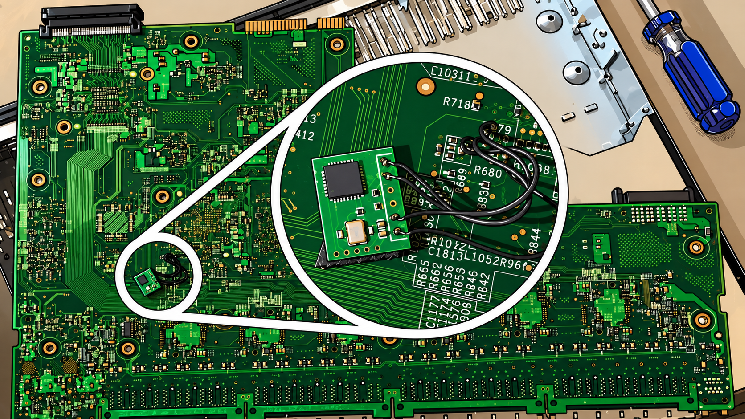
In a presentation at Hardwear.io 2026, hardware security expert Joe Grand detailed a sophisticated spy chip discovered inside counterfeit Ledger Nano X hardware wallets. Initially reported in 2021, these tampered devices reached victims through data leaked from Ledger in 2020 and subsequent phishing campaigns.
The implanted board connects to the internal SPI bus, passively intercepting data between the Secure Element and the OLED display. Using pattern recognition, it "reads" the seed phrase words displayed during wallet setup or recovery, stores them in its flash memory, and then exfiltrates the data via a built-in 4G modem and eSIM, independent of the victim's computer. To fit the extra hardware, the attackers reduced the battery size and replaced a thermal sensor with a fixed resistor to fake a 100% charge reading.
Grand noted this is not an isolated incident, with similar supply-chain attacks previously targeting Trezor devices where compromised firmware generated predictable seed phrases. The researcher plans to intercept and decrypt the chip's cellular traffic to learn more about the attackers.
Ledger advises users to purchase devices directly from the manufacturer or authorized resellers, not third-party marketplaces, and to compare devices against official photos. The company is also considering enhanced physical security for future products. The article questions whether Ledger Live's Secure Element authentication would detect such a passive hardware implant and highlights that the core risk lies in the physical supply chain, not just software.
cryptonews.ru11天前
Threads
Welcome to the HTX Community. Here, you can stay informed about the latest platform developments and gain access to professional market insights. Users' opinions on the price of TraderJoe (JOE) are presented below.
Related Questions
Welcome to the Crypto FAQ. Users' questions and answers on TraderJoe (JOE) are presented below.