Point your camera at QR code

to get HTX App

More options
Language
Currency
Log out
Language
Currency
btc

Bitcoin (BTC) Plunge

BTC Plunge History

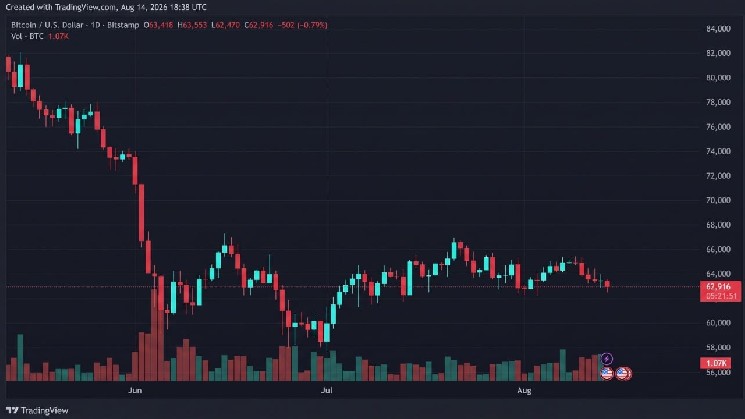
Over the past year, BTC has recorded a 24h drop of 5% a total of 9 times, 10% a total of 0 times, and 20% a total of 0 times.

Live BTC Chart (BTC/USD)

Last Updated:

  • 1H
  • 24H
  • 1W
  • 1M
  • 1Y
  • All
No data

BTC 24h Plunge History (>5%)

Track BTC price movements and major plunge events on HTX, with the latest 10 records.View more data for the BTC prices

DateCryptoOccurrence #Price24h Change
2026/06/17Bitcoin (BTC)9$62,402.6-5.19%
2026/06/04Bitcoin (BTC)8$60,489.95-5.25%
2026/06/01Bitcoin (BTC)7$67,377.34-5.45%
2026/02/04Bitcoin (BTC)6$67,495.23-8.97%
2026/02/03Bitcoin (BTC)5$74,139-5.12%
2026/01/28Bitcoin (BTC)4$84,961.54-5.04%
2025/11/30Bitcoin (BTC)3$84,685.53-7.38%
2025/11/20Bitcoin (BTC)2$82,931.89-7.71%
2025/10/10Bitcoin (BTC)1$111,822-6.05%

Articles

Rate Hikes to Save STRC, Selling Bitcoin to Preserve Credit: Strategy Picks Its Two Most Expensive Paths

Over the past six weeks, Strategy has faced a significant crisis of confidence, with its core securities MSTR and STRC experiencing sharp price declines. The situation escalated as the company utilized dollar reserves intended for dividends and interest payments to repurchase debt, and then sold a small amount of Bitcoin for the first time since 2022—an action that contradicted its "never sell" narrative and signaled potential liquidity strain. In response, Strategy introduced a Digital Credit capital framework. This formalized a series of measures to manage the pressure down its capital structure: ordinary shareholders have already borne costs through equity dilution from an $11.5 billion ATM offering; new rules enforce a hard dollar reserve covering at least 12 months of expected dividend and interest payments; the STRC dividend rate was increased from 11.5% to 12%; and, most notably, Bitcoin was officially integrated into the capital toolkit, with board authorization to sell up to $1.25 billion worth if needed to support obligations and repurchase programs. The market reacted with a mix of relief and skepticism. While the announcement triggered a sharp single-day rally in both MSTR and STRC, the preferred shares still trade at a significant discount. Supporters view the framework as pragmatic crisis management that provides a price floor and clearer rules. Critics argue that institutionalizing Bitcoin sales undermines the core investment thesis and, with Bitcoin's price below the company's average cost basis, amounts to selling assets at a loss to maintain its financial structure. The broader context shows institutional Bitcoin buying drying up, highlighting that Strategy's challenges and new framework are now a key indicator for overall market risk sentiment. Ultimately, the framework buys time, but STRC's return to par value depends on market belief in the company's ability to cover dividends without further dilution or substantial Bitcoin sales—a task that would be easier if Bitcoin's price recovers.

Rate Hikes to Save STRC, Selling Bitcoin to Preserve Credit: Strategy Picks Its Two Most Expensive Paths - 链捕手

In the Age of AI, What's Left for Bitcoin?

Author: Sevclub, Seven Research Amid Bitcoin's recent drop below $60k, the author reflects on a growing sense that AI and Bitcoin are two sides of the same coin. Today, encountering any content triggers a new default question: "Was this made by AI?" The cost of generating convincing text, images, and video is now negligible. While the internet lowered information *distribution* costs, AI is crashing information *production* costs to near zero. The consequence is a flood of content where truth and falsehood are increasingly indistinguishable. In this environment, what becomes truly valuable is not more information, but the ability to verify what is real—"verifiability." This reframes the common criticism that Bitcoin "wastes electricity." AI consumes power to produce "capability" (e.g., more powerful models). Bitcoin consumes power to produce something else: "verifiability." Bitcoin's core purpose isn't about belief or trust in any institution, developer, or even its creator. It's about enabling independent verification. Every bitcoin's origin, every transaction, and the integrity of the entire ledger are secured by mathematics, cryptography, and a global network of nodes. AI can fabricate convincing media, but it cannot falsify a transaction on the Bitcoin network. The expended energy makes篡改历史 (tampering with history) prohibitively expensive, purchasing a globally verifiable ledger. The author draws a historical parallel to the Renaissance. The printing press drastically reduced the cost of copying knowledge, while double-entry bookkeeping reduced the cost of trust in commerce—one enabled creation, the other verification. Today, AI is the new printing press, driving content production costs toward zero. The question becomes: what is this era's "double-entry bookkeeping"? Blockchain appears to be the leading candidate. It doesn't verify which news is true or which image is real, but it provides a foundational layer for independently verifying asset ownership and historical records in the digital realm without centralized authorities. Therefore, AI and blockchain are not in competition. AI lowers the cost of *generation*. Blockchain (and Bitcoin as a prime example) lowers the cost of *verification*. One creates, the other proves. Whether Bitcoin ultimately succeeds remains uncertain, facing potential challenges from quantum computing, regulation, and technical evolution. However, the author now sees it less as a "machine for making bitcoin" and more as a "machine for making verifiability." In an age where AI can generate anything, true scarcity may no longer be "more content," but "more independently verifiable facts." Whether the market will price this accordingly is a separate question.

In the Age of AI, What's Left for Bitcoin? - 链捕手

In the AI Era, What's Left for Bitcoin?

As Bitcoin falls below $60,000, the author reflects on the relationship between AI and Bitcoin, seeing them as two sides of the same coin. In the AI era, the cost of generating content has plummeted, making fake text, images, and videos increasingly easy and cheap to produce. This has led to a fundamental shift: while AI dramatically lowers the cost of information production, it also undermines trust and authenticity online. What becomes truly valuable is not more content, but the ability to verify what is real—"verifiability." This perspective offers a new lens for Bitcoin. Its massive energy consumption, often criticized as wasteful, is reinterpreted. While AI burns energy to enhance "capability" and efficiency, Bitcoin burns energy to produce "verifiability." Its purpose is not to be trusted but to enable a system where no trust in intermediaries—banks, platforms, or developers—is needed. Every transaction and the entire ledger's history is secured by cryptography and a decentralized network of nodes, making it independently verifiable. AI cannot forge a transaction on the Bitcoin network because the system is designed for proof, not generation. The author draws a historical parallel to the Renaissance: the printing press drastically reduced the cost of copying knowledge, while double-entry bookkeeping reduced the cost of trust in commerce. Today, AI is the new printing press, reducing content creation costs to near zero. Blockchain, and Bitcoin as its pioneer, may be the modern equivalent of double-entry bookkeeping—a foundational technology for verifying digital asset ownership and historical records without centralized authorities. Thus, AI and blockchain are not competitors. AI lowers the cost of creation; blockchain lowers the cost of verification. In an age where AI can generate anything, true scarcity may lie not in more content, but in independently verifiable facts. Whether the market will reprice Bitcoin accordingly remains uncertain, but its core value proposition as a "machine for producing verifiability" becomes strikingly relevant.

In the AI Era, What's Left for Bitcoin? - marsbit

Grant Cardone raises Bitcoin holdings to 2,700 BTC – Why now?

Grant Cardone's firm Cardone Capital increased its Bitcoin holdings to approximately 2,700 BTC, purchased at an average of $59,000, amid a market downturn. This accumulation contrasts with actions from MicroStrategy, the largest corporate holder, which recently authorized selling up to $1.25 billion worth of Bitcoin after its first-ever sale in June. The broader market also saw significant selling pressure, with U.S. spot Bitcoin ETFs experiencing a record net outflow of roughly $4.06 billion in June. However, technical analysis using Bollinger Bands on the weekly chart suggests Bitcoin may have reached a potential bottom, as the price touched the lower band—a historical support level.

Grant Cardone raises Bitcoin holdings to 2,700 BTC – Why now? - ambcrypto

Did Bitcoin’s price really bottom out?

Bitcoin's price has declined recently, falling below $60k and triggering significant long liquidations. Analysts observe a descending triangle pattern repeating from the 2021-2022 cycle, suggesting a potential market bottom may take time to form, with a bullish turnaround possible by Q4 2026. Key on-chain metrics, like the long-term holder MVRV ratio compressing to a three-year low of 1.24, indicate the market is nearing historical cycle lows but has not yet reached the definitive capitulation zone. The breach of the 200-week moving average aligns with the typical 4-year cycle pattern. However, a high long/short ratio suggests excessive bullish positioning, which could lead to further selloffs and long squeezes in the near term. In summary, while Bitcoin shows signs of approaching a bottom based on past cycles, several indicators suggest the downturn may not be over.

Did Bitcoin’s price really bottom out? - ambcrypto

Recommendations

ctr
CitreaCTR
wstusdt
wrapped stUSDTWSTUSDT
apr
aPrioriAPR
ctx
Cryptex FinanceCTX
audio
AudiusAUDIO
mantra
MantraMANTRA
xvs
VenusXVS
waxl
AxelarWAXL
bill
Billions NetworkBILL
pyth
PYTH (Pyth)PYTH
rune
THORChainRUNE
velodrome
Velodrome FinanceVELODROME
brev
BrevisBREV
zrx
ZRX(0X)ZRX
cake
PancakeSwapCAKE
jst
JUSTJST
band
Band ProtocolBAND
sun
SUNSUN
zbt
ZerobaseZBT
1inch
1inch1INCH
twt
Trust WalletTWT
dexe
DeXeDEXE
avax
AvalancheAVAX
lista
Lista DAOLISTA
reef
ReefREEF
re
ReRE
zkc
BoundlessZKC
era
CalderaERA
aster
AsterASTER
carv
CarvCARV
btt
BitTorrentBTT
btw
BitwayBTW
cvx
Convex FinanceCVX
cfg
CentrifugeCFG
rlc
iExecRLC
ankr
Ankr NetworkANKR
hana
HANA NetworkHANA
o
O1 exchangeO
pendle
PendlePENDLE
orbs
Orbs Network ORBS
kaito
KaitoKAITO
order
OrderlyORDER
based
BasedBASED
chip
USD.AICHIP
sfp
SafePalSFP
dia
DIADIA
ach
Alchemy PayACH
bmt
BubblemapsBMT
genius
GeniusGENIUS
red
RedStoneRED
prove
SuccinctPROVE
soph
SophonSOPH
avail
AvailAVAIL
lit
LighterLIT
acx
Across ProtocolACX
layer
SolayerLAYER
nes
NesaNES
elf
aelfELF
morpho
MORPHOMORPHO
trb
Tellor TributesTRB
opg
OpenGradientOPG
bnt
Bancor Network TokenBNT
opn
OpinionOPN
sxt
Space and TimeSXT
spk
SparkSPK
waves
WavesWAVES
dbr
deBridgeDBR
night
MidnightNIGHT
me
Magic EdenME
trx
TRONTRX
nft
AINFTNFT
hsk
HashKey Platform TokenHSK
amp
AMPAMP
avnt
AvantisAVNT
sqd
SubsquidSQD
safe
SafeSAFE
ava
TravalaAVA
es
EclipseES
bard
LombardBARD
cap
CapCAP
gwei
ETHGasGWEI
avl
AvalonAVL
usde
USDEUSDE
usdd
USDDUSDD
tree
TREEHOUSETREE
plume
Plume NetworkPLUME
synd
SyndicateSYND
xch
Chia NetworkXCH
win
WINkLinkWIN
met
MeteoraMET
sent
SentientSENT
theta
ThetaTHETA
solv
Solv ProtocolSOLV
ff
Falcon FinanceFF
fhe
Mind NetworkFHE
inj
InjectiveINJ
towns
TOWNSTOWNS
wan
WanchainWAN
crv
Curve DAO TokenCRV
grt
The GraphGRT
dydx
dYdXDYDX
cbk
CobakCBK
krrx
KyrrexKRRX
rpl
Rocket poolRPL
uni
UniswapUNI
zama
ZAMAZAMA
inx
InfinexINX
ldo
LidoLDO
xdc
XDC NetworkXDC
link
ChainLinkLINK
bone
ShibaSwap BoneBONE
xtz
TezosXTZ
obt
Orbiter FinanceOBT
enso
ensoENSO
zest
Zest ProtocolZEST
well
Moonwell ArtemisWELL
bio
BIO ProtocolBIO
lqty
LiquityLQTY
anime
AnimecoinANIME
nil
NillionNIL
newt
Newton ProtocolNEWT
ctc
CreditcoinCTC
rad
RadicleRAD
skr
SeekerSKR
home
Defi.appHOME
Language