The reference exchange rate is for reference only and is not locked in. The final rate will be determined by the actual execution price.
Real-Time ORDER Stats
The live price of Orderly (ORDER) is $0.02 USD and its current market capitalization is $-- USD.
Get real-time ORDER/USD updates on HTX. Stay informed with the latest data and market trends to make smart trading decisions. HTX, your trusted source for accurate cryptocurrency price information.
Orderly Key Stats
24h Volume (USD)
$--
Price Change Today
--
Circulating Supply (ORDER)
371.77M
Sign up and trade to win rewards worth up to 1,500 USDT.Join Now
ORDER Price Performance
Track Orderly price movements with chart views spanning 1 day, 30 days, 60 days, 90 days, 1 year, and the period since it was listed on HTX.View more data for the Orderly prices
Time
Change
Change%
Highest Price
Lowest Price
No data
ORDER Market Information
Get the latest Orderly price details on HTX: 24-hour high and low, all-time high (ATH), and daily price change percentage.
24h Low
$0
24h High
$0
All-Time High
$0
Market Cap
$0.00
24h Volume (USD)
$--
Circulating Supply
--
What is ORDER?
Orderly Network is an L2 built on OP stack delivering a permissionless liquidity layer for Web3 trading, with one shared orderbook across different blockchains — powered by Orderly Chain and LayerZero. Our mission is to empower trading on any chain, any asset, any interface. Orderly offers spot and perpetual futures orderbooks trading across Arbitrum, Optimism, Polygon, Base ,Mantle and Near, while expanding to other blockchains.
It's super easy to buy ORDER on HTX. Simply click here to view a complete guide to buying Orderly with ease.
Real-Time ORDER Markets
View real-time Orderly prices on HTX's spot markets. Switch between spot and futures markets to instantly compare live prices and 24-hour price changes.
Based on the historical performance of Orderly, our prediction tool estimates that the price of Orderly (ORDER) could reach -- by --.
Predicted ORDER Price in --
Our most recent forecast indicates the price of Orderly (ORDER) will increase to -- by --, with a price change of --% and a cumulative ROI of approximately --%.
Buy your first ORDER on HTXSign Up
ORDER FAQs
What is the Orderly (ORDER) price today?
The current price of Orderly (ORDER) is $0.02 USD.
What is the Orderly (ORDER) market cap?
The current market capitalization of Orderly (ORDER) is $0.00 USD, calculated by multiplying its circulating supply by its current price.
What is the Orderly (ORDER) circulating supply?
The current circulating supply of Orderly (ORDER) is -- ORDER.
What is the Orderly (ORDER) all-time high?
As of 2026-08-18, the all-time high of Orderly (ORDER) is $0 USD.
What is the Orderly (ORDER) 24h trading volume?
The 24-hour trading volume of Orderly (ORDER) is -- USD on HTX.
Can I buy Orderly (ORDER) on HTX?
Yes, HTX offers industry-leading trading fees and deep liquidity, ensuring a smooth and secure Orderly (ORDER) purchase experience.
**Summary**
Rialto is positioning itself as an on-chain spot exchange focused on order routing and execution quality for a range of assets, including cryptocurrencies and tokenized stocks/ETFs. It operates primarily on the Robinhood Chain network.
Its core mechanism revolves around **propAMMs** – on-chain market makers that use proprietary inventory and pricing logic, referencing external markets (like underlying stock exchanges for tokenized equities) rather than relying solely on automated market maker (AMM) formulas. For each user order, Rialto's aggregator solicits real-time quotes from multiple liquidity sources, including its own propAMM (Rivo Altus) and traditional DEX pools. It then selects and atomically executes the path offering the best net output after costs, potentially splitting orders across sources.
Rialto's key competitive claim is turning **order routing control into a service for better execution**. Instead of users manually finding the best liquidity, the system automatically compares and routes to the optimal source(s) for each trade. It has launched a partner program for integrations and its swap API is already used by several protocols.
Challenges ahead include expanding the asset base on Robinhood Chain, ensuring Rivo Altus's price competitiveness, attracting diverse external liquidity, and consistently delivering superior net execution compared to manual routing. Success in these areas would see Rialto competing for the crucial "order routing right" in the emerging on-chain market for tokenized real-world assets.
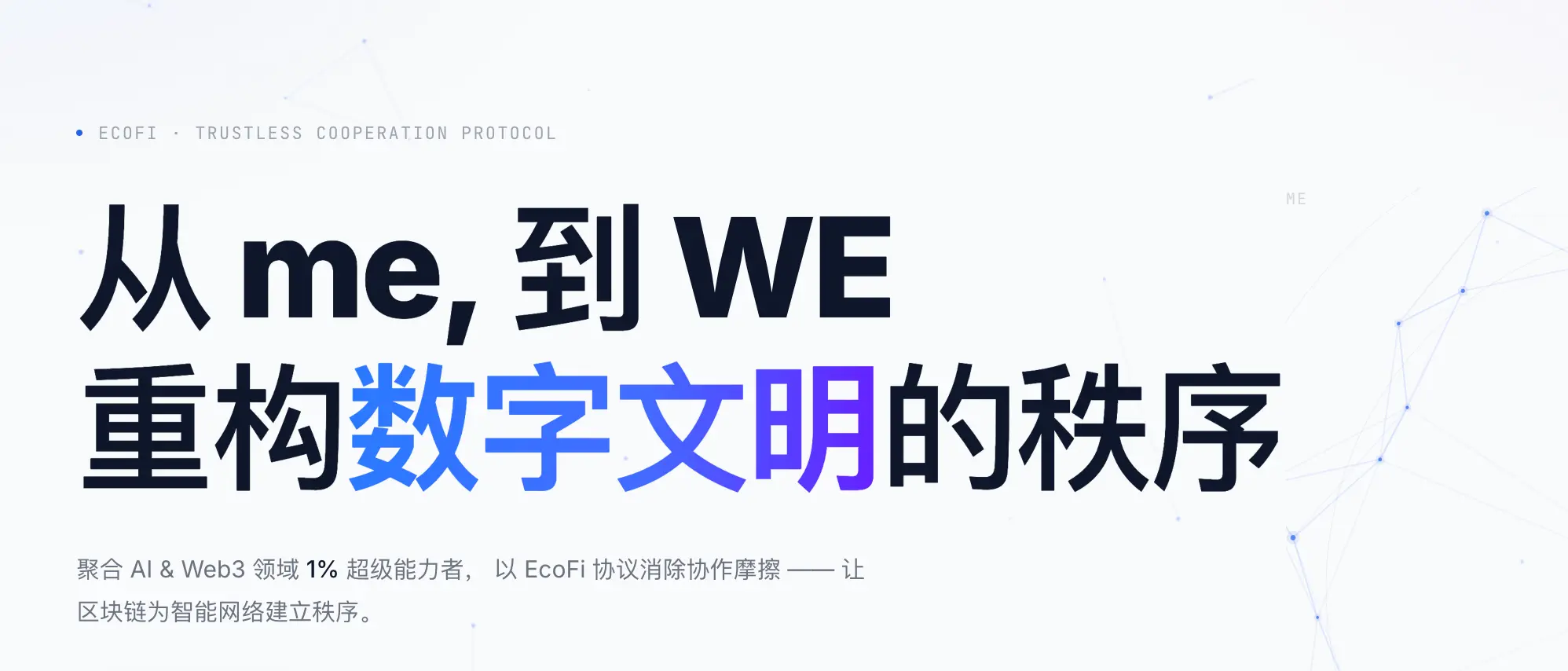
The article explores the evolution of order in the AI & Web3 era, framing the competition around establishing new foundations for human-AI collaboration. It argues that as AI Agents become core economic participants, the existing Web3 infrastructure—focused on assets, identity, and decentralized governance—is insufficient. The core challenge shifts to building trust, assessing complex contributions, and creating fair value distribution among diverse human and AI actors.
The analysis positions the m&WDAO project within this landscape by comparing it to existing paradigms: Colony (human-centric DAO governance), SingularityNET (AI service exchange), Gitcoin Passport (Sybil-resistant identity), and Farcaster/Lens (open social graphs). m&W's distinct path, termed EcoFi (Ecological Finance/Order), aims to integrate these layers. Its three-phase evolution is outlined: 1) **m&W 1.0: Credit Anchoring** - filtering high-quality "Builder" nodes and converting their contributions into non-transferable SBTs (Soulbound Tokens) as a bedrock of trust. 2) **m&W 2.0: Collaborative Economy** - deploying the EcoFi protocol to enable verified, complex task collaboration with a hybrid AI/human judgment system for valuation and dispute resolution, creating a closed-loop value system. 3) **m&W 3.0: Intelligent Order** - where human-originated SBT credit enables trusted AI Agent "digital twins" to participate in a mature human-AI co-creation economy.
The conclusion asserts that while other projects solve discrete problems (proving identity, governing contributions, exchanging AI capabilities), m&W's ultimate mission is to address the foundational question of a new socio-economic order for the coming era of human-AI collaborative networks.
Bernstein revisits long-term agreements (LTAs) in the memory industry, highlighting new contracts with purchase commitments, minimum prices, and financial guarantees signed by Micron and SanDisk. These aim to provide an earnings floor for the coming years.
Micron has 16 strategic customer agreements, with 14 representing approximately $100 billion in minimum revenue and about $22 billion in cash deposits/commitments. SanDisk has contracts for around $42 billion in minimum revenue and over $11 billion in guarantees. Combined, these ~$33 billion in guarantees make it more costly for major clients to walk away.
However, Bernstein models that the potential revenue needing protection over 3-5 years is around $5.2 trillion. The existing guarantees thus cover only about 0.6% of that scale. While LTAs provide a cushion, they cannot fully shield profits in a severe downturn, as clients may still find it cheaper to breach contracts if spot prices fall deeply below floor prices.
LTAs are most suitable for large, credit-worthy customers like U.S. cloud service providers with stable, high-volume AI infrastructure needs. Consumer segments (phones, PCs) and some Chinese clients are less likely to adopt them, leaving an estimated 30-50% of the DRAM/NAND market exposed to spot price volatility.
AI demand (e.g., HBM for training, storage for inference) supports higher valuations and makes LTAs more attractive for locking in high-demand customers. Yet, Bernstein stresses that LTAs soften, but do not eliminate, the memory cycle. Their true test will come in the next downturn, revealing whether clients honor contracts and whether guarantees provide sufficient pain to maintain supplier discipline.
To purchase the experimental weight-loss drug retatrutide, Americans like Zach are turning to Bitcoin despite initial skepticism. Retatrutide, an unapproved triple-agonist from Eli Lilly, offers significant weight loss but is inaccessible through U.S. channels. Buying from domestic resellers costs around $3,600 annually, whereas Zach found a Chinese seller offering a year’s supply for $240—with Bitcoin as the only payment option. This price disparity led him to learn cryptocurrency for the transaction.
Online sellers of such “research chemicals” or peptides often use Bitcoin because traditional payment systems avoid the regulatory and legal risks. Chainalysis data shows crypto payments to grey-market peptide sellers reached $32 million in Q1 2026, suggesting an annualized volume exceeding $100 million, though this remains a fraction of the estimated $1-3 billion black market.
The trend intersects with communities like DeSciNYC, where events on peptides draw crowds interested in biohacking and longevity, indicating shared interests between crypto and wellness circles. However, potential FDA moves to legalize certain peptides could shift demand away from the black market and reduce the need for crypto payments.
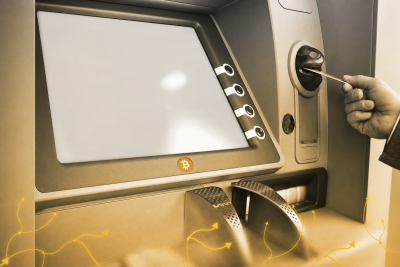
Cryptocurrency ATM operator Cryptolink has had its 96 terminals temporarily disabled across Australia. The Australian Transaction Reports and Analysis Centre (AUSTRAC) suspended the company's registration for three months due to repeated failures to comply with anti-money laundering and counter-terrorism financing (AML/CTF) rules.
Despite a previous fine and an agreement to hire independent auditors, Cryptolink allegedly stopped reporting large transactions (over ~USD 7,000) and failed to respond to regulatory requests. The company's terminals, primarily located in Sydney, Melbourne, and Brisbane, allowed users to buy and (where enabled) sell cryptocurrency for cash, with transaction limits up to ~USD 3,530.
This action is part of AUSTRAC's heightened scrutiny of the crypto sector, which it considers high-risk for financial crime. The regulator has signaled it will enforce strict compliance on all crypto service providers, including physical terminal operators.
cryptonews.ru8天前
Threads
Welcome to the HTX Community. Here, you can stay informed about the latest platform developments and gain access to professional market insights. Users' opinions on the price of Orderly (ORDER) are presented below.
Related Questions
Welcome to the Crypto FAQ. Users' questions and answers on Orderly (ORDER) are presented below.