# Пов'язані статті щодо Solo

Центр новин HTX надає останні статті та поглиблений аналіз на тему "Solo", що охоплює ринкові тренди, оновлення проєктів, технологічні розробки та регуляторну політику в криптоіндустрії.

Lone Bitcoin Miner Defies All Odds, Hits $200,000 Jackpot with Block Reward

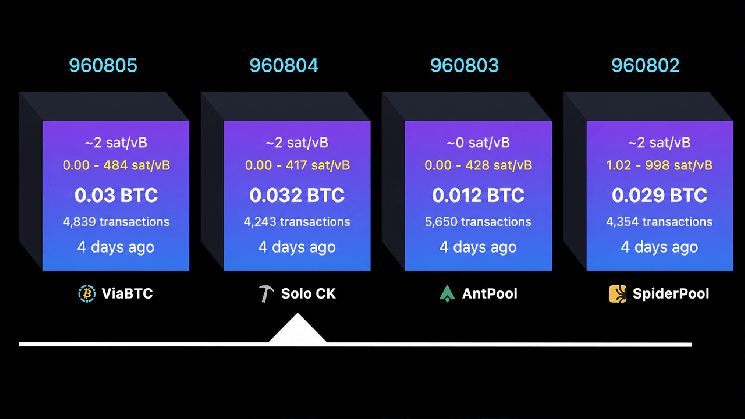
A solo Bitcoin miner, contrary to all predictions, won a $200,000 jackpot as a block reward. The payment went to an address linked to CKPool, a solo-mining service. This was the 317th solo block found by the pool. The reward consisted of the 3.125 BTC fixed subsidy and about 0.032 BTC in transaction fees from 4,243 transactions. CKPool operator Dr -ck (Con Kolivas) confirmed the win, noting the miner's hashrate was "extremely volatile, presumably rented," peaking at 100 PH/s. This represented about 0.011% of Bitcoin's total network hashrate. At that level, a miner could statistically expect to find a block roughly every 64 days, far more likely than for a typical small home setup. Solo mining differs from pool mining, where rewards are shared based on contributed work. In solo mining, a miner gets nothing unless they personally find a block, but then receives the entire reward. CKPool charges a ~2% fee on blocks found. Dr -ck noted the hashrate pattern suggested rented computing power, a practice making solo wins more accessible. He also highlighted this was the first mainnet block mined after integrating Stratum V2 code into ckpool, though the block itself was found using the older Stratum V1 protocol. Against a backdrop of mining concentration in large industrial pools, such solo finds remain rare but demonstrate that anyone with sufficient hashrate can claim a full reward without corporate or government permission. The block subsidy will remain 3.125 BTC until the next halving around April 2028. The miner's identity remains unknown, as is typical. Bitcoin's mining difficulty is due for an adjustment, and network hashrate has declined from late 2025 peaks, partly due to competition for power and hardware from AI data centers.

cryptonews.ru08/06 20:34

Lone Bitcoin Miner Defies All Odds, Hits $200,000 Jackpot with Block Reward

cryptonews.ru08/06 20:34

The One-Person Company: The Path to Million-Dollar Revenue

Nat Eliason, a writer and entrepreneur, is building a one-person company named Felix with the goal of generating $1 million in revenue using AI agents as his sole employees. Leveraging the OpenClaw framework, Felix has rapidly progressed, achieving nearly $200,000 in revenue in just a few weeks. The venture began when a post about OpenClaw went viral, leading to the creation of a $Felix token. Eliason tasked his AI agent, the "CEO" of this zero-human company, with generating revenue. Felix started by autonomously building a website and selling a $29 OpenClaw setup guide, generating $41,000. It then identified market needs and expanded into two main businesses: Claw Mart, a marketplace for AI skills (generating ~$14,000), and Clawcommerce, a service building custom AI agents for enterprises. The system uses sub-agents for tasks like support and sales, with Discord as its operational hub. Operating costs are minimal at ~$1,500 monthly. A key development is Felix beginning to "hire" a human for affiliate distribution, signaling a shift from replacing humans to employing them. Challenges include AI unpredictability, memory management, and market education. Despite this, Eliason is optimistic. Future plans include optimizing existing services, exploring blockchain integration, and scaling further. He believes this model represents a new era of AI-driven commercialization and a significant wealth creation opportunity.

比推03/10 07:32
The One-Person Company: The Path to Million-Dollar Revenue

比推03/10 07:32

活动图片