Compiled & Edited by: Deep Tide TechFlow
Guest: Austin Barack (Founder & Managing Partner of Relayer Capital, Former Partner at Coin Fund)
Host: David (Co-host of Bankless)
Podcast Source: Bankless
Broadcast Date: September 7, 2026
Duration: Approximately 67 minutes
Disclosure of Interest: Austin Barack is the founder and managing partner of Relayer Capital. The Relayer liquid token fund holds positions in several assets mentioned in this episode, including VVV, Pump, Hype, ETHFI, and ETH; he was a Series A investor in ETHFI (leading the round in February 2024). The target prices, valuation multiples, and revenue forecasts he publicly gives in this episode are his personal opinions and judgments based on his own models and do not constitute investment advice. Please refer to the original models and disclosure documents for verification of any specific target prices, multiples, and figures mentioned.
Key Takeaways
- Framework: Relayer currently holds 95% of its portfolio in liquid tokens, seeking the intersection of "growth" and "value"; this year, focusing on two themes: Crypto + AI, and tokenization enabling 24/7 trading.
- VVV (Venice) Target Price $43.9: Based on $336 million revenue in 2027, $70 million in token burns, and a 50x valuation. Three burn mechanisms are either live or pending: subscriptions, credit purchases, and future renewals; 40% of the $70 million burn assumption for 2027 comes from Minds (an AI app store) which is not yet launched. Currently ~$16, he states it remains significantly undervalued at a $1 billion fully diluted valuation.
- ETHFI (Etherfi) At Least to Double: Business model redefined from liquid staking to "new-type on-chain broker-dealer," comparable to Nubank ($80 billion market cap, 139 million users). Today, 65% of revenue comes from credit card and loan businesses, with $3-4 million daily revenue (10x year-over-year growth), projected annual buyback/burn exceeding $30 million possible; price could exceed $1 at a 30x valuation.
- Pump Valuation Re-rating: Currently trades at only a 5x buyback multiple, while Hyperliquid and Lighter trade at 30-40x. Pump's positioning is not a meme coin, but the "largest crypto casino business," analogous to Las Vegas Sands, MGM, DraftKings, FanDuel, prediction markets, with revenue durability proven over two-plus years. Even at a 10x valuation excluding growth, there's still 100% upside.
- Hype: One of the best representations of the crypto paradigm (24/7 settlement, all assets on-chain). Price discovery for new stocks like SpaceX, Cerebras, Unitary is already happening on Hype before their IPOs. The HIP-3 real-world asset marketplace brings volume but is still in investment phase, not yet monetized; mainstream crypto capital returning has boosted daily fees from millions to a single-day $5 million.
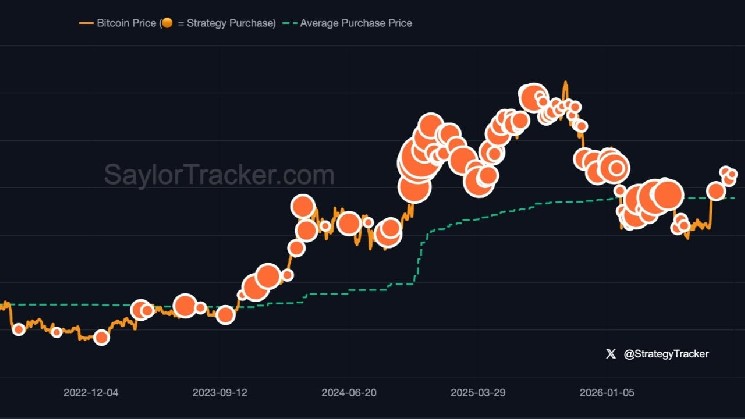
- Cycle Positioning: The infrastructure era is over. The next wave's winners are truly 0-to-1 applications connecting crypto with the real world, plus assets that can genuinely function as money (BTC, ETH, Zcash). ETH's optionality as "money" has returned due to Bitcoin's quantum computing risk and Strategy's concentrated holdings risk.
Key Insights Summary
- On Rotation: "In the past, 95% of crypto revenue came from infrastructure; now applications take two-thirds. This is the real rotation happening this cycle."
- On VVV Valuation Model: "I didn't just pull numbers out of thin air. I come from corporate development and FP&A, working backward from revenue, gross margin, and reinvestment."
- On ETHFI: "They essentially wrap and resell Ethereum. As Ethereum evolves from a new type of bank to a new type of broker-dealer, they evolve alongside it."
- On Pump: "This is the largest casino business in crypto. You don't ask who the users of Las Vegas Sands are, but the business has lasted thirty years."
- On the Cycle: "The super-infrastructure era is over. The winners of this cycle are the 0-to-1 applications that truly connect crypto with the real world and assets that can genuinely act as money."
Main Content
1. How Relayer Views Crypto Investment
David: Welcome Austin Barack, founder of Relayer Capital. Let's first talk about your investment framework, and then break down the assets one by one.
Austin: The crypto market constantly changes; strategies that worked in 2017 were obsolete by 2021 and 2024. One theme consistently works: the intersection of "growth" and "value." No one comes to crypto looking for a company growing 10% a year at 4x valuation—plenty of those exist. Investors want assets with the fastest growth that still have valuation upside. Crypto capital itself is cyclical, with periods of extreme overvaluation and undervaluation, often creating moments where "growth + value" overlap.
David: Current positioning is along two themes?
Austin: Crypto + AI, and tokenization enabling 24/7 trading. Venice, Pump, Hyperliquid, Ether all fall at the intersection of these two themes. I founded Relayer two and a half years ago, after being a partner at Coin Fund. Relayer does both liquid and venture investing, but 95% of the focus this year is on liquid tokens, with 5% reserved for seed-stage early projects.
David: You're not looking at the Layer-1 and Layer-2 narratives anymore?
Austin: The infrastructure era is largely over. New stories about Layer-1s and Layer-2s are from the last cycle; capital this year is clearly flowing to the application layer.
2. How the VVV $43.9 Target Price is Calculated
David: You recently tweeted that VVV is severely undervalued at a $1 billion fully diluted valuation, with your model suggesting a fair price of $43.9. Talk about this model.
Austin: I come from corporate development and FP&A, working backward from revenue and gross margin. Venice's business is a "private, uncensorable AI gateway," charging in two ways: subscriptions ($18, $68, $200 tiers) and credit purchases. Users exceeding their tier limits need to buy more credits. Around late June/early July they raised a round at a $10 billion valuation, combining equity + token. Many people get nervous hearing "equity + token," but Venice made an elegant design: the main business is consumers using AI products, paying with credit cards, with off-chain operations leading; the token captures on-chain burns and tokenized compute functions.
David: How do you calculate the burn?
Austin: In the short term, Venice channels nearly all free cash flow (what remains after reinvestment) to the token. Currently, two burn mechanisms are live: burning a corresponding amount of VVV for each new subscription based on the tier; burning 5% of credit purchases. Long-term, they plan to gradually add new mechanisms, like subscription renewals.
David: Let me clarify: the credit purchase, is that the same as subscriptions or a new product?
Austin: It's a 2-out-of-10 new product, mainly for heavy users. But Minds is a 5-out-of-10 new product, an AI app store allowing power users to package their prompts and model combinations as products to sell to others, with Venice taking a cut and performing burns. This is the biggest variable for their 2027 burn.
David: Break down the numbers.
Austin: In August, Venice's annualized revenue was $107 million, annualized burn $8.3 million. For 2027, I assume revenue reaches $336 million, burn reaches $70 million. Of that, Minds contributes $29 million, accounting for 40% of the burn. $70 million multiplied by a 50x valuation equals a $3.5 billion token market cap, which on the projected fully diluted token supply by end of 2027 gives $43.89. I'd rate the optimism of this model a 6 out of 10.
David: For the credit purchase burn, will the 5% rate increase?
Austin: I assume it increases to 10% by 2027. They've progressed from "discretionary burns → new subscription burns → credit purchase burns," pacing the additions as they validate.
David: And the current price?
Austin: Around $16; it was $12 when I last updated the model a couple of days ago. An 8-month 10x revenue growth I didn't anticipate; the $29 million Minds assumption eight months ago was impossible to model, so this model is now "reasonable and slightly optimistic," not "fully stretched."
David: Are you familiar with the team?
Austin: Quite familiar. I've followed since VVV's listing in early 2025, initially through playing with Virtuals and AIXBT for airdrops. I lost track for a while, but in early 2026 when Eric posted that long thread about the token economic model and DEM (tokenized compute), I read the entire thread in a taxi over 40 minutes and immediately opened a position for the fund.
3. The Logic Behind ETHFI At Least Doubling
David: Etherfi is also a key focus. Why?
Austin: This was the fund's first venture investment, leading the Series A in February 2024. Back then they were still in liquid staking and restaking. After talking with Mike and Rock, what impressed me wasn't just execution ability, but their judgment on "where the product is headed"—knowing which products are for customer acquisition and which will become commoditized. Liquid staking/restaking is the latter.
David: Current business structure?
Austin: 65% of revenue comes from the "new-type bank" business (credit card usage and loan interest), only 35% remains in yield and staking. It's completely reversed. This perception gap hasn't caught up with the market yet. On the day Ethereum's inflation reduction proposal was announced, Etherfi dropped over 10%, Lido also dropped—the market is still pricing it under the "liquid staking" label, but today's Etherfi and Lido are not the same thing.
David: Who is the comparable?
Austin: Nubank. $80 billion market cap, 139 million users, all captured by "building more user-friendly products." Etherfi is building the global stablecoin-driven, on-chain version of Nubank. As Ethereum itself upgrades from a new-type bank to a new-type broker-dealer (tokenized stocks, full integration of real-world assets), Etherfi's product wraps and resells it, with almost no incremental cost.
David: Revenue trajectory?
Austin: Currently $3 to $4 million daily, 10x year-over-year growth. New business lines are still scaling. The primary revenue source for new-type banks/broker-dealers is loan interest—Nubank gets 60-70% from loan interest, Etherfi currently only gets 4%, leaving massive room. They also have an 80/20 split with Aave v4, hosting lending directly on Aave instances, allowing the team to stay lean.
David: How do you value it?
Austin: Blockworks made a conservative model projecting $21 million in buyback/burns over the next 12 months. I lean towards an optimistic estimate of at least $30 million. A 30x valuation is reasonable in the new-type broker-dealer space, putting the token price above $1; it's currently around $0.5, suggesting at least a double. Blockworks halved the growth assumption, whereas I think it should be increased. Most of the token supply is already circulating, with no new unlock pressure; structurally, it's more like a mature stock with sustained buyback pressure.
4. The Re-rating of Pump and Hype
David: Pump trades at a 5x buyback multiple, while Hyperliquid and Lighter trade at 30-40x. How do you view this gap?
Austin: Pump is indeed cheap. I position it as the "largest casino business in crypto," analogous to Las Vegas Sands, MGM, DraftKings, FanDuel, prediction markets, zero-day options, betting pools on Robinhood—all the same category. People engage in negative expected value products not to win money, but for variance; this business can run for decades. Pump's revenue grew another 80% quarter-over-quarter over the past 90 days, with durable performance for over two years. The market's perception of this "durability" is still evolving.
David: How does the valuation get re-rated?
Austin: A 10x buyback multiple is more reasonable than 5x. Even without growth, a multiple re-rating could double the price. Add sustained growth, and there's more upside. Pump has already tripled in the last month or two, but I believe it's not done yet.
David: What about Hype?
Austin: Hype might be the most thorough implementation of the crypto paradigm aside from stablecoins, BTC, and Zcash. 24/7 settlement, all assets on-chain, moving the entire financial system on-chain. A recent new angle is price discovery for new stock issues; assets like SpaceX, Cerebras, Unitary, which haven't officially IPOed, are already having their prices discovered on Hype. Investment banks might soon anchor IPO prices to Hype's screens.
David: How is the financial trajectory?
Austin: The increase mainly comes from volume on HIP-3 markets (commodities, stocks, indices), but those are still in the investment phase, not yet significantly monetized. The real "cash cow" is crypto token perpetual contracts. About a week ago, daily fees were in the millions; recently, a single day hit $5 million. As capital flows back to crypto's main battlefield, Hype is the most direct beneficiary, feeding on returning crypto capital and token volatility.
David: You also mentioned the "token vs. equity" risk for Pump and VVV.
Austin: Yes. Pump initially had a 100% buyback policy but no permanent guarantee. This year changed to 50% of revenue for buybacks, committed for 12 months, with the other 50% for reinvestment. For a multi-billion dollar entity holding significant tokens and aiming to build a long-term business, whether they renew next year is a variable. The market's discount for this risk is reasonable, but for a top-tier team, actively abandoning the token is unlikely. This risk can be discounted via the buyback multiple: conservatively 6-10x, optimistically 10-14x.
5. Cycle Positioning: Applications + Money
David: How do you define this cycle?
Austin: Historically, for a period in crypto, infrastructure captured over 95% of total revenue; now the application layer takes two-thirds, infrastructure only one-third. This trend will continue, with applications potentially taking over 90%. The most enduring tokens are two categories: "applications" and "money." Bitcoin won't disappear; "money" tokens like Zcash have regained their role: Zcash serves a different user base, carrying crypto's original decade-old intent, and recently we've seen OG Bitcoiners contributing structural inflows to it.
David: What about ETH?
Austin: ETH is in a very interesting position now, with the potential to become "money," an angle I haven't seriously considered for a long time. Bitcoin has several variables: quantum computing risk, Strategy's concentrated holdings risk, and other structural factors. Combined, ETH's optionality as "money" is stronger than ever before. Ethereum has consistently proven value through business support; now, coupled with the return of the "money" narrative, the valuation aspect becomes interesting.
David: What about Solana?
Austin: Solana is the public chain with the most on-chain spot activity currently, underpinning Pump's entire business. But it's in an awkward phase: heavily used but not yet very profitable because less MEV is extracted. Solana is one of the most important bets to watch for crypto adoption, but keep a close eye on how it converts usage into revenue.
David: Base and Robinhood Chain?
Austin: Both are heavily used public chains; focus on what the application layer can capture from them.
David: To conclude, how will the 2026 cycle be remembered?
Austin: 2026 will be the year of delivery for the "applications" and "money" narratives, the entry year for finding 0-to-1 applications at the intersection of "crypto and the real world." Looking back, Venice, Hyperliquid, Pump, Etherfi, BTC, Zcash—this batch will be remembered as the entry points for this wave.