Nvidia's Jensen Huang Poised to Bet $10 Billion on Anthropic's Massive IPO!

marsbitОпубліковано о 2026-09-12Востаннє оновлено о 2026-09-12

Анотація

Nvidia is reportedly in talks to invest up to $10 billion as an anchor investor in Anthropic's upcoming IPO, which could be the largest in history. According to exclusive Reuters reporting, the IPO aims to raise $100 billion at a valuation nearing $2 trillion, dwarfing previous records. This potential investment follows a previous $10 billion deal where Nvidia funded Anthropic in exchange for a $30 billion cloud compute commitment on Microsoft Azure, powered by Nvidia chips. This pattern highlights a key dynamic in AI: major chipmakers and cloud providers invest in model companies to secure future customers for their hardware and services. Anthropic's revenue has skyrocketed, growing from an annualized $9 billion at the end of 2025 to over $65 billion by July 2026. To support this growth and reduce reliance on external suppliers, the company has begun developing its own custom chips. The anticipated IPO, expected before the November U.S. midterm elections, is seen as a pivotal moment in the race toward Artificial Superintelligence (ASI), with Nvidia's potential massive bet signaling a strategic move to secure its position in the coming AI era.

Just now, a huge bombshell has hit the AI world—

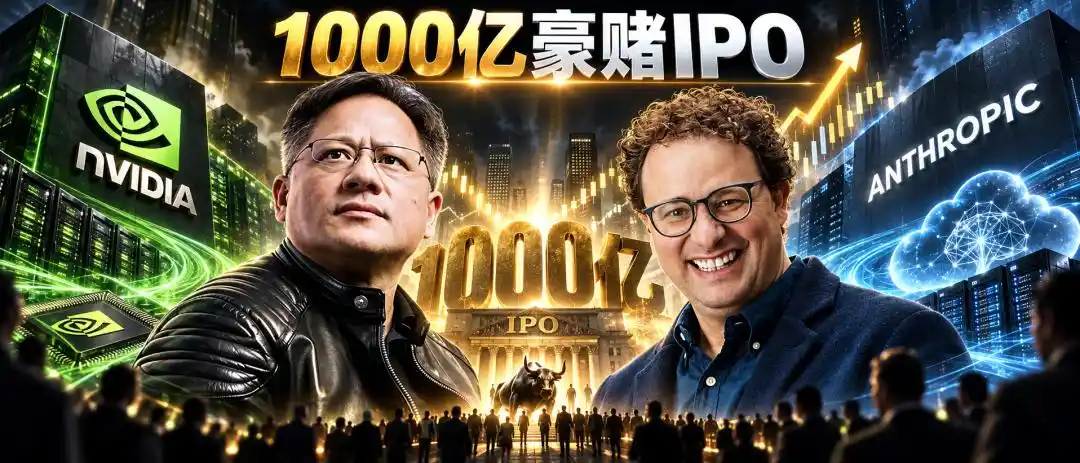
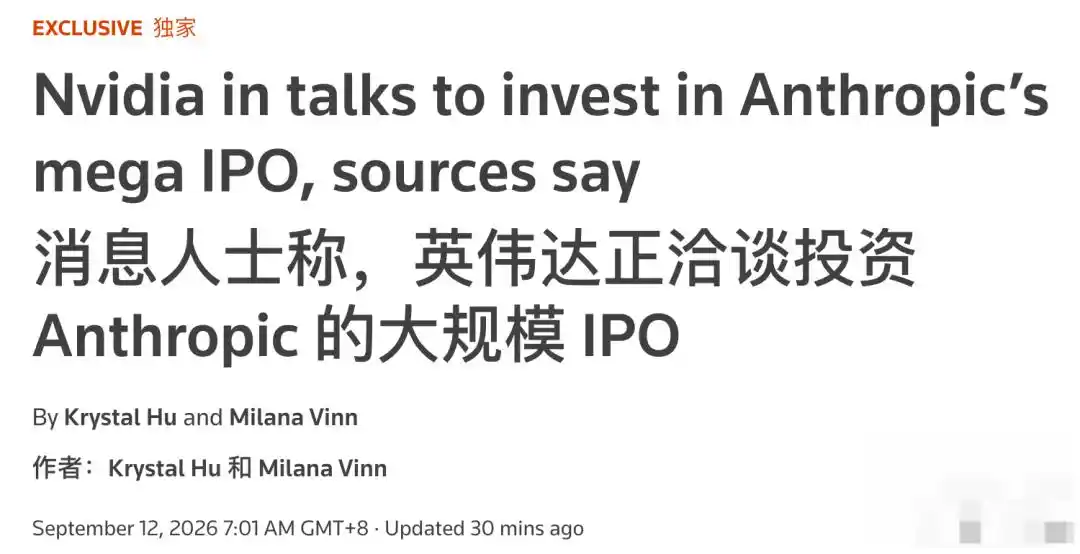
Reuters exclusively reported: Nvidia is in talks with Anthropic to invest up to $10 billion, diving into what could be the largest IPO in history!
That's right, you read that correctly.

The guy selling shovels, Jensen Huang, is about to put money directly into the hands of the gold diggers. And he's doing it as an "anchor investor."

$2 Trillion, The Largest IPO in Human History?

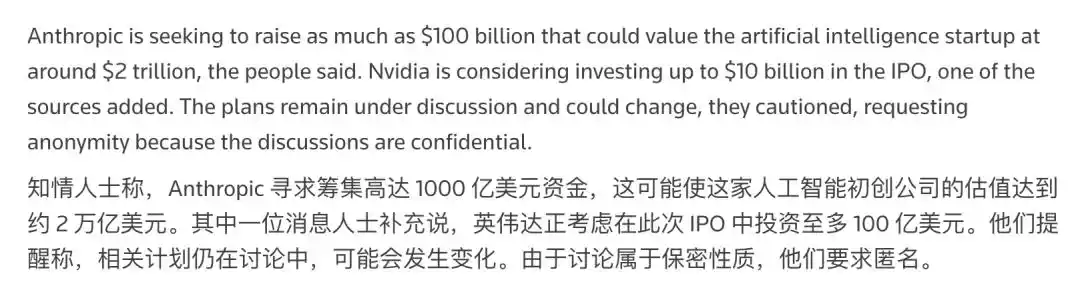
According to two sources familiar with the matter who spoke to Reuters, Anthropic's IPO plans to raise up to $100 billion, targeting a valuation nearing $2 trillion.
If successful, this would shatter the record set by SpaceX in June this year, which raised $75 billion, making it the largest IPO in the history of global capital markets.

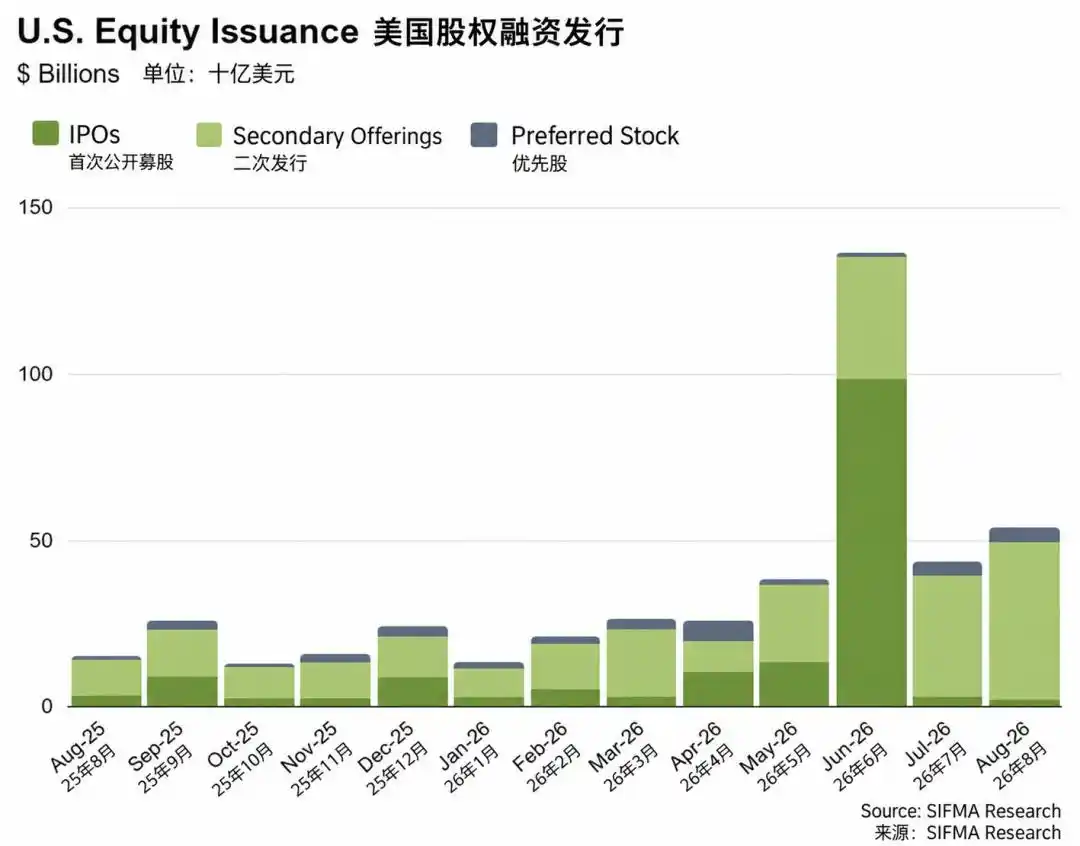
What does $100 billion mean? In the first eight months of this year, the entire US IPO market (excluding SPACs) raised only $137 billion.

In other words, Anthropic alone would account for 73% of the total market volume from the first eight months.
According to the report, Nvidia is considering investing up to $10 billion in the deal.

However, negotiations are still ongoing, and terms could change at any time. Anthropic declined to comment, and Nvidia has not yet responded.

The IPO is expected to be completed before the US midterm elections in November.

Jensen Huang's Calculus: More Than Just an Investment

An "anchor investor" is a major institutional buyer that commits to subscribing *before* the public roadshow, providing a vote of confidence to the market.

When Arm went public, Nvidia and Amazon were anchor investors; during SpaceX's IPO, Saudi Arabia's PIF played a similar role.

If Anthropic can secure a "headline buyer" of Nvidia's caliber, the signal to the entire capital market is unmistakable—even the GPU king is willing to put real money on the line, what are you waiting for?

But the story is far more nuanced than that.

There's a very delicate relationship here: Nvidia is both a "supplier" to Anthropic and its "investor."

Training and running the Claude models is inseparable from Nvidia's GPUs.

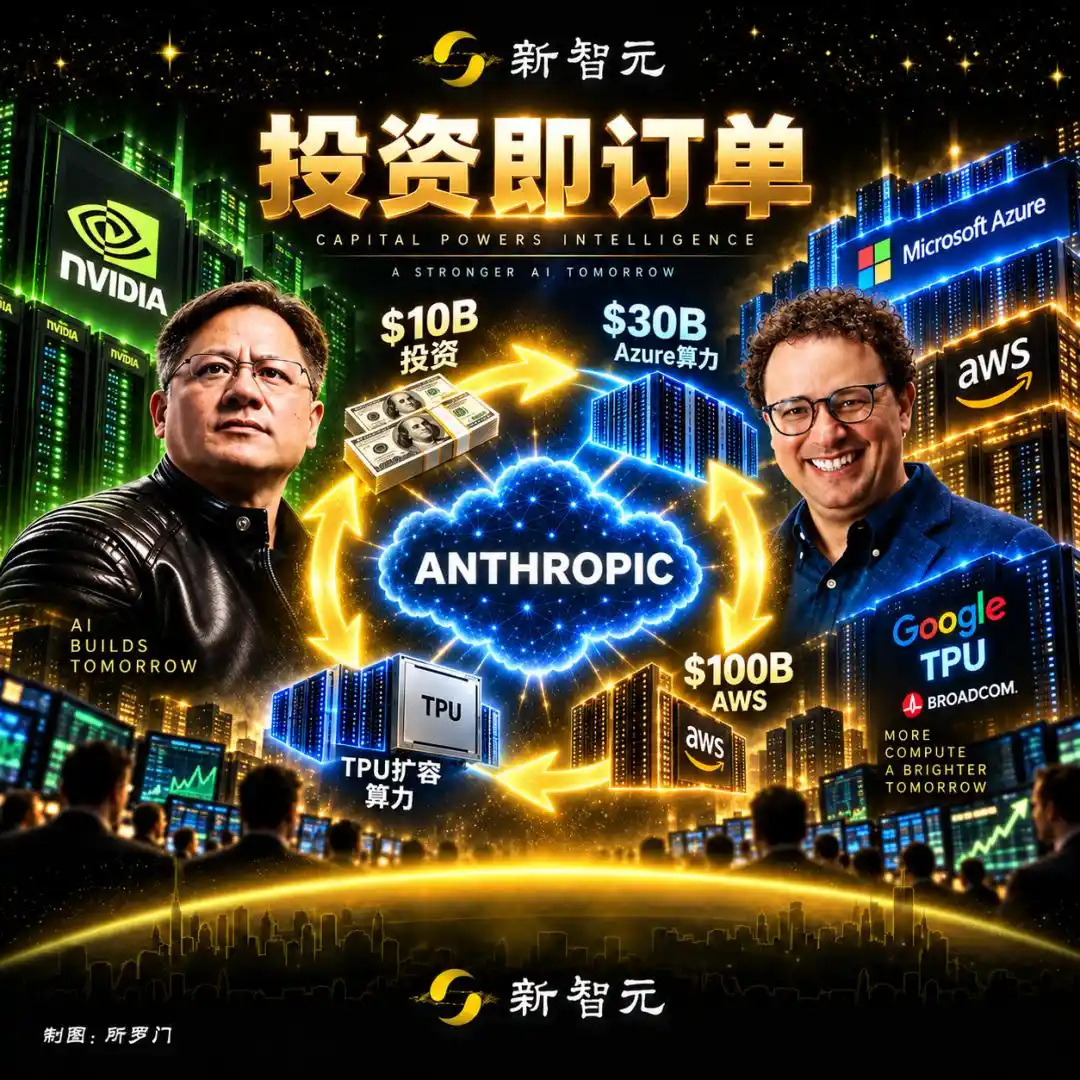
And just in November 2025, Nvidia invested $10 billion in Anthropic—in exchange, Anthropic committed to purchasing $30 billion worth of computing power on Microsoft Azure, which, incidentally, runs on Nvidia's chips.

Think about it: Nvidia invests $10 billion, Anthropic turns around and spends $30 billion on cloud services powered by Nvidia chips. The money goes full circle, right back into Jensen Huang's pocket.

Now, by adding another $10 billion during the IPO phase, this cycle extends from the private market to the public market.

And it's not just Nvidia.

On Anthropic's list of major backers, Amazon and Google also play the dual role of "investor + compute provider."

In April this year, Anthropic announced plans to invest over $100 billion in Amazon AWS over the next decade, using over 1 million Amazon Trainium2 chips; it also signed "multi-gigawatt" agreements to expand its use of Google and Broadcom's TPUs.

The capital logic of the AI industry couldn't be clearer: Money raised by model companies ultimately becomes purchase orders for computing power, flowing back into the hands of chip giants and cloud providers.

Investing in AI companies is essentially pre-booking customers for your own chips and cloud services.
Supporting this astronomical valuation is Anthropic's explosive growth trajectory.

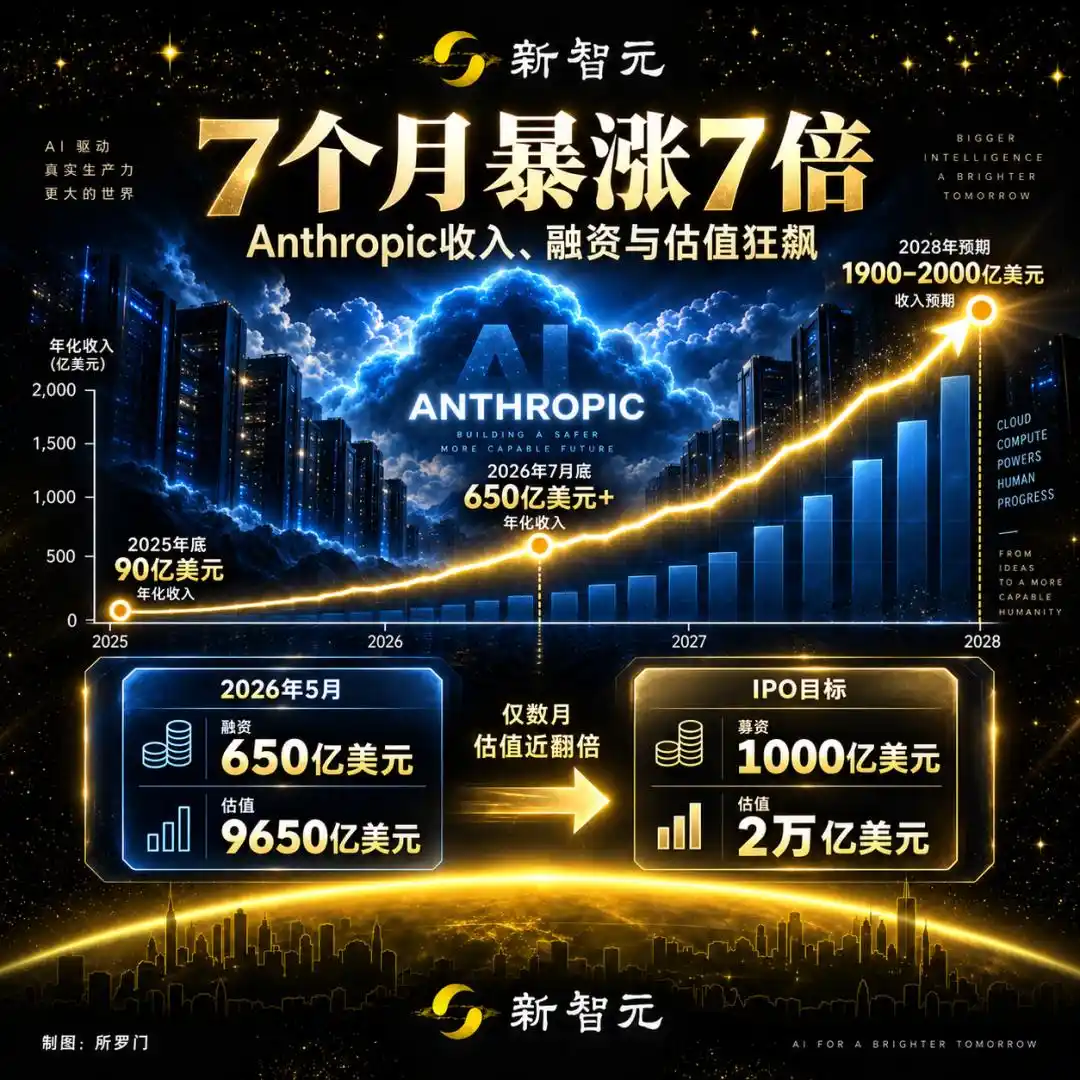
At the end of 2025, Anthropic's annualized revenue was approximately $9 billion. By the end of July 2026, this number had skyrocketed to over $65 billion, a more than seven-fold increase in just seven months.

Reuters previously reported that Anthropic expects revenue to reach $190 to $200 billion by 2028.

In May this year, Anthropic just completed a $65 billion funding round, valuing the company at $965 billion. Now, the IPO is aiming to hit $2 trillion directly, effectively doubling the valuation in a matter of months.
Meanwhile, Claude's user demand is growing so fast that it has stretched Anthropic's existing computing resources thin.

To reduce dependence on external chips, Anthropic has even formed an internal team to begin developing custom chips in-house.

This Is Just the Beginning

Zooming out, Nvidia's $10 billion bet on Anthropic's IPO is a microcosm of the AI industry entering its "decisive moment" in 2026.

As of the end of August, the US IPO market has raised $137 billion, setting a historical record, and the year is far from over.

This means that from late 2026 into 2027, humanity will, for the first time, price "tickets to AGI" on the public capital markets.

Anthropic and OpenAI, the two companies considered most likely to reach artificial general intelligence first, will successively stand on the Nasdaq, facing public judgment from global investors.

Behind this IPO feast lies an unprecedented infrastructure arms race in human history. Global spending on AI-related projects has already reached $2.6 trillion.

Most crucially: Everyone is betting on the same thing—ASI is approaching.

Real product progress continues to validate this prediction.

When AI starts improving itself, when models start improving models, once this flywheel starts spinning, everything accelerates.

This is the real reason Nvidia is desperately pouring money into Anthropic: They are not just investing in a company's IPO; they are investing in a ticket to the age of ASI (Artificial Superintelligence).

References:

https://www.reuters.com/legal/transactional/nvidia-talks-invest-anthropics-mega-ipo-sources-say-2026-09-11/

Editor: Solomon

This article is from the WeChat public account "Xinzhiyuan", author: Xinzhiyuan

Пов'язані питання

QAccording to the article, what is NVIDIA reportedly considering investing in Anthropic's upcoming IPO, and what is the maximum amount mentioned?

ANVIDIA is reportedly considering investing up to $10 billion as an anchor investor in Anthropic's upcoming mega IPO.

QWhat record-breaking valuation is Anthropic's IPO reportedly targeting?

AAnthropic's IPO is reportedly targeting a valuation close to $2 trillion, which would make it the largest IPO in history.

QHow does the article describe the strategic relationship between NVIDIA and Anthropic beyond just investment?

AThe article describes a strategic cycle where NVIDIA is both a supplier and an investor. NVIDIA invests money into Anthropic, and Anthropic uses that capital to purchase massive amounts of compute power (cloud services powered by NVIDIA chips), effectively circulating funds back to NVIDIA.

QWhat was Anthropic's reported annualized revenue as of July 2026, and how does it compare to the figure from late 2025?

AAs of July 2026, Anthropic's annualized revenue was reported to be over $65 billion, a more than seven-fold increase from approximately $9 billion in late 2025.

QWhat broader industry trend or 'bet' does the article suggest NVIDIA's massive investment in Anthropic represents?

AThe article suggests the investment represents a bet on the imminent arrival of ASI (Artificial Superintelligence). NVIDIA is not just investing in a company's IPO but is buying a 'ticket to the ASI era'.

Пов'язані матеріали

PhotonPay Obtains UK EMI License, Advancing Global Payment Operating System Layout

PhotonPay has obtained an Electronic Money Institution (EMI) license from the UK Financial Conduct Authority (FCA), marking a significant milestone in its global compliance strategy. With this license, PhotonPay can issue electronic money and provide payment services within the UK regulatory framework, strengthening its local financial capabilities and supporting global businesses with broader fund-flow solutions. The UK is a key financial hub connecting Europe and global markets, and as enterprises expand internationally, their financial needs are shifting from single cross-border transactions to integrated management of accounts, payments, foreign exchange, cards, and treasury. The EMI license reinforces PhotonPay's UK localization, enabling connections with local banks, payment networks, and financial partners. PhotonPay's Global Chief Compliance Officer JP noted that this license is a key step in building a global payment operating system backed by solid local regulatory foundations. PhotonPay is developing a next-generation payment operating system that unifies fragmented financial infrastructure across markets, allowing businesses to manage global accounts, collections, payments, FX, cards, and embedded finance more efficiently. Built on real business fund flows, PhotonPay continues to expand regulatory qualifications, banking partnerships, payment networks, and technology. To date, PhotonPay has secured nearly 30 payment licenses and regulatory qualifications worldwide, covering global accounts, payments, FX, cards, and embedded finance. The UK EMI license further strengthens its global compliance network as it continues building a next-generation global payment operating system.

marsbit12 хв тому

PhotonPay Obtains UK EMI License, Advancing Global Payment Operating System Layout

marsbit12 хв тому

US Treasury Survey Fails to Signal Debt Issuance Cuts, Treasury Yields Rise, 10-Year Back Above 5.12%

The U.S. Treasury's latest primary dealer survey did not signal an imminent reduction in long-term bond auction sizes, disappointing investors who bet the government would act to push down long-term rates. Treasury yields rose broadly, with the 10-year benchmark yield重回 above 5.12%, up 6.5 basis points intraday, while 20-year and 30-year yields also climbed. The survey was part of preparations for the quarterly refunding announcement on November 4. Markets had hoped for clues that Treasury Secretary Bessent might adjust long-term issuance, particularly the possibility of cutting or halting 20-year bond sales. Instead, Treasury only asked broadly what auction size adjustments should be considered, without clearly hinting at reduced long-term supply. Dealers were also asked about the long-term buyback program, improving buyback efficiency, timing of T-bill and floating-rate note issuance around FOMC meetings, and economic and financing outlooks. Analysts including RBC's Blake Gwinn and TD Securities' Molly Brooks said the questions were too broad and sent no substantive signal, with long-term auction changes unlikely before February 2027. Citi, however, maintained its forecast that Treasury would cut 20-year and 30-year auction sizes by $3 billion each in November. Rising oil prices also added upward pressure on yields. The market reaction was concentrated in long-dated Treasuries, which are especially sensitive to supply expectations. The November 4 refunding announcement is the next key focal point.

marsbit42 хв тому

US Treasury Survey Fails to Signal Debt Issuance Cuts, Treasury Yields Rise, 10-Year Back Above 5.12%

marsbit42 хв тому

Chainalysis Report: The $3 Trillion North American Crypto Landscape, AI and Stablecoins Reshaping Global Finance

Chainalysis’s 2026 North America report shows the region remains the world’s dominant crypto market, with $3.02 trillion in on-chain economic value over the year ending July 1, 2026. The U.S. accounts for $2.78 trillion, down 2.2% in a cyclical adjustment, while Canada grew 2.3% to over $247.7 billion. Three shifts stand out: AI agent commerce, dollar stablecoin exports, and tokenized real-world assets. The U.S. leads AI agent payments, with Base’s x402 protocol surpassing 138 million transactions and 88.1% of model-inference share. Micro-payments between machines are becoming viable, with most x402 transactions between $0.01 and $0.10. Wallet behavior shows rising stickiness: 89.3% of new wallets received a second funding within 30 days in Q2 2026, and the median time from funding to first payment fell from 73 days to 18 minutes. China-linked wallets dominate security and code analysis at 90%, while the U.S. leads inference and agent frameworks. Capital flows show the U.S. importing bitcoin and exporting digital dollars: large institutional bitcoin inflows totaled 53,200 BTC, while USDC circulation reached $73.3 billion and quarterly on-chain settlement hit $14.8 trillion. Tokenized U.S. Treasuries dominate RWA at $15.42 billion, 42.8% of the total, with overseas retail buyers prominent. Canada emerges as the G7’s top P2P market, driven by immigrants; stablecoin remittances to India, China, and the Philippines reached $2.36 billion, up 141%. Overall, the U.S. builds infrastructure while the world adopts it.

marsbit2 год тому

Chainalysis Report: The $3 Trillion North American Crypto Landscape, AI and Stablecoins Reshaping Global Finance

marsbit2 год тому

Торгівля

Спот
活动图片