"RBC-Crypto" does not provide investment advice; the material is published for informational purposes only. Cryptocurrency is a volatile asset that can lead to financial losses.
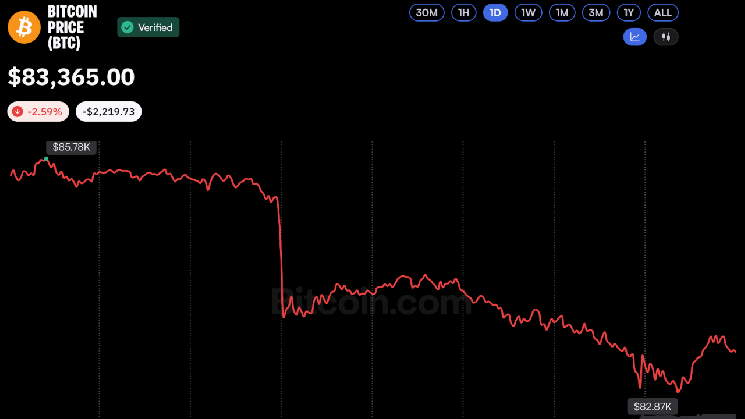
On the morning of September 11, Bitcoin ($BTC) is trading around $77,000, and Ethereum ($ETH) is around $2,450. Over the past 24 hours, cryptocurrency prices have fallen by 2% and 1%, respectively.
In recent days, the cryptocurrency market has significantly declined. From its peak at the beginning of the month, above $82,000, Bitcoin's price has lost over 6%. Notably, the price of $ETH has lost only 3% over the same period. Yesterday, Bitcoin updated its monthly low, dropping to $76,500.
Cryptocurrency Prices
In the catalogs of major aggregators of online exchangers, offers to sell the stablecoin $USDT on the TRC20 standard for cash rubles or via SBP transfers start from 87 rubles per 1 $USDT.
The total cryptocurrency market capitalization is at $2.63 trillion. The cryptocurrency Fear & Greed Index stands at 56 points (zone of market "greed") out of 100 possible — indicating that investors are inclined to buy cryptocurrencies.
Among the top 100 cryptocurrencies by market capitalization over the past 24 hours, the token of the decentralized exchange based on Solana — Raydium (RAY) — showed the largest gain (20%). The largest coin in the anonymous transactions sector, Zcash (ZEC), fell the most (13%).
During the trading session on September 9, capital outflow from Bitcoin-based ($BTC) exchange-traded funds (ETFs) amounted to over $282 million. Ethereum ($ETH) funds recorded capital outflows of over $29 million.
Bitcoin News
Macroeconomics remains the determining factor for sentiment in the cryptocurrency market. Despite the U.S. Treasury's monetary interventions in the government bond market aimed at reducing stress, yields on these securities are rising. Brent crude oil is trading above $107, having gained about 15% since the beginning of the month.
The point is that oil prices, as a factor influencing inflation like the government bond market, are important arguments for conducting monetary policy. Stresses in these markets can influence the U.S. Federal Reserve's decisions on interest rates. And all of this collectively affects trading markets.
In recent days, the prices of Bitcoin, gold, and the main stock indices S&P500 and NASDAQ have been reacting to stresses with a synchronous decline. An additional factor for increased volatility in global markets could be the U.S. inflation data for August, which will be released on September 11 at 15:30 Moscow time. Following this, on September 16, the Federal Reserve will announce its decision on the interest rate — the probability of an increase has risen from 60% to 70% in the past day.
In the short term, in the public space, experts do not have a clear forecast for Bitcoin's price movement. However, key players consistently maintain optimism regarding the future of the cryptocurrency in the long term. For example, Coinbase CEO Brian Armstrong stated that, in his opinion, Bitcoin's price has reached a bottom in the current cycle, and growth lies ahead over the next one to two years.
However, while there is a clear trend among experts for long-term growth forecasts regarding Bitcoin, there is no clear position regarding the altcoin market. For instance, the asset management company Bitwise decided to cease operations of its ETF based on the largest memecoin, Dogecoin (DOGE).
And Armstrong, in comments on the not-yet-adopted CLARITY Act regulating the cryptocurrency market, focused his optimism solely on the stablecoin market. In this sense, the cryptocurrency market as a whole has not been evaluated as promising in recent days — only certain parts of it.
end-content