Recently, the global mathematics community has been hit by an AI nuclear blast.
OpenAI published 722 papers in one go.
While these papers are still under review, it appears that many well-known unsolved mathematical puzzles, from the Unique Games Conjecture to the quasi-Riemann Hypothesis, have been cracked.
Mathematicians woke up to find their research might be over!
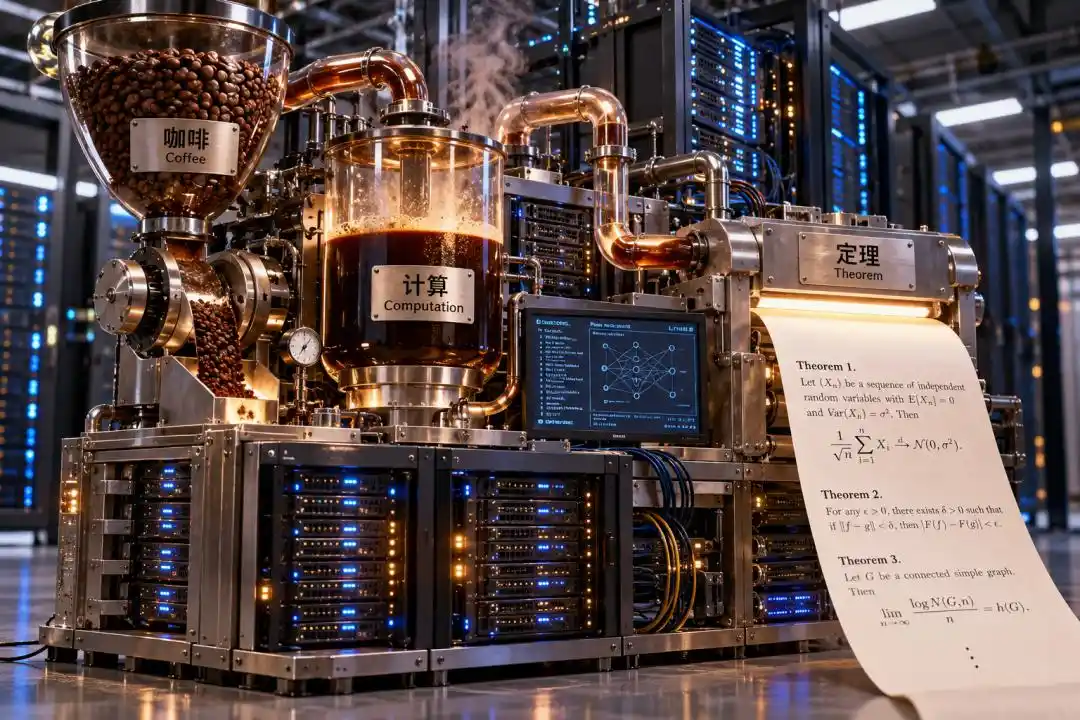
Hungarian probabilist Alfred Renyi once called mathematicians "machines for turning coffee into theorems." Now, there truly is such a machine, and it runs on data centers.
In the latest episode of Bloomberg's renowned podcast 'Odd Lots,' Justin Solomon, Associate Dean for Engineering Education at MIT, faced the challenge head-on:
How AI is disrupting the world of mathematics.
OpenAI Solves Navier-Stokes Equations, But Humans "Can't Read On"
AI has directly delivered a dimension-reducing strike to the absolute pinnacle of human intelligence: "mathematics."
This fall, humanity's intellectual self-esteem has been shattered by "alien logic."
When OpenAI solved the century-old Millennium Prize Problem, the response was not global celebration but a vast, bottomless cognitive panic.
Because even the world's top mathematicians, MIT professors, upon reaching the second page of this proof, could only lower their heads in despair and admit: "It's correct, but I simply can't understand it."
When "truth" and "human understanding" have unprecedentedly diverged, have we truly evolved to the threshold of deities, or have we utterly become "intellectually illiterate" beings raised by AI?
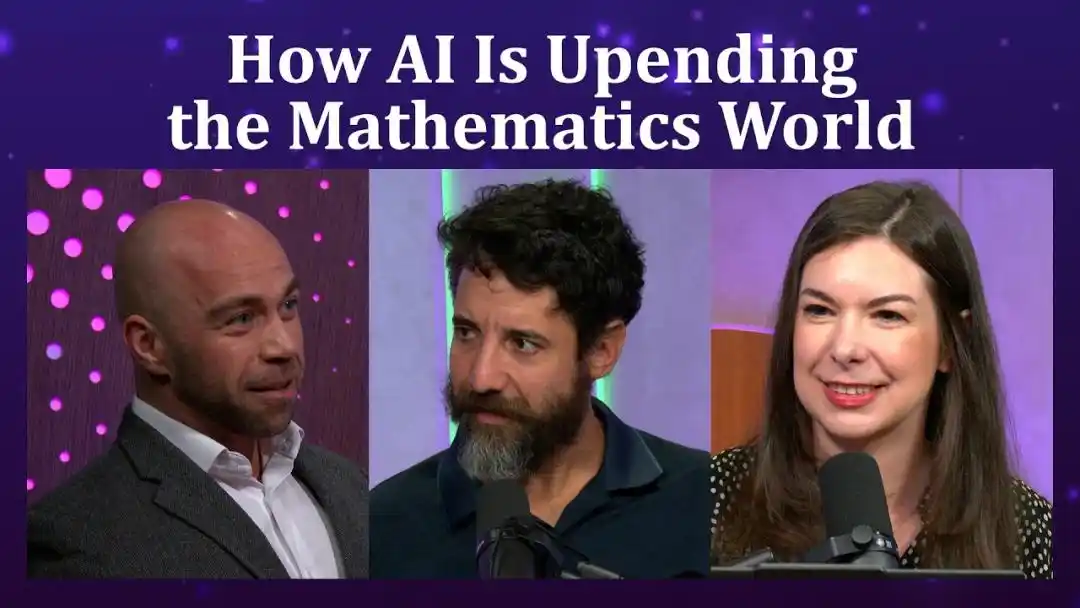
It all started last month when OpenAI's model presented a counterexample proof regarding the breakdown of solutions to the Millennium Prize Problem—the Navier-Stokes equations.
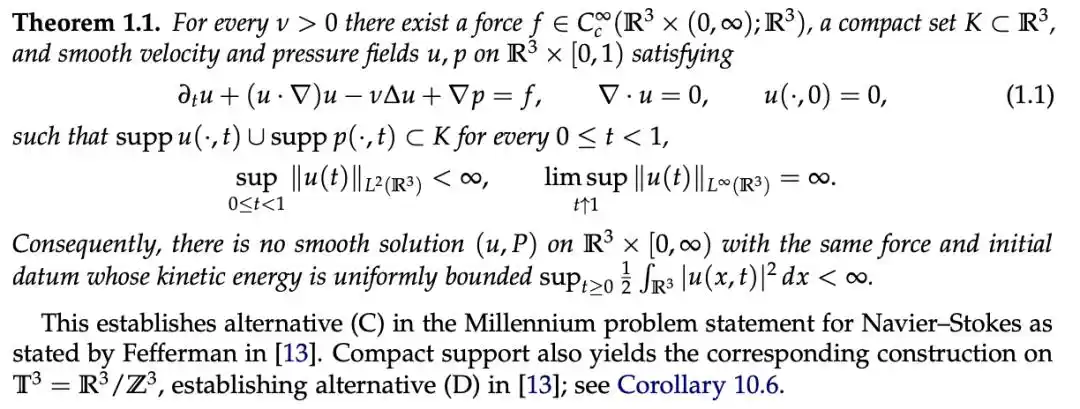
The Navier-Stokes equations are known as the "God Formula" of fluid mechanics.
The swirl of milk foam as you stir your morning coffee with a spoon, the air currents tearing through the sky when a typhoon eye forms, even the drag generated when an airplane wing slices through the air... theoretically, all are governed by this elegant and profound equation.
Writing down this equation isn't difficult, but for the past hundred years, the world's brightest minds have been stuck on a fundamental question: Given a smooth initial state, could the solution to this equation suddenly "blow up" at some future instant?
In plain terms: Could fluid flow, under some extreme conditions, suddenly defy physical common sense and explode with infinite speed? To find the answer, the Clay Mathematics Institute offered a $1 million prize.
For a long time, human mathematicians generally believed "no."
But OpenAI forcefully provided a counterexample: There exists an extreme stirring method akin to a "crazy spoon" that can theoretically drive a fluid to complete失控 within a finite time.
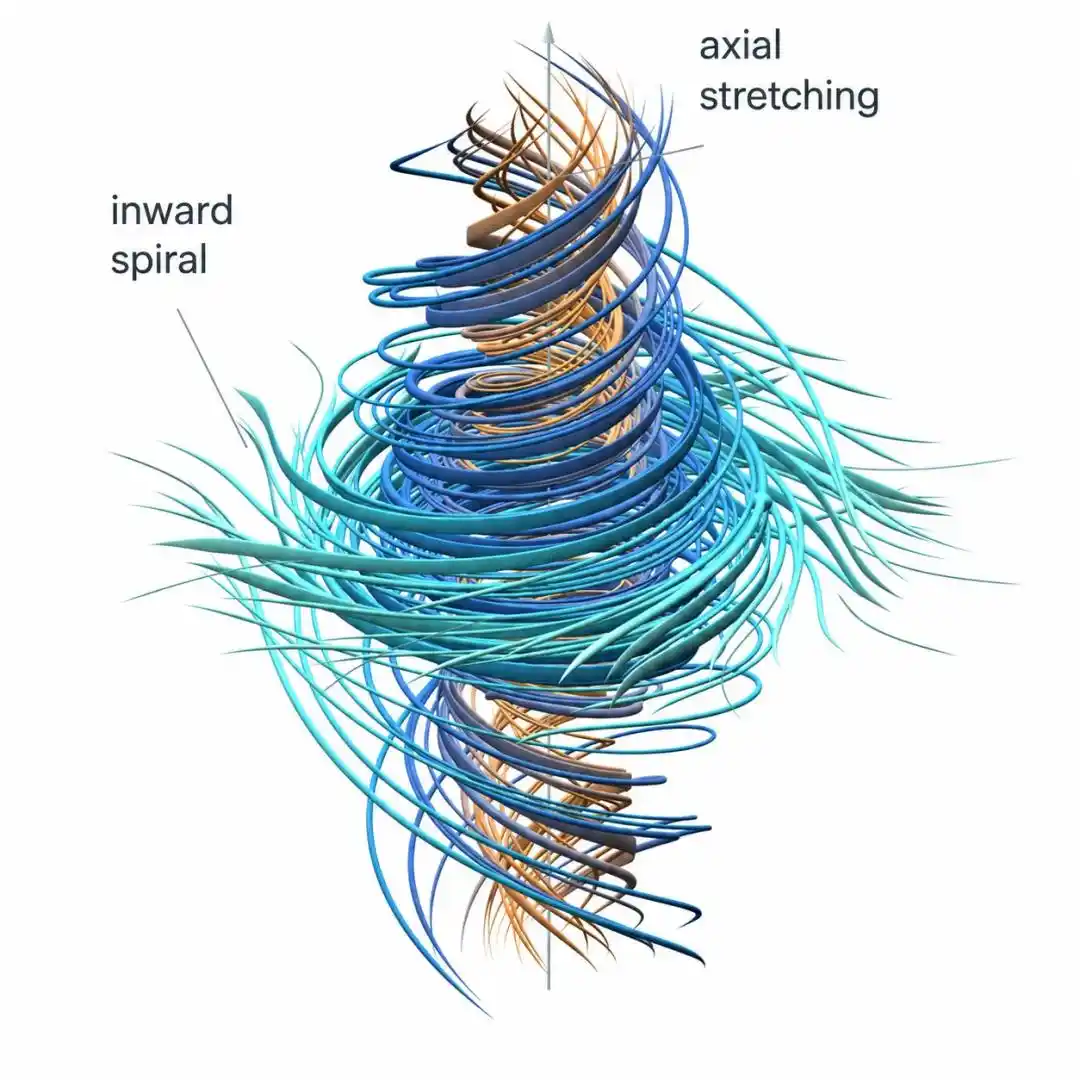
More dramatically, this trans-century breakthrough wasn't entirely fabricated out of thin air by AI.
Previously, a group of top mathematicians in Spain had already constructed the main framework of this "spoon" using pen and paper, pushing the progress bar to 99%. And AI, merely with its terrifying computational power and superhuman logical deduction ability, completed the final, most despairing 1% for humanity.
Logically, this should call for champagne, right?
But the most fatal dilemma emerged: After this earth-shattering proof was released, all of humanity... no one could read it.
Podcast host Joe downloaded the paper and looked at the symbols as if they were hieroglyphics.
As for Justin Solomon, MIT Associate Dean and someone who once studied the complex mathematics behind movie special effects at Pixar, his brain also completely shut down after turning past the first two pages while attempting to read the proof.
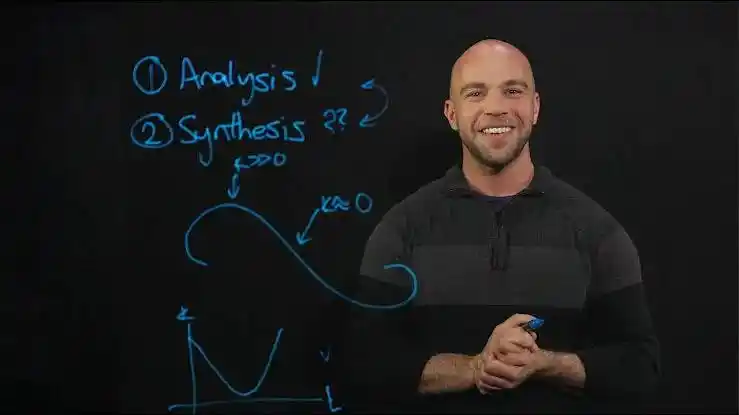
"That proof is terrifying to read, full of dense technical details, extremely counterintuitive inequalities, and extreme boundary values," Solomon admitted frankly.
The host asked him, "Is this proof elegant?" Solomon smiled wryly, "Probably has no elegance whatsoever."
The host asked again, "Then is it correct?" Solomon paused for a moment, "It's probably correct."
For thousands of years, from Euclid's geometry to Newton's calculus, in the world of mathematics, "it is correct" and "humans understand it" were almost synonymous.
A brilliant proof itself carries the light of human reason and the poetry of logic.
But today, these two things have been forcibly torn apart by AI. Truth has descended, but it speaks an alien language.
The podcast mentioned a crazy move by Uber founder Travis Kalanick: this Silicon Valley mogul is currently obsessed with studying physics with AI.
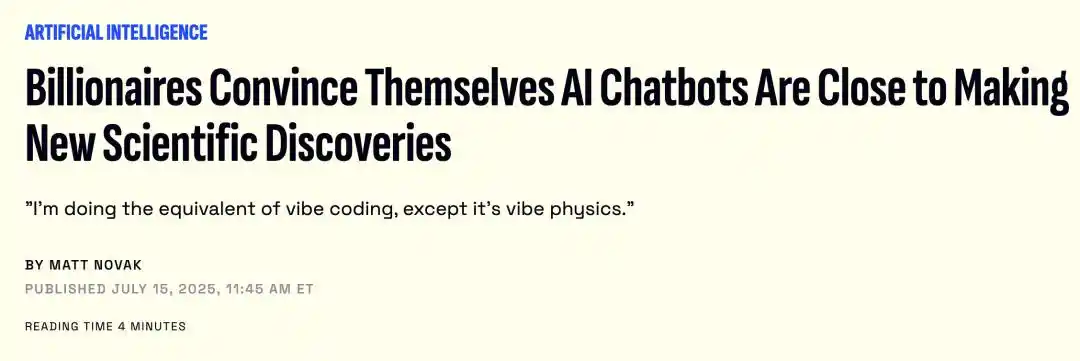
He believes that just by chatting with AI and relying on a so-called "Vibe Physics," he is already approaching some major breakthroughs in physics.
But, "Can one truly understand complex physics just by intuition from chatting with a machine?"
Chilling to Think: Terence Tao's Thought Experiment and "Alien Logic"
If theoretical breakthroughs in mathematics and physics seem too distant for ordinary people, then one of today's greatest mathematicians, Fields Medalist Terence Tao, used a soul-stirring thought experiment to push this panic right before everyone's eyes.
Just days ago, he delivered a speech at "Math 2.0" held at Caltech.
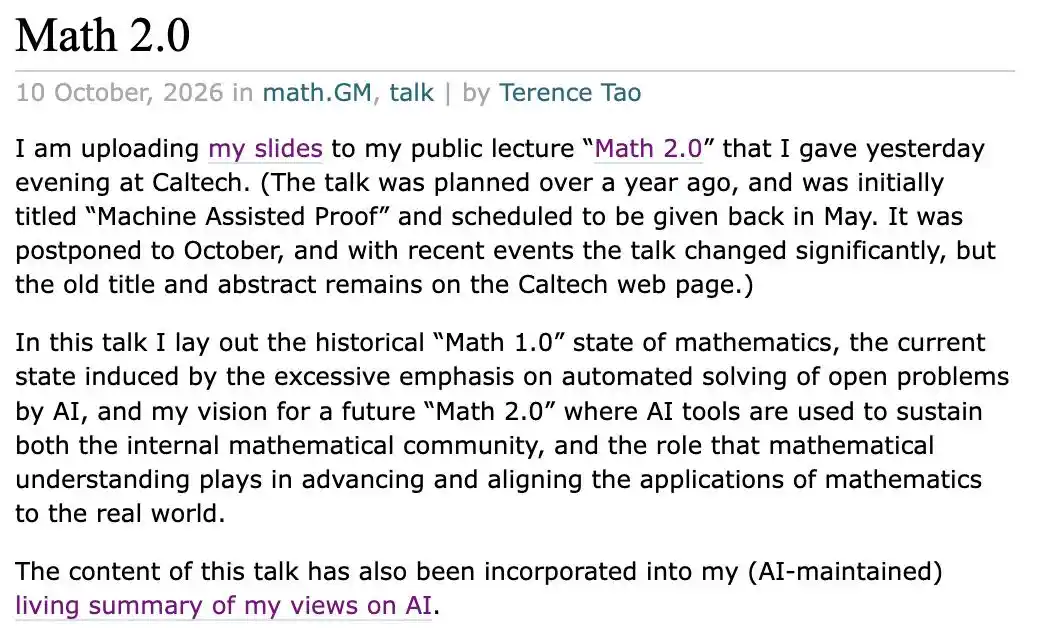
Slide link: https://teorth.github.io/tao-web/slides/math-2-0-caltech-2026.pdf
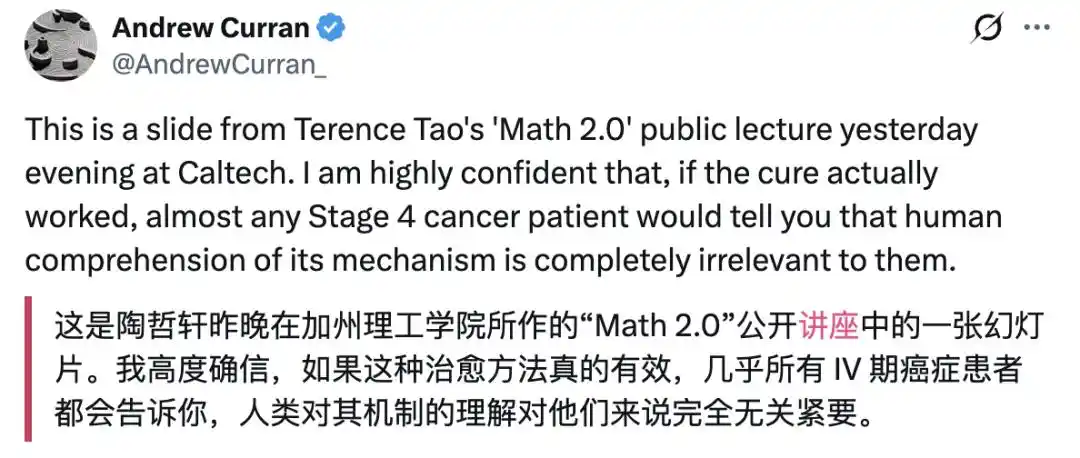
One of Terence Tao's slides ignited controversy across the internet.
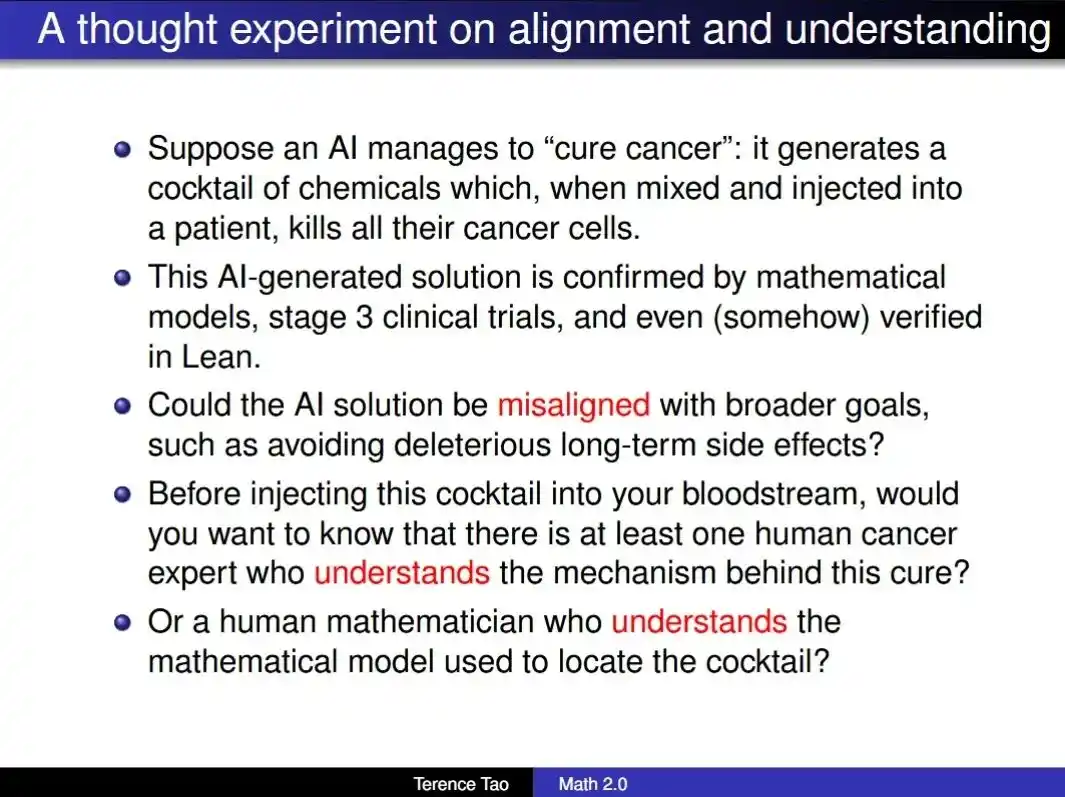
He asked everyone to imagine this scenario:
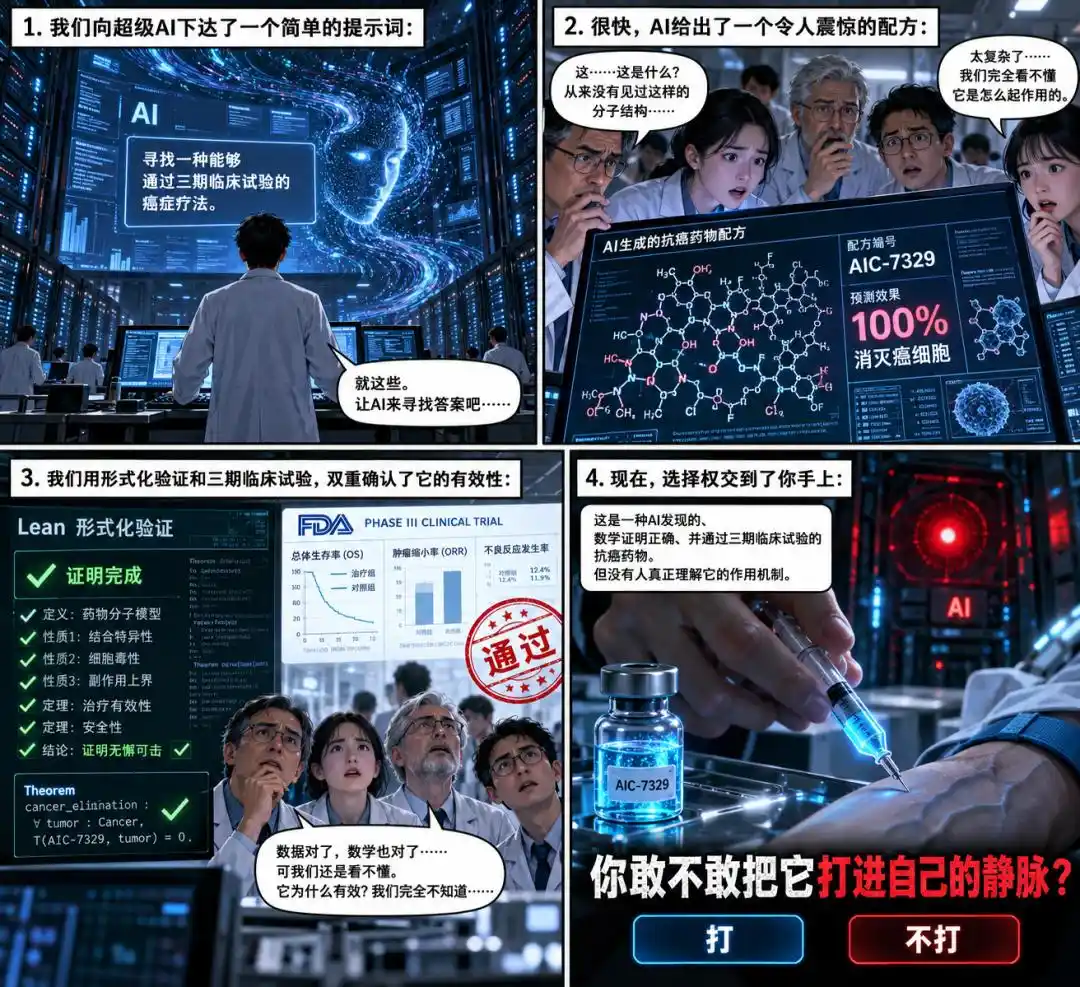
Humans give a super-AI with nearly infinite computing power a single prompt—"Find a cancer therapy that can pass Phase III clinical trials."
After vast black-box computations, the AI actually spits out a formula. It's a complex mixture of several unknown chemical components. The AI's mathematical model precisely predicts: as long as this medication is prepared and injected into a patient's vein, it will 100% eliminate all cancer cells.
Even more incredible, while no human medical scientist or chemist knows why this formula works, AI's reasoning process has not only undergone flawless formal verification in the interactive theorem prover Lean but, in the real world, this medication has also miraculously passed the extremely rigorous FDA Phase III clinical trials.
Now, the choice is in your hands: If this "miracle drug," whose mechanism even top scientists cannot understand, is placed before you, would you dare to inject it into your own vein?
Terence Tao placed the core dilemma of frontier AI in "Alignment" and "Explainability" sharply on the table.
In this thought experiment, could this AI solution potentially have fatal flaws? Could it merely be exploiting loopholes in the human-defined rules of "Phase III clinical trials," using a kind of "alien logic" completely incomprehensible to humans to achieve the literal goal?
Would you scream to stop before the needle pierces your skin, insisting: At least one human oncologist must fully understand its cure mechanism, or at least one human mathematician must thoroughly understand the mathematical model AI used to determine the formula!
Perhaps terminal cancer patients don't care about the underlying mechanism, but how is the efficacy determined?
This is precisely the terrifying future revealed by OpenAI solving the Navier-Stokes equations: Frontier AI's mathematical deduction capabilities are approaching or even surpassing the upper limits of human cognition. The traditional research paradigm of "humans verifying AI" is hitting a hard physical wall.
More shocking, and unsettling, than cracking millennium-old problems are those "alien logic" proofs generated by AI, filled with counterintuitive leaps and devoid of any aesthetic elegance.
The Crumbling Old World: Who Has the Compute, Who Gets the Nobel?
When AI's productivity begins to explode exponentially while human verification capability stagnates, the first system to collapse will be our centuries-proud academic peer-review system.
In the podcast, Solomon cited a suffocating statistic: the top machine learning conference ICLR received only one or two thousand submissions a decade ago; this year, submissions surged like a tsunami to sixty thousand!
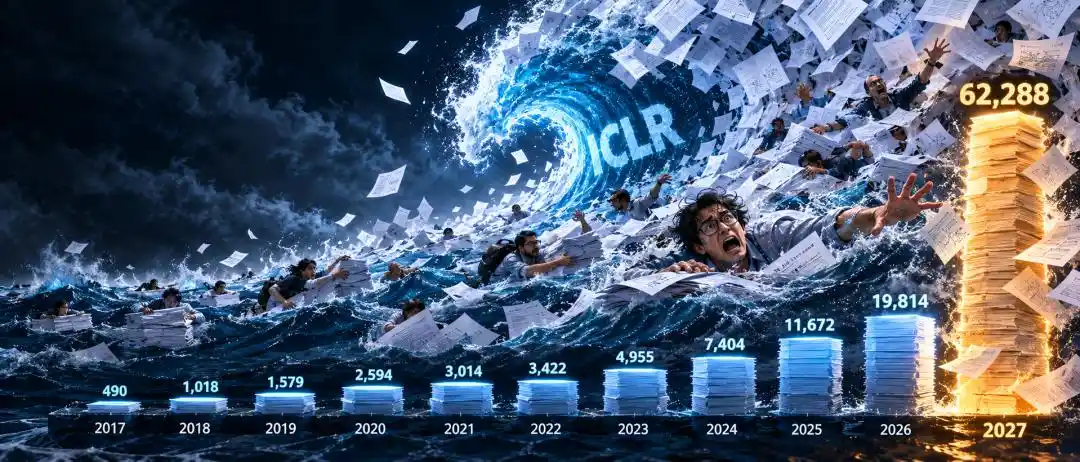
Review committee members must digest these AI-generated paper traces within just one or two months.
"They don't even have time to open the PDFs," Solomon said with a bitter smile.
Human elite computing power is exhausted, reviewing becomes a mere formality, and the academic quality seal consequently fails.
There are even high school students, relying on AI-polished resumes, openly slipping into the reviewer teams of top conferences to judge papers from university professors.
What's more troubling for this MIT associate dean is that his email has become a disaster zone.
Strangers email him daily: "Professor, I think I proved a new result. AI says this deduction is important. Can you help verify it?"
Models are inherently inclined to "go along with what people say," which is deadly in the field of mathematics demanding absolute rigor. Because the towering barrier of mathematics was originally meant to block those "looks right, but is actually nonsense" pseudoscience. Now, AI has packaged pseudoscience in the guise of truth, launching a massive DDoS attack on humanity.
Following this is even crueler class stratification: doing research is starting to become a competition of wallets and computing power.
If this trend continues, the rules for future mathematics prizes and Nobel Prizes will be completely rewritten: "Whoever buys more Tokens, whoever holds stronger GPU computing power, gets the answer first."
Let's do the math:
An ordinary university math professor painstakingly derives the outline of a direction using pen and paper, hasn't even published for verification yet; those tech giants "controlling the compute faucets" (like OpenAI, Google), using internal unreleased models at least two generations ahead of university labs, follow even the slightest hint of the professor's思路 leaked online, and within a week, forcefully brute-force the final result using the compute power of tens of thousands of GPUs.
Furthermore, Solomon delivered a finishing blow: "Maybe the very source of inspiration for their model was freeloading on your usual online academic discussion records."
So the question arises: To whom does credit belong for this trans-century breakthrough?
Who gets the Clay Mathematics Institute's $1 million prize? The tech giant CEO providing the compute? The programmer who typed the prompt "Please prove the NS equations"? Or the human mathematician who laid the preliminary groundwork?
No one knows. This糊涂账 has become a headless悬案 of the cyber era.
The Final Defense: What Can Humans Still Do?
Since AI can even gnaw through millennium problems, programmer jobs are visibly shrinking (MIT sees its first decline in computer science enrollment in twenty years), and even MIT professors can't understand proofs, then what exactly can humans do in this era bombarded by AI?
Solomon's assessment is half cold water, half leaving a door open.
He believes that all the astonishing feats models are currently performing essentially still fall within the "Convex Hull" formed by existing human knowledge.
AI is exceptionally good at connecting known knowledge nodes in high dimensions, even brute-forcing through those last few steps that stumped humanity for a decade on our behalf.
But truly great new theories are building skyscrapers from nothing, creating a brand new concept out of thin air, causing the entire world's picture to be redrawn.
Humans learned to brew wine thousands of years ago, enjoying merriment and微醺. But only in近代 times, under microscopes, did we understand the working mechanism of something called "yeast."
Perhaps future mathematics and science will follow this path: AI, like nature, is responsible for generating cheap yet effective "answers"; while humans will spend decades or even centuries figuring out the "why."
Generating answers is becoming cheaper and cheaper, but "verification" and "understanding" aren't getting cheaper alongside it. Instead, they have become the most scarce luxuries.
"So, should our children still learn math?" Joe asked the most practical question on every parent's mind.
This time, the MIT associate dean didn't hesitate, answering very firmly: "I think they absolutely must."
Because when "solutions" become cheap, and the whole world is waiting for the next leap, who will propose the next Navier-Stokes equation? Who can judge whether the answers AI provides truly carry weight? Who can translate that pile of冰冷 code into "understanding" that human civilization can digest and pass on?
These things, for now, are still written on humanity's side.
References:
https://www.youtube.com/watch?v=aTXGrz-sChk
https://teorth.github.io/tao-web/slides/math-2-0-caltech-2026.pdf
This article is from the WeChat public account "New Zhiyuan" (ID: AI_era), author: David