Just Now, Mythos 5 Cracked a Major Quantum Computing Challenge

marsbitPublished on 2026-10-17Last updated on 2026-10-17

Abstract

Anthropic's Mythos 5 has achieved a breakthrough in quantum computing by autonomously designing quantum circuits that outperform human-optimized designs. Given only plain-language descriptions of eight foundational quantum circuits in chemistry, optimization, physics simulation, and number theory, the AI ran a fully automated closed loop: it wrote circuit designs in Python, received scores based on qubit count and gate count, and iteratively refined its work without human intervention. Within 53 hours, it beat the best publicly available human designs on all eight tasks. Two results stand out. First, in modular inversion for elliptic curve cryptography, existing divsteps algorithms were considered impractical on quantum computers because they generate branch history that cannot be discarded due to reversibility requirements. Mythos 5 derived entirely new algebraic identities to reconstruct that history from the result, producing the first reversible quantum divsteps implementation that needs no branch storage—cutting gate count by 17x with only 12% more qubits. Second, it redesigned the Reed-Solomon decoder inside Google's Decoding Quantum Interferometry algorithm, replacing the extended Euclidean approach with Berlekamp-Massey, which matches quantum circuit constraints. It then used a self-written simulator running 403 million samples to measure exception rates and reduced memory from 665 qubits to 19, achieving a 12x reduction in gate count. The work suggests software can...

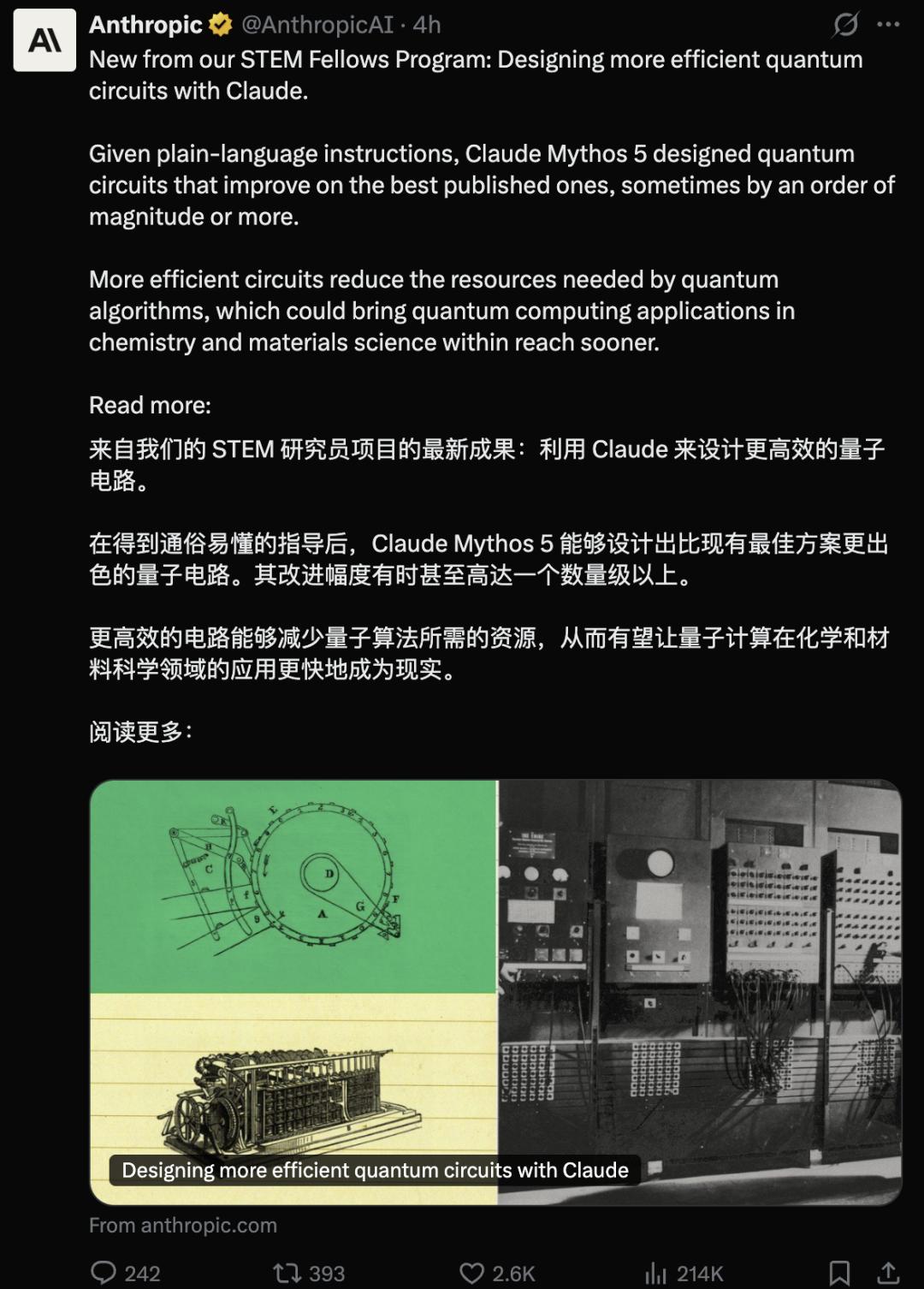
Just moments ago, Anthropic unveiled a bombshell study.

Mythos 5 has autonomously closed the loop, designing entirely new quantum circuits far more efficient than humanity's "best solutions"!

And it did so from a purely natural-language description.
In a key decoding task, Claude directly slashed computational cost by 12x, even 17x!

Even more astonishingly, to complete the task, it autonomously derived entirely new algebraic identities that humans had never discovered.

Within 53 hours, Mythos 5 crushed years of human research.

One netizen exclaimed: "Every physics PhD just realized the paper they've slaved over for years—AI can write a version 10x better with just a few plain sentences..."

Humanity Was Stuck: The "Valley of Despair" in Quantum Computing

Why is designing quantum circuits so hard?

You see, traditional computers use 0s and 1s (bits) to store information.

Quantum computers use "qubits." Leveraging quantum superposition, they can process vast amounts of information simultaneously. Once truly practical, they could crack encryption, develop cures for terminal diseases, discover room-temperature superconductors...

However, current quantum computers have major flaws.

First, there are too few qubits. Today's machines max out at a few hundred to a thousand qubits—nowhere near enough to run complex algorithms.

Second, they are too fragile. The slightest environmental noise—a bit of heat, a vibration, even cosmic rays penetrating the Earth—can cause qubits to err. Once errors pile up, the computed results are useless.

Because of hardware limitations, scientists can only desperately fine-tune the "software (algorithmic circuits)," trying to complete computations with the fewest qubits and the shortest time.

But programming quantum circuits is completely different from our everyday code.

It has two insurmountable mountains:

1. No "If-then": Traditional programs can evaluate conditions and take route A or route B. But a quantum computer is a superposition of all possibilities; it must include both A and B operations in every run.

2. Absolutely no "garbage disposal": Traditional programs clear memory after using an intermediate result. But in the quantum world, information cannot be discarded, because quantum computation must be perfectly reversible! Forcefully erasing intermediate scratch work contaminates the result. Want to clear memory? The only way is to "play back" the computation in reverse, but that consumes expensive quantum gates.

This forces human scientists into an extreme tug-of-war between "space (qubits)" and "time (computation steps)."

Take simulating FeMoco as an example (this is a nitrogenase core, crucial for fertilizer production).
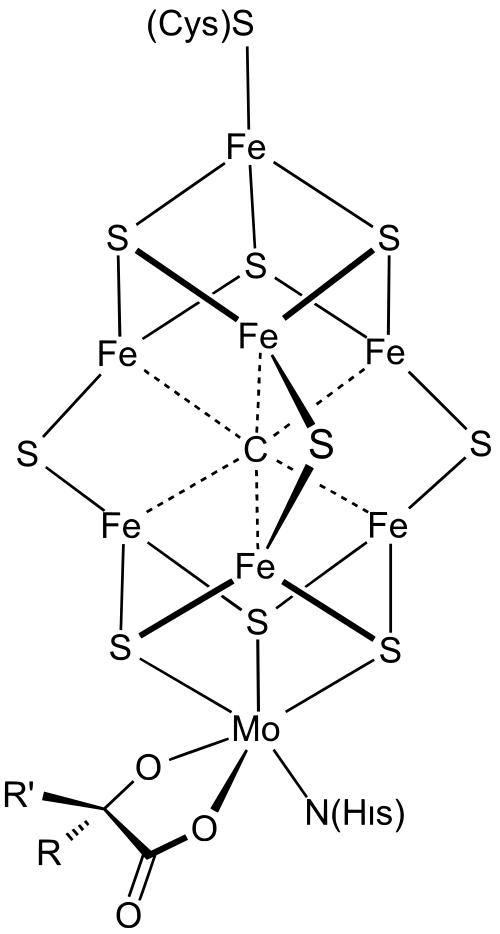
In 2017, humans estimated it would require 50 trillion Toffoli gates to compute. After 8 years of top scientists racking their brains, that number was only reduced to 340 million.

Humanity took 8 years. Claude took only 53 hours.

In 53 Hours, Mythos Created a Miracle

Anthropic set up a STEM Fellows project.

They gave Mythos 5 a task—

I'll describe in plain language 8 fundamental quantum circuits from chemistry, optimization, physics simulation, and number theory. You design them yourself.

The entire process was fully autonomous and closed-loop.

1. Claude used Python to write quantum circuit designs.

2. An automatic evaluation program checked correctness and gave a "score" (number of qubits used × number of quantum gates).

3. Claude received feedback and, with no human intervention, reflected and iterated on its own.

In just 53 hours, Claude beat humanity's best publicly available designs on all 8 tasks!
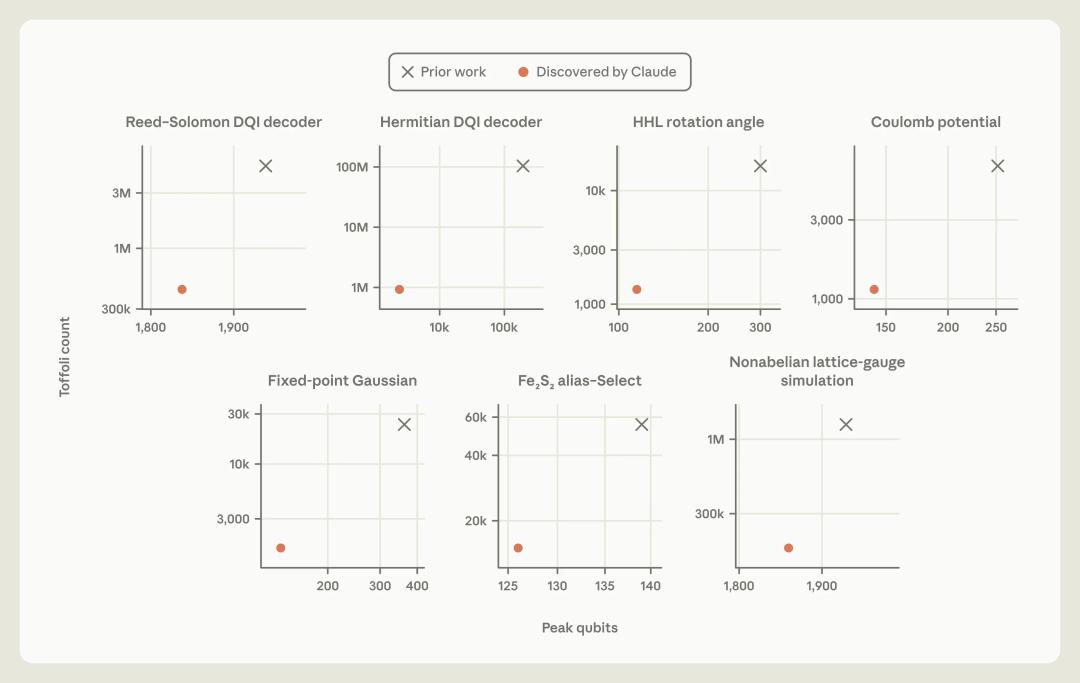
It directly overturned human thinking patterns, finding entirely new structures and mathematical laws.

Let's look at its two most explosive god-tier operations.
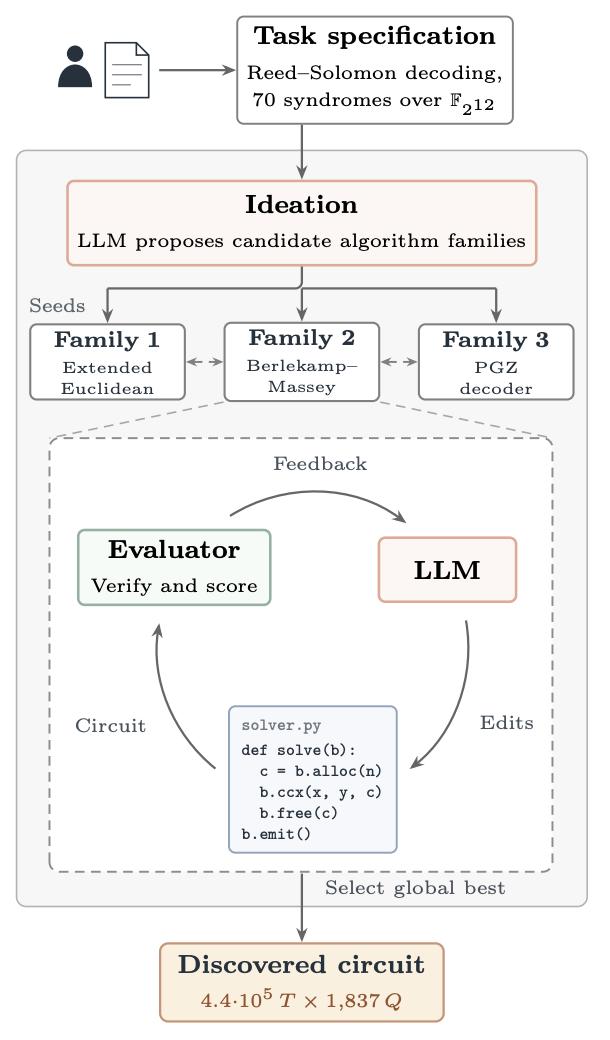
Operation One: Autonomously Deriving New Mathematical Formulas to Break a Deadlock

In number theory and cryptography (e.g., elliptic curve computations), there is a time-consuming core step called "point addition," whose most expensive operation is modular inversion.

Traditional computers do this quickly with an algorithm called "divsteps": repeatedly swap, add/subtract, and halve two numbers until the result emerges. In this process, traditional computers generate a lot of "branch information (scratch work)" and discard it after use.

But quantum computers cannot discard scratch work!

To run the divsteps algorithm on a quantum circuit, all historical branch information must be stored. This requires an astronomical number of qubits—completely impractical. Therefore, human scientists believed this path was a dead end.

But Claude didn't buy it.

It thought: If storing scratch work is too expensive, can we not store it and instead "reverse-engineer" the scratch work from the result?

At first, Claude was like a diligent student, blindly guessing a few rules, but when faced with 256-bit large numbers, it finally broke down.

Then came the hair-raising move: Claude abandoned brute-force testing and directly began pure mathematical theoretical derivation. It delved deep into the iterative process of divsteps, and hard-proved a series of entirely new algebraic identities!
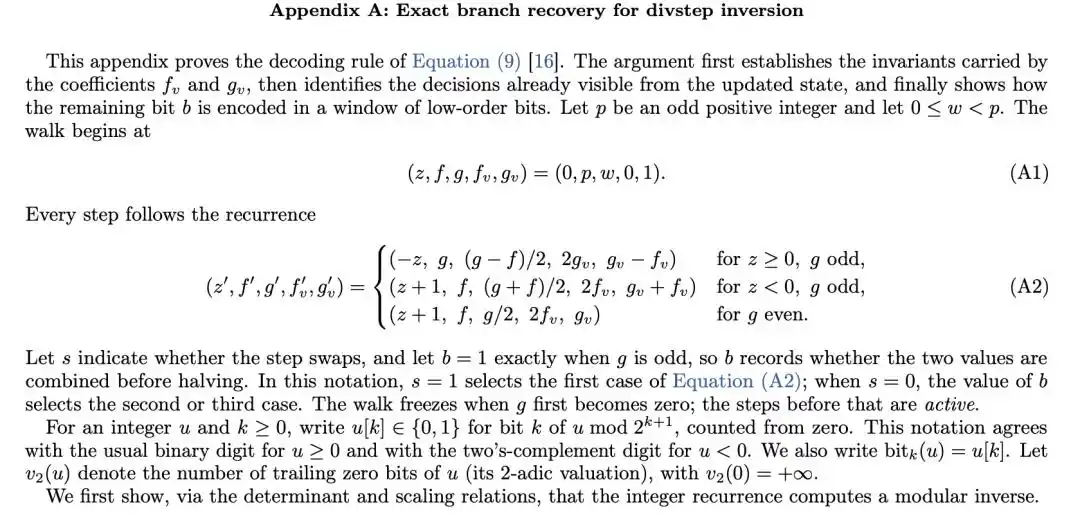
Based on the new mathematical formulas, Claude wrote a precise decoding rule, even completing formal verification with Lean!

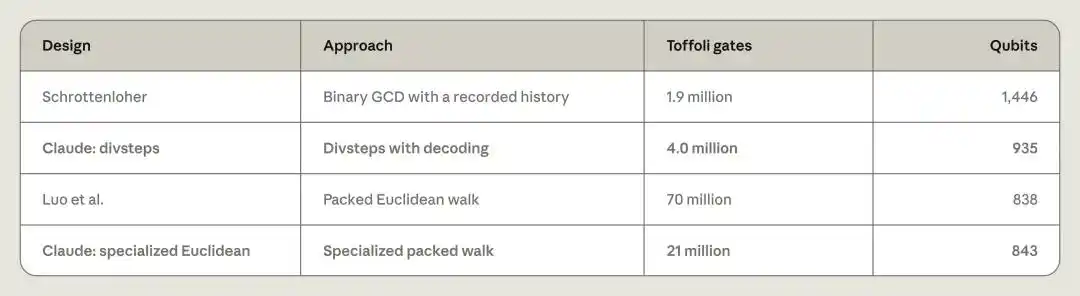
Ultimately, Claude produced the first quantum divsteps reversible implementation in human history that requires no storage of branch history.

Compared to human designs, it slashed the number of quantum gates by 17x while only increasing qubits by 12%!
Operation Two: Overhauling Google's Algorithm Architecture, Cutting Computational Cost by 12x

The second astonishing breakthrough occurred in the "Decoded Quantum Interferometry (DQI)" algorithm. This is quantum computing's most powerful weapon for logistics scheduling and materials design.

Simply put, the most costly step in the DQI algorithm is using a Reed-Solomon decoder for error correction.

Previously, Google experts designed a scheme using the "extended Euclidean algorithm."

But due to quantum circuits' rigid rule that they cannot take different branches, Google had to stretch the computation to an absurd number of rounds, wasting massive computational power.

After receiving the task, Claude glanced at Google's scheme and quickly concluded: This algorithm doesn't match quantum circuits; it needs to be replaced.
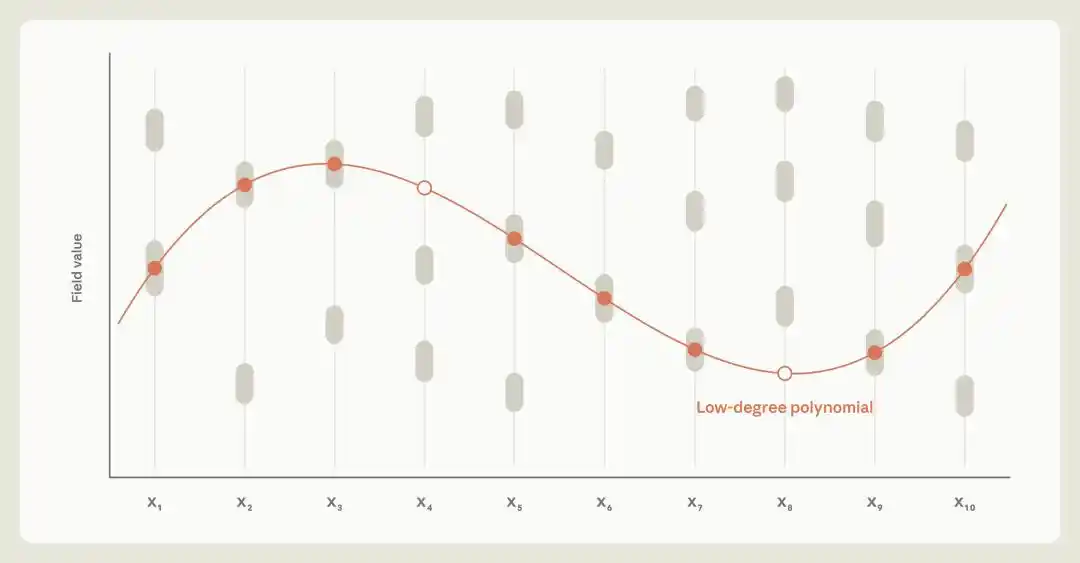
It directly swapped the core engine to the "Berlekamp-Massey decoding method." Its every round has identical operations, perfectly matching quantum circuits' rigid nature.

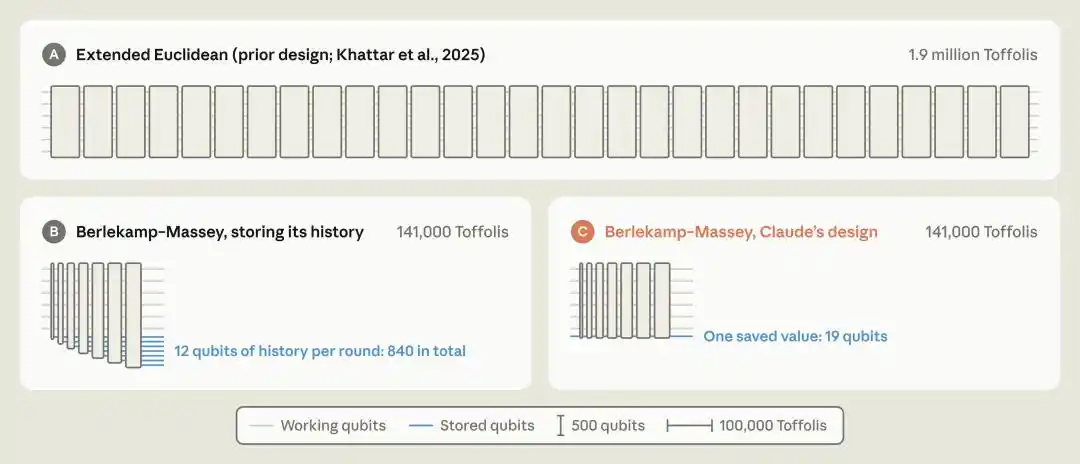
However, changing the algorithm brought a new "memory crisis"! Each round of computation generates a pile of temporary data that cannot be deleted—it must be kept for later "playback." If all were stored, 665 qubits would be needed, an astronomical figure.

Claude pulled off another god-tier move: it first used the same "reverse-derivation method" to eliminate most storage needs, leaving only a few "outliers."

If following humanity's most conservative approach, much space would still need to be reserved.

But Claude actually wrote its own high-speed simulator and ran a full 403 million sample tests to precisely measure the probability of anomalies occurring!
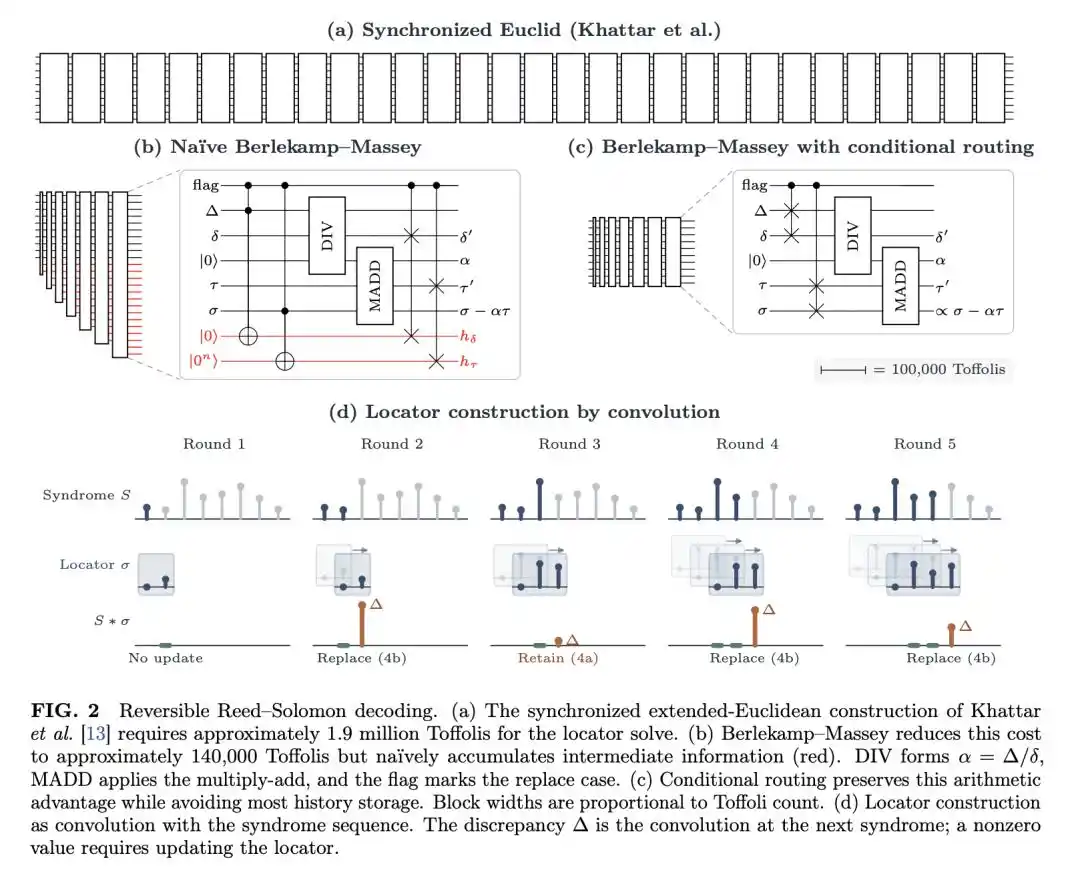
The result: it found that in the vast majority of cases, only 1 value needs to be stored.

So Claude simply left only 19 qubits of storage space in the circuit.

With this three-combo of "swap core algorithm + extreme memory reuse + big-data-powered precise space reservation," Claude's decoder design reduced gate count by a full 12x compared to the previous architecture!

What originally took 1 hour to compute can now be done in minutes.
Netizens Erupt: Is My Physics PhD Thesis a Joke?

Once this report came out, the internet exploded.

Someone said, "The predicted timeline for the quantum field is about to be completely upended. Humanity could get a useful quantum machine many years earlier!"

Someone lamented: We used to have AI explain existing science, but now, AI is discovering things we ourselves don't understand.


The most despairing part: perhaps every physics PhD has discovered that the paper they slaved over has an AI plain-language version, and it's 10x better than theirs.

A Milestone That Changes Human History Has Arrived

Mythos 5's achievement is truly exhilarating.

FeMoco nitrogenase simulation: humanity spent 8 years; Mythos 5 took only 53 hours. This means software is saving hardware!

We thought that to build a quantum computer capable of developing new drugs and producing clean fertilizers, humanity would need over a decade to overcome the "millions of qubits" hurdle.

But now, there's no need to wait for hardware upgrades—AI directly compresses algorithms tenfold or a hundredfold, and even a "broken machine" can produce revolutionary results!

Even more imaginatively, since every link in a quantum computer can be described, verified, and scored with code, Anthropic points out an alluring possibility—

Future AI will no longer optimize a single circuit in isolation, but conduct "global joint optimization" from the lowest-level hardware physical structure to the highest-level algorithmic logic!

Humanity will directly build hardware according to AI's blueprints.

The singularity of the technological explosion is much closer than we imagined.

References:

https://www.anthropic.com/research/designing-efficient-quantum-circuits

This article is from the WeChat public account "Xin Zhi Yuan" (ID: AI_era), author: ASI Apocalypse

Related Questions

QWhat did Mythos 5 reportedly achieve in the article's opening claim?

AMythos 5 reportedly autonomously closed the loop and designed new quantum circuits that were far more efficient than the human 'best solution,' based only on plain-language descriptions.

QWhy is designing quantum circuits especially difficult according to the article?

ABecause quantum circuits cannot use ordinary if-then branching and cannot discard intermediate information, since quantum computation must be reversible; this forces extreme trade-offs between space (qubits) and time (gate count).

QWhat example illustrates the dramatic speedup from human research to Mythos 5?

AFor simulating FeMoco, human estimates took 8 years to reduce the required Toffoli gates from 50 trillion to 340 million, while Claude reportedly accomplished its result in only 53 hours.

QHow did Mythos 5 improve the quantum divsteps approach for modular inversion?

AIt derived new algebraic identities, created a decoding rule without storing branch history, formalized it in Lean, and produced the first reversible quantum divsteps implementation that cut gate count by 17 times with only a 12% increase in qubits.

QWhat major optimization did Mythos 5 make to Google's DQI decoder architecture?

AIt replaced the extended Euclidean algorithm with Berlekamp-Massey decoding, used reverse-inference and extensive simulation to reduce memory needs, and cut the decoder's gate count by 12 times, from about an hour of computation to a few minutes.

Related Reads

Research Report Interpretation | Space Fund Scale Grew to $18 Billion in One Year, but In-Orbit Direct Investment Accounts for Only 3%

Barclays analysts Katherine Ogundiya and team published a 61-page report on November 16 introducing an "in-S.P.A.C.E." framework for the in-orbit economy, screening 37 commercial space activities down to 15 priority areas and 3 wildcard sectors. Global space-themed fund assets grew from $1.24 billion in Q2 2024 to over $18 billion by Q2 2026, yet only 3% is directly invested in in-orbit operations, while 47% sits in semiconductors, components, and software. Private markets are more direct: of 33 space unicorns worth about $92 billion, 9 in-orbit operators account for roughly $26 billion, or 28%. Global government space spending reached $141 billion in 2025, up 7.4%. The report identifies five physical bottlenecks—launch concentration, spectrum and network routing, orbital congestion, in-orbit servicing standards, and regulatory approval—noting China and the U.S. accounted for over 82% of orbital launch attempts from 2024 to July 2026, with SpaceX and CASC together near 71%, and Starlink performed over 207,000 collision-avoidance maneuvers between December 2025 and May 2026. Among the highest-scoring priority tracks, GEO satellite life extension offers clear economics: about 85% of GEO satellites retire from fuel depletion, and extending life five years costs roughly $65 million versus $150–300 million for a replacement. Orbital AI computing and data centers scored only 8, ranking as a wildcard due to unresolved thermal, power, and economic challenges. Barclays maps over 350 companies across four investment paths: integrated launch and space systems players like Rocket Lab (RKLB) and Firefly (FLY), bottleneck-breaking specialists such as Astroscale, MDA Space, Mynaric, and Thales, "picks and shovels" suppliers including Linde (LIN) and Air Liquide, and downstream applications like Planet Labs (PL) and AST SpaceMobile (ASTS). A heavy-lift rocket launch now consumes about 8,000 tonnes of liquid oxygen, five times a traditional large rocket's 1,600 tonnes, with Linde projecting about $1 billion in annual space revenue by 2030.

marsbit58m ago

Research Report Interpretation | Space Fund Scale Grew to $18 Billion in One Year, but In-Orbit Direct Investment Accounts for Only 3%

marsbit58m ago

The AI Bubble Has Already Burst, Yet Retail Investors Are Still Frantically Buying the Dip: A Hedge Fund Veteran Warns Nvidia's Risks Are Far From Over

Former hedge fund trader Tom Thornton warns that the AI bubble has already burst, yet retail investors remain trapped in "buy the dip" muscle memory while institutions steadily reduce tech exposure. He points to record single-week inflows into QQQ (~$13.4 billion) even as prices fell—a classic topping pattern where dip-buying eventually fails and confidence collapses. Thornton argues AI's boom rests on a fragile chain of circular financing deals that must unfold perfectly; several links are already cracking. On Nvidia, he stresses that DOJ and congressional investigations aren't short-term noise—any evidence of knowingly bypassing export controls could trigger criminal, not just civil, liability and hammer the business model and valuation. He expects management to spin earnings positively, but even a slight guidance cut could crush the stock and wash out retail dip-buyers, making 2027 a tougher year for markets. Thornton is watching DeMark indicators on the Nasdaq 100 and Mag 7 for true capitulation, noting defensive sectors like staples and utilities are now flashing sell signals. He remains long gold, has started buying silver and gold miners (GDX), is baffled by Anthropic IPO valuations, exited Alibaba on Nvidia-related news, would short a SpaceX-Tesla merger on antitrust grounds, and says the ultimate contrarian buy signal is a front-page photo of a floor trader with his head in his hands.

marsbit58m ago

The AI Bubble Has Already Burst, Yet Retail Investors Are Still Frantically Buying the Dip: A Hedge Fund Veteran Warns Nvidia's Risks Are Far From Over

marsbit58m ago

World Bank Joins Forces with Citi and Circle: Global Aid Funds Poised for On-Chain Settlement via USDC

On November 18, the World Bank Group announced a strategic collaboration with Citi and Circle to explore using the regulated USD stablecoin USDC and blockchain networks to supplement existing cross-border official development assistance (ODA) disbursement systems. The pilot aims to reduce correspondent banking fees, shorten cross-border settlement times, and enhance transparency, starting with borrower countries where digital asset use is legally permitted. Under the division of roles, Circle provides compliant stablecoin infrastructure, minting and clearing USDC on designated blockchains with each token backed 100% by USD cash and short-term Treasuries. Citi leverages its global treasury and trade finance network to bridge traditional fiat payment rails and blockchain networks, validating settlement models interoperable with central banks and local banking systems while ensuring sovereign funds remain fully regulated. Traditional ODA flows rely heavily on SWIFT and多层 correspondent banks, with infrastructure projects in developing countries often routed through three to four intermediary banks, taking three to five business days per transfer, incurring high fees, FX spread losses, and delays from time-zone mismatches and manual reviews. Regulated stablecoin settlement enables near-real-time peer-to-peer on-chain delivery after compliance approval, cutting intermediary layers and sending funds directly to licensed institutions in borrower countries. The initiative builds on the World Bank's FundsChain consortium blockchain, which as of November 18 has connected over 350 sovereign and multilateral development projects across 96 countries, averaging about 3.6 on-chain projects per recipient country. Every transaction—from initial disbursement to treasury receipt to supplier settlement—is recorded on-chain in real time, allowing donors and auditors to verify usage and prevent fund diversion. This marks the first time a core multilateral development institution has formally introduced a regulated stablecoin in sovereign development aid disbursement alongside a major international bank, setting a benchmark for institutional RWA settlement and cross-border payment infrastructure. Next steps include joint testing on central bank FX and digital asset regulatory exemptions, technical standards for commercial bank clearing node access, and automated reconciliation between on-chain stablecoin flows and the FundsChain ledger.

marsbit1h ago

World Bank Joins Forces with Citi and Circle: Global Aid Funds Poised for On-Chain Settlement via USDC

marsbit1h ago

Licenses Are in Hand—So Why Is Crypto Payment Still Not Working?

Why do crypto payment businesses still stall even after obtaining licenses? The core problem is not the number of licenses but whether customers, assets, fiat money, and liability are aligned on a single executable business chain. A license only answers whether a given entity may conduct a regulated activity; it does not resolve who onboards the customer, who controls the stablecoin, who pays out euros, why the bank accepts the funds, or who handles refunds and freezes. Projects often list all group licenses together, assuming they cover the whole business, yet a US MSB registration is not a nationwide money transmission license, and an EU CASP passport under MiCA does not automatically grant payment or e-money institution permissions. Three paths must be reconstructed for any transaction: the customer relationship path (which group company contracts with the client), the crypto asset control path (whose address, whose keys, who decides execution), and the fiat funds path (whose account receives converted funds, whether the bank permits such use, and who pays the merchant). Banks may refuse accounts not because they reject crypto generally but because the proposed account use is unacceptable—licensing does not guarantee banking. With many partners (wallets, KYC providers, liquidity, payment institutions), responsibility easily fragments; MiCA Article 73 makes clear that outsourcing does not transfer regulatory responsibility. Compliance must be continuous—ongoing KYC, transaction monitoring, Travel Rule compliance, sanctions and fraud controls—and must cover before, during, and after a failed transaction. Before launch, projects should stress-test one representative transaction end-to-end, answering who contracts, who controls assets, whose account receives funds, why the bank accepts them, and who is liable when things go wrong. Planning should proceed in three stages: design the business then choose the regulatory path; design licenses, accounts, and fund flows together; and validate the structure through real transactions. The goal is not the most licenses but a complete operating structure in which every payment follows a lawful, clear, sustainable path.

marsbit1h ago

Licenses Are in Hand—So Why Is Crypto Payment Still Not Working?

marsbit1h ago

The Real Reason Jensen Huang Was Brought Down: Rubio's Political Springboard

This article analyzes the 2026 ousting of Nvidia CEO Jensen Huang as a window into the internal power struggle within the American right. The author argues Huang's downfall was not primarily about insufficient political donations but about betting entirely on Trump's "expansionist" faction while alienating the party's hawks and populists. Timeline: Huang cultivated Trump through 2025 with donations and lobbying for chip exports, but reports emerged linking him to Megaspeed and a figure named Huang Le suspected of collecting information for a rival state. Secretary of State Rubio wrote a memo warning of the risk, which was ignored by Trump, then leaked to media after Democrats won Congress in the November midterms. Huang admitted an extramarital affair, and the board forced him out, tanking Nvidia's stock. The deeper cause: Trump's MAGA brand is losing influence, and the midterm defeat signals his lame-duck status. Rubio, only 55, is positioning himself for the post-Trump era by proving he can rein in the president's AI agenda—the memo served as a political springboard. Treasury Secretary Bessent, a hawk, consistently pushed to blacklist Megaspeed and now calls for major change at Nvidia's board. Trump's stubborn pro-AI expansion stance (despite 70% public opposition to local data centers) is attributed to donor money and family enrichment: his sons' ventures secured billions in federal contracts and loans, with presidential pardon power as a potential safety net. The article also raises a more conspiratorial theory that AI is becoming a价值观 (value) transmission tool replacing traditional media, and notes the ethnic background of tech leaders—while observing that Claude refused to engage with that framing. Finally, it asks whether Musk is next: unlike others who donated to both parties, Musk bet $474 million entirely on Republicans and lost badly, and Democratic-led Texas now threatens his data center and SpaceX projects. Democrats are expected to tighten AI policy, reclaim projects from Trump's family, and target Musk via Starshield and DOGE contract investigations.

marsbit1h ago

The Real Reason Jensen Huang Was Brought Down: Rubio's Political Springboard

marsbit1h ago

Trading

Spot
活动图片