How Did Liquid Network's 4,000 Bitcoins Vanish from the Vault?

marsbitОпубліковано о 2026-09-15Востаннє оновлено о 2026-09-15

Анотація

On September 6th, approximately 4,000 Bitcoins worth $320 million were stolen from the Liquid Network, a Bitcoin sidechain, marking the largest crypto theft of 2026. The breach did not involve stolen private keys, hacked hardware, phishing, or insider collusion. Instead, the attack exploited a critical vulnerability in the network's node software, allowing the attacker to forge L-BTC, the sidechain's asset, and then legitimately redeem it for real Bitcoin. The Liquid Network, operated by a 15-member federation with an 11/15 multi-signature requirement, was designed to be secure. Its use of Confidential Transactions hides transaction amounts. However, a caching flaw in the Elements node software for validating "range proofs" (which confirm amounts are valid without revealing them) was the entry point. The software's cache did not properly tie a validated proof to a specific asset or recipient. Over 14 hours, the attacker submitted 68 identical valid proofs, priming the cache. They then reused the same proof in an invalid context—creating 3,996 L-BTC without any real Bitcoin backing. Since the federation nodes only verified multi-signatures and amounts, not the legitimacy of the L-BTC's origin, the forged assets were approved. A subsequent peg-out request, signed by 11 members, moved nearly 4,000 real Bitcoins off the main chain. The theft was detected due to a node discrepancy, revealing a reserve deficit of over 95%. A fix for the caching bug had been committed to the codeb...

On September 6, approximately 4,000 bitcoins (worth around $320 million at the time) left the Liquid Network's wallet. This is the largest cryptocurrency theft event to date in 2026.

But the most puzzling aspect of this case is not the amount.

No private key was stolen, no HSM (Hardware Security Module) was breached, no one was phished, and there was no insider. The 15 institutions managing this vault all kept their keys perfectly intact in their own safes, and every signature was made by them actively, voluntarily, and according to the rules.

And just like that, the money walked out.

To understand how this happened, we need to spend a few minutes understanding how this vault was designed.

I. A Bitcoin Vault Co-managed by 15 Institutions

The Bitcoin mainnet has a well-known problem: it's slow and expensive. A transaction typically takes about ten minutes to be included in a block, and the fees fluctuate with mining difficulty. This is not sufficient for exchanges or quantitative teams that need to make large, frequent transfers.

Liquid Network is a solution proposed by Blockstream. It is a "sidechain"—think of it as a fast lane next to the Bitcoin mainnet.

The usage is simple: you deposit real bitcoin into a jointly managed vault, and the vault issues you a receipt of equivalent value. This receipt is called L-BTC and can circulate rapidly on this fast lane, handling a transaction per minute. When you want to withdraw the real bitcoin, you return the receipt for cancellation, and the vault gives you the equivalent amount of real coins. The former action is called peg-in, the latter peg-out. In theory, the total amount of L-BTC circulating on-chain should always equal the amount of real bitcoin lying in the vault—this is the so-called 1:1 peg.

The key is who manages this vault. Liquid's answer: it is not entrusted to any single entity, but to a "federation" of 15 known institutions, including multiple exchanges and infrastructure service providers. Each of these 15 nodes holds a key stored in its own dedicated Hardware Security Module (HSM). Any operation to open the vault requires simultaneous signatures from at least 11 of these keys, i.e., an 11/15 multisig.

Simultaneously, these 15 nodes are also responsible for taking turns producing blocks and validating each other. In other words, they are both the custodians of the vault and the bookkeepers of this chain.
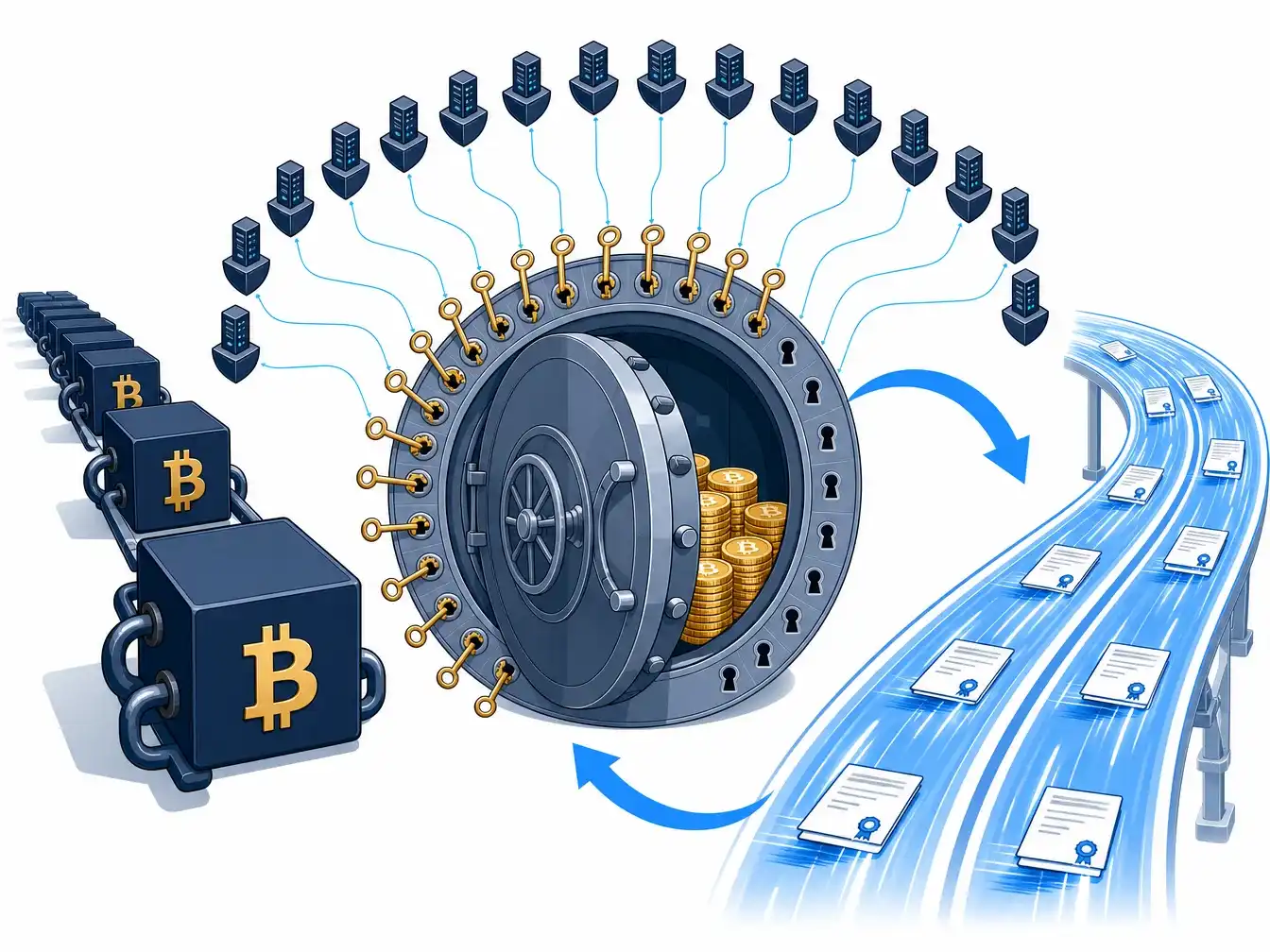
The intention of this design is clear: single-point malfeasance is impossible; you would need to persuade 11 unrelated institutions simultaneously to steal the money. From the perspective of "defending against bad actors," it indeed does a good job.

II. A Private Ledger and "Verifying Money Without Opening the Envelope"

Liquid has another feature: its transaction amounts are kept confidential from the public.

On the Bitcoin mainnet, anyone can see the specific amount of each transfer. This is uncomfortable for institutions—your large-scale position adjustments are watched by the whole world. Liquid solves this with a technology called "Confidential Transactions": amounts are encrypted and hidden, leaving only a mathematical commitment on-chain; outsiders cannot see the specific numbers.

But this immediately introduces a new problem. If the amounts are invisible, how do nodes know that a transaction is not cheating? For example, writing a negative number out of thin air or inflating a number to overflow?

The solution is called "range proof." To use an analogy: put the amount into an opaque envelope, and attach a mathematical proof. This proof allows anyone to be convinced, without opening the envelope, that the number inside falls within a legitimate range. Nodes check these proofs one by one, confirming that the income and expenditure of each transaction balance, but never knowing the specific amount.

This mechanism itself is sound cryptography. The problem lies in its performance optimization.

III. The Vulnerability: A Verifier with Too Good a Memory, but Remembering the Wrong Thing

Verifying range proofs is computationally expensive. To prevent nodes from being overwhelmed, Elements (the open-source node software used by Liquid, a fork of Bitcoin Core) did something any engineer would do: add caching.

A proof that has been verified once is recorded; next time the same one is encountered, it is directly approved without recalculation.

Now the question arises: how to determine if "the encountered proof is the same one"?

Elements' approach was to create an index key using two things: the bytes of the proof itself, plus the encrypted amount commitment.

What was missed? It missed which asset this was, and who this money was to be paid to (the output script).

Using a checkout counter analogy. There is a bill verifier on the counter. Bills it has verified are recorded by serial number; the same serial number is directly approved next time. But when recording the serial number, it only recorded the watermark pattern and denomination of the bill, not which country's currency it was, nor which payee it was meant for. Thus, the same "verified" conclusion could be applied to a completely different, inapplicable scenario.
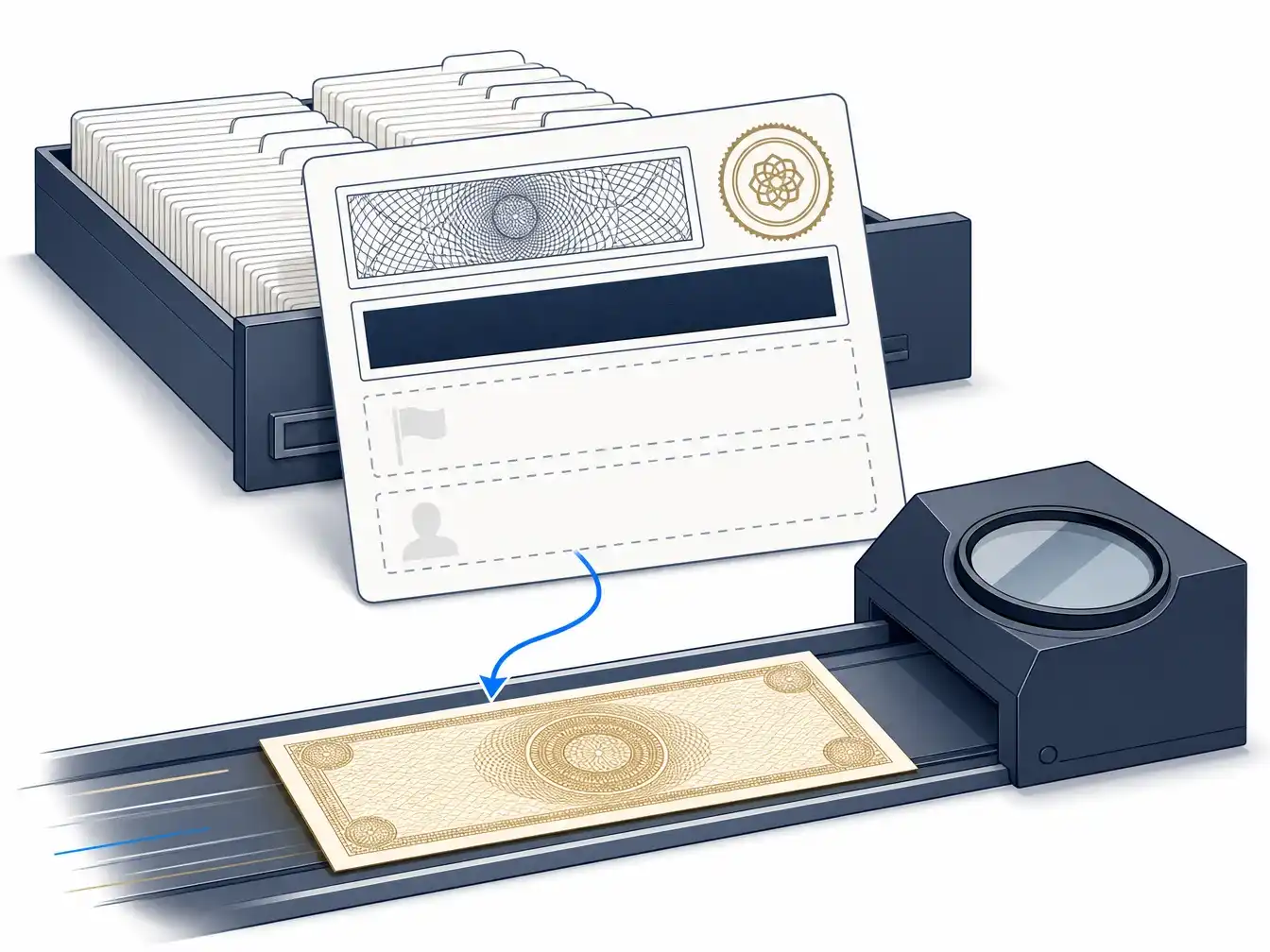
This is exactly what the attacker did, and very patiently. According to researcher analysis, in the approximately 14 hours before taking action, they gradually sent 68 identical range proofs to the chain—feeding these "verified" conclusions into the caches of various nodes, over and over. When the time was ripe, they submitted the same proof again, but placed it in a context where it should have been rejected.

The node checked its cache, found "I've verified this, no problem," and approved it.

Thus, 3,996 L-BTC, unsupported by any real bitcoin, was recorded into the ledger out of thin air.

Since the amounts were already hidden by Confidential Transactions, no observer on-chain could see this extra money.

IV. Those 35 Minutes: Every Step Compliant

At 23:53 Beijing Time on September 6 (15:53:10 UTC), Liquid block 4,050,336 packaged this forged transaction.

Every step that happened next was completely in accordance with the rules. This is the most unsettling part of the whole incident.

These newly minted L-BTC were transferred to SideSwap's wallet (a third-party platform providing peg-out services). Once mixed in, they became indistinguishable from any normal L-BTC. To the ledger, they were real money.

A dozen minutes later, a peg-out request for 4,000 L-BTC was submitted: cancel the receipts and withdraw the real bitcoin.

The 15 nodes began to perform their duties. Their HSMs performed two checks: whether the withdrawal address was on the whitelist, and whether the amount of L-BTC being destroyed matched the amount of bitcoin requested. Both checked out.

It would not, and could not, ask the third question: where did these L-BTC originally come from?

Eleven keys signed as usual. About 35 minutes later, the Bitcoin mainnet confirmed that transaction, and 3,996 real bitcoins left the federation wallet.

It's worth noting that Liquid had an emergency insurance mechanism: if the normal signing path fails, it requires using 2/3 of the backup keys and waiting 56 days to access the funds. This insurance was never triggered—because the attacker never went for the back door; they walked through the front door, and the front door opened for them.

The multisig threshold controls "who can sign"; it cannot answer "whether what is being signed is correct." When the forgery occurs at a layer below the signing—the node software's judgment of what constitutes real money—a higher threshold only serves to sign an erroneous expenditure more neatly.

V. How It Was Discovered

Ironically, this vulnerability caused discrepancies between different nodes: for the same block, some nodes accepted it, while others rejected it—depending on what was previously stored in their respective caches.

Bitcoin Core developer Antoine Poinsot pointed out publicly at the time that the key block was "rejected by mempool but accepted by Blockstream."
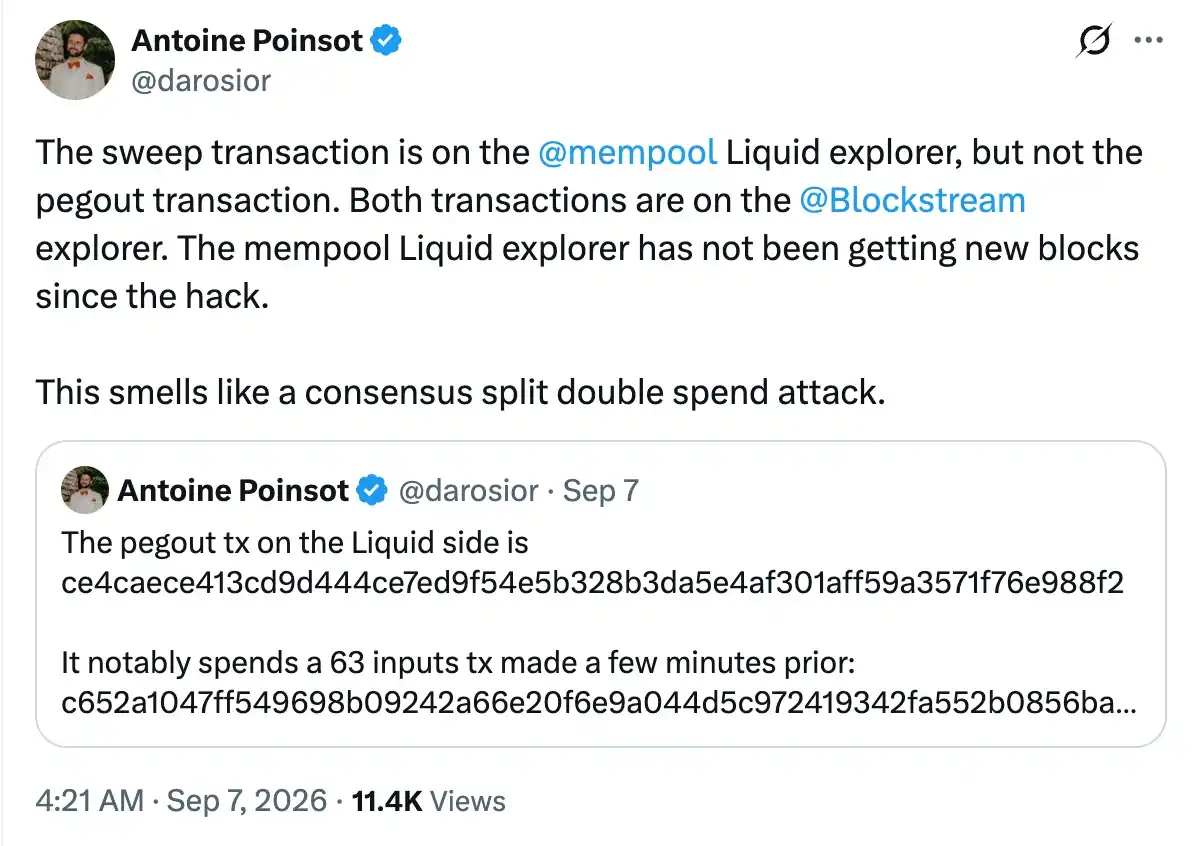
And mempool.space itself is a member of the federation. Its real-time auditing program caught an abnormal withdrawal of -4,019 BTC, while Liquid's official panel did not reflect this loss at the time—two monitoring systems presented different realities.

The subsequent numbers were stark: 4,205 L-BTC were circulating on-chain, while after processing a few subsequent withdrawals, only 197 real bitcoins remained in the federation wallet—a backing rate of less than 5%.

This also reveals the other side of Confidential Transactions: the cost of privacy is verifiability. With amounts hidden, no external party can cross-check in real time the "total receipt amount on the ledger" with the "balance of real coins in the vault." The 1:1 peg degenerates from a fact verifiable by anyone into a statement that needs to be believed. By the time it was proven false, the gap was already $320 million.

VI. More Striking Than the Bug Is the Patch

If the story ended here, it would just be a high-level cryptographic attack. But there is a second half.

The code to fix that caching flaw had already been submitted to the code repository on August 3, with a clear title: bind range proof caching to asset and output script. On September 2, it was merged into the main branch.

At the time of the incident, the federation nodes were running version 23.3.3—released on April 13, which did not contain this fix. Less than three hours after the incident on September 6, this patch was urgently merged into the release branch.

It needs to be clarified that the official has not formally confirmed that this incident was caused by this specific flaw; the above correspondence comes from external researcher analysis. But the timeline itself is sufficient to illustrate a more common problem: a vulnerability being fixed and the fixed code actually running in the production environment are two different things, and there can be a five-month gap between them.

Casa's Head of Security, Jameson Lopp, pointed out another thing: the public commit history of the federation node code repository showed that the last commit was in April 2024—over two years before the incident.
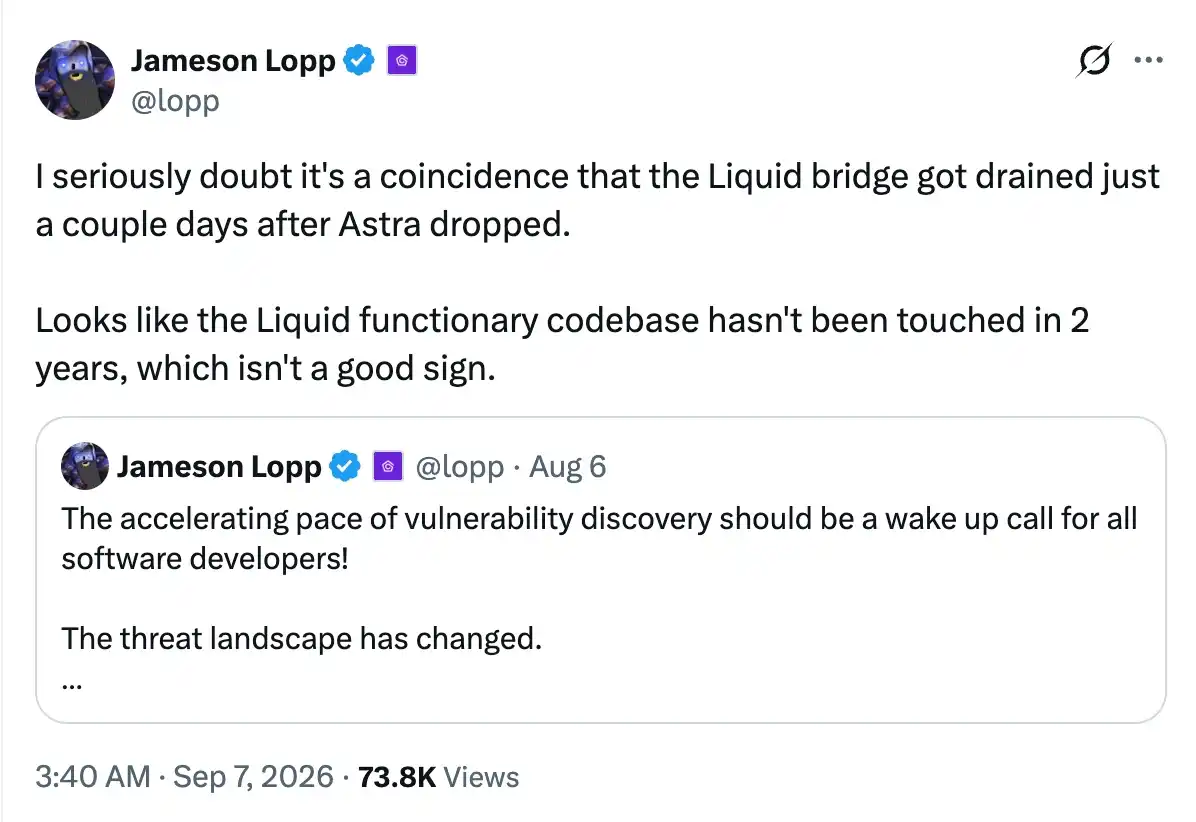
$320 million in assets was entrusted to software that hadn't been seriously maintained for two years. This is not a failure of cryptography; it's a failure of operations.

VII. "We Are White Hats," and Blockstream's Response

That evening, the receiving address sent an OP_RETURN message on-chain:

we are whitehats. contact us on chain.

Negotiations began. On September 7, the other party returned 3,400 bitcoins (approximately $272 million, 85%), keeping 598.5 bitcoins (approximately $47 million) for themselves.

Initially, communication was private, with Blockstream replying using encrypted and PGP-signed messages. But between September 8 and 9, the other party moved the messages to plaintext on the public chain, and the tone changed:

Accusing the other side of negligence—"You only spent $1.5 million (possibly even $0) to protect $5 billion in assets; this is a blatant disregard for security."

Proposing conditions—demanding that Blockstream pay an additional vulnerability bounty equivalent to 10% from its own funds as a precondition for returning the remainder.

And threatening—if refused, to make "all your holders bear a 15% loss for your irresponsibility and stinginess."

At this point, the self-proclaimed "white hat" status became difficult to maintain. Ledger's CTO, Charles Guillemet, was quite direct: a real white hat would disclose the vulnerability before moving the collateralized assets, not after; emptying 95% of the reserves first and then setting terms "resembles extortion more than security research."

Comparing with history also reveals the difference. In cases like Nomad, SafeMoon, and Team Finance, there have been outcomes where "most was returned, and a bounty was kept," but those usually involved a clear bounty arrangement, often around 10%. The peculiarity here is that the 15% was unilaterally taken, and the question of who set the "price" remained unanswered throughout.

Then, Blockstream publicly refused.

In a public statement, Blockstream stated it would not pay a ransom for the return of stolen funds and left no room for ambiguity: taking assets without authorization and refusing to return them is a crime, not responsible vulnerability disclosure, nor white-hat behavior—"this is theft."

The statement acknowledged that good-faith communication had indeed taken place earlier, aiming to recover user funds and protect the broader Bitcoin community, but emphasized that this should not be misinterpreted as accepting the other party's actions or conditions. It also explicitly refused to set a precedent: developers of open-source software created for the benefit of the Bitcoin community should not be forced to pay a ransom that "far exceeds their economic participation."

In response to the threat of "making holders bear a 15% loss," the statement's reply was a declaration of principle—bitcoin is hard money, it cannot be minted costlessly, and Bitcoin will not impose a write-down on users to pay a ransom.

Finally, it presented two paths: return now, and things can still be handled according to white-hat standards; if not returned, Blockstream will use all legal means, collaborating with law enforcement, exchanges, service providers, on-chain forensics experts, and other parties to trace, recover the assets, and identify the responsible parties. And it reminded everyone of a common knowledge in the crypto world: Bitcoin's design is inherently transparent; "transactions do not disappear, and the evidence they leave does not either."

Why this matter is more important than those $47 million. In recent years, "take first, negotiate terms later" has gradually solidified into a semi-standardized playbook: attackers drain the funds, claim to be white hats, keep a self-determined "bounty," and the project accepts to mitigate losses quickly. The essence of this playbook is that the pricing power of a security incident falls into the hands of the attacker—the return ratio, the retention amount, the negotiation pace are all decided by the other party.

What Blockstream refused this time was not so much the money, but this playbook. The price might be that the $47 million cannot be recovered; what is gained is not endorsing the pricing for the next attack. Whether this judgment is correct depends on whether subsequent investigations yield results. But it at least lays out a long-term ambiguity: the victim's willingness to communicate in good faith and the victim's acceptance of conditions are two entirely different things.

Another detail worth noting. Since an AI model, evaluated as "the first capable of independently discovering unknown vulnerabilities," was released just three days before the incident, there was speculation in the community linking the two events—there is still no evidence to support this; treat it as chatter. But interestingly, Blockstream's statement also proactively mentioned AI: "Advances in AI are making the world different, and the Bitcoin community has been working hard to address this threat."

The official did not say that this attack used AI. But the fact that a company that just lost $320 million mentions AI in the threat context of its incident statement itself indicates the industry's judgment: the cost of discovering deep vulnerabilities is decreasing, while the speed of patching and deployment has not kept pace. The patch that lay dormant for five months in this incident is the most concrete footnote to this statement.

VIII. The Current Situation

Liquid resumed block production at 12:26 UTC on September 10, but does not yet package user transactions; peg-in and peg-out remain suspended. The official has outlined a three-phase recovery path—first resume block production, then replay verified transactions, and finally reopen pegging operations after confirming the network state is correct.

After the return of 3,400 bitcoins, the backing rate of L-BTC returned to approximately 86%. Blockstream co-founder Adam Back publicly stated that the 1:1 L-BTC peg will be backed and advised holders not to panic sell on the over-the-counter market.

With Blockstream's public refusal to pay, the remaining 598.5 bitcoins are no longer a negotiation issue but have become an investigation issue—on-chain forensics, exchange cooperation, law enforcement involvement, with timelines measured in months or even years, and outcomes highly uncertain.

This also clarifies the meaning of the promise that "the 1:1 peg will be backed": the shortfall will be borne by Blockstream and the federation's own balance sheets, not by imposing a proportional write-down on token holders. This is precisely the implication of the statement's line, "Bitcoin will not write down users to pay a ransom." For L-BTC holders, this means that, for now, they face a liquidity freeze lasting from days to weeks, not a loss of principal—provided this guarantee of backing is fully executed. This "proviso" should be assessed by the holders themselves, not taken as grounds for optimism on their behalf.

IX. An Expensive Lesson for Institutions

This incident yields several conclusions that don't require you to understand cryptography.

First, "wrapped assets" are not the original assets.

The L-BTC in your hands, various cross-chain BTC, various wrapped tokens—they are not the native assets themselves, but deposit receipts. Their security equals the weakest link among three layers: the issuer's credibility, potential bugs in the node software implementation, and whether the entry/exit channels can distinguish between real and fake. In this case, the problem occurred in the second layer, and the party that accepted the bad money was the third layer—SideSwap did nothing wrong; it simply had no way to distinguish. Most people only look at the first layer when assessing risk.

Second, visibility is more important than invisibility.

Privacy is a genuine need, but when the verifiability of reserves is sacrificed, you lose the ability to detect a problem before it becomes catastrophic. The gap in this case was caught because different nodes accidentally gave different answers, not because of any designed verification mechanism.

Third, your risk includes others' operational rhythms.

A patch lying dormant for five months without being deployed; code that hasn't been touched for two years—these aren't written in any whitepaper, but they determine how safe your money is. When evaluating a protocol, besides reading its design documents, it's also worth looking at its commit history and version release discipline.

Fourth, multisig is necessary, but it defends against bad actors, not bad code.

An 11/15 multisig is a good defense in a key-theft scenario; in a scenario where software mistakes fake money for real money, it is useless. It might even make that erroneous expenditure appear exceptionally proper and legal.

Fifth, "white hat" is a behavioral standard, not an identity one can claim.

The difference lies not in how much is ultimately returned, but in the sequence: disclose first, then collaborate; or drain first, then set a price. Blockstream's choice, even risking the non-recovery of $47 million to publicly refuse payment this time, draws exactly this line for the industry. It may not recover the money, but it at least makes the next attacker uncertain whether claiming to be a white hat will still grant a get-out-of-jail-free card.

As a custody service provider, what alarms us most at Cactus Custody about this incident is not the vulnerability itself, but that it exposed three actions that could have been managed proactively:

  • Asset vetting should not only examine the issuer; the minting logic, redemption channels, and the degree of reserve verifiability must be assessed together. Assets lacking independent verification means should be categorized and limited separately.
  • Any entry confirmation relying on a single data source is fragile. Critical on-chain states are worth cross-verifying using two independent node service providers—the gap in this case was precisely caught because "two nodes gave different answers."
  • Holding user assets in address-isolated accounts and conducting regular reconciliations can limit the blast radius of any single misjudgment to a manageable scope.

In the end, security is not about whose lock is stronger, but about who needs to trust fewer entities.

Трендові криптовалюти

Пов'язані питання

QAccording to the article, how were approximately 4,000 bitcoins transferred out of the Liquid Network vault without any keys being stolen or compromised?

AThe transfer exploited a vulnerability in the 'range proof' caching mechanism within the Elements node software. Attackers submitted 68 identical valid range proofs over 14 hours to prime the nodes' caches. Later, they reused the same cached proof in an illegitimate transaction context to mint 3,996 L-BTC without actual bitcoin backing. This fraudulent L-BTC was then used to legitimately peg-out and withdraw the real bitcoin, bypassing the 11/15 multi-signature scheme as all checks appeared normal.

QWhat was the critical flaw in the 'range proof' caching mechanism that enabled the attack on Liquid Network?

AThe flaw was that the cache index key was constructed using only the proof bytes and the encrypted amount commitment. It failed to include the asset type and the output script (recipient). This allowed a previously validated proof to be incorrectly matched and accepted in a completely different and illegitimate transaction context, tricking the node software into approving the creation of fraudulent L-BTC.

QWhat major operational failure, beyond the software vulnerability itself, did the article highlight as contributing to the incident?

AThe article highlighted a severe operational failure: a patch fixing the caching vulnerability had been committed to the code repository on August 3rd and merged on September 2nd. However, at the time of the attack on September 6th, the federation nodes were still running version 23.3.3 from April 13th, which did not contain the fix. Furthermore, the federation node codebase showed no commits for over two years prior to the incident, indicating poor maintenance practices for software securing billions in assets.

QWhy did Blockstream publicly refuse to pay the remaining ~598.5 BTC as demanded by the attackers, and what principle were they defending?

ABlockstream refused to pay to avoid setting a precedent where attackers unilaterally set the price for a security incident by taking funds first and then negotiating. They classified the act as theft, not responsible white-hat disclosure. The principle they defended was that developers of open-source software for the Bitcoin community should not be forced to pay ransoms 'far exceeding their economic participation.' They also emphasized that Bitcoin is hard money and should not be debased (e.g., via user haircuts) to pay ransoms.

QWhat key distinction does the article make between a genuine 'white-hat' security researcher and the attackers in this case?

AThe key distinction is the sequence of actions. Genuine white-hat researchers would disclose the vulnerability to the project and collaborate *before* exploiting it to move funds. In this case, the attackers drained 95% of the reserves first and then opened negotiations, setting their own terms for the return of most funds while unilaterally keeping a portion as a 'bounty.' Security experts like Ledger's CTO labeled this behavior as closer to extortion than responsible security research.

Пов'язані матеріали

Founders Fund Leads $5 Million Token Purchase of ANVL: What Exactly is This "Non-Lending" DeFi Protocol Doing?

On October 6th, Founders Fund, led by Peter Thiel, invested $5 million to purchase ANVL tokens from the DeFi protocol Anvil's treasury. The round included participation from Pantera Capital and others, alongside angel investors like Compound founder Robert Leshner. Anvil is not a lending protocol. Instead, users lock assets like ETH or USDC into its vault to generate a verifiable on-chain "Letter of Credit" (LOC). This LOC acts as an economic guarantee, proving the user has sufficient locked collateral to back financial commitments, without borrowing funds. The protocol applies this mechanism to use cases like payment guarantees for merchants (via integration with Flexa) and enabling instant deposits for traders on exchanges like Bullish. Anvil's economic model is unique: it charges zero protocol fees. Its native token, ANVL, derives value solely from governance rights over parameters like supported collateral types. The total supply is 100 billion tokens. Despite an 83% price surge on the investment news, ANVL remains down approximately 89% from its all-time high. The protocol's Total Value Locked (TVL) has also fallen about 87% from its peak of ~$109 million in July 2025 to around $14 million currently. The investment represents a strategic bet that on-chain credit guarantees could become a significant category. Key factors to watch include the rate of real enterprise adoption through Anvil's SDK, the long-term sustainability of its zero-fee model, and the broader migration of traditional trade finance needs to blockchain infrastructure.

marsbit1 год тому

Founders Fund Leads $5 Million Token Purchase of ANVL: What Exactly is This "Non-Lending" DeFi Protocol Doing?

marsbit1 год тому

Mathematical Explosion: OpenAI Overnight Solves 722 Math Problems, Quasi-Riemann Hypothesis Proven

OpenAI has stunned the global mathematics and AI communities by releasing a GitHub repository containing 722 manuscripts addressing 372 previously unresolved major mathematical problem families, all reportedly generated by an unreleased internal AI model. The announcement, made without prior peer review, has provoked both excitement and alarm among mathematicians. The most notable breakthrough claims to be a proof of a "quasi-Riemann Hypothesis," establishing a zero-free region for Dirichlet L-functions with real part greater than 7/8 and eliminating the Landau-Siegel zeros—a significant leap in analytic number theory. The work has reportedly undergone formal verification using Lean. Other highlighted results include: unconditionally proving the NP-hardness of the basic semidefinite programming (SDP) threshold for approximation algorithms, based solely on P ≠ NP and circumventing the Unique Games Conjecture; proving the rational Hodge conjecture for abelian varieties with complex multiplication (CM); and resolving both the symmetric and asymmetric Mahler conjectures in convex geometry. According to OpenAI, most proofs were generated automatically by the model, with an average "thinking" time of just three hours per problem. This unprecedented scale and speed have sparked intense debate about the future of human mathematicians. While some express fear about the concentration of intellectual power, others see it as the dawn of a new era of discovery driven by AI. The mathematical world is now tasked with scrutinizing these claims, which, if verified, would represent historic milestones.

marsbit1 год тому

Mathematical Explosion: OpenAI Overnight Solves 722 Math Problems, Quasi-Riemann Hypothesis Proven

marsbit1 год тому

As Midterm Elections Approach, the Real Trade in U.S. Stocks Isn't About Who Wins

With the US midterm elections approaching in early November, political uncertainty has re-emenrged as a market variable. While market participants are weighing potential shifts in congressional control and policy direction, historical data suggests midterm elections themselves are not a definitive negative catalyst for US equities. Since 1937, the S&P 500 has averaged a positive gain of 9.2% in midterm election years, though this lags behind the 13.3% average for non-election years. A more consistent historical pattern is increased market volatility and a tendency for stronger performance concentrated in the fourth quarter, as political uncertainty is resolved. The article, citing analysis from J.P. Morgan and Capital Group, argues that the market's primary concern is policy path uncertainty rather than which party wins. This uncertainty tends to depress markets in the run-up to the vote, with a potential rebound afterward as the political risk premium dissipates. However, the article cautions against attributing market performance solely to the election. Recent midterm years like 2018 and 2022 saw significant market declines primarily driven by factors like Federal Reserve tightening and inflation, not the election outcome itself. The core argument is that the midterm election's impact on markets is often secondary to more fundamental drivers. Regardless of whether the result is a unified or divided government, the market's longer-term trajectory has historically been determined by underlying economic conditions. For the current environment, the key variables to watch post-election are not political labels but the path of interest rates, corporate earnings trends, and whether any actual policy changes materially alter cash flow expectations for businesses. The election may influence sentiment and policy expectations, but the sustainability of any year-end rally will ultimately depend on these core fundamentals of profitability, rates, and economic data.

marsbit1 год тому

As Midterm Elections Approach, the Real Trade in U.S. Stocks Isn't About Who Wins

marsbit1 год тому

AI Can't Change 'DNA': How Long Can SanDisk Stay Strong?

**AI Cannot Alter the "DNA": How Much Longer Can Western Digital's Run Last?** This analysis examines the sustainability of the current "super cycle" for NAND flash memory, driven by AI, with a focus on Western Digital (WD). The core argument is that while AI demand has fundamentally shifted NAND's role from a data warehouse to an essential component on the compute path, especially for AI inference, this does not eliminate the industry's cyclical nature. The piece first assesses the supply-demand dynamics. On the supply side, major producers are showing capital expenditure restraint for NAND, prioritizing DRAM/HBM. Capacity growth through 2028 relies heavily on technological upgrades (increasing 3D layers to 300+) and expansion primarily from China's YMTC, rather than new fabs. Global new fab capacity from players like Samsung and WD/Kioxia is concentrated post-2029. This results in estimated bit supply growth (CAGR ~24% for 2026-2028) largely driven by higher per-wafer output. Demand is undergoing a structural shift. AI-related NAND demand (for data lakes, KV cache, and staging) is forecast to grow at a 75% CAGR from 2025-2028, becoming the dominant driver. Data center demand will surpass 50% of total NAND demand in 2026. Consumer demand (PC, smartphone) is being squeezed and is expected to decline or stagnate. A key 2027 demand catalyst is NVIDIA's Rubin platform with its dedicated contextual memory storage (ICMS). The analysis concludes that a supply-demand deficit will persist into 2027. However, 2028 is identified as a potential inflection point where supply (led by YMTC's new fab) could outpace demand, ending the price rally. For Western Digital, the analysis models a more conservative path than management's guidance. It forecasts Average Selling Price (ASP) peaking in FY28 (ending June 2028) before declining in FY29-30 as the market loosens, though supported by long-term agreements (LTAs) and a higher mix of data center products. Consequently, margins and profits are expected to peak in FY28 and then contract. The valuation suggests WD's current price largely reflects a neutral scenario, with limited short-term upside unless the market becomes convinced that prices will remain stable post-2028. The fundamental takeaway is that despite AI's transformative impact, NAND's cyclical "DNA" remains intact.

marsbit2 год тому

AI Can't Change 'DNA': How Long Can SanDisk Stay Strong?

marsbit2 год тому

Торгівля

Спот

Популярні статті

Що таке BITCOIN

Розуміння HarryPotterObamaSonic10Inu (ERC-20) та його позиції у крипто-просторі Останніми роками ринок криптовалют спостерігав за зростанням популярності мем-коінів, які привертають інтерес не тільки трейдерів, але й тих, хто шукає спілкування та розважальну цінність. Серед цих унікальних токенів є HarryPotterObamaSonic10Inu (ERC-20), інтригуючий проект, що поєднує культурні посилання з тканинами криптовалюти. Ця стаття досліджує ключові аспекти HarryPotterObamaSonic10Inu, вивчаючи його механізми, спільноту та його взаємодію з ширшим крипто-ландшафтом. Що таке HarryPotterObamaSonic10Inu (ERC-20)? Як випливає з його назви, HarryPotterObamaSonic10Inu є мем-коіном, побудованим на блокчейні Ethereum, класифікованим за стандартом ERC-20. На відміну від традиційних криптовалют, які можуть підкреслювати практичну корисність або інвестиційний потенціал, цей токен процвітає завдяки розважальній цінності та силі своєї спільноти. Проект спрямований на створення середовища, де зацікавлені користувачі можуть об'єднуватися, ділитися ідеями та брати участь у заходах, натхненних різноманітними культурними явищами. Однією з примітних особливостей HarryPotterObamaSonic10Inu є нульовий податок на транзакції. Цей привабливий елемент має на меті заохочувати торгівлю та участь у спільноті, позбавлену додаткових витрат, які можуть відлякувати дрібних трейдерів. Загальна пропозиція монет становить один мільярд токенів, що позначає намір підтримувати суттєву циркуляцію в межах спільноти. Творець HarryPotterObamaSonic10Inu (ERC-20) Походження HarryPotterObamaSonic10Inu дещо окутане таємницею; деталі про творця залишаються невідомими. Розвиток цього токена позбавлений впізнаваної команди або чіткої стратегії, що не є рідкістю в секторі мем-коінів. Натомість проект виник органічно, а його розвиток значною мірою залежить від ентузіазму та участі його спільноти. Інвестори HarryPotterObamaSonic10Inu (ERC-20) Щодо зовнішніх інвестицій та підтримки, HarryPotterObamaSonic10Inu також залишається невизначеним. Токен не зазначає жодних відомих інвестиційних фондів або значної організаційної підтримки. Натомість життєва сила проекту полягає в його базовій спільноті, яка інформує про його зростання та стійкість через колективні дії та залученість у крипто-просторі. Як працює HarryPotterObamaSonic10Inu (ERC-20)? Як мем-коін, HarryPotterObamaSonic10Inu функціонує передусім поза традиційними рамками, що часто регулюють вартість активів. Є кілька відмінних аспектів, що визначають, як працює проект: Транзакції без податку: Завдяки відсутності податкових зборів на транзакції, користувачі можуть вільно купувати та продавати токен, не турбуючись про приховані витрати. Залучення спільноти: Проект процвітає завдяки взаємодії спільноти, використовуючи соціальні медіа для створення шуму та сприяння залученню. Обговорення, обмін контентом та залученість є ключовими елементами, що допомагають розширити його охоплення та зміцнити лояльність серед прихильників. Відсутність практичної корисності: Слід зазначити, що HarryPotterObamaSonic10Inu не пропонує конкретної корисності в рамках фінансової екосистеми. Натомість він класифікується як токен, що призначений в основному для розваги та спільнотних активностей. Культурне посилання: Токен кмітливо вплітає елементи популярної культури, щоб привернути інтерес, зв'язуючи з ентузіастами мемів та крипто-стежками. HarryPotterObamaSonic10Inu ілюструє, як мем-коіни функціонують інакше, ніж традиційні криптовалютні проекти, увійшовши на ринок як інноваційні соціальні конструкти, а не утилітарні активи. Хронологія HarryPotterObamaSonic10Inu (ERC-20) Історія HarryPotterObamaSonic10Inu відзначена кількома значними етапами: Створення: Токен виник з вірусного мему, захопивши уяву багатьох крипто-ентузіастів. Конкретні дати створення недоступні, що підкреслює його органічний розвиток. Лістинг на біржах: HarryPotterObamaSonic10Inu з'явився на різних біржах, дозволяючи зручніший доступ і торгівлю спільноти. Ініціативи залучення спільноти: Ведення діяльності, спрямованої на покращення взаємодії спільноти, включаючи конкурси, кампанії в соціальних мережах та створення контенту від фанатів та прихильників. Плани на майбутнє: Дорожня карта проекту включає запуск колекції NFT, мерчандайзинг та електронну комерцію, пов'язану з його культурними темами, що далі залучає спільноту та намагається додати більше вимірів до його екосистеми. Ключові моменти про HarryPotterObamaSonic10Inu (ERC-20) Спільнотний підхід: Проект надає пріоритет колективному внеску та креативності, забезпечуючи, щоб участь користувачів була в центрі його розвитку. Класифікація як мем-коін: Це є його епігенез розважальної криптовалюти, що відрізняється від традиційних інвестиційних інструментів. Жодного прямого відношення до Bitcoin: Незважаючи на схожість у назві, HarryPotterObamaSonic10Inu є відмінним і не має жодного зв’язку з Bitcoin або іншими усталеними криптовалютами. Зосередженість на співпраці: HarryPotterObamaSonic10Inu створено для того, щоб надати простір для співпраці та обміну історіями серед його власників, забезпечуючи шлях для творчості та спільного зв'язку. Перспективи на майбутнє: Амбіція розширитися за межі початкової концепції в NFT та мерчандайз відкриває шлях для проекту потенційно потрапити в більш мейнстрімні сфери цифрової культури. Оскільки мем-коіни продовжують захоплювати уяву спільноти криптовалют, HarryPotterObamaSonic10Inu (ERC-20) вирізняється своїми культурними зв'язками та орієнтованим на спільноту підходом. Хоча він може не відповідати типовій моделі утилітарного токена, його суть полягає в радощах і товариськості, що підтримуються серед його прихильників, підкреслюючи еволюційну природу криптовалют в усе більш цифрову епоху. Оскільки проект продовжує розвиватися, важливо спостерігати за тим, як динаміка спільноти вплине на його траєкторію в постійно змінюваному ландшафті технології блокчейн.

3.1k переглядів усьогоОпубліковано 2024.04.01Оновлено 2024.12.03

Що таке BITCOIN

Як купити BTC

Ласкаво просимо до HTX.com! Ми зробили покупку Bitcoin (BTC) простою та зручною. Дотримуйтесь нашої покрокової інструкції, щоб розпочати свою криптовалютну подорож.Крок 1: Створіть обліковий запис на HTXВикористовуйте свою електронну пошту або номер телефону, щоб зареєструвати обліковий запис на HTX безплатно. Пройдіть безпроблемну реєстрацію й отримайте доступ до всіх функцій.ЗареєструватисьКрок 2: Перейдіть до розділу Купити крипту і виберіть спосіб оплатиКредитна/дебетова картка: використовуйте вашу картку Visa або Mastercard, щоб миттєво купити Bitcoin (BTC).Баланс: використовуйте кошти з балансу вашого рахунку HTX для безперешкодної торгівлі.Треті особи: ми додали популярні способи оплати, такі як Google Pay та Apple Pay, щоб підвищити зручність.P2P: Торгуйте безпосередньо з іншими користувачами на HTX.Позабіржова торгівля (OTC): ми пропонуємо індивідуальні послуги та конкурентні обмінні курси для трейдерів.Крок 3: Зберігайте свої Bitcoin (BTC)Після придбання Bitcoin (BTC) збережіть його у своєму обліковому записі на HTX. Крім того, ви можете відправити його в інше місце за допомогою блокчейн-переказу або використовувати його для торгівлі іншими криптовалютами.Крок 4: Торгівля Bitcoin (BTC)Легко торгуйте Bitcoin (BTC) на спотовому ринку HTX. Просто увійдіть до свого облікового запису, виберіть торгову пару, укладайте угоди та спостерігайте за ними в режимі реального часу. Ми пропонуємо зручний досвід як для початківців, так і для досвідчених трейдерів.

6.2k переглядів усьогоОпубліковано 2024.12.12Оновлено 2026.06.02

Як купити BTC

Що таке $BITCOIN

ЦИФРОВЕ ЗОЛОТО ($BITCOIN): Комплексний аналіз Вступ до ЦИФРОВОГО ЗОЛОТА ($BITCOIN) ЦИФРОВЕ ЗОЛОТО ($BITCOIN) — це проект на основі блокчейну, що працює в мережі Solana, який має на меті поєднати характеристики традиційних дорогоцінних металів з інноваціями децентралізованих технологій. Хоча він має таку ж назву, як і Bitcoin, який часто називають “цифровим золотом” через його сприйняття як засобу збереження вартості, ЦИФРОВЕ ЗОЛОТО є окремим токеном, розробленим для створення унікальної екосистеми в ландшафті Web3. Його мета — позиціонувати себе як життєздатний альтернативний цифровий актив, хоча деталі щодо його застосувань і функціональностей все ще розробляються. Що таке ЦИФРОВЕ ЗОЛОТО ($BITCOIN)? ЦИФРОВЕ ЗОЛОТО ($BITCOIN) — це токен криптовалюти, спеціально розроблений для використання в блокчейні Solana. На відміну від Bitcoin, який виконує широко визнану роль зберігання вартості, цей токен, здається, зосереджується на більш широких застосуваннях і характеристиках. Помітні аспекти включають: Інфраструктура блокчейну: Токен побудований на блокчейні Solana, відомому своєю здатністю обробляти швидкі та низьковартісні транзакції. Динаміка постачання: ЦИФРОВЕ ЗОЛОТО має максимальне постачання, обмежене 100 квадрильйонами токенів (100P $BITCOIN), хоча деталі щодо його обігового постачання наразі не розголошуються. Утиліта: Хоча точні функціональності не викладені, є вказівки на те, що токен може бути використаний для різних застосувань, потенційно пов'язаних з децентралізованими додатками (dApps) або стратегіями токенізації активів. Хто є творцем ЦИФРОВОГО ЗОЛОТА ($BITCOIN)? На даний момент особа творців і команди розробників, що стоять за ЦИФРОВИМ ЗОЛОТОМ ($BITCOIN), залишається невідомою. Ця ситуація є типовою для багатьох інноваційних проектів у сфері блокчейну, особливо тих, що пов'язані з децентралізованими фінансами та феноменом мем-коінів. Хоча така анонімність може сприяти культурі, орієнтованій на спільноту, вона посилює занепокоєння щодо управління та підзвітності. Хто є інвесторами ЦИФРОВОГО ЗОЛОТА ($BITCOIN)? Доступна інформація вказує на те, що ЦИФРОВЕ ЗОЛОТО ($BITCOIN) не має жодних відомих інституційних спонсорів або помітних венчурних капіталовкладень. Проект, здається, працює за моделлю “рівний до рівного”, зосереджуючись на підтримці та прийнятті спільноти, а не на традиційних шляхах фінансування. Його активність і ліквідність переважно розташовані на децентралізованих біржах (DEX), таких як PumpSwap, а не на встановлених централізованих торгових платформах, що ще більше підкреслює його підхід знизу вгору. Як працює ЦИФРОВЕ ЗОЛОТО ($BITCOIN) Операційні механізми ЦИФРОВОГО ЗОЛОТА ($BITCOIN) можна детальніше розглянути на основі його дизайну блокчейну та характеристик мережі: Механізм консенсусу: Використовуючи унікальний proof-of-history (PoH) Solana в поєднанні з моделлю proof-of-stake (PoS), проект забезпечує ефективну валідацію транзакцій, що сприяє високій продуктивності мережі. Токеноміка: Хоча конкретні дефляційні механізми не були детально описані, велике максимальне постачання токенів вказує на те, що воно може задовольняти мікротранзакції або нішеві випадки використання, які ще потрібно визначити. Інтероперабельність: Існує потенціал для інтеграції з більш широкою екосистемою Solana, включаючи різні платформи децентралізованих фінансів (DeFi). Однак деталі щодо конкретних інтеграцій залишаються невизначеними. Хронологія ключових подій Ось хронологія, яка підкреслює значні віхи, пов'язані з ЦИФРОВИМ ЗОЛОТОМ ($BITCOIN): 2023: Початкове розгортання токена відбувається на блокчейні Solana, позначене його адресою контракту. 2024: ЦИФРОВЕ ЗОЛОТО набуває видимості, оскільки стає доступним для торгівлі на децентралізованих біржах, таких як PumpSwap, що дозволяє користувачам торгувати ним проти SOL. 2025: Проект спостерігає спорадичну торгову активність і потенційний інтерес до ініціатив, очолюваних спільнотою, хоча на даний момент не зафіксовано жодних значних партнерств або технічних досягнень. Критичний аналіз Сильні сторони Масштабованість: Основна інфраструктура Solana підтримує високі обсяги транзакцій, що може підвищити утиліту $BITCOIN у різних сценаріях транзакцій. Доступність: Потенційно низька торгова ціна за токен може привабити роздрібних інвесторів, сприяючи більш широкій участі завдяки можливостям дробового володіння. Ризики Відсутність прозорості: Відсутність публічно відомих спонсорів, розробників або процесу аудиту може викликати скептицизм щодо стійкості та надійності проекту. Волатильність ринку: Торгова активність сильно залежить від спекулятивної поведінки, що може призвести до значної волатильності цін і невизначеності для інвесторів. Висновок ЦИФРОВЕ ЗОЛОТО ($BITCOIN) постає як цікавій, але неоднозначний проект у швидко розвиваючійся екосистемі Solana. Хоча він намагається використати наратив “цифрового золота”, його відхід від встановленої ролі Bitcoin як засобу збереження вартості підкреслює необхідність чіткішого розмежування його передбачуваної утиліти та структури управління. Майбутнє прийняття та адаптація, ймовірно, залежатиме від вирішення поточної непрозорості та більш чіткого визначення його операційних та економічних стратегій. Примітка: Цей звіт охоплює синтезовану інформацію, доступну станом на жовтень 2023 року, і можуть відбутися події, що виходять за межі дослідницького періоду.

714 переглядів усьогоОпубліковано 2025.05.13Оновлено 2025.05.13

Що таке $BITCOIN

Обговорення

Ласкаво просимо до спільноти HTX. Тут ви можете бути в курсі останніх подій розвитку платформи та отримати доступ до професійної ринкової інформації. Нижче представлені думки користувачів щодо ціни BTC (BTC).

活动图片