Written by: Zen
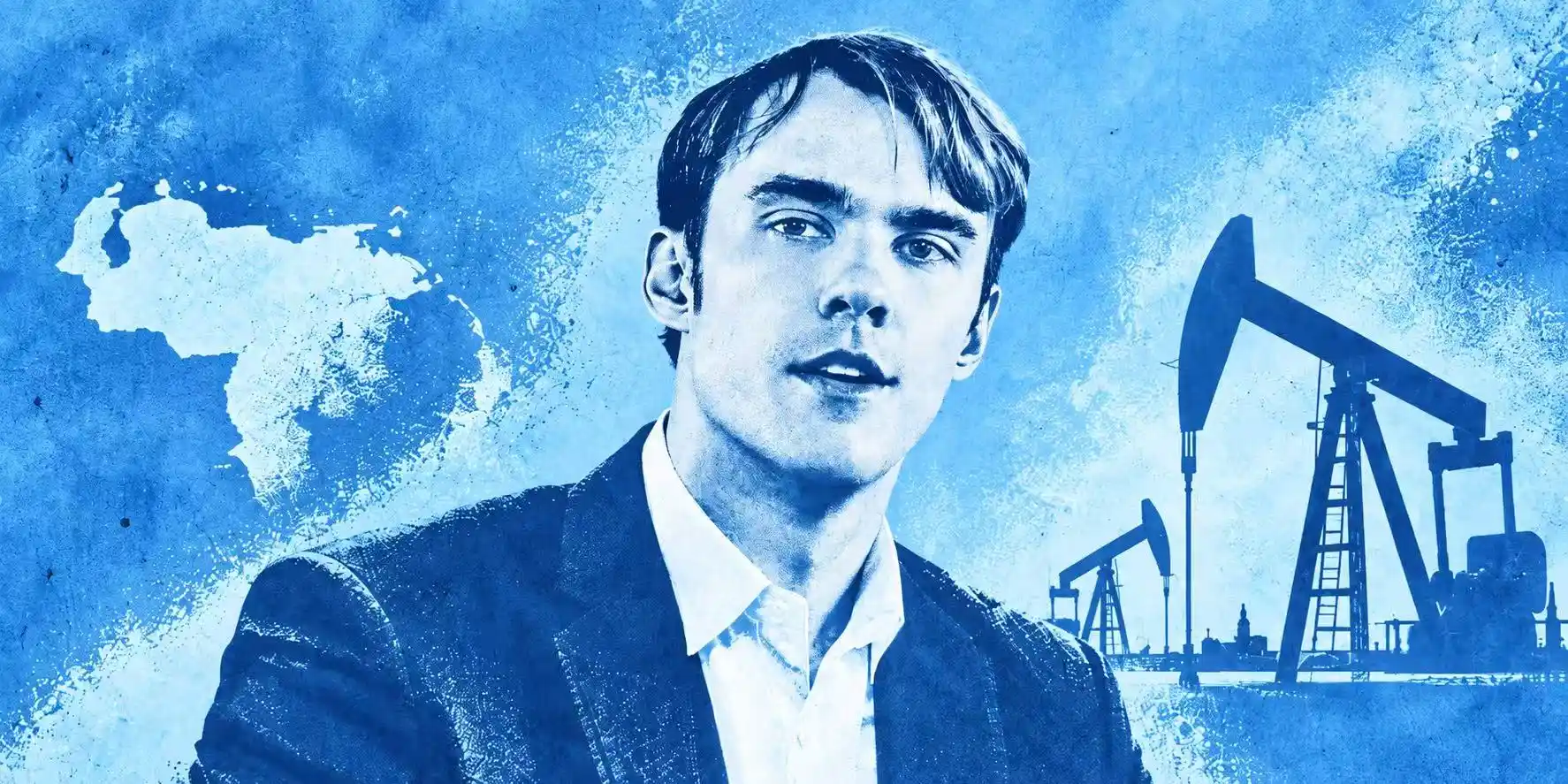
After making enough money in the crypto industry, where should the next investment go? Coinbase co-founder Fred Ehrsam recently offered a surprising answer: oil fields. This 38-year-old crypto millionaire has frequently appeared in Caracas, the capital of Venezuela, over the past few months, even living in local hotels for extended periods.
After months of traveling, by early September, Fred Ehrsam finally saw his first 'harvest.' Primavera Infinita, which he co-founded, officially signed a production participation contract with Venezuela's state oil company PDVSA, securing the opportunity to develop the Budare-Elotes block oil field. PDVSA's long-term target is for this block to contribute over 70,000 barrels per day of new production.
This is also an investment hard to connect with Ehrsam's resume. He worked as a foreign exchange trader at Goldman Sachs, co-founded Coinbase with Brian Armstrong in 2012, co-founded crypto investment firm Paradigm in 2018; later, his investment portfolio further extended to frontier tech companies like OpenAI, Anthropic, and SpaceX.
Why would someone who accumulated wealth through digital assets and has long invested in software and frontier technology venture into Venezuela, a place with extremely high political risk, to vie for a traditional resource humanity has been extracting for over a century? Perhaps, the answer isn't only in the oil.
As Old-School Oil Giants Hesitate, Ehrsam Charges In
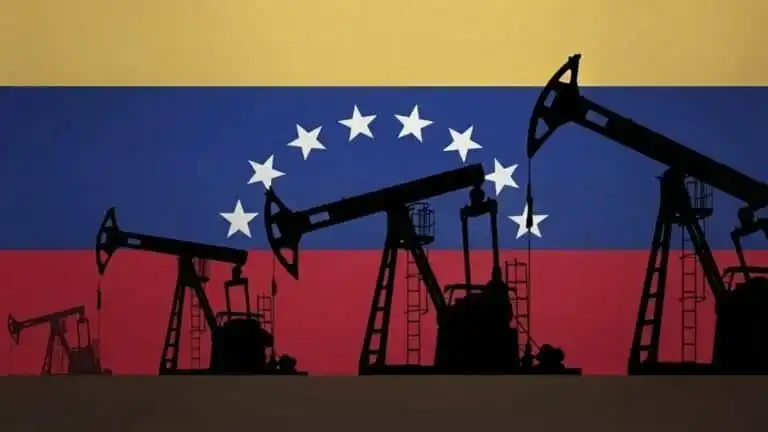
Judging solely by petroleum resource endowment, Venezuela is a place that cannot be ignored. But over the past two decades, the country's vast underground resources have not translated into a commensurate level of production. In the late 1990s, Venezuela's crude oil production once reached about 3 million barrels per day; now it's only 1.25 million barrels per day.
Long-term sanctions, underinvestment, aging equipment, coupled with political and property rights risks, have gradually turned this country, sitting on one of the world's largest proven oil reserves, into a special case in the global petroleum industry. The ground is not short of oil; what's truly lacking is sustained capital investment, well-maintained infrastructure, and the technical talent and operational capacity that are constantly draining away.
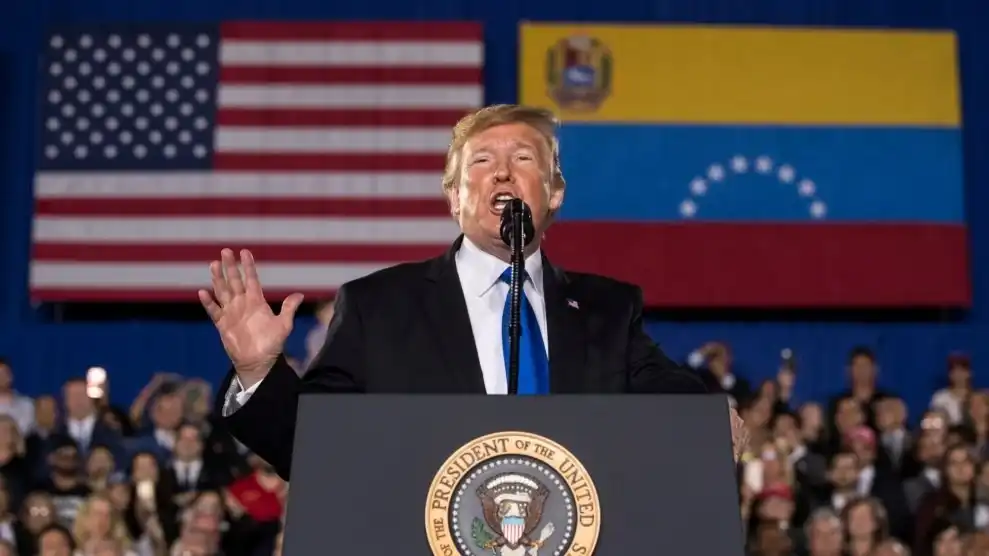
However, starting in 2026, the situation began to change. After Maduro's arrest by US authorities and the appointment of Delcy Rodríguez as interim president, the relationship between the US and Venezuela was rapidly reconfigured. Specifically for the oil industry, Venezuela reformed its petroleum laws, allowing more private capital to enter under a new production participation model; the Trump administration placed oil at the core of its Venezuela strategy, pushing for sanctions and contract framework adjustments while urging US energy firms to invest about $100 billion in the country.
This has turned Venezuela's oil sector into a market undergoing institutional repricing. A country long shunned by global capital due to years of sanctions and economic crisis, once reopened, could yield returns far exceeding those of mature markets. Based on his subsequent choices, Ehrsam was evidently willing to bear the risks for the potential rewards of this reopening. He co-founded Primavera with Manuel Iribarren, a Venezuelan graduate of Stanford, early this year. In February, the two arrived in Venezuela to begin seeking investment opportunities there.
After meetings with Venezuelan leaders and PdVSA executives, they found oil and gas, these high-risk investments, most appealing. This is actually a payout structure quite familiar to VCs, and also what most attracted Ehrsam. It's not about finding a 10% price undervaluation in a market with stable property rights and transparent information, but rather bearing a huge probability of failure in a place where many investors dare not enter, in exchange for significant asset revaluation space after institutional changes.
However, the waters of such potential high returns are deep, and not everyone is willing to wade in. In fact, Trump had urged companies like ExxonMobil, ConocoPhillips, and Continental Resources (owned by oil magnate Harold Hamm) to invest $100 billion, but these old-school energy giants have remained on the sidelines.
ExxonMobil and Conoco, two companies once deeply involved in Venezuela, experienced asset nationalization during the Chávez era. This legacy of claims also makes them more sensitive to property rights, arbitration, and whether the next government will continue to recognize current contracts.
Of course, not all oil majors are so cautious. Chevron, which has operated in Venezuela for decades, announced in early September that it would inject $7 billion into Venezuelan oil fields over the next five years, hoping to increase its production in Venezuela to about 600,000 barrels/day. Insiders revealed that the contract terms for Chevron's new joint venture with PdVSA are expected to be very favorable, which is seen as reducing the risk of further investment in the country.
'A Disorderly Land Rush Benefits No One'
In this round of Venezuela's oil opening, besides established energy companies like Chevron, a batch of smaller, higher-risk-appetite independent oil and gas companies and new capital have also emerged. They come from diverse backgrounds but share a rather conspicuous commonality—they have varying degrees of connection with Trump and his political network.
Ehrsam rarely mentions his political views publicly, but according to federal fundraising records, he donated $1 million to the Trump-Vance inaugural committee, establishing ties with the Trump administration. He is currently a member of the US President's Council of Advisors on Science and Technology. For an oil project highly dependent on US sanctions policy, Venezuelan domestic law, and the trajectory of bilateral relations, this political access itself is an important resource. It can significantly reduce information asymmetry and alter investors' judgment of policy reversal risks.
Similar connections appear among other new entrants. Denver-based Aspect Holdings has signed a contract with PdVSA to participate in local technical studies. Aspect is a private energy investment and exploration company founded by billionaire Alex Cranberg, who has long been a major Republican donor.
Another company attempting to enter the Venezuelan market, Sable Offshore, is led by oil industry veteran Jim Flores. Sable itself has a more traditional energy industry background, but it also has noteworthy policy intersections with the Trump administration. Previously, when California regulators opposed its plan to resume offshore oil production near Santa Barbara, Sable ultimately secured federal support through an executive order signed by Trump, allowing the project to proceed.
A more typical example is Dallas-based Hunt Oil. On August 18, the company signed a production participation contract with Venezuela to participate in the development and production increase of the Caro and Carisito oil and gas fields in the east. Hunt Oil is not a new player in the oil industry but an independent energy company with decades of oil and gas development experience. The Hunt family behind it are long-time supporters of Trump and the Republican Party.
However, rather than the Trump government 'allocating' Venezuelan oil fields, it's more accurate to say these US capitals are more willing to believe the current policy window can be sustained and are more willing to bear the resulting tail risks. Conversely, for old-school giants like ExxonMobil and ConocoPhillips, their reluctance to move forward isn't due to unfamiliarity with Venezuela, but rather being too familiar. Precisely because they have experienced asset nationalization, lengthy arbitration, and sanctions flip-flops, they are more cautious about property rights stability and policy continuity.
This contrast has already raised concerns within Venezuela's oil industry. Some veterans question whether these new entrants possess sufficient capital and professional expertise to handle Venezuela's complex heavy oil projects. The local crude is highly viscous, infrastructure is aging, and both development and transportation require sustained investment; Venezuela's massive debt may also make banks cautious about project financing, forcing many investments to rely more heavily on equity investors.
Venezuelan opposition figure and former PdVSA board member Pedro Burelli believes oil fields should be entrusted to companies with sufficient capital strength and experience in complex projects, not rapidly carved up when the policy window opens. Burelli said this current disorderly land rush benefits no one.
Betting on an Open Political Window
The question arises: how should an investor like Fred Ehrsam, who has never set foot in the oil industry, operate in the most complex market of Venezuela?
The most familiar method in venture capital is for capital to first find undervalued assets or entrepreneurs, then solve subsequent problems by recruiting a management team, securing additional funding, and resource integration. Ehrsam is clearly trying to replicate this approach. While lacking experience in the oil and gas industry himself, he has already brought in a professional team including veteran oilman Dheeraj Verma.
But the difference between an oil field and a software company isn't just 'heavy assets' versus 'light assets.' What truly sets them apart is the mode of capital investment and the payback period.
For a software company, funds can be quickly converted into team expansion and market growth upon receipt. If growth falls short, losses can be mitigated through layoffs, spending cuts, product adjustments, or even pivots. Many costs are also expensive, but new investments are generally easier to phase in, scale back, or reallocate.
The logic of the oil industry is completely different. Whether it's well rehabilitation, pipeline construction, equipment upgrades, or improving storage and transportation systems, all require significant upfront capital investment before production actually materializes. Moreover, a considerable portion of these investments is largely irreversible. Whether a project becomes profitable depends on whether it can sustain production, export, and settlement for years to come, ultimately recouping the initial investment.
For Ehrsam and his Primavera, the biggest risk may not come from oil technology itself, but from the mismatch between the return cycle and the political cycle. An oil field project may take many years to reach a stable return phase, but US sanctions policy towards Venezuela, local petroleum laws, contract enforcement environment, and bilateral relations could all change during that time.
It's worth noting that in Chevron's recent investment, the new terms even included the right to international arbitration. This precisely illustrates what mature oil companies truly care about: after investing tens of billions of dollars, whether the contract will still be valid in five or ten years. Because no one can guarantee that a contract signed today will be executed under the same conditions five years later. This is exactly why other traditional oil majors are being extra cautious about Venezuela.
From this perspective, what Ehrsam is truly betting on isn't just how much more production the Budare-Elotes block can add, but how long the current political window will remain open.
New Money of the Digital Age Ultimately Returns to the Most Traditional Assets
Setting aside Ehrsam's bet on Venezuela's political climate, merely investing in the traditional energy industry is itself a noteworthy phenomenon within the cryptocurrency sector. Looking solely at Primavera, this could still be understood as a crypto tycoon's personal adventure. But zooming out from Ehrsam reveals that similar asset preferences are not entirely isolated.
In February this year, BitMEX co-founder Arthur Hayes unusually disclosed his asset allocation. Besides crypto assets like BTC, ETH, ZEC, and HYPE, his stock portfolio covered gold, silver, copper and uranium miners, major oil companies, Latin American energy firms, and defense contractors, while also holding physical gold directly.
This asset allocation already shows a clear shift: for someone who accumulated wealth through Crypto, Bitcoin and assets like gold, copper, uranium, and oil are not mutually exclusive; they appear side-by-side in the same portfolio.
In this regard, Tether, with annual profits reaching tens of billions of dollars, has gone even further. In 2025, the issuer of USDT reported net profits exceeding $10 billion. By year-end, the company stated that an independent investment portfolio built using its own profits and excess capital had surpassed $20 billion, covering industries like AI, energy, precious metals, agriculture, land, and telecommunications.
Among these, Tether's most typical investment also occurred in South America. In 2024, Tether first bought about 9.8% of agricultural group Adecoagro for $100 million; in 2025, it launched a cash tender offer, ultimately raising its stake to 70%. The latter offer alone, involving 49.597 million shares at $12.41 per share, corresponded to a cash outlay of about $615 million.
Tether gaining control of Adecoagro wasn't about tokenizing it or packaging it as an RWA agricultural project, but truly owning a traditional enterprise with land, farms, processing plants, and power generation facilities. Adecoagro manages over 200,000 hectares of sugarcane plantations in Brazil, owns three sugar mills producing sugar, ethanol, and electricity; it also operates rice, dairy, and other businesses in Argentina and Uruguay. Its sugar mills can use sugarcane waste for cogeneration, selling excess electricity to the local grid after meeting their own energy needs.
This even creates a rather interesting inversion. Over the past few years, the crypto industry has talked a lot about 'Real World Assets' (RWA), constantly exploring how to bring real-world assets onto the blockchain. Tether's transaction took another path—not first packaging agricultural assets into tokens, but directly acquiring control of an agricultural and energy production enterprise.
From this perspective, Hayes, Tether, and Ehrsam actually represent three different paths: gaining resource price exposure through stocks, directly acquiring control of physical production enterprises, and personally participating in oil field operations. They are not strictly progressive steps but collectively illustrate that crypto capital's interest in real-world assets is no longer limited to 'how to put assets on-chain' and is also manifesting in more traditional ways of holding and operating.
In fact, the ultimate flow of funds into energy, metals, and land is not entirely accidental. These assets all possess a scarcity completely different from crypto assets. Bitcoin's 21 million cap is written in code; the supply constraints of oil fields, mines, and land are written in geology, geography, and long development cycles. The former is an artificial but highly credible digital scarcity; the latter is a physical scarcity difficult to alter in the short term through capital and technology.
Fred Ehrsam's Venezuelan adventure is just the most extreme case among them. Starting from a wealth system almost entirely composed of code and networks, he ultimately placed real money into oil fields requiring years of investment, impossible to relocate, and whose fate hangs on both geology and politics.
Crypto can create and transfer wealth very quickly. But when a portion of that wealth begins seeking a longer-term, larger-scale home, it ultimately needs to look towards physical entities that cannot be unplugged for an ultimate anchor.