Author:Thaddeus Pinakiewicz,Galaxy Research
Compiled by:Deep Chao TechFlow
Deep Chao Guide: Over the past decade, the U.S. Commodity Futures Trading Commission (CFTC) has frequently targeted the crypto industry, citing the "retail leverage transactions must be conducted on licensed exchanges" provision from the Dodd-Frank Act, yet never provided clear compliance guidance. Now, CFTC Commissioner Michael Selig has officially released a significant 108-page Advance Notice of Proposed Rulemaking (ANPR), formally introducing Regulation CTX and Reg CAM. Galaxy Research provides an in-depth analysis of this regulatory breakthrough: The CFTC has not only, for the first time, endorsed the integrated full-stack exchange model but has also historically established the federal regulatory principle of "Not your keys, not your coins" by delving into hundreds of legal precedents, paving the way for self-custody, DEX matching, and compliant on-chain order book exchanges.

Regulatory Breakthrough: The First Compliance Guide After a Decade of Enforcement Pressure
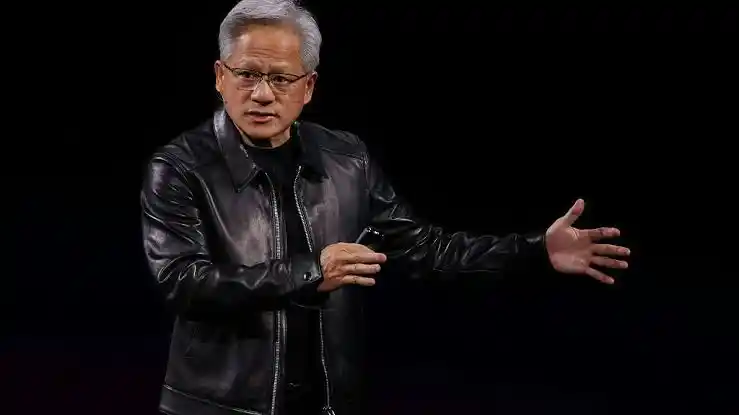
On Monday, CFTC Commissioner Michael Selig, at an academic symposium at Fordham University School of Law, quoted President Ronald Reagan's famous line about "the nine most terrifying words in the English language" ("I'm from the government, and I'm here to help"), before officially unveiling Regulation CTX, which represents the real help the CFTC plans to offer the crypto industry.
This help, centered around Regulation CTX and its companion Reg CAM, is encapsulated in a 108-page Advance Notice of Proposed Rulemaking (ANPR). The Dodd-Frank Act, passed in 2010, explicitly states that any commodity transaction with leverage, margin, or financing for retail investors must be conducted on a formally registered, compliant exchange. Over the past decade, the CFTC consistently enforced this provision strictly against crypto firms but never guided the industry on exactly how to achieve compliance. Now, the crypto industry finally has a systematic operational guide.
In the view of Galaxy Research, this ANPR is an excellent starting point for constructive interaction between the industry and regulators. The questions posed in the notice are highly targeted and deeply informed, meaning all industry stakeholders can finally sit down and seriously discuss margin rules and asset custody details, rather than submitting feedback only to receive a cold Wells Notice.
Breaking Traditional Barriers: Allowing Fully Integrated Crypto Asset Markets (CAM)
The architecture of traditional futures markets is artificially split into separate entities:
1. Exchange (DCM, Designated Contract Market): Specializes in order matching, rule enforcement, and market surveillance.
2. Broker (FCM, Futures Commission Merchant): Responsible for holding customer funds, strictly segregating customer assets from proprietary funds in designated depositories, and is subject to intensive regulation by the National Futures Association (NFA).
3. Clearinghouse (DCO, Derivatives Clearing Organization): Intervenes in every matched transaction, acting as the central counterparty guaranteeing performance for both buyer and seller, and holds sufficient risk reserves to cover the default of its largest member.
Although a single group can own all these entities (e.g., CME Group operates both an exchange and a clearinghouse), each is a legally distinct entity with its own license and applicable rules.
However, crypto exchanges were never built on this fragmented model, partly due to the bearer asset nature of crypto and partly due to the long-term absence of regulatory guidance. Existing crypto trading platforms typically integrate listing, order matching, clearing & settlement, and asset custody. Users' tokens essentially exist as ledger entries within the platform's internal database.
Significantly, Reg CAM does not intend to forcibly split crypto exchanges into separate entities. Instead, it allows qualified crypto asset markets to register directly as proprietary FCMs, proprietary DCOs, or both, as a "Fully Integrated Crypto Asset Market (Fully Integrated CAM)." This is the core architecture that Coinbase vigorously advocated for in its public letter to regulators last year.
Critics might question: Isn't a platform that combines the roles of exchange, broker, lender, and clearinghouse just FTX all over again? The CFTC's response shows remarkable legal confidence: FTX did indeed serve as the extreme test case, but history proves that within the wreckage of FTX's collapse, customer funds held by its CFTC-registered compliant entities remained strictly segregated and safe, in stark contrast to the 130 other offshore affiliated entities that went bankrupt.
Delving into 300 Case Laws: Regulators Acknowledge "Private Keys as Ownership" for the First Time
The fully integrated CAM architecture primarily targets top-tier licensed giants like Coinbase. The rest of this lengthy document addresses the broader Web3 industry and contains the most exciting breakthrough.
A remarkably rare and moving scene unfolded in regulatory history: A federal agency overseeing commodities and derivatives, after delving through a lengthy footnote referencing a full 300 judicial precedents, ultimately arrived at the mantra often cited by crypto fundamentalists: "Not your keys, not your coins."
According to the rules, if a commodity transaction completes "Actual Delivery" within 28 days, it can be exempt from the strict requirement to trade only on licensed exchanges. Reg CTX finally outlines what constitutes actual delivery for crypto assets. The new rule explicitly states that actual delivery may require "actual possession of access credentials (such as private keys)." This means that ledger transfers within a centralized exchange's internal database do not constitute actual delivery; but withdrawing assets to an independent wallet where the user fully controls the private keys constitutes indisputable legal delivery.
The CFTC preliminarily concludes that on-chain trading protocols typically deliver assets directly to the buyer's digital wallet. Once on-chain delivery is complete, footnote 279 in the notice explicitly states that, aside from combating fraud and market manipulation, the CFTC will no longer have routine regulatory jurisdiction over those assets. Commissioner Selig even directly quoted this classic slogan on social media, emphasizing, "For those looking to operate under the original cypherpunk vision, we are committed to providing the clarity needed to allow on-chain finance to flourish."
In Galaxy's view, this means purely self-custodial on-chain interactions, like Uniswap, do not need to register as CAMs, DCMs, or FCMs. The two core US financial regulators have reached a rare consensus: Former SEC Commissioner Hester Peirce previously stated that peer-to-peer smart contract matching does not need a regulatory exemption; and the SEC's latest proposed custody rules also allow advisors to hold private keys themselves under extreme circumstances. "Private keys as ownership" is officially becoming regulatory common sense at the federal level in the US.
Vault Interactions, Code Audits, and Regulatory Outlook for On-Chain Order Books
While purely self-custodial trading itself escapes the regulatory cage, the front-end user interface (Interface) used to trigger transactions may face scrutiny. Reg CTX defines "offering leverage" very broadly: Does incorporating yield-generating on-chain vaults within the same application interface where retail users purchase crypto assets constitute offering leverage to retail? This directly relates to the distribution lifeline of underlying DeFi. For example, the Coinbase App deeply integrates Morpho vaults curated by Steakhouse. The regulatory definition of such front-end interfaces will directly determine the depth of future CeDeFi integration.
Regarding smart contract audits, for smart contracts operating autonomously without human intervention, the Commission explores whether to mandate pre-deployment testing, formal verification, and circuit breaker mechanisms. While traditional code audits have proven to offer limited signal quality in the past, with the maturation of large language model coding assistants and fuzzing tools, formal code verification might become a key part of the compliance threshold.
Regarding Proof of Reserves, the CFTC explores the possibility of utilizing blockchain's native transparency. Galaxy strongly recommends that regulators adopt on-chain Merkle Tree technical solutions, as genuine on-chain proofs are far superior to traditional accounting firm lagging spot checks, enabling a qualitative leap from Proof of Reserves to the deeper Proof of Solvency.
Finally, the most significant topic is the "regulated on-chain exchange": Section V.B of the notice explores whether to allow compliant markets to directly use the blockchain network itself as their order matching and execution layer. This means we could almost see a compliant version of Hyperliquid: a high-performance order book fully operating on-chain, accessible to compliant US users through a front-end KYC gateway. Its ticket into the realm of compliance might be the complete open-sourcing of the underlying node code.
As Commissioner Selig stated towards the end of his speech: "Satoshi's technological revolution has fundamentally altered the global financial system. If the United States can embrace this paradigm shift and establish the right rules, we are poised for another golden age." This time, help from the regulator is no longer a frightening punishment, but a means to return code and private keys to the hands of the public.