Written by: Ryan Weeks, Bloomberg
Compiled by: Saoirse, Foresight News
Just as the U.S. Treasury market needs external buying support the most, the growth of the stablecoin industry has stalled.
U.S. Treasury Secretary Scott Bissett once envisioned that stablecoin companies could grow into trillion-dollar buyers of U.S. government bonds. But industry growth is now stagnating, precisely when the market is in urgent need of this force for support.
With the downturn in cryptocurrency trading, the demand for stablecoins has decreased, suppressing a potential source of demand for Treasuries. Stablecoins are pegged to the value of the U.S. dollar, with reserves including short-term Treasury bills and other highly liquid assets, primarily used by traders to park funds when adjusting positions.
USDT, issued by the world's largest stablecoin issuer Tether, shrunk by nearly $30 billion in the first six months of this year, falling to around $184 billion, potentially marking its first contraction since the 2022 crypto industry crash. According to company data, USDC, issued by its main competitor Circle, also saw a similar decline, currently at about $72 billion.
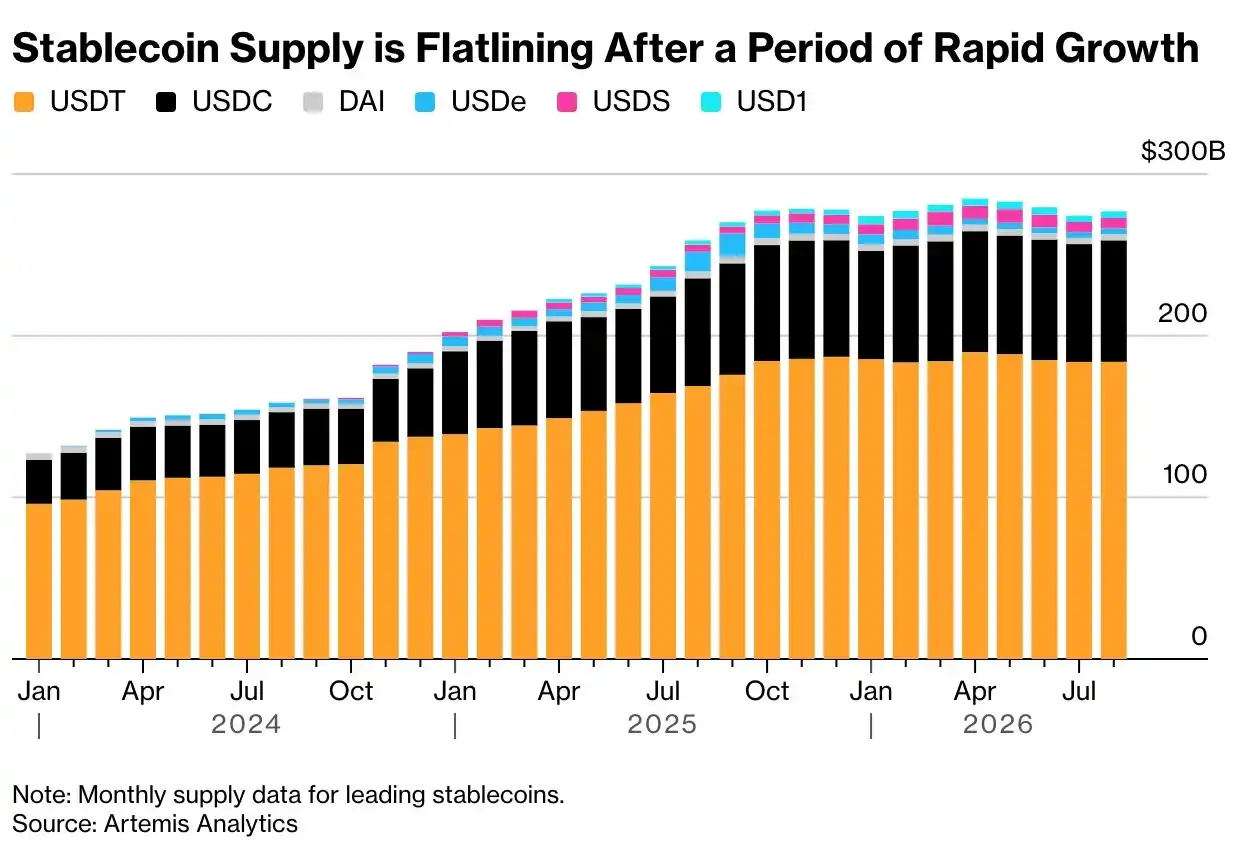
After rapid expansion, the total supply of stablecoins has stalled in growth
Note: Monthly supply data for major stablecoins
This situation, at least in the short term, weakens the administration's argument that embracing the crypto industry can expand the Treasury demand market, benefiting U.S. finances.
Bissett previously stated that the stablecoin market could expand tenfold by the end of this decade, reaching $3 trillion, creating significant new demand for the current roughly $7 trillion in outstanding short-term Treasury bills. The vast majority of stablecoins in circulation are issued by Tether and Circle, which disclose holdings of $134 billion and $63 billion in U.S. Treasuries and Treasury-backed reverse repurchase assets, respectively.
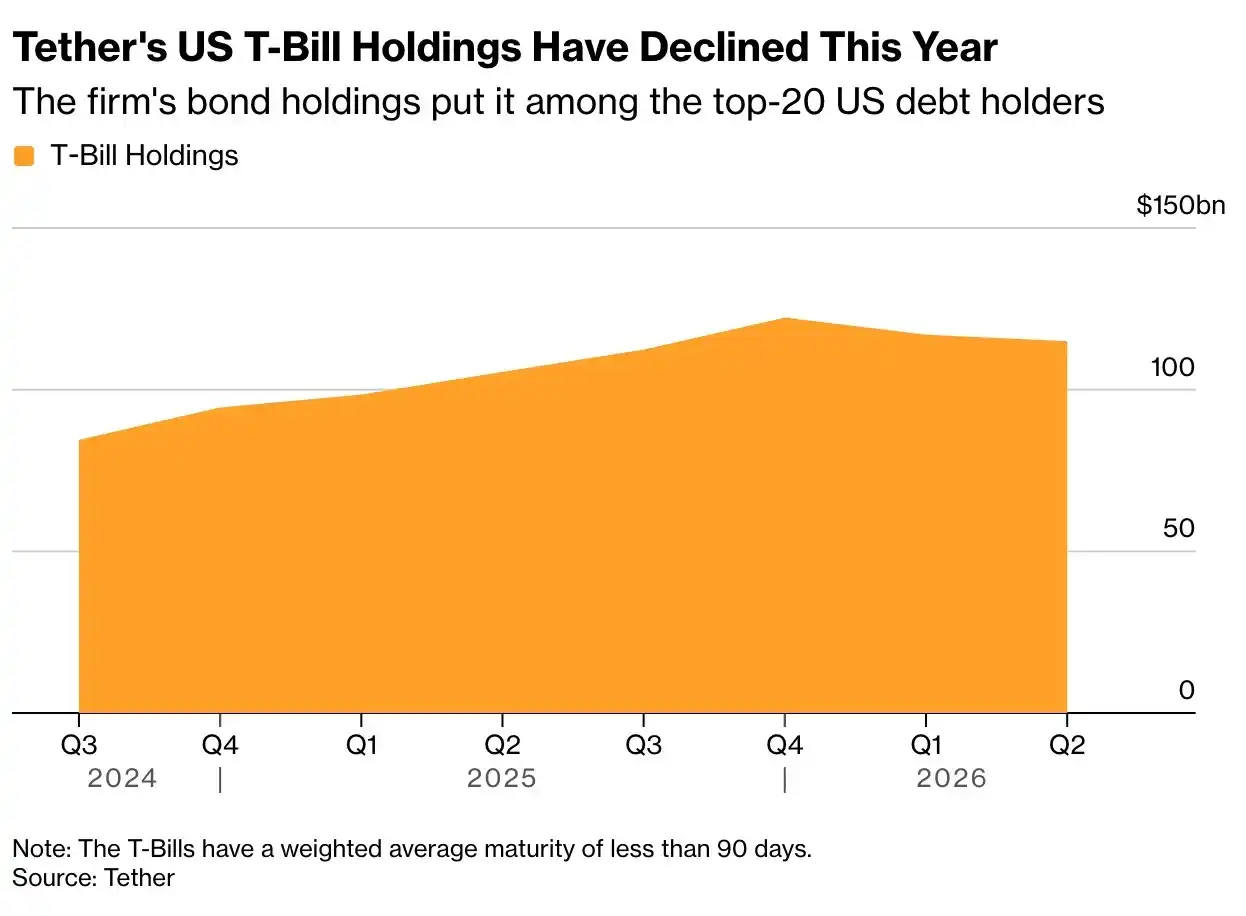
Tether's holdings of U.S. short-term Treasury bills have decreased this year. The scale of its bond holdings places it among the top twenty holders of U.S. debt.
Note: Treasury bills with a weighted average remaining maturity of less than 90 days
Recent trends suggest that stablecoin companies are unlikely to alleviate pressure on the Treasury market in the short term. With persistently high inflation and an expanding national debt, investors are demanding higher yields as compensation for risk.
Bissett is attempting to suppress rising long-term rates by increasing bond buybacks and relying more on issuing short-term Treasury bills—the very type stablecoin issuers primarily purchase. Last Friday, after a much stronger-than-expected jobs report for the previous month, the market became more convinced that the Federal Reserve is likely to start raising interest rates at its September 16 meeting, pushing some Treasury yields higher.
Samuel Earl, a Barclays strategist tracking the short-term debt market, stated that investors are not optimistic about stablecoins becoming a significant market force in the short term. "I never believed stablecoins could achieve the explosive growth many have claimed."
The stagnation in stablecoin growth may be temporary. Stablecoin fortunes are deeply tied to the volatility of crypto trading, which has shrunk significantly since the cryptocurrency price crash last year. Although Bitcoin has recently rebounded, it remains far from its high last October; other tokens like Ethereum have also seen substantial declines.
Carlos Guzman, a research analyst at crypto market maker GSR, believes the crypto market downturn is the core reason for the contraction in stablecoin supply. "We have observed a decline in USDT balances on exchanges and outflows of funds on chains related to the Ethereum ecosystem."
Stablecoin applications in payments and cross-border remittances are seen as potential growth paths. Tether stated that the company is accelerating the deployment of such use cases to hedge against the impact of sluggish crypto trading. The firm said in a response to inquiries: "The current stagnation in stablecoin growth should not be interpreted as demand for Treasuries having peaked."
A Circle spokesperson declined to comment, and the U.S. Treasury Department did not respond to requests for comment.
According to Paymentscan data, in July, stablecoin card payments offered by institutions like RedotPay and EtherFi exceeded $1 billion in transaction volume for the first time. A McKinsey study earlier this year estimated the annual payment volume of stablecoins at around $390 billion, with the vast majority being business-to-business transactions.
However, a boom in stablecoin payments may not increase the total stablecoin supply in the short term. Chris Maurice, CEO of stablecoin payment service provider Yellow Card, explained that the same token can circulate repeatedly in transactions, requiring no new issuance from the issuer.
"The industry is shifting from speculative use to payment scenarios," Maurice said. "The U.S. government should proactively and vigorously support such stablecoin payment businesses."