Before Leaving OpenAI, Anthropic's President Had a 'Plush Toy Advisory Board'

marsbitPublished on 2026-10-07Last updated on 2026-10-07

Abstract

While still at OpenAI, Anthropic's co-founder and president Daniela Amodei and her husband Holden Karnofsky used a collection of plush toys as an informal "advisory board" to discuss management problems. Each toy represented a different personality: one advocated for fewer meetings and less work, another emphasized rules and execution, and a third reminded them to act with compassion. Faced with a tough workplace issue, they would have these "personas" voice opinions, simulating how different types of managers might react. This personal anecdote, revealed in an upcoming book, coincided with growing tensions between the Amodei siblings and OpenAI's leadership. Daniela had clashes with several executives, including Greg Brockman, while her brother Dario became increasingly wary of the company's direction and the risks of advanced AI. Dario privately organized with like-minded researchers concerned about AI safety, a group some colleagues called "Dario's clique." By 2020, these internal disagreements reached a breaking point. Dario began assembling a team to leave OpenAI and pursue AI research with a stronger focus on safety, with Daniela playing a key role in the exit negotiations—a split later referred to internally as a "divorce." In December 2020, Daniela and Dario Amodei officially left to co-found Anthropic, initially a small AI safety research lab. It has since grown into a major AI company with thousands of employees, considered a key competitor to OpenAI. Daniela now...

Author: Li Jia, Wall Street News

Today, Anthropic has made "AI safety" its core brand. But few know that in her earlier years, Daniela Amodei, the company's co-founder and president, along with her husband Holden Karnofsky, used a group of plush toys to discuss management issues.

These toys were assigned distinct personalities: one dedicated to "fewer meetings, less trouble for oneself"; another emphasizing rules, details, and execution; and one responsible for reminding decision-makers to maintain empathy. When faced with a thorny workplace problem, Daniela and her husband would have these virtual characters "voice their opinions," simulating the choices different types of managers might make.

This rather private and even somewhat whimsical past happened while Daniela was still working at OpenAI. During this same period, she and her brother Dario Amodei were growing increasingly at odds with OpenAI's management: Daniela clashed with several executives in her work, while Dario grew more wary of the company's leadership and the direction of advanced AI development.

In 2020, the siblings ultimately decided to leave OpenAI. This split, later referred to by insiders as a "divorce," marked the genesis of Anthropic.

In a recent article, The Atlantic, citing journalist Kevin Roose's forthcoming book "The AGI Chronicles," revealed this little-known experience. In a 2023 interview with Roose, Daniela stated that this method was "very useful for analyzing different personality types."

From relying on a plush toy "advisory committee" back then to growing into an AI giant with thousands of employees today, Anthropic has evolved from a small AI safety startup into a significant industry player. Media reports suggest its potential IPO valuation could approach $2 trillion.

How Did a Group of Plush Toys Become an 'Advisory Committee'?

This informal "advisory board" was not a simple joke but a mental method to simulate different decision-making styles.

Among them, Jinji, a laid-back cat, leaned towards lightening Amodei's workload, such as skipping unnecessary meetings; pink bear Maura represented the opposite style—organized, demanding, and detail-oriented; a panda named Beary Bonds was designed to inject more compassion and generosity into discussions.
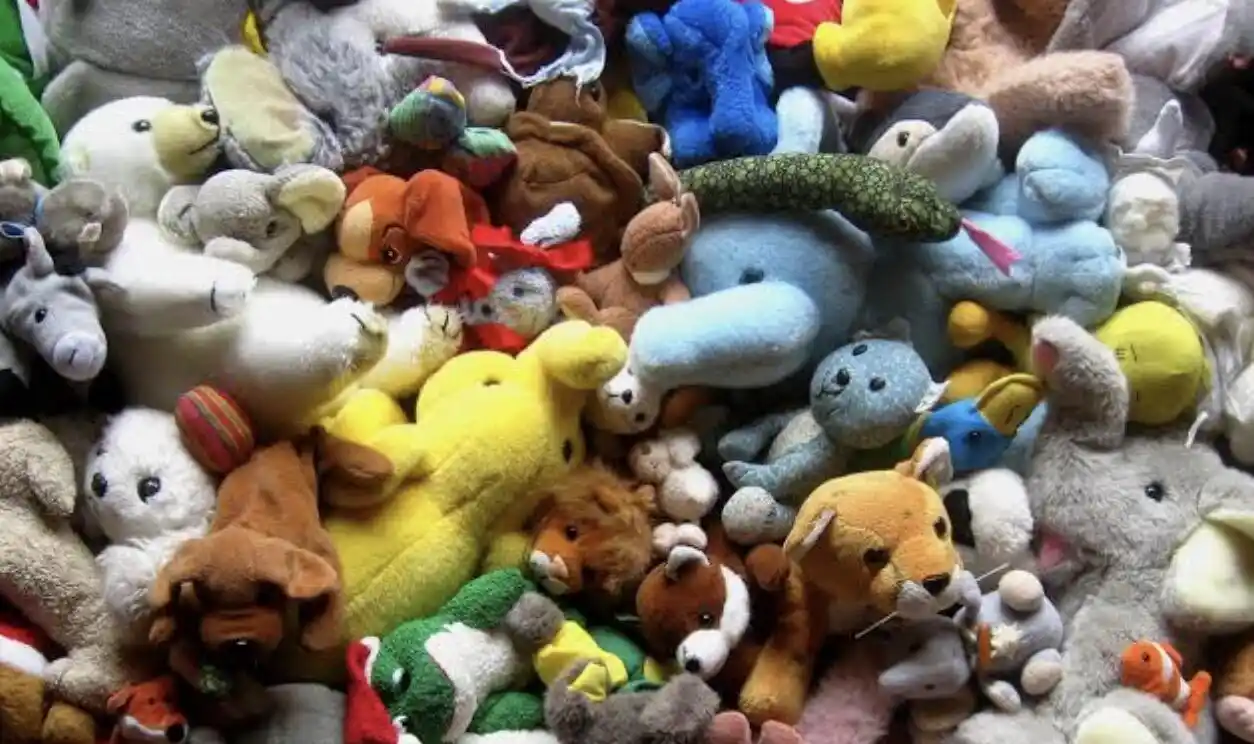
Faced with the same workplace issue, the Amodei couple would have the different "personalities" represented by the toys react separately.

The true function of this method lay not in the toys themselves, but in forcing decision-makers to temporarily step away from their own positions and re-examine the problem through another persona.

In essence, it was a low-cost thought experiment: without real external advisors, one could simulate different roles to break down the same problem into various decision-making paths.

And this method was virtually unknown within OpenAI.

Beyond Plush Toys, Internal Divisions at OpenAI Were Widening

Meanwhile, the relationship between the Amodei siblings and OpenAI was also changing.

Daniela Amodei joined OpenAI in 2018, later moving into a technical team management role and encountering disagreements with several executives, including Greg Brockman and Mira Murati.

She was once close to Brockman. Brockman gave a speech at her wedding to Holden Karnofsky in 2017, but their working relationship subsequently deteriorated.

Dario Amodei grew increasingly concerned about OpenAI's leadership and the trajectory of advanced AI development, becoming more cautious of Sam Altman and Brockman.

At the same time, he began privately organizing activities with a group of researchers who wanted to place greater emphasis on the risks of powerful AI systems. Operating outside the company's normal structure, this group communicated and held meetings, with some colleagues referring to this faction as "Dario's circle."

The internal tensions eventually reached an unavoidable point.

In 2020, Dario began assembling a team willing to leave OpenAI to pursue advanced AI research with a different safety philosophy. Daniela became a key figure in this departure, responsible for negotiating with OpenAI as the team prepared to leave.

This split was later referred to privately by insiders as a "divorce."

A Departure Gives Birth to an AI Giant

In December 2020, the Amodei siblings officially left OpenAI and co-founded Anthropic.

Jack Clark, Sam McCandlish, Tom Brown, Chris Olah, and Jared Kaplan also participated in the company's founding, with Ben Mann later recognized as another co-founder.

Anthropic started as a small research institute focused on AI safety. Subsequently, the company expanded to thousands of employees and grew into one of OpenAI's most significant competitors.

Daniela Amodei now serves as President and Chair of the Board at Anthropic, overseeing most research, engineering, product, and business operations. Holden Karnofsky, a former member of OpenAI's nonprofit board, later joined Anthropic.

From simulating managers with plush toys to growing into an AI giant with thousands of employees, this past also chronicles Anthropic's journey from grassroots startup to maturity.

Related Questions

QWhat unique method did Daniela Amodei and her husband use to discuss management problems, and what was its purpose?

AThey used a group of stuffed animals, each assigned a specific personality, to form an informal 'advisory board.' The purpose was to simulate different decision-making styles and perspectives, forcing them to step outside their own viewpoints and analyze problems from various angles, which served as a low-cost thought experiment.

QWhat were the primary reasons behind the Amodei siblings' departure from OpenAI in 2020?

AThe primary reasons were growing disagreements with OpenAI's management and its direction on advanced AI. Daniela had workplace frictions with several executives, while Dario became increasingly wary of the leadership and more focused on the risks of powerful AI systems. These internal conflicts ultimately led to their departure.

QWhat is the core identity or 'tag' that Anthropic has built for itself, and what was a key event in its founding?

AAnthropic has built its core identity around 'AI safety.' A key event in its founding was the departure of the Amodei siblings and other researchers from OpenAI in December 2020, an internal split sometimes referred to as a 'divorce,' which marked the beginning of Anthropic.

QAccording to the article, what significant growth has Anthropic experienced since its founding?

ASince its founding as a small AI safety research startup, Anthropic has grown into a major industry player with thousands of employees and is considered one of OpenAI's most important competitors. Reports suggest its potential IPO valuation could approach $2 trillion.

QWho is Holden Karnofsky, and what is his connection to Daniela Amodei and Anthropic?

AHolden Karnofsky is Daniela Amodei's husband. He was involved with her in the stuffed animal advisory method, later joined Anthropic, and had previously served on the nonprofit board of OpenAI.

Related Reads

Strategy stock sheds 5% amid MSCI index removal, Bitcoin sell-off

Strategy (Michael Saylor's Bitcoin treasury company) fell 6.49% on Thursday to close at $114.41, after MSCI confirmed the company's removal from its global equity indexes, compounded by a broader crypto market sell-off. The removal takes effect after the Nov. 30 market close and could trigger selling by index-tracking funds; JPMorgan previously estimated roughly $2.8 billion in potential selling pressure. Ryan Kirkley, CEO of Global Settlement Network, said the decision could distinguish Bitcoin treasury companies from traditional operating businesses and limit indirect crypto exposure for passive investors, noting that index inclusion had given ordinary passive investors leveraged Bitcoin exposure they never chose. He added it raises questions about whether such companies should be classified alongside traditional operating businesses, arguing that buying and holding an asset isn't an operating business but rather a fund that doesn't follow fund rules. In its Aug. 31 response to MSCI's proposed rules, Strategy called the changes a pretext for targeting digital asset treasury companies and downplayed the impact, saying MSCI-linked funds held about 13 million of its shares, just 3.1% of basic shares outstanding. The decline coincided with a broader crypto sell-off, with Bitcoin near $71,340, down 4.3% in 24 hours, and total crypto market capitalization down 3% to about $2.49 trillion.

cointelegraph44m ago

Strategy stock sheds 5% amid MSCI index removal, Bitcoin sell-off

cointelegraph44m ago

US Justice Department, business groups and DeFi firms challenge Illinois crypto tax

The US Department of Justice, business and financial industry groups, and a coalition of DeFi firms have backed a legal challenge to Illinois' 0.2% digital asset tax, arguing it unfairly targets crypto transactions and could impose taxes even without profit. The Justice Department filed a statement of interest, while the US Chamber of Commerce and SIFMA submitted an amicus filing. A coalition including Andreessen Horowitz, Paradigm, Uniswap and Aave Labs also filed a brief. The law, enacted in June, taxes the value of digital assets exchanged, transferred or stored regardless of profit. The Digital Chamber sued Illinois officials in July, followed by a separate challenge from the Blockchain Association and Crypto Council for Innovation in August. Originally set for Jan. 1, 2027, the tax was delayed to July 1, 2027. Illinois projected $60 million in fiscal year 2027 revenue. SIFMA and the Chamber warned the tax would affect banks, broker-dealers, custodians and asset managers nationwide, exposing them to compliance costs and burdening customers—someone who loses money owes the same tax as someone who profits, and moving assets between accounts could trigger tax without a sale or gain. They argued it discriminates against digital assets and may violate federal internet tax protections and constitutional interstate commerce requirements. The DOJ said the tax undermines federal efforts to promote crypto innovation, citing the Strategic Bitcoin Reserve and GENIUS Act. The DeFi coalition warned the rules could impose obligations on software developers and blockchain participants lacking customer information or control over funds.

cointelegraph1h ago

US Justice Department, business groups and DeFi firms challenge Illinois crypto tax

cointelegraph1h ago

DTCC Plans Solana Expansion as Wallet Rules Limit Access

DTCC plans to connect its tokenization service to Solana in the second half of 2027, allowing certain securities held by its DTC subsidiary to be converted into digital tokens on the network. Analysts say the move could attract more traditional financial institutions to Solana, which is known for fast transactions and low fees and had about $4.94 billion in total value locked as of Nov. 12. However, the impact may be limited by US regulatory rules. Alex Lin of Reforge noted that Solana's experience handling memecoin trading served as a public stress test, giving the network credibility to handle retail-scale volume reliably. Still, under a December 2025 SEC no-action letter, DTC participants must register wallets to hold tokenized securities, and tokens can only be transferred between registered wallets. Lin said the near-term impact is overstated because the tokens remain in a walled garden, inaccessible to permissionless retail and DeFi liquidity until regulators allow these assets to function as true onchain collateral. DTCC launched its tokenization service on the Canton Network and its private Besu network on Oct. 28, with 20 DTC participants signed on, though it has not said whether any plan to use Solana. Kha Nguyen of Birdeye said Solana has already seen growing demand for tokenized stocks, with trading volume reaching around $4.9 billion in H1 2026 and over 1 million accounts holding tokenized stocks by late September. However, broader Solana activity has slowed, with transactions down nearly 40%, DEX volume down 34.4%, and fees down 39%, while tokenized RWA value rose almost 7% to $4.76 billion. Nguyen said DTCC's integration would need banks, brokers, and issuers to actively issue, trade, and settle on Solana, with enough liquidity for large trades. He stressed that assets must be active rather than idle—traded around the clock, used as collateral, and earning yield. Lin agreed that long-term impact depends on where assets are used for secondary trading and collateral activity, not where they are issued.

cointelegraph2h ago

DTCC Plans Solana Expansion as Wallet Rules Limit Access

cointelegraph2h ago

Trading

Spot
活动图片