October - Bitcoin and Ether Show Promise: What's Changing in the Crypto Market

cryptonews.ruPublished on 2026-10-03Last updated on 2026-10-03

Abstract

October brings optimism for Bitcoin and Ethereum. Bitcoin rose 2.97% in the reported week, reclaiming the $86,000 level, supported by positive U.S. PCE inflation data reducing rate hike fears and a bullish Citigroup forecast of $113,000. Spot Bitcoin ETFs saw a third week of inflows, led by BlackRock's IBIT. Technical indicators remain positive with support at $82,833. Ethereum gained 1.76%, concluding Q3 as its best quarter in five years with a 70.8% surge. However, signs of a slowdown emerged: on-chain transaction activity has significantly decreased, and spot Ethereum ETFs recorded outflows. The technical outlook is mixed, showing a consolidation phase. Other major assets saw varied performance: Monero dipped slightly despite a planned privacy protocol upgrade. Near Protocol rose modestly (0.87%) following a technical update and the launch of its first U.S. spot ETF, though marred by a security incident. Ethena fell nearly 7% as a token rewards program ended, despite a very bullish long-term price prediction from Standard Chartered. In summary, while Bitcoin and Ethereum ended the week positively, underlying activity suggests Q4 may be less dynamic than the strong previous quarter.

Bitcoin

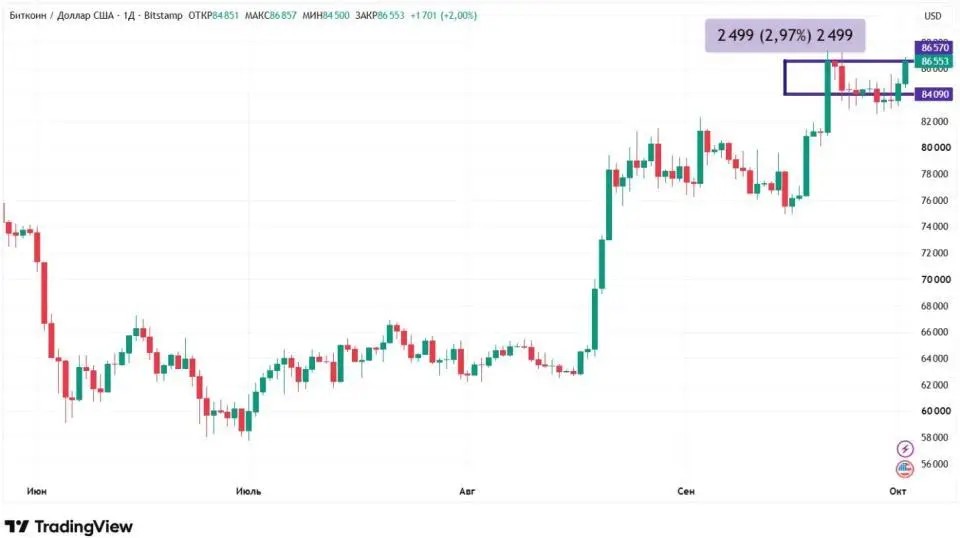
Bitcoin rose by 2.97% from September 25 to October 2, 2026. This allowed the largest cryptocurrency by market capitalization to climb back above $86,000 after falling below this important threshold the previous week. The positive momentum was provided by the last two trading sessions, in each of which $BTC added more than 1.5%.
Source: tradingview.com

One of the main catalysts that pushed Bitcoin higher was a positive 12-month forecast from the financial giant Citigroup. According to the American investment bank's estimate, in a year $BTC will trade at $113,000. The bank's analysts see the influx of capital into spot ETFs and improved economic conditions as arguments in favor of the forecast. Citigroup believes that the negativity from the failure of the CLARITY act has been mitigated by subsequent decisions from the Securities and Exchange Commission (SEC). Furthermore, digital gold received support from a statement by the US Treasury Department about buying back long-term government bonds.

Statistics on the US Personal Consumption Expenditures (PCE) index also helped. The indicator for August was 3.4%. This is noticeably lower compared to July's 3.7%. Core PCE, which excludes spending on volatile food and energy, grew by 3%, below the consensus forecast (3.3%). In other words, price growth in the US in August was lower than expected. This gives investors hope that there will be no key rate hike in October.

Spot Bitcoin ETFs recorded capital inflows for the third week in a row. However, this time it was more than modest - $51.25 million. This is because investors preferred to withdraw money from the majority of the funds. Among all spot $BTC-ETFs, BlackRock's product, iShares Bitcoin Trust (IBIT), showed the best dynamics with an inflow of $292.03 million.

Source: sosovalue.com

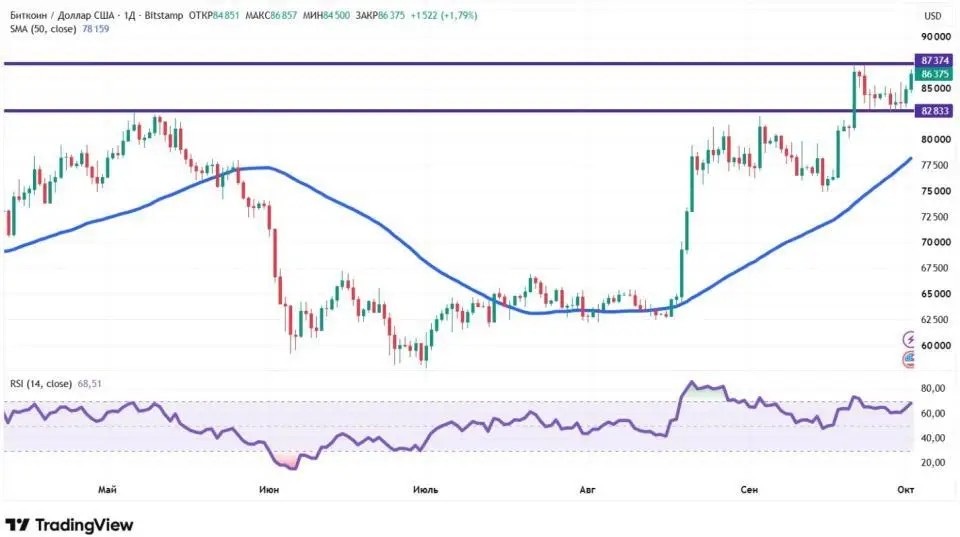
From a technical analysis perspective, despite the slowdown in growth over the last two weeks, Bitcoin's trend remains upward. This is indicated by the price position above the 50-day moving average (marked in blue). The RSI indicator also favors buyers (bulls), as its value exceeds 50. The support and resistance levels on the daily chart remained unchanged from last week: $82,833 and $87,374.
Source: tradingview.com

The Fear and Greed Index increased by one point compared to last week, reaching 72. This still indicates the predominance of greed in crypto investor sentiment.

Ethereum

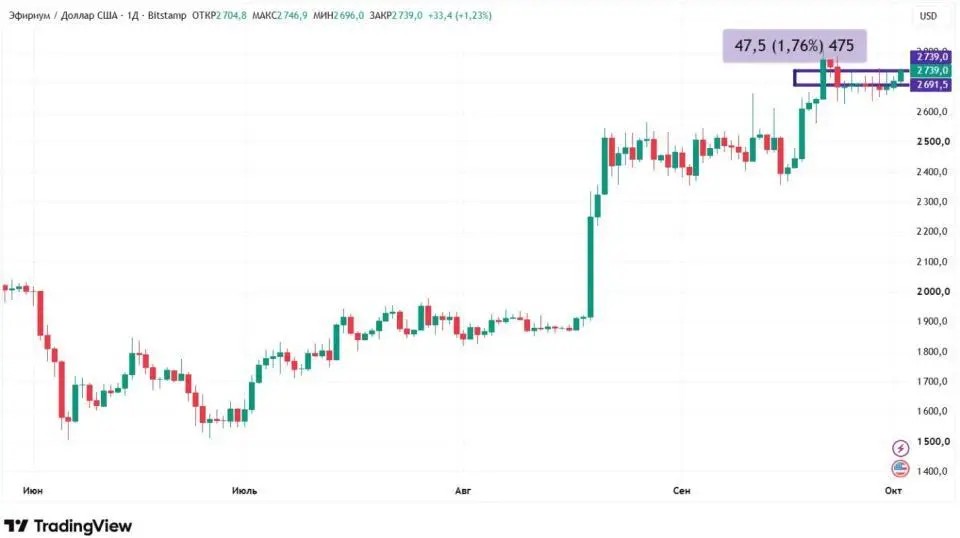
Ether rose by 1.76% from September 25 to October 2. Volatility was extremely low: not once did the daily price change exceed 1.5%. Throughout the week, $ETH moved within a narrow range of $2630–2750.
Source: tradingview.com

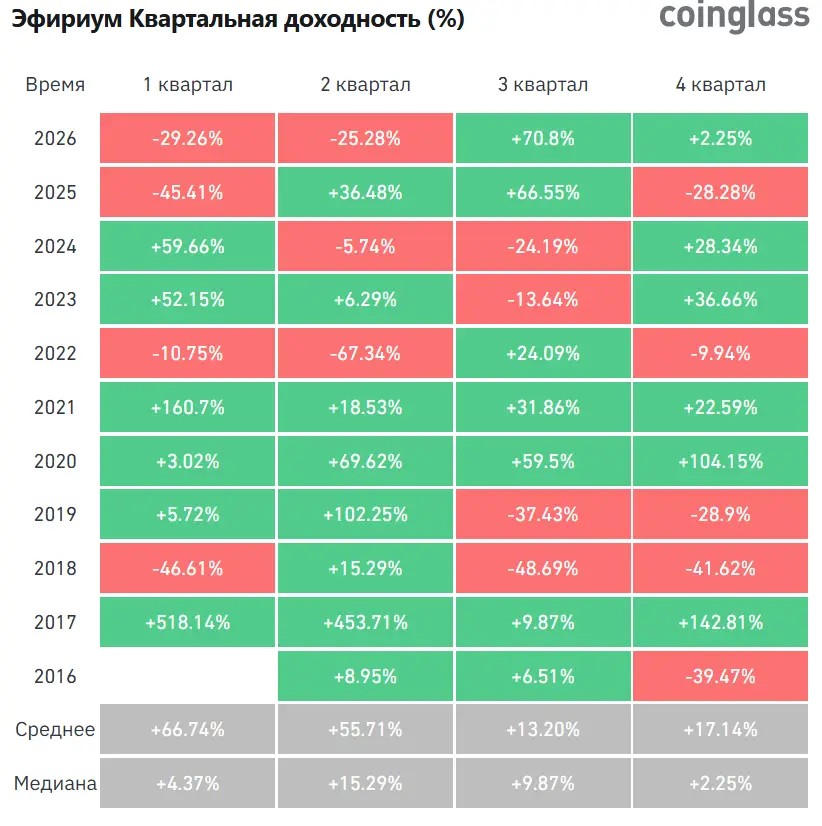
The concluded third quarter of the year, the period from July to September, was the best for Ether in its entire history. During this time, the second-largest cryptocurrency by market cap gained a full 70.8%. And the past three months are also the best quarter for $ETH in the last five years. Prior to this, Ether grew by a larger percentage, 160.7%, from January to March 2021.
Source: coinglass.com

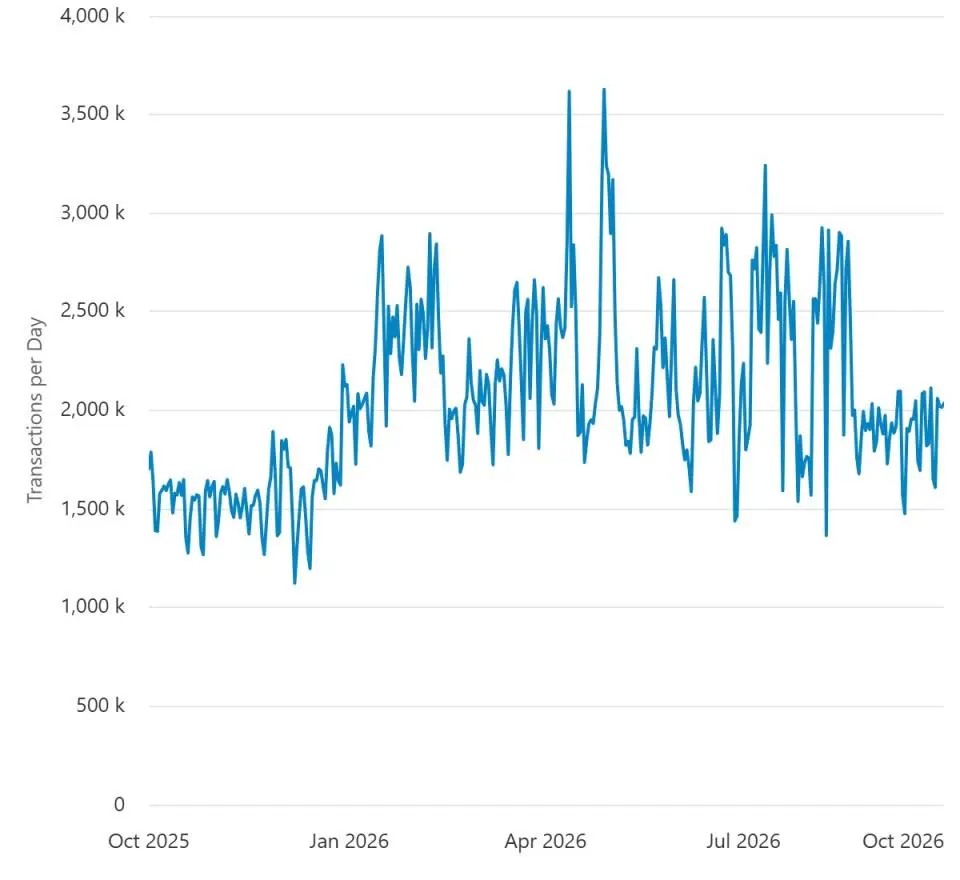
Despite the impressive price dynamics, user activity on the Ethereum network has clearly slowed since September. The number of daily transactions exceeded 2.1 million only once, on September 25. This value is 53% lower than the summer peak shown on July 11, and 72% less than this year's maximum (April 28). Taking this fact into account, it's difficult to expect a repeat of the rapid growth of the third quarter in the fourth.
Source: etherscan.io

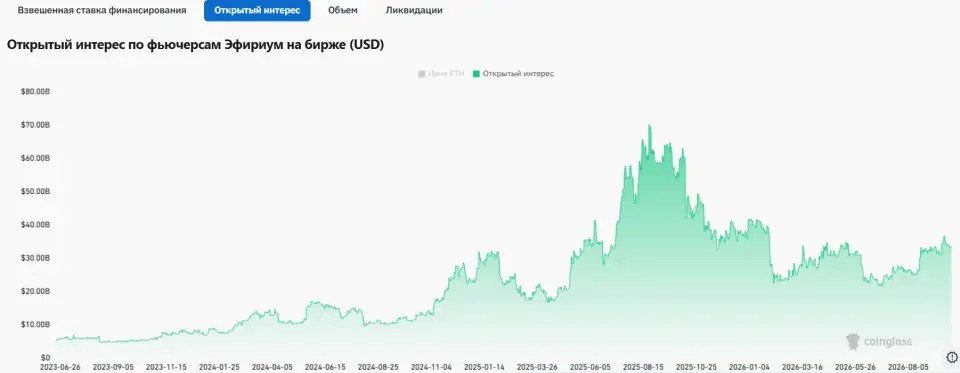
A certain stagnation is also observed in the derivatives market. The open interest indicator for Ether futures has been declining for more than two weeks. From its four-month peak value of $36.83 billion, by October 2 it had lost almost 9%, falling to $33.57 billion.
Source: coinglass.com

Spot ETFs on Ether recorded an outflow of depositor funds for the second time in the last three weeks. The size of the outflow this time amounted to $100.67 million. The majority of this amount, $56.81 million, came from Fidelity's fund, Fidelity Ethereum Fund (FETH).

Source: sosovalue.com

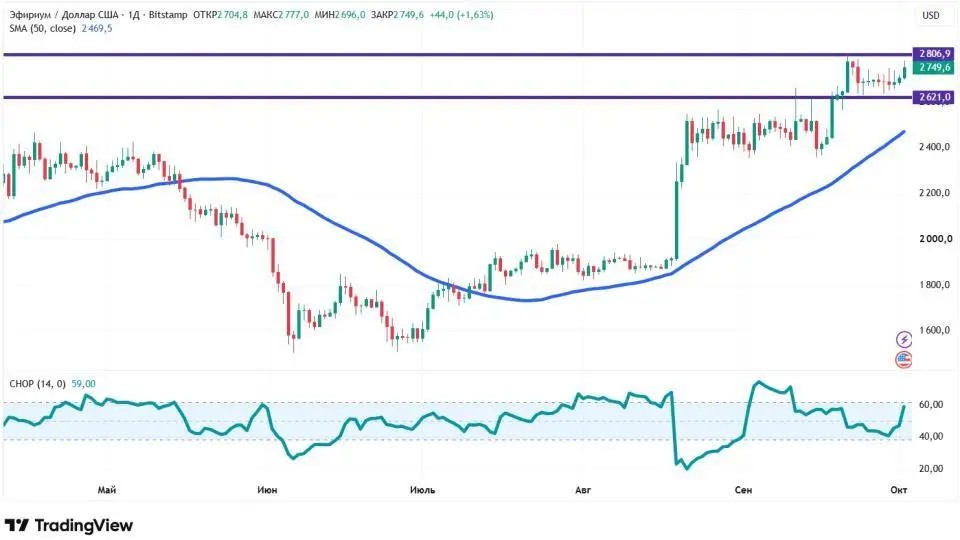
From a technical analysis perspective, Ether's long-term trend is upward. This is confirmed by the price position of $ETH above the 50-day moving average (marked in blue). However, a short-term consolidation has formed. This is clearly indicated by the Average True Range (ATR) index value of 59. The nearest support and resistance levels on the daily chart are $2621 and $2806.9.
Source: tradingview.com

Monero

The Monero cryptocurrency team released a new beta version of the software for its staging network. Announcing this on Monday, September 28, the developers called on the community to participate in testing the novelty to find shortcomings. The direct implementation of the software in the third version of the staging network for the FCMP++ and CARROT updates is scheduled for October 5. The main goal is to change the transaction privacy architecture. The goal is to be achieved by replacing the existing traditional ring signature system with zero-knowledge proofs.

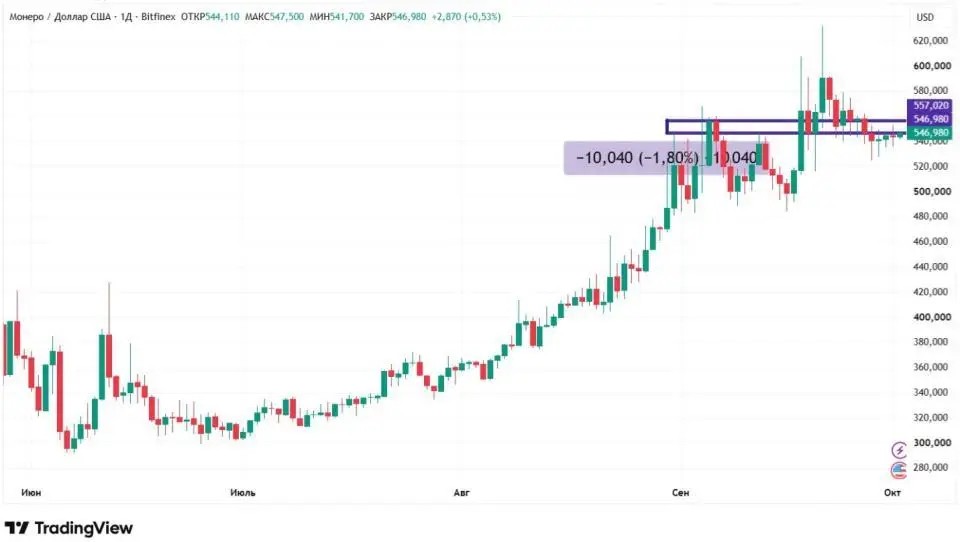
The step towards an important technical update did not significantly affect Monero's price. For the week from September 25 to October 2, the XMR token fell by 1.8%.
Source: tradingview.com

Near Protocol

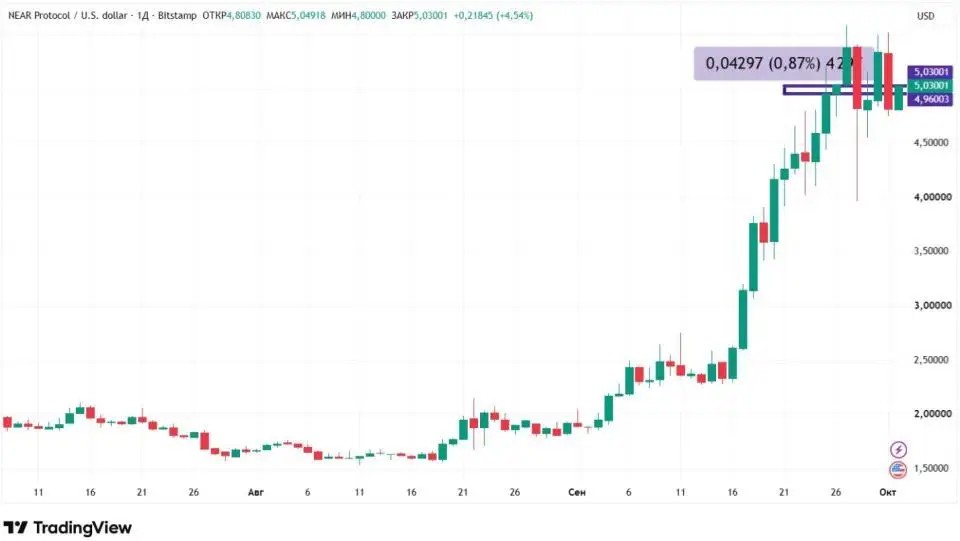
Near Protocol deployed the SPICE update, changing the transaction execution format. The process is now more asynchronous. This result is achieved by separating transaction ordering, data availability, and execution. This will allow blocks to be produced faster, reducing latency. The result of SPICE, as expected by Near Protocol, should be greater user engagement and expanded network capabilities for conducting complex transactions.

During the past week, trading began on the NYSE Arca platform for the first spot ETF on $NEAR in the US - Bitwise $NEAR ETF (NRR). The new product received the ticker NRR. The management fee is 0.75% per annum. In each of the three past trading sessions, NRR recorded capital inflows. The total amount deposited by investors exceeded $57 million.

Among the negative news, it's worth noting a vulnerability in the $NEAR Intents structure. The operation of the structure, as well as the near.com website, had to be stopped after the SHIELD security system detected unusual activity. The problem was resolved within an hour. However, as a result of the incident, Near Protocol lost $3.8 million. Although Near co-founder Ilya Polosukhin announced that all losses to users would be reimbursed, a reputational blow could not be avoided. This is precisely why $NEAR's price increase for the week was extremely modest - 0.87%.
Source: tradingview.com

Ethena

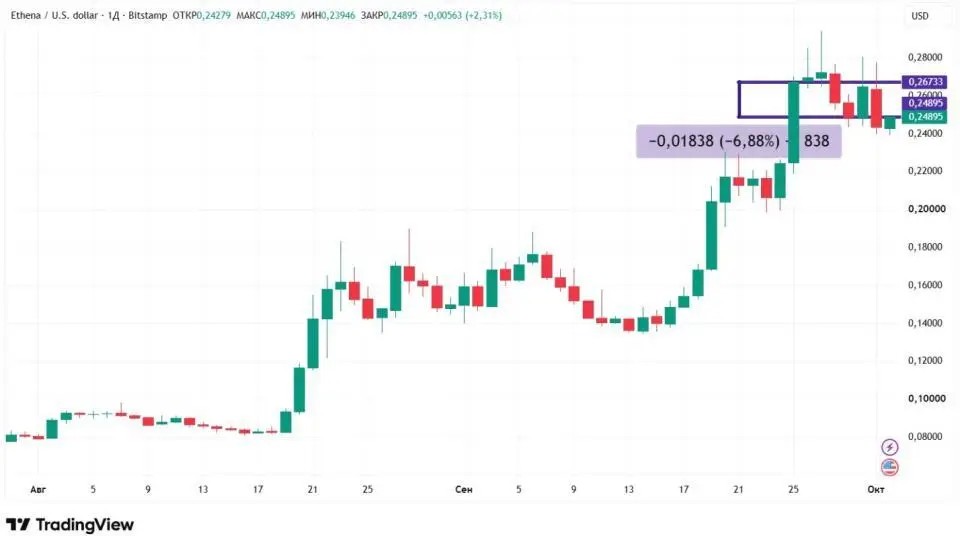
The British bank Standard Chartered made a bold forecast for the Ethena cryptocurrency. By 2028, bankers expect to see the price of $ENA = $2, which is eight times greater than the market price at the beginning of October 2026. Standard Chartered believes that Ethena will be supported by perpetual futures, tokenization, and stablecoins. Ethena's buyback programs were named as a factor in favor of $ENA. Although the bank's forecast has yet to materialize in practice, it has already attracted some attention to Ethena.

September 30 was the last day when holders of the USDe stablecoin or its yield version sUSDe could receive rewards in $ENA tokens. Ethena officially announced this on September 26. The step is aimed at reducing the inflation of $ENA.

Despite generally positive news, Ethena lost 6.88% from September 25 to October 2. It is quite likely that investors preferred to lock in their profits, as $ENA had gained more than 250% since mid-summer.
Source: tradingview.com

Conclusion

For the week, the two largest digital assets - Bitcoin and Ether - increased in price, while others (e.g., Monero and Ethena) decreased. Although the third quarter of the year ended on a positive note, the fourth quarter will likely be less impressive.

This material and the information in it are not individual or any other recommendation. The opinion of the editorial board may not coincide with the opinions of analytical portals and experts.


Trending Cryptos

Related Questions

QWhat was the price performance of Bitcoin and Ethereum from September 25 to October 2, 2026?

ABitcoin rose by 2.97%, allowing it to climb back above $86,000. Ethereum grew by 1.76% during the same period.

QWhat was Citigroup's price forecast for Bitcoin for the next twelve months, and what were the main arguments supporting it?

ACitigroup forecasted that Bitcoin would trade at $113,000 in a year. The main arguments were capital inflows into spot ETFs and improved economic conditions, including the softening of negative impacts from the CLARITY act failure and supportive actions by the SEC and the US Treasury.

QWhat technical analysis indicators suggested Bitcoin's trend remained upward?

AThe price position above the 50-day moving average and an RSI value above 50 indicated an upward trend for Bitcoin. The Fear and Greed Index also increased to 72, signaling prevailing greed among investors.

QWhy does the article suggest it's difficult to expect a repeat of Ethereum's strong Q3 2026 performance in Q4?

AUser activity on the Ethereum network has significantly slowed since September, with daily transaction counts far below summer peaks. A certain stagnation is also observed in the derivatives market, with open interest in Ethereum futures declining for over two weeks.

QWhat were the key developments and price changes for Monero and Near Protocol during the reported week?

AMonero's developers released a new beta version of software for its stress test network, aiming to change transaction privacy architecture. Its price, however, fell by 1.8%. Near Protocol deployed the SPICE update to improve transaction execution and saw the launch of the first US spot ETF on $NEAR (NRR), which attracted over $57 million. Despite this, a security vulnerability in $NEAR Intents caused a $3.8 million loss, limiting $NEAR's weekly gain to just 0.87%.

Related Reads

Bitcoin carry trades could beat Treasury bills in 2027, Sygnum predicts

Bitcoin carry trades could regain their edge over US Treasury bills in 2027 as demand for leverage recovers, according to digital asset bank Sygnum. In its 2027 Sygnal Outlook report, Sygnum forecasts that the annualized premium on three-month Bitcoin futures at the Chicago Mercantile Exchange would average more than 2% above three-month US Treasury bill yields next year. A crypto carry trade involves buying Bitcoin while betting against its price through futures contracts, limiting exposure to price swings while collecting funding payments or futures premiums. Fabian Dori, Sygnum's chief investment officer, said returns could recover as investors become more willing to take risks and fewer hedge funds compete for the same profits. The basis trade had become very crowded, with many hedge funds running it through spot ETFs against short CME futures, but positioning data indicates those funds have now unwound much of their CME short positions. Sygnum cited a 67-day stretch of negative Bitcoin funding rates in 2026, and Talos research shows funding rates and futures premiums that peaked at 20%-40% annualized in early 2024 dropped to just 3%-5% this year, roughly matching the current three-month Treasury bill yield of around 4.25%. Bitcoin carry trades became popular after the launch of US spot Bitcoin ETFs in 2024, but as more investors entered, returns fell. Dori noted a more mature market pays less for the same trade but also attracts additional investors, potentially increasing demand for leverage. Talos found funding rates have started rising again since August, and Coinbase reported Bitcoin funding rates rose from around 4% annualized at the start of October to an average of 8.9% in the last week of the month, though Coinbase questioned whether this reflected meaningful demand given weaker spot buying. Sygnum expects wider institutional adoption, tokenization growth and rising AI demand to support leveraged Bitcoin exposure in 2027. Dori warned that a sharp market downturn, liquidity shortage, or interest rates staying higher for longer could prevent carry trade returns from recovering, and that even hedged positions can face margin calls. Carry can pay steadily for long periods and then turn quickly, he said, and when positioning gets crowded and funding reverses, the unwind is typically fast.

cointelegraph23m ago

Bitcoin carry trades could beat Treasury bills in 2027, Sygnum predicts

cointelegraph23m ago

Bernstein Research Report Interpretation: Fiscal 2028 Revenue to Top $740 Billion, Yet Only a Neutral Rating for Nvidia

Nvidia reported Q3 FY2027 revenue of $115.844 billion, beating consensus of $109.330 billion, with adjusted EPS of $2.68 versus $2.47 expected. Data Center revenue reached $107.610 billion, up 21% QoQ and 110% YoY, driven by the Vera Rubin architecture, which contributed about $20 billion in its first quarter, alongside continued Blackwell Ultra shipments. Hyperscale cloud revenue was $60.136 billion, while AI cloud and enterprise customers reached $47.474 billion, up 195% YoY. Networking contributed about $21 billion, and adjusted gross margin came in at 74.9%. Q4 FY2027 guidance stands at $130 billion, above the $125.1 billion consensus, but Bernstein notes this includes an extra accounting week worth roughly $5-10 billion; excluding it, the normalized outlook is slightly below consensus. Q3 also benefited from about $2.4 billion in Hopper sales to China, which are excluded from Q4 guidance. Q4 gross margin is guided at 71.5%, expected to be the cycle trough before price increases lift margins to 72-73% in FY2028. Management raised FY2028 revenue growth guidance to about 75% from 70%, implying revenue above $740 billion, saying strong global demand offsets new export controls. Supply commitments rose to $390 billion, or $518 billion including cloud, leasing, and equity commitments. Inventory climbed to $39.7 billion. Free cash flow was $43.8 billion, with $22.1 billion in buybacks and a new $150 billion authorization. Bernstein raised its FY2028 revenue forecast to $742.4 billion and EPS to $17.18. Despite strong fundamentals, Bernstein maintains a Market-Perform rating and $200 target price, citing governance and long-term execution risks following management changes. The board has said it does not intend to bring back Jensen Huang and is searching for a new leader, raising questions about supplier negotiations, product roadmap, decision speed, and talent retention, plus potential investigation risks. At around $155.46, the stock trades at just 9.0x FY2028 EPS, or about 10x the $200 target based on average FY2028-29 EPS of $20.59. Bernstein remains on the sidelines pending clarity.

marsbit1h ago

Bernstein Research Report Interpretation: Fiscal 2028 Revenue to Top $740 Billion, Yet Only a Neutral Rating for Nvidia

marsbit1h ago

Bitcoin Volatility Falls to 43%, Below Nearly One-Fifth of S&P 500 Constituents: Is the Crypto Asset Risk Narrative Being Rewritten?

Grayscale Research argues that Bitcoin's risk profile has structurally changed and that investors' framework for assessing crypto risk needs a fundamental reset. Bitcoin's one-year realized volatility has fallen from roughly 64% a decade ago and 81% five years ago to about 43% today, placing it within the normal range of S&P 500 large-cap stocks and below roughly 19% of S&P 500 constituents. This decline reflects deeper institutional market-making, spot ETP launches, and established regulatory boundaries. The report cautions against judging Bitcoin by volatility alone. Its returns exhibit fat tails and momentum clustering, with the bulk of long-term compound gains concentrated in a handful of best trading days; missing the top 10 days would erase most cumulative returns. Downside-only measures such as the Sortino ratio therefore flatter Bitcoin more than the Sharpe ratio does. Although drawdowns exceeding 50% have occurred, risk-parity-adjusted drawdowns look less exceptional versus traditional assets. Crucially, Bitcoin's returns are poorly explained by traditional macro factors, giving it low correlation with equities, bonds, and commodities. Backtests show that adding a 1–5% Bitcoin allocation to a classic 60/40 portfolio improves risk-adjusted returns without proportionally worsening maximum drawdown. Beyond Bitcoin, crypto sub-sectors are structurally decoupling: Bitcoin now explains only about 50% of overall crypto return variance. Smart contract platforms show roughly 58% volatility driven by on-chain fundamentals, while consumer and AI sectors show 76% and 85% respectively, driven by distinct narratives. This rotation creates room for bottom-up alpha. Institutions should adopt a two-layer approach: Bitcoin as a macro diversifier, plus selective exposure to vertical-sector infrastructure, managed through volatility budgeting and disciplined rebalancing.

marsbit2h ago

Bitcoin Volatility Falls to 43%, Below Nearly One-Fifth of S&P 500 Constituents: Is the Crypto Asset Risk Narrative Being Rewritten?

marsbit2h ago

Strategy Removed from MSCI: Will BlackRock's 123,000 Shares Really Hit the Market?

After Nov 30, MSCI will remove Strategy (Michael Saylor's bitcoin-holding company) from several indices, effective Dec 1, under new eligibility rules for "non-operating" companies. Investors expect selling pressure, since index-tracking funds that bought Strategy solely to mirror the index no longer have a reason to hold it. But two BlackRock funds tracking the same MSCI USA Index illustrate why holdings can't simply be summed into one sell order: iShares MSCI USA ETF (MLRG) holds Strategy shares directly (5,227 shares as of Nov 13), while iShares MSCI USA Swap UCITS ETF (MUSD) gets index exposure via total return swaps, so its counterparties may adjust their own positions without disclosure. BlackRock's URTH (29,300 shares) and ACWI (88,500 shares) also hold Strategy, bringing the three identified funds to 123,000 shares worth about $13.74 million — a specific snapshot, not the full universe of affected funds. USXF holds 16,100 shares but its specialized index adjustment is pending. Strategy says index funds collectively hold about 13 million shares, or 3.1% of free float. Crucially, shrinking holdings don't prove selling: ETFs grow and shrink with creations and redemptions, and shares can leave a fund via in-kind redemptions without exchange sales. Index removal may weaken demand for Strategy's stock and complicate its bitcoin-funding model, but it does not require Strategy to sell any bitcoin.

marsbit2h ago

Strategy Removed from MSCI: Will BlackRock's 123,000 Shares Really Hit the Market?

marsbit2h ago

Trading

Spot

Hot Articles

Discussions

Welcome to the HTX Community. Here, you can stay informed about the latest platform developments and gain access to professional market insights. Users' opinions on the price of ETH (ETH) are presented below.

活动图片