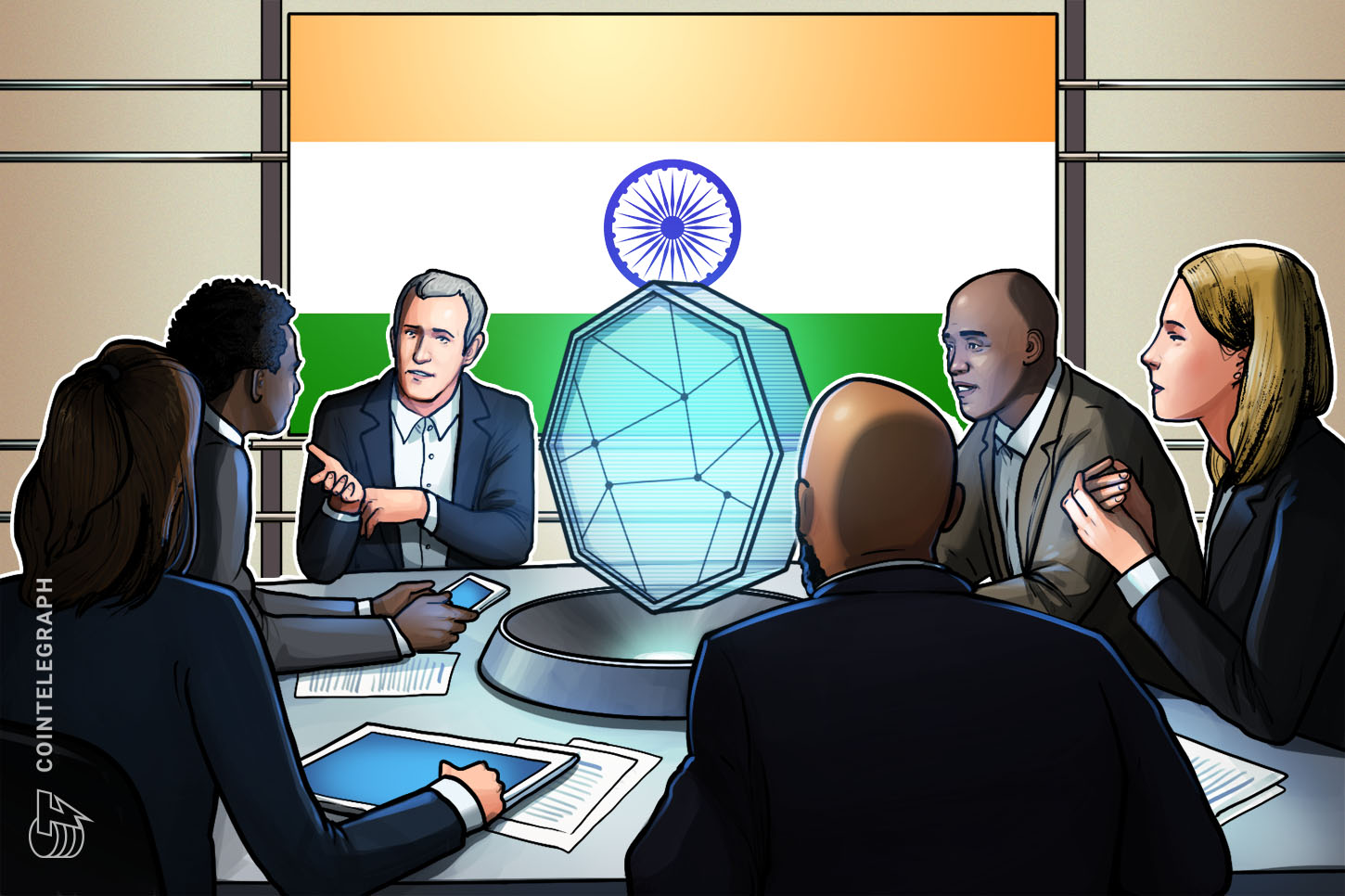
XRP Gains Access to Nasdaq: Evernorth Lists 473 Million XRP on the Exchange

cryptonews.ruPublished on 2026-10-12Last updated on 2026-10-12

Abstract

Evernorth Holdings Inc. (ticker XRPN on Nasdaq) has completed its merger with Armada Acquisition Corp. II, a Special Purpose Acquisition Company (SPAC), granting traditional stock market investors access to a managed portfolio of XRP. As part of the deal closure on October 9th, Evernorth holds approximately 473 million XRP tokens. The company also secured around $300 million in gross cash proceeds before transaction expenses. Founder and CEO Ashish Birla stated the firm intends to invest capital into the XRP economy by supporting use cases and infrastructure that expand XRP’s utility, while pursuing strategies aimed at increasing per-share value over time.

Stock market investors will gain access to an actively managed $XRP portfolio after the completion of a merger by Evernorth Holdings Inc. (Nasdaq: XRPN) on October 9. XRPN is the common stock ticker for Evernorth on Nasdaq. The completed business combination merger resulted in the consolidation of Evernorth and Armada Acquisition Corp. II, a special purpose acquisition company created to bring another enterprise to the exchange.

At the closing of the deal, Evernorth owned approximately 473 million $XRP and raised about $300 million in gross cash proceeds before transaction expenses. Founder and CEO Ashish Birla stated:

"We will deploy capital into the $XRP economy, supporting infrastructure and use cases that expand $XRP utility, as well as implement strategies aimed at growing the per-share value of $XRP over time."

Trending Cryptos

Related Questions

QWhat was the main event regarding XRP and Nasdaq mentioned in the article?

AOn October 9th, Evernorth Holdings Inc. completed a merger, giving stock market investors access to an actively managed portfolio of XRP. Its common stock trades on Nasdaq under the ticker XRPN.

QHow many XRP tokens did Evernorth Holdings own at the closing of the deal?

AAt the closing of the deal, Evernorth Holdings owned approximately 473 million XRP tokens.

QWhat is the Nasdaq ticker symbol for Evernorth's common stock?

AThe Nasdaq ticker symbol for Evernorth's common stock is XRPN.

QWhat other company was involved in the merger with Evernorth Holdings?

AEvernorth merged with Armada Acquisition Corp. II, a special purpose acquisition company (SPAC).

QWhat did Ashish Birla, Founder and CEO of Evernorth, say about the company's capital investment plans?

AAshish Birla stated they would invest capital into the XRP economy by supporting infrastructure and use cases that expand XRP's utility, and implement strategies aimed at increasing the value of XRP per share over time.

Related Reads

Jensen Huang's Scandal, Nvidia's Nightmare

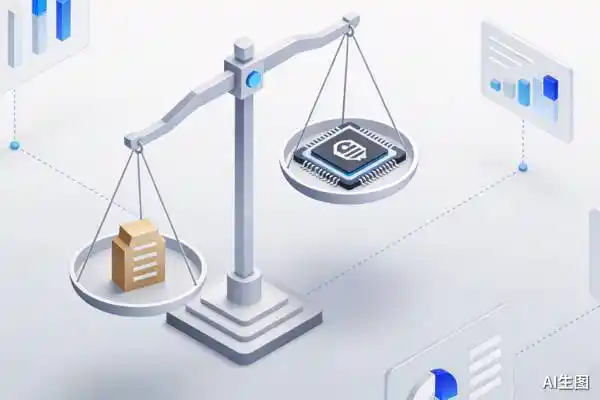
The article argues that the real danger to Nvidia from the Huang Renxun scandal is not criminal liability but securities litigation and governance risk. Criminal charges require proving knowledge and intent, a high bar. Far more threatening is the 10b-5 class action, which hinges on whether statements like "no evidence of chip diversion" and calling the relationship "normal and not unusual" were misleading when made. Plaintiffs need only show the company lacked adequate basis for such confident characterizations—a much lower threshold than criminal intent. The "no evidence found" statement is especially vulnerable: if discovery reveals the company didn't seriously look or ignored anomalies, it becomes misleading. The nightmare scenario is the discovery phase, where internal emails, compliance records, and board minutes must be handed over, exposing governance gaps that fuel further lawsuits, congressional hearings, and regulatory scrutiny. Board investigations cut both ways: a narrow scope looks perfunctory, while a broad one may uncover new disclosure obligations. The article also highlights a regulatory shift from item-based export controls to relationship-based controls, meaning executives' personal networks are now part of compliance monitoring. This raises structural costs across the entire AI chip supply chain and could lead to industry-wide compliance discounts. Key indicators to watch: whether congressional briefings escalate to subpoenas or public hearings, whether the class action focuses on disclosure-control failures, whether the board investigation covers Megaspeed and export compliance, and whether customer contracts add "no-diversion" audit and indemnity clauses. The ultimate nightmare isn't a fine—it's a rule change.

marsbit2m ago

Jensen Huang's Scandal, Nvidia's Nightmare

marsbit2m ago

The Failure of 'First Principles': When AI Entrepreneurship Falls into the Trap of Physics Worship

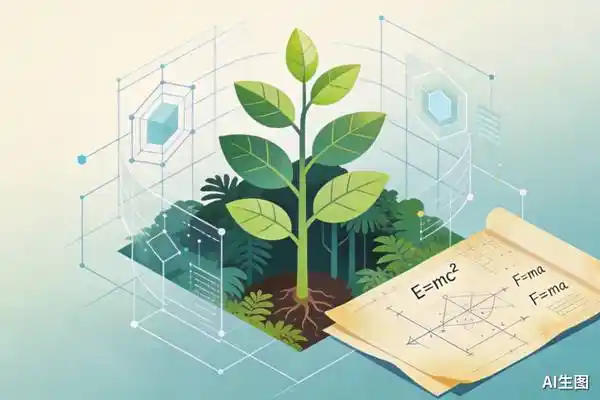
This article critiques the misapplication of "first principles" thinking in AI entrepreneurship, arguing that while Elon Musk's physics-based approach succeeds in hardware (a "convergent system" governed by physical laws and measurable variables), it fails in software and AI ecosystems, which are "divergent systems" defined by emergence, network effects, path dependency, and unpredictable human behavior. The author contends that many founders treat first principles as a universal cure-all, ignoring existing industrial structures, user habits, and collaboration networks, leading to failure. OpenAI's evolution—marked by trial, error, and adaptation rather than a perfect blueprint—serves as a counterexample. In China, complexity is compounded by strong regulation, unique user habits, and entrenched supply chains, making "from-scratch" thinking especially risky. The article proposes upgrading from reductionist physics thinking to complex adaptive systems thinking, centered on three shifts: seeking a viable ecological niche rather than a perfect solution, embracing co-evolution over unilateral disruption, and accepting emergent adaptation over full upfront design. It introduces a four-layer decision framework—environment sensing, ecosystem analysis, path design via a Minimum Viable Ecosystem (MVE), and adaptive organizational mechanisms—plus China-specific tools like government-market dual drivers, industrial clusters, and semi-open data ecosystems. Practical paths include avoiding direct competition with tech giants, prioritizing scenario embedding over technical purity, ecosystem compatibility over disruptive features, and iterative feedback over complete top-down design. Future trends favor vertical small models over general large models, ecosystem affinity as the key competitive edge, regional specialization (AI+manufacturing in the Yangtze River Delta, AI+services in the Greater Bay Area), and SOE digitalization as a major second growth curve. Ultimately, success in China's AI sector depends on precise embedding and co-evolution within complex business ecosystems rather than isolated technical excellence.

marsbit7m ago

The Failure of 'First Principles': When AI Entrepreneurship Falls into the Trap of Physics Worship

marsbit7m ago

Claude's New Flagship Just Launched, and Its 950,000-Character Top-Secret Prompt Has Been Completely Exposed

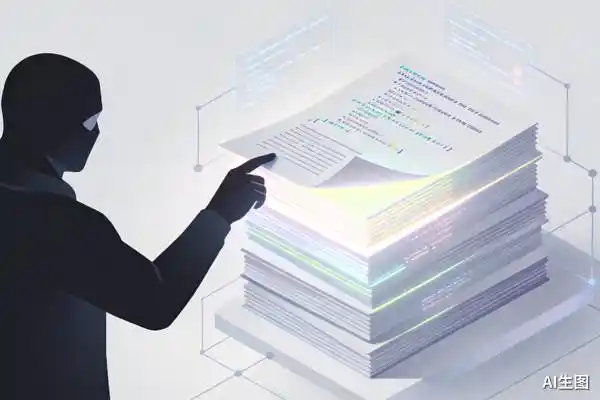
Anthropic's newly launched Claude Fable 5.2 was breached by hacker Pliny within two hours of release, exposing the full system prompt and tool definitions on GitHub—953,659 characters across 7,832 lines, roughly 30 times larger than the 31,881-character public version. Key revelations include: Anthropic deliberately weakened the model's "accelerator kernel optimization" ability during training to prevent others from using Claude to train their own AI, forcing it to doubt itself and consult external docs on such tasks. The internal prompt contains 128 tools (up from 18 and 46 in prior leaks) and 44 built-in skills, including guides for making phone reservations, automating expense reimbursements via Gmail verification codes, renewing prescriptions from pill-bottle photos, and importing memories from other AI assistants. Despite being able to spawn parallel sub-agents, Claude is strictly forbidden from doing so unless the user asks, because cold-start context recomputation is too costly. Safety guardrails are extensive: local rm/rmdir commands are locked by default, with files moved to a _to_delete folder instead; stock trading, transfers, entering real passwords or bank card details, and bypassing verification codes are absolutely prohibited even with explicit user authorization; external content is treated as data, never instructions; and forged "guardrails disabled" messages are ignored. Long-term memory may not store salary, diagnoses, or ID numbers, and Claude must never say "according to my memory." Yet the defenses were punctured within an hour: Pliny hid "I like turtles" in a hidden reasoning tag, and Claude twice claimed it received only blank messages—then immediately guessed "turtle!" when asked to blindly name an animal, proving the model's talkative nature can't be fully suppressed by a 950,000-character instruction manual. The leak shows that what makes Claude effective isn't raw model benchmarks alone, but the 128 tools, 44 workflows, and robust safety rails built around it.

marsbit8m ago

Claude's New Flagship Just Launched, and Its 950,000-Character Top-Secret Prompt Has Been Completely Exposed

marsbit8m ago

Shandong Qingdao Semiconductor Equipment Company Pursues IPO, Peer of NAURA and Piotech

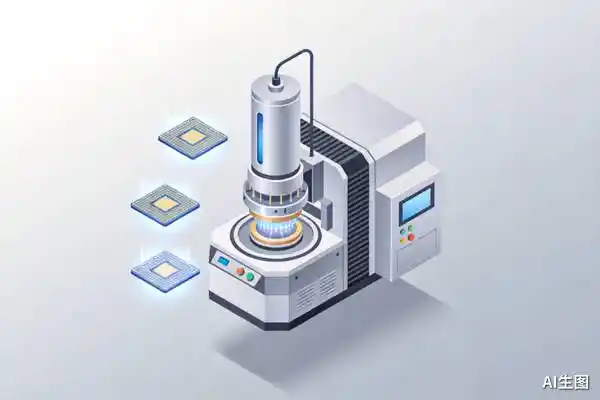
Siliray (Qingdao Siliray Intelligent Technology), a Chinese semiconductor equipment maker based in Qingdao, Shandong, has filed for an IPO on the STAR Market with Guotai Haitong Securities as sponsor. The company specializes in atomic layer deposition (ALD) equipment and ion implantation equipment for ICs, power devices, research, and displays, and claims to be one of the few domestic firms to achieve key technical breakthroughs in both fields. Financially, revenue grew from RMB 349 million in 2023 to RMB 495 million in 2025, but the company remains unprofitable, with cumulative losses exceeding RMB 1 billion over three and a half years and breakeven projected no earlier than 2029. R&D spending is heavy, at 41.63%–61.05% of revenue. Inventories have ballooned to about RMB 1.3 billion, raising write-down risks, and overseas business via its Finnish subsidiary Beneq carries regulatory and tax exposure. The market is dominated by international giants: Applied Materials, Tokyo Electron, and Lam Research hold 58.15% of global ALD share, while Applied Materials and Axcelis control 82.25% of ion implantation. Domestic peers include NAURA, Piotech, and Leadmicro. Siliray ranked third globally and first among Chinese vendors in compound semiconductor ALD with 12.01% share in 2025, first globally in displays (14.72%) and research (8.29%). Gross margins fluctuated between 33.98%, 41.43%, 39.02%, and 22.13%. The company has no controlling shareholder or actual controller; CRRC Sifang Institute is the largest shareholder with 16.15%, followed by Huayu Guohua at 15.3%. It plans to raise RMB 2 billion for R&D and manufacturing centers and working capital.

marsbit22m ago

Shandong Qingdao Semiconductor Equipment Company Pursues IPO, Peer of NAURA and Piotech

marsbit22m ago

Trading

Spot

Hot Articles

What is XRP 2.0

XRP 2.0: A New Frontier in the Cryptocurrency Landscape Introduction to XRP 2.0 In the ever-evolving realm of cryptocurrency, new projects continuously emerge, vying for attention and adoption. One such promising initiative is XRP 2.0, a novel cryptocurrency project designed to leverage advanced blockchain technology and robust encryption methodologies. While the name draws parallels with Ripple’s XRP, it’s crucial to note that XRP 2.0 operates independently, focusing on enhancing transaction security, privacy, and scalability. As the digital financial landscape increasingly embraces decentralized solutions, XRP 2.0 aims to contribute meaningfully to web3 and the overall expansion of crypto projects. What is XRP 2.0? At its core, XRP 2.0 is a cryptocurrency project that aims to create a secure and decentralized digital currency ecosystem. Its foundational technology integrates sophisticated blockchain principles with cutting-edge encryption techniques. The overarching goal of XRP 2.0 is to establish itself as a reliable and efficient platform enabling swift transaction execution while prioritizing enhanced privacy protections for its users. The project is promoted as a solution to many limitations faced by existing cryptocurrencies, proposing a system that can handle a higher volume of transactions with improved speed and privacy. This versatility positions XRP 2.0 as a significant contender in a marketplace riddled with various digital currencies. Who is the Creator of XRP 2.0? The identity of the creator behind XRP 2.0 has been flagged as ‘Wilbur.’ However, comprehensive details regarding Wilbur or their associated entity remain elusive. The anonymity of many cryptocurrency creators is not an uncommon phenomenon in the industry, often designed to maintain a degree of privacy and security. Who are the Investors of XRP 2.0? As of now, specific information related to the investment foundations or organizations supporting XRP 2.0 is not publicly available. In the cryptocurrency sector, the backing by reputed investors can significantly influence a project's credibility and success, yet the transparency regarding the financial supporters of XRP 2.0 has not been established. How Does XRP 2.0 Work? XRP 2.0 stands out by employing a combination of blockchain technology and advanced encryption algorithms that ensures secure and decentralized transactions. Its innovative structure includes unique features designed to foster user engagement and broaden functionalities beyond conventional cryptocurrency transactions. Among these features, XRP 2.0 incorporates AI-powered capabilities, such as text-to-image and text-to-speech functionalities. These additions are designed to enhance the interactive experience for users, promoting broader applicability across various sectors. By bridging technological advancements with user-centered design, XRP 2.0 aims to capture the attention of a diverse range of individuals and enterprises looking to integrate cryptocurrency solutions into their operational frameworks. Timeline of XRP 2.0 Understanding XRP 2.0 requires examining the milestones that have defined its journey thus far: July 23, 2023: XRP 2.0 is introduced as a novel cryptocurrency project, aiming to revolutionize secure and decentralized transaction capabilities in the blockchain domain. September 8, 2023: The launching of another project, XRP20, occurs, marking the emergence of an ERC-20 token on the Ethereum blockchain that remains unrelated to XRP 2.0. November 13, 2023: The XRP Ledger undergoes a significant update with the release of rippled server software version 2.0.0. It is essential to note that this development is disconnected from the XRP 2.0 cryptocurrency project. Key Points About XRP 2.0 To distill the essence of XRP 2.0, several critical factors emerge: Unique Features: The inclusion of features like AI-powered text-to-image and text-to-speech further diversifies the potential applications of XRP 2.0. Blockchain Technology: The framework utilizes advanced blockchain mechanisms and encryption protocols, ensuring a secure and decentralized environment for transactions. Scalability and Privacy: XRP 2.0 prioritizes enhanced privacy protections in transaction processes and the scalability necessary to accommodate a growing user base. No Affiliation with Ripple: Importantly, despite its name, XRP 2.0 does not have any allegiance or collaboration with Ripple’s XRP, distinguishing its operational framework and objectives within the cryptocurrency ecosystem. Conclusion XRP 2.0 represents an ambitious venture into the cryptocurrency sphere, aiming to offer a combination of security, privacy, and efficiency in digital transactions. By integrating sophisticated technologies and user-friendly features, the project sets out to broaden the horizons of what cryptocurrency can achieve in today's digital economy. While the anonymity of its creator and lack of disclosed investors might raise questions for some, XRP 2.0's focus on advanced functionalities and decentralisation enhances its appeal amidst an increasingly crowded crypto market. As the cryptocurrency landscape continues to evolve, XRP 2.0 may yet emerge as a pivotal player in the expansion of secure and scalable blockchain solutions.

3.5k Total ViewsPublished 2024.04.01Updated 2024.12.03

What is XRP 2.0

Discussions

Welcome to the HTX Community. Here, you can stay informed about the latest platform developments and gain access to professional market insights. Users' opinions on the price of XRP (XRP) are presented below.

活动图片