A Critical Week Begins for Bitcoin and Altcoins! The Final Draft of the Clarity Act Published, Voting Tomorrow: 'Even Trump Approved It!'

cryptonews.ruОпубліковано о 2026-09-14Востаннє оновлено о 2026-09-14

Анотація

This week is critical for Bitcoin and altcoins, beginning with a procedural Senate vote on the Clarity Act cryptocurrency legislation on September 15. The bill requires 60 votes to advance. Republican senators have released a revised version incorporating Democratic demands, focusing on ethics and conflict-of-interest provisions, particularly regarding former President Donald Trump's crypto-related business activities. Republicans have called this their "final offer," with Senator Cynthia Lummis stating Trump agreed to stringent ethical restrictions. The vote's outcome is decisive. Republicans hold 52 seats and need at least 8 Democratic votes for passage. While Trump's concessions on ethics increase the chance of a deal, Democratic demands for stricter anti-money laundering rules leave the final result uncertain. The week will also feature a Federal Reserve interest rate decision.

This week will be crucial for Bitcoin and altcoins. This week, many important events may occur both in the financial world and in the world of cryptocurrencies. The week begins tomorrow, September 15, with the vote on the Monetary Policy Clarity Act (Clarity Act) and continues on Wednesday with the Federal Reserve's interest rate decision.

One of the most important events of the week will be related to the Clarity Act, cryptocurrency legislation. A procedural vote will be held in the Senate tomorrow. To pass the procedural stage, the bill needs 60 votes. If this threshold is not reached, the Clarity Act will not be rejected; however, its progress in the Senate will be significantly hindered and delayed. This is because the bill, which has been under consideration in the Senate for nearly a year, will now take much longer to be adopted.

Republicans Warn of a 'Final Offer'!

Republican senators published a revised version of the CLARTY law, which will be voted on tomorrow, taking into account the demands of Democrats. It is reported that the new Republican version focuses on provisions related to ethics and conflicts of interest, which is one of the main obstacles to passing the bill.

Senator Cynthia Lummis, one of the most ardent supporters of the bill, stated: 'If even this version of the bill is rejected, it will mean a rejection of real ethical reforms,' while Republicans warned Democrats about their 'final offer,' calling their draft the 'final, best and final' version.

Trump's Cryptocurrency Assets Made Headlines!

As is known, one of the most contentious aspects of the law to date is President Donald Trump's and his family's business activities in the cryptocurrency sector.

At this stage, Democrats argued that the current law does not sufficiently account for potential conflicts of interest related to Trump's income from digital assets. However, Republican senators noted that the final draft includes changes requested by Democrats, particularly regarding ethics rules.

Lummis stated: 'President Trump voluntarily agreed to unprecedented ethical restrictions, some of the strictest in US history, extending to every federal elected official, judge, and their spouse. Democrats got what they wanted; now they will have to accept the 'yes' answer.'

The Results of the September 15 Vote Will Be Decisive!

For the bill to progress, Republicans need to secure the support of Democratic senators. After a delay in August, renewed attempts by the parties to reach a compromise have placed the fate of the bill at the last moment.

Although Trump's acceptance of a significant portion of Democratic demands regarding ethics rules increases the likelihood of an agreement between Republicans and Democrats, the outcome of the negotiations remains unclear, as Democrats demand stricter provisions on ethics and anti-money laundering. There are 100 senators in the US Senate. For the bill to pass tomorrow's procedural vote, at least 60 senators must vote for it. Given that Republicans currently have 52 votes, it is also necessary to secure at least 8 votes from Democrats.

*This is not investment advice.

end-content
Пов'язані питання

QAccording to the article, what is the main focus of the revised CLARITY Act submitted by Republican senators?

AThe revised version focuses on provisions concerning ethics and conflict of interest, which has been a major obstacle to the bill's passage.

QWhat is the procedural threshold that the Clarity Act needs to pass in the Senate on September 15th?

AThe bill requires 60 votes to pass the procedural vote in the Senate on September 15th.

QWhy does Senator Cynthia Lummis argue that Democrats should accept the current bill proposal?

AShe argues that President Trump voluntarily agreed to unprecedented ethics restrictions, some of the strictest in U.S. history, applicable to every federal elected official and their spouse, giving Democrats what they wanted regarding ethics.

QHow many Democratic votes are needed for the Clarity Act to pass the procedural vote, based on the current Senate composition?

AGiven that Republicans currently hold 52 votes, at least 8 Democratic votes are needed to reach the required total of 60 votes for the procedural vote.

QWhat was one of the main points of contention for Democrats regarding the initial Clarity Act in relation to Donald Trump?

ADemocrats argued that the initial bill did not adequately address potential conflicts of interest related to Donald Trump's income from digital assets and demanded stricter ethics provisions.

Пов'язані матеріали

The Truth About Stablecoin Cards: They Don't Save Money, Nor Do They Disrupt Visa

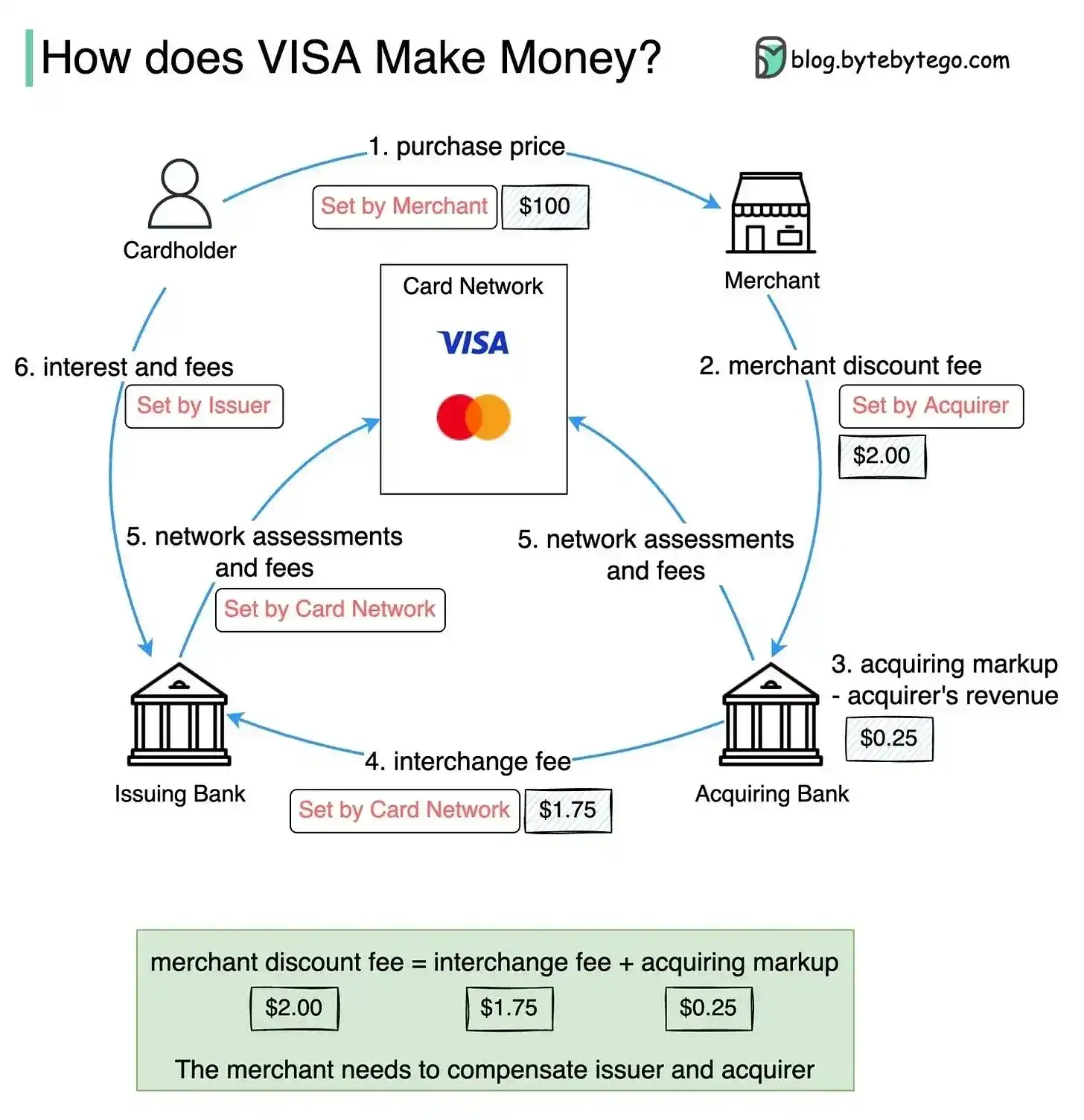
The Reality of Stablecoin Cards: They Don't Save Money, Nor Disrupt Visa Stablecoin-linked cards promise to bypass traditional payment networks like Visa to reduce merchant fees, but an analysis reveals this narrative is flawed. While crypto card usage is growing, over 90% of transactions still rely on Visa. A breakdown of a typical $100 credit card transaction shows the majority (70-80%) of the ~2.2% fee goes to the issuing bank (interchange fee), with payment processors taking a cut, and Visa itself only receiving a small assessment fee (7-9%). Stablecoin cards, which are debit products, operate in a different economic model. They don't offer credit, so they can't generate the same high interchange revenue as reward credit cards. Even with higher interchange rates from partnering with small banks, the total fee pool for a stablecoin debit transaction is significantly smaller (~$0.62 vs. $2.20 for credit), leaving little room to pass significant savings to merchants after covering costs. The true innovation of stablecoins in payments lies not in replacing Visa's network but in optimizing the back-end settlement layer. Stablecoins enable near-instant (T+0) settlement between issuers and card networks, freeing up working capital traditionally locked for two days (T+2). However, this benefit primarily accrues to card issuers, not merchants or consumers, and doesn't lower the front-end fees merchants pay. Visa and Mastercard are actively integrating stablecoin settlement (e.g., Visa's $7B annual USDC settlement), co-opting the technology rather than being disrupted by it. While stablecoins can demonstrably reduce costs in cross-border payments by eliminating intermediaries and forex layers, this logic doesn't translate to domestic card payments. In summary, stablecoin cards are more likely to be absorbed into the existing payment infrastructure, streamlining settlement for issuers, but they fail to deliver the promised fee savings for merchants or pose a fundamental threat to major card networks.

marsbit1 хв тому

The Truth About Stablecoin Cards: They Don't Save Money, Nor Do They Disrupt Visa

marsbit1 хв тому

How Much Cash Should We Really Hoard?

Title: How Much Cash Should We Actually Hold? From an asset allocation perspective, experts hold starkly different views on how much cash or cash equivalents one should hold. Legendary investor Charlie Munger advised keeping a large cash reserve for opportunities, while Ray Dalio famously calls cash "trash" due to currency debasement. Warren Buffett suggests a 90/10 split between the S&P 500 and short-term treasuries for his heirs. Nassim Taleb’s "Barbell Strategy" proposes allocating 90% to ultra-safe assets (cash/T-bills) and 10% to highly speculative, high-upside bets, creating an "antifragile" portfolio resilient to shocks while capturing extreme gains. The article argues the correct strategy depends entirely on the individual. For a young professional with health, time, and future earning potential, the "safe" left side of the barbell is already substantial. They can afford to allocate more savings to volatile, long-duration assets (like tech stocks, bitcoin) or self-investment (education, side hustles). For a mid-career professional, the calculus changes. With potentially limited career upside and higher vulnerability to job loss, building a substantial cash safety net (the barbell's left side) becomes paramount. This cushion serves dual purposes: weathering crises and providing the psychological "oxygen" to endure volatility in risk assets without being forced to sell at lows. Ultimately, personal finance is deeply personal. The size of the safe "left side" must be sufficient to cover expenses in a worst-case scenario, tailored to one's unique life stage, risk tolerance, and obligations. As the author notes, unspent money grants the freedom of choice and the power to say "no"—it’s your "F*ck You Money" that buys independence.

marsbit12 хв тому

How Much Cash Should We Really Hoard?

marsbit12 хв тому

Торгівля

Спот
活动图片