Compiled & Translated: Deep Chao TechFlow
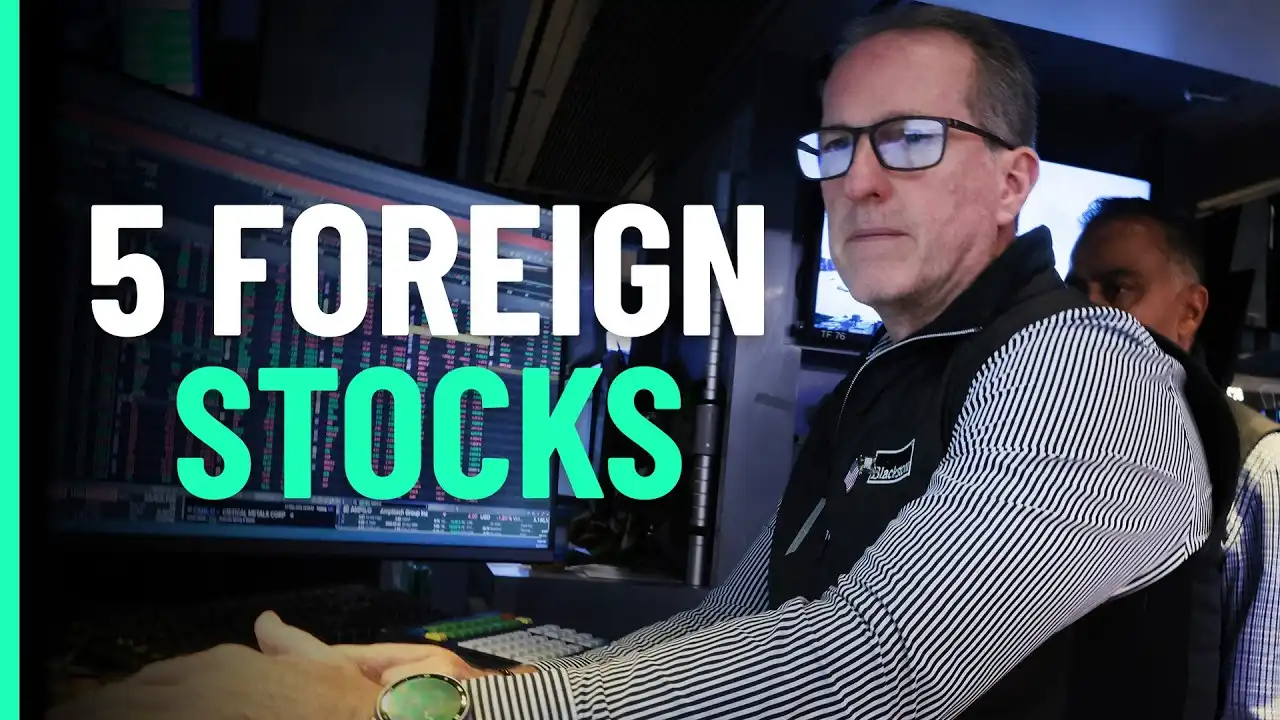
Guest: James E. Demmert, Main Street Research CIO
Host: Caroline
Podcast Source: TheStreet & James E. Demmert
Original Title: 5 Foreign Stocks That Could Beat The S&P 500
Broadcast Date: June 2, 2026
Key Points Summary
Main Street Research CIO James Demmert, while maintaining a year-end target of 8100 for the S&P 500, bluntly states that returns from overseas equity markets will surpass those of the US stock market. He presents five international stocks with valuations far lower than their US peers yet directly benefiting from the AI revolution: HSBC with a P/E of 9, BHP with a P/E of 16, and ASML, which he considers the pick "if you could only hold one stock for five years."
Demmert judges that Europe and Japan are taking up the baton of global growth with unprecedented fiscal stimulus, and this trend of international equities outperforming the US "will last for several years," suggesting investors allocate 45% of their portfolio overseas.
Highlights
- "If investors are only holding US stocks now, what they're missing out on is first diversification, and second, amazing opportunities outside the US where stock prices are more reasonably priced with growth rates that are equally attractive, if not higher."
- "Overseas markets have already outperformed the US, and we believe this trend will continue."
The Ultimate Global Chip Play: $ASML
- "We hold NVIDIA and Micron, and ASML plays a different role in the AI trade—it provides the chip design and manufacturing technology, while also giving us diversification exposure outside the US."
- "The US dollar is persistently weakening, and allocating assets to stocks of overseas companies helps diversify away from the concentration risk of a US dollar-denominated portfolio."
High-Value Global Bank: $HSBC
- "HSBC has a P/E ratio of only 9, cheaper than JPMorgan Chase, with a better forward growth outlook. As a global investment bank, its influence in Asia is unmatched by JPMorgan."
- "I don't think Chinese equities are investable at this point in time, but companies operating or capable of operating there, I think, are very meaningful."
Energy Infrastructure Play: Siemens Energy
- "The world is running out of electricity—AI is consuming power, cryptocurrency is consuming power, electric vehicles are consuming power. The core business of Siemens Energy is helping the world build its power grids."
- "The AI revolution is still in the third or fourth inning of a nine-inning game, still in the early stages. The behavior of this type of stock—if you remember the tech boom of the '90s—the trading patterns in the first few years are very similar, and this trend can last for quite some time."
The Hidden AI Mining Stock: $BHP
- "Most people think this is just a commodity trade, but when you consider all the data center needs, this is absolutely an AI investment—I call it the second derivative of AI."
- "The world needs more copper. The more data centers we build, the more important a role copper plays. BHP's P/E ratio is only 16; valuations overseas are far superior to the US."
Undervalued Healthcare Rebound: $AZN (AstraZeneca)
- "Healthcare has been neglected by the market for too long. AstraZeneca has a robust pipeline of drugs and biomedical products, with a P/E of 18 and growing over 20% annually."
- "Investors will start rotating into healthcare sometime in the second half of this year, as they will then begin to feel the value-add and real contributions AI is starting to make in the healthcare sector."
Why International Equities Are Outperforming the US
- "It's a valuation story, but it's also a story about changing global policies. The US is tightening fiscal spending, while Europe is taking a page out of our old playbook—they are engaging in unprecedented massive government fiscal spending, trying to keep interest rates low."
- "Overseas markets have outperformed the US for the first time in years, and we think this is a trend that will last for several years."
Rapid-Fire Q&A: Top Pick & Biggest Risk
- "If you could only hold one stock for the next five years, it would be ASML. The first to double would be ASML. The first to buy on a pullback would be Siemens Energy."
- "The most undervalued international market is Europe. The biggest mistake US investors make is not allocating enough overseas, being too conservative. We recommend 45% overseas, the rest domestic."
Introduction
Host Caroline: The S&P 500 at 8100—that's the bold prediction from my next guest. Although he remains bullish on US stocks, he says some of the biggest opportunities right now might actually be overseas. Joining me now is James Demmert, Founder and Chief Investment Officer at Main Street Research. James, great to have you.
James:
Great to see you, Caroline.
Host Caroline: You still think the S&P can hit 8100 this year, yet none of your top five stock picks are in the S&P 500. What does that say?
James:
It says that we think the S&P can go to 8100—that target used to look very high, and it still doesn't seem as far-fetched as before, but it is certainly closer than imagined. It also says that if we're leaning overseas, it's because we think they can actually outperform the S&P 500.
Host Caroline:What are investors missing out on if they only hold US stocks right now?
James:
I think they're missing out on first diversification, and second they're missing out on amazing opportunities outside the US where stock prices are more reasonably priced with growth rates that are equally attractive, if not higher. You may have noticed that overseas markets have already outperformed the US year-to-date, and we believe this trend will continue.
Pick #1: The Ultimate Global Chip Play
Host Caroline: Alright, let's get into your top five stock picks, starting with ASML. This stock is up a lot already this year, why are you still buying it?
James:
I know in the tech world, everyone is all over Micron and the memory chip trade. But don't forget, ASML is a company that does chip design, manufacturing, and technology; they are an integral part of the entire chip manufacturing process. The company is headquartered in the Netherlands, currently trading at 38 times earnings, but their annual growth rate far exceeds that. It's a great entry point into overseas equities.
Host Caroline: You mentioned Micron, so why hold ASML instead of just buying Micron or even NVIDIA or other chip stocks?
James:
We do hold NVIDIA, and we hold Micron. ASML is in our portfolio because it plays a completely different role in the AI trade—it's about the chip design technology, while also giving us diversification exposure outside the US. You also know that the US dollar is persistently weakening, and allocating assets to stocks of overseas companies helps diversify away from the concentration risk of a US dollar-denominated portfolio.
Pick #2: High-Value Global Bank
Host Caroline: Next is HSBC Holdings. There are plenty of great bank stocks to buy in the US, why go overseas for a bank?
James:
That's a very good question. The core reason is valuation. Caroline, HSBC has a P/E ratio of only 9. In comparison, JPMorgan Chase, while an excellent company—and we hold it—HSBC offers better valuation and a better forward growth outlook, because what you're seeing is a reawakening of overseas investing. That's why overseas indices are outperforming their domestic counterparts. HSBC is a significant component of overseas indices, and as a global investment bank, its business reach covers not just the US and Europe but also has a presence in Asia that JPMorgan simply cannot match.
Host Caroline: Still, how should investors view the China risk?
James:
I'm not sure the Chinese market itself is investable, but I do think you can invest in companies that can operate safely in China. I know that's also why NVIDIA is eager to open its doors to the Chinese market and sell products there. So, I don't think Chinese equities are investable at this point in time, but companies operating or capable of operating there, I think, are very meaningful.
Pick #3: Energy Infrastructure Play
Host Caroline: Next on your list is Siemens Energy, trading in the US under SMERY. Up about 40% year-to-date, why are you bullish on this stock?
James:
It has indeed performed well this year, and I think that performance will continue. We need to be clear about one thing—the world is running out of electricity. AI is consuming massive amounts of power, cryptocurrency is consuming power, electric vehicles are consuming power. And as we all think about increasing the power supply, that is precisely the domain Siemens Energy focuses on. They are helping us build global power grids, not just in Germany where they are headquartered, but all over the world. This stock trades around 37 times earnings, but earnings growth far outpaces that.
Host Caroline: I mentioned it's up year-to-date, but the one-year chart is even more impressive—over 90%. How should investors approach stocks that have already run up so much? Is it too late if they haven't entered yet?
James:
If they haven't entered, my consistent advice is to wait for a pullback, buy on weakness, or start with a third of a position and build it gradually. If you already hold it, remember this type of stock can be volatile; the entire AI trade is volatile. But in our view, the AI revolution is still in the third or fourth inning of a nine-inning game, still in the early stages. The behavior of this type of stock—if you remember the tech boom of the '90s—the trading patterns in the first few years are very similar, and this trend can last for quite some time.
Pick #4: The Hidden AI Mining Stock
Host Caroline: Next is BHP Group, also up over 40% year-to-date. Why are you still bullish on the mining sector?
James:
The world needs more copper. The more data centers we build, the more important a role copper plays. We also believe we are in a global economic expansion, which means demand for raw materials will only increase, and BHP is an excellent way to participate in this trend. The company is headquartered in Australia, with a P/E ratio of only 16. Again, valuations overseas are far superior to the US.
Host Caroline: So is this a commodity trade or an AI infrastructure trade?
James:
That's exactly what it is. Most people think this is just a commodity trade, but when you consider all these data center needs, this is absolutely an AI investment—I call it the second derivative of AI.
Pick #5: Undervalued Healthcare Rebound
Host Caroline: Finally, a healthcare stock, AstraZeneca, which has actually underperformed the market this year, roughly flat. Why buy a lagging healthcare stock?
James:
This is the "little engine that could." We really feel the healthcare sector has been neglected by the market for too long. AstraZeneca has a very robust pipeline of drugs and biomedical products. A P/E of 18, growing over 20% annually. We believe the market will re-recognize the value of these stocks.
We also believe investors will start rotating into healthcare sometime in the second half of this year, as they will then begin to feel the value-add and real contributions AI is starting to make in the healthcare sector. So, I think this ultimately becomes an AI investment as well. And in terms of valuation and overseas exposure, it's a great way to diversify a portfolio.
Why International Equities Are Outperforming the US
Host Caroline: So, looking at this overall from a valuation perspective and across these five picks, is the logic for international over US purely a valuation story right now?
James:
It's a valuation story, but it's also a story about changing global policies. You also know the US is tightening fiscal spending, or trying to. What we've done, effectively, is passed the growth baton to Europe—now it's Europe's turn to follow our old script. In Europe, overseas, in Japan, you're seeing these economies really heat up because they are engaging in unprecedented massive government fiscal spending while trying to keep interest rates low. That's why overseas markets have outperformed the US for the first time in years, and we think this is a trend that will last for several years.
Rapid-Fire Q&A: Top Pick & Biggest Risk
Host Caroline: Let's move to a rapid-fire Q&A. If you could only hold one stock for the next five years, which one would you choose?
James: ASML.
Host Caroline: If you had to drop one from this list, which one would you drop?
James:
AstraZeneca.
Host Caroline: Which one are you buying first on a pullback?
James:
Siemens Energy.
Host Caroline: Which one of these five will double first?
James:
ASML.
Host Caroline: If the economy slows down, which one is most resilient?
James:
AstraZeneca.
Host Caroline: Which one has the biggest competitive advantage versus its peers?
James:
Siemens Energy.
Host Caroline: What's the biggest risk common to all five stocks?
James:
A bear market.
Host Caroline: If you were to add a sixth stock to the list, what would it be?
James:
NVIDIA.
Host Caroline: Which is the most undervalued international market right now?
James:
Europe.
Host Caroline: What's the biggest mistake US investors make when allocating overseas?
James:
Not allocating enough overseas, being too conservative.
Host Caroline: For a standard portfolio, what should be the US vs. international allocation?
James:
We recommend 45% overseas, the rest domestic.
Host Caroline: A US stock to hold for five years, not NVIDIA, which one?
James:
Costco.
Host Caroline: What type of US stock are you avoiding right now?
James:
Anything in real estate and consumer discretionary.
Host Caroline: Is that because of interest rates?
James:
It's interest rates, and it's also the K-shaped economy.
Host Caroline: Okay, one word to describe your feeling about the current US market.
James:
Bullish, but always worried.
Host Caroline: One word to describe your feeling about the international market.
James:
Very optimistic—that's two words.