Series Preface: China's embodied intelligence startup circle is a community written by professors, academicians, and their students. This six-part series dissects the connections of blood, geography, and capital within this circle. In the second part, we examine a community that has practiced 'master leading apprentice' for thirty years—Li Ze Xiang, and the robot army growing from Songshan Lake.
In December 2025, two companies incubated by the same professor consecutively conducted IPOs on the Hong Kong Stock Exchange.
One was XIDI Autonomous Driving, the first commercial vehicle autonomous driving company listed on the Hong Kong Stock Exchange; the other was Wo'an Robot, 'the world's first listed AI embodied home robotics enterprise', with a first-day market capitalization nearing HKD 180 billion.
This professor is Li Ze Xiang.
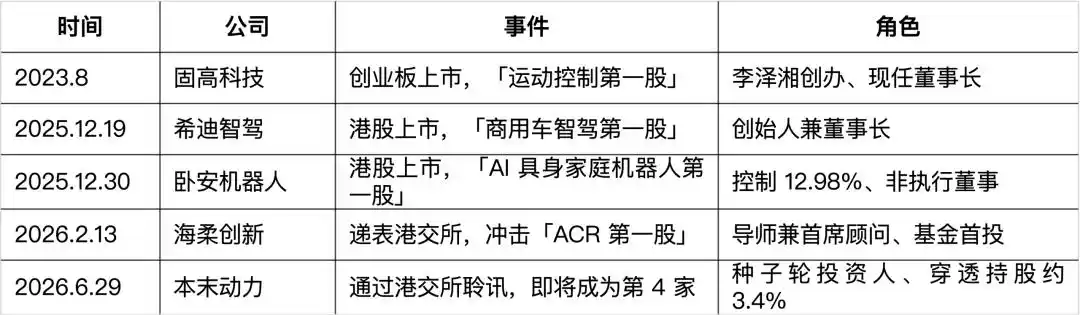
Looking back: In August 2023, Guzhen Technology went public on the ChiNext board. Looking forward: In June 2026, Banmo Dynamics passed the Hong Kong Stock Exchange hearing; additionally, Haiqv Innovation has submitted its listing application, and Narwal Robotics is sprinting for Pre-IPO.
All these companies are intimately connected with Li Ze Xiang.
A university professor, over thirty years, has 'produced' an entire IPO assembly line. Within the system, over 280 companies have been cumulatively incubated, with a total valuation exceeding RMB 500 billion. How did this system grow?
The answer begins in a laboratory in Hong Kong's Clear Water Bay in 1992. To understand these thirty years, it's crucial to state a key background fact: From his appointment at HKUST in 1992 to the present day, Li Ze Xiang has never resigned or retired.
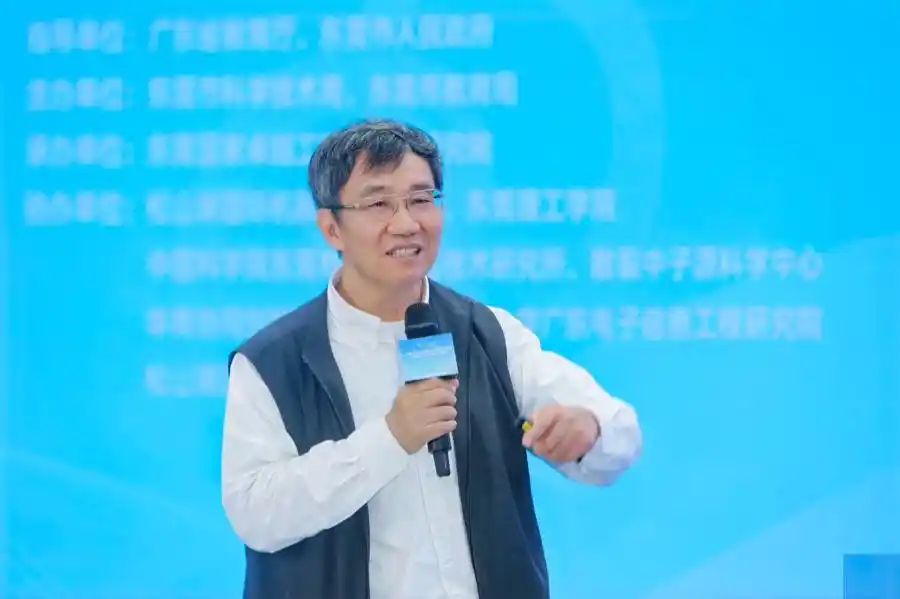
His thirty years are divided into two periods—the HKUST era (1992–2014) and the Songshan Lake era (2014 to present). Two different approaches, one continuous lineage.
I. The Seed in Clear Water Bay: The HKUST Era (1992–2014)
In 1978, 17-year-old Li Ze Xiang from Lanshan County, Yongzhou, Hunan, was admitted to the Central South Institute of Mining and Metallurgy as the county's top scorer. The following year, following the establishment of Sino-US diplomatic relations and a visit by the Aluminum Company of America which left scholarship opportunities, he became one of China's first publicly funded undergraduate students to study in the US. He studied at Carnegie Mellon University for his bachelor's degree, then obtained his master's and PhD from the University of California, Berkeley, followed by a postdoctoral fellowship at MIT, and finally a faculty position at New York University.
If the story stopped here, the world would have gained another typical overseas Chinese professor.
But in 1992, the 31-year-old Li Ze Xiang made a decision that puzzled his colleagues: giving up his NYU faculty position to return to Hong Kong—joining the barely one-year-old Hong Kong University of Science and Technology as a professor in the Department of Electronic and Computer Engineering.
What he brought back was a teaching method considered unorthodox at the time.
The HKUST EE Department gave him a laboratory, numbered 3126—he attributed a formulaic meaning to this number: '3 teachers, guiding 12 students, to build a prototype in 6 days.' The Automation Technology Center (ATC) thus became the place with the strongest hands-on capability at HKUST.
The rule of 3126 was: Teachers do not do projects for students; they are only responsible for finding real problems, resources, and funding. Students must turn ideas into working prototypes within days. This 'student-led, teacher-assisted' approach was later brought by Li Ze Xiang into nearly every company he participated in.
The companies incubated by Li Ze Xiang during this period had pure 'bloodlines'—they were founded either by colleagues or his own students.
The first company was founded with colleagues.
In 1999, he 'persuaded' seven or eight HKUST colleagues to go to Shenzhen and establish Guzhen Technology, focusing on motion controllers—the underlying 'nervous system' of industrial robots and CNC machine tools.
This was China's first company with fully independent intellectual property rights for motion controllers, later dominating the domestic motion controller market for years.
Note his position at this time: Li Ze Xiang was still an HKUST professor—HKUST allowed professors one day per week for industry work; adding weekends, he could squeeze in three days a week. He later recounted that during those years, he would work in Shenzhen on weekends and still had to 'write self-criticisms' upon returning to campus.
In August 2023, Guzhen went public on the ChiNext board, dubbed the 'First Stock of Motion Control'; to this day, Li Ze Xiang remains Chairman of Guzhen.
Guzhen proved that 'professor entrepreneurship' could succeed, but what truly clarified for Li Ze Xiang 'how education should be done' was a student named Wang Tao.
Around 2003, Wang Tao was studying in the EE department at HKUST.
His graduation project was the flight control system for a remote-controlled helicopter—during the defense, the helicopter fell mid-air, the demo failed, and he received a C grade. However, Li Ze Xiang remembered this student from the Robocon robotics competition: around 2005, the HKUST team led by Wang Tao won the Hong Kong championship and the international third place in Robocon.
Li Ze Xiang exceptionally accepted Wang Tao as a graduate student.
In 2006, Wang Tao, with a few others, founded DJI in a warehouse less than 20 square meters in Chegongmiao, Shenzhen—the warehouse was located beneath the Yangguang Golf Building, with restaurants and machining shops downstairs. Li Ze Xiang later recalled: 'In the early days when Wang Tao came to Shenzhen for prototyping, the machining shop was right next to the restaurant; after finishing the meal, the prototype was ready. In Hong Kong, it couldn't be done in a week; in the US, it couldn't be done in a month.'
DJI nearly died once in its early days: After the launch of its first mature product, the XP3.1, in 2008, the three co-founders besides Wang Tao left one after another, and the company ran out of money.
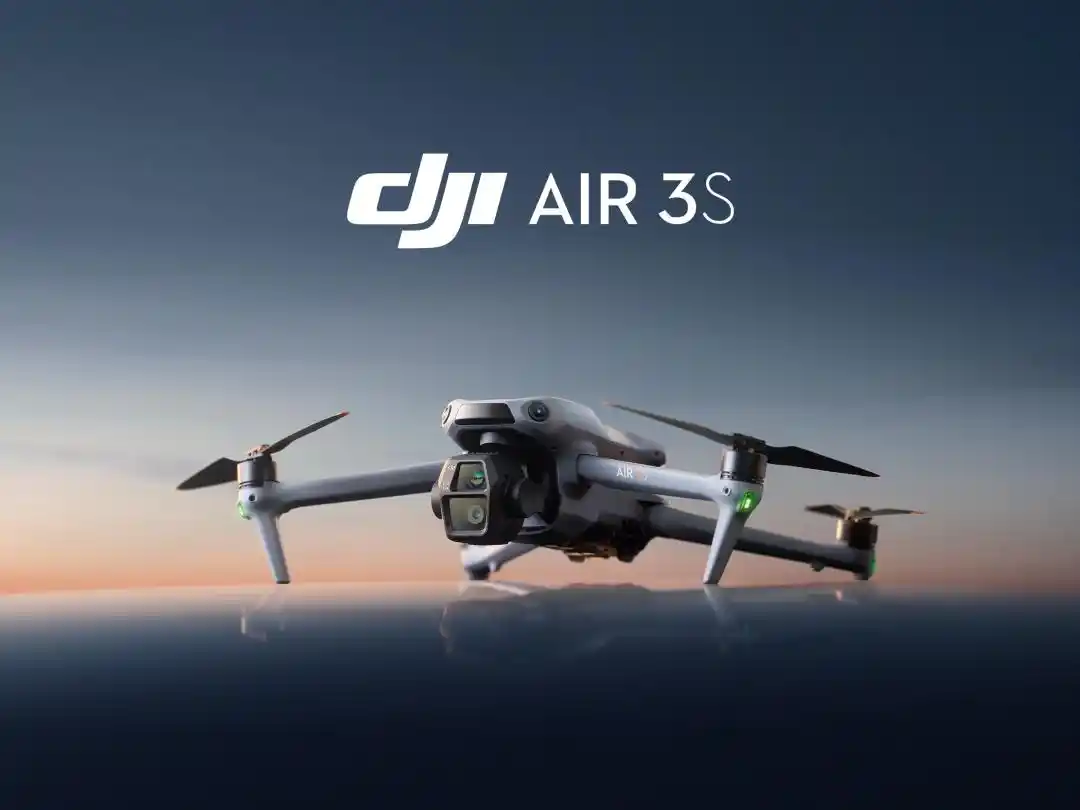
Li Ze Xiang invested money and recruited students from the first cohort of the educational reform class at the Harbin Institute of Technology Shenzhen Graduate School (which he co-founded with the school in 2004, training over 300 people in six years) to replenish the team—this group later formed the middle management of DJI. Between 2012-2013, the Phantom aerial photography drone ignited the global market; in 2013, Li Ze Xiang brought Sequoia's Michael Moritz from Silicon Valley to Shenzhen, and Sequoia invested tens of millions of US dollars.
Thereafter, DJI almost never needed external financing—it became a money-printing machine itself.
In 2019, at the ICRA award ceremony in Montreal, Li Ze Xiang and Wang Tao jointly received the IEEE Robotics and Automation Award.
After DJI became the global leader in consumer drones, Li Ze Xiang stepped back to the periphery. He explained: 'The most important thing was to help them cultivate talent and find people. The specific operations of the company have always been managed by themselves.'
The path of guiding students to start businesses wasn't always smooth.
Early on, he guided eight students in a partnership to make LED wire bonders. The product's momentum was so good that 'farmers brought bags of cash to buy equipment,' but in the end, the eight founders argued for a month and dissolved the company. Another venture, Biray, co-founded with students from the HIT Shenzhen reform class, also didn't survive.
These two failures convinced him: Entrepreneurial education must start at the undergraduate level and must teach teamwork—'Like walking a night road, one person is afraid; several people together, given a flashlight and a stick, are better.'
At the end of the HKUST era, there were two companies that served as a 'bridge.'
In 2011, his doctoral student Shi Jinbo founded QKM Robotics in Songshan Lake, focusing on high-end domestic industrial robots—the company name comes from the mathematical concept 'Lie Group' (named after Norwegian mathematician Sophus Lie), which is the mathematical foundation for describing robot motion configurations.
In 2012, Tao Shizheng, the captain of the HKUST robotics team he had mentored, started developing electric outboard motors on the HKUST campus, founding Epropulsion.
The founders of these two companies are of the standard '1.0 lineage'—emerging from the competition circuit, cultivated within the mentorship circle—but they were directly established in Songshan Lake, becoming the bridge connecting the two eras.
Labeling the twenty-two years from 1992–2014 as the 'HKUST Era,' its model can be summarized as 1.0: Driven by teacher-student relationships, incubated within a single laboratory.
These companies grew out of projects and graduation designs from Lab 3126: Guzhen was a colleague venture; DJI, QKM, and Epropulsion were student ventures. Over 100 people graduated from Lab 3126, with more than one-third embarking on entrepreneurial paths.
However, this model has a natural ceiling: one lab can only accommodate a dozen or so students at a time; his radius for finding students extended only as far as the Robocon competition field.
II. The Songshan Lake Assembly Line: First the Base, Then the Teacher-Student Relationship (2014 to Present)
In 2014, Li Ze Xiang proposed a concept to the Dongguan municipal government: building a robotics industry base in Songshan Lake. The government provided land and funding, but operations followed an enterprise model; Li Ze Xiang joined forces with two long-time partners—Gao Bingqiang, former Dean of Engineering at HKUST (a senior scholar in integrated circuits, later an independent director of Montage Technology), and Gan Jie, Professor of Finance at Cheung Kong Graduate School of Business—selling part of their DJI shares as startup capital. The XbotPark Songshan Lake International Robotics Industry Base thus took shape.
The base's campus faces Huawei's Songshan Lake base. Covering over 60,000 square meters with 110,000 square meters of floor space, it contains classrooms, laboratories, shared factories, dormitories, canteens, libraries, sports fields, and even a children's center—more like a miniature university than an industrial park.
Incubation in the HKUST era relied on 'teacher-student缘分 (yuanfen)'—he only invested in people he had mentored; incubation in the Songshan Lake era relies on a platform—the base is open to all young people with 'sparkling eyes.'
This is the biggest difference between the two periods: 1.0 is driven by teacher-student relationships; 2.0 is driven by platform plus fund. First the base, then the teacher-student relationship; those entering the base call him 'Teacher Li,' regardless of their origin.
ChinaVenture summarized the complete closed loop of the Li Ze Xiang system: Competitions discover people → Laboratory cultivates people → Base incubates projects → Fund provides the first investment → Pearl River Delta supply chain enables mass production → VC接力 (jieli) financing → Capital market exit.
The assembly line was built; where does the 'raw material' come from? The 'joining cases' of the Songshan Lake era are increasingly illustrative.
The first to enter the base was Epropulsion—incubated by HKUST, grown in the base. The management committee even built a dock on the lakeshore specifically for its boat testing. This was the physical relocation from 1.0 to 2.0.
The first externally introduced was Zhang Junbin from Narwal—this path is the most extreme and best illustrates the openness of 2.0. In 2015, a 25-year-old Chaoshan native submitted a resume to Li Ze Xiang's public account.
He held a bachelor's degree from the School of Mechanical Science & Engineering at Huazhong University of Science and Technology and a master's from the University of Michigan–Shanghai Jiao Tong University Joint Institute. He had played with robots since childhood, winning a gold medal at the International Youth Robotics Olympiad in 2006—note, he was not a 'Li disciple' in any sense. Li Ze Xiang invited him for a meal and, after talking, said: Come to Songshan Lake. The base isn't fully built yet, but you can come first. Later, Zhang Junbin tried robots for picking up golf balls and navigation aids for the blind at the base, which failed until his father complained at a family gathering that 'mopping the floor makes your back ache too much.' He then started experimenting with floor-cleaning robots.
In October 2016, Narwal Robotics was registered at Songshan Lake Headquarters No. 1. Zhang Junbin later said: 'When I was just carrying a backpack, Teacher Li was willing to support me, investing in me round after round.'
Chen Yuqi from Haiqv Innovation represents the second path: returnee. Born in 1989 in Wuhu, Anhui, he graduated with First Class Honors in Electronic Engineering from Hong Kong Polytechnic University and obtained a master's in robotics from ETH Zurich, where his graduation project was on bin-picking robots.
In December 2016, he and two alumni founded Haiqv Innovation in Shenzhen. He studied at PolyU and ETH, not under Li Ze Xiang—but in multiple public sources, Li Ze Xiang's role in the Haiqv team is 'mentor and chief advisor.' This is the norm for 2.0: The teacher-student relationship at the base is established on the day one enters the base.
Wo'an represents the third path: actively seeking to be incorporated. Wo'an founders Li Zhichen and Pan Yang are alumni of HIT. They started a business in Shenzhen in 2015 and created the 'finger robot' SwitchBot Bot that sticks to switches—a 35-gram, average-priced 126 yuan device. The team spent three months perfecting it to control the pressing error within 0.1 mm.
In 2018, the company hit a bottleneck; successful crowdfunding didn't translate into stable revenue, and financing attempts repeatedly failed. Li Zhichen made a crucial decision: actively bring the project into the Songshan Lake XbotPark incubation system.
In December 2018, funds including XBOTPARK completed a Pre-A round investment. Li Ze Xiang later explained why he accepted it: the team's technical tenacity, plus a pragmatic approach—'actively avoiding the concept bubble of humanoid robots, focusing on distributed, scenario-based products.'
Li Ze Xiang calculated for the base's 1.0 phase (2014–2020): 60 startup teams, 80% survival rate, with a unicorn and quasi-unicorn rate of 15%. This survival rate is almost from another planet in the incubation field.
III. Two Funds, One Capital Vein: Examining Investment Trends from IT桔子 Data
The base is the visible assembly line; money is the invisible one.
First, let's outline the source of this capital vein: After the Songshan Lake base landed in 2014, a supporting incubation fund was established the following year (2015)—initially called 'Hong Kong Clear Water Bay Venture Capital Fund,' later restructured into the XBOTPARK Fund,依托 (yituo) the base to specialize in seed and angel rounds.
In July 2016, Li Ze Xiang jointly initiated the Hong Kong X Tech Fund (Hong Kong X, first phase HKD 300 million, investing in over 50 companies in five years) with Sequoia Capital's Neil Shen and Tencent's Pony Ma. In August 2022, Dongguan Clear Water Bay Phase II Venture Capital Partnership was established (completed filing in 2023), with registered capital of RMB 727.5 million. The total fund size within the system exceeds RMB 2 billion.
Main Fund One: XBOTPARK Fund is operated by Dongguan Songshan Lake International Robotics Institute. Main Fund Two: Clear Water Bay Capital—named after HKUST's Clear Water Bay, specialized in接力 (jieli) investing.
According to Li Ze Xiang in an interview with China Entrepreneur, the LP composition of these two funds covers five types of investors:
● Top-tier VCs: Sequoia Capital China, Hillhouse Capital
● Industrial Capital: Tencent
● State-owned and Government Guidance Funds: Shenzhen Capital Group, Dongguan Industrial Investment Mother Fund
● University Funds: The University of Hong Kong invested RMB 70 million in Clear Water Bay Phase II—a rare precedent of a university directly investing in a mainland private equity fund.
● Personal Investments from Professors: Gao Bingqiang RMB 20 million, Gan Jie RMB 12 million, among others.
In other words: Li Ze Xiang uses his own credibility as the GP, having Sequoia, Tencent, Shenzhen Capital Group, HKU, and Dongguan state capital act as his LPs—so-called 'mentor's money' is backed by the entire Chinese venture capital circle.
The division of labor thus emerged: The XBOTPARK Fund manages 'getting on the horse'—providing the first capital, taking the earliest shares; Clear Water Bay Capital manages 'accompanying the run'—following investments from Angel rounds all the way to Series D, accompanying promising students to the IPO gate.
In the IT桔子 database, as of early September 2026, the XBOTPARK Fund-Songshan Lake Robotics Institute名下 (mingxia) has cumulatively 76 investment events, and Clear Water Bay Capital has 91. Spreading out these two investment curves reveals three very clear trends.
Trend One: The XBOTPARK Fund does one thing—provides the first capital. The vast majority of its 76 investments fall into seed and angel rounds, with relatively small amounts: the seed round in Banmo was RMB 300,000 (April 2020), the seed round in Haiqv was several million (January 2017), the angel round in AgileX was several million (August 2016). Its first external investment historically occurred in May 2015—given to Zhang Junbin who submitted his resume via public account, several million RMB, also the starting point for Narwal.
From an investment round perspective, the XBOTPARK approach is to take only 5%–13% early equity,基本不再 (jibben bu zai)追加 (zhuijia) after Series A, leaving space for mainstream VCs.
Trend Two: Clear Water Bay Capital is responsible for following from Angel to Series D. Its first investment in 2017 went to EcoFlow—that was the first case of 'DJI system spillover.' Although founder Wang Lei was not a Li disciple, he is the best footnote for the辐射半径 (fushe banjing) of this system.
Thereafter, Clear Water Bay repeatedly appeared in system companies: Series A (March 2018, USD 30 million) and Series A+ (August 2020, RMB 100 million) for XIDI, Series D (August 2024, several hundred million RMB) for Epropulsion, Series B+ (RMB 300 million) for Shenzhen Institute of Advanced Technology, following Deep Research Bio from Pre-A to A+...
According to IT桔子 data, the two institutional entities have jointly invested in over 25 companies (Narwal, Wo'an, Banmo, Wuqiong Innovation, Zhuoyi Technology, Yinghansi Dynamics, Hengzhi Future...). The接力 (jieli) structure is一目了然 (yimuliao ran): XBOTPARK provides the first capital, Clear Water Bay follows later rounds—the mentor's money accompanies from天使 (tianshi) all the way to the IPO gate.
Reinvestment (multiple rounds in the same company) by these two entities is常规动作 (changguidongzuo): Narwal was invested in three rounds by XBOTPARK (Angel→A→C+), Wo'an two rounds (Pre-A 5 million→Series A 12 million), Wuqiong Innovation three rounds, Zhuoyi, Yinghansi, and X-Bot were all 'Angel + A' two rounds.
The most extreme is still Banmo: XBOTPARK seed round RMB 300,000 (April 2020), followed by Clear Water Bay angel round RMB 3 million eight months later (December 2020), accompanying all the way to the HKEx hearing—calculated on a diluted basis, the return on that RMB 300,000 is about 400 times.
The sector distribution of these invested companies also reveals the approach of Li Ze Xiang's two entities: besides robotics and advanced manufacturing, the investment portfolio includes HOMEN for pet intelligence, Deserter Farmer for agricultural farming, Keyi Surgical for medical devices, Hutaozn for sports equipment... This confirms Li Ze Xiang's 'category thinking'—he is not investing in 'robot companies,' but in 'categories that can be re-done with hardware.'
IV. The Assembly Line's Report Card: A Three-Tier Company List
The other end of the assembly line is the product, also the report card. Ranking Li Ze Xiang-affiliated companies by capital market recognition yields exactly three tiers: Already listed (including IPOs in progress), Unicorns, and Potential Unicorns. First, an overview, then dissect a few.
Tier One: Listed and IPOs in Progress—Straightening the timeline reveals the capitalization process一目了然 (yimuliao ran):
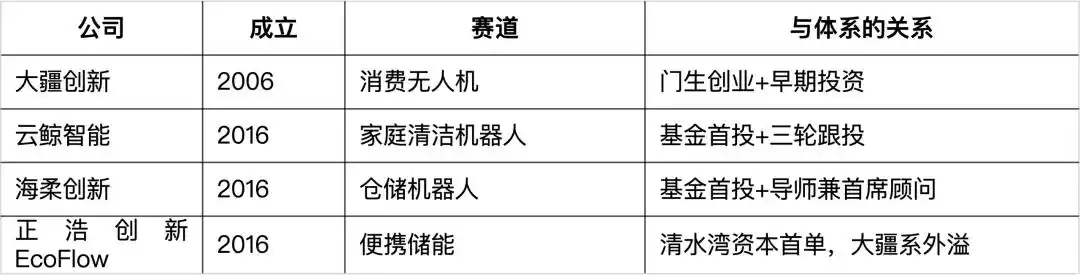
Tier Two: Unicorns (Not listed, valuation over USD 1 billion / RMB 10 billion):
Tier Three: Potential Unicorns (Valuation between RMB 1 billion and USD 1 billion):
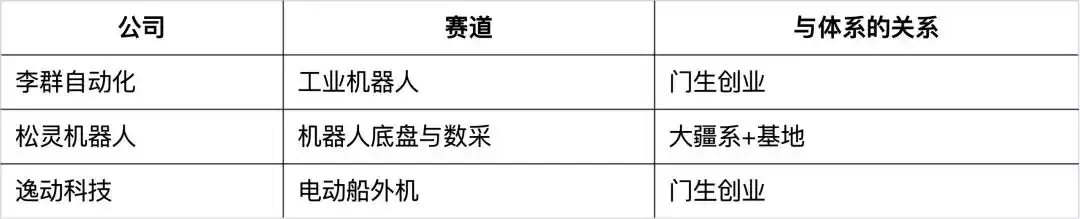
Combining the three tiers, the most astonishing aspect of this picture is not the quantity, but the coverage: from motion control (Guzhen) to joints (Banmo, QKM), from chassis (AgileX) to整机 (zhengji) (Narwal, Wo'an, Haiqv), from water surface (Epropulsion) to mining (XIDI)—The Li Ze Xiang system has written the four words 'embodied intelligence' into the capillaries of industry and home.
After looking at the list, examine the real secret of this IPO machine—how the money flows.
The two institutional entities from Chapter IV are几乎全勤 (jihu quanqin) in the first two rounds of each company listed above: Haiqv's first money (Jan 2017 seed), Banmo's first money (Apr 2020, 300k), Narwal's angel round (May 2015, lead), Wo'an's desperate Pre-A (Dec 2018), AgileX's first money (Aug 2016 angel), XIDI's Series A (Mar 2018, Clear Water Bay)—all from them.
Mainstream VCs only enter after the mentor's money. Names like Sequoia, 5Y Capital, Hillhouse, Source Code Capital, Today Capital, Tencent... only appear after the company has a product, revenue, and 'verified certainty.' VCs buy certainty, while Li Ze Xiang's funds buy 'people'—at the most uncertain time, with the smallest capital, placing bets on competition champions, doctoral theses, and 'students with sparkling eyes.'
This model has a counter-intuitive characteristic: He deliberately does not take much. Typically taking only 5%–13% early shares, stepping back after Series A, diluted to 0.2%–6% pre-IPO (Wo'an's 12.98% is a rare exception, as it includes the Songshan Lake Institute's incubation投入 (touru); his穿透持股 (chuantou chigu) in Banmo is 3.39%). In 2024, funds within his system even conducted an 'exit drill' operation—transferring部分 (bufen) old shares in明星项目 (mingxing xiangmu) like Narwal to new funds,回收资金 (huishou zijin) to invest in new projects.
V. The Victory of Craftsmanship
Placing Li Ze Xiang's thirty years—the 1.0 HKUST era and the 2.0 Songshan Lake era—side by side reveals that this is a 'victory of craftsmanship,' not a 'victory of model.'
The deepest aspect of the apprenticeship and base incubation approach cannot be written into any system manual—it is绑定 (bangding) to a specific individual.
The deepest moat in the Li Ze Xiang system is not a specific technology, but three layers of assets accumulated over thirty years:
The talent funnel with Robocon/RoboMaster as the entry point (the competition circle recognizes him as this 'godfather'); the cultivation chain from the HKUST reform class to the Shenzhen Institute of Innovation and Entrepreneurship (the students he taught return to teach students); and the campus in Songshan Lake, Dongguan, facing Huawei—where classrooms, factories, funds, and dormitories form a closed loop within walking distance.
The Shenzhen Institute of Innovation and Entrepreneurship selects 80 people annually from over 1300 applicants. At the demo day of the training camp, the judges sitting台下 (taixia) might be partners from Clear Water Bay. In this system, entrepreneurship is not a line on a resume, but a 'craft'拆成 (chaicheng) courses.
When the embodied intelligence wave arrived, they found themselves standing on存量 (cunliang).
After 2023, when 'embodied intelligence' became the hottest term in the primary market, the most稀缺 (xique) assets suddenly became three things: mass-producible hardware本体 (benti), real-world data, and global channels.
And these恰好 (qiahao) are the family assets the Li Ze Xiang system has accumulated for twenty years—Narwal's floor cleaners are home data入口 (rukou) (binocular vision deployed in over 1 million devices), AgileX's data collection bases sell training data, Banmo's joints are components everyone形机器人 (renxing jiqiren) needs to buy, and Wo'an holds household channels in over 90 countries.
They don't need to 'switch careers' to embodied intelligence; they just need to add an AI brain to their存量 (cunliang).
This article is from WeChat public account 'IT桔子' (ID:itjuzi521), author: Judy