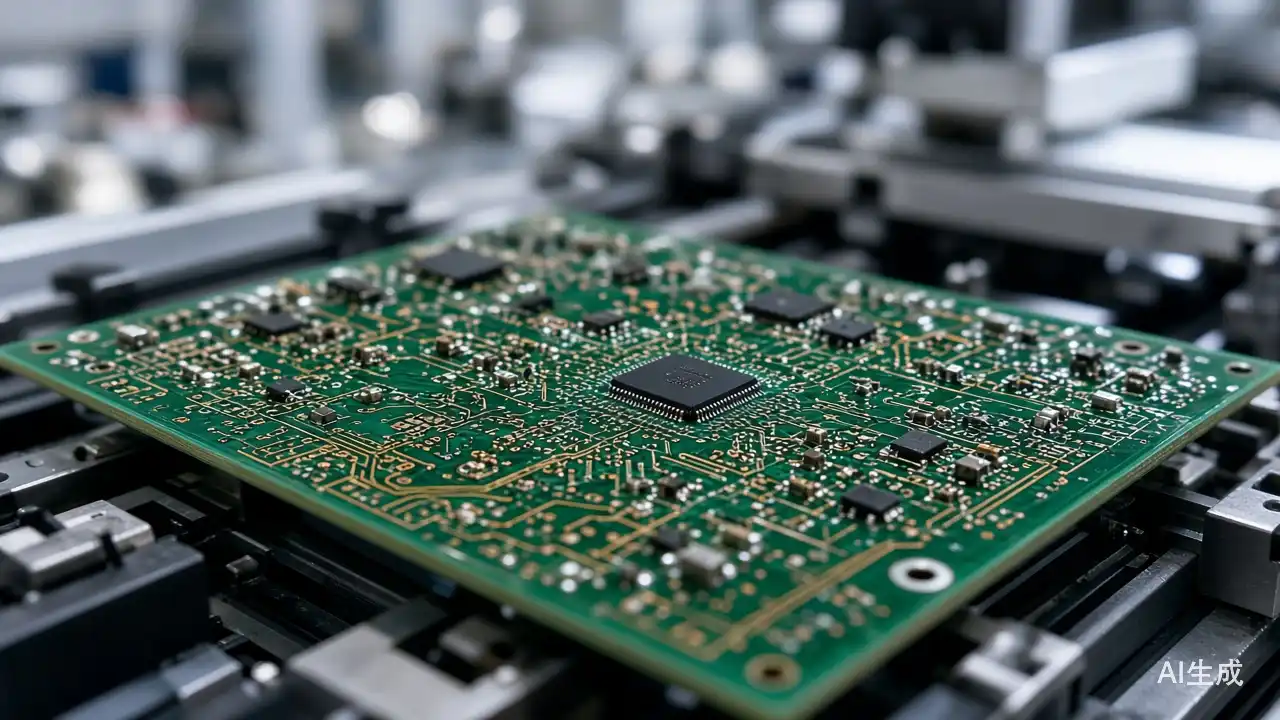
The latest earnings season revealed a common thread: management at Apple, Tesla, Amazon, and Nvidia are all discussing memory prices and supply, not just models or GPUs. HBM, DRAM, and NAND, once seen as cyclical commodities, have now become critical components limiting the expansion of AI devices and data centers. For Micron, the cost pressure on its customers corresponds to its opportunity for pricing power.
Four Tech CEOs Send the Same Signal
Apple's former CEO Tim Cook stated that the company paid more for memory in the March quarter than in the December quarter, saw a significant increase again in the June quarter, and expects to pay an even higher premium in the September quarter. He described this memory cycle as a "once-in-a-hundred-years flood," with Apple partially offsetting costs by raising prices on Macs and iPads.
Tesla CEO Elon Musk specifically thanked Micron for providing Tesla with considerable allocations and relatively reasonable terms despite "fairly crazy" memory prices. Buyers complain about prices while scrambling for allocations, reflecting that companies are worried not just about cost, but also about impacting deliveries if they can't secure enough product.
Cloud Providers Boost Budgets but Still Can't Fill Demand
Amazon increased its full-year capital expenditure budget from about $200 billion to $220 billion, with management citing memory price increases as a major reason for the upward revision. Even with an extra $20 billion, the company expects it will still not build sufficient computing capacity to meet demand this year, and shortages may persist until 2027.
This indicates that AI capital expenditure has not yet receded due to component price hikes. As long as customers would rather bear higher costs than delay server construction, memory prices will remain supported. However, the greater the investment, the higher the customer's requirements for project returns and cash flow will be.
Nvidia Locks in Memory with Long-Term Commitments
Nvidia disclosed that it has secured $279 billion in supply and capacity commitments through fiscal 2032, with $267 billion of that corresponding to the next two and a half years, primarily related to memory procurement. Such large-scale long-term arrangements indicate that the bottleneck for AI chip shipments is not only in advanced manufacturing processes but also requires planning for supporting memory years in advance.
The article also points out that HBM supply is already sold out through next year. Long-term contracts and advance volume locking help Micron reduce demand volatility in traditional memory cycles, plan capital investments, and increase the proportion of high-value products in its revenue.
Buyers' Profits Under Pressure, Sellers Gain Pricing Power
Rising memory prices are impacting the gross margins and free cash flow of large tech companies. Apple is buffering the pressure with terminal price increases, Nvidia hinted that its gross margin might move from the mid-70% range to the low-70% range, while Amazon and Tesla need to invest more cash to expand infrastructure or purchase chips.
On one side of the ledger are pressured device and cloud service providers, and on the other side are suppliers like Micron. The global DRAM market has only a few major players, and supply expansion takes time, making pricing power easier to form during shortage phases. As long as AI server demand continues, Micron is no longer just waiting for PC and smartphone upgrade cycles.
High Boom Doesn't Mean Stock Price Only Goes Up
At the time of the article's publication, Micron traded around $958.16, up 0.22% for the day. The author believes that the forward P/E ratios for Micron and SanDisk are around 6 to 7 times, but this assessment is based on the premise that peak profits can be sustained. If customers cut capital expenditures or supply expands faster than demand, profit expectations could still be revised downward.
Investors should watch HBM order locks, traditional DRAM and NAND prices, and customer capital expenditures. The $950 to $960 range provided in the article is an observation zone, below $918 is a risk line, and above $1020 requires stronger order or earnings signals. The super cycle is still on, but cyclical stocks remain sensitive to changes in expectations.