Bitroot Public Chain Invited to Attend Tencent Cloud Singapore AI Conference, Discussing the Future Alongside Solana

marsbitОпубліковано о 2026-05-27Востаннє оновлено о 2026-05-27

Анотація

On May 19, Bitroot, an emerging Layer 1 blockchain, participated in the Tencent Cloud AI Summit in Singapore alongside key industry players like Solana Foundation. The event explored the intersection of AI infrastructure, enterprise applications, AI Agents, and Web3. Bitroot's invitation, despite being pre-mainnet, highlights industry interest in its focus on high-performance, AI-native architecture tailored for future AI Agent execution and verifiable on-chain automation. Bitroot CEO Juan Jose emphasized that AI competition is shifting from model performance to data, real-world application scenarios, and trust infrastructure. He argued that for AI Agents to evolve from assistants to autonomous executors managing transactions and assets, they require low-latency, low-cost, and high-throughput blockchain environments. Bitroot aims to address this through its EVM-compatible design, optimistic parallel execution, and a consensus mechanism targeting high scalability. Currently in its Testnet 5.0 phase, Bitroot reports metrics like over 50,000 peak TPS and sub-0.3 second average block time. Its narrative positions it within a growing landscape where next-generation Layer 1s like Monad and Aptos also compete on performance, while Bitroot differentiates by integrating AI computational capabilities natively across its stack. The summit underscored that the fusion of AI and Web3 is moving from concept to infrastructure competition, where networks balancing performance, security, and...

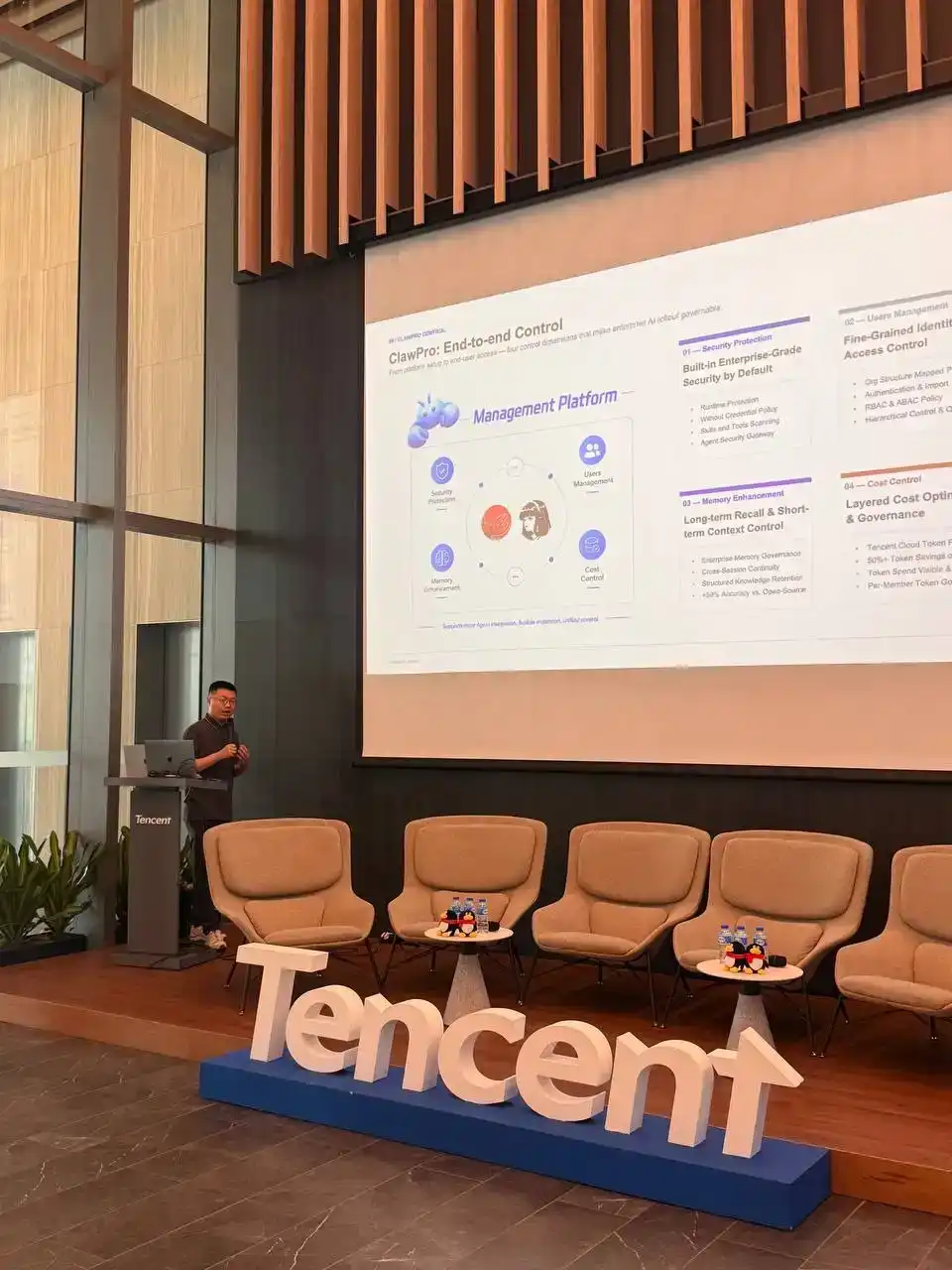
On May 19th, an AI-themed event hosted by Tencent Cloud was held in Singapore. The event focused on topics such as AI infrastructure, enterprise-level AI implementation, AI Agents, Web3 verifiable computing, and fintech, bringing together industry representatives from cloud services, public chain ecosystems, payment networks, financial technology, and investment institutions.

As a significant financial and technological hub in Asia, Singapore has increasingly become a crucial node for AI, Web3, and digital finance companies looking to expand into the Southeast Asian market. Tencent Cloud's choice to host its AI event in Singapore also reflects how major cloud service providers are paying more attention to the integration of AI application implementation, computing power services, enterprise-level solutions, and new digital infrastructure.
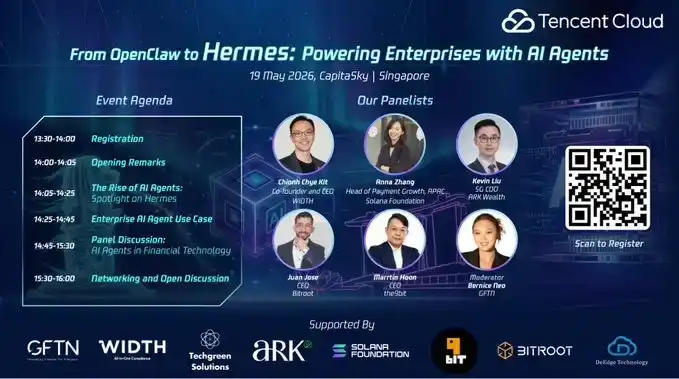

According to event information, attendees included Kevin Zhou, Director of Tencent Cloud Computing; Anna Zhang, Head of Payments Growth, APAC at Solana Foundation; Juan Jose, CEO of Bitroot; Chionh Chye Kit, Co-founder and CEO of WIDTH; Martin Hoon, CEO of the9bit; and Kevin Liu, COO of ARK Wealth Singapore, among others.

Judging by the lineup, this event was not merely a single AI product showcase but a cross-domain discussion centered on "how AI integrates with cloud services, payment networks, on-chain infrastructure, and financial technology." Tencent Cloud represents Web2 cloud computing and enterprise-level service capabilities, Solana represents a mature public chain ecosystem and on-chain payment exploration, while fintech and wealth management institutions represent the application demands of AI in real business scenarios. Against this backdrop, Bitroot, as an emerging public chain project focusing on high-performance Layer 1 and AI-native architecture, was invited to participate, making it one of the noteworthy Web3 infrastructure representatives at this event.

Behind the High-Profile AI Event, Web3 Infrastructure Re-enters the Discussion

Over the past year, the focus in the AI industry has gradually shifted from model capability competition to enterprise implementation, data governance, Agent workflows, and automated decision-making. For cloud service providers and fintech institutions, the commercialization of AI depends not only on the model itself but also on a complete set of infrastructure capabilities including computing power, data, permissions, security, and auditing mechanisms.

This explains why Web3 infrastructure is beginning to be included in AI discussions. As AI Agents evolve from "conversational tools" to "execution entities," they may need to call APIs, initiate payments, manage assets, complete settlements, and even participate in multi-party collaborative workflows in the future. In these scenarios, traditional centralized systems and on-chain verifiable infrastructure may complement each other.

The programmable assets, automated settlement, state verifiability, and on-chain auditing capabilities provided by blockchain precisely address the trust issues faced by AI Agents in financial, payment, and enterprise collaboration scenarios. Therefore, Tencent Cloud's Singapore AI event, by placing public chain ecosystems, cloud services, payment growth, and fintech representatives in the same discussion space, itself sends a signal: the next phase of AI competition is shifting from single-point technological capabilities to composite infrastructure competition.
Why Was Bitroot, Yet to Launch, Invited?

For Bitroot, being invited to this event holds certain representativeness. Unlike public chains like Solana, which already have a mature mainnet and a large ecosystem, Bitroot is currently still in the testnet and ecosystem expansion phase before its mainnet launch. The fact that an emerging Web3 project, yet to launch its mainnet, could make it onto the participant list of Tencent Cloud's Singapore AI event indicates that its technical direction and narrative approach have at least attracted the attention of some industry players.

From an industry logic perspective, the reason for Bitroot's invitation may not lie in its current ecosystem scale, but rather in the alignment of the infrastructure direction it is betting on with the demands of the AI era.

First, AI Agents and on-chain automated execution require higher-performance underlying networks. Traditional public chains still have certain limitations in throughput, latency, and cost, while AI Agents may bring about more frequent, continuous, and automated interaction demands in the future. This means the underlying chain needs to have stronger concurrent processing capabilities and lower execution costs.

Second, developer compatibility remains key to whether a new public chain can establish an ecosystem. Bitroot's choice of an EVM-compatible route means it does not attempt to completely migrate developers to an unfamiliar environment. Instead, it aims to provide a higher-performance execution environment while retaining the Ethereum developer toolchain. For a new public chain still in its early stages, this approach helps reduce the difficulty of ecosystem cold-start.

Third, AI-native architecture is becoming an important differentiating direction for next-generation infrastructure projects. Compared to simply emphasizing TPS or transaction fees, Bitroot emphasizes AI Agent, on-chain automated application, and verifiable execution scenarios. This positioning makes it easier to enter discussions about the convergence of AI and Web3, rather than being seen as just another high-performance public chain.

Therefore, from an industry observation perspective, it at least indicates that some participants in cloud services, fintech, and the Web3 ecosystem are paying attention to new infrastructure projects yet to launch their mainnets, especially those Layer 1 networks designed around AI-native features, high-performance execution, and developer compatibility.
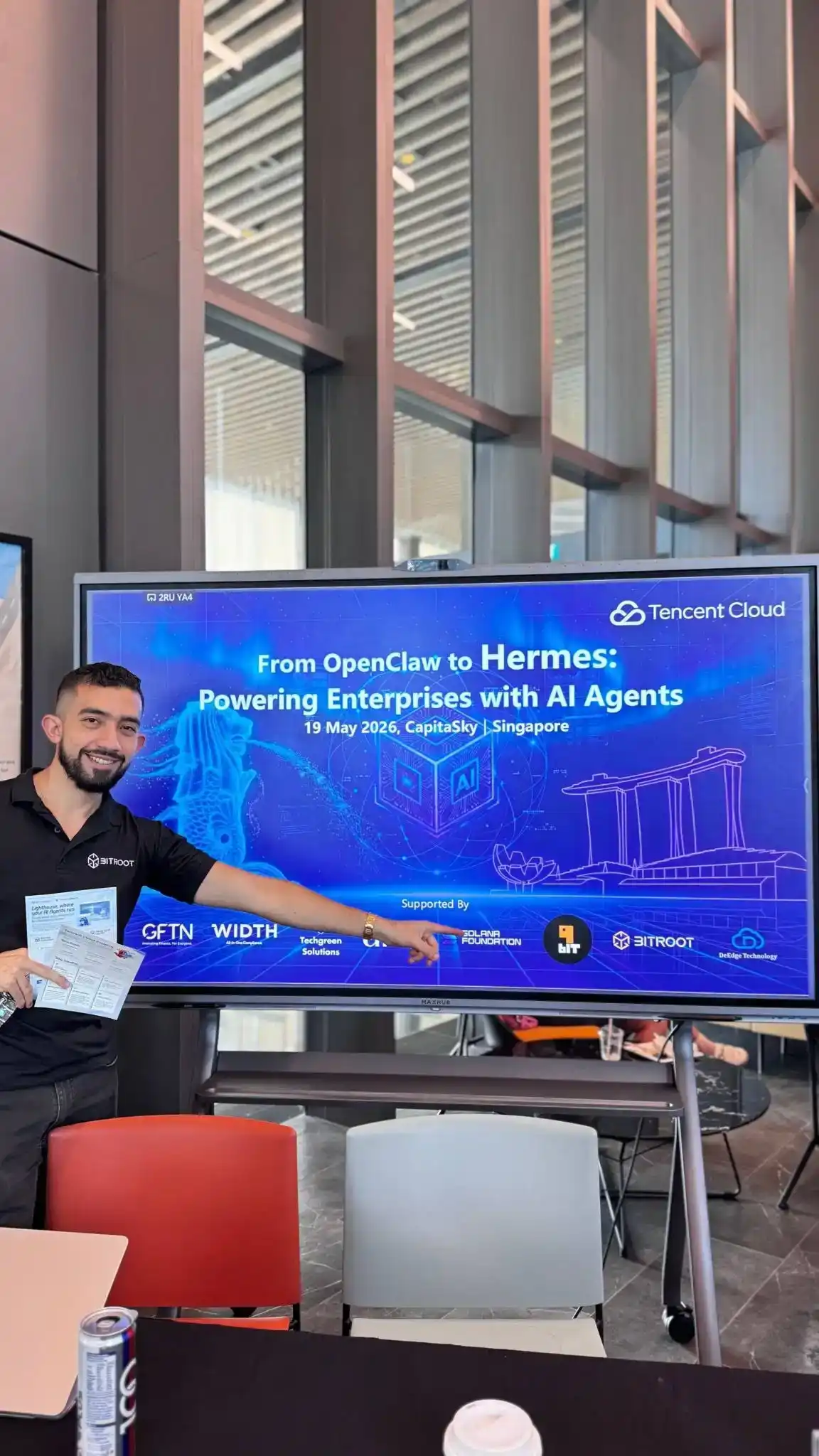
Sharing the Stage with Solana, Enhancing the Observational Value of Emerging Layer 1s

At this event, the participation of Anna Zhang, Head of Payments Growth, APAC at Solana Foundation, added perspectives from a mature public chain ecosystem and on-chain payments. Solana has been continuously advancing in the direction of high-performance public chains, payments, and consumer-grade applications in recent years, establishing itself as a key example in the Web3 infrastructure domain.

The fact that Bitroot shared the stage with representatives of mature ecosystems like Solana for discussions is itself noteworthy. It reflects that in the broader context of AI-Web3 convergence, the industry is not only focused on public chains that have already achieved scale but is also paying attention to new variables that may emerge in the next generation of infrastructure.

For an emerging Layer 1 like Bitroot, the fact that its mainnet is not yet launched means its technical roadmap is still malleable. If its parallel execution, EVM compatibility, and AI-native design can be validated in subsequent testnets and the mainnet, then it has the opportunity to carve out a differentiated position in scenarios like AI Agents, on-chain automated execution, and high-frequency applications.

Especially as AI gradually becomes a central industry theme, market requirements for public chains may change. Past public chain competition largely revolved around DeFi, NFTs, GameFi, and asset issuance. Future competition may increasingly focus on Agent execution, on-chain settlement, automated finance, data invocation, and verifiable computing. Bitroot entering industry discussions at this juncture is precisely why it deserves attention.

Juan Jose: AI Competition Will Shift from Models to Data, Scenarios, and Trust

During the panel discussion, Juan Jose, CEO of Bitroot, stated that the future gap between AI companies may no longer be just about model performance or parameter scale, but rather a comprehensive competition of data, scenarios, and trust mechanisms.
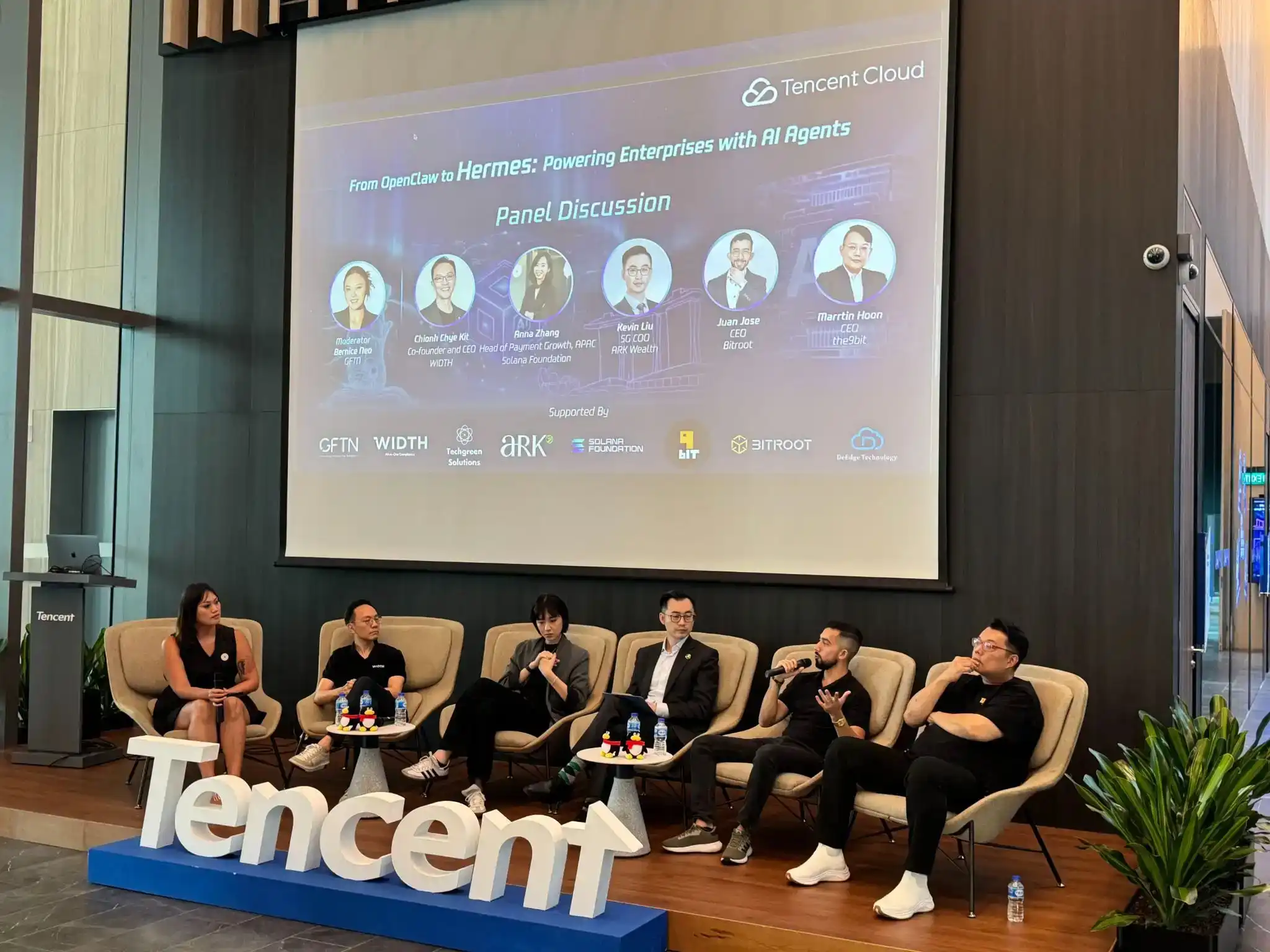
He believes that as both open-source and closed-source models continue to iterate, model capabilities themselves are accelerating in commoditization. The truly long-term, effective moat for enterprises comes from whether they possess high-quality industry data, whether they can deeply integrate into specific business processes, and whether they can establish long-term trust at both user and institutional levels.

This assessment aligns with current AI industry trends. More and more companies are realizing that the value of AI lies not only in generating content or completing simple Q&A, but in whether it can enter real business processes and consistently produce results in a controllable, auditable, and evaluable environment.

Juan Jose further pointed out that enterprise-level AI implementation still faces challenges in reliability, data infrastructure, and organizational change. Especially in high-risk scenarios like finance, payments, and auditing, AI systems must not only pursue capability ceilings but also meet stability, permission control, and auditing requirements.

AI Agents Require High-Performance and Verifiable Execution Environments

AI Agents were another important direction discussed at this event. Juan Jose stated that the industry is still in the "assistive Agent" stage, and there is still time before truly enterprise-level autonomy is achieved. The reason is that once Agents enter enterprise systems, they will face issues like multi-step task error accumulation, security permissions, legal liability, and explainability.

However, in the long term, the direction for AI Agents is relatively clear. Future Agents will not just provide suggestions; they may call services, manage accounts, initiate transactions, execute strategies, and complete settlements. This means the underlying infrastructure must support higher-frequency interactions and more trustworthy execution.

In this regard, Bitroot's technical narrative strongly correlates with industry needs. According to project information, Bitroot adopts an EVM-compatible route and enhances on-chain execution efficiency through designs like optimistic parallel EVM and the Pipeline BFT consensus mechanism, aiming to provide a high-performance, low-cost on-chain execution environment for AI Agents, DeFi, and Web3 applications.

For AI + Web3 scenarios, performance is not merely a technical metric but a prerequisite for whether applications can be viable. If an Agent requires high fees and long confirmation times for every operation, many automation scenarios will struggle to scale. Conversely, an on-chain environment with low latency, low cost, and high throughput could become an important foundation for AI Agents moving towards real-world applications.
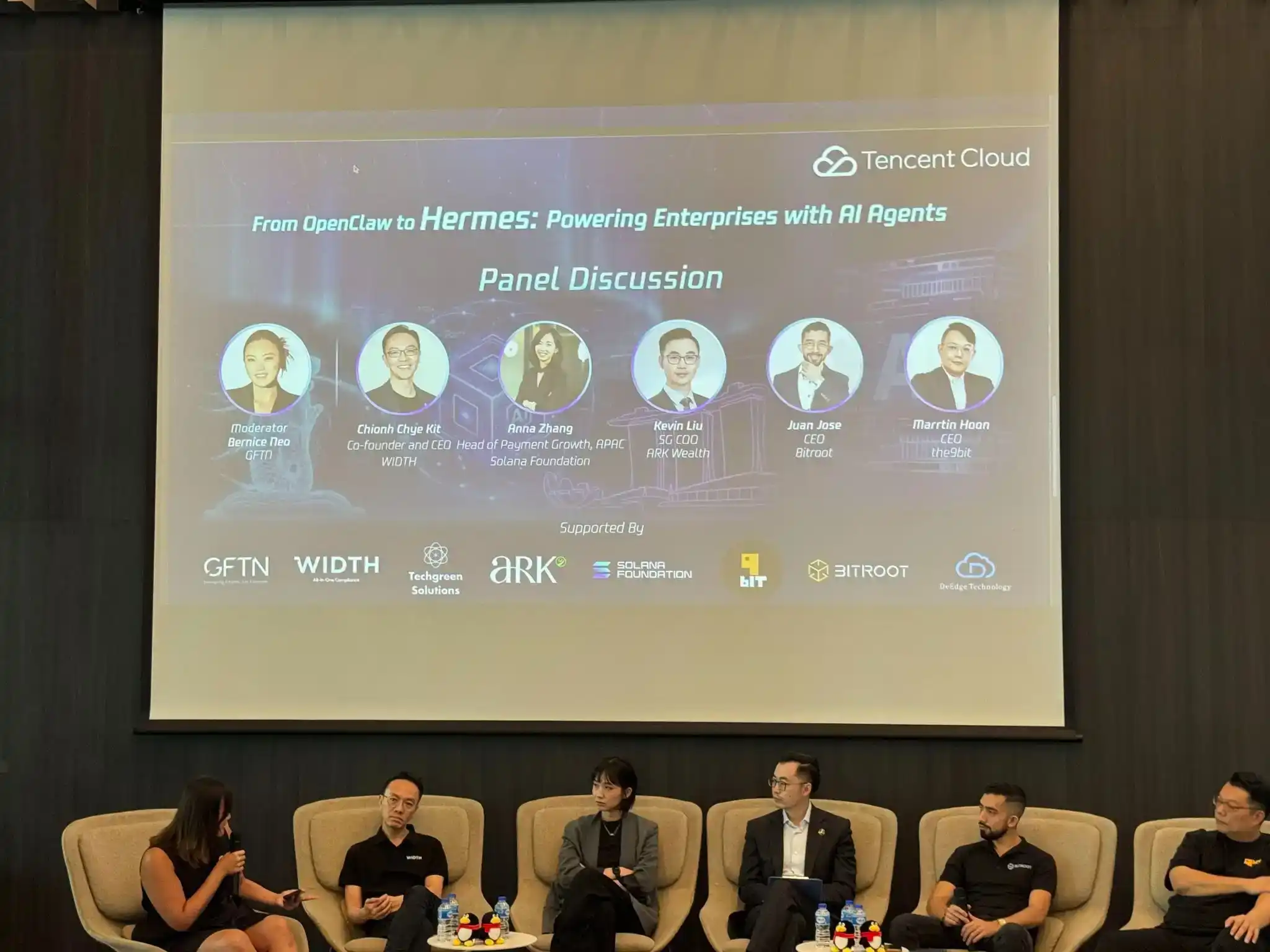
The Testnet Phase Will Be a Crucial Validation Window for Bitroot

Bitroot is also advancing its testnet and ecosystem infrastructure development. According to project information, its testnet has entered version 5.0, with related upgrades covering network performance, cross-chain components, ecosystem application deployment, and node optimization.

Judging from testnet data, Bitroot has demonstrated technical implementation capability: the test network address count exceeds 1 million+, daily on-chain transaction volume exceeds 50,000+, peak TPS reaches 50,000+, and average block time is approximately <0.3 seconds.

For an emerging public chain yet to launch its mainnet, the testnet phase holds dual significance. On one hand, it is a validation window for the technical roadmap, where developers can observe network performance, contract compatibility, toolchain maturity, and node stability. On the other hand, it is also an important phase for ecosystem cold-start, allowing community users and developers to participate in network building through early interaction.

Industry Observation: The Competitive Landscape of High-Performance AI-Native Public Chains

From the discussions at this summit, it is evident that the convergence of AI and Web3 is shifting from conceptual narratives to specific infrastructure-level issues. In this track, different projects have chosen different technical paths:

Solana is known for its high-speed execution and mature ecosystem, having established a large developer community and DeFi ecosystem; Monad focuses on performance optimization of parallel EVM; Aptos achieves optimistic parallel execution through Block-STM. The differentiation of Bitroot lies in that it not only pursues extreme breakthroughs in public chain performance but also natively integrates AI computing capabilities into the underlying architecture of the chain—from the useful Proof-of-Work at the consensus layer, to the parallelized EVM at the execution layer, and to the distributed training and inference network at the application layer, constructing a complete decentralized AI Stack.

For next-generation infrastructure projects, how to support more complex AI application invocations while maintaining security and decentralization characteristics will become a core competitive proposition in the future.

Conclusion

Judging from the signals released at the Singapore AI-themed summit, AI is becoming the main theme for the next phase of the technology industry's evolution. The new demands arising around AI Agents, automated finance, on-chain data, and verifiable execution are placing higher requirements on the underlying infrastructure.

High-performance infrastructure is not merely a narrative choice for a single project but an inevitable direction in the process of scaling AI and Web3 applications. Bitroot's entry into this track with its full-stack architecture of "parallelized EVM + AI-native computing network," sharing the stage with mature ecosystems like Solana at the Tencent Cloud summit, demonstrates the technical depth and industry ambition of a new generation of AI public chains.

In the future, underlying networks that can simultaneously balance performance, compatibility, security, and verifiability will have a greater opportunity to host next-generation application scenarios and occupy key positions in the long-term trend of AI and blockchain convergence. Bitroot's performance is worth continued attention.

About Bitroot

Bitroot is a Layer 1 public chain project focused on parallel execution and AI-native architecture. Bitroot adopts an EVM-compatible technical route and explores providing a high-performance, low-cost on-chain execution environment for AI Agents, DeFi, and Web3 applications through parallel execution mechanisms, consensus optimization, and AI-related interface design.

Пов'язані питання

QWhat was the main theme of the Tencent Cloud AI event in Singapore that Bitroot was invited to?

AThe event focused on AI infrastructure, enterprise AI implementation, AI Agents, Web3 verifiable computing, and fintech. It explored the integration of AI with cloud services, payment networks, on-chain infrastructure, and financial technology.

QAccording to the article, why was Bitroot, an unreleased Layer 1 blockchain, invited to such a high-profile event?

ABitroot was invited primarily due to its focus on an AI-native infrastructure and high-performance execution architecture, which aligns with the future needs of AI Agent operations and verifiable on-chain execution, rather than its current ecosystem size.

QWhat is Bitroot's core technical approach as a new Layer 1 project?

ABitroot's core technical approach is an EVM-compatible, high-performance Layer 1 architecture featuring optimistic parallel EVM execution, a Pipeline BFT consensus mechanism, and an AI-native stack designed to provide a low-cost, high-throughput environment for AI Agents and Web3 applications.

QWhat key point did Bitroot CEO Juan Jose make about the future of AI competition during the panel discussion?

AJuan Jose stated that the future gap between AI companies will shift from competing on model performance or parameter scale to a comprehensive competition based on data quality, integration into specific business scenarios, and establishing trust mechanisms.

QWhat is a key potential advantage of integrating high-performance blockchains like Bitroot with AI, as discussed in the article?

AHigh-performance, low-cost, and low-latency blockchain environments can provide the verifiable execution, automated settlement, and trust mechanisms necessary for AI Agents to scale into real-world applications, especially in areas like automated finance, payments, and multi-party workflows.

Пов'язані матеріали

Trillion-Dollar Euphoria for Memory Sellers, Halved Profits for Memory Buyers

Title: The Trillion-Dollar Memory Seller's Carnival vs. The Buyer's Halved Profits On May 26, a stark contrast unfolded. While memory chipmaker Micron's market cap surged past $1 trillion, smartphone maker Xiaomi reported plummeting profits. Xiaomi's Q1 2026 profits fell 43% year-on-year. Executive Lu Weibing cited memory prices quadrupling from last year, adding roughly $210 to a phone's cost. To survive, Xiaomi is cutting entry-level models, sacrificing volume. Micron's stock, however, skyrocketed over 19% in a day, capping an 8x gain in a year. Major banks like UBS and JPMorgan issued bullish reports, raising price targets drastically. Their core thesis: Long-Term Agreements (LTAs) with AI cloud giants (Microsoft, Google, etc.) are eliminating the memory industry's notorious boom-bust cycle. By locking in fixed-price, multi-year contracts for AI-grade memory (HBM, server DDR5), these deals promise stable, utility-like earnings, justifying a higher valuation (20-30x P/E vs. the historical 8-15x). The article reveals a three-tiered memory market in 2026: 1) **AI Storage (HBM/DDR5/Enterprise SSD)**: Extreme shortage, soaring prices, LTAs. This is Micron's story. 2) **Mobile/Embedded Memory**: Also facing sharp price hikes as AI production crowds out capacity, severely pressuring phone makers like Xiaomi. 3) **PC Retail**: Some spot prices are falling due to channel inventory liquidation, creating a divergence from contract markets. The author questions if LTAs truly end the cycle. It hinges on sustained, hyper-growth AI demand. Micron's current profits are at a cycle peak, driven mostly by price hikes, not volume. If AI capital expenditure growth slows, the massive industry capacity expansion (e.g., Micron's $250B+ CapEx plan) could lead to a glut. Historically, using peak-cycle earnings for valuation is a classic trap. While the AI-driven structural shift might be real, the unanimous Wall Street euphoria warrants caution, echoing past bubbles like Cisco's in 2000. The memory seller's trillion-dollar狂欢 (carnival) continues, but the cycle's shadow remains.

链捕手5 хв тому

Trillion-Dollar Euphoria for Memory Sellers, Halved Profits for Memory Buyers

链捕手5 хв тому

Agentized OS: It's Not About AI, It's About the Foundation

The Agentic OS: Beyond AI, It's About the Foundational Stack In 2026, major operating systems like Android, iOS, HarmonyOS, and Windows are entering the "Agentic" era, integrating proactive AI assistants deeply into the system layer. However, the real competition lies not in the flashy AI features showcased at events, but in the three-layer foundational stack that enables them: the system-level AI Runtime, proprietary/controllable chips, and the on-device/cloud model matrix. The AI Runtime acts as the central scheduler, managing model inference, resource allocation, and exposing capabilities to apps. Controllable chips (e.g., Apple Silicon, Google Tensor, Huawei Kirin) are crucial for deep hardware-software co-optimization, determining the efficiency and experience limits of on-device Agents. The on-device/cloud model matrix provides the "intelligence," with proprietary, chip-optimized small models (like Gemini Nano, Apple's ~3B model) handling daily tasks locally for low latency, privacy, and reliability, while cloud models tackle complex requests. Deep synergy between these three layers enables key Agent differentiators: ultra-low latency and power efficiency, genuine "on-device first" privacy, access to system-level personal context across apps, and reliable performance as a system service even offline. OS vendors with strong integration across this stack (like Apple, Google, and Huawei) build a deeper moat. Beyond this core stack, long-term competitiveness depends on variables like structured App integration (e.g., App Intents/AppFunctions) for reliable multi-step workflows, and robust privacy frameworks that build user trust. This shift towards Agentic OS extends beyond phones and PCs to IoT, cars, and XR glasses via existing multi-device ecosystems. The race is won not in a keynote, but through generations of meticulously co-developed chips, models, and system software.

marsbit1 год тому

Agentized OS: It's Not About AI, It's About the Foundation

marsbit1 год тому

Why Sam Altman's 'Water and Electricity Theory' Sparks Copyright Controversy

OpenAI CEO Sam Altman's recent statement that "intelligence will become a utility like electricity or water" has sparked significant controversy, primarily around copyright issues and the nature of AI development. While positioning AI as a utility serves as a compelling narrative for infrastructure investors, critics argue the analogy is flawed in three key areas. First, there's a fundamental "property gap." Traditional utilities like water and power create new, physical infrastructure from scratch. In contrast, major AI models are trained by reorganizing vast amounts of existing human-created content—books, articles, code, etc.—often scraped from the web without explicit permission or compensation to creators. This "free acquisition, paid resale" model is seen by many as ethically problematic. Second, there's a "pricing gap." True public utilities are typically regulated to ensure universal service with non-discriminatory, cost-plus pricing. AI's token-based pricing, however, involves significant price discrimination (e.g., output tokens costing much more than input tokens) and is designed for revenue maximization, not equitable access. Third, a "governance gap" exists. Utilities operate under public oversight, while AI pricing and development are currently controlled by a few private companies. Furthermore, the industry's own shift toward buying licensed training data (e.g., deals with Reddit or news publishers) undermines its previous legal reliance on "fair use" for freely scraped data. In conclusion, while AI is indeed becoming a foundational technology, calling it a public utility remains contentious. The title requires not just scale and a pay-per-use model, but also credible solutions for data provenance, equitable pricing, and public governance.

marsbit1 год тому

Why Sam Altman's 'Water and Electricity Theory' Sparks Copyright Controversy

marsbit1 год тому

Торгівля

Спот
Ф'ючерси

Популярні статті

Що таке SOLANA

HarryPotterWifHatMyroWynn10Inu,$solana: Занурення у модний проект мем-койнів Вступ У постійно змінюваному світі криптовалют інноваційні проекти постійно з’являються, привертаючи уяву інвесторів та ентузіастів. Один з таких проектів – це HarryPotterWifHatMyroWynn10Inu,$solana, мем-койн, який почав займати свою нішу в криптоспільноті. Метою цієї статті є надати вам всебічний огляд проекту, пояснивши його мету, архітектуру, творця, інвесторів та значні досягнення на шляху. Що таке HarryPotterWifHatMyroWynn10Inu,$solana? Огляд HarryPotterWifHatMyroWynn10Inu,$solana – це проект мем-койну, структурований на блокчейні Solana – платформі, відомій своєю масштабованістю та швидкістю. Метою проекту є приносити радість і креативність у криптопростір, він не тільки слугує торговим токеном, а й каталітиком для генерації та поширення мем-контенту. Спільнота в його основі заохочується до активної участі, створюючи динамічну екосистему, де процвітає креативність і співпраця. Цілі та завдання Суть проекту полягає в сприянні середовищу, де ентузіасти мемів можуть збиратися, ділитися та створювати новий мем-контент. Цей наративно орієнтований підхід надає енергії спільноті, стимулюючи залученість, у той же час висвітлюючи міцні функції, притаманні блокчейну Solana. Визначаючи проект, орієнтований на спільноту, HarryPotterWifHatMyroWynn10Inu,$solana також бажає досліджувати соціальний вплив цифрових валют як засобу вираження. Хто є творцем HarryPotterWifHatMyroWynn10Inu,$solana? Ідентичність творця HarryPotterWifHatMyroWynn10Inu,$solana залишається загадкою. Проект структуровано таким чином, що право власності було відмовлено; тому він розвивається як ініціатива, що очолюється спільнотою. Ця децентралізація сприяє прозорості та демократичній участі всіх залучених сторін. Такий підхід стає дедалі популярнішим у світі мем-койнів, де активна участь спільноти є найвищою цінністю. Хто є інвесторами HarryPotterWifHatMyroWynn10Inu,$solana? На цей момент немає публічно доступної інформації про конкретних інвесторів або фонди, що підтримують HarryPotterWifHatMyroWynn10Inu,$solana. Відсутність відомих інвесторів ще більше підкреслює орієнтований на громаду дух проекту, оскільки він існує незалежно від традиційних фінансових структур. Ця незалежність дозволяє проекту розвивати свою ідентичність без зовнішнього тиску, покладаючись замість цього на колективний інтерес своєї бази користувачів. Як працює HarryPotterWifHatMyroWynn10Inu,$solana? Економічна модель Проект використовує унікальну економічну модель, що підкріплює його функціональність і залучення користувачів. Транзакції в межах HarryPotterWifHatMyroWynn10Inu,$solana призначені для того, щоб бути вигідними для всіх учасників. Кожна угода передбачає комісію, яка потім перераспреділяється серед поточних власників, одночасно підвищуючи ліквідність. Основні компоненти цієї моделі включають: Механізм відображення: Частина транзакційних зборів повертається власникам, сприяючи довгостроковим інвестиціям у токен. Придбання ліквідності: Кошти розподіляються для підвищення ліквідності, забезпечуючи, щоб угоди купівлі-продажу могли виконуватись гладко. Механізми спалювання: Частина токенів може бути спалена для створення дефіциту, потенційно підвищуючи вартість, оскільки попит зрештою зростає. Такий дизайн сприяє самодостатній екосистемі, яка процвітає завдяки взаємодіям спільноти та інвестиціям. Залучення спільноти В основі HarryPotterWifHatMyroWynn10Inu,$solana лежить цінність, дана залученню спільноти. Дозволяючи користувачам брати участь у розвитку проекту через різні активності, такі як створення мемів та промоції, проект сприяє розвитку вітальної екосистеми, де креативність може розквітати. Хронологія HarryPotterWifHatMyroWynn10Inu,$solana Шлях HarryPotterWifHatMyroWynn10Inu,$solana має кілька значущих подій, які визначили його поточну позицію в крипто спільноті: Створення: Конкретна дата створення залишається невідомою, але початок проекту корениться в культурі мемів, що пронизує цифрову епоху. Перехід до спільноти: Після відмови від права власності його творцем проект перейшов на модель, що очолюється спільнотою, що дозволяє усім учасникам мати частку в його успіху. Аудит і колекція NFT: Щоб підвищити свою довіру, проект завершив ретельний аудит, одночасно запустивши колекцію NFT, яка слугує втіленням його мемоцентричного духу. Партнерства та розробка: Проект наразі перебуває в процесі пошуку потенційних партнерств з іншими токенами та організації розробки унікального веб-сайту та мерчендайзингових опцій на основі його легендарних мемів. Ключові моменти Отже, HarryPotterWifHatMyroWynn10Inu,$solana постає як помітний гравець у секторі мем-койнів криптовалюти. Ось деякі ключові висновки: Ініціатива, що керується спільнотою: Проект процвітає як колективний зусилля, заохочуючи активні внески від його членів спільноти, при цьому відокремлюючись від претензій на власність. Інноваційна економічна модель: Використовуючи механізми відображення, придбання ліквідності та спалювання, він створює міцне та захоплююче фінансове середовище для користувачів. Залучення NFT та мерчандайзу: Запуск колекції NFT має на меті поглибити залученість у громаді, підкреслюючи зв’язок між культурою мемів і цифровою валютою. Дослідження партнерств: Ініціатива не стоїть на місці – постійна розробка та потенційні партнерства вказують на прогресивний підхід, спрямований на сталий розвиток. Висновок У міру того як HarryPotterWifHatMyroWynn10Inu,$solana продовжує здобувати популярність у світі криптовалют, його унікальне поєднання залучення спільноти, інноваційних економічних структур та інтеграції культури мемів окреслює його потенційний шлях вперед. Попри таємницю навколо його витоків та зв’язків з інвесторами, проект втілює цікаву історію, що говорить про суть децентралізованих інновацій. У світі, де криптовалюти часто розглядаються виключно з фінансової точки зору, HarryPotterWifHatMyroWynn10Inu,$solana демонструє, що крипторух включає креативність, спільноту та співпрацю. Чи ви досвідчений інвестор, чи новачок, розгортання цього проекту мем-койнів безсумнівно служить захоплюючим випадком, що заслуговує на увагу.

613 переглядів усьогоОпубліковано 2024.04.04Оновлено 2024.12.03

Що таке SOLANA

Що таке SOLANA 2.0

BarbieCrashBandicootRFK777Inu, $SOLANA 2.0: Новий гравець на крипто-ландшафті Вступ до BarbieCrashBandicootRFK777Inu, $SOLANA 2.0 У постійно змінюваному світі криптовалют нові учасники постійно привертають увагу інвесторів та ентузіастів. Серед цих нових проектів — BarbieCrashBandicootRFK777Inu, представлений криптовалютою з символом $SOLANA 2.0. Ця унікальна ініціатива поєднує елементи гламуру, пригод та культури мемів, прагнучи перевершити очікування в надзвичайно конкурентному середовищі. З амбіціями зростання та інновацій, цей проект втілює дух аутсайдера, що бореться з усталеними гігантами. Що таке BarbieCrashBandicootRFK777Inu, $SOLANA 2.0? У своїй основі BarbieCrashBandicootRFK777Inu — це криптовалютний проект, що черпає натхнення з різних культових культурних посилань. Включаючи елегантність і чарівність Барбі, динамічну енергію Crash Bandicoot та невтомну рішучість, що представлена RFK, проект прагне запропонувати багатогранний досвід у світі криптовалют. Основною метою проекту BarbieCrashBandicootRFK777Inu є об'єднання цих різноманітних елементів у єдину екосистему, що приваблює широку аудиторію. Приймаючи капризність культури мемів, залишаючись при цьому в рамках принципів децентралізації та фінансової підтримки, проект зарекомендував себе як приваблива альтернатива для як досвідчених інвесторів, так і новачків у криптовалютному світі. Хто є творцем BarbieCrashBandicootRFK777Inu, $SOLANA 2.0? Попри зростаючий інтерес до BarbieCrashBandicootRFK777Inu, інформація щодо його творця залишається в значній мірі невідомою. Анонімність засновника або команди розробників викликає питання щодо структури та управління проектом. У світі криптовалют не рідкість, коли проекти працюють без публічних творців. Ця відсутність інформації може відлякати деяких потенційних інвесторів, тоді як інші можуть сприймати це як можливість embrace духу децентралізації, що лежить в основі багатьох ініціатив у криптовалютній сфері. Хто є інвесторами BarbieCrashBandicootRFK777Inu, $SOLANA 2.0? На даний момент доступна обмежена інформація про інвестиційні фонди або організації, що підтримують BarbieCrashBandicootRFK777Inu. Відсутність детального інвестиційного фінансування проекту підкреслює незалежний характер численних криптовалют. У цьому випадку ще належить з'ясувати, чи буде фінансування проекту походити від широкої підтримки спільноти або від підтримки більших фінансових установ. Як працює BarbieCrashBandicootRFK777Inu, $SOLANA 2.0? BarbieCrashBandicootRFK777Inu розроблено з низкою характеристик, які сприяють його унікальності в переповненому крипто-просторі. Хоча конкретні технічні деталі залишаються під покриттям, проект, як очікується, інтегрує функціональність, спрямовану на покращення залученості користувачів і сприяння зростанню спільноти. Поєднання різноманітних впливів — від моди та пригод до ігор — сприяє створенню інклюзивної атмосфери, що відповідає різним інтересам. Крім того, зв’язки проекту з екосистемою $SOLANA 2.0 передбачають потенційні технологічні переваги. Це може включати інноваційні швидкості транзакцій, масштабованість та ефективність витрат, що відповідає технічним можливостям блокчейну Solana. Засновники проекту, здається, намагаються спиратися на цю технологічну основу для створення тривалого досвіду спільноти та значної пропозиції продукції. Хронологія BarbieCrashBandicootRFK777Inu, $SOLANA 2.0 Шлях BarbieCrashBandicootRFK777Inu містить кілька ключових етапів, що дають уявлення про розвиток проекту на сьогоднішній день: Концептуалізація проекту: Початкові ідеї виникли навколо об'єднання гламуру, пригод та культури мемів, що надало основу для унікальної концепції проекту. Створення токена: Символічний токен $SOLANA 2.0 був встановлений, розроблений для втілення амбіцій проекту та залучення інтересу потенційних інвесторів. Розвиток проекту: Наразі проект проходить подальший розвиток, з акцентом на виклики для великих гравців у крипто-просторі та пропонуючи інноваційні рішення. Ці етапи відображають траєкторію зростання проекту, підкреслюючи його прагнення до розробки інноваційного досвіду криптовалюти. Ключові моменти про BarbieCrashBandicootRFK777Inu, $SOLANA 2.0 Унікальна концепція: BarbieCrashBandicootRFK777Inu виділяється завдяки поєднанню елементів гламуру, пригод і культури мемів в єдиному криптовалютному проекті. Дух аутсайдера: Проект приймає образ аутсайдера, прагнучи кинути виклик усталеним криптовалютним проектам і створити нішу в індустрії. Фаза розвитку: Активні зусилля з розвитку тривають з метою надання нових та інноваційних рішень, що відповідають очікуванням спільноти та інвесторів. Висновок BarbieCrashBandicootRFK777Inu, представлений символом $SOLANA 2.0, є цікавим новим учасником на ринку криптовалют. Його унікальне поєднання культурних посилань та амбітна візія можуть відгукнутися на запити тих, хто шукає альтернативні цінності проекту в крипто-ландшафті. Хоча невідомий статус його творця та інвесторів може викликати запитання, акцент проекту на чарівності і пригодах представляє захопливу історію, що розширює межі того, що можуть втілювати криптовалюти. У процесі розвитку проекту буде цікаво спостерігати його еволюцію в більш широкій крипто-індустрії та те, як він позиціонує себе серед своїх конкурентів. Для тих, хто залучений, BarbieCrashBandicootRFK777Inu, можливо, відкриє несподівані досвіди, які перевизначать залученість до цифрових активів. Поки що, коли проект рухається вперед, його шлях є нагадуванням про те, що інновації в крипто-просторі не знають меж, пропонуючи все — від захоплення і розваг до потенціалу фінансової підтримки.

168 переглядів усьогоОпубліковано 2024.04.05Оновлено 2024.12.03

Що таке SOLANA 2.0

Як купити SOL

Ласкаво просимо до HTX.com! Ми зробили покупку Solana (SOL) простою та зручною. Дотримуйтесь нашої покрокової інструкції, щоб розпочати свою криптовалютну подорож.Крок 1: Створіть обліковий запис на HTXВикористовуйте свою електронну пошту або номер телефону, щоб зареєструвати обліковий запис на HTX безплатно. Пройдіть безпроблемну реєстрацію й отримайте доступ до всіх функцій.ЗареєструватисьКрок 2: Перейдіть до розділу Купити крипту і виберіть спосіб оплатиКредитна/дебетова картка: використовуйте вашу картку Visa або Mastercard, щоб миттєво купити Solana (SOL).Баланс: використовуйте кошти з балансу вашого рахунку HTX для безперешкодної торгівлі.Треті особи: ми додали популярні способи оплати, такі як Google Pay та Apple Pay, щоб підвищити зручність.P2P: Торгуйте безпосередньо з іншими користувачами на HTX.Позабіржова торгівля (OTC): ми пропонуємо індивідуальні послуги та конкурентні обмінні курси для трейдерів.Крок 3: Зберігайте свої Solana (SOL)Після придбання Solana (SOL) збережіть його у своєму обліковому записі на HTX. Крім того, ви можете відправити його в інше місце за допомогою блокчейн-переказу або використовувати його для торгівлі іншими криптовалютами.Крок 4: Торгівля Solana (SOL)Легко торгуйте Solana (SOL) на спотовому ринку HTX. Просто увійдіть до свого облікового запису, виберіть торгову пару, укладайте угоди та спостерігайте за ними в режимі реального часу. Ми пропонуємо зручний досвід як для початківців, так і для досвідчених трейдерів.

1.3k переглядів усьогоОпубліковано 2024.12.12Оновлено 2025.03.21

Як купити SOL

Обговорення

Ласкаво просимо до спільноти HTX. Тут ви можете бути в курсі останніх подій розвитку платформи та отримати доступ до професійної ринкової інформації. Нижче представлені думки користувачів щодо ціни SOL (SOL).

活动图片