Crypto card access doesn’t match global demand, Tangem says

cointelegraphPublished on 2026-10-07Last updated on 2026-10-07

Abstract

Swiss crypto wallet provider Tangem highlights a global mismatch between demand for crypto-linked payment cards and their actual availability. Over 40% of payments for its Tangem Pay service come from Latin America and over 30% from the US, yet the company cannot ship its new physical Visa card to roughly 20 countries, including China and Russia. According to Tangem, this gap is due to the complex alignment needed between local demand, regulations, banking infrastructure, and card-issuing compliance—factors that don't always overlap. The company recently launched its first physical card with an initial limited release, allowing users to fund it directly from a self-custodial wallet. It also announced a USDC stablecoin cashback program. Tangem will showcase the card at the Token2049 event in Singapore.

More than 40% of Tangem Pay payments come from Latin America and over 30% from the US, while physical card availability remains restricted in some markets, the Swiss crypto wallet provider told Cointelegraph.

“It is not simply a question of where people want crypto cards,” Andrey Ilinskiy, head of Tangem Pay, told Cointelegraph, adding: “It is where demand, regulation, banking infrastructure and card-issuing requirements happen to line up — and today, those maps do not always overlap.”

On Wednesday, Tangem announced its first physical Visa card for in-store and online purchases and ATM withdrawals, with an initial release limited to 5,000 cards.

The company said users can fund the card directly from their self-custodial wallet and move funds back to the wallet if the card is suspended or closed.

“Self-custody removes one major boundary: there is no custodian standing between the user and their assets. But when those assets enter a regulated payment network, another set of boundaries appears,” Tangem said.

Tangem can’t ship its card to about 20 countries

Tangem said it cannot currently deliver physical Tangem Pay cards to roughly 20 countries, including China, Russia, North Korea and Palestine.

The restrictions do not necessarily mirror rules governing crypto itself, according to the company. Know Your Customer (KYC) requirements, sanctions, local banking rules and card-issuing compliance can all determine where a crypto-linked card is available.

“The same conditions that can create demand for crypto as an alternative financial rail can make regulated card issuance more difficult,” Tangem said.

Related: US stablecoin adoption could surge with bank-like protections: Visa survey

Tangem is also introducing cashback in Circle’s USDC stablecoin, at rates of 1% for Basic users and 2% for Plus users on eligible purchases.

The company plans to showcase the first physical Tangem Pay cards at Token2049 in Singapore.

Magazine: Crypto hardware wallets compared for 2026

Trending Cryptos

Related Questions

QWhat is the main reason for the geographical mismatch between Tangem Pay usage and its card availability?

AThe mismatch is not just about where people want crypto cards, but where demand, regulation, banking infrastructure, and card-issuing requirements happen to align. These factors do not always overlap in the current global landscape.

QWhat key feature does Tangem's new Visa card offer regarding asset control?

AUsers can fund the card directly from their self-custodial wallet and move funds back to the wallet if the card is suspended or closed.

QApproximately how many countries cannot receive physical Tangem Pay cards, and what are some examples?

ATangem cannot currently deliver physical cards to roughly 20 countries. Examples include China, Russia, North Korea, and Palestine.

QWhat are the main factors, other than crypto regulation, that determine where a crypto-linked card like Tangem Pay is available?

AKey factors include Know Your Customer (KYC) requirements, sanctions, local banking rules, and card-issuing compliance requirements.

QWhat incentive is Tangem offering with its new card and in what currency?

ATangem is offering cashback in Circle's USDC stablecoin, with rates of 1% for Basic users and 2% for Plus users on eligible purchases.

Related Reads

Conversation with Macro Analyst Jordi Visser: Micron Has 60%-80% Upside, the Longevity Economy Is a High-Confidence Main Theme

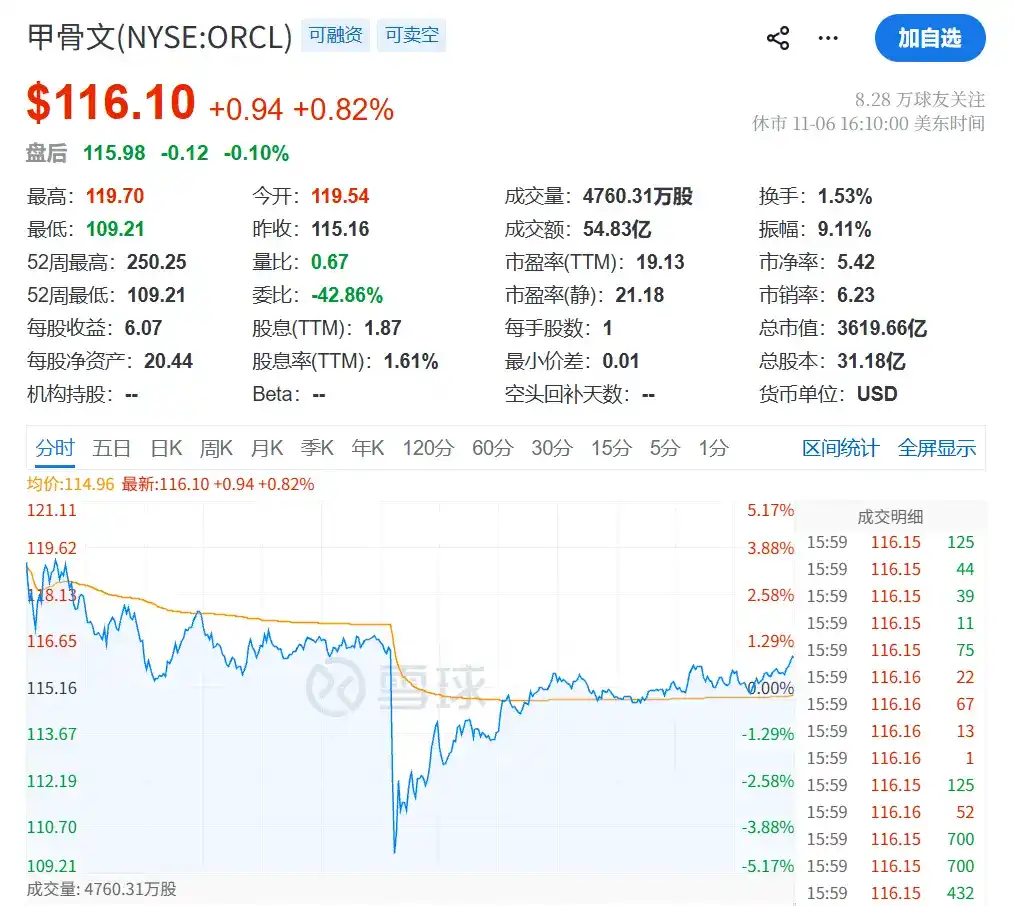
Macro analyst Jordi Visser argues that AI is the sole real driver of the economy today, with traditional GDP metrics failing to capture its value—AI-driven productivity shows up in corporate profit margins instead, as large firms grow revenue while hiring freezes. He attributes rising Treasury yields to AI-related capex and debt issuance, not Fed policy, and views credit default swap widening as a concentration-risk hedging issue rather than an AI bubble. He expects hyperscaler external financing to peak as data centers come online and free cash flow turns positive (citing Oracle's guidance). On labor, he sees Microsoft's buyout of 27% of its workforce as a template: AI-driven revenue-per-employee surges will push governments toward redistributing profits from capital to labor via tax restructuring, since personal income tax bases erode. He warns the market is discounting risks like labor turmoil, political gridlock, memory/data center bottlenecks, and cybersecurity. His key themes are agentic compute and the longevity economy. He is bullish on Eli Lilly as the purest longevity play, predicting it will become the S&P 500's largest company by 2030, and on Micron, which he re-entered around $800 with only ~10% downside and 60-80% upside, citing humanoid robot RAM demand, SpaceX's 10GW compute plan, and long-term supply agreements through 2030. He also holds crypto as his largest allocation, expecting 2027 to mark a breakout year for blockchain commercial applications and payment networks.

marsbit2h ago

Conversation with Macro Analyst Jordi Visser: Micron Has 60%-80% Upside, the Longevity Economy Is a High-Confidence Main Theme

marsbit2h ago

Michael Saylor: Four Centuries of Digital Credit Evolution

Michael Saylor traces the four-century evolution of digital credit, showing how centuries of financial infrastructure paved the way for Bitcoin-based corporate treasuries. The story begins in 1602 with the Dutch East India Company, which separated a company's capital duration from investors' holding periods through transferable shares. Preferred stock followed, exemplified by the Baltimore and Ohio Railroad's 6% perpetual preferred dividend in 1836 and Delaware's 1899 recognition of distinct share classes. Exchanges and tickers—from the 1792 Buttonwood Agreement to the 1867 stock ticker and 1971 Nasdaq—gave ownership a public market. U.S. securities and commodities law (1922–1974) established the distinction between assets a company holds and securities it issues. The 1940 Investment Company Act's "40% test" still shapes how bitcoin treasury companies use common stock, preferred stock, and debt. Tax law dating to 1921–1954 distinguishes return of capital from income, allowing preferred dividends to reduce cost basis before gains are realized. Shelf registration (Rule 415, 1982–1983) and at-the-market programs (1982, 2005) let companies prepare financing in advance and raise capital at market prices. Buybacks, recognized since 1828 with the 1982 Rule 10b-18 safe harbor, let firms manage capital in both directions. Bitcoin, launched in 2008–2009 and classified as a commodity by the CFTC in 2015, provides a new reserve asset, while companies supply capital structure, dollar liquidity, and distribution policy. Digital credit thus combines over 400 years of corporate ownership transfer, roughly 190 years of U.S. preferred stock, more than a century of tax cost-recovery rules, and four decades of modern shelf and ATM regulation into a familiar framework for investors.

marsbit3h ago

Michael Saylor: Four Centuries of Digital Credit Evolution

marsbit3h ago

The Hidden Risks Behind Anthropic's Nearly $1 Trillion Bet

Anthropic's IPO filing reveals a fragile, high-risk financing mechanism behind its AI ambitions. The company has committed to up to $895.4 billion in data center spending through 2045, with profits squeezed by rising compute costs. Rather than paying upfront for hardware, Anthropic relies on supplier-backed financing: Broadcom arranged a $63 billion equipment financing deal under which it absorbs losses if Anthropic defaults—up to roughly $43 billion once equipment is delivered. Google and AMD similarly tie funding to hardware leases or deployments. This shifts risk onto chipmakers' balance sheets, and because custom TPUs serve a narrower ecosystem than Nvidia GPUs, resale risk is higher. Analysts warn that while individual loans appear safer, risk concentration across the system is rising and harder to assess. Anthropic also can issue up to $42 billion in convertible notes to Broadcom to cover rent, with interest rates rising from 9% to 13% and conversion terms worsening if revenue targets are missed. Despite holding $146.6 billion in liquidity as of September 30, its massive forward obligations and tangled partnerships could limit access to investment-grade financing. Key concerns: whether revenue growth can outrun compute costs and cover future commitments, and whether drawing on credit lines signals distress. Anthropic's Direct initiative—separating data center leasing from chip purchases—and IPO proceeds could give it more flexibility, but ultimately debt repayment depends on end-customer revenue.

marsbit14h ago

The Hidden Risks Behind Anthropic's Nearly $1 Trillion Bet

marsbit14h ago

Trading

Spot

Hot Articles

How to Buy T

Welcome to HTX.com! We've made purchasing Threshold Network Token (T) simple and convenient. Follow our step-by-step guide to embark on your crypto journey.Step 1: Create Your HTX AccountUse your email or phone number to sign up for a free account on HTX. Experience a hassle-free registration journey and unlock all features.Get My AccountStep 2: Go to Buy Crypto and Choose Your Payment MethodCredit/Debit Card: Use your Visa or Mastercard to buy Threshold Network Token (T) instantly.Balance: Use funds from your HTX account balance to trade seamlessly.Third Parties: We've added popular payment methods such as Google Pay and Apple Pay to enhance convenience.P2P: Trade directly with other users on HTX.Over-the-Counter (OTC): We offer tailor-made services and competitive exchange rates for traders.Step 3: Store Your Threshold Network Token (T)After purchasing your Threshold Network Token (T), store it in your HTX account. Alternatively, you can send it elsewhere via blockchain transfer or use it to trade other cryptocurrencies.Step 4: Trade Threshold Network Token (T)Easily trade Threshold Network Token (T) on HTX's spot market. Simply access your account, select your trading pair, execute your trades, and monitor in real-time. We offer a user-friendly experience for both beginners and seasoned traders.

14.9k Total ViewsPublished 2024.03.29Updated 2026.06.02

How to Buy T

Discussions

Welcome to the HTX Community. Here, you can stay informed about the latest platform developments and gain access to professional market insights. Users' opinions on the price of T (T) are presented below.

活动图片