The First Person to Fly by Mars Will Be a Bitcoin Miner

marsbitОпубліковано о 2026-05-24Востаннє оновлено о 2026-05-24

Анотація

The first person to conduct a flyby of Mars will be a Bitcoin miner. In 2026, Wang Chun, co-founder of the F2Pool mining pool, announced from Bouvet Island that he would command a SpaceX Starship on humanity's first crewed interplanetary mission to Mars. His journey began in childhood, fascinated by blank spaces on maps and later by programming and systematic record-keeping. After discovering Bitcoin in 2011, he co-founded F2Pool, which grew to mine over 1.3 million BTC. His wealth from mining and his later PoS venture, stake.fish, funded his ambitions. After traveling to Earth's poles, he conceived and funded a private SpaceX mission, Fram2, achieving the first crewed polar orbit in 2025. Now, he plans a two-year Starship mission to fly by Mars, representing a shift where private individuals, empowered by new wealth like cryptocurrency, can personally define and fund humanity's next frontiers in space.

By: Bibi News

On May 21, 2026, during the global live broadcast of SpaceX's Starship V3 launch, Wang Chun, co-founder of F2Pool, stood on the most remote island in the South Atlantic, Bouvet Island, and announced that he would soon command the Starship to execute humanity's first crewed interplanetary flight mission: a flyby of Mars.

Many people know F2Pool, a mining pool that has cumulatively mined over 1.3 million bitcoins, accounting for more than 9% of all Bitcoin blocks in human history and, at its peak, holding one-third of the network's total hashrate.

The funds heading to Mars primarily came from his mining pool fee income accumulated over more than a decade since starting F2Pool in 2013, as well as wealth generated from his stake.fish PoS business founded in 2018.

His X profile continues to be updated with records: following the ISO 3166 standard, documenting travels to every country and region in the world, currently having explored 60% of one celestial body (150 out of 249), still updating......

The Vast Blank on the Map

In 1987, Wang Chun's grandfather brought home a found world map. Wang Chun lay down and was captivated by the enormous blank space in the polar regions at the map's bottom. He was five years old then, living mostly with his grandparents, rarely venturing far, yet he was already deeply drawn to those distant and unknown places.

At age 13, upon graduating elementary school, he saved up to buy his first 486SX computer. He wrote himself a planetary gravity simulator and watched the solar system's motion trajectories on the monitor.

On the first day of registering for QQ in middle school, he set his name to 1. The next day he changed it to 2, the day after to 3, incrementing daily like this, persisting for nearly seven years, counting all the way up to 2523, until one day he found it boring and stopped.

No special reason to start, no particular reason to stop, and finally that number remained there forever. The '2' in F2Pool's name later came from this QQ number.

Although this habit stopped, his way of understanding the world did not change. He turned time into something countable, turned progress into a marked scale, stamped every ordinary day with a timestamp, making them a progress bar he could look back on.

He later meticulously recorded every train journey down to the minute and second, numbered every flight, and marked off visited countries one by one on a list. These things seemed laborious to outsiders, but for him, it was just instinct.
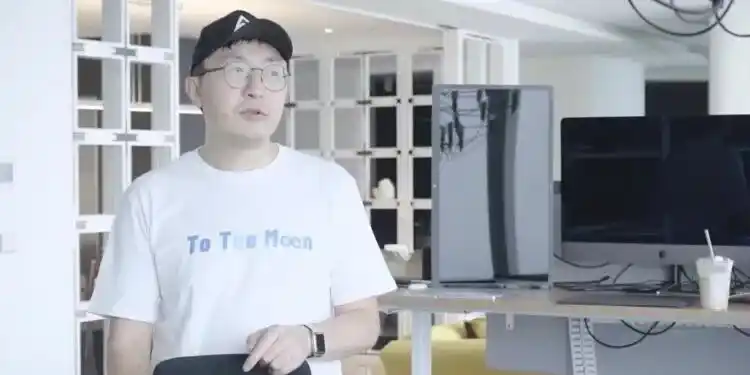
After graduation, he went to a Norwegian software company in Beijing. To save money, he slept on a French colleague's sofa, slept in the office. After work on Friday, he headed straight to the train station, returning Monday morning.

In the year 2007, he traveled 75,900 kilometers by train, equivalent to spending two full months on the road. He recorded every segment of the journey, precise to the minute or even second, posting it on forums. Someone gave him a nickname: Thousand-Trip High-Speed Rail Man.

In 2010, he went abroad for the first time, to Nepal, then India. In India, he boarded the country's longest-running train, the 16317 Himsagar Express, traveling all the way from the southernmost Kanyakumari to Kashmir, spending his entire savings at the time, $1,000.

Launching the F2Pool Bitcoin Mining Pool

In May 2011, he read two articles about Bitcoin on Solidot. That night, he opened the Bitcoin Wiki and read it from start to finish all night long. He described the feeling as if he had discovered a new continent.

On May 28, he bought his first bitcoin at a unit price of $8.70, borrowed $40,000 from his father, went to Zhongguancun to buy two graphics cards, rented four civilian houses, equipped dozens of mining rigs, second-hand motherboards, 512MB RAM, 4GB USB drives installed with Ubuntu, and started mining like that.

In the first two years, he mined 7,700 bitcoins, used 4,000 to pay for electricity, exchanged 660 for an iPhone (which was stolen in the St. Petersburg metro station). He sold the rest in January 2013 at $17 each, repaid his father's money, and made a small profit of over ten thousand dollars.

In April of that year, he and Mao Shixing, online nickname 'Shenyu' (which means 'Magic Fish'), launched F2Pool in Wenzhou, the first Bitcoin mining pool in China, later familiarly known as 'Fish Pool'.

Wang Chun wrote the backend code, Shenyu handled operations. A mining pool is different from a mining farm; a farm mines for itself, while a pool organizes the computing power of global miners, distributes rewards based on contribution, charges a handling fee, more like infrastructure for the Bitcoin network.

After going online, the pool expanded rapidly. This infrastructure business brought continuous cash flow and became an important source of his long-term wealth. Over the past decade-plus, F2Pool has helped global miners cumulatively mine over 1.3 million bitcoins.

In 2015, he used 2,900 bitcoins to buy his first apartment in Pattaya, Thailand. In 2018, he founded stake.fish in Thailand, a PoS staking service. This company later supported over twenty public chains including Ethereum, Solana, Cosmos, managing assets exceeding $3 billion.

The PoW mining pool and PoS validation, two infrastructure businesses based on different technological routes, together formed the foundation of his wealth. It is widely estimated that Wang Chun's wealth has reached hundreds of millions of dollars, but the specific figure has never been disclosed.
Flying into Space, Overlooking the Poles

On-paper wealth grew, but his lifestyle hardly changed: writing code, traveling, counting.

In December 2021, he stood at the South Pole. In July 2023, the North Pole. All geographical poles on Earth had been reached; there were no farther endpoints left, yet the questing heart did not stop.

It was then that he saw SpaceX's Falcon 9 booster landing vertically back on the launch pad. He felt that feeling again, exactly like the first time he heard about computers, the first time he discovered Bitcoin.

On April 23, 2023, lying in a hotel bed in Saudi Arabia, he asked himself: if he could design his own mission, where would he fly? The poles were the final frontier, but since 1961 when humans entered space, almost all crewed spacecraft had operated in mid-to-low inclination orbits. No vessel had ever truly flown over the poles, not because it couldn't be done, but because no one thought to do it, or no one had the resources to do it.

He thought of Darwin's HMS Beagle, the Beagle 2 Mars lander named after it, and then he thought of the Fram, the Norwegian exploration ship that conquered the poles multiple times, meaning 'Forward' in Norwegian.

So he planned and designed everything, submitted a private mission proposal to SpaceX, requesting to charter an entire Crew Dragon, enter orbit at a 90-degree polar inclination, and fly over the poles.

The entire mission was fully self-funded, no sponsors. No brokers, no NASA approvals. He treated SpaceX as a charter company, negotiated requirements and costs, became the mission commander himself, fully responsible for overall decisions, coordinating the crew, and interfacing with ground control.

He deliberately chose the crew too: a Norwegian, a German, an Australian, all non-American citizens, because this was a purely private decision.
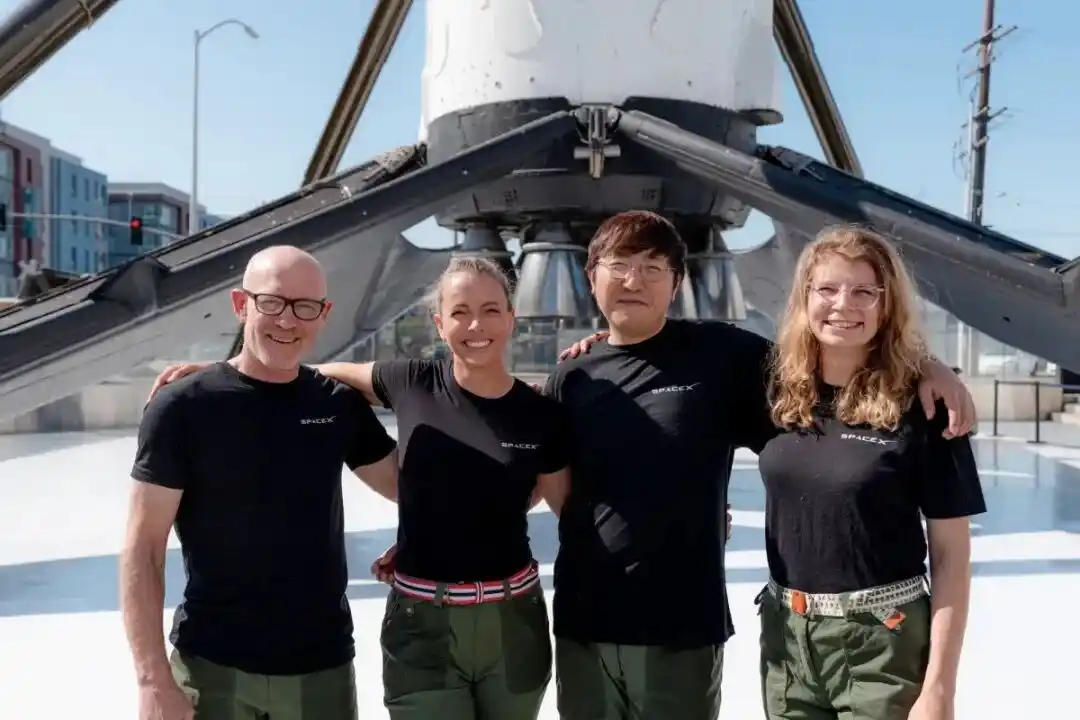
SpaceX sent him 2.8GB of learning materials, including mission procedure manuals, spacecraft system operation documents, guides for 22 scientific experiments, and explanations of polar orbit-specific risks.

Over the next 8 months, he underwent rigorous training: centrifuge high-G training, parabolic microgravity flights, cabin pressure loss simulation, polar survival drills, unassisted autonomous egress training, and more.

On March 31, 2025, the Falcon 9 lifted off from Kennedy Space Center.

Day one, the whole crew experienced space motion sickness. Day two, he wrote: feeling completely fine, like starting over.

The pole came into view, and he sent a message: Hello, Antarctica. Looking down from 430 kilometers high, a pure white expanse, no signs of human activity visible.

Suspended above Earth, he thought of Heisenberg's uncertainty principle, modeling his situation using quantum mechanics.

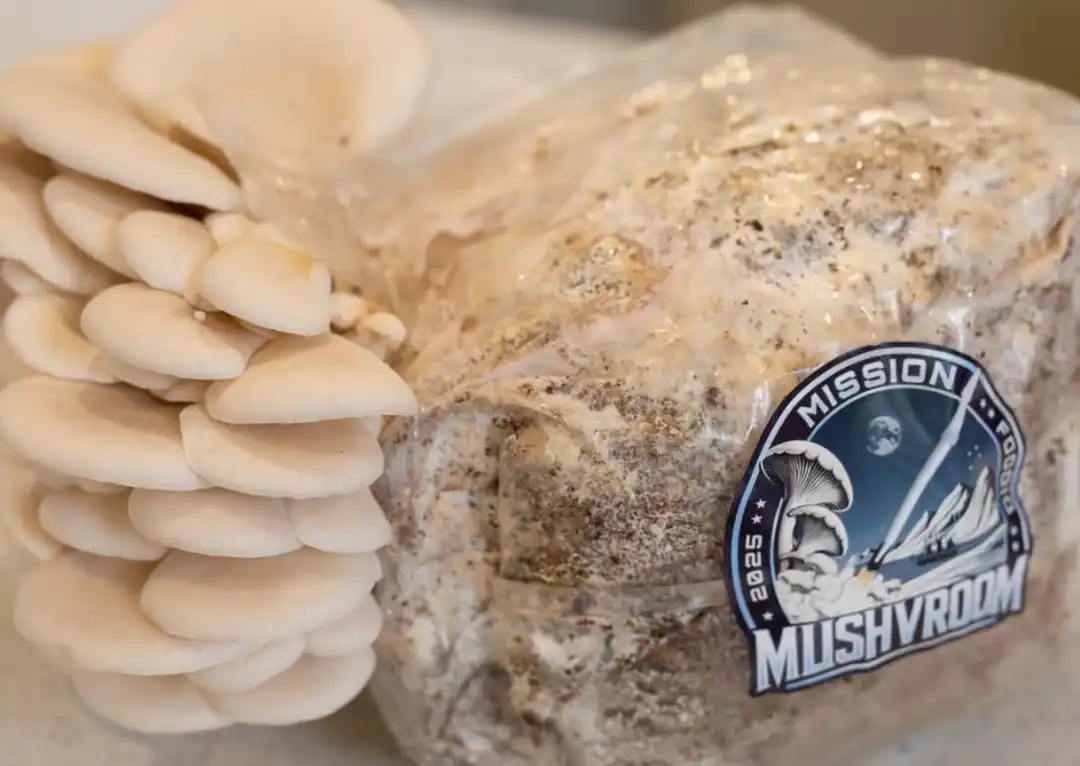
In three and a half days, the Fram2 mission completed 22 scientific experiments, including the first X-ray image taken in space by humans, growing oyster mushrooms in microgravity, monitoring polar radiation data, photographing auroras......

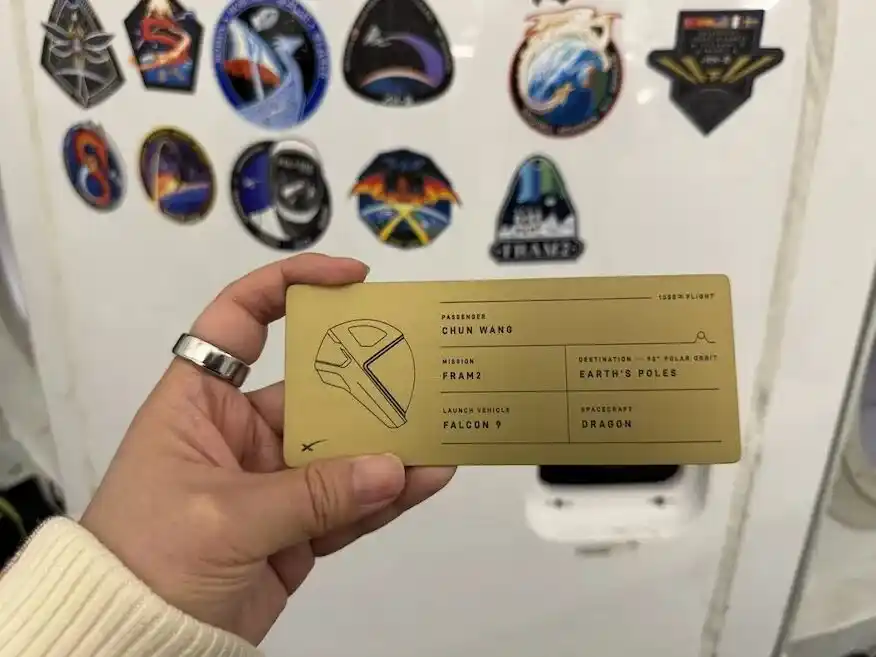
On April 4, 2025, the Crew Dragon splashed down off the coast of California. This was humanity's first crewed polar orbit flight, with an inclination of 90.01 degrees, breaking the 65-degree record set by the Soviet Union's Vostok 6 in 1963.
Mars Flyby

After Fram2's success, Wang Chun was already in line for SpaceX's next, even grander project.

In May 2026, on the eve of SpaceX's live broadcast of the Starship V3's first launch test, the camera cut to Bouvet Island, where Wang Chun formally announced he would command the Starship to execute humanity's first crewed interplanetary flight mission: leaving the Earth-Moon system, flying by Mars, and returning to Earth, expected to take two years.

Before that, he would also complete the first commercial Starship lunar flyby mission with Dennis Tito and his wife, flying by within 200 kilometers of the lunar surface, as a warm-up for the official mission.

Twenty years ago, ordinary people had no chance to participate in deep space missions. Between 2001 and 2009, only seven extremely wealthy private individuals paid to hitch a ride to the International Space Station via Russian spacecraft, each trip costing around $20 million and requiring strict qualification review.

SpaceX changed the underlying structure of this logic. Reusable rockets lowered costs, private individuals could directly charter an entire spacecraft, mission forms shifted from brief visits to the space station to free-flight, allowing custom orbits, experiments, and crew selection.

Wang Chun's Fram2 was the first privately customized crewed polar orbit mission, and this Starship Mars flyby is humanity's first privately funded crewed interplanetary mission, with communication delays up to 20 minutes, no quick return windows, no possibility of rescue, the entire mission handled by SpaceX, unrelated to NASA.
The Continuously Expanding Map

Bitcoin played a special role in this change, creating a path for wealth accumulation not attached to the traditional financial system, and this wealth is flowing in some way towards the boundaries of civilization's expansion.

Wang Chun used mining-accumulated capital to charter the polar orbit, used mining pool operating profits to wait for Starship. It's not mere wealth consumption, but investing the resources Bitcoin gave him into the direction he's been oriented towards since he was five years old.

Over the past few decades, crewed spaceflight has long been dominated by national systems. Who could go up, where to go, what to do, was basically decided by space agencies.

Now, a programmer from Tianjin can define his own mission, choose his own orbit, be his own commander, and decide to fly by the side of Mars.

The counting continues, just on a map with a larger scale.

Пов'язані питання

QWhat is the source of the wealth that enabled Wang Chun to fund his private space missions?

AThe primary source of his wealth is the accumulated revenue from fees generated by the F2Pool Bitcoin mining pool he co-founded and the PoS staking service provided by stake.fish, which he later established.

QWhat was the name and significance of Wang Chun's first private space mission?

AHis first private space mission was named 'Fram2'. It was the first-ever privately funded, crewed mission to achieve a 90.01-degree polar orbit, flying directly over the Earth's North and South Poles, breaking the 1963 record of 65 degrees set by the Soviet Vostok 6 mission.

QWhat ambitious future mission did Wang Chun announce in May 2026?

AIn May 2026, he announced his plan to command the Starship spacecraft to execute humanity's first crewed interstellar flyby mission to Mars, leaving the Earth-Moon system, flying past Mars, and returning to Earth, with an estimated mission duration of two years.

QHow did Wang Chun first get involved with Bitcoin?

AHe first learned about Bitcoin in May 2011 from articles on Solidot. Intrigued, he read the entire Bitcoin Wiki in one night, describing the feeling as 'discovering a new continent'. On May 28, he bought his first Bitcoin for $8.7 and soon after borrowed money to begin mining.

QAccording to the article, what role has Bitcoin played in the broader context of space exploration?

AThe article suggests Bitcoin has played a special role by creating a path for wealth accumulation independent of the traditional financial system. This new wealth is now being channeled towards the frontiers of civilization expansion, enabling private individuals like Wang Chun to fund and define their own ambitious space missions.

Пов'язані матеріали

The Revived Codex, Carrying OpenAI's Hopes for IPO

This article analyzes the intense recent development of OpenAI's Codex, positioning it as a crucial component for OpenAI's impending IPO. Over the past two months, Codex has seen a rapid series of major updates focused on integrating into real enterprise workflows. Key new features include enhanced context capture (Appshots, file previews, built-in browser), long-running task execution ("Goal Mode"), remote operation (phone control, lock-screen access), and enterprise management tools (plugin sharing, access tokens, automated risk review). These updates aim to make Codex a comprehensive AI workbench that can "see the scene, push tasks, and manage risks." The author argues that while ChatGPT proves OpenAI's massive user base and API provides foundational revenue, Codex represents OpenAI's clearest path to demonstrating tangible, high-value commercial viability. It targets developers and engineering teams—a segment already accustomed to paying for efficiency gains in costly software development cycles. This is critical because, despite higher overall revenue, OpenAI's adjusted operating margins remain deeply negative, highlighting the challenge of outrunning immense compute costs. The pressure is amplified by competitor Anthropic's success with Claude Code, which has shown that a focused approach on high-value enterprise and developer workflows can lead to a path toward profitability. Codex's aggressive evolution is thus seen as OpenAI's strategic move to capture a similar enterprise-ready, revenue-generating narrative essential for its market debut. In essence, "ChatGPT proved OpenAI has users. Codex needs to prove OpenAI is a business that can make money."

marsbit8 хв тому

The Revived Codex, Carrying OpenAI's Hopes for IPO

marsbit8 хв тому

a16z: 7 Charts to Understand How Tokenization Is Changing the Nature of Assets

a16z: 7 Charts on How Tokenization is Transforming the Nature of Assets Tokenized Assets, often referred to as "real-world assets" (RWA), are altering the form, flow, and structure of the financial system. The market recently surpassed $30 billion (excluding stablecoins), driven largely by tokenized U.S. Treasuries. These offer investors digital, yield-bearing assets with efficient settlement. Growth varies significantly by asset class. Asset-backed credit leads in speed, followed by niche financial assets, while venture capital and active strategies took longer to scale. U.S. Treasuries and commodities dominate, holding about two-thirds of the current market share. Within commodities, gold tokenization dominates entirely due to its standardization and historical appeal in crypto. The ecosystem is spread across multiple blockchains. Ethereum holds over half the market, with others like BNB Chain, Solana, and Stellar holding significant shares. However, a key insight is that most tokenized assets currently lack "composability." While the total market is large, only a small fraction (e.g., 5% of tokenized bonds) is used within DeFi protocols. Many tokens are simply digital records of off-chain assets, not natively programmable financial building blocks. In contrast, smaller categories like reinsurance tokens see very high on-chain usage. Looking ahead, forecasts for the tokenized asset market by 2030 range from $2 trillion to over $30 trillion, representing immense potential growth from today's ~$340 billion base. Yet, relative to global markets (e.g., $140T+ in bonds), tokenization's penetration remains minuscule (<0.02%). The current phase focuses on digitizing straightforward assets for efficiency. The next major challenge is bringing more complex financial instruments on-chain and integrating tokenized assets into truly composable, internet-native financial infrastructure.

marsbit38 хв тому

a16z: 7 Charts to Understand How Tokenization Is Changing the Nature of Assets

marsbit38 хв тому

Data Theft at Will! Major Vulnerability Exposed in This Popular AI Programming Tool

A critical vulnerability in Anthropic's Claude Code AI programming tool allowed attackers to bypass its network sandbox for over five months, enabling potential data exfiltration. Independent researcher Aonan Guan discovered a second complete bypass exploiting a null-byte injection in the SOCKS5 proxy. This flaw, present since the sandbox's launch in October 2025, let processes inside the sandbox access any host, contrary to user-configured domain whitelists. The attack chain involved manipulating hostnames (e.g., `attacker.com\x00.google.com`). JavaScript's `endsWith()` check would pass `.google.com`, while the underlying C `getaddrinfo()` function would only parse `attacker.com` due to the null byte, creating a parser discrepancy. Combined with a previously disclosed prompt injection method, this could leak API keys, credentials, and internal data. Anthropic silently fixed the issue in April 2026 without a security advisory, CVE, or user notification. The researcher noted that Claude Code itself confirmed the vulnerability's severity when tested. This incident highlights broader industry issues, as similar vulnerabilities found in Google's Gemini CLI and GitHub's Copilot Agent also lacked public disclosures. The report criticizes the false sense of security created by a broken sandbox and emphasizes the need for defense-in-depth and transparency in AI tool security.

marsbit3 год тому

Data Theft at Will! Major Vulnerability Exposed in This Popular AI Programming Tool

marsbit3 год тому

Under the squeeze between giants Tether and Circle, how can foreign exchange stablecoins break through?

In the face of dominance by Tether (USDT) and Circle (USDC), new entrants in the stablecoin space face significant challenges competing directly, especially in the foreign exchange (FX) market. A more viable and efficient path forward is the adoption of synthetic foreign exchange (Forex) built atop existing USD stablecoin rails. The rise of stablecoin neo-banks represents the next major growth area for mass crypto adoption, with FX becoming a core component. However, replicating the vast liquidity, distribution channels, and network effects of USDT/USDC is extremely difficult for new FX stablecoin issuers. The total market cap of all FX stablecoins is a fraction (roughly 1/700th) of USD stablecoins, leading to issues like poor liquidity, peg instability, limited acceptance, and complex compliance hurdles. Instead of issuing spot FX stablecoins, the article advocates for a model inspired by traditional finance's non-deliverable forwards (NDFs). Users would continue to hold underlying USDT/USDC, while their account balances are displayed and economically settled in their preferred local currency through MtM (Mark-to-Market) NDF structures. This approach leverages the deep liquidity and infrastructure of USD stablecoins while providing synthetic forex exposure. Key advantages include strong peg stability via oracles, retained access to USD stablecoin yields and liquidity, high capital efficiency, and easy scalability to new currencies. Primary use cases for this on-chain NDF forex include: 1. Neo-banks, custodians, and wallets offering multi-currency accounts to attract international users and increase deposits. 2. Forex carry trade strategies, potentially offering more stable and scalable yields compared to crypto-native products like Ethena. 3. Global corporate payments, allowing businesses to receive payments in local currencies while hedging forex risk on-chain, similar to services offered by Stripe in traditional finance. This synthetic forex model presents a pragmatic solution to overcome the network effects of incumbents and unlock the next wave of stablecoin utility for global consumers and businesses.

marsbit4 год тому

Under the squeeze between giants Tether and Circle, how can foreign exchange stablecoins break through?

marsbit4 год тому

Торгівля

Спот
Ф'ючерси

Популярні статті

Що таке BITCOIN

Розуміння HarryPotterObamaSonic10Inu (ERC-20) та його позиції у крипто-просторі Останніми роками ринок криптовалют спостерігав за зростанням популярності мем-коінів, які привертають інтерес не тільки трейдерів, але й тих, хто шукає спілкування та розважальну цінність. Серед цих унікальних токенів є HarryPotterObamaSonic10Inu (ERC-20), інтригуючий проект, що поєднує культурні посилання з тканинами криптовалюти. Ця стаття досліджує ключові аспекти HarryPotterObamaSonic10Inu, вивчаючи його механізми, спільноту та його взаємодію з ширшим крипто-ландшафтом. Що таке HarryPotterObamaSonic10Inu (ERC-20)? Як випливає з його назви, HarryPotterObamaSonic10Inu є мем-коіном, побудованим на блокчейні Ethereum, класифікованим за стандартом ERC-20. На відміну від традиційних криптовалют, які можуть підкреслювати практичну корисність або інвестиційний потенціал, цей токен процвітає завдяки розважальній цінності та силі своєї спільноти. Проект спрямований на створення середовища, де зацікавлені користувачі можуть об'єднуватися, ділитися ідеями та брати участь у заходах, натхненних різноманітними культурними явищами. Однією з примітних особливостей HarryPotterObamaSonic10Inu є нульовий податок на транзакції. Цей привабливий елемент має на меті заохочувати торгівлю та участь у спільноті, позбавлену додаткових витрат, які можуть відлякувати дрібних трейдерів. Загальна пропозиція монет становить один мільярд токенів, що позначає намір підтримувати суттєву циркуляцію в межах спільноти. Творець HarryPotterObamaSonic10Inu (ERC-20) Походження HarryPotterObamaSonic10Inu дещо окутане таємницею; деталі про творця залишаються невідомими. Розвиток цього токена позбавлений впізнаваної команди або чіткої стратегії, що не є рідкістю в секторі мем-коінів. Натомість проект виник органічно, а його розвиток значною мірою залежить від ентузіазму та участі його спільноти. Інвестори HarryPotterObamaSonic10Inu (ERC-20) Щодо зовнішніх інвестицій та підтримки, HarryPotterObamaSonic10Inu також залишається невизначеним. Токен не зазначає жодних відомих інвестиційних фондів або значної організаційної підтримки. Натомість життєва сила проекту полягає в його базовій спільноті, яка інформує про його зростання та стійкість через колективні дії та залученість у крипто-просторі. Як працює HarryPotterObamaSonic10Inu (ERC-20)? Як мем-коін, HarryPotterObamaSonic10Inu функціонує передусім поза традиційними рамками, що часто регулюють вартість активів. Є кілька відмінних аспектів, що визначають, як працює проект: Транзакції без податку: Завдяки відсутності податкових зборів на транзакції, користувачі можуть вільно купувати та продавати токен, не турбуючись про приховані витрати. Залучення спільноти: Проект процвітає завдяки взаємодії спільноти, використовуючи соціальні медіа для створення шуму та сприяння залученню. Обговорення, обмін контентом та залученість є ключовими елементами, що допомагають розширити його охоплення та зміцнити лояльність серед прихильників. Відсутність практичної корисності: Слід зазначити, що HarryPotterObamaSonic10Inu не пропонує конкретної корисності в рамках фінансової екосистеми. Натомість він класифікується як токен, що призначений в основному для розваги та спільнотних активностей. Культурне посилання: Токен кмітливо вплітає елементи популярної культури, щоб привернути інтерес, зв'язуючи з ентузіастами мемів та крипто-стежками. HarryPotterObamaSonic10Inu ілюструє, як мем-коіни функціонують інакше, ніж традиційні криптовалютні проекти, увійшовши на ринок як інноваційні соціальні конструкти, а не утилітарні активи. Хронологія HarryPotterObamaSonic10Inu (ERC-20) Історія HarryPotterObamaSonic10Inu відзначена кількома значними етапами: Створення: Токен виник з вірусного мему, захопивши уяву багатьох крипто-ентузіастів. Конкретні дати створення недоступні, що підкреслює його органічний розвиток. Лістинг на біржах: HarryPotterObamaSonic10Inu з'явився на різних біржах, дозволяючи зручніший доступ і торгівлю спільноти. Ініціативи залучення спільноти: Ведення діяльності, спрямованої на покращення взаємодії спільноти, включаючи конкурси, кампанії в соціальних мережах та створення контенту від фанатів та прихильників. Плани на майбутнє: Дорожня карта проекту включає запуск колекції NFT, мерчандайзинг та електронну комерцію, пов'язану з його культурними темами, що далі залучає спільноту та намагається додати більше вимірів до його екосистеми. Ключові моменти про HarryPotterObamaSonic10Inu (ERC-20) Спільнотний підхід: Проект надає пріоритет колективному внеску та креативності, забезпечуючи, щоб участь користувачів була в центрі його розвитку. Класифікація як мем-коін: Це є його епігенез розважальної криптовалюти, що відрізняється від традиційних інвестиційних інструментів. Жодного прямого відношення до Bitcoin: Незважаючи на схожість у назві, HarryPotterObamaSonic10Inu є відмінним і не має жодного зв’язку з Bitcoin або іншими усталеними криптовалютами. Зосередженість на співпраці: HarryPotterObamaSonic10Inu створено для того, щоб надати простір для співпраці та обміну історіями серед його власників, забезпечуючи шлях для творчості та спільного зв'язку. Перспективи на майбутнє: Амбіція розширитися за межі початкової концепції в NFT та мерчандайз відкриває шлях для проекту потенційно потрапити в більш мейнстрімні сфери цифрової культури. Оскільки мем-коіни продовжують захоплювати уяву спільноти криптовалют, HarryPotterObamaSonic10Inu (ERC-20) вирізняється своїми культурними зв'язками та орієнтованим на спільноту підходом. Хоча він може не відповідати типовій моделі утилітарного токена, його суть полягає в радощах і товариськості, що підтримуються серед його прихильників, підкреслюючи еволюційну природу криптовалют в усе більш цифрову епоху. Оскільки проект продовжує розвиватися, важливо спостерігати за тим, як динаміка спільноти вплине на його траєкторію в постійно змінюваному ландшафті технології блокчейн.

1.9k переглядів усьогоОпубліковано 2024.04.01Оновлено 2024.12.03

Що таке BITCOIN

Як купити BTC

Ласкаво просимо до HTX.com! Ми зробили покупку Bitcoin (BTC) простою та зручною. Дотримуйтесь нашої покрокової інструкції, щоб розпочати свою криптовалютну подорож.Крок 1: Створіть обліковий запис на HTXВикористовуйте свою електронну пошту або номер телефону, щоб зареєструвати обліковий запис на HTX безплатно. Пройдіть безпроблемну реєстрацію й отримайте доступ до всіх функцій.ЗареєструватисьКрок 2: Перейдіть до розділу Купити крипту і виберіть спосіб оплатиКредитна/дебетова картка: використовуйте вашу картку Visa або Mastercard, щоб миттєво купити Bitcoin (BTC).Баланс: використовуйте кошти з балансу вашого рахунку HTX для безперешкодної торгівлі.Треті особи: ми додали популярні способи оплати, такі як Google Pay та Apple Pay, щоб підвищити зручність.P2P: Торгуйте безпосередньо з іншими користувачами на HTX.Позабіржова торгівля (OTC): ми пропонуємо індивідуальні послуги та конкурентні обмінні курси для трейдерів.Крок 3: Зберігайте свої Bitcoin (BTC)Після придбання Bitcoin (BTC) збережіть його у своєму обліковому записі на HTX. Крім того, ви можете відправити його в інше місце за допомогою блокчейн-переказу або використовувати його для торгівлі іншими криптовалютами.Крок 4: Торгівля Bitcoin (BTC)Легко торгуйте Bitcoin (BTC) на спотовому ринку HTX. Просто увійдіть до свого облікового запису, виберіть торгову пару, укладайте угоди та спостерігайте за ними в режимі реального часу. Ми пропонуємо зручний досвід як для початківців, так і для досвідчених трейдерів.

4.6k переглядів усьогоОпубліковано 2024.12.12Оновлено 2025.03.21

Як купити BTC

Що таке $BITCOIN

ЦИФРОВЕ ЗОЛОТО ($BITCOIN): Комплексний аналіз Вступ до ЦИФРОВОГО ЗОЛОТА ($BITCOIN) ЦИФРОВЕ ЗОЛОТО ($BITCOIN) — це проект на основі блокчейну, що працює в мережі Solana, який має на меті поєднати характеристики традиційних дорогоцінних металів з інноваціями децентралізованих технологій. Хоча він має таку ж назву, як і Bitcoin, який часто називають “цифровим золотом” через його сприйняття як засобу збереження вартості, ЦИФРОВЕ ЗОЛОТО є окремим токеном, розробленим для створення унікальної екосистеми в ландшафті Web3. Його мета — позиціонувати себе як життєздатний альтернативний цифровий актив, хоча деталі щодо його застосувань і функціональностей все ще розробляються. Що таке ЦИФРОВЕ ЗОЛОТО ($BITCOIN)? ЦИФРОВЕ ЗОЛОТО ($BITCOIN) — це токен криптовалюти, спеціально розроблений для використання в блокчейні Solana. На відміну від Bitcoin, який виконує широко визнану роль зберігання вартості, цей токен, здається, зосереджується на більш широких застосуваннях і характеристиках. Помітні аспекти включають: Інфраструктура блокчейну: Токен побудований на блокчейні Solana, відомому своєю здатністю обробляти швидкі та низьковартісні транзакції. Динаміка постачання: ЦИФРОВЕ ЗОЛОТО має максимальне постачання, обмежене 100 квадрильйонами токенів (100P $BITCOIN), хоча деталі щодо його обігового постачання наразі не розголошуються. Утиліта: Хоча точні функціональності не викладені, є вказівки на те, що токен може бути використаний для різних застосувань, потенційно пов'язаних з децентралізованими додатками (dApps) або стратегіями токенізації активів. Хто є творцем ЦИФРОВОГО ЗОЛОТА ($BITCOIN)? На даний момент особа творців і команди розробників, що стоять за ЦИФРОВИМ ЗОЛОТОМ ($BITCOIN), залишається невідомою. Ця ситуація є типовою для багатьох інноваційних проектів у сфері блокчейну, особливо тих, що пов'язані з децентралізованими фінансами та феноменом мем-коінів. Хоча така анонімність може сприяти культурі, орієнтованій на спільноту, вона посилює занепокоєння щодо управління та підзвітності. Хто є інвесторами ЦИФРОВОГО ЗОЛОТА ($BITCOIN)? Доступна інформація вказує на те, що ЦИФРОВЕ ЗОЛОТО ($BITCOIN) не має жодних відомих інституційних спонсорів або помітних венчурних капіталовкладень. Проект, здається, працює за моделлю “рівний до рівного”, зосереджуючись на підтримці та прийнятті спільноти, а не на традиційних шляхах фінансування. Його активність і ліквідність переважно розташовані на децентралізованих біржах (DEX), таких як PumpSwap, а не на встановлених централізованих торгових платформах, що ще більше підкреслює його підхід знизу вгору. Як працює ЦИФРОВЕ ЗОЛОТО ($BITCOIN) Операційні механізми ЦИФРОВОГО ЗОЛОТА ($BITCOIN) можна детальніше розглянути на основі його дизайну блокчейну та характеристик мережі: Механізм консенсусу: Використовуючи унікальний proof-of-history (PoH) Solana в поєднанні з моделлю proof-of-stake (PoS), проект забезпечує ефективну валідацію транзакцій, що сприяє високій продуктивності мережі. Токеноміка: Хоча конкретні дефляційні механізми не були детально описані, велике максимальне постачання токенів вказує на те, що воно може задовольняти мікротранзакції або нішеві випадки використання, які ще потрібно визначити. Інтероперабельність: Існує потенціал для інтеграції з більш широкою екосистемою Solana, включаючи різні платформи децентралізованих фінансів (DeFi). Однак деталі щодо конкретних інтеграцій залишаються невизначеними. Хронологія ключових подій Ось хронологія, яка підкреслює значні віхи, пов'язані з ЦИФРОВИМ ЗОЛОТОМ ($BITCOIN): 2023: Початкове розгортання токена відбувається на блокчейні Solana, позначене його адресою контракту. 2024: ЦИФРОВЕ ЗОЛОТО набуває видимості, оскільки стає доступним для торгівлі на децентралізованих біржах, таких як PumpSwap, що дозволяє користувачам торгувати ним проти SOL. 2025: Проект спостерігає спорадичну торгову активність і потенційний інтерес до ініціатив, очолюваних спільнотою, хоча на даний момент не зафіксовано жодних значних партнерств або технічних досягнень. Критичний аналіз Сильні сторони Масштабованість: Основна інфраструктура Solana підтримує високі обсяги транзакцій, що може підвищити утиліту $BITCOIN у різних сценаріях транзакцій. Доступність: Потенційно низька торгова ціна за токен може привабити роздрібних інвесторів, сприяючи більш широкій участі завдяки можливостям дробового володіння. Ризики Відсутність прозорості: Відсутність публічно відомих спонсорів, розробників або процесу аудиту може викликати скептицизм щодо стійкості та надійності проекту. Волатильність ринку: Торгова активність сильно залежить від спекулятивної поведінки, що може призвести до значної волатильності цін і невизначеності для інвесторів. Висновок ЦИФРОВЕ ЗОЛОТО ($BITCOIN) постає як цікавій, але неоднозначний проект у швидко розвиваючійся екосистемі Solana. Хоча він намагається використати наратив “цифрового золота”, його відхід від встановленої ролі Bitcoin як засобу збереження вартості підкреслює необхідність чіткішого розмежування його передбачуваної утиліти та структури управління. Майбутнє прийняття та адаптація, ймовірно, залежатиме від вирішення поточної непрозорості та більш чіткого визначення його операційних та економічних стратегій. Примітка: Цей звіт охоплює синтезовану інформацію, доступну станом на жовтень 2023 року, і можуть відбутися події, що виходять за межі дослідницького періоду.

75 переглядів усьогоОпубліковано 2025.05.13Оновлено 2025.05.13

Що таке $BITCOIN

Обговорення

Ласкаво просимо до спільноти HTX. Тут ви можете бути в курсі останніх подій розвитку платформи та отримати доступ до професійної ринкової інформації. Нижче представлені думки користувачів щодо ціни BTC (BTC).

活动图片